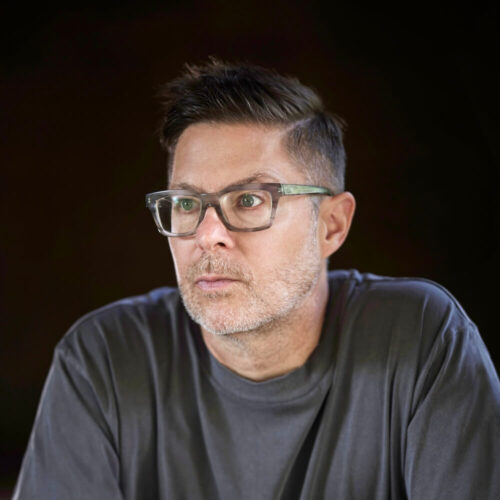
Josh Kun
New America Fellow, 2027
Today, the New America Fellows Program announced the Class of 2027 New America Fellows. Out of a pool of hundreds of applicants, a talented group of 14 scholars, journalists, and storytellers was selected. Over the course of their fellowships in the coming year, they will bring bold ideas to life across a range of cutting-edge issues and public problems—from social media addiction and postpartum mental health to masculinity and climate change.
One of those talented fellows is cultural historian, writer, and curator Josh Kun. In this special Q&A, Kun gives us insight into his forthcoming book project on music and migration—and even shares a short playlist of the tunes that just won’t leave his mind.
Your forthcoming book, Beats Across Borders, follows migrants across the world through the music they make and listen to. What inspired you to take on this project?
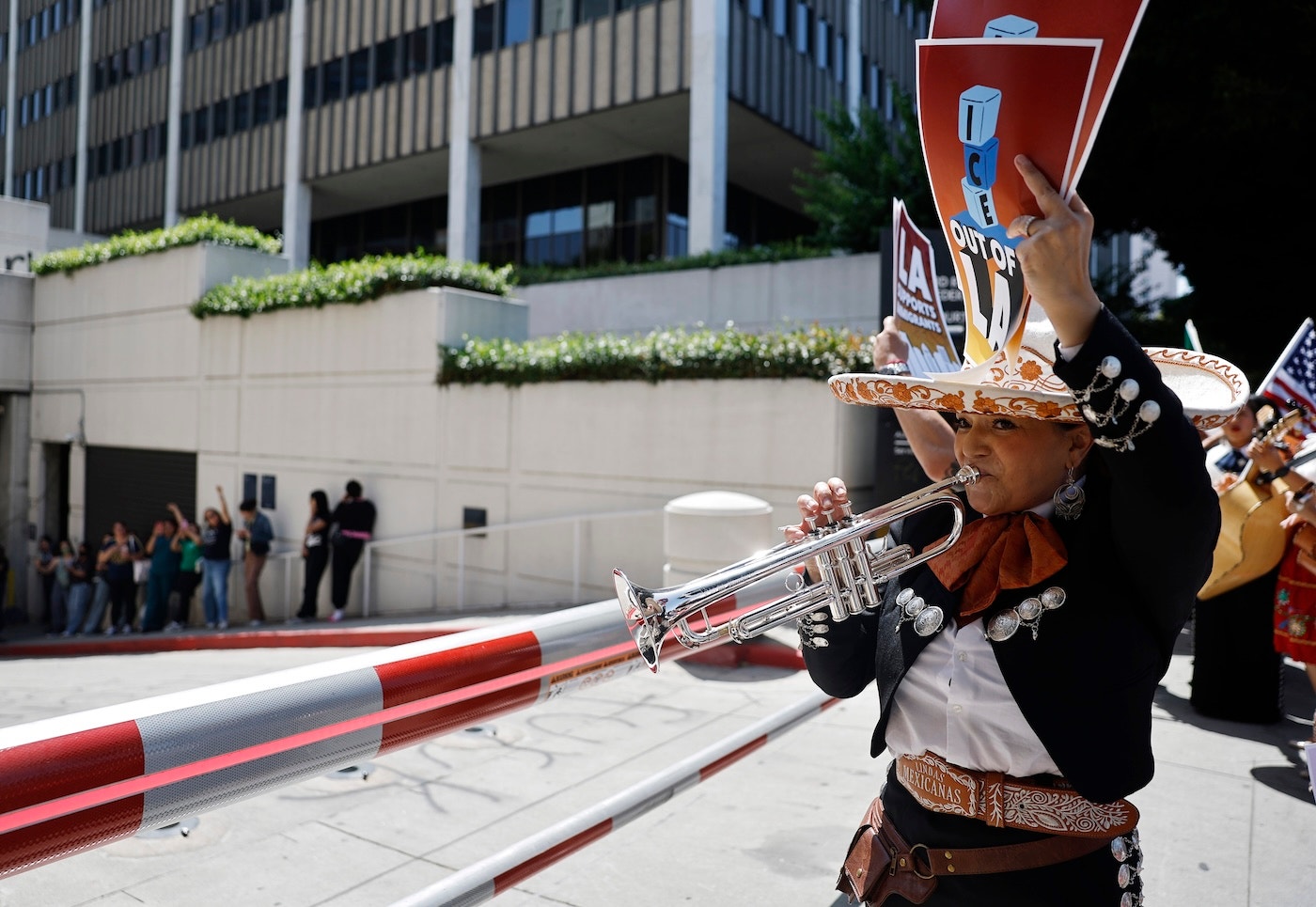
Music is how I make sense of the world. As so many have documented, there are currently more migrants, refugees, and asylum-seekers than at any time in human history. I wanted to understand how people are using music to navigate the complexities and struggles of forced migration, as well as respond to (and resist) anti-immigrant legislation, border militarization, and mass deportations.
The book is structured as a literal songbook—with each chapter a theme of contemporary migration. What’s special about this particular format?
Since the ninth century, songbooks have used songs to make compelling arguments, compile and represent the musical traditions of specific communities, cultures, and nations, and foster mobilization and fuel activism. I’ve long been drawn to the songbook form because of how it organizes disparate songs under a guiding theme or curatorial principle, serves as a vehicle for generating new knowledge through compilation, and becomes its own method of unique storytelling. For this book, I have been reading about songbooks like philosopher and poet Johann Gottfried Herder’s 18th-century “people’s songbooks,” and gathering my own mini reference archive of everything from Mexican corrido songbooks (cancioneros) to Irish immigration songbooks to labor, union, and civil rights songbooks.
You’ve spent much of your career working with archives, records, and exhibitions. This book required something different: five years of travel and reporting in the field. What did that ask of you that archival work doesn’t?
I drew on my past experiences as a journalist, but I was rusty! I had to relearn reporting techniques and lean back into the craft of the interview. Most of the musicians I am writing about in the book have been as much “subjects” as interlocutors and collaborators. I have also been fortunate to have opportunities to perform parts of the book live with some of the musicians I write about, which never fails to change the writing and to change the relationships we have with one another.
A changed conversation would be one in which the experiences and histories of immigrants, refugees, and asylum-seekers are not just voiced but deeply listened to...
Your reporting took you across the world—from the Arizona desert to the island of Lampedusa in the Mediterranean to Doha, Qatar. What memory from your travels sticks out to you that you’ll carry long after the book publishes?
There are too many to choose from. In a way, the book is a collection of those memories, of unexpected meetings that changed the way I understood a place, a people, a struggle, a song. Two relationships in the book lasted longer than others—one with the Syrian trumpet player Milad Khawam who I met in Berlin, and the other with the members of the Gazan group Sol Band who I first met in Ramallah, Palestine, and then got to know in Doha—and both of those have, in different ways, changed my life and the way I hear the world.
You want the book to change the current tenor of public conversations about migration. What would a changed conversation sound like?
It would sound like a conversation where true listening has taken place. When we listen to music, one person’s song can become the soundtrack to another person’s life. What a powerful thing—so full of social and political and interpersonal potential, that happens thousands of times, every minute, across the world. So, a changed conversation would be one in which the experiences and histories of immigrants, refugees, and asylum-seekers are not just voiced but deeply listened to, transforming everyone in the process. I hope that this book can help change cultural narratives about migration and that it might find its way to policy circles and community organizations to support their work to protect and expand rights for immigrants and refugees.
After five years of listening, which songs have stuck with you?
That playlist is very long, but here are a few that jump to mind:
Want to stay connected with current and past New America Fellows? Sign up for The Fifth Draft for exclusive Q&As and news.
New America Fellow, 2027