Fanna Gamal
Fellow, New America CA
You may not have noticed, but there are two Californias.
The first is experiencing unprecedented wealth, surpassing the United Kingdom to become the world’s fifth-largest economy in terms of GDP. The other, however, tells a very different story—one of unaffordable cities, unequal educational opportunities, and a rising homeless population.
According to a recent report, 45.8 percent of California’s children live in this other California at or near the poverty line. That’s nearly half of all the state’s children, which includes children like the teenager Brian (not his real name). Brian and his family lived together in a two-bedroom apartment not far from his school in the San Francisco Bay Area. When Brian’s mother lost her second job, the family lost their apartment. Over the next year, the family ricocheted among motels, shelters, and couches while Brian’s mother looked for another job to help them afford an apartment.
All this uncertainty took a toll on Brian’s education. He missed several weeks of school, was failing every class, and was missing out on valuable special-education services. Though he had a right to stay in his school of origin—that is, the school he was in when he was last stably housed—the school pressured his mother into pulling him out and enrolling him in an independent-study program closer to the motel where they were at the time. Worse still, the program was in a dangerous neighborhood: While walking to class one day, two men Brian didn’t know shot at him from a moving car. He wasn’t hurt, but he was still traumatized. He started carrying his uncle’s pistol in his backpack in case he saw the men again. He carried it until one day when a neighbor saw Brian with the gun and had him arrested and charged with two felonies in juvenile court.
I was Brian’s lawyer, and I watched as his mother almost lost her job trying to attend innumerable court appearances, probation appointments, and school meetings. All of this made me wonder: What could’ve kept Brian in a high school classroom, instead of being tossed into a juvenile detention center? The answer, at least in part, lies at the juncture of how we approach educational rights and homelessness.
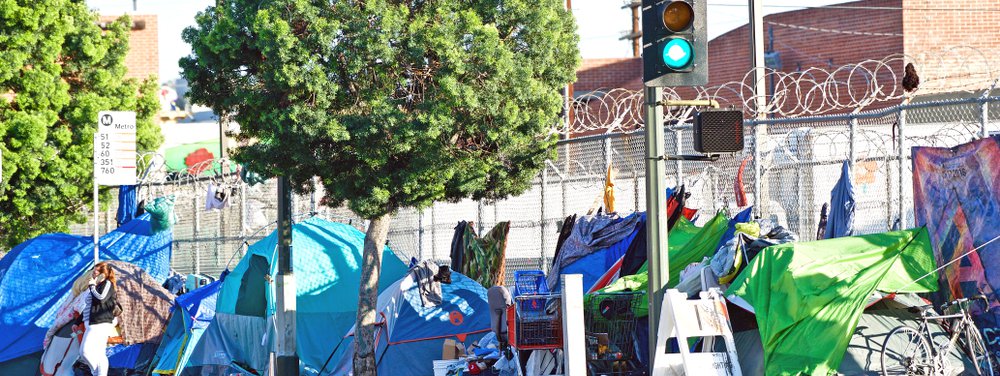
To understand the scope of the issue, consider this: Between 2014 and 2016, the number of homeless students in California increased by 25 percent. There are now more than 200,000 K-12 homeless students in the state, and they live in shelters, cars, motels, on the street, and doubled-up or tripled-up with other families. A lack of affordable housing, stagnant wages, racial and gender oppression, and exposure to traumatic events like job loss, eviction, and intimate-partner violence can easily drive a struggling family into homelessness. Compared to their stably housed peers, homeless children like Brian are more likely to drop out of school, come into contact with the juvenile justice system, and, ultimately, experience adult homelessness.
When it comes to what could’ve protected a kid like Brian, we can certainly look at the public policies, state officials, communities, and individuals that affect them. But we can also imagine how Brian’s trajectory might’ve been radically different had he been afforded school stability after his family became homeless.
Under the McKinney-Vento Act, which is the federal law designed to protect homeless students, Brian should have had the right to stay in the school he was attending when he was last stably housed, or at least to attend a school closer to wherever the family was living at the time. However, if the parent and the school disagree over what school the student should attend, as was the case with Brian’s mom, the student should go to the school that serves the child’s “best interest.”
But who makes that call?
That’s a more complicated question, and the short answer is: the school. There’s a presumption that it’s always better for the child to remain at the student’s original school. But, given the unequal power dynamics between schools and homeless parents, it’s a presumption that’s too easily denied disenfranchised parents like Brian’s mom. As a homeless mother of three who was working two jobs, it was difficult for her to stand her ground and insist that her child remain at his school of origin, especially as Brian struggled to maintain his attendance and as school officials pressured him to transfer. This power imbalance between a homeless parent and a school not only often interferes with the very spirit of the law, which was crafted to create school stability for students experiencing homelessness, but it also shows the need for schools to be more expansive and creative in their efforts to help students facing homelessness.
Indeed, for students battling a turbulent living situation, it’s almost always better to preserve the relationships and routine they have built than to move to a different school. For Brian, switching schools ushered in a host of other problems that further disadvantaged him: a new environment to adjust to, new threats in the neighborhood, and a change in his routine. It makes sense to ask: What might have happened if his school of origin had been more flexible, and had encouraged him to stay but presented him with a truncated schedule? Or if they had allowed him to do some work at the library with a tutor, or had even awarded him academic credit for getting a job or volunteering?
What homeless and other struggling students need is slack. Looking ahead, schools that are willing to be flexible with homeless students are more likely to keep them on crucial paths toward graduation. To serve California’s growing population of homeless students, schools must be ready to break the mold of a typical school day and trust parents when they express what’s best for their children. After all, incorporating flexibility and trust into a school culture will serve all students, not just homeless students like Brian.
Fellow, New America CA