Kevin Sack
New America (Emerson Collective) Fellow, 2019
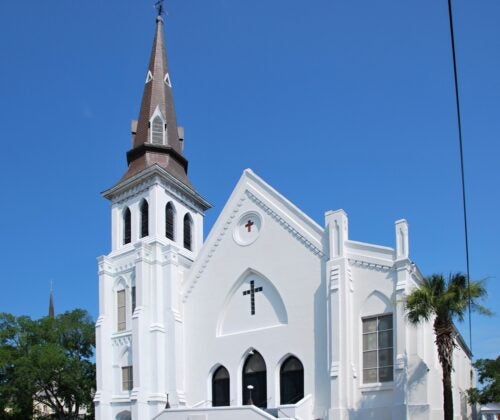
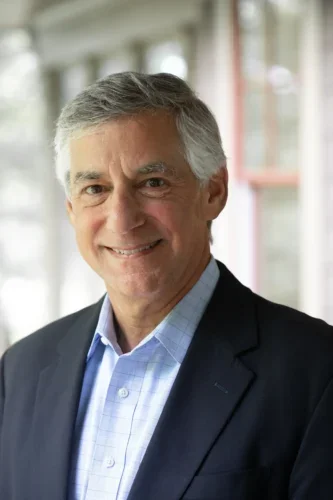
New America (Emerson Collective) 2019 Fellow Kevin Sack spoke about his book, Mother Emanuel, for “Three questions” in The Fifth Draft, the Fellows Program’s monthly newsletter. Sack is a longtime correspondent and senior writer with The New York Times.
Your Fellows project, the forthcoming book Mother Emanuel, will cover the 200-year history of Emanuel African Methodist Episcopal (AME) Church in Charleston, South Carolina. What drew you to tell this long history?
To some extent, it was in fact the length of the church’s timeline. It seemed to me that there was a void to be filled in African-American history. Although many formidable works have focused on a person or place or era, fewer have managed to convey the connectedness of events and movements across a long continuum. Emanuel presented a marvelous vehicle for exploring two centuries of Black history in Charleston, the capital of American slavery and birthplace of the Civil War, all under one metaphorical roof. As I near completion of the manuscript, I continue to marvel at how much that thesis has proven out. From the depths of enslavement to the age of Obama, the microcosmic story of this one congregation illuminates the panoramic saga of the Black church in America and the ongoing resistance of Black Southerners to white supremacy.
From the depths of enslavement to the age of Obama, the microcosmic story of this one congregation illuminates the panoramic saga of the Black church in America and the ongoing resistance of Black Southerners to white supremacy.
Tragically, Emanuel AME is best known for the massacre of nine congregants carried out by a white supremacist in 2015. What role does this event take in the overall narrative of your book?
It’s the jumping off point but not the primary focus. As the book is currently structured, the massacre and its aftermath occupy three of 17 chapters. I start there, then skip back several centuries before meandering back toward the present. This takes a while. But the real mission is less to recount the horror of that night—although I do—than to guide readers through the 200 years that brought Mother Emanuel to that moment. That remarkable journey—the congregation’s bold founding, the insurrection plot that led to its destruction, its Reconstruction-era revival, the appearances by Washington and Du Bois and King, the civil rights crusades—should not be obscured by “The Tragedy,” as Emanuel members call it. Whether the killer realized, it very much mattered that this was the place he chose to desecrate. I set out to explain why.
You use both archival research along with interviews of living people for this book. What are the advantages and disadvantages of using each research method for your writing?
Both methods are vital for a narrative that spans more than two centuries. I’ve relied heavily on interviewing to recreate the life of the church from World War II on, and to fill gaps in my reading in history and theology. The oldest Emanuel member I interviewed was 104. It has been important, though, to check memories against documents, as pieces of Emanuel’s oral history are not backed by the record. The need to rely on archival research for the church’s earlier history is problematic, of course, because the written record was written almost exclusively by whites, particularly prior to 1865. I keep grains of salt at hand, and look for alternatives. Among the most useful have been the rich dispatches of early Black missionaries to the antebellum South published in The Christian Recorder, the AME. house organ, founded in 1852 (and blessedly available online).
Subscribe here to receive next month’s issue of The Fifth Draft.
New America (Emerson Collective) Fellow, 2019