Jeremy Bauer-Wolf
Investigations Manager, Higher Education
Commentary has proliferated for months about the death of academic majors like social work and the arts. This type of debate is perennial, but this time, it was largely prompted by a part of the One Big Beautiful Bill Act that took effect over the summer.
Under a new federal standard called “Do No Harm,” students won’t be able to take out federal loans for college programs with low earning potential. The limit has bred blistering pushback, with some claiming the Trump administration has abandoned often-vulnerable workers—teachers, counselors, musicians, clergy.
Data tells a different story. Those types of majors, including social work and teaching, are mostly unaffected, it shows.
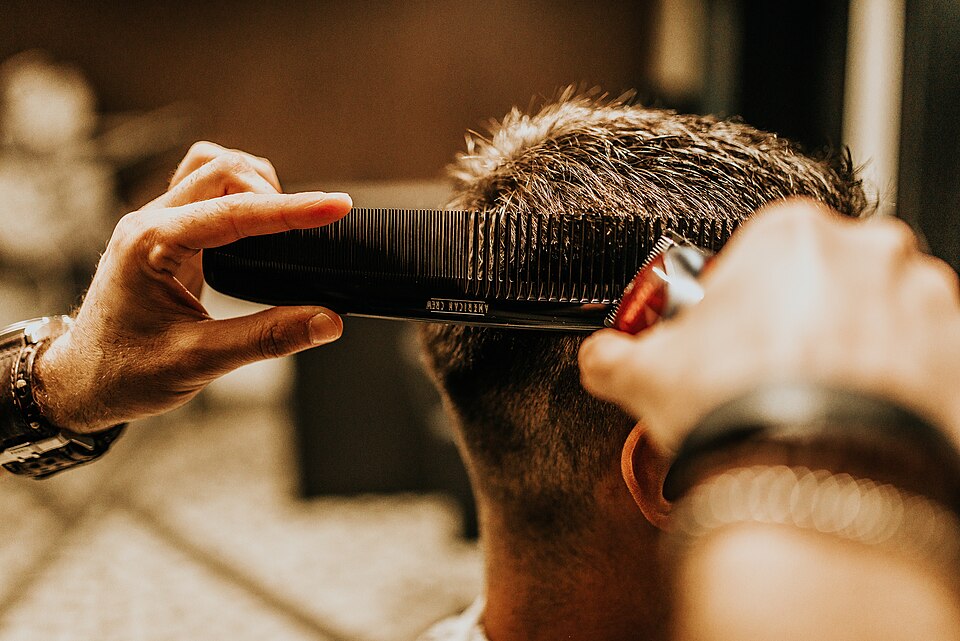
Many of the programs that fail the earnings metric are actually in cosmetology. Almost 80 percent of students who receive federal aid to attend a cosmetology program are enrolled in one that can’t clear the earnings threshold, according to the Postsecondary Education & Economics Research, or PEER, Center at American University.
Those familiar with this segment of schools likely are unsurprised by the beauty world’s anemic earning potential. Cosmetology schools, particularly in the for-profit sector, often offer outdated programs with stringent licensure requirements that force students to remain enrolled longer. Bloating their programs, including by fighting for state laws that require students to complete lengthy training, keeps them locked in—and the spigot of financial aid flowing.
Better models exist for learning the beauty trade—like affordable community college programs, high school career and technical education courses, or registered apprenticeships, where students learn the hands-on part of beauty training with a licensed cosmetologist.
Policymakers should push back on recent industry attempts to paper over its widespread issues, especially because a potent cosmetology lobby has already been doing so for decades.
Significant problems plague the for-profit cosmetology industry, as we found in our report last year.
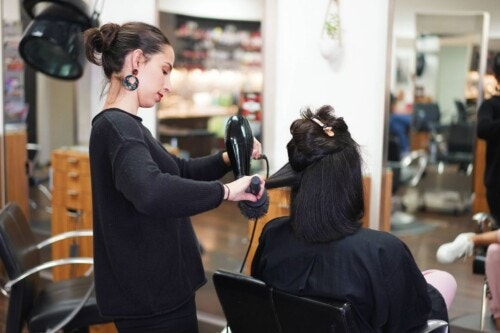
We interviewed beauty school students who said they often learned basics from antiquated textbooks that did not touch on situations common in a salon, such as textured hair and contemporary colors. When these students transitioned to hands-on portions of their programs, they encountered even worse problems—dwindling supplies, and incompetent or overloaded instructors who forced them to learn the lessons from one another. One student told us her instructor didn’t show up for a full week, so she and her peers stayed on their phones. And while they’re paying tuition, students often provide free labor in their schools’ salons.
These low-quality programs translate to graduates’ pay. Across the country, beauty school students who attend federally supported colleges often earn less than a high school graduate after finishing a credential, by $5,000 to $14,000 less on average, according to our report last year. Four years after finishing, a typical graduate will only make about $20,000. In 2023, unemployment among for-profit cosmetology school alumni topped 10 percent, more than three times the national unemployment rate, we found.
The beauty school lobby would rather the public not know any of this.
The American Association of Career Schools, which represents cosmetology schools, has derailed regulatory efforts, including repeatedly suing over accountability regulations for about a decade.
More recently, the cosmetology lobby has come out against Do No Harm, devising a campaign to highlight how many beauty school students are women and people of color. About 90 percent of cosmetology program graduates are women, including large shares of students of color and parenting students.
It’s plainly exploitative to invoke these students without providing them the support they need.
For instance, John Paul DeJoria, the multibillionaire founder of Paul Mitchell, one of the most prominent for-profit cosmetology chains in the country, wrote an essay this year pushing back on Do No Harm. He agonized over the woes of beauty school students should the policy come into effect.
“The veteran looking for a stable second career, the young entrepreneur who dreams of owning her own salon” would all be boxed out of their dream jobs, he argued.
If DeJoria cared, he would have spent his time and fortune fixing problems rampant within the schools he built. But despite its popularity, Paul Mitchell peddles predatory programs. One federal class-action lawsuit more than 10 years ago accused the company of pushing Paul Mitchell students to function as licensed stylists, but without pay, while coercing them to sell its branded products and maximize profit.
The lobby’s efforts succeeded in weakening Do No Harm.
The Trump Administration implemented a regulatory provision specifying some programs—those where workers often receive tips—get extra time to come into compliance with the policies before losing loan eligibility.
The reason, ostensibly, was a change in the law that lets workers deduct up to $25,000 in tips, previously considered taxable income. The Education Department now won’t measure earnings among these programs, including cosmetology, before 2026 (the first year no-tax-on-tips takes effect).
That means the earliest a cosmetology program would lose loan access would be in 2029. This likely is a tactic to delay the policy’s implementation while the cosmetology lobby wages a legal battle against it.
Other paths to a cosmetology license are not as well-known as the traditional for-profit route, but are much more promising for students.
During registered apprenticeships, students split their time between classroom instruction and work in a salon, which pays them and helps build their skills and client base. Students earn the same license but, unlike those working in school salons, get paid and have labor protections.
Our report last year highlighted Janice Dorian, a former beauty school owner who converted her Massachusetts school into a registered apprenticeship in 2017. Her model paired 600 hours of instruction, half of it online, with 400 hours in regional salons. More than 90 percent of apprentices finished, and landed their licenses and jobs.
Some public high schools also allow students to log their licensing hours for free before they graduate. In Pittsburgh, students in the district’s cosmetology program can earn all 1,250 hours Pennsylvania requires before leaving high school, and the district covers the licensing exam fee.
Policymakers should be constructing more of these avenues to a cosmetology license—which professionals in the field have backed.
One of them is Margaret Ferguson, who worked as a hairdresser for more than a decade. She began a nonprofit called Beyond the Chair, which promotes better education and labor protections for beauty professionals. In a May essay, Beyond the Chair called for stronger accountability within the sector, and development of cheaper programs with close ties to employers, like apprenticeships.
The group doesn’t oppose beauty schools, it argued in that piece, but if a program survives on sky-high tuition and federal aid while its graduates earn little, then “policymakers should ask whether those programs were truly serving students in the first place.”
They aren’t.
As Congress begins anew in 2027, and state legislatures gear up for their sessions, lawmakers should not be persuaded by lobbying attempts and campaigns to grow and support for-profit cosmetology.
The industry has already gotten what it wanted—a decades-long pass on accountability.
Investigations Manager, Higher Education