
Table of Contents
Ideas, Provocations, and Stories
Below are a collection of key themes and comments from participants at the events, gathered and documented via video either from one-on-one video interviews or moderated discussions with speakers and facilitators.
Learning Power: Examining the Future of Education Amid Automation and Artificial Intelligence
July 24, 2019
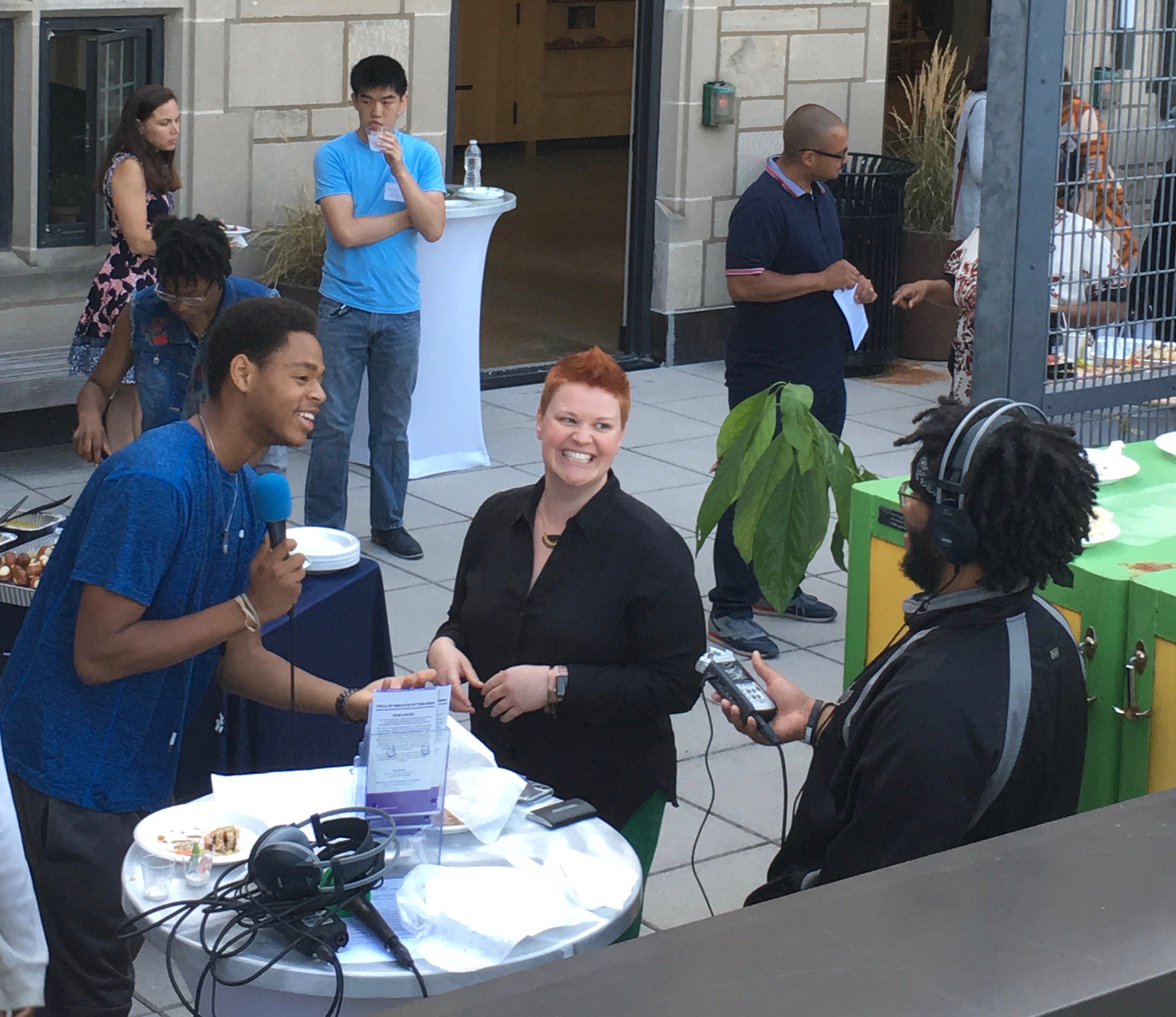
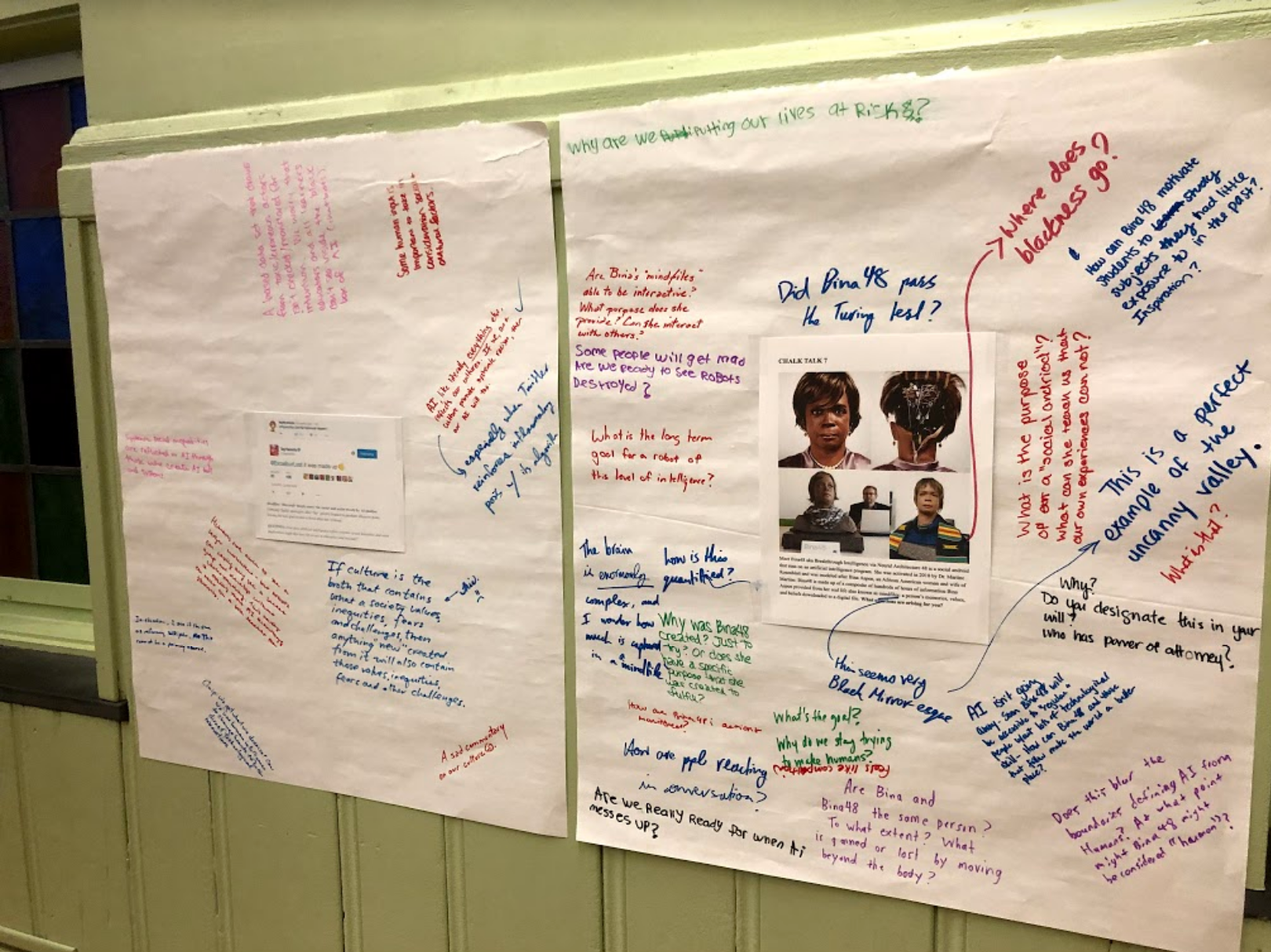
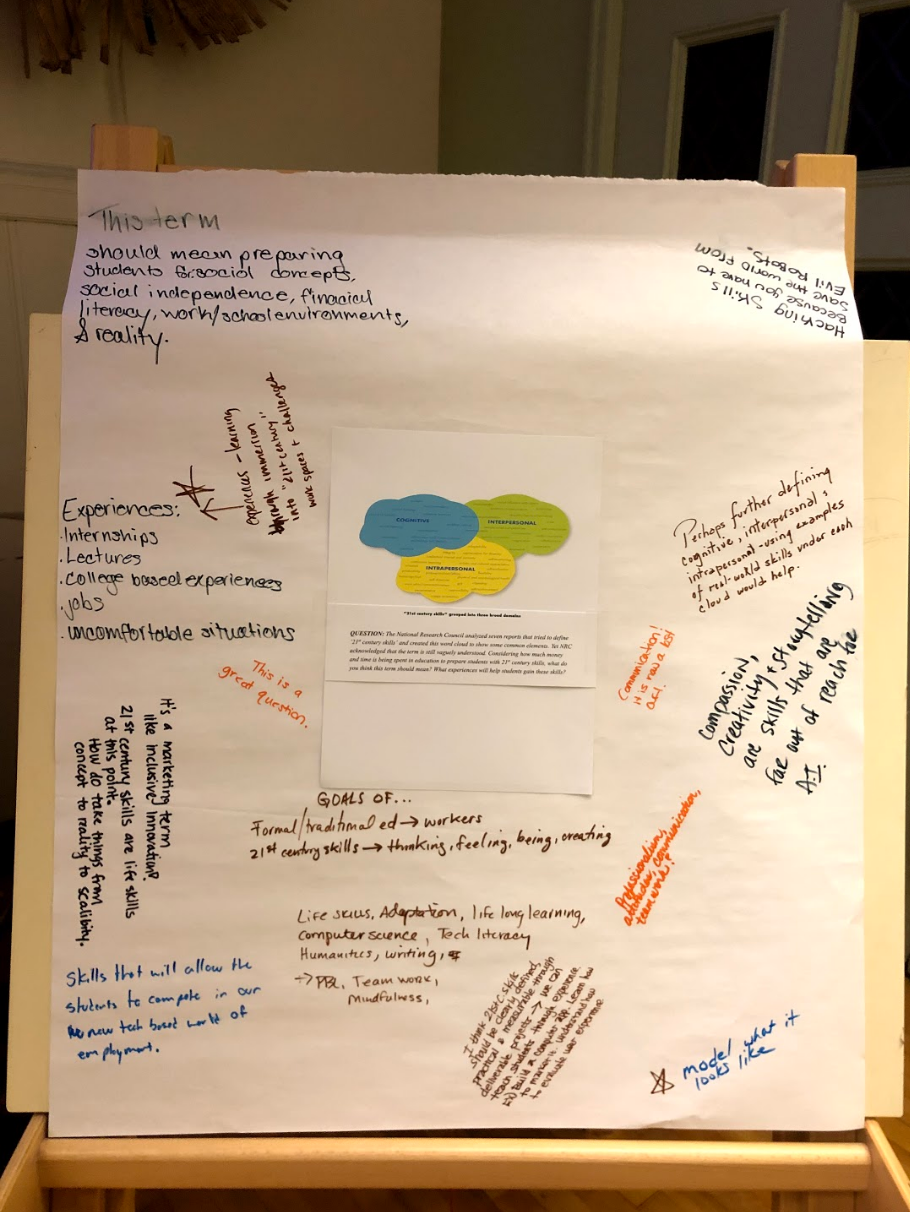
The first event was developed with the Western Pennsylvania Writing Project (WPWP) and the CREATE Lab at Carnegie Mellon University, which are also hosting working group discussions about the role and impact of artificial intelligence in education. This event became a way to continue some of those conversations with a larger group of educators from Pittsburgh and other areas. It was held as an evening event at Falk Laboratory School and affiliated with the WPWP’s Summer Institute. In addition to prompting participants to do some writing and group reflecting, the event featured a conversation with Nicole Mirra, author of Educating for Empathy: Literacy Learning and Civic Engagement, and an assistant professor of urban teacher education at Rutgers University.
Key themes and questions:
● Many of today’s students are interested in using new technologies to help their voices be heard and wish more educators would give them those opportunities.
● If artificial intelligence systems are used in education, are inherent biases taken into account? How?
● What does it take to ensure that technology for classrooms is designed with educators instead of just for educators?
● Guiding the use of new communications tools, such as remote video chat, with students across boundaries (geographic or otherwise) may help to create space for more empathy and understanding of different groups.
Comments from participants:
● “It was really exciting to hear the discussion of critical civic empathy and how we can use digital tools to help students learn how to break those bubbles created by residential and school segregation as a way to foster empathy, inquiry, and responsiveness.” —educator
● “I’m into people using technology to create human experiences and expanding their network to find more information and more people to connect with and collaborate with for new content or to explore or inquire about all content.” —tech business leader
● “We need to examine who is creating the AI [artificial intelligence] tools and what biases they bring to the table—and understand that since it is created by humans and we are innately flawed that the systems too are going to be reflective of those biases that the programmers bring into them.” —educator
● “So it’s not so simple to say, ‘let’s all just get along.’ We need to go a little deeper to understand why power manifests itself in certain ways and if I truly want to understand what life is like through another person’s perspective, it takes a lot of personal excavation of my own privilege; it takes true dialogue and communication, it takes moving past a lot of those surface narratives we have.” —researcher and writer
“How do we get that conversation centered back on what is the learning that occurs rather than the newest and latest?” —educator
Video of interviews with participants.
Event recap: Artificial Intelligence, Youth Media, and the Future of Education
Neighborhood Stories: Looking into the Past to Map the Future
October 5, 2019
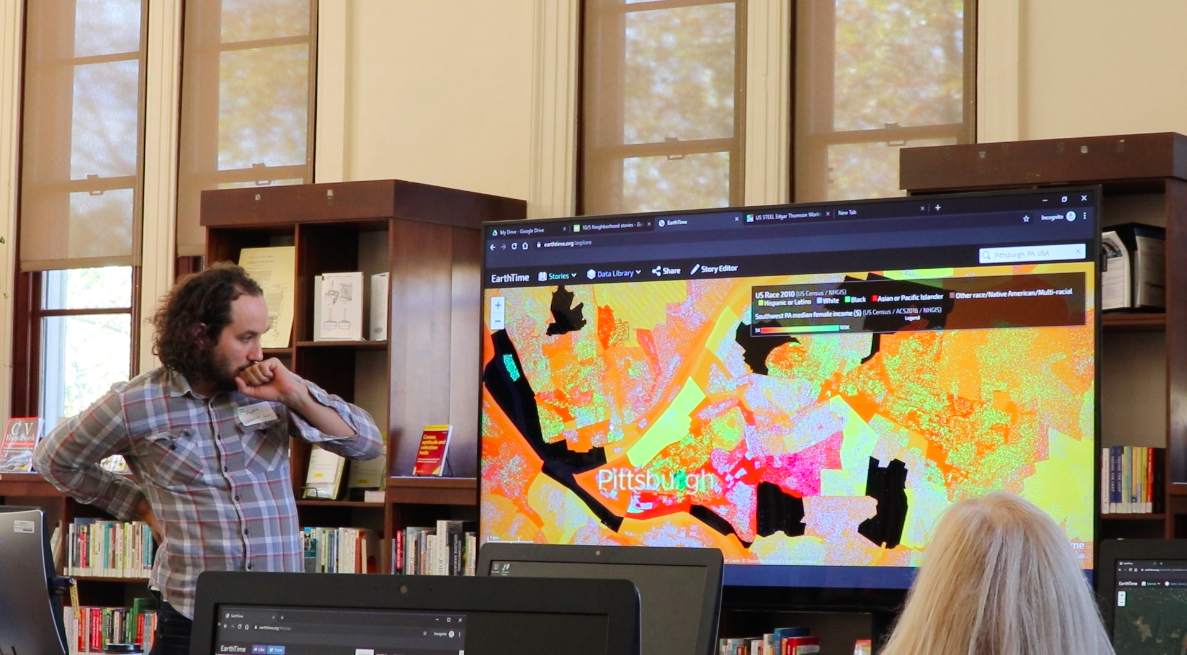
The second event was hosted at Carnegie Library of Pittsburgh as part of the Historic Pittsburgh Fair. In addition to exploring displays from historical societies showcasing their artifacts and photos, educators were invited to a professional development workshop on how to merge the teaching of history with digital map-making tools. The Senator John Heinz History Center presented a lesson on how to use 100-year-old census data with the pin-drop functionality of Google maps to visualize the various nationalities and ethnicities that shaped the city a century ago. CREATE Lab showed teachers how to use EarthTime, an open-source data visualization and mapping program that can use demographic data to identify disparities from one neighborhood to another and provoke educators and students to inquire about the roots of those disparities. Andy Mink, vice president of education for the National Humanities Center, and Sunanna Chand, then director of Remake Learning, gave lunchtime talks on the usefulness of mapping not only for geographic understanding but also as a way to analyze social connections.
Key themes and questions:
● Maps are not just depictions of geography or physical space. They show connections between groups and ideas.
● Who or what is left off of a map can be as telling and important as who or what is placed on the map.
● Where can teachers, students, and community members go to learn more about digital mapping as a tool for understanding history, culture, and society?
Comments from participants:
● “I’d like to see and apply these tools to talk about social justice issues that have historically happened in our community and that are happening now for young people in our schools….Challenging these systems is important to make sure we’re uplifted and affirmed and celebrated and not invisibilized.” —community educator and youth organizer
● “My grandmother is 93 years old and is still alive….We’re capturing oral history and hope to be able to pinpoint them on a map and tell some stories…and that’s great for my nieces and nephews. Grandma tells you something. Imagine the amount of history [she is privy to].” —tech business leader
● “What [our digital landscape] requires is an ethical core. It requires us to understand [our] values and relationships and purposes… and hopefully technology will express that and not the other way around.” —education leader
● “We really need the humanities—the history, the arts—to pair with the technology to create a more just and equitable society.” —education leader
Video of lunchtime key notes at 2nd event.
Video at the end of the 2nd event, about the digital mapping in education.
Crafting Pathways: Makers and the Future of Work in Appalachia
December 4, 2019
The third event in the series, held in Morgantown, WV, focused on the economic and cultural importance of artisans and makers. Pittsburgh has a strong legacy of art and makers; it is also a city at once tied to and separate from the rural communities that surround it. It is important for artisans across the region to have their work validated—by educators, consumers, and the public—but it is potentially a matter of economic survival for the most rural areas, perhaps most in West Virginia. Local makers, social impact investors, educators, and arts organization leaders gathered at a local restaurant to discuss economic and labor market factors leading to the economic vulnerability of residents and how artisans’ and makers’ work builds future-proof skills and a vital craft manufacturing culture.
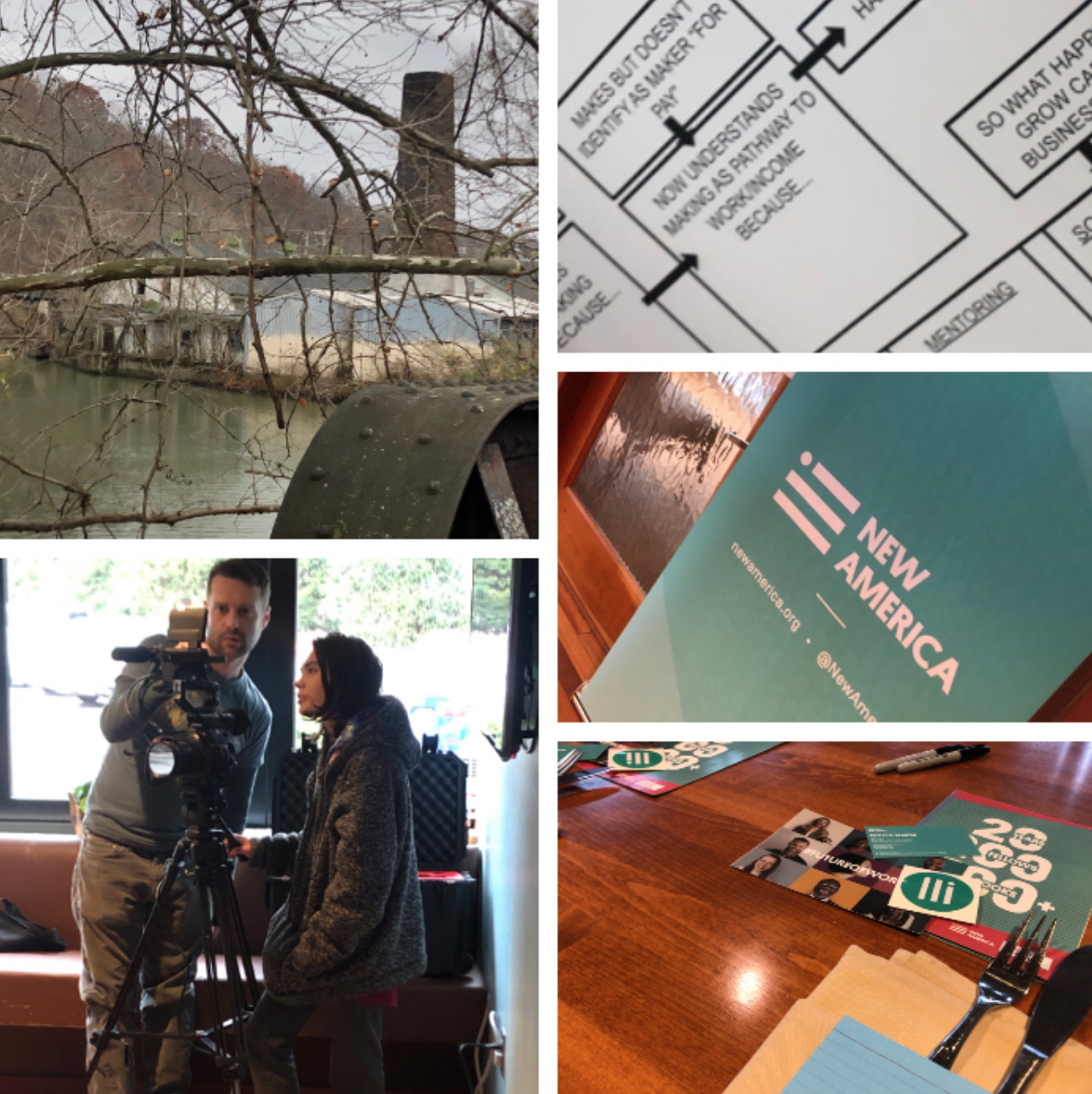
Key themes and questions:
● There is both an appetite and a system support for the credentialing of makers and artisans. But the label “makers” does not always resonate with the makers themselves, and we need a clearer public conversation about the market value and portable skills associated with these creators, as well as how to attract and retain them in the market.
● Beware of “parachute fatigue” in rural spaces: journalists, think tanks, non-local fellowships dropping into the region to fetishize or lecture locals. Participants talked of needing resources and programs to elevate existing programs and leaders, versus replacing them.
● How might rural residents participate in the economy remotely? What cultural and community-building needs must be met in order to make remote work fulfilling and not isolating?
● People value locally-made and/or handmade goods, a demand that more artisans in West Virginia could meet if provided resources to connect to education, platforms, and workspace.
● Do not underestimate the importance of telling stories of hope when you are working for a rural community’s survival. Telling stories and showing success achieved through authentic work is vital.
Comments from participants:
● “There are young people who really want to stay but feel like they don’t have any opportunity.” —economic consultant
● “We have a crisis of hope.” —STEM outreach coordinator
● She makes beautiful works of art,…has two kids, works at Pizza Hut,…has no technological training. If she had a website where she could post her art and this stuff, then people like y’all and all around the world would be paying her a lot of money for her Appalachian art.” —author and activist
● “[When we talk about helping people see themselves as ‘makers’] why start with the word ‘maker?’ It’s been co-opted….We should start by talking about them…the people.” —education leader
For more on makerspaces and collaboratives in the region visit https://remakelearning.org/maker-learning-collaborative/, https://www.monmade.org/ and https://wvmakes.com/