Tabatha Abu El-Haj
Professor of Law, Drexel University’s Kline School of Law
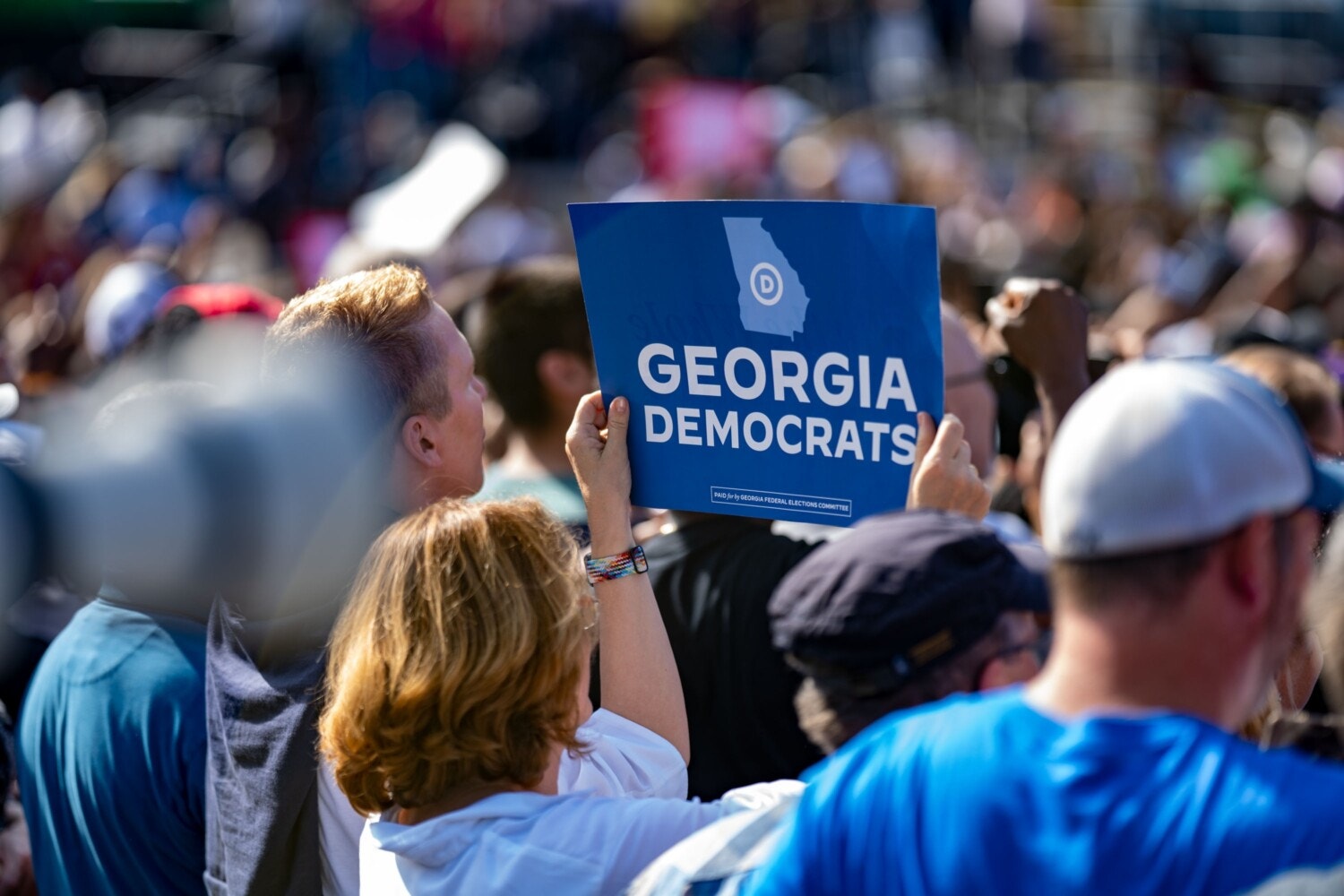
Democrats swept this year’s midterms, including historic statewide wins in Texas and Keisha Lance Bottoms’s victory in the Georgia governor’s race. A favorable national political environment certainly helped, but these victories were also years in the making. In both states, Democrats had spent more than a decade pursuing a strategy of “associational party building” that put them in a position to seize the opportunities of 2026.
Associational parties build power by focusing on associations and on association—that is, on organizations and social capital. Associational parties invest in year-round state and local party organizations that prioritize engaging face-to-face with local civic groups to build the social capital that undergirds electoral mobilization. Then, they use their local knowledge to develop realistic platforms that deliver what voters actually want. In an associational party strategy, political consultants and money have a role, but they are subservient to the party’s on-the-ground work.
Democrats in both Georgia and Texas have been investing in their party infrastructure in exactly this way since at least 2010, as Didi Kuo and I highlighted in our initial work on association party building five years ago. In both states, investment started with activists.
The Texas Organizing Project ran successful local legislative campaigns to enact paid sick leave and bail reform, laying the foundation for Beto O’Rourke’s vibrant but ultimately unsuccessful 2018 senatorial bid. By 2020, these efforts were embedded in state and local parties. In Harris County, home to Houston, Democrats began reviving dormant local Democratic clubs and forming new ones. Clubs facilitated monthly meetings with candidates or elected officials and recruited people to run for precinct-level elected positions. Those efforts paid off this year when the party fielded a candidate for every single state and federal seat, a first in the state’s history for either party.
The evidence of the Democratic Party’s associational party building in Georgia was arguably even stronger under Stacey Abrams. Abrams, a former officeholder and devoted party builder, played an integral role in building the civic and political infrastructure for the Democratic victories in Georgia in 2020. But like in Texas, the associational work started much earlier, in the Obama years, first with a campaign to register voters from minority and underrepresented communities and then with the New Georgia Project, a campaign to enroll Georgians in health insurance through the Affordable Care Act. Abrams and her campaign manager, Lauren Groh-Wargo, moreover, were active proponents of talking with and engaging potential voters about their needs—an approach that shaped the state Democratic Party’s platform.
Politics is a long game, and the associational path to democratic responsiveness is neither straight nor easy. High representative voter turnout, including in off-cycle elections, and a pipeline of strong homegrown party leaders and candidates are both good signs of progress under this approach. Still, without wins, associational party building cannot deliver on much-needed policy responsiveness. As we wrote in 2022, “Political parties must be competitive and win seats in order to pass new policies.”
With respect to Georgia more specifically, we wrote, “Although the Democratic Party of Georgia has clawed itself out of irrelevance, it has yet to achieve electoral successes that can be translated into comprehensive policy gains.” But, we added, “It takes time to recover from two decades of party nonexistence.”
Indeed, it does. Now the task for Bottoms, working with other Georgia Democrats and stakeholders and navigating the Republican-held state Senate, is pursuing the Medicaid expansion, strong schools, and other policies she campaigned on—showing how associational party building can meaningfully change voters’ lives. Texas Democrats will have to do the same.
Professor of Law, Drexel University’s Kline School of Law