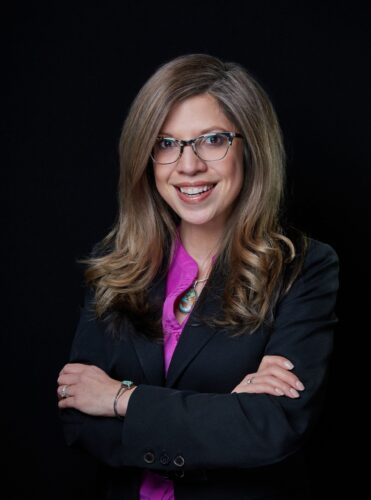
Danila Crespin Zidovsky
Senior Policy and Leadership Specialist
Saul Zaentz Early Education Initiative
This resource is designed for state and local policymakers, agency leaders and staff, and advocates working to establish, design, or strengthen their own dedicated funding streams for early childhood education.



Insights to Action: Perspectives for Early Education Policy and Systems Change is a series produced by the Zaentz Early Education Initiative at the Harvard Graduate School of Education in collaboration with New America. This series surfaces promising early education policy strategies from states, counties, and cities across the country—sharing the approaches leaders are taking, the lessons they have learned, and connections to research—so that policymakers, advocates, and systems-builders can learn from and advance this work.
This resource is designed for state and local policymakers, agency leaders and staff, and advocates working to establish, design, or strengthen their own dedicated funding streams for early childhood education. It draws on interviews with leaders in Connecticut and Kent County, Michigan and on policy research in other jurisdictions. The leadership and implementation lessons we share are grounded in conversations with the people who led the work.
High-quality early childhood education supports children’s healthy development and family well-being, yet funding remains fragmented and insufficient. States and communities are increasingly pursuing dedicated funding streams to create stable, long-term investments that better align with family and provider needs. But dedicated funding is only the beginning. Leaders in Connecticut and Kent County, Michigan emphasize that sustaining it requires stewardship, relationships and coalitions, and transparency—with families, advocates, and political champions—throughout implementation.
Strong early education systems should offer high-quality by design, with coordinated investments that support diverse program types rather than a single model. Fragmented, short-term funding structures leave programs under persistent financial pressure, while the cost of care remains out of reach for many families, particularly those without access to subsidies or other support. Dedicated funding streams offer a more stable foundation—one that better aligns public investment with how families actually use care, and with the operational realities facing providers.
Early childhood funding in Connecticut was fragmented across state agencies, limiting coordination and leaving significant gaps in access—particularly for infants, toddlers, and underserved communities. In 2023, Governor Ned Lamont convened a Blue Ribbon Panel on Child Care, bringing together philanthropists, providers, businesses, families, and advocates. The panel’s work led to Connecticut’s Early Childhood Education Endowment. The endowment is funded through Connecticut’s budget surplus: unbudgeted dollars are deposited into the fund each year and generate revenue through investment. The endowment launched in 2025 with a deposit of $300 million; because only a fixed percentage of the fund can be spent each year, approximately $36 million was available in its first year to expand child care access, improve quality, and support the workforce. In June 2026, the state deposited an additional $320 million into the endowment, bringing the total to $620 million and positioning Connecticut to begin offering no-cost or reduced-cost child care to eligible families as early as July 2027.
Kept the full system in view. Leaders resisted pressure to focus only on preschool, ensuring that infants, toddlers, and the mixed-delivery system were included from the start. As one leader noted: “We knew, as an agency…you can’t bifurcate infants and toddlers out of whatever this expansion proposal is going to look like, because we’ve learned from other states…that it just doesn’t work.”1 The endowment requires that at least 35 percent of new spaces serve infants and toddlers.
Built political and cross-sector support. As one leader put it: “Relationships matter, and trust is key. Without those two things, it’s really very, very difficult to move anything forward.”2 Leaders were committed to showing that community input guided the design at each stage—especially parents’ perspectives. To sustain parent input, they established a parent cabinet, an advisory board to the Office of Early Childhood.
Embedded legislative leadership in endowment governance. The endowment’s advisory board is chaired cooperatively by one state representative, one state senator, and the commissioner of early childhood, giving the legislature a direct stake in implementation. Agency leaders meet regularly with the three chairs, which keeps them involved in planning and spending decisions so they remain invested advocates rather than passive overseers.
Realized the need for strong data systems. Lacking reliable data on family incomes and fees, leaders used census data and supply-and-demand assumptions. They later discovered that nearly 90 percent of families they were serving fell below the $100,000 income threshold for free care—creating a gap of roughly $60 million between initial projections and actual costs. Connecticut has updated its reporting systems to collect the data directly.
Communicated transparently as public demand outpaced capacity. With families and providers awaiting promised benefits, the department held statewide listening sessions to explain the endowment and why expansion takes time. Parent cabinet members also communicated directly with families: ““A lot of times people don’t trust state agencies…they want to hear directly from parents, from people that they trust.”3
Key insight: Connecticut’s endowment is the largest public investment the state has ever made in early childhood education, and a model for how to build sustained funding outside the annual appropriations process. But endowments trade speed for durability: they take time to grow and their returns depend on economic conditions.
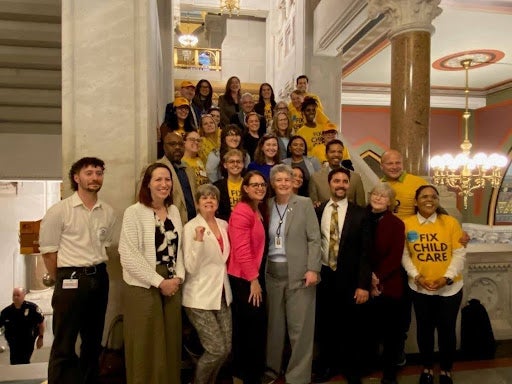
In Kent County, Michigan—home to the city of Grand Rapids and 660,000 residents—a 2017-2018 gap analysis found that roughly half of children under five came from economically disadvantaged communities with significant shortfalls in access to health and early learning. In 2018, county voters approved the Ready by Five Early Childhood Millage, a 0.25 mill property tax levy—$62.50 per year for a home valued at $250,000—dedicated to early childhood services across four areas: early education, parent support, healthy development, and outreach and navigation. Voters renewed the millage for another six years in 2024.
Built broad-based support before going to the ballot. Leaders laid careful groundwork before pursuing a ballot measure, engaging a bipartisan group of prominent community figures who could raise campaign funds and use their personal standing with county commissioners to build the support needed to get the measure on the ballot. As one leader put it: “This is not a sprint. You need to make sure that you have developed the relationships that you need in your community that are whispering in the ears of your county commission.”4
Designed for flexibility and accountability. The millage was structured to adapt to changing conditions. When programs were disrupted by COVID and did not receive millage revenue, funds were redistributed rather than lost, and backlogged dollars were later deployed into the community at a larger scale. As one leader noted, “the policy and the millage were designed so that it could pivot if it needed to.”5
Embedded equity in funding design and measurement. From the start, leaders designated “opportunity zip codes”—areas identified in the gap analysis as having the greatest need—and required organizations applying for funding to specify how they would serve those communities. Data-sharing agreements with funded partners allow First Steps Kent to track reach and impact. By the renewal campaign, leaders were able to show millage-funded programs had served children and families in every zip code in the county.
Demonstrated return on investment. When anti-tax sentiment surfaced during the renewal campaign, leaders showed that Ready by Five-funded programs returned $3 to $12 for every dollar invested and pointed to national recognition of some of those programs. Data also showed statistically significant kindergarten readiness gains for multilingual learners who participated in Ready by Five-funded programs.
Key insight: Kent County’s millage succeeded because leaders understood it as a political effort as much as a programmatic one—building bipartisan relationships before the ballot, then demonstrating the impact needed to renew it. By the second campaign, the network of funded partners had grown large enough to advocate on its own, amplifying what a small group of champions had started.

A few patterns stand out across these examples:
Building endowments for long-term stability. New Mexico’s Early Childhood Education and Care Fund uses oil and gas revenues to generate sustained funding through investment earnings.
Using ballot measures to catalyze large-scale investment. In San Antonio, voters approved a sales tax to fund Pre-K 4 SA, creating a stable local revenue stream for early learning. In Anchorage, Alaska, voters approved dedicating existing marijuana sales tax revenue to child care and early education. In San Francisco, a ballot measure established a commercial rent tax generating approximately $146 million annually for early care and education. In Oakland, California, voters approved a 30-year parcel tax with a goal of universal preschool for 3- and 4-year-olds. Voters in Alameda County, California, also approved a 0.5 percent sales tax in 2020 that will generate about $150 million each year for expanding access to early education, including one-time emergency grants to providers and the implementation of a wage floor of $25/hour for early educators.
Using voter-approved levies to unlock state matching funds. In New Orleans, Louisiana, voters approved a 5 mill property tax levy in 2022 to fund early childhood education for 2,000 children from low-income households annually, raising $21 million in the first year—an amount doubled by state matching funds.
Dedicated funding streams don’t automatically strengthen early childhood systems. Common friction points include:
Consider tracking:
Senior Policy and Leadership Specialist
Saul Zaentz Early Education Initiative
Research Assistant, Policy and Professional Learning
Saul Zaentz Early Education Initiative
Senior Writer and Editor
Saul Zaentz Early Education Initiative
Assistant Director, Learning Design and Communications
SaulZaentz Early Education Initiative