
Building Systems in Tandem
Abstract
In 2018, state leaders in Maine determined that their efforts to support children and their families were hampered by the lack of coordination among key stakeholders—early education and care providers, public school educators, and health and social services providers. Addressing these challenges would require new forms of collaboration both among state agencies and at the local level. In response, they created initiatives designed to work in tandem—a state inter-agency team and a companion initiative in 13 communities throughout the state.
Maine chose to use the First 10 framework to guide and structure this work. First 10 partnerships bring together school districts, elementary schools, early childhood programs, and community agencies to improve the quality and coordination of education and care for young children and their families. They work to improve teaching and learning, deepen partnerships with families, and provide comprehensive services for children and families.
The author provided technical assistance to Maine’s state and local teams in support of this initiative.
Acknowledgments
Many thanks to Lee Anne Larsen, Sue Reed, Nicole Madore, Nena Cunningham, and the members of Maine’s state and local First 10 teams for their invaluable contributions to this study and their work on behalf of children.
The author is also grateful to Laura Bornfreund, Sarah Fiarman, and Elliot Regenstein for their expertise, suggestions, and editorial insight and to Riker Pasterkiewicz, Julie Brosnan, Fabio Murgia, Hana Hancock, and Sabrina Detlef for their assistance in producing this report.
Finally, thanks to Siobhan Murphy, Cindy Taylor, Eileen Caruso, Trisha O’Connell, Shelley Pasnik, Kim Elliott, Pam Buffington, and many other EDC colleagues for their wise counsel and ongoing support.
About Education Development Center
Education Development Center (EDC) is a global nonprofit that advances lasting solutions to improve education, promote health, and expand economic opportunity. Since 1958, EDC has been a leader in designing, implementing, and evaluating powerful and innovative programs in more than 80 countries around the world. Learn more: https://www.edc.org/
Downloads
Foreword
Decades of brain science shows that the early years are critical to children’s long-term health and success. What they learn and understand about the world around them, the relationships they build, and the interactions they have with adults and other children lay the foundation for all future learning. At the same time, we know that more than 1 in 5 young children are living in poverty. Science tells us that high-quality early learning experiences and stable, nurturing relationships with adults can mitigate the harmful effects of poverty. Yet the children who benefit most from high-quality learning opportunities in their earliest years are the least likely to receive them.
While K–12 education has long been referred to as the great equalizer, the quality of children’s education is highly dependent on where they live. Children from families with low incomes and children living in communities of color have the least access to well-resourced public schools. Further, across the country, kindergarten and the first to third grades lie in a “policy dead zone,” meaning states and school districts pay too little attention to the quality of teaching and learning experiences during these critical years of children’s schooling. As a result, many children attend school in early grade classrooms where learning environments and instruction are not in tune with how young children learn best.
Addressing these challenges was difficult before the COVID-19 pandemic. During this crisis and after it, doing so will be even more important and also more challenging. As states and school districts plan for the future and a new normal, ensuring the well-being of young children must be a priority. In addition to the learning loss school communities are concerned about addressing, many children will also need redoubled attention to their social-emotional health, with some experiencing trauma and loss due to the pandemic. Furthermore, as the U.S. becomes increasingly aware of the urgent need to end persistent racial injustice, public schools must examine and strengthen their role in disrupting and addressing disparities in how children of color are disciplined, encouraged, instructed, and represented throughout their education journey, beginning in early childhood. In order to significantly improve outcomes for children, federal, state, and local education agencies need to take a comprehensive, coordinated, and seamless approach to early and elementary education. This means enacting policies that bring together efforts to ensure equity, strengthen teaching and learning, partner more closely with families, and provide services and resources that families say they want and need.
One approach was introduced by David Jacobson of Education Development Center in 2019. His paper, All Children Learn and Thrive: Building First 10 Schools and Communities, offers ideas on policies and practices states and local communities can put in place to implement these actions. In the new paper that follows, Jacobson details his work with the state of Maine to implement his First 10 framework at the state and local level. While the work took place before our current crises, it is an example of the actions needed to take a more comprehensive approach to children’s early and elementary education, which will be crucial going forward.
Executive Summary
How can communities improve, align, and coordinate the programs and services that serve young children and their families across the early childhood and elementary school years? And how can state agencies best guide and support this work?
In 2018, state leaders in Maine determined that their efforts to support children and their families were hampered by the lack of coordination among key stakeholders—early education and care providers, public school educators, and health and social services providers. Addressing these challenges would require new forms of collaboration both among state agencies and at the local level. In response, they created initiatives designed to work in tandem—a state inter-agency team and a companion initiative in 13 communities throughout the state.
Maine chose to use the First 10 framework* to guide and structure this work. First 10 partnerships bring together school districts, elementary schools, early childhood programs, and community agencies to improve the quality and coordination of education and care for young children and their families. They work to improve teaching and learning, deepen partnerships with families, and provide comprehensive services for children and families.1
Maine’s First 10 state team includes representatives from the Departments of Education and Health and Human Services. Its goals are to improve the coordination of programs, generate policy ideas, and provide technical assistance to local communities. Maine's 13 First 10 community teams have developed and are implementing plans that address the full early childhood-elementary continuum. The state team has followed the progress of the local teams, building in opportunities to learn from implementation and collecting suggestions from local leaders that have informed its working agenda.
Three themes have emerged from the planning and implementation activities of Maine’s 13 First 10 communities. Many created new structures to significantly deepen family engagement and support—often using school-based play and learn groups to begin building relationships with and supporting families well before children enter kindergarten. Most First 10 plans address the “seam” between early childhood and K–12 education, both instructionally and in terms of information-sharing about students. And many plans integrate efforts to improve pre-K and kindergarten teaching and learning into broader school and district initiatives to improve elementary school instruction more generally.
Maine’s First 10 teams encountered a number of challenges, including identifying and accessing service providers in rural areas and funding staffing arrangements to facilitate the First 10 teams and help carry out planned activities.
A year and a half into Maine’s First 10 initiatives, several lessons are becoming apparent that have implications for the design of similar initiatives in other states and communities.
- Maine’s experience demonstrates that First 10 strategies can be adapted to both urban and rural contexts and to meet the needs and budgets of a wide range of communities.
- Rural teams gravitated to elementary school hub models that provide integrated supports to children and families beginning before children enter kindergarten and continuing through elementary school.
- A number of Maine’s First 10 teams developed especially strong partnerships between school districts and local Head Start programs, partnerships which yielded a wide range of benefits and led to significant changes in practice.
- To be successful teams needed to actively manage their plans, addressing obstacles and coordination challenges and maintaining the comprehensive nature of their First 10 work.
Maine’s First 10 initiatives created a structure in which the state team was able to support community efforts while learning from their experiences. This collaboration between the state and local teams has helped pinpoint needed policy changes and technical assistance strategies, such as providing state guidance to local school boards, streamlining licensure, continuing to facilitate cross-community learning and exchange, and identifying and coordinating comprehensive services, especially around mental health.
Maine’s experience has generated lessons about aligning early childhood education, K–12 education, and health and social services. It represents one state’s approach to connecting state and local system-building in a coordinated way so that the two efforts inform and support each other. As such, it may prompt similar creative thinking about this type of coordination in other states and communities.
*The author provided technical assistance to Maine’s state and local teams in support of this initiative.
Citations
- David Jacobson, All Children Learn and Thrive: Building First 10 Schools and Communities (Waltham, MA: Education Development Center, 2019).
Designing Complementary State and Local First 10 Initiatives
Many communities throughout the state of Maine, urban and rural, face significant challenges in improving educational outcomes for children, including poverty, unemployment, opioid misuse, and trauma. These challenges will become even more acute in the aftermath of the COVID-19 pandemic and the widespread closures of schools and early childhood programs. In 2018, state leaders in Maine identified ways in which their efforts to support children and their families were impaired. According to Lee Anne Larsen, the early learning team coordinator at the Department of Education (DOE), the biggest obstacle has been the lack of coordination among the various stakeholders—early education and care providers, public school educators, and health and social services providers—who often do not realize how much their aims overlap and the potential for sharing resources. As a result, families struggle to navigate the transition from early childhood services to the K–12 system; early childhood providers often do not have well-established connections to public schools and may feel powerless to smooth these transitions; and public school educators are unaware of resources they could draw on to build relationships with families and better support them. Besides hampering progress, the absence of coordination can lead to frustration and finger-pointing all around.
“In partnering, we stand a better chance at building a systemic approach,” says Larsen. Her view is consistent with a growing research consensus. In 2015, the National Academy of Medicine’s Transforming the Workforce report summarized decades of research and concluded that improving outcomes for young children requires: (1) successive years of high-quality education and care that span early childhood and elementary school, (2) coordination between early childhood programs and elementary schools to ensure alignment and well-organized transitions, and (3) coordination of the education, health, and social services that serve young children and their families.1
For Maine, putting this view into action has raised two critical questions, which take on even greater importance in addressing opportunity gaps in the aftermath of the COVID-19 pandemic and widespread closures of schools and early childhood programs:
- How can communities improve, align, and coordinate the programs and services that serve young children and their families across the early childhood through elementary school years?
- How can state agencies best guide and support this work?2
Beginning in 2018, Larsen and Sue Reed, the DOE’s early childhood specialist at the time,3 determined that they would address these two questions in tandem, and they created complementary initiatives—a state inter-agency team and a companion initiative in 13 communities throughout Maine.
Larsen explains the rationale that underlies Maine’s two-level state and local approach: “Our hope was to build better capacity at the state level to continue supporting the design and expansion of First 10 communities after the grant funding was gone while at the same time forging stronger coordination across state agency programs.”
Maine chose the First 10 framework to guide and structure this work.4 The state’s experience has generated a wealth of new lessons about aligning early childhood education, K–12 education, and health and social services. This experience represents one state’s approach to connecting state and local system-building in a coordinated way so that the two efforts inform and support each other. As such, it may prompt similar creative thinking about this type of coordination in other states and communities.
First 10 Schools and Communities
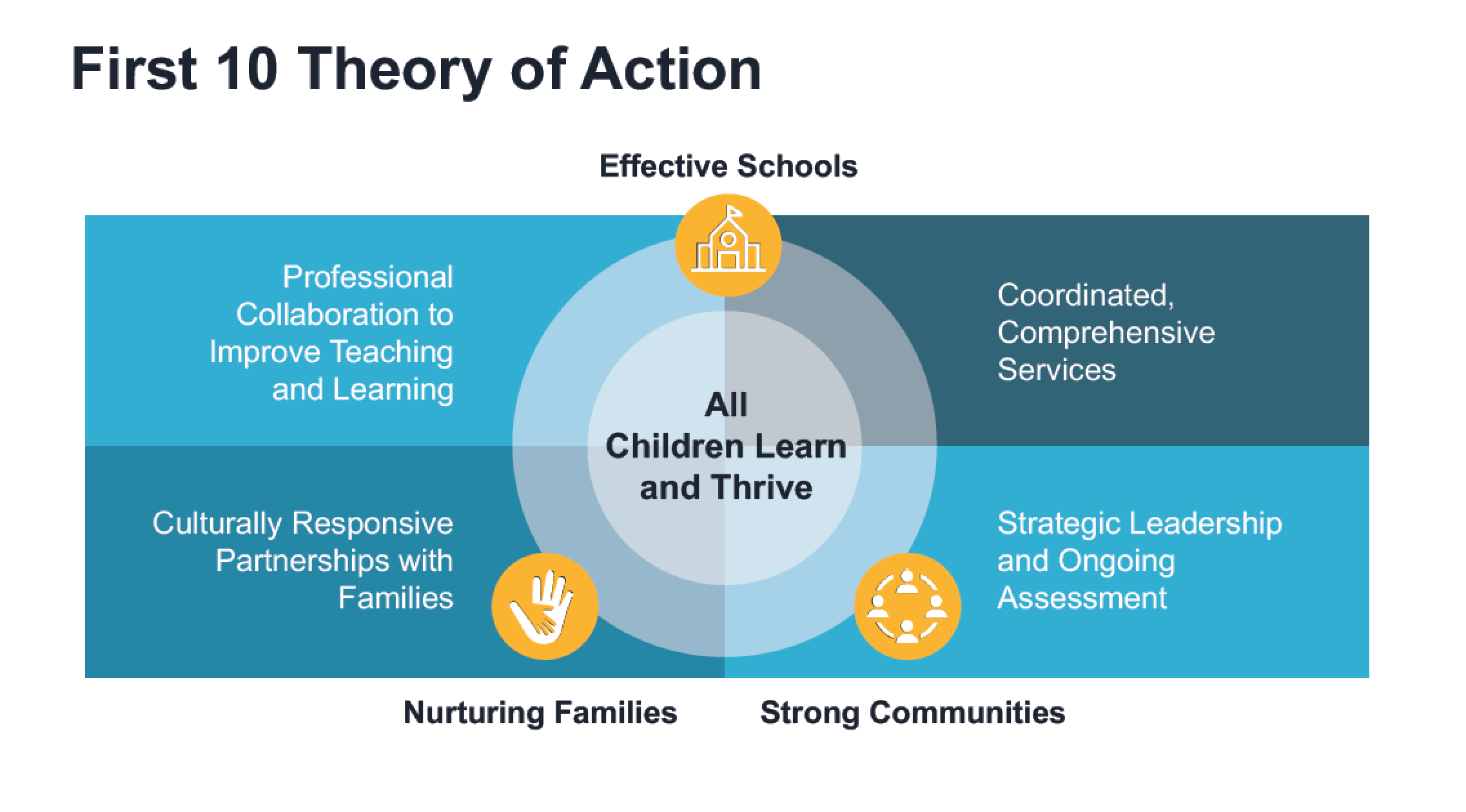
First 10 partnerships bring together school districts, elementary schools, early childhood programs, and community agencies to improve the quality and coordination of education and care for young children and their families. These partnerships conduct needs assessments and then build plans around four broad strategies to address the needs of their communities:
- Support professional collaboration to improve teaching and learning
- Coordinate comprehensive services for children and families
- Promote culturally responsive partnerships with families
- Provide strategic leadership and ongoing assessment
Typical First 10 practices include providing school-based play and learn groups, coordinating connections to health and social services, improving the quality of early childhood programs, coordinating the transition to kindergarten, conducting joint pre-K and kindergarten professional development, and improving early grades curriculum and instruction.5
First 10 draws on a long history of research on transitions, early childhood system-building, and community schools; on the contemporary P–3 and community schools movements; and in particular on the work of pioneers such as Sharon Lynn Kagan, Kristie Kauerz, Robert Pianta, Sharon Ritchie, and Ruby Takanishi.6
The Context: Expanding High-Quality Prekindergarten in Collaboration with School Districts
At the time this project was designed, Maine was approaching the fourth year of its federal Preschool Expansion Grant (the first round of these “PEG” grants). Thirteen communities had formed small teams that included different configurations of school and/or district leaders, pre-K and kindergarten teachers, and Head Start administrators. These teams had managed the expansion of high-quality preschool classrooms in each community.
As the DOE’s early childhood specialist, Reed had been overseeing the PEG program. She was pleased with the expansion of preschool classrooms and the intensive professional learning for teachers that had accompanied the expansion, but consistent with Larsen’s observations, Reed had concerns about the lack of coordination of programs and services. Kindergarten teachers were impressed with the skills and knowledge of routines that the children from PEG classrooms brought to kindergarten, yet the transition was still difficult as a result of large differences in curriculum and instruction across the two settings. The transition for children who had not participated in pre-K was even harder.

Further, the children and families participating in the PEG classrooms benefited from extensive family services and linkages to comprehensive health and social services. These supports were often no longer provided in kindergarten. Many districts were not connected to regional providers of such services, which was especially problematic in rural areas where such services are scarce. Finally, Reed was aware that many children were not experiencing any programming during the critical age 0–3 years, a gap she was eager to see filled.
As early childhood–elementary school collaboration was a requirement of the PEG grants,7 and with these considerations in mind, Reed and Larsen decided that developing and implementing what would eventually be called First 10 plans would be the primary new focus of the fourth year of these PEG grants (which were later extended).
Maine’s State Inter-Agency First 10 Team: Collective Learning, Coordination, and Policy
Maine’s First 10 state team is designed to connect the various offices across the DOE and DHHS that impact children and families. Representatives include the DOE commissioner’s chief of staff, the DOE’s chief innovation officer, the state Children’s Cabinet coordinator, the Head Start collaboration director, and representatives from the offices of child care, early intervention, student support services, behavioral health, literacy, and math, among others.
The team began with collective learning. The group reviewed relevant research on early childhood—elementary school collaboration, community schools and integrated student supports, and the First 10 approach. Team members shared information about the programs and initiatives they administer in order to identify the full range of resources available as well as opportunities for improved coordination.

The team also wanted to learn about relevant work underway in Maine and elsewhere. Members organized presentations by a community school site manager, the leader of a rural trauma-informed program, two of the 13 participating Maine PEG communities, and the state Head Start collaboration director, who presented on the role of Head Start family service coordinators. Joan Wasser Gish from Boston College’s Center for Optimized Student Supports presented on state efforts around the country to expand integrated student supports. As this list suggests, interest in community schools and integrated student supports emerged as a strategy for better meeting the health and social service needs of children and families.
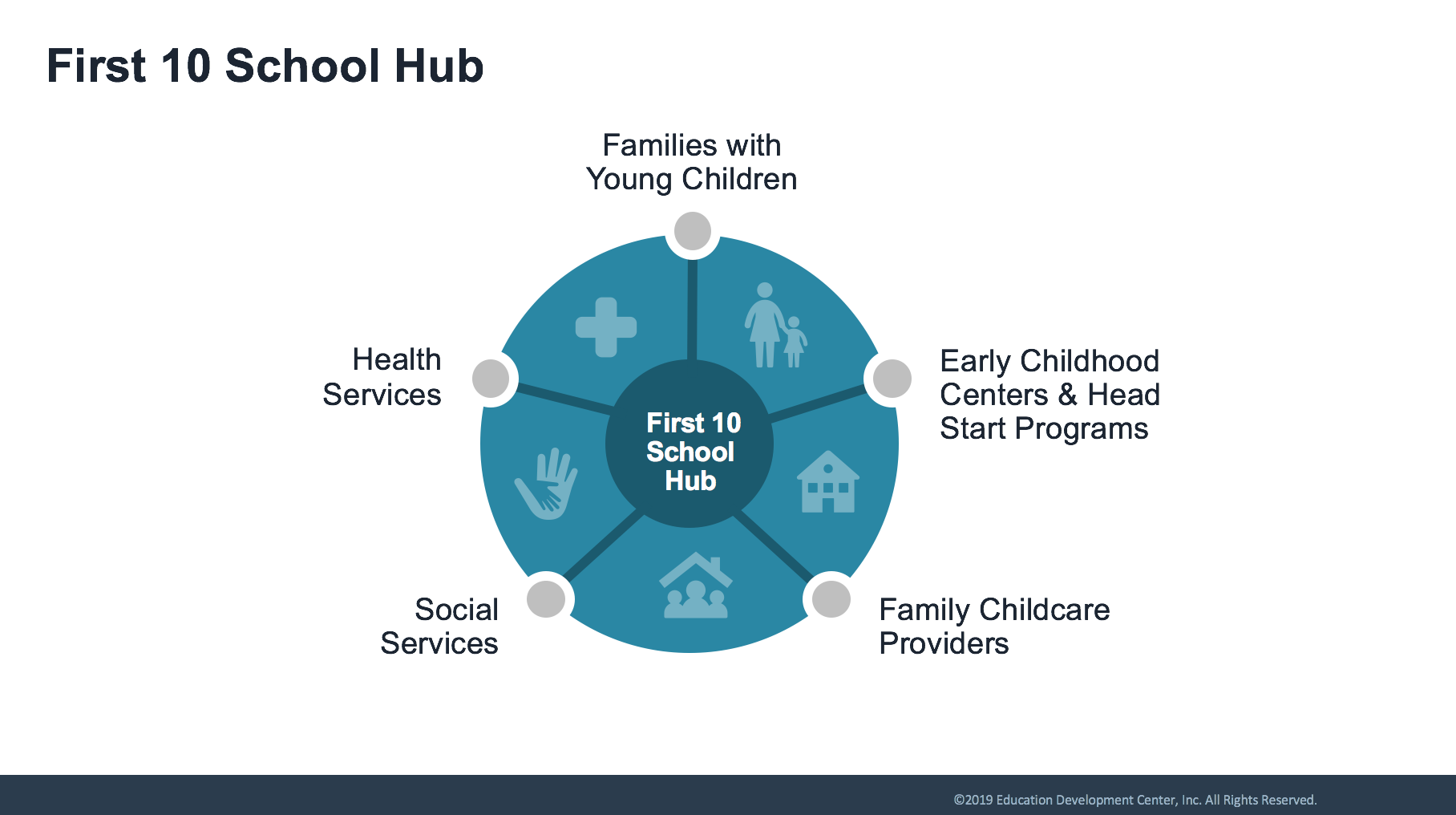
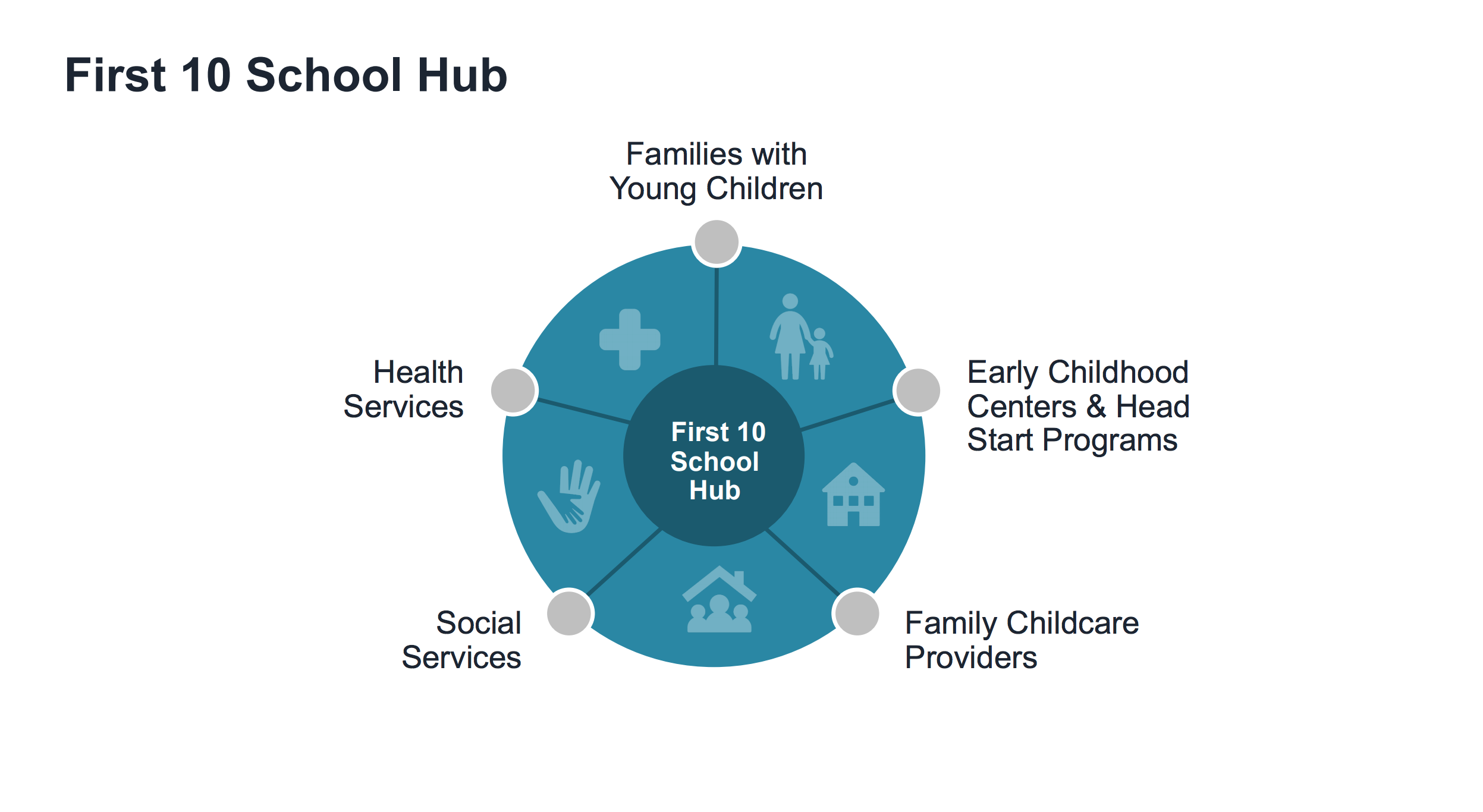
The state team discussed a variety of policy and technical assistance strategies to support local First 10 implementation and the provision of comprehensive services more generally, generating ideas that have been shared throughout their respective agencies and with their respective commissioners. The team determined that the First 10 school hub model—in which integrated student supports are provided to children and families beginning before children enter kindergarten and continue throughout elementary school—would be particularly helpful in the state’s many rural settings (to see school hub model, click here or see full description in section 5). The team has begun to engage in conversations with DOE’s legislative liaison and the chief innovation officer about how future legislation might be shaped to best support First 10 school hubs. The First 10 team also serves as an organizational platform for responding to federal funding opportunities.
Finally, a central component of the First 10 team’s work has been to monitor the progress of the 13 First 10 community initiatives and learn from their implementation.
Policy Suggestions from 13 Communities
As a concrete example of the complementary nature of Maine’s state and local approach to First 10, 13 communities from across the state came together in May 2019 with members of the state First 10 team. Each community had followed a common planning process to develop and begin implementing First 10 plans. The state team members engaged with community teams as they presented their plans and what they were learning as they implemented them. The local teams also suggested how state policy and technical assistance could support strategies in a session explicitly designed for this purpose.
The following themes emerged from these suggestions:
Provide state guidance and communication
- Communicate the important message that schools cannot do it alone: it takes a village.
- Help communicate to local education committees the importance of a focus on the early years and collaboration with early childhood programs.
Streamline policy
- Streamline licensure procedures across schools and providers.
Facilitate learning and exchange
- Facilitate ongoing community-to-community learning and exchange.
- Support administrators in better understanding pre-K teaching, learning, and care.
Support comprehensive services
- Create a state directory of services available across state agencies.
- Designate regional one-stop liaisons to aid in resource referral.
- Facilitate closer connections between school districts and regional DHHS offices.
- Help improve early intervention capacity.
Provide targeted support for mental health and trauma
- Provide professional learning opportunities for all staff on supporting student mental health needs, including summer institutes.
- Provide additional mental health and social-emotional health services.
These suggestions have helped inform the state team’s working agenda, demonstrating the benefits of Maine’s two-level approach. Moving forward, additional priorities include developing a state First 10 website and funding and designing a next-generation First 10 initiative that includes support for local First 10 coordinators. The implementation experience of Maine’s 13 First 10 community teams, the companion initiative to the state team, is described below.
Citations
- LaRue Allen and Bridget B. Kelly, eds. Transforming the Workforce for Children Birth Through Age 8: A Unifying Foundation (Washington, DC: The National Academies Press, 2015), source
- For more on the relationship between state and local efforts to coordinate early childhood and elementary school programs and services, see David Jacobson, Building State P–3 Systems: Learning from Leading States (Washington, DC: Center for Enhancing Early Learning Outcomes, 2016).
- Reed has since retired. Nicole Madore is currently Maine’s early childhood specialist.
- The author provided technical assistance to Maine’s state and local teams in support of this initiative.
- Jacobson, All Children Learn and Thrive. For more information on First 10, see David Jacobson, source">Four Strategies for Getting the First 10 Years of a Child’s Life Right. Education Week, February 4, 2020, and EDC’s source">First 10 Theory of Action (website).
- Sharon Lynn Kagan and Kristie Kauerz, Early Childhood Systems: Transforming Early Learning (New York: Teachers College Press, Columbia University, 2012); Sharon Ritchie, Kelly Maxwell, and Richard M. Clifford, “FirstSchool: A New Vision for Education,” in School Readiness and the Transition to Kindergarten in the Era of Accountability, ed. Robert C. Pianta, Martha J. Cox, and Kyle Snow, 85–96 (Baltimore, MD: Paul H. Brookes Publishing, 2007); Ruby Takanishi, First Things First! Creating the New American Primary School (Alexandria, VA: National Association of Elementary School Principals, 2016); Kristie Kauerz and Julia Coffman, Framework for Planning, Implementing, and Evaluating Prek–3rd Grade Approaches (Seattle, WA: College of Education, University of Washington, 2013); Lisa Guernsey and Sara Mead, A Next Social Contract for the Primary Years of Education (Washington, DC: New America, 2010); Laura Bornfreund, Elise Franchino, Amaya Garcia, Aaron Loewenberg, Cara Sklar, and Kristina Ishmael, Supporting Early Learning in America Policies for a New Decade (Washington, DC: New America, 2020); and John Rogers, Community Schools: Lessons from the Past and Present (Flint, MI: Charles S. Mott Foundation, 1998). For more on this history, see All Children Learn and Thrive, pages 4–11 and 62–64.
- Following the language of the Preschool Expansion Grant, originally the Maine DOE used the term “B–3” to refer to this initiative. The state team has now switched to “First 10,” which I use throughout this series.
First 10 in Action in Maine Communities
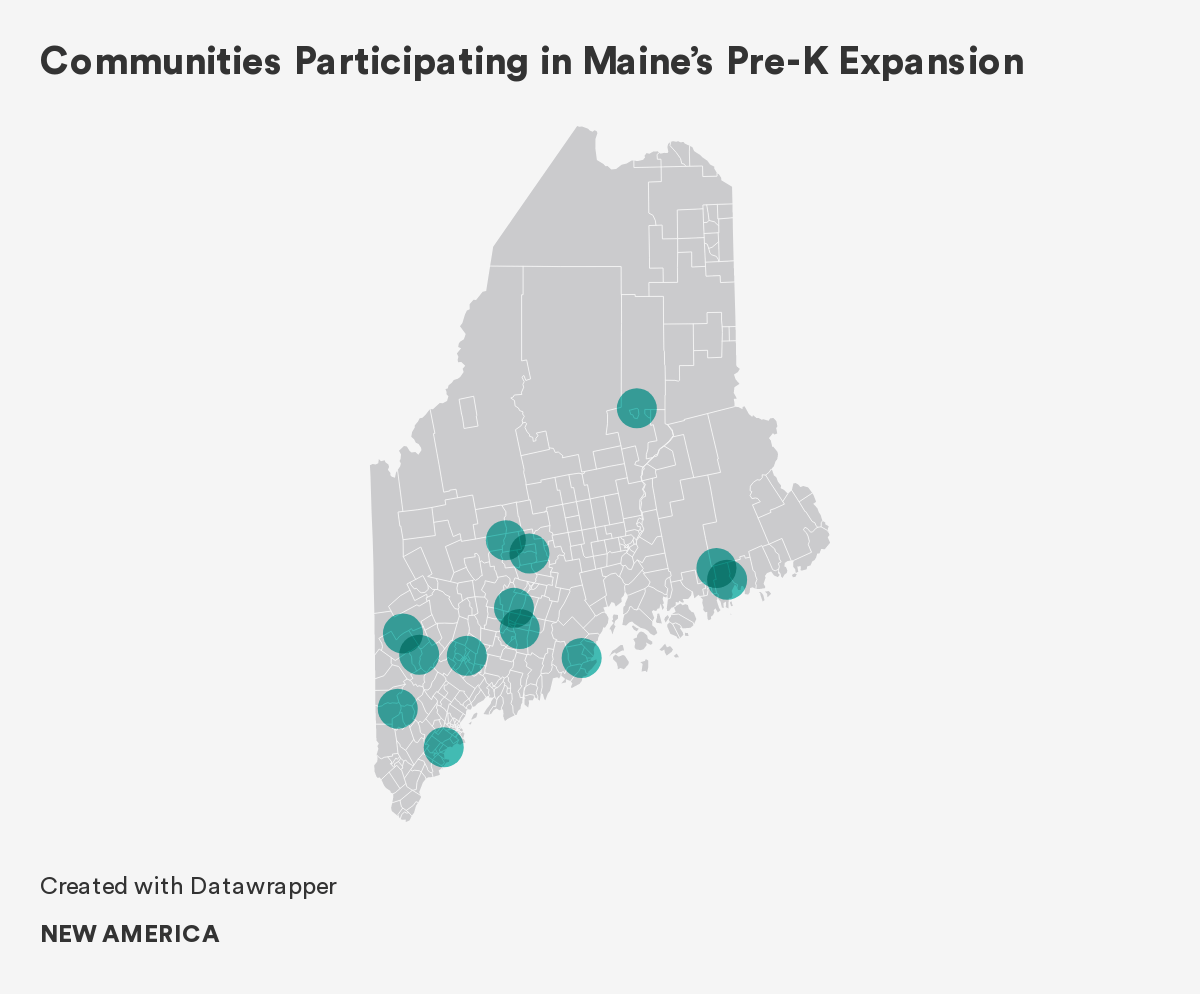
Most of the 13 communities that participated in Maine’s pre-K expansion and First 10 initiatives are rural and relatively small. Many have been impacted by paper mill closures. Some are single elementary school districts in which the school is an important community hub; others are communities with four to five elementary schools spread out over large geographic areas. The one exception, however, is the city of Lewiston, which faces acute urban challenges associated with a distressed economy and an influx of refugees from war-torn countries. All the participating communities, however, serve significant numbers of families who are experiencing high poverty, many of whom are experiencing significant trauma, and who live in environments buffeted by Maine’s opioid epidemic and related hardships.
Integral to First 10 partnerships’ work building more coherent systems is a structured planning and plan implementation process. Each of Maine’s 13 First 10 community teams began this process by assessing local needs. The plans address each stage of the early childhood–elementary school continuum (i.e., ages 0 to 3, 3 to 5, and 5 to 10). They include strategies to improve teaching and learning, deepen partnerships with families, and provide comprehensive services to children and families. Within these packages of strategies, of course, communities may have particular areas of initial emphasis. For some, addressing trauma and/or engaging and supporting families may have been the first, most pressing priority while others focused initially on academic challenges in the early grades.
Each community constructed its initiatives and strategies in different ways. For instance, Lewiston was in the midst of a crisis of child and adult trauma as well as a merger of two elementary schools. Its plan combined an initial focus on social-emotional and trauma-informed teaching and learning, self-care supports for educators, increased supports for families, and deep collaboration between the district and the Head Start program on classroom quality and professional development. These first strategies are intended to lead to an increased focus on transitions and alignment across the early grades over time.
As another example, Sacopee Valley, a rural district in western Maine serving five small rural towns, structured its plan around four broad initiatives, each further defined through specific strategies:
- Improve family engagement and supports for children 0–8 and their families
- Continue providing a high-quality pre-K program
- Improve transition of all learners to kindergarten
- Improve classroom teaching and learning in the PreK–third grades
Key components of the first year of implementation for Sacopee Valley, as discussed further below, included:
- Collaboration between pre-K and kindergarten teachers and between pre-K and kindergarten children
- Collaboration between the school district and community-based preschools
- Comprehensive wraparound support services for families
- A new series of play and learn groups jointly organized by the school district and the public library with significant input from pre-K teachers
- Work in teacher professional learning communities on using data, determining essential standards, and improving literacy and math instruction in the early grades of elementary school
Three Emerging Themes
Three themes have emerged from the planning and implementation activities of Maine’s 13 First 10 community teams. Many created new structures to significantly deepen family engagement and support, often using school-based play and learn groups to begin building relationships with and supporting families well before children enter kindergarten. Most First 10 plans address the “seam” between early childhood and K–12 education and care, both instructionally and in terms of information-sharing about students. And many communities integrated efforts to improve pre-K and kindergarten teaching and learning into school and district initiatives to improve elementary school instruction more generally.
Creating New Structures to Engage and Support Families with Young Children
Reaching families with young children before the children enter pre-K and kindergarten emerged as a priority for most of the First 10 partnerships, one around which there was much enthusiasm. In particular, many of the teams were taken by the use of school-based play and learn groups in two First 10 exemplar communities, Multnomah County, Oregon and metropolitan Omaha, Nebraska.
School-Based Play and Learn Groups. Projects in Multnomah County and metro Omaha provide school-based play and learn groups to support children ages 0–5 and their families. The benefits of these programs include not only for the playful learning, information-sharing, and bonding that takes place during the sessions, but also to build relationships and trust with families, break down school-family barriers, and begin connecting families to comprehensive services prior to children’s entering kindergarten. It is helpful to keep in mind that in Maine, the First 10 communities had recently expanded high-quality pre-K through the federal PEG grant. The teams see play and learn groups as a way to reach children and families before pre-K and to reach additional families that are not participating in the new high-quality pre-K classrooms funded by PEG.
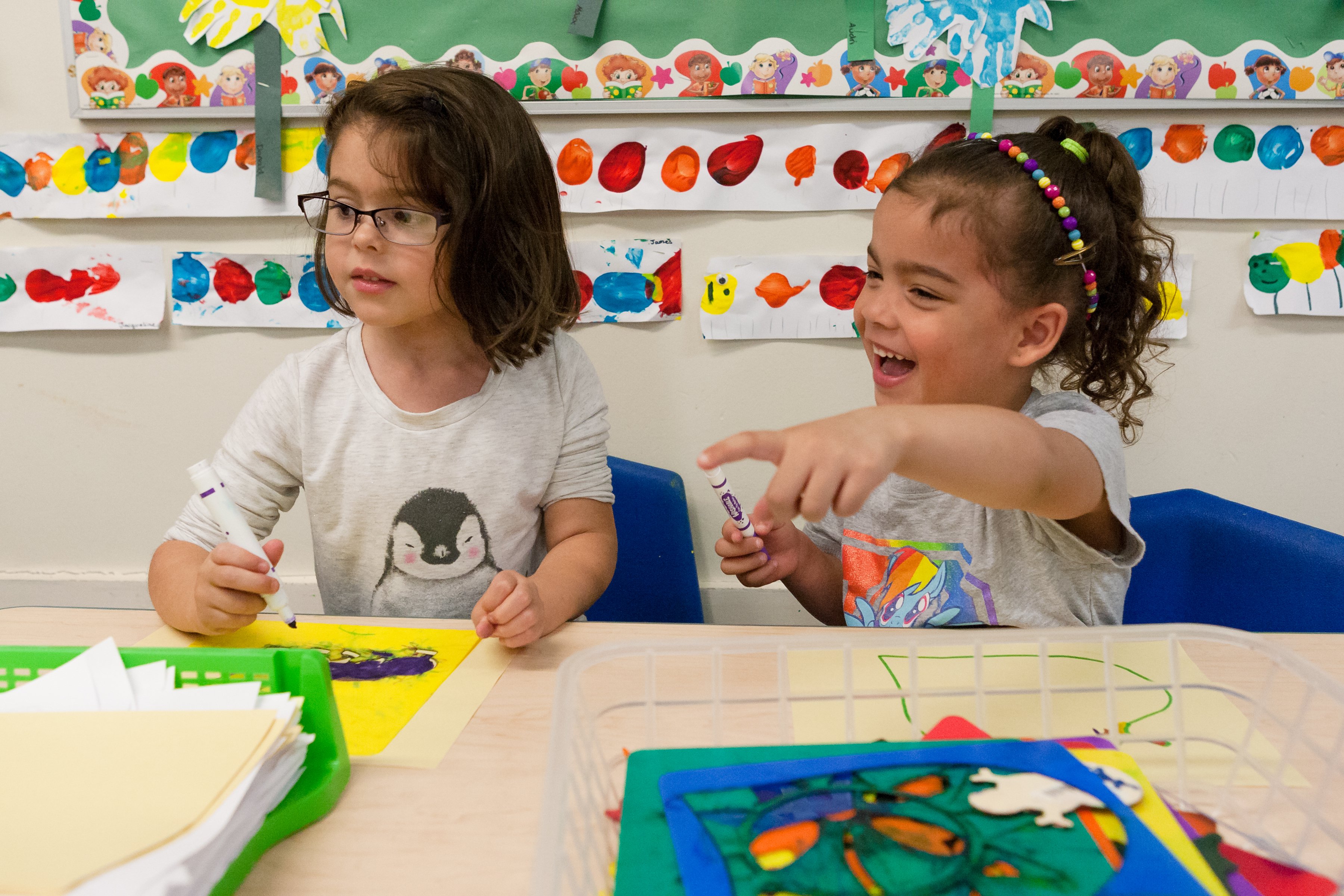
Several of the 13 Maine communities are implementing some form of new play and learn groups. In Millinocket, a small community in northern Maine approximately an hour from Bangor that is challenged by a dearth of social services, the idea of connecting to families well before kindergarten appealed to the First 10 team. The team ran a successful eight-week play and learn group series which families attended regularly and found to be enjoyable and helpful.
A New Library Partnership. Sacopee Valley in western Maine took a different approach to providing play and learn groups. Using the school, family, and community partnerships framework from Epstein et al. to conduct a needs assessment, this team identified a significant need to reach young children prior to kindergarten.1 The First 10 team has established a partnership with the local library, the first significant collaboration between the school district and the library on early childhood. District preschool teachers have partnered with librarians to design the play and learn groups, and the partnership is also sponsoring pajama hours and other family engagement activities. Each play and learn group session includes time, while children play, to share information with parents and caregivers on topics such as literacy, occupational therapy, and speech and language.
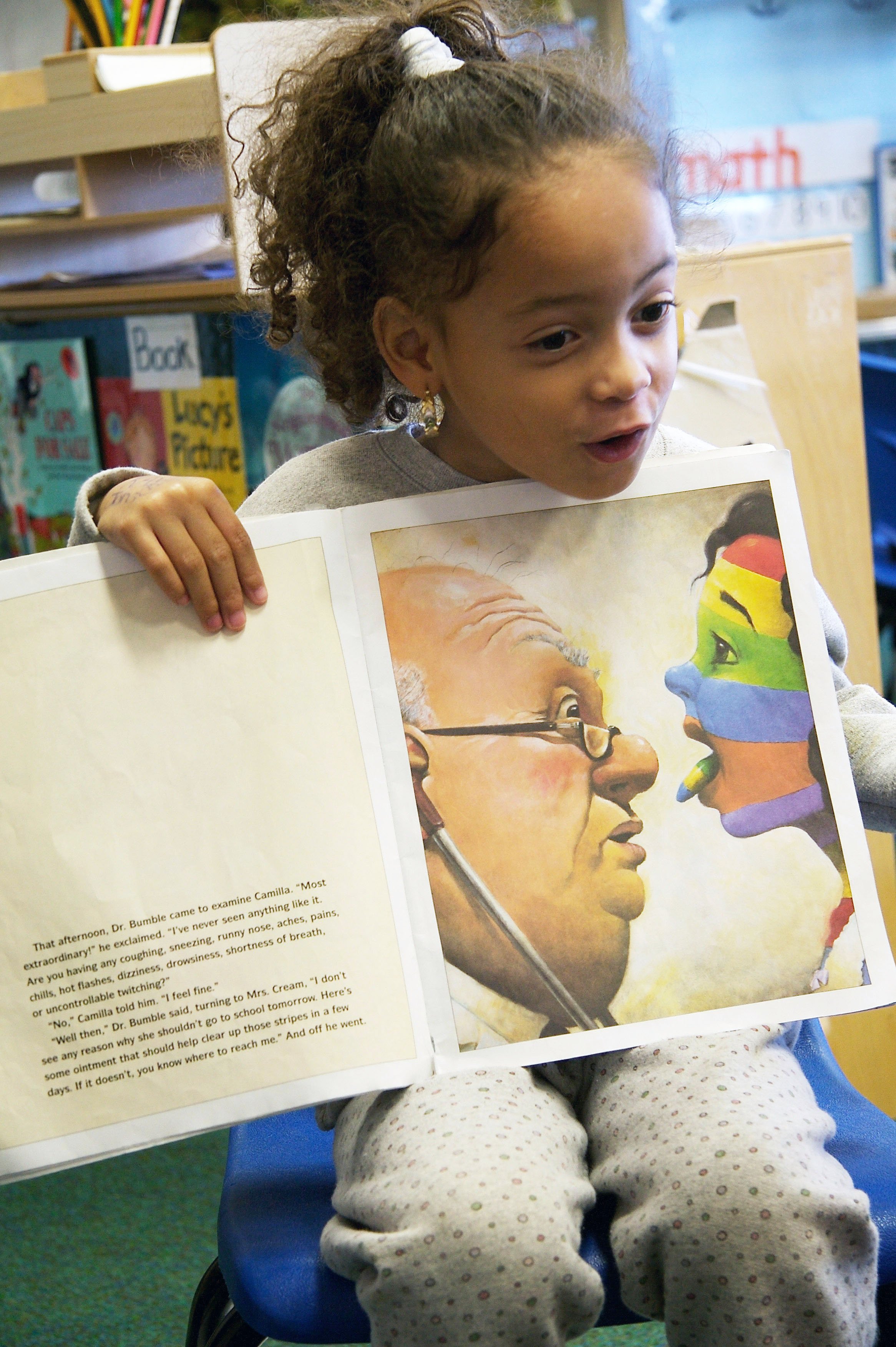
New Family Engagement Structures. Other communities have instituted new structures to serve families with young children. Old Orchard Beach, a coastal community with a low-income year-round population, has created a family resource center and conducted a survey to help determine what kinds of services families most need. Among the supports the resource center is providing are two monthly events for family groups: “Dine and Discuss” evenings, which are parent driven opportunities to connect with each other and discuss topics that they generate; and “Early Learning Matters” events in which staff prepare sessions on topics like building literacy skills.
Yet other communities, including some of the ones most impacted by family trauma and stress, have managed to hire full-time or part-time family liaisons. Lewiston hired a half-time family advocate who works closely with, and is guided by, Head Start’s family advocate, another indication of the value of this partnership. Lewiston is organizing trips to other communities, including the Harlem Children’s Zone in New York City, to inform how it will structure these roles and design family partnership and support strategies.
In another example of a new family engagement structure that also illustrates the value of district-Head Start partnerships, a Head Start agency2 that is part of the Regional School Unit 12 (RSU 12) First 10 team received a grant focused on health. In collaboration with the school district, the Head Start program has offered a health institute that served 100 participating families. The institute addressed oral health and mental health, ran wellness workshops, and provided resources such as children’s books, first aid kits, fire extinguishers, and puppets.
Bridging Gaps: Pre-K and Kindergarten, School and Community
RSU 12 is a rural district in central Maine that serves seven towns and has five elementary schools. Its First 10 team is a partnership between the district and two regional Head Start providers, which manage the PEG pre-K classes in district classrooms. Through its needs assessment, the First 10 team determined that there were significant gaps between pre-K and kindergarten, gaps in instructional alignment as well as in communication about rising kindergarten students. The team also concluded that the district had focused too exclusively on assessment as its kindergarten teachers were implementing the Teaching Strategies Gold assessment and not enough on a broader approach that also includes curriculum expectations and instructional practice.
For these reasons, RSU 12’s First 10 team initiated a major push to align the district’s pre-K and kindergarten classrooms and improve the transition experience for children and families.
“Ghost Walks” as a First Step. The RSU 12 First 10 team determined early on that it would draw on one of the most common initial strategies in transitions and alignment work (whether of the First 10, P–3, or B–3 varieties), and that is to organize classroom observation visits between pre-K and kindergarten teachers to compare instructional practices.3 These visits represented a concrete step away from the district’s initial narrower focus on assessment and towards more emphasis on instructional practice. Yet teachers expressed concern about these classroom visits, finding them, in the words of one administrator, “threatening.” So in response to these concerns, the First 10 team began the classroom visits with “ghost walks,” visits to empty classrooms in which pre-K and kindergarten teachers examined the physical design and the use of wall space, the public-facing aspects of the classrooms. These visits were guided by a protocol of questions: What did you notice? What surprised you? What affirmed or validated your own practice? They led to rich conversations and helped to build trust, setting the stage for subsequent cross-grade classroom visits while teaching was in progress.
While still “scary” for some of the participants, these conversations about observations of live teaching were “very powerful,” according to Director of Curriculum and Technology Deb Taylor. The pre-K and kindergarten teachers identified more similarities in instructional practice than they had expected, bringing to the surface misconceptions about how different the district’s pre-K and kindergarten classes were. The teachers found that in some instances the use of different vocabulary describing practices was obscuring some important underlying similarities in instructional philosophy and approach. These cross-grade visits and resulting discussions began breaking down some of the barriers that had hindered the two grades from moving beyond merely congenial relations to ones that allow for more productive collaboration.
Discussing the Needs of Each Child. Another important component of RSU 12’s alignment and transitions work revolved around communication between pre-K and kindergarten teachers regarding the needs of rising kindergartners. The First 10 partnership between the school district and the Head Start programs expanded the use of transition meetings so that they went from serving only children identified as having disabilities to meetings to discuss the academic and social-emotional needs of all the pre-K children moving up to kindergarten, about two-thirds of the incoming kindergarten class. RSU 12 found the exchange of qualitative observational information about the children to be especially valuable in preparing kindergarten teachers, countering, in Taylor’s view, a tendency to focus on quantitative data only.
School and Community Collaboration. The changing relationship of pre-K and kindergarten teachers in RSU 12 was made possible through the strong collaboration between the school district and the Head Start providers on the First 10 team. This pattern of increasing collaboration between school districts, Head Start programs, and in some cases community-based preschools was pronounced in many of Maine’s First 10 communities. A couple of additional examples suggest how these collaborations extended beyond educators working within the same school.
In Lewiston, for example, the district and the Head Start provider, the Promise Early Education Center, have developed a particularly strong partnership focused on improving quality in their combined pre-K classrooms. Most of Maine’s PEG communities use the OWL (Opening the World of Knowledge) pre-K curriculum. The Promise Early Education Center has much more experience implementing this curriculum, and thus has been able to provide implementation guidance that the district regards as invaluable. Further, the district pre-K coordinator and the Head Start education manager are both certified as reliable on the Teacher Pyramid Observation Tool, which they are using to advance practice as they establish a common approach to social-emotional development and behavior. These two leaders also work hand in hand developing monthly joint professional development workshops and book studies for their teachers. Topics include supporting dual language learners, implementing socially responsive classrooms, and trauma-informed practices.
The pre-K coordinator and the Head Start education manager see this work as building a community across the pre-K classrooms in Lewiston. Future plans for Lewiston include integrating kindergarten into some of the current professional development sessions and developing a district transition-to-kindergarten plan—which in turn is intended to set the stage for further alignment and quality improvement work in the early elementary grades.

Extending Collaboration to Community-Based Preschools. Like RSU 12, Sacopee Valley also organized cross-grade classroom observations between pre-K and kindergarten teachers. As one kindergarten teacher said, “we don’t know what they teach, and they don’t know what we teach.” The teachers found these visits to be “very effective” in communicating the standards each grade covers and how. The team also organized meetings between pre-K and kindergarten teachers to discuss data as well as specific rising kindergartners (with parental permission).
Extending this work, the First 10 team has also reached out to community-based preschools, drawing on existing personal relationships in their small community. They visited each preschool program to deliver a transition form and garner interest in a pizza night to bring together the district and all the preschool programs. Prior to this outreach the district had no information about rising kindergartners from community-based preschools. As one teacher shared, “this is exciting to me as a kindergarten teacher—to know more about these kids. This is huge.”
Improving Teaching and Learning in the Early Grades
Maine’s First 10 partnerships developed strategies to improve pre-K and kindergarten curriculum and instruction while integrating and aligning these two early grades into broader district initiatives to improve elementary school education.
High-Quality Early Grades Curricula. As mentioned above, most of the Maine PEG grantee communities were using the first edition of the OWL pre-K curriculum. Additionally, the Maine DOE is supporting the implementation of a customized version of the Boston Public Schools Focus on K2 kindergarten curriculum in a number of communities, including two that also participated in the PEG grant. Boston’s kindergarten curriculum was developed to be in alignment with its version of the OWL curriculum. The kindergarten curriculum initiative is called Kindergarten for ME, and Old Orchard Beach and Oxford Hills have integrated Kindergarten for ME into their First 10 plans and are working to support its successful implementation in their district classrooms. The DOE is hopeful that as the Kindergarten for ME initiative expands, additional First 10 communities will adopt it and integrate it into their plans.
Integrating Prekindergarten into Elementary School Improvement Efforts. In addition to working to improve pre-K and kindergarten teaching and learning through the use of high-quality curricula, a number of Maine’s First 10 partnerships made significant strides in integrating pre-K—in developmentally appropriate ways—into elementary school improvement plans.4 RSU 12’s efforts to align pre-K and kindergarten, discussed earlier, led to integrating pre-K into elementary schools more generally. At the prompting of its Head Start partners, RSU 12 identified numerous school structures that did not include pre-K, such as the school’s early grades vertical meetings and its Response to Intervention handbook. Deb Taylor, director of curriculum and instruction, reflects on her community’s integration of pre-K, saying, “we were forever coming up against a failure to include that wasn’t at all purposeful. We had leadership structures that excluded [pre-K] classrooms down the hall. This was a big take-away. It required a degree of mindfulness and intentionality. It took a year. Every structure had to be re-examined.”
Similarly, Oxford Hills has integrated pre-K into district-wide instructional improvement initiatives focused on prioritizing and unpacking standards. Pre-K teachers in Sacopee Valley now participate in the same improvement activities as the teachers in other grades: data meetings, determining essential standards, and literacy and math initiatives.
As a final example, Old Orchard Beach uses a common behavioral assessment tool across pre-K through first grade and has developed a pre-K to grade 12 scope and sequence document. Further, Old Orchard Beach has a strong commitment to using the CLASS observation tool for coaching purposes in all elementary school classrooms. The district has integrated pre-K into this work. In doing so, it is developing a common language and common expectations about quality teaching and learning based on the CLASS tool’s emphasis on teacher-child interactions and its three domains: emotional support, instructional support, and classroom organization.
The First 10 planning process also provides communities with an opportunity to take stock of current elementary school teaching and learning initiatives, determine next steps, and ensure that instruction is aligned and transitions are coordinated across all the elementary school grades. Lewiston, for instance, plans to continue its transitions and alignment work up through the grades over time. Given the structure, composition, and original preschool expansion aim of Maine’s PEG teams, its improvement efforts—thus far—have focused more on improving and aligning pre-K and kindergarten and integrating these grades into existing elementary school instructional improvement initiatives rather than making more fundamental changes to teaching and learning in the grades above kindergarten.
Citations
- Joyce L. Epstein et al., School, Family, and Community Partnerships: Your Handbook for Action, 4th ed. (Thousand Oaks, CA: Corwin Press, 2018).
- The Southern Kennebec Child Development Corporation Head Start.
- Jacobson, All Children Learn and Thrive.
- For more on the challenge of integrating district pre-K classrooms into elementary school programming and elementary school communities, see pages 47–48 of All Children Learn and Thrive.
Key Takeaways: Learning from Maine’s Experience
While Maine’s First 10 state team was assessing their agencies’ collective programs, resources, and policies, Maine's 13 First 10 community teams conducted needs assessments and developed First 10 plans. Despite local differences, commonalities emerged. Communities created new structures like play and learn groups, family resource centers, and family liaison positions to engage and support families with young children, often well before children enter kindergarten and often connecting families to health and social services. They worked to align their new high-quality PEG pre-K classrooms and kindergarten instructionally and improve information about rising kindergarteners within elementary schools while in some cases also supporting collaboration across district, Head Start, and community-based preschool educators located in separate buildings. And they integrated pre-K and kindergarten into elementary school instructional improvement initiatives focused, for instance, on using standards and data to guide teaching and learning, response-to-intervention, and/or literacy, math, or social-emotional standards.
A year and a half into Maine’s combined state and local First 10 initiatives, a number of challenges and lessons are becoming apparent, all of which have implications for the design of similar initiatives in other states and communities.
Challenges
Structuring Teams for First 10
Although birth-to-third-grade alignment was one of the six original goals of the first PEG awards, the primary focus of the PEG teams was pre-K expansion, and the teams were configured for that purpose. Almost all of the 13 communities embraced the First 10 initiative wholeheartedly, yet a few were not ideally configured to design and implement First 10 strategies (i.e., they didn’t have the right district and community-based leaders at the table). For instance, in a couple of instances, an early childhood coordinator or principal was not able to engage elementary school leaders located in other district buildings. Likewise, the initial composition of the teams did not include community-based preschool educators and addressing the quality of early grades teaching and learning was not part of the teams’ original charge. Moving forward, Maine’s state First 10 team would like to create a grant opportunity specifically for First 10 partnerships and configure the teams accordingly.
Staying Comprehensive
As is common in ambitious initiatives of all types, several of the Maine communities became especially excited about one of their initiatives and/or strategies and then lost track of some of the others. For instance, in some communities addressing trauma in children and families became a big priority, and as a result teaching and learning strategies received less attention. Focusing more on family engagement and less on improving teaching and learning is a common initial dynamic in early childhood-elementary school partnerships.1 Maine’s technical assistance to the communities included regular plan management check-in meetings, which helped the teams maintain the comprehensiveness of their plans while allowing them to sequence and prioritize strategies according to their needs.

Identifying and Accessing Service Providers
The paucity of health and social services in rural Maine is a problem common in many rural areas in the United States. In some cases there are providers that serve communities, but due to Maine’s overlapping service jurisdictions (i.e., district, county, and other geographical units of service provision), districts were not aware of the available offerings, a problem the partnerships can address with state support. In other communities, the services were simply not available. For this reason, both the Maine First 10 state team and many of the community teams are interested in providing integrated student supports, including to children ages 0 to 4 and their families, through First 10 community school hubs.2
Staffing
Both the state team members and the community teams identified staffing as a challenge for First 10 teams. Often the team leader or convener was a district leader with many other responsibilities. The state team determined that establishing dedicated staff time to support the coordination and implementation of the First 10 plan and/or to help coordinate health and social services for families (particularly in the First 10 school hub model) is a priority.
Encountering Turmoil
A couple of communities encountered major changes or challenges that slowed down the implementation of their plans. Lewiston merged the pilot First 10 elementary school with another school while addressing severe trauma in parts of its community. Another community faced an unusual amount of staff turnover in a short period of time. First 10 initiatives can expect that a portion, ideally small, of community planning efforts will encounter periods of turbulence. In these cases, they should be prepared to scale back ambitions accordingly and maintain plans to resume full implementation as soon as possible.
Lessons Learned
Exemplar Strategies Can Be Adapted to Initial Budgets
The First 10 model, while drawing on the P–3 and community school movements and the long history of work on transitions, early childhood system-building, and comprehensive services, was also inspired by communities such as Multnomah County, Oregon, metro Omaha, Nebraska, the CPC P–3 initiative in Normal, Illinois (and elsewhere in the Midwest), and Boston and Cambridge, Massachusetts. Most of these communities are making significant investments of public funds in this work. Maine’s First 10 initiative demonstrates that smaller communities and communities just beginning this work can draw on the examples of these leading-edge communities while adapting strategies to meet their specific needs, and importantly, their initial budgets. While Maine’s state First 10 team and the local partnerships would like to be able to invest more in and grow these initiatives over time, they have already implemented a number of strategies that they see as making significant differences.
Exemplar Strategies Can Be Adapted to Rural and Urban (and Suburban) Contexts
The lack of transportation, long travel distances for families, and the paucity of health and social services in some areas are significant challenges in rural contexts. First 10-type initiatives in rural Blue Mountain Oregon, Venango County, Pennsylvania, and Normal, Illinois have illustrated how First 10 strategies and practices can be creatively and profitably adapted to rural circumstances.3 Likewise, Broader, Bolder, Better includes a chapter specifically on rural communities. Now, in addition, we have the examples of 12 small, largely rural communities in Maine, plus Lewiston as an economically distressed urban setting.
These communities, as in urban environments, have found that play and learn groups, transition to kindergarten planning, pre-K and kindergarten collaboration, early grades curriculum improvement and alignment, and efforts to deepen partnerships with families have met critical needs. And there is no reason why suburban communities would not be able to do the same. While identifying service providers and funding coordinators remain significant challenges in rural communities, the Maine communities have also identified rural advantages: leaders and educators who know one another and see each other around town, relative ease in convening important stakeholders around the table, and the de facto centrality of elementary schools serving as community hubs.
The School Hub Model is Particularly Appealing in Rural Contexts
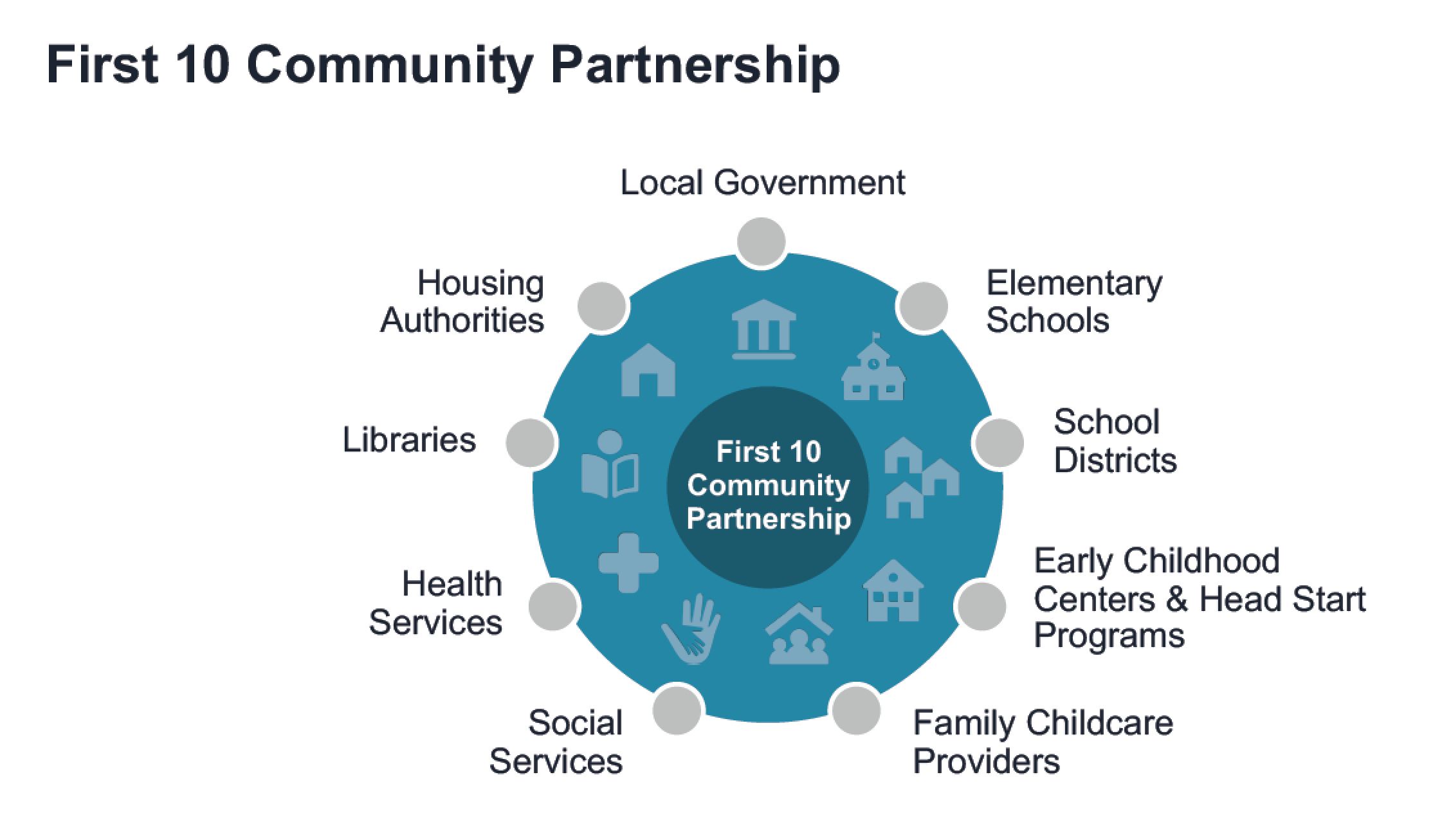
There are two different First 10 structures. First 10 School Hubs are anchored by a single elementary school that partners with providers in its catchment area and extends supports to children ages 0 to 4 and their families. First 10 Community Partnerships serve geographic areas that include at least two or more elementary schools and (ideally, over time) all the Head Start programs, community-based preschools, and family child care, home-visiting, and health and social service providers in that area. Given that elementary schools play important roles as community hubs in rural communities, the First 10 School Hub model has had particular resonance in Maine, and the First 10 state team has been eager to identify a funding source to support local First 10 hub coordinators. Future First 10 efforts should nonetheless keep an eye out for instances where services could be substantially improved through coordination at the district, county, and/or other regional unit levels (e.g., district-wide transition plans, family child care quality improvement initiatives, and/or resource and referral services).
Early Childhood-Elementary School Partnerships Provide Benefits, and Often Head Start Programs Play a Special Role
Maine’s PEG teams were formed as collaborations between school districts and pre-K providers, many of which were Head Start programs, to create and administer high-quality pre-K classrooms. By the beginning of the fourth year of the grant, most had established good working relationships, and some have developed strong partnerships. As the teams expanded their work to develop and implement First 10 plans, the value-added benefits of these partnerships became even more evident in the eyes of the participants, and a common theme was the value of Head Start’s expertise in early childhood pedagogy, family engagement, and the provision of comprehensive services.4
Head Start providers in RSU 12 helped in this context simply by asking why pre-K teachers did not participate in the regular K–2 team meetings established by the school district. This question led not only to what are now PreK–2 vertical team meetings, but a systematic process of pre-K inclusion in all elementary school professional learning opportunities and guidance materials. This collaboration also led to the health institute for 100 families mentioned above.
Likewise, the collaboration between the district early learning coordinator and the Head Start education manager in Lewiston has led to joint monthly professional development sessions, collaboration on curriculum implementation and instructional strategies, close working relationships between the organizations’ family advocates, and plans to extend transitions to kindergarten activities throughout the district and throughout the region that the Head Start provider serves.
Several of the Maine partnerships do not have many community-based private preschool providers in their communities. Given the original purpose of the PEG grants, those that do have these providers did not initially include them on their preschool expansion teams. Some, like Sacopee Valley, have made outreach to and collaboration with community-based preschools a priority. Future iterations of Maine’s First 10 work could include, where applicable, community-based providers—as well as other community early childhood programs—in First 10 partnerships.
Assessing Needs and Ongoing Plan Management are Critical to Successful Implementation
All of Maine’s local First 10 plans were based on an assessment of each community’s strengths and needs in the domains of the First 10 framework: professional collaboration on teaching and learning, coordinated comprehensive services, culturally responsive partnerships with families, and strategic leadership and ongoing assessment. Successful implementation of the resulting initiatives and strategies developed by the teams requires active management of the plans to ensure that strategies are implemented in a timely fashion, obstacles and coordination challenges are addressed, and the teams do not lose sight of some of their strategies and thus maintain the comprehensiveness of their plans. Maine’s teams benefited from technical assistance provided by the state that encouraged active plan management.
State and Local Initiatives Can Be Complementary and Reciprocal
Finally, Maine’s two-level First 10 initiative created a structure in which the state team was able to support community efforts while learning from their experiences, with the aim of informing policymaking and technical assistance. The state team received regular updates on the progress of the local partnerships, including a couple of presentations by local leaders at state team meetings during the first implementation year. Further, at Maine’s First 10 Summit in May 2019, state team representatives sat in on the community-to-community presentations. Afterwards, the local teams participated in a session with the state representatives in which they shared their suggestions for how the state could best support their First 10 work, including ideas such as providing guidance to local school boards, streamlining licensure, continuing to facilitate cross-community learning and exchange, and helping to identify and coordinate comprehensive services, especially around mental health. Those suggestions are informing the working agenda of the First 10 state team.
Citations
- Jacobson, Building State P–3 Systems: Learning from Leading States, Chapter 1.
- The Coalition for Community Schools, the Center for Optimized Supports, and the recent book, Weiss and Reville, Broader, Bolder, Better: How Schools and Communities Help Students Overcome the Disadvantages of Poverty (Cambridge, MA: Harvard Education Press, 2019), are excellent resources regarding comprehensive services and integrated student supports. See also: Mary Kingston Roche, Martin Blank, and Reuben Jacobson, Community Schools: A Whole-Child Framework for School Improvement (Washington, DC: Coalition for Community Schools, Institute for Educational Leadership, 2017); and Joan Wasser Gish, Building Systems of Integrated Student Support: A Policy Brief for Local and State Leaders. (Washington, DC: America’s Promise Alliance, 2019).
- Jacobson, Building State P-3 Systems; Jacobson, All Children Learn and Thrive.
- On this point, see Ashley LiBetti and Sara Mead, Leading by Exemplar: Lessons from Head Start Programs, (Sudbury, MA: Bellwether Education Partners, 2019), especially page 31: “In some cases, they [Head Start programs] are the only high-quality early childhood program available to the children they serve; in others, they are a crucial partner in larger state pre-K or early childhood systems, combining resources from Head Start, pre-K, childcare, and local or philanthropic sources to address the comprehensive needs of children growing up in poverty.”
Conclusion and Ongoing Priorities
How can communities develop comprehensive systems to improve outcomes for young children and their families and how can states support this work? Maine has developed an approach to addressing these two questions in tandem. The First 10 state team serves as a structure for inter-agency collective learning and coordination of state programs, an arena for policy deliberation and development, and a network for diffusing ideas throughout agency offices and up to senior agency leaders. Maine’s 13 Frist 10 community teams embraced strategies developed in high-resource projects like those in Nebraska and Oregon and adapted them for smaller communities with smaller initial budgets. While the communities are enthusiastic about the progress they are making in engaging and supporting families and improving and aligning teaching and learning, this early experience raises an important question of dosage to be addressed in future research: at what level of intensity and at what scale do First 10 strategies need to be implemented in order to produce demonstrable evidence of improved child health, development, and learning outcomes?
Maine’s state and local leaders creatively made the most of teams formed primarily to expand high-quality preschool classrooms. Their experience suggests several priorities for work moving forward as well as for others interested in supporting cross-sector collaboration across the early childhood and elementary school years:
- Address the types of state policy and technical assistance issues raised by Maine’s community teams.
- Design initiatives that include community-based early childhood providers and community organizations such as libraries and social service providers from project inception.
- Prioritize assessment of the quality of elementary school teaching and learning from project inception.
- Identify funding for coordinating First 10 teams, staffing comprehensive family supports, and conducting collaborative professional learning around instruction.
Recognizing these priorities, Larsen sums up the state’s plans as follows:
We will continue to interact with the 13 First 10 sites to follow their progress and lend support as appropriate. We also plan to continue building out the resources through the website as well as our own collective background related to research and successful approaches. Finally, we will work to share our findings with legislators, policymakers, and potential funders in hopes of expanding opportunity to cultivate this type of model throughout more of Maine.
The two-level First 10 structure that Maine has developed is one model for better coordinating the programs and services that safeguard and support young children and their families, perhaps suggesting ideas that can be adapted in other states and communities. In a context in which the COVID-19 pandemic and associated school closures are exacerbating yawning inequalities and taxing resources for education and social services, this type of coordination is crucially important.
More About the Authors

David Jacobson
Issues
Programs/Projects/Initiatives
Related