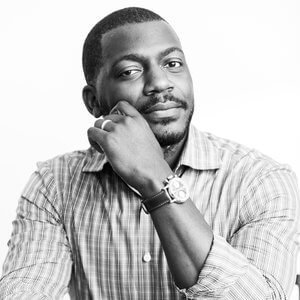
Adam Harris
Nonresident Senior Fellow
Your Fellows project is a book, The State Must Provide, about racial inequality in higher education. Can you tell us about the origins of this project and how you decided on the title?
Back in late 2017, I began working on a story about the historically black colleges in Mississippi. I had been covering federal higher education policy for the Chronicle and I had learned that there were still six states that had not proven to the federal government that they had desegregated their higher education systems. Mississippi, despite some jarring statistics, was not one of them. That story led me to the Ayers case, one of the most underexplored, though important, civil rights cases which defines what it means for a state to have eliminated the vestiges of segregation in its colleges. Digging through the Ayers case made me wonder how deep the roots of America’s unequal higher education system ran, which led me to my current book project.
The title comes from the opinion in one of the landmark cases that was a precursor to Brown v. Board of Education: Sipuel v. Board of Regents (1948). “The State must provide such education for her in conformity with the equal protection clause of the Fourteenth Amendment,” the ruling said. “And provide it as soon as it does for applicants of any other group.”
Mentors are great—and my mentors have been incredibly helpful to me throughout my career—but I’ve often found that the people around my age, the cohort of young journalists I cut my teeth alongside, have been most useful for bouncing ideas off of and helping me stay grounded.
How did you find your path to becoming a journalist, and specifically to reporting on education?
I studied philosophy in college and thought—for a long time—that I would get my PhD and become a professor. But in 2013, I moved to Austin along with my now-wife and started freelance writing. I did not have much success early on. I had written for the school paper at Alabama A&M, but that was the extent of my formal journalism training. My writing was raw. To supplement my writing, I began substitute teaching, coaching basketball, and opened a digital marketing firm.
After about two years, my writing became my most central passion. I applied for jobs across the country, ultimately landing one as the social editor at ProPublica in New York. A year later, when I realized I wanted to be reporting more, I applied for an open position at the Chronicle of Higher Education. I had already had an interest in education, but this seemed like a great opportunity to go deeper. I jumped at it.
What advice do you have for young journalists, especially when it comes to navigating the media landscape in the time of COVID-19 and the Black Lives Matter movement?
The best advice I ever received was to find a network of peers. Mentors are great—and my mentors have been incredibly helpful to me throughout my career—but I’ve often found that the people around my age, the cohort of young journalists I cut my teeth alongside, have been most useful for bouncing ideas off of and helping me stay grounded.
Subscribe here to receive next month’s issue of The Fifth Draft.
Nonresident Senior Fellow