
The Economics of Direct Democracy: Cost, Access, and Value
This report examines the costs and value of state ballot initiatives and argues for reforming, not restricting, access to the process.
Amid deepening political dysfunction and distrust, ballot initiatives offer a time-tested mechanism for democratic correction and renewal. At the state level, ballot initiatives— sometimes referred to as direct democracy, citizen-initiated ballot measures, and initiative and referendum (or I&R), among other terms—allow voters to expand the policy agenda by proposing and voting on legislation or amendments to state constitutions. Initiatives provide opportunities for direct democratic engagement and the ability to bypass state legislatures when necessary to advance policies with wide support in the electorate.
“Expanding Citizen-Led Policy in the United States,” a project of New America’s Political Reform program, explores the uneven landscape of citizen-led policymaking in the United States, the feasibility and advantages of expanding ballot initiative processes to more states, and possible strategic paths reformers might take toward that goal.
While 26 states provide for at least one form of statewide citizen-initiated ballot measure, the rest of the country, home to about half of all U.S. residents, lacks any initiative access at the state level. This collection features resources, reports, and articles on expanding the number of U.S. states that allow ballot initiatives.
This report examines the costs and value of state ballot initiatives and argues for reforming, not restricting, access to the process.
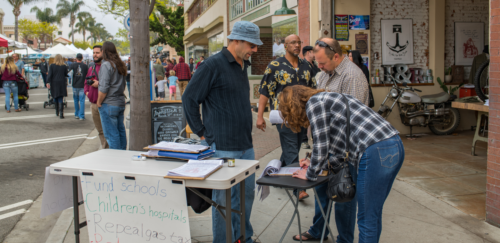
A new survey commissioned by Political Reform suggests a key barrier to adopting a ballot initiative process is a lack of awareness.
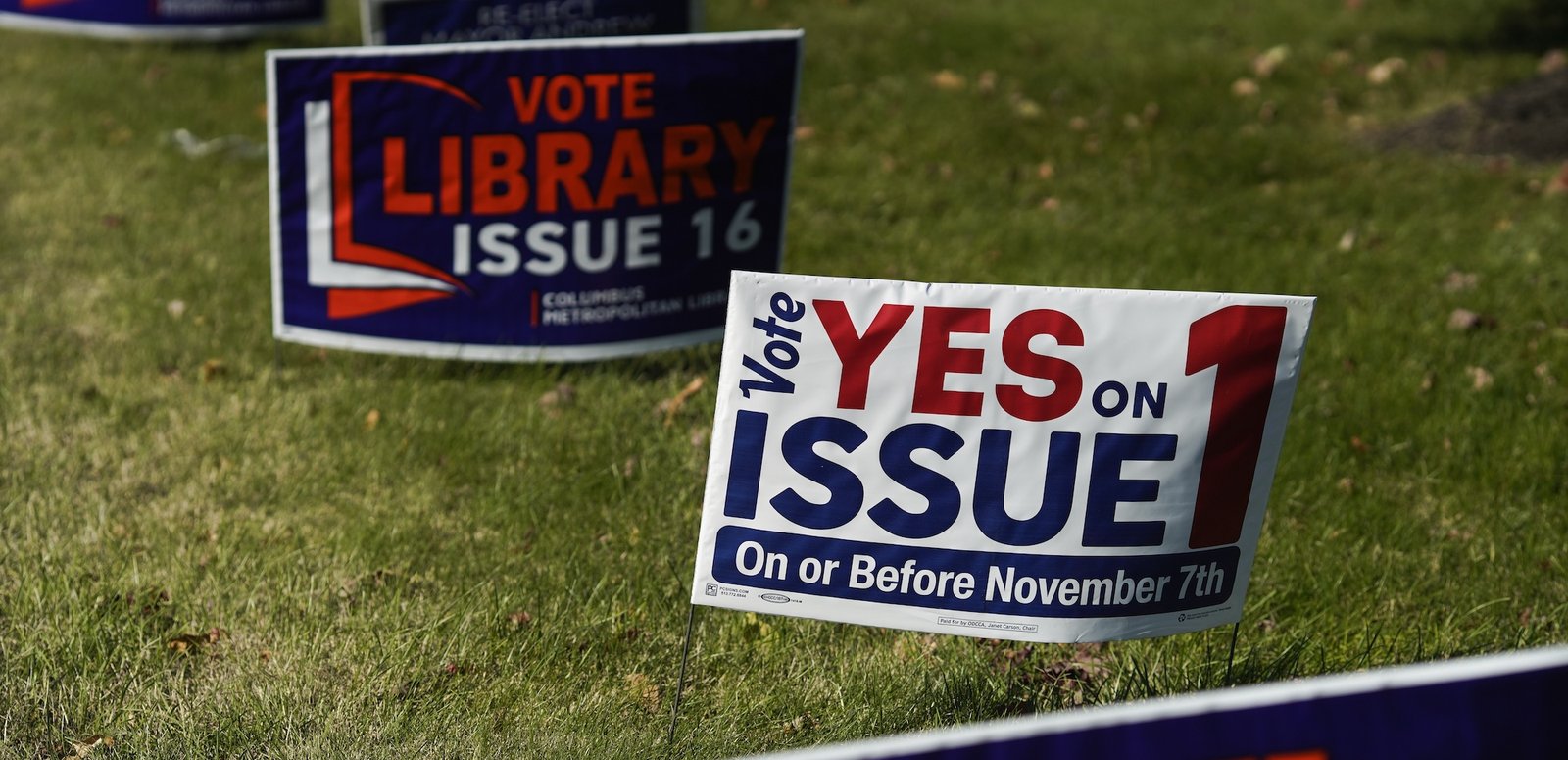
In the face of deepening political dysfunction and disaffection, ballot initiatives offer a time-tested mechanism for democratic renewal. This report examines the uneven landscape of citizen-led policymaking in the United States, where fewer than half of states provide access to usable initiative processes, leaving millions without a direct channel to shape public policy when other paths are blocked. Drawing on extensive historical and contemporary research and expert interviews, this report suggests that now may be an opportune moment to expand ballot initiative access. It also presents strategic recommendations for future initiative adoption efforts and introduces a methodology for assessing states’ readiness for direct democracy based on political, legal, and civic indicators.
Citizen-initiated ballot measures have helped bridge the gap between public preferences and government policy in half the country. The logical next step is to extend that opportunity to all 50 states. The political challenges are real, but so is the public demand. Americans want a more direct role in policymaking, especially when traditional representative pathways are blocked.
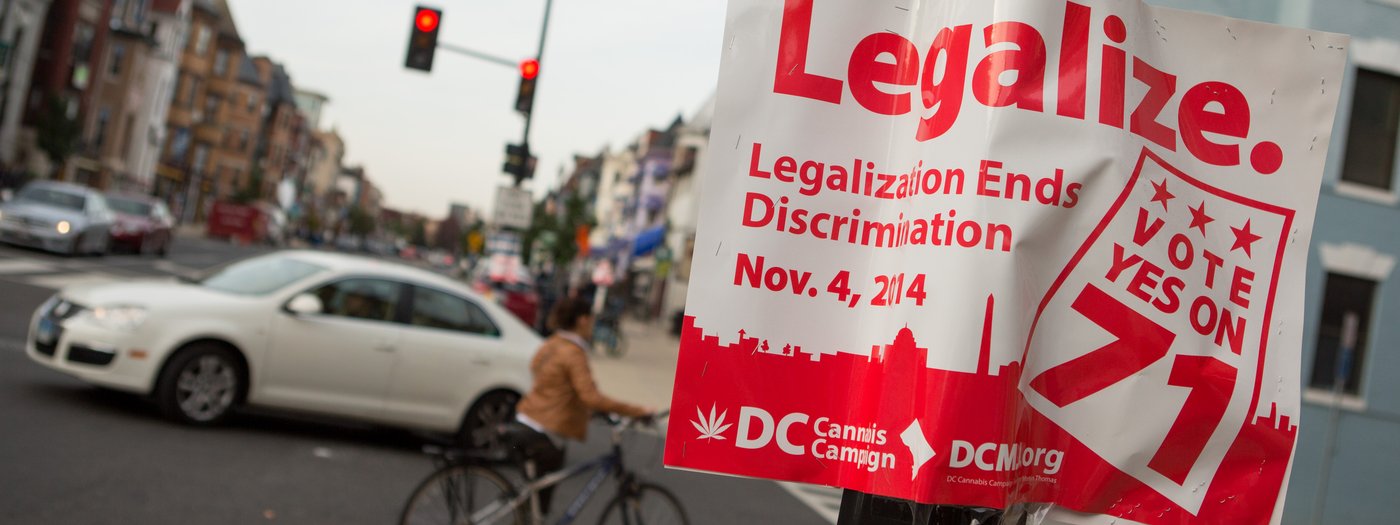
Over the years, April 20 (aka 4/20) has gone from a stoner inside joke in Northern California to a widely recognized, if unofficial holiday—familiar to marijuana consumers and non-users alike. But beyond the haze and humor, the day should be a reminder of something bigger: the power of everyday people to make big policy changes.

“Wisconsin has a proud legacy of leading on reform, including its early embrace of women’s suffrage, direct primaries, union rights and campaign finance regulation. Instituting citizen-led initiatives would be in keeping with our proud tradition of democratic self-governance. Let’s get it done.”
“If party leaders insist on running from competition, then it’s time for voters to run toward it. And in many states, the best tool available to do that is the citizen-led ballot initiative — a way for ordinary people to demand fair representation when legislators won’t deliver it.”

How do ordinary citizens get legislative measures on the ballot? What threats are being made to the process? Maresa Strano of New America and Chris Melody Fields Figueredo from the Ballot Initiative Strategy Center share a breakdown.
Learn more by reading New America’s report Expanding Citizen-Led Policymaking in the Twenty-First Century.
Listen to this podcast on Apple Podcasts and Spotify.
In the map below, the “Current Landscapes” tab shows the status of initiatives and referenda in the states that currently have some type of direct democracy at the state level. We categorized each of these states by the level of access they provide to direct democracy and the barriers they impose to actually using initiatives or referenda. States without any state-level direct democracy mechanism are shown in gray. For these states, the “State Readiness” map shows the degree to which they may be poised for adopting citizen-initiated ballot measures based on a scoring system that incorporates various indicators capturing the feasibility of adoption and the potential impact on democracy and governance. For more information on this score, see the Methodology section below.
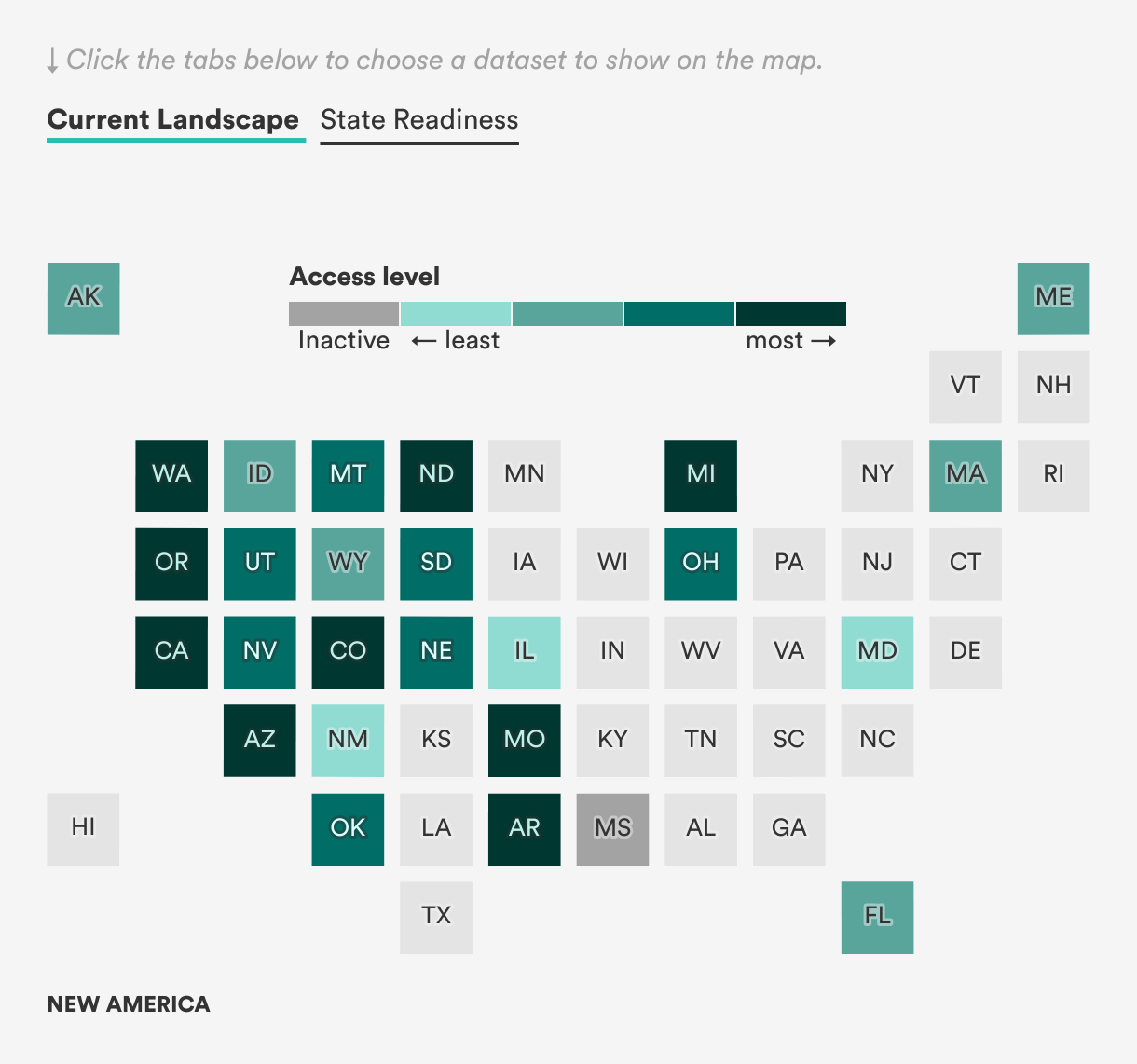
We developed a scoring system to identify the most promising states for the expansion of citizen-initiated ballot measures. Based on a review of historical patterns, political science research, interviews with reform scholars and practitioners, and recent organizing experience, we conceptualized a state’s readiness for initiatives based on two dimensions: feasibility of adoption and potential policy impact. The feasibility dimension refers to factors associated with a higher likelihood of adopting ballot initiatives, as established by previous research on the topic, and to factors that would facilitate the work of people on the ground advocating for ballot initiatives. The impact dimension refers to factors that indicate places where ballot initiatives could have a greater impact because citizens have a greater difficulty expressing their views through the usual electoral channels.
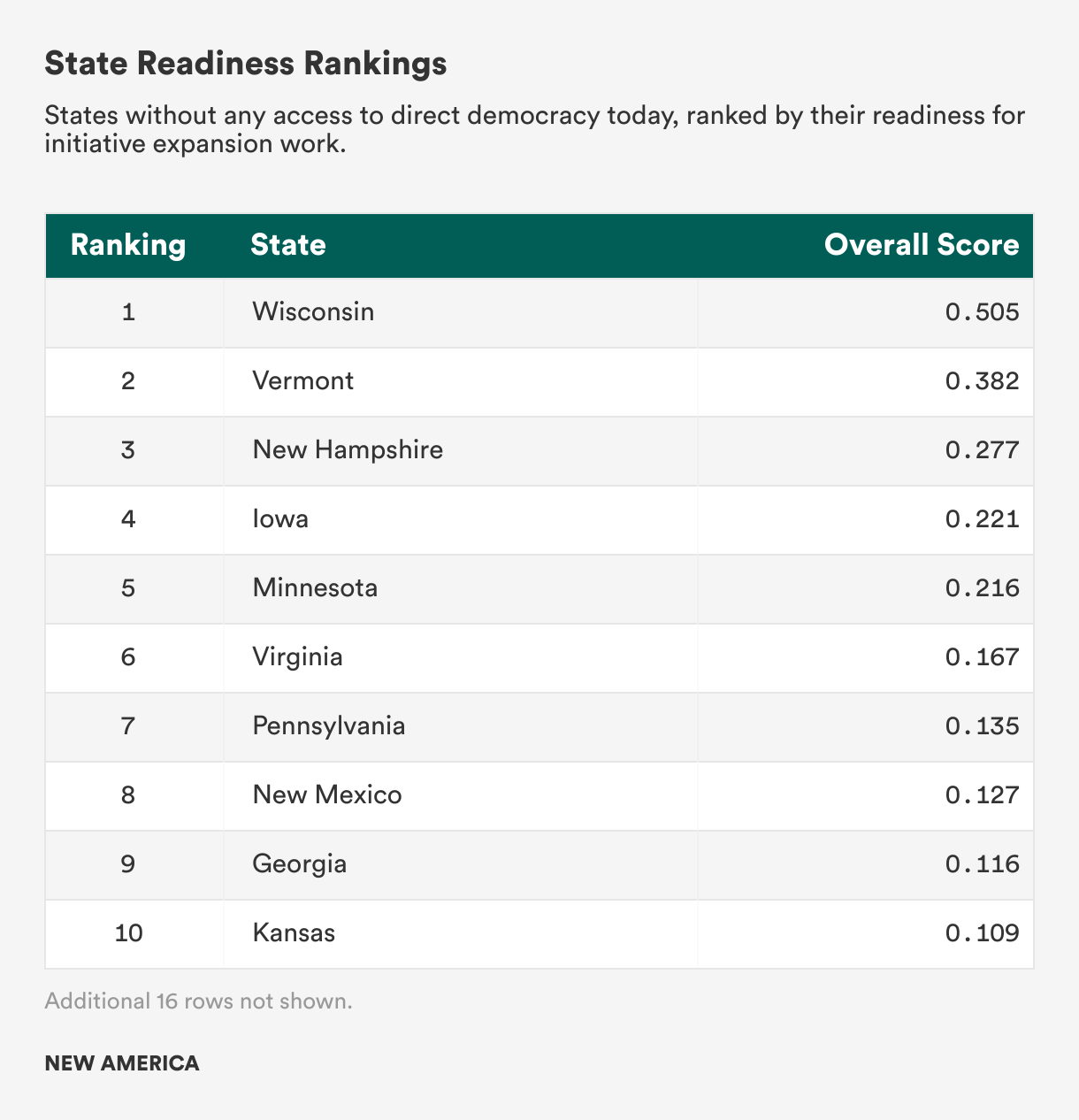
The following table shows the overall scores and the rankings of the states, from potentially most amenable to work related to promoting initiatives to least, based on a combination of feasibility and impact indicators.
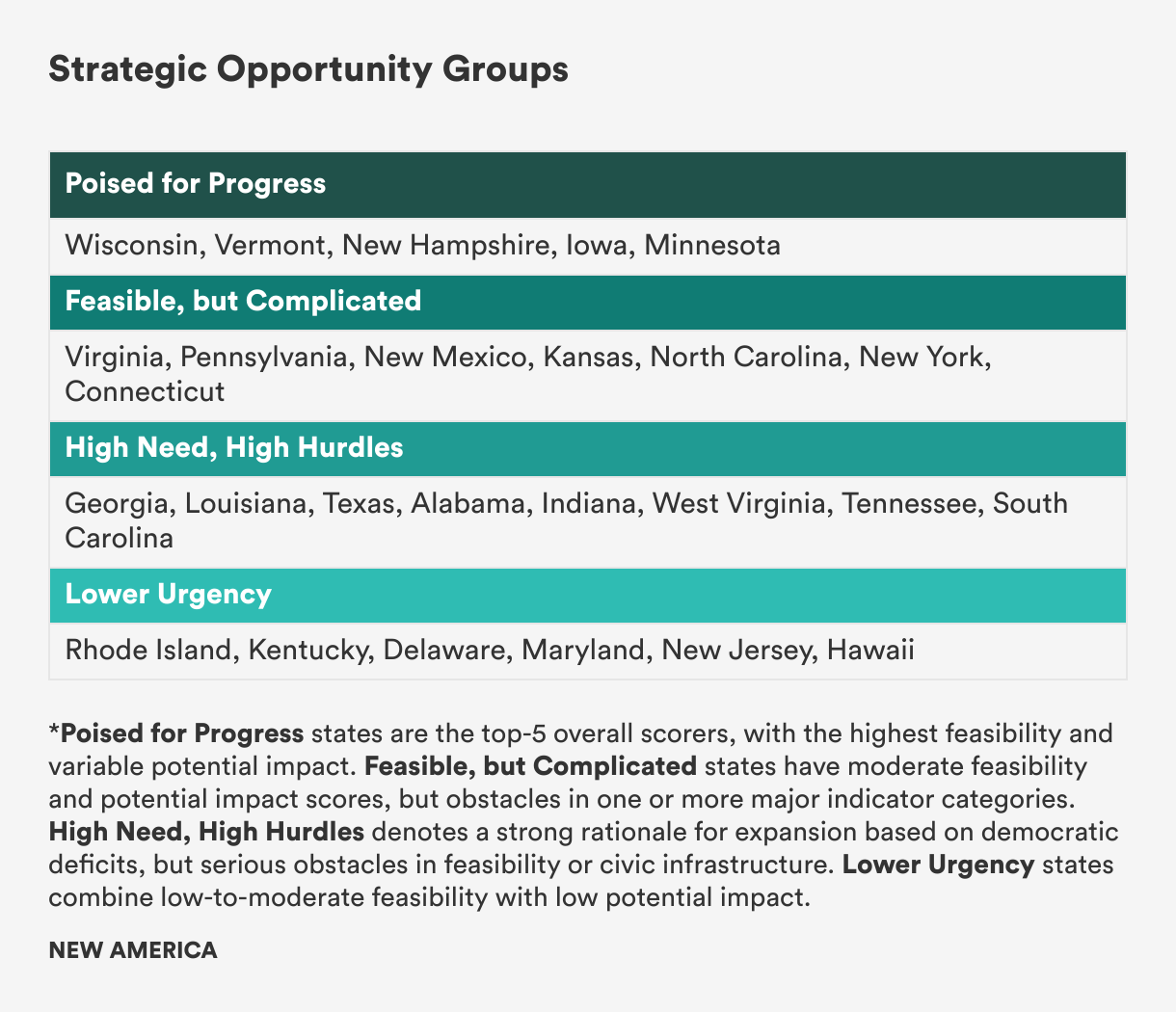
The accompanying table groups non-initiative states into four readiness categories. For example, states in the “Poised for Progress” category are the top five overall scorers: These states boast the highest feasibility scores, making them strong candidates for near-term efforts.
For a detailed description of how we calculated the rankings, please refer to our report, Expanding Citizen-Led Policymaking in the Twenty-First Century, where we explain our methodology, list all the indicators that go into the score, and provide sources for each indicator.