Roselyn Miller Champion
Grant Analyst, City of Portland
Connecting policy and people in Fresno, CA for co-designed solutions


If you want to know about a neighborhood, ask the people who live there. From restaurant recommendations to bus routes to where to find and how to engage neighbors, residents know best. In partnership with a set of community leaders who also value resident expertise, New America CA (“NA CA”) took to porches, parks, and gathering places in the Jackson and Winchell neighborhoods of Fresno this past Spring with two not-so-simple questions: in what ways is your neighborhood living up to your hopes and dreams? And where and how can it change to do so?
The framing of those Springtime conversations, to lift up local aspirations for development, came from early conversations with local stakeholders. We began by meeting with Fresno leaders participating in the Opportunity Corridors working group of the Fresno DRIVE initiative, exploring what more they wished to learn in order to make informed, useful, and resident-centered policy decisions. We combined their feedback with learnings from our review of existing research, including findings from earlier community engagement efforts. However, understanding that organizations and reports can only say so much about what a community can and should be, we were very deliberate about the types of conversations we planned to have with residents. Our two important intentions included, 1) having asset-focused conversations that would elevate hopes and a neighborhood vision for the future and 2) utilizing the resulting set of strengths and growth areas to guide priority topics for a participatory policy lab that would be different from other resident engagement.
During the next critical step, engaging with residents individually, our team had in-depth hour-long conversations with both English- and Spanish-speaking residents and business owners, to better understand their priorities and aspirations. To gain full, representative, and robust participation, it is necessary to alleviate structural barriers to participation by paying residents for their time and utilizing interpretation services. This work goes at the speed of trust, and in addition to carefully building rapport, we connected with residents through trusted messengers like community-based organizations and peer networks. Residents were driven, well-informed, and willing to share painful memories and hopeful ideas in service to their communities. Their experiences and concerns fell into common themes, including a desire for cleaner and safer neighborhoods, strong and flourishing businesses, and thriving and healthy residents. Our team carefully, and with attention to the spirit and authenticity of their statements, stitched together a set of “Hope Narratives” from these individuals for the future of the Jackson and Winchell communities.
One-on-one resident interviews are vital to a project like this one, as is relaying resident insights to policymakers. However, continuously surveying and relaying messages from one group to another asynchronously has limitations, like losing the initial story or experience that sparked the policy idea or passion. There is also a risk: engaging residents without follow-up can further distance residents from the policymaking process or deprive them of the opportunity to control their own influence.
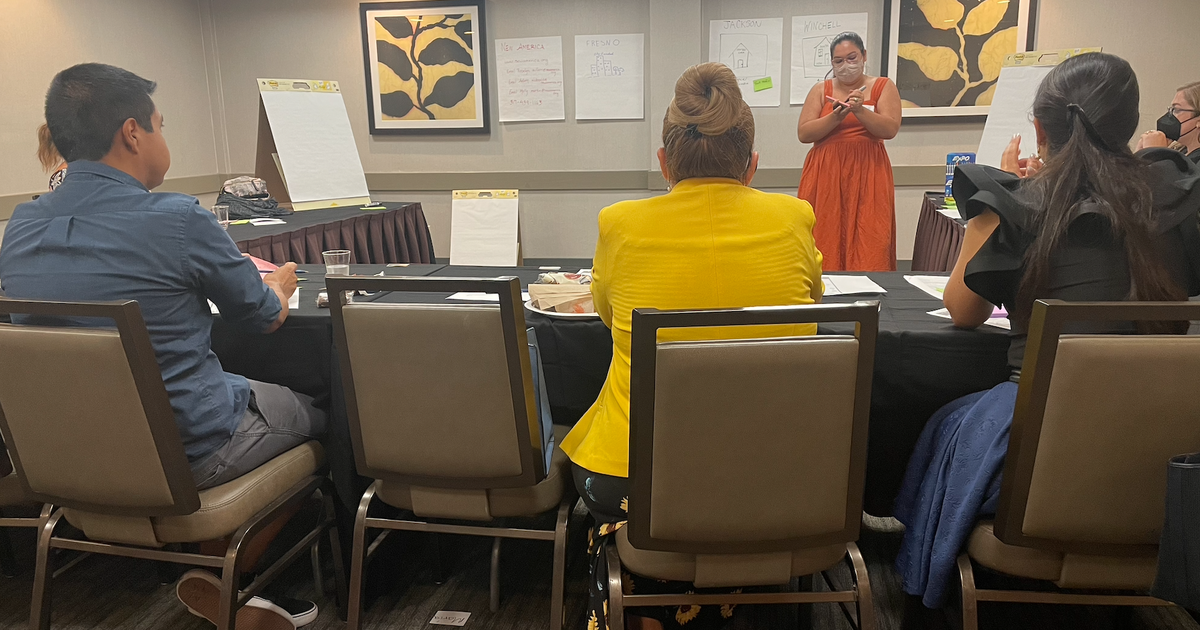
A potential solution, or at the least a promising new practice, would be finding a more direct line of contact and communication, one that moves from engagement to empowerment. Policy deciders and influencers were invited to the events, and those that attended were not observers but rather full participants engaging with the design activities along with residents. Connecting local stakeholders in one room, in real-time provides an opportunity to share power more thoughtfully between community policy leaders and residents. Real-time, peer-to-peer engagement also allows residents the opportunity to have greater understanding and ownership of policy feasibility and outcomes.
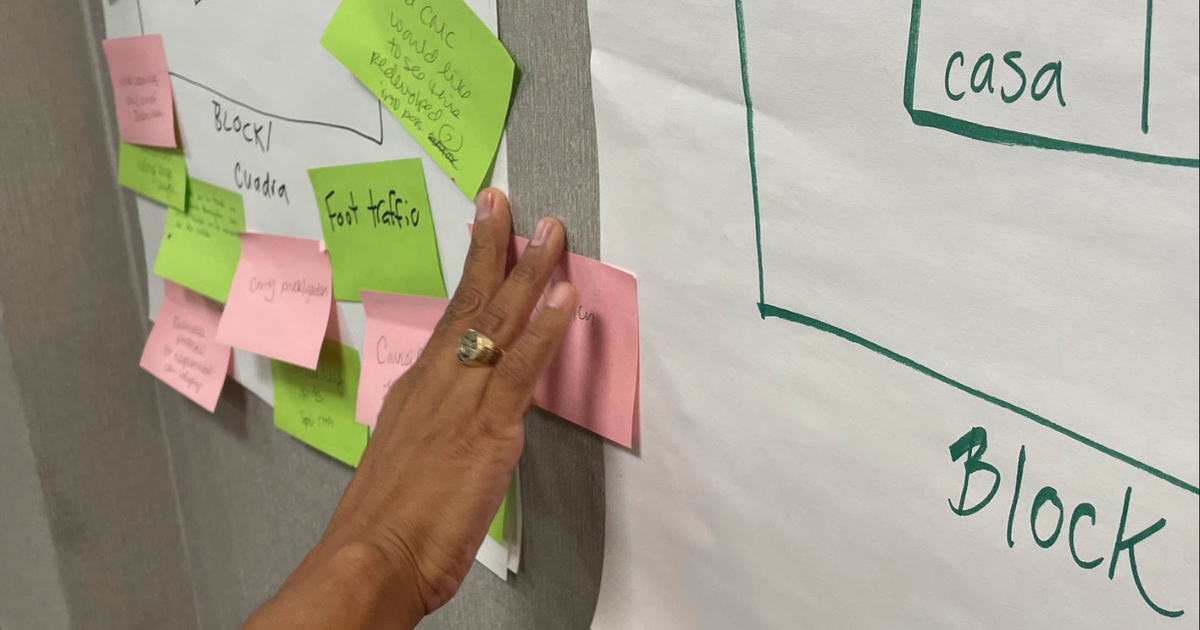
This thinking regarding better next-steps with community engagement became the third step—our final intention—what NA CA team leader Autumn McDonald has been calling “proximity projects.” These participatory policy labs or proximity projects focused on resident priorities surfaced within the “Hope Narratives.” The sessions focused on two themes we heard repeatedly: community safety and policies to help residents stay in their neighborhoods. Goals included having resident and policy-decider attendees uncover the specific context of the challenges and identify concrete priorities for action.The sessions were intentionally small in order to foster a safe space for vulnerability and deep participation, were bilingual, and allowed attendees to select potential solutions and ideas they were most interested in seeing city leaders address.
While this process aims to improve the traditional ways policy and people interact, it comes with its own fair share of challenges and opportunities. Differences in language, educational attainment and literacy, and mixed experiences with the public sector can affect what people expect and how they show up. Power dynamics among leaders and residents, and earned cynicism impact, both, what residents share and what they view as possible.
NA CA tried to make the session as inclusive as possible: stipends and childcare support for residents; locating the meeting on a bus line; recruiting residents via their preferred means of contact (phone calls, texts, personal referrals); providing dinner; offering COVID tests and masks; and providing various ways to engage in the content (an interpreter, reading content aloud). The team also committed to spending time with residents ahead of the event, explaining the purpose, the people involved, and how the information generated would be used.
This cautious, caring approach is key to this process, to build trust that when organizations ask for residents’ experiences and feedback they will attempt to use it and to honor it. Proximity projects and co-design sessions will not change a community overnight, but through thoughtful and intentional inclusion and empowerment they can equip communities and local leaders with the infrastructure and process necessary to create informed and effective solutions.
Grant Analyst, City of Portland
Vice President, Development & Strategy