
Priya Fielding-Singh
Director of Policy and Programs, Global Food Institute at the George Washington University



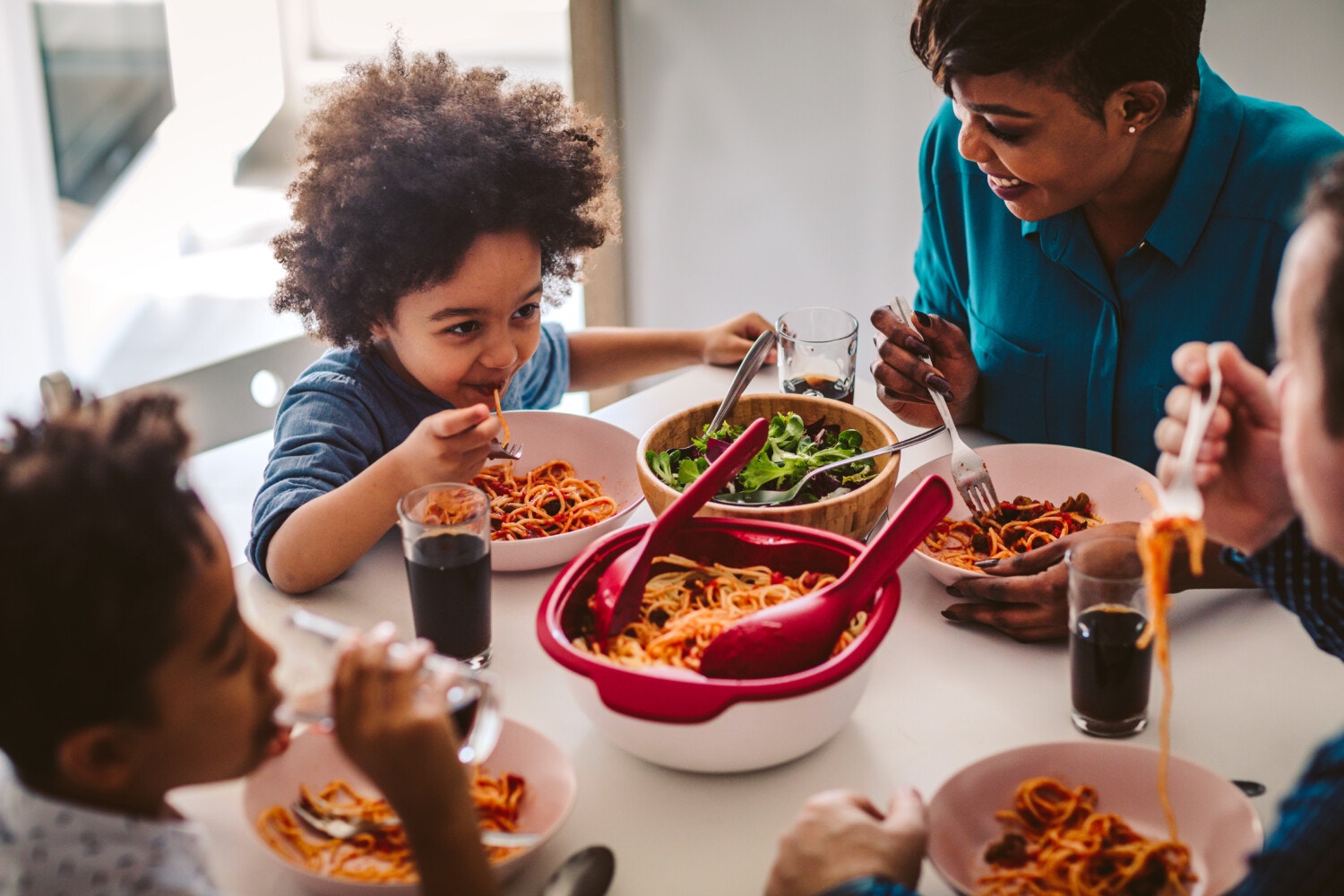
This publication is a product of a collaboration between New America and the Global Food Institute at the George Washington University. A full-text PDF of this publication is available for download here.
Children’s food preferences shape how families stretch limited food budgets. For low-income families, buying foods children refuse can mean wasting money they cannot afford to lose. Parents therefore often prioritize foods they know their children will eat.
Nutrition remains a priority, but adults absorb the trade-offs. Many parents bought pricier fruits, vegetables, or fish for their children while eating cheaper, less varied foods themselves.
Developing healthy eating habits requires resources that many families lack. Repeated, low-pressure exposure to new foods requires money, time, flexibility, and a tolerance for waste that many families lack.
Nutrition policy can better support the realities of feeding children. The publication recommends expanding produce incentives, strengthening school nutrition programs, limiting child-directed junk food marketing, and offering practical feeding guidance that acknowledges budget constraints.
Every day, parents across America make food decisions for their families that take into account household budgets, time constraints, cultural preferences, and nutrition goals. For families with limited resources, these decisions often involve difficult trade-offs. Alongside the well-recognized challenges of affordability, transportation, and food insecurity, parents must also navigate a less frequently acknowledged reality: whether their children will actually eat the food they buy and prepare. As changes to federal nutrition assistance put additional pressure on low-income families’ food budgets, understanding how parents navigate these everyday decisions is especially urgent.
Children’s food preferences are a normal part of development, but under resource constraints, they can carry significant consequences. Buying food that children don’t like or may not eat can mean wasting money a family cannot afford to lose and missing an opportunity to ensure a child leaves the table full. As a result, parents have to make decisions that balance their priorities for their children’s diets alongside concerns about food waste, satiety, and cost.
Drawing on New America’s Thriving Families project—which engaged 43 low-income families in Minnesota, Pennsylvania, and New Mexico over 18 months—and a broader body of research on children’s food preferences and family food decision-making, this brief examines how families navigate this daily challenge. Rather than focusing on a single policy or program, the project invited families to share their experiences across many aspects of everyday life. Together, their accounts brought attention to an issue that is often overlooked in nutrition policy: whether parents have the resources to test and try healthy options and whether children will eat and enjoy the food their families can access and afford.
Recognizing the important role that children’s preferences play in household food decisions requires designing and refining food and nutrition policies and services to reflect the realities families face. Building on families’ experiences and the broader evidence base, we identify policy opportunities to:
Food and nutrition policies and programs have made important progress in improving children’s access to healthy foods. But we as a society can go further by recognizing not only what children should eat but also what families need to successfully help them build lifelong healthy eating habits.
Feeding children is one of the most fundamental responsibilities of parenthood. Every day, parents across America decide what foods to buy, prepare, and serve, hoping to nourish their children while balancing the realities of work, school schedules, household budgets, cultural traditions, and the other countless demands of family life.
Yet these food decisions are rarely about nutrition alone. They are also about what children themselves are willing to eat.
Children’s food preferences are a normal part of development, and most parents have experienced the frustration of a child refusing dinner or insisting on familiar foods. For families with greater resources, these moments are inconvenient. But for families with limited incomes, they carry much higher stakes. When resources are limited, buying food that goes uneaten can mean wasting money that cannot easily be replaced and missing an opportunity to ensure a child leaves the table satiated.
Drawing on New America’s Thriving Families diary study and research on children’s food preferences and family food decision-making, this publication examines how children’s food preferences intersect with resource constraints to shape everyday family food decisions. It explores what families’ experiences reveal about the challenges of feeding children under constraints and considers how food and nutrition policy can better support families in those efforts.
Food and nutrition policy has made important progress in improving the affordability, availability, and nutritional quality of food for lower-income families. Yet it has paid less attention to two related questions: How do children’s food preferences shape parents’ everyday feeding decisions? And how can nutrition policies and programs better support families in navigating those preferences?
The New Practice Lab engaged 43 Medicaid-eligible families with young children (at least one child under age six) living in Minnesota, Pennsylvania, and New Mexico through a qualitative study. Participation involved an in-person workshop followed by an 18-month diary study, during which families received one question each week and could respond through text, audio, or images. Between April 2023 and November 2025, these families shared their experiences and thoughts on diverse topics ranging from their daily lives to their hopes for the future. All quotes below are attributed to participant aliases in accordance with the consent given.
This publication, which examines how low-income parents navigate children’s food preferences in the everyday work of feeding their families, complements a broader series of publications the New Practice Lab has shared from the study. For this publication, families were invited to participate in feedback sessions to review and discuss its main findings, helping ensure that their experiences were accurately reflected and providing an opportunity for them to share additional perspectives on feeding their children.
Children’s food preferences are a normal part of development. But developing healthy food preferences is not always straightforward. Children are naturally drawn to sweet and savory flavors and often more hesitant to accept bitter tastes, including those found in many vegetables.1 As they move into toddlerhood and early childhood, many also experience food neophobia—a normal developmental reluctance to try foods that are unfamiliar or differ from what they expect.2
Early Preferences, Long-Term Health
Early childhood is a particularly important period for developing food preferences and eating habits that can persist into adolescence and adulthood. Helping children become familiar with a wide variety of nutritious foods during these years supports healthy growth and diet quality in the short term and can help establish eating patterns that promote long-term health.3 Helping children develop healthy food preferences early is therefore about not only what they eat today but also a foundation for lifelong health.
These developmental tendencies help explain why simply making nutritious food available is often not enough. Children may need to encounter a new food many times before they accept it. Research therefore recommends repeated, low-pressure exposure: Parents continue offering unfamiliar foods in positive settings without forcing children to eat them, allowing familiarity and acceptance to build over time.4
Yet for families with limited resources, repeated exposure can carry real financial costs.5 Each new attempt requires a parent to purchase or prepare a food that a child may refuse and often to keep doing so despite that initial rejection. It can also demand additional time and persistence, whether in preparing a food differently, incorporating it into meals in new ways, or simply continuing to offer it. In this sense, many recommended feeding practices rely on resources that are easy to overlook: not only food itself but also money, time, flexibility, and ability to absorb some amount of waste.
Parents also do not shape children’s food preferences in a vacuum. Children are continually learning what foods are familiar and desirable from siblings and peers, child care and school settings, the foods available in their communities, and pervasive commercial marketing.6 These environments can reinforce caregivers’ efforts to introduce nutritious foods—or make that work considerably harder.
For families with limited resources, these developmental recommendations also operate within a broader set of constraints. Research on food insecurity and family feeding shows that parents facing constrained food budgets often place particular importance on ensuring children have enough to eat and avoiding foods that could be wasted.7 Physical limitations more likely in low-income households—like limited kitchen equipment—can compound these challenges.8 While understandable, these conditions can make it more difficult to repeatedly introduce unfamiliar foods and broaden children’s food preferences over time.
The experiences of parents in the Thriving Families study help illuminate what these dynamics look like in everyday family life. The next section examines how parents navigating significant economic and practical constraints respond to children’s food preferences and how those preferences shape decisions about what families buy, prepare, and ultimately put on the table.
Across interviews and diary entries in this study, parents described the everyday work of feeding children under resource constraints. Their experiences reflect a challenge faced by millions of families nationwide: In 2024, 6.7 million households with children—nearly one in five—experienced food insecurity.9 Most families in this study had experienced food insecurity; all but one received federal food assistance through the U.S. Department of Agriculture’s (USDA) Supplemental Nutrition Assistance Program (SNAP) or Special Supplemental Nutrition Program for Women, Infants, and Children (WIC); and the majority had accessed food through a food bank or pantry. One priority consistently emerged: making sure children had enough to eat. Children’s developing food preferences shaped how parents pursued that goal.
For many of the parents in this study, the first priority was making sure their children left the table fed. Particularly for families that had experienced food insecurity, ensuring children had enough to eat was not simply one consideration among many; it was a central responsibility and source of pride.
Candace put it simply:
I refuse to be the mom that makes my kid eat what she doesn’t like. I’d rather her be happy and fed than sad and hungry.
Hope expressed the same priority:
For me, the goal is for them to eat, because they need to eat something. That’s my goal. I always try to talk to them to make sure they eat something, even if it is something little. I don’t want them to stay without food, you know.
For some parents, ensuring children ate enough also meant avoiding conflict or pressure around food. Drawing on their own difficult childhood experiences with eating and mealtimes, they wanted their children to develop a healthier relationship with food. As Camila explained:
Mamá no te obliga; otra persona tampoco tiene el derecho de obligarte.
(Mom doesn’t force you; nobody else has the right to force you either.)
For families with little margin for waste, that commitment shaped what parents felt able to buy and serve.
Once keeping children fed becomes the priority, children’s food preferences take on new significance. These preferences can become the difference between a meal consumed and a meal—and money—wasted. When a child refuses a meal, parents can lose both the money spent on that food and the opportunity to ensure the child has eaten enough. As a result, for lower-income families, buying foods children are likely to eat becomes a practical way to reduce uncertainty and make limited resources go further.10
Families’ experiences with food assistance made the costs of getting that calculation wrong especially visible. Hope, for example, described receiving foods from a food pantry that her family would not eat:
I don’t like going to [the food bank] because they just pack food. Give you anything. They don’t know if it’s what you eat or not. So many times that I go, I end up throwing stuff away.
Parents described continually adapting their shopping, meal planning, and cooking around this reality. They carefully planned around both the resources available to them and what their children were likely to eat.
Complicating these decisions, parents described how children’s food preferences were shaped by experiences outside the home, including advertising, school meals, and interactions with peers. Evelyn, for example, recalled her children requesting Häagen-Dazs ice cream after seeing advertisements on YouTube or television, while Maria observed that her children would sometimes eat foods with friends that they refused at home.
Parents also described trying to broaden children’s diets while recognizing that not every attempt would succeed. Several explained that they encouraged children to try the family meal first while also keeping a “plan B” available if a child still refused to eat. Julie, for example, described this balance:
We have one picky eater, my six-year-old. We always have him try what we have made for dinner, but usually we will have an alternate option for him to eat if he really doesn’t like it.
Julie’s approach illustrates how some parents tried to follow recommended feeding practices while maintaining a safety net if repeated exposure did not work that day.
Parents consistently described healthy eating as an aspiration, not an afterthought. When resources were insufficient, parents made compromises in their own diets, the variety of foods they purchased, or other aspects of family meals rather than abandoning nutrition altogether.
That pattern is consistent with broader research showing that parents often try to buffer children from food insecurity, with adults more likely to absorb reductions in food quantity or diet quality themselves.11
The families in this study described that dynamic directly. Many protected the quality of their children’s diets even when it required sacrifices elsewhere. Several explained that if their children would eat the food, they prioritized purchasing more expensive items—such as fresh fruits, vegetables, or fish—for their children while adults ate cheaper or less varied meals themselves. Rather than compromising their children’s diets first, many described making those compromises themselves.
Isabel, for example, explained that while she and her husband often ate the least expensive foods available, they reserved a wider variety of fruits and vegetables for their children:
Compramos variedad de frutas y verduras, pero solamente para nuestros hijos, y la que sobra en sus platos nos las comemos nosotros. Mi esposo y yo comemos naranjas y plátanos, que es lo más económico en la tienda, y cuando vamos al banco de comida, nos dan variedad de vegetales y ahí aprovechamos para comer saludable.
(We buy a variety of fruits and vegetables but only for our children and we eat the rest on their plates ourselves. My husband and I eat oranges and bananas, which are the cheapest in the store, and when we go to the food bank, they give us a variety of vegetables and we take advantage of the opportunity to eat healthy.)
These accounts challenge the common assumption that parents simply choose between healthy and unhealthy foods. Instead, they suggest that parents continue to prioritize nutrition while navigating the practical realities of constrained budgets and children’s developing food preferences.
Introducing New Foods While Minimizing Waste
Some parents, particularly with larger families, described strategies for introducing unfamiliar foods while trying to minimize waste and ensure their children ate enough. Evelyn, for example, started with small portions of new foods served alongside familiar favorites. Julie often separated the components of a meal so her children could choose what to eat, explaining that they might eat the noodles but leave the mushrooms or spinach. She also involved her children in cooking and encouraged them to try foods they had helped prepare: “You made it, so you have to try it.” These strategies illustrate the care and creativity parents brought to feeding their children, but they also required time, flexibility, and a willingness to risk food going uneaten—resources that were not equally available to all families.
Overall, children’s food preferences did not fully replace nutrition as a priority. But, importantly, under resource constraints, they changed the conditions under which parents pursued it.
Nutrition policies and programs have long sought to help families access healthier foods by improving affordability, availability, and nutritional quality. These remain essential goals. Yet mounting research on children’s diets and development and the experiences of families in this study suggest an additional lens through which these efforts can be designed and evaluated: whether they help families introduce, reintroduce, and sustain nutritious choices for their children when money, time, and other resources are limited.
Children’s food preferences are a normal part of development, but under resource constraints, they shape family food decisions in important ways. Parents are not simply deciding which foods are healthiest; they are simultaneously balancing nutrition priorities alongside concerns about food waste, household budgets, children’s satiety, and time constraints.
Recognizing these realities does not mean lowering expectations for children’s diets. Rather, it means creating the conditions that make those expectations more achievable for families. This begins with three priorities detailed below: reducing the financial risks of introducing nutritious foods, supporting healthy eating across children’s everyday environments, and equipping caregivers with practical feeding support.
Developmental research shows that children often need repeated, low-pressure exposure before accepting unfamiliar foods. For families with limited resources, however, that process can be costly: Repeatedly purchasing fruits, vegetables, or other nutritious foods that a child may initially reject requires a degree of financial flexibility that many simply do not have.
Major federal nutrition programs like WIC and SNAP already provide families with resources and flexibility that can help make introducing nutritious foods more affordable. Both programs reach millions of Americans: In fiscal year 2025, WIC served approximately 6.9 million participants each month, while SNAP served 42.1 million. Within these larger programs, smaller initiatives offer additional support for purchasing nutritious foods, although their reach remains limited. For example:
Making Nutrition Benefits Easier to Use
Families in this study devoted considerable time and effort to coordinating nutrition benefits, in addition to planning meals, anticipating children’s preferences, and adapting when plans changed. Nutrition programs can reduce that burden through practical design choices—such as allowing remote or phone-based enrollment interviews and recertification, simplifying forms and documentation requirements, aligning renewal timelines across programs where possible, offering flexible appointment hours, and making it easier to use benefits online. For example, WIC modernization efforts such as remote certification, online shopping, and data-sharing with other programs to confirm eligibility show how service design can help families enroll and use their benefits more efficiently. These changes can help families spend less time navigating systems and more time feeding their families.
While WIC and SNAP provide substantial support to millions of households, these additional incentive programs operate on a much smaller scale and are not available to most participants. Maintaining and strengthening these programs can help reduce the financial risks families face when trying healthier foods. Similarly, ensuring food assistance benefits keep pace with food costs can give families more financial flexibility to continue exposing children to these foods; this is especially important as broader policy changes, including recent federal cuts to nutrition assistance, place additional pressure on many low-income household food budgets.
The Thriving Families interviews also suggest there is an opportunity to broaden how we evaluate food and nutrition programs. Federal and state agencies, researchers, and philanthropic funders can consider evaluating nutrition incentive programs not only by whether they increase purchases of nutritious foods but also by whether they make repeated exposure more feasible for families with young children and whether this leads to greater acceptance of nutritious foods among children over time.
Expanding Exposure Opportunities Through the Charitable Food System
Food banks and pantries can help reduce the financial risk of introducing children to unfamiliar nutritious foods without risking limited grocery dollars. Federal and state policies can help expand these opportunities. Through the Emergency Food Assistance Program (TEFAP), USDA supplies food to food banks and pantries, including fresh, frozen, and canned fruits and vegetables. States and food banks may wish to consider using their USDA Foods orders for fruits and vegetables. Federal officials could increase funding for TEFAP food purchases, including fresh and frozen produce, while also providing funds to investments in storage, refrigeration, and distribution that would help the systems distribute more fruits and vegetables to families.
Making nutritious foods more affordable is necessary, but it is not sufficient. Children’s food preferences are also shaped by the environments in which they spend time every day, from child care settings and schools to stores, media, and their broader communities. These environments influence which foods children come to see as familiar, desirable, and normal. Creating environments that give children more opportunities to encounter nutritious foods—and fewer repeated exposures to less nutritious ones—can therefore help support healthy eating from an early age.
Child nutrition programs are among the most important levers for doing so, first and foremost because of their extensive reach. Every day, USDA’s National School Lunch Program and School Breakfast Program serve roughly 30 million and 16 million children, respectively.12 Through the Child and Adult Care Food Program, an additional 4.4 million children receive meals and snacks in child care centers, family child care homes, and Head Start programs.13
The importance of these programs goes beyond providing children with enough to eat. Because they reach children regularly during the years when food preferences are developing, they can also give children repeated opportunities to encounter and become familiar with nutritious foods. Maintaining and strengthening school nutrition standards is therefore important not only for the nutritional quality of the meals children eat today but also for helping shape what foods they learn to eat and enjoy over time. Meeting strong standards also requires giving schools the resources, training, and investments to prepare and serve nutritious foods in ways children find appealing—from offering fresh, cut fruit to preparing vegetables in different ways.
Building Familiarity with Healthy Foods at School
Several existing school-based initiatives already give children repeated, low-pressure opportunities to encounter nutritious foods. These approaches may be especially valuable for lower-income families because they allow children to try unfamiliar foods repeatedly without requiring parents to bear the full financial risk when those foods are initially rejected. While existing programs provide a foundation for this work, there is considerable opportunity to expand their reach and give more children these experiences.
USDA’s Fresh Fruit and Vegetable Program, for example, provides free, fresh fruits and vegetables to students in eligible elementary schools, prioritizing schools serving larger shares of lower-income children, with the goal of introducing children to new varieties and increasing their acceptance and consumption of fresh produce. However, the program’s reach and funding remains limited; participating schools receive only approximately $50–$75 per student each school year.
In addition, farm-to-school programs often pair locally sourced foods in school meals with activities such as taste tests, nutrition education, and visits from farmers, giving children opportunities to encounter foods in multiple settings and forms. School gardens and hands-on cooking activities offer additional opportunities for children to grow, prepare, and taste unfamiliar foods, helping build familiarity and interest in foods they might otherwise reject. Federal farm-to-school grants help schools and other organizations launch and expand these efforts, but funding remains limited and competitive. In fiscal year 2026, USDA awarded nearly $20 million to 68 projects across 37 states, leaving considerable opportunity to expand these approaches to more children.
Importantly, creating healthier food environments also means reducing children’s exposure to less nutritious foods. Just as repeated exposure to nutritious foods can build familiarity and acceptance, repeated exposure through advertising can shape children’s preferences and what they come to see as desirable. The challenge is that food and beverage companies spend billions of dollars marketing products such as fast food, sugary drinks, and candy to children.14 Policies that reduce this child-directed marketing—whether by strengthening protections against digital marketing or eliminating tax incentives that subsidize unhealthy food marketing—can help counter these influences.
Schools have additional tools at their disposal. Districts participating in federal school meal programs are required to maintain local school wellness policies that address foods sold outside school meals and food and beverage marketing on school grounds.15 Strengthening and consistently enforcing these policies can help reduce children’s exposure to and marketing of less nutritious foods throughout the school day.
Knowing which foods are nutritious and being able to afford them are only part of feeding children well. Caregivers also need practical, evidence-based strategies for navigating children’s food preferences. The experiences of families in this study suggest that caregivers are already working thoughtfully to meet these challenges; the opportunity is to better align nutrition programs and services with the realities they face.
Nutrition education should address not only what children should eat but also the everyday realities of helping children eat it. Although SNAP Education, the nation’s largest federally funded nutrition education program, was eliminated by Congress last year, other platforms still exist to support caregivers in this work.16 These programs—including WIC nutrition education, pediatric counseling, and community-based family nutrition programs—can provide practical guidance on responsive feeding by helping caregivers recognize and respond to children’s hunger and fullness cues.17 They can also assist with repeated exposure, which encourages children to taste foods multiple times.18 And they can provide guidance on age-appropriate feeding strategies that support a child’s developmental stage, including introducing complementary foods, appropriate portion sizes, and self-feeding skills as motor skills develop.
Importantly, curricula and guidance for parents of young children should likewise acknowledge that recommended practices such as repeated exposure and responsive feeding can be harder to sustain when money, time, and flexibility are limited. And continued investment in developing and evaluating family-centered feeding interventions can also help ensure that nutrition guidance is not only evidence-based but also practical, culturally relevant, and feasible for the families it is intended to serve.
The authors thank the families who participated in New America’s Thriving Families project. The authors are also grateful to the following for their thoughtful review and input on earlier drafts of this publication: Stacy Dean and Marian Winters from the Global Food Institute at the George Washington University and Amira Boland and Erica Meade from the New Practice Lab. Finally, the authors thank Karen Kafer from GENYOUth, Kelly Horton from the Academy of Nutrition and Dietetics, and Donna Martin for providing valuable insights and resources to strengthen this publication.
Director of Policy and Programs, Global Food Institute at the George Washington University
Director of Design, New Practice Lab
Research Project Manager, Global Food Institute at the George Washington University
Senior UX Design Lead, New Practice Lab