Jeremy Bauer-Wolf
Investigations Manager, Higher Education
Last year, my colleague and I hunched together in a fluorescent-lit conference room, a pay-as-you-go flip phone and a pad of paper for notetaking in hand.
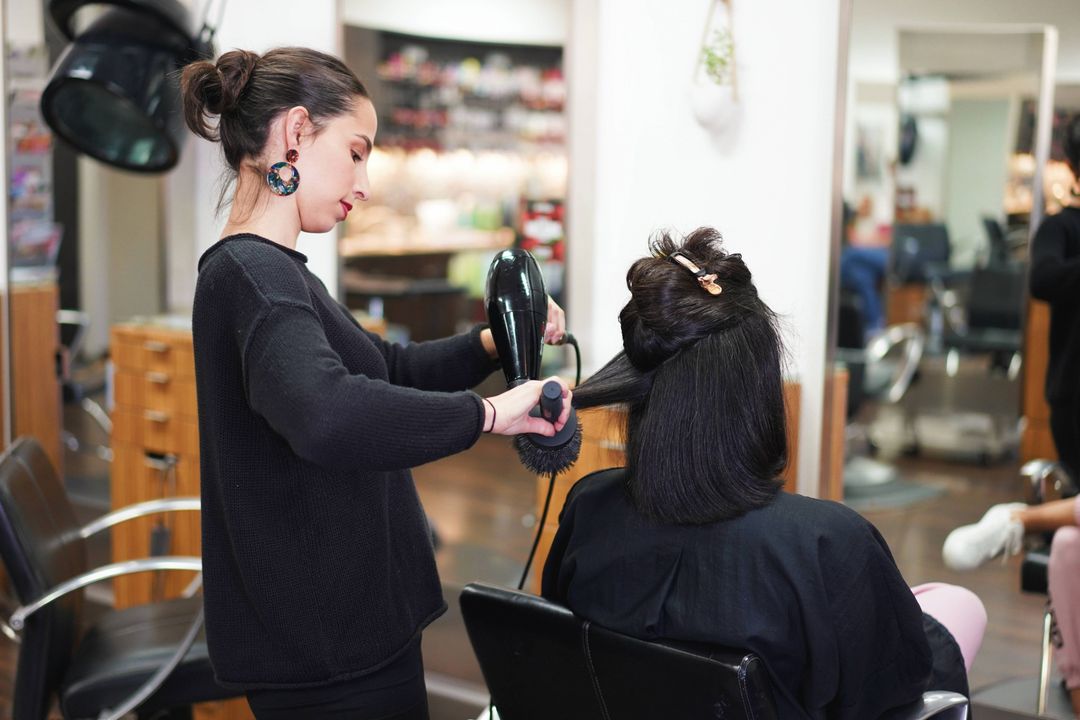
We were calling troubled beauty schools across the country—secret shopping them. On the phone, I was a high school graduate named Tim who didn’t click with my local community college and wanted to know more about cosmetology.
Could I take out student financial aid? What was “accreditation?” Did these schools have it?
The answer on the other end of the phone call was almost always wrong.
That’s how New America started investigating a regulator and overseer of beauty schools, a college accreditor called the National Accrediting Commission of Career Arts and Sciences, or NACCAS.
Accreditors are publicly obscured but critically important entities that vet colleges, which unlocks access to federal financial aid. This is taxpayer money without which most schools could not survive.
Being accredited signifies a college has met certain quality standards, so students and the public deserve an accurate picture of an institution’s accreditation status.
But we discovered through our research and secret shopper calls that colleges almost never disclosed when NACCAS sanctioned them—as they are required to—or they shared incorrect information about accreditation or their programs. NACCAS did not appear to be aware these colleges were flouting transparency rules. And NACCAS itself was often too lenient, permitting beauty schools with continual problems—often of the same nature—to hold onto accreditation.
Our findings helped inform the U.S. Department of Education’s own evaluation of NACCAS, and last week, it punished the accreditor. For one year, NACCAS cannot add any new colleges to its roster of accredited schools. It could face additional penalties if it doesn’t address certain problems. About 300 colleges had accreditation pending with NACCAS, the Education Department indicated.
Among its failings, the accreditor did not police colleges under its watch closely enough, the Education Department determined. That lackadaisical oversight let poorly performing, financially floundering colleges rake in taxpayer money.
As Nicholas Kent, under secretary and the Trump administration’s top higher education official, wrote to NACCAS: “Ensuring that an institution is offering a quality education—and remediating noncompliance—is the fundamental role of an accreditor. Here, it is clear that NACCAS has failed to conduct these tasks meaningfully.”
We agree.
Hundreds of federally funded colleges fall under NACCAS’ purview. These schools reaped more than $1 billion of taxpayer dollars and enrolled tens of thousands of students in the 2022-23 academic year alone.
As we have documented, cosmetology students are often among the nation’s most impoverished or otherwise vulnerable. The federal government pushing NACCAS to actually do its job can help protect these students and the public’s investments.
The Trump administration could have gone further and stripped NACCAS’ ability to gatekeep federal aid—and it should, if the accreditor fails, within the year the department gave it, to remedy the mistakes we bore witness to. The Education Department’s own advisory committee on accreditation, commonly known as NACIQI, recommended it take that step and revoke NACCAS’ federal recognition.
NACCAS’ most egregious problems stem from how it handled colleges that violated its standards.
Instead of considering all problems at a college as a single record, NACCAS often handled each rule infraction as a separate matter. This set up a loophole for NACCAS colleges. If an institution ran into a problem, and fixed it by a deadline the accreditor set, it could dodge harsh consequences, like accreditation loss, even if that same college kept running into new issues.
A hypothetical: A beauty school could face grave financial troubles—it might not have enough money coming in to sustain operations. NACCAS would give that theoretical college 15 months to fix its problems. But if another financial speedbump arose during that period, then NACCAS would view that as a separate problem, and provide another 15-month window to address the issue before it would apply a more severe punishment.
In this scenario, that college would have 30 months or more to come into compliance with NACCAS rules.
One example we looked at was the now-defunct Arizona Academy of Beauty. In October 2024, NACCAS issued the school a “show-cause” order, a serious sanction that requires a college to explain why it should keep its accreditation. The school had failed to submit the financial statements NACCAS relies on to review institutions. Two months later, NACCAS moved to revoke its accreditation. Then it issued a second show-cause order, which made little sense because NACCAS had already started pulling accreditation.
In his letter, Kent lambasted NACCAS’ methods.
“I find significant fault with NACCAS’s practice of stacking decisions,” Kent wrote. “It is clear that the agency has obfuscated the narrative of several of these institutions, taking new actions without resolving old ones to indicate that the institution has faced new challenges, rather than failing to rectify old concerns.”
NACCAS was also simply a permissive body. It liberally issued probations in lieu of severe punishments—an Education Department staff member noted that NACCAS was “the heaviest I’ve seen on issuing probations.”
Probations weren’t reserved for minor slip-ups. The Education Department reviewed a year’s worth of NACCAS records, and found that of the 166 probations or similar actions NACCAS took against schools, about 78 were related to financial concerns. These are problems that could spur an abrupt closure, or otherwise disrupt a college, scenarios where many other accreditors would have just ended access to federal aid.
When institutions’ transgressions were piling up, NACCAS needed to make sure students and the public were aware. It often did not.
Federal regulations require colleges to disclose infractions with their accreditor to current and prospective students within seven days. But Education Department staff parsed the websites of NACCAS colleges and determined “none included accurate information regarding the institution’s accreditation status.”
“I find serious concern with the fact that NACCAS has neglected to confirm its institutions are providing students with appropriate information regarding accreditation status,” Kent wrote. “Without sufficient knowledge, students may assume they have a means to finance their education when the institution may not be eligible” for federal aid.
NACCAS did not have “adequate follow up” and did not make sure colleges told students about policy violations, Darin Wallace, the organization’s executive director, admitted during a public meeting earlier this year.
Obscurity and erroneous information abounded in our secret shopper calls.
The owner of the closed Arizona school didn’t tell us that it was in the process of losing accreditation, even when we asked about its status. Some colleges still listed on their websites that they were NACCAS accredited, despite no longer having access to federal aid—some had already shut down.
NACCAS had other transparency problems, too. It, for instance, would incorrectly report sanctions to a federal database, a public-facing website detailing accreditors’ actions taken against colleges. This is a critical tool for researchers and investigators who want to learn more about colleges, particularly private institutions.
Students have based the life-altering decision of which college to attend on publicly available materials. But NACCAS’ failures in managing its colleges left them with potentially false and misleading facts. And its breakdown in punishing colleges permitted those with poor outcomes and shaky finances to blossom.
The accreditor has a year to repair its processes and prove that it can properly oversee cosmetology schools. When people pick up the phone and and ask beauty schools about accreditation, they should get the truth.
Investigations Manager, Higher Education