
Danila Crespin Zidovsky
Senior Policy and Leadership Specialist
Saul Zaentz Early Education Initiative
This resource is designed for state and local policymakers, agency leaders and staff, and advocates working to strengthen early childhood data systems.




Insights to Action: Perspectives for Early Education Policy and Systems Change is a series produced by the Zaentz Early Education Initiative at the Harvard Graduate School of Education in collaboration with New America. This series surfaces promising early education policy strategies from states, counties, and cities across the country—sharing the approaches leaders are taking, the lessons they have learned, and connections to research—so that policymakers, advocates, and systems-builders can learn from and advance this work.
This resource is for state and local policymakers, agency leaders and staff, and early childhood advocates working to strengthen early childhood data systems. It draws on interviews with policy leaders in Kansas and in Chicago, Illinois, and on policy research in several additional jurisdictions. The lessons we share are grounded in conversations with the people who led the work.
Helping families access high-quality early childhood options requires knowing where children are, what services they’re receiving, and whether those services are working—yet in many places, that information is difficult to access. Compared to K-12, early childhood programs are funded and regulated through a far more complex web of overlapping federal, state, and local programs, making data more challenging to link. Stronger data systems—including dashboards, integrated data systems, and longitudinal systems—can help policymakers use limited resources more strategically, give advocates local evidence, and give communities a clearer picture of strengths and gaps.
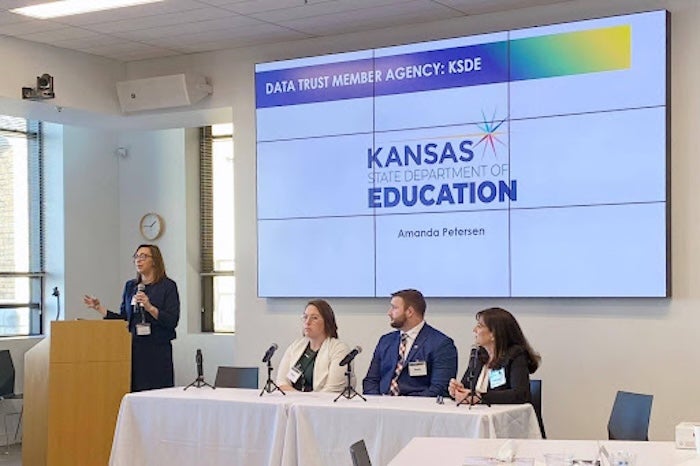
Early childhood programs and services were scattered across multiple state agencies in Kansas, making it hard to answer basic questions. Data either didn’t exist or lived in separate agency systems that couldn’t talk to each other. The Kansas Children’s Cabinet and the University of Kansas’s Center for Public Partnerships and Research (CPPR) partnered to build the Kansas Data Trust—a formal data-sharing framework enabling authorized projects across state agencies, with each agency retaining ownership of its own data. They built on Data Application and Integration Solutions for the Early Years (DAISEY), a system CPPR had created to track children served by early childhood programs; funding came from a Preschool Development Grant Birth through Five.
Put governance first. Previous efforts to link data across agencies had stalled because the structure to hold them together wasn’t in place. This time, before building anything technical, leaders created a legal agreement that established conditions for data sharing, a governance board, and a process for carrying out authorized projects. Getting five agencies to sign took a year and a half. But as one leader reflected, “It was going to be the thing that was going to hold this together, no matter what administration might come next.”1 The agreement also had to navigate legislative concerns about government tracking of children—a political undercurrent that shaped what was possible.
Combined political savvy with technical expertise. The partnership between CPPR’s Teri Garstka, who led the Data Trust design from 2018 to 2023, and Melissa Rooker, executive director of the Children’s Cabinet, was central. Garstka brought deep technical and systems knowledge; Rooker brought legislative experience and the authority to lead state agency directors toward making data a shared priority. As Garstka put it: “It wouldn’t have happened without the both of us.”2
Invested in soft infrastructure. Garstka developed the concept of “soft infrastructure”—the human capacity that bridges the technical and relational dimensions of systems. This means having people who can understand data and technology yet also navigate agency dynamics, build trust, and translate findings across audiences. Soft infrastructure, she said, is “the grease that makes the wheels run.”3
Started with a high-value proof of concept. Rather than build everything at once, leaders began with a high-value question: Does participation in early childhood services reduce child welfare involvement? The results were striking—children who received early childhood services were 23 percent less likely to be removed from their homes. “It was Kansas data,” Garstka reflected, “so that mattered to people.”4
Planned for the long game. Garstka described the work in three phases: the sprint—running hard when a window opens; the marathon—sustaining the work over time; and the relay—ensuring knowledge and momentum can be passed on. “If you are planning for all of those phases—the sprint, the marathon, and the relay—that should infuse all of your design work, because you never know what disruptions are going to happen.”5
Key insight: Kansas succeeded by pairing technical rigor with relational and political savvy—starting with governance rather than technology, combining complementary expertise at the leadership level, and designing for sustainability from the start.
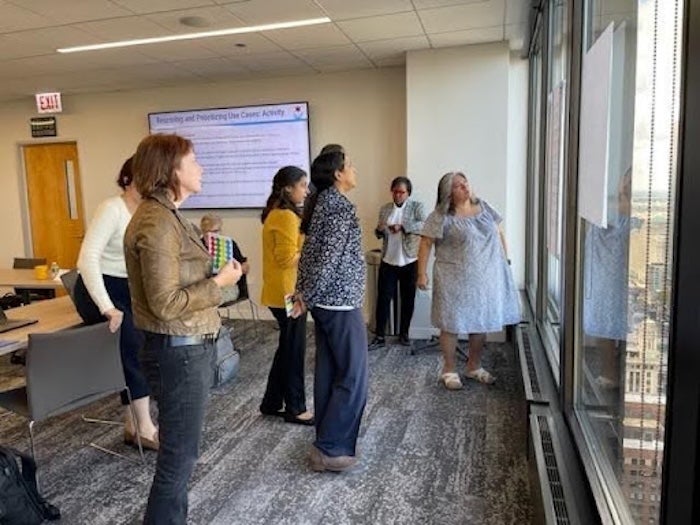
In Chicago, early childhood programs operated across Chicago Public Schools, the Department of Family and Support Services (DFSS), Head Start grantees, and hundreds of community-based providers with no clear, shared view of the children they collectively served. Launched in 2022 after several years of planning, the Chicago Early Childhood Integrated Data System (CECIDS) merged data across agencies to answer 52 use cases identified by an advisory group—from operational questions about enrollment and capacity to longitudinal research on children’s pathways. Northern Illinois University (NIU) served as technical trustee, holding individual data sharing agreements with each contributing agency and producing dashboards and ad hoc analyses. CECIDS is now winding down due to funding constraints; the work ahead includes documenting and transferring lessons about governance, trust-building, and financial sustainability.
Understood that early childhood data is not K-12 data. Building an ECIDS requires expertise in early childhood’s unique landscape: blended and braided funding, multiple agencies, community-based providers, transient families, and data systems never designed to work together. As one leader said: “You need to have conversations with your data providers to understand how those data are created, how they’re stored, how you’re ingesting them—and then how you can process it.”6
Maintained data integrity as the foundation of trust. When new leadership inherited CECIDS in 2023, the system required a technical overhaul. But the harder work was restoring agency confidence in the data. When published numbers don’t match agency records, trust erodes quickly. As one leader put it: “You put out numbers, after building all this trust with your stakeholders, that don’t reconcile with them—you will lose [trust] like that. And it’s very hard to rebuild.”7 That meant planning to meet individually with each agency to review their numbers before anything was published.
Invested in the translator role. The most valuable hire is someone “deeply interested and curious about learning the business”—the programs, agencies, and data systems that make up early childhood.8 Rather than serving primarily as a technical expert, this person asks probing questions, understands stakeholders, and translates that understanding to the technical team. Knowing your audience also matters: sending SQL code to a family child care provider doesn’t meet them where they are, and communication that misses its audience can undermine trust.
Planned for financial sustainability from the start. CECIDS is now winding down in part because agencies were willing to share data but not dollars. The lesson: “If you’re going to stand up an ECIDS and do this time and investment and do it properly, have you really thought about that financial sustainability piece?”9 A financial model—embedded in existing grants, diversified across funding streams, or connected to state infrastructure—deserves the same attention as governance and technical design.
Key insight: Chicago’s experience shows that some of the hardest parts of building an integrated data system aren’t technical—they involve trust, translation, and sustainability. Getting those elements right takes time, but it’s worth the investment.
A few patterns stand out across these examples:
Making data visible. Indiana’s Brighter Futures Data Center curates data for families, providers, and communities, reflecting the principle that data should serve users, not just builders. Nevada’s Early Childhood Advisory Council Data Dashboard, codified through legislation from the start, offers public data on population, workforce, child care, and the state’s economy.
Linking data across agencies. Georgia’s Cross Agency Child Data System (CACDS) links data across six programs and five agencies, demonstrating long-term sustainability through diversified state, federal, and philanthropic funding. Philadelphia’s Office of Integrated Data for Evidence and Action connects birth, health, foster care, pre-K, and early intervention data through a longstanding university partnership, formalized by executive order in 2022. Rhode Island embeds financial sustainability into its Data Ecosystem by funding it in part through federal Medicaid dollars rather than time-limited grants.
Following children over time. Minnesota’s Early Childhood Longitudinal Data System (ECLDS) integrates data from birth records, child care assistance, home visiting, and early education programs as a companion to the state’s broader P-20 system. New Mexico’s Research Informing Success in Education (RISE NM)—the nation’s first entirely cloud-native statewide longitudinal data system—connects early childhood, K-12, postsecondary, and workforce data across five agencies, and it illustrates the relational and project management discipline large-scale data systems require.
Using workforce registries to guide policy. Ohio’s Workforce and Program Analysis Platform (WPAP) converts workforce registry data into dashboards tracking turnover and retention. It demonstrated its value in supporting evidence-based policymaking by showing that the state’s Hero Pay bonus program correlated with greater retention among participating providers.
Data infrastructure presents both technical and human challenges. Common friction points include:
Consider tracking:
Senior Policy and Leadership Specialist
Saul Zaentz Early Education Initiative
Research Assistant, Policy and Professional Learning
Saul Zaentz Early Education Initiative
Senior Writer and Editor
Saul Zaentz Early Education Initiative
Assistant Director, Learning Design and Communications
SaulZaentz Early Education Initiative