

Awista Ayub
Senior Director, New America Fellows Program
The New America Fellows Program aims to support talented journalists, academics, and other public-policy analysts who offer fresh perspectives on major challenges facing society. The strongest work comes out of a strong community—we believe not only in channeling financial support to talented individuals, but also in creating an environment in which they can both do their best work and communicate it effectively.
"The strongest work comes out of a strong community…"
Every year, we choose our National Fellows through a rigorous, highly competitive selection process. We seek to support individuals who advance big ideas and do so through projects that utilize in-depth research, keen reporting, nuanced analysis, and a thoughtful storytelling approach.
A National Fellow’s project might comprise a sweeping reframing of a familiar subject through new research, a masterful presentation of a case study that advances our understanding of a long-standing public-policy dilemma, an innovative new media or academic project that disseminates knowledge about a shared challenge, a compelling narrative that captures public attention around a neglected or misunderstood issue, or a bold policy prescription for moving the nation forward.
"We welcome 200+ National Fellows upon acceptance of the new class…"
We aim to identify thinkers who are advancing the frontiers of knowledge and understanding regardless of ideology or party affiliation. We give fellowships both to younger thinkers at a critical juncture in their career and to more established thinkers advancing new, ground-breaking work. Our National Fellows have backgrounds and voices that reflect the diversity of America.
Since our founding in 1999, the Fellows Program has created a unique identity and reputation as a fellowship that can allow a writer to turn an interesting story into a significant project.
"For our Class of 2019 fellowships, we received 476 applications and awarded 17 fellowships."
The acceptance of this new class is particularly meaningful as 2019 marks three significant milestones both for the program and the organization: We welcome 200+ National Fellows upon acceptance of the new class, and earlier this year we marked the publication of the 100th Fellows Program-supported book right as we head into our 20th anniversary.
Given the program’s impact and success to date coupled with the volume of applications that we receive on a yearly basis, we recognize the unique opportunity that we have to understand broader trends around issues that are most interesting to storytellers. Oftentimes, our applicants develop projects that speak to the most pressing issues of our day.
For our Class of 2019 fellowships, we received 476 applications and awarded 17 fellowships. Here are some observations about the Class of 2019 candidate pool as well as a few additional observations as it relates to trends from the past three years of applications (Classes 2017-2019).
This year, the Fellows Program received 476 applications from 477 candidates. To note, one application represented a team project and so 477 individual candidates applied to the fellowship and, thus, several statistics reflect that count, while other statistics reflect the 476 application (project) count.
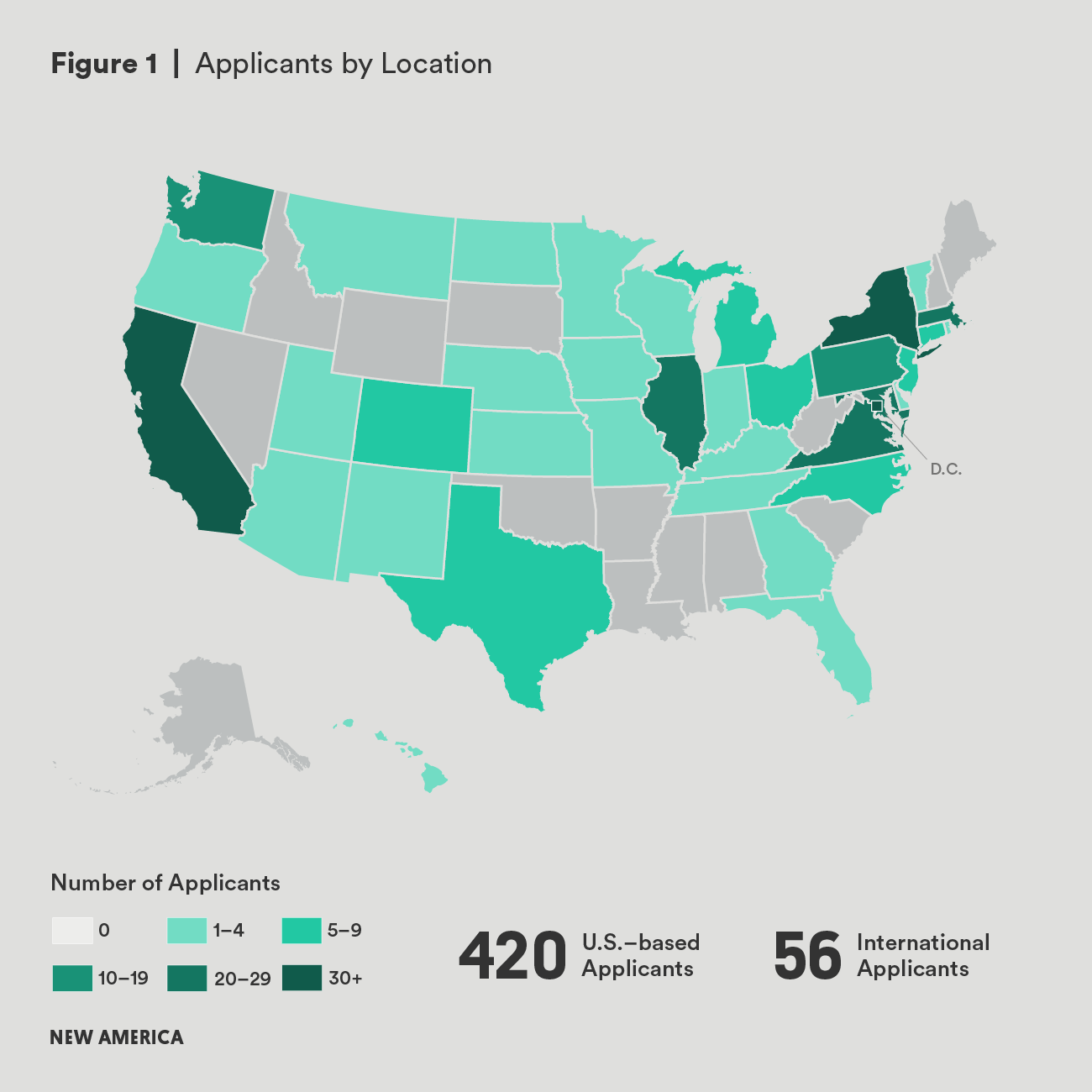
Class of 2019 by Location
Broadly, this year, 420 applications were submitted by candidates that were based in the United States and 56 were based abroad, and more specifically, the U.S.-based applicants were located in the following states:
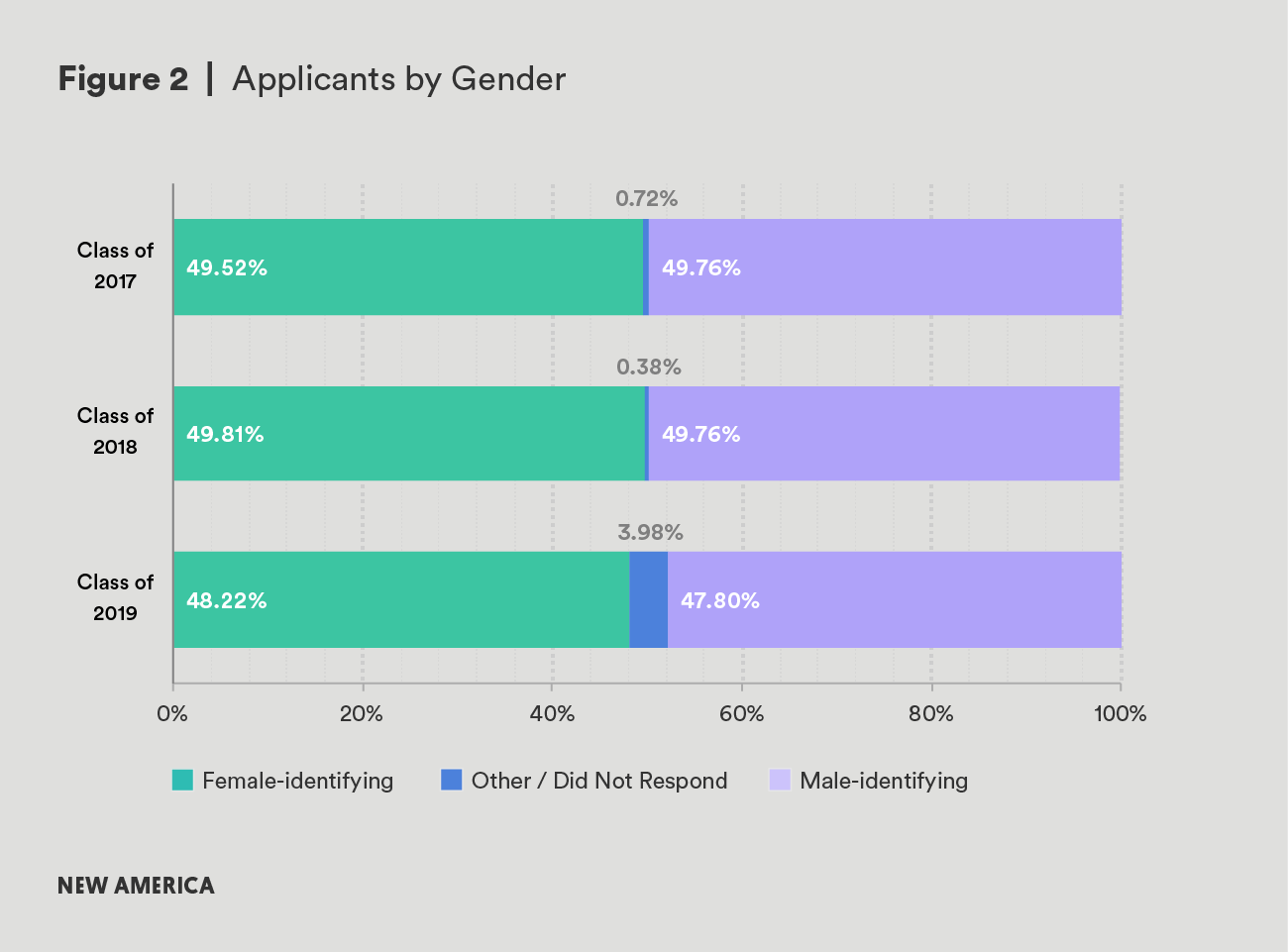
Class of 2019 by Gender
This year, we again reached parity between those candidates who identify as female and those that identify as male. This is in line with the last two year’s candidate pool and is a promising trend to note as it relates to who applies to the program.
Class of 2019 by Issue Areas
Every year, candidates submit applications that speak to a range of pressing global and domestic issues. Given the annual application cycle, this provides the program with a unique insight into the types of stories that journalists, academics and other thought leaders are attuned to in that given year.
For any given class year, candidates submit their application in early February of the previous year, i.e. the Class of 2017 National Fellows submitted their application in February 2016.
For the Class of 2017-2019 fellowships, the five broad issue areas among the applicant pool reflected as follows:

Keyword Mapping
An extensive analysis of a keyword mapping exercise demonstrates the following trends:
You can learn more about the work of our the 17 Class of 2019 National Fellows here.
New America’s Fellows Program thanks Eric & Wendy Schmidt, New America's board of directors, Emerson Collective, the 11th Hour Project, Arizona State University's Center on the Future of War, the Center for the Future of Arizona, Southern New Hampshire University, and New America’s Muslim Diaspora Initiative for their support this year.
We would also like to thank Audrey Gu, Ellie Budzinski, Maria Elkin, Joanne Zalatoris and Clarke Reeves for supporting the design of and preparation of this report.
Senior Director, New America Fellows Program


