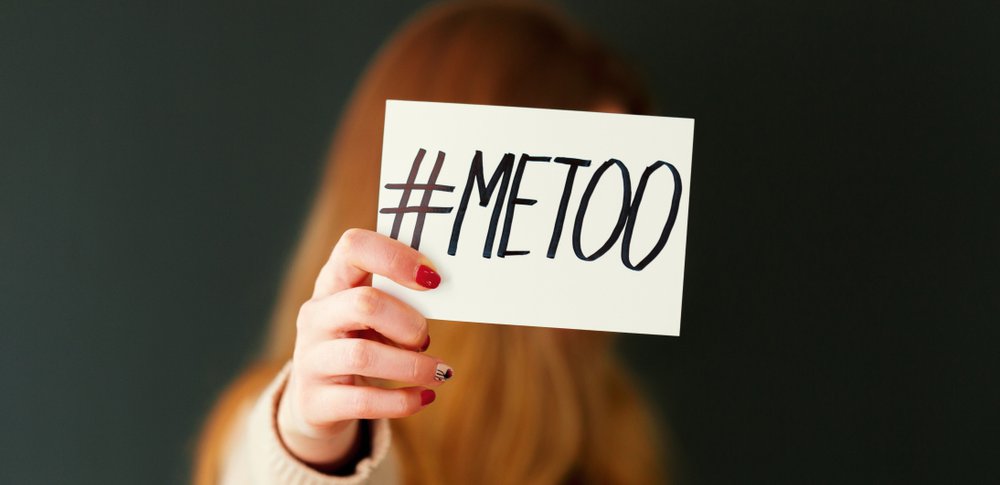
Sexual Harassment: A Severe and Pervasive Problem
Acknowledgments
The authors of this paper would like to thank the following individuals for their feedback on drafts of this document: Ally Coll Steele, Ariane Hegewisch, Elena Silva, Haley Swenson, Joan Williams, and the National Women’s Law Center.
We would also like to acknowledge and thank Kater Gordon and the Modern Alliance Fund at Philanthropic Ventures Foundation for its support of this work.
Downloads
Summary of Findings
Click here to view the companion #NowWhat: The Sexual Harassment Solutions Toolkit.
Sexual harassment is everywhere.
More than four decades after the term “sexual harassment” was first coined to describe unwanted, hostile harassing behavior based on one’s sex, the team at the Better Life Lab analyzed an extensive collection of data and research to draw a more complete picture of the incidence and experience of sexual harassment in the workplace. We have not only focused on professional settings, which have garnered the most media and public attention, but also extended our analysis across all sectors. By dividing industries by gender ratio and wage, we also sought to understand the factors that drive sexual harassment, finding that some are common across all sectors, and others unique to a particular sector. We found that sexual harassment in the workplace remains a severe, pervasive, and troublingly unresolved problem. Even as women comprise nearly half the workforce, sexual harassment persists in virtually every sector of the economy, from male-dominated to female-dominated industries and workplaces, and from low-wage and precarious jobs to high-wage professions.
Sexual harassment is systemic.
Sexual harassment isn't something that just happens because of fleeting circumstance or desire. It is driven in all sectors by imbalances in power. Men hold far more positions of power in all sectors of the economy. Even in female-dominated fields, men are more likely to be supervisors, principals, and managers. In all fields, race and racism add another layer to systemic power imbalances.
Impacts of sexual harassment are felt beyond just the harassing interaction.
This analysis shows that no sector remains untouched by sexual harassment, nor unaffected by its impacts. Sexual harassment damages the lives, health, prospects, financial independence, and opportunities of its victims, and costs businesses not only legal fees, but lost productivity, morale, effectiveness, and talent. Tolerating or failing to adequately respond to sexual harassment can block women’s and other targets’ economic security, access to opportunity, and advancement, which serves to preserve the status quo and power imbalances that drive sexual harassment in the first place.
Women are the most common, but not the only, targets for sexual harassment.
There are basic patterns for sexual harassment, but those patterns do not capture the variations in experience by different groups of people and by workers in different sectors. The data shows that across all sectors, women of lower status are the most common targets of sexual harassment by perpetrators, who are typically men of higher status. But sexual harassment in the workplace is by no means limited to this dynamic. Men, particularly those who don’t conform to traditional masculine norms, and others seen as outsiders, like LGBTQ and gender nonconforming people, can be targets. Women can be harassers. People of color, especially women of color, are more likely to be subject to sexual harassment than their white counterparts.
It’s not just bosses and co-workers who are doing the harassing.
In nearly every sector, we found that it’s not just managers, supervisors, and those in power who sexually harass targets. Harassment can come from coworkers, as is the case for some hostile work environment claims. Sexual harassment is also common from third parties. That’s true for fast-food restaurant workers in the low-wage arena, who can be harassed by customers, and for nurses, doctors, and healthcare workers who can be harassed by patients. It’s also true for highly paid lawyers, who can be sexually harassed by opposing counsel, clients, and judges.
Gaps in labor and civil rights laws create vulnerability to sexual harassment among large numbers of Americans.
A swath of workers across all sectors are not covered by current civil rights laws, and have little or no resources to report or complain about sexual harassment. This includes independent contractors, entrepreneurs, gig workers from any sector, and agricultural and domestic workers—some of whom face additional challenges in the form of precarious immigration status. Members of Congress and other legislative bodies have also exempted themselves and their staffs from many civil rights laws.
Sexual harassment is often driven by narratives, myths, and norms about women, men and workers.
Sexual harassment is fueled, in part, by the stories we tell ourselves and the narratives that we choose to believe. Many organizations are often driven to protect perceived high performers, superstars, creative geniuses, and rainmakers at all costs, thinking that success, innovation, or survival is dependent on that one person, regardless of their behavior. Narratives around the ideal worker and the breadwinner-homemaker ideal perpetuate a gender-harassing power dynamic rooted in the belief that women and others who don’t conform to these traditional norms don’t belong and can’t compete in the work world, and that men don’t belong in caregiving. These damaging mythologies not only drive rampant sexual harassment, but foster abusive and toxic cultures that silence, sideline, and waste the talents and potential of countless targets. Denial—thinking that sexual harassment doesn’t happen in, say, female-dominated environments, or that organizations have already fixed it—is another powerful false narrative that provides fertile ground for sexual harassment to thrive.
Harassment comes in two basic varieties: gender-based sexual harassment and sex-focused sexual harassment.
Sexual harassment comes in roughly two forms: harassment that centers on sex and desire for sexual or romantic connection, and gender harassment. Gender harassment is generally not about sexual attraction or sexuality. Gender-harassing physical, verbal, and symbolic behaviors insult and degrade one’s gender in an effort to assert power, control behavior, or force those who don’t conform out of a particular job or out of the profession entirely. Workers across industries experience these different types of sexual harassment, some of which cross the legal standard of either quid pro quo harassment, or harassment that is so severe and pervasive that it constitutes a hostile work environment that negatively impacts one’s work. But others experience harassment—usually gender harassment—that doesn’t necessarily meet the legal standard but still has a negative impact on the work life of many individuals and on workplace cultures.
The cost of leaving jobs is high for many, which can embolden harassers, keep targets silent, and normalize sexual harassment
Workers in the low-wage sector may tolerate sexual harassment because they need their jobs to survive and have few options. Male-dominated blue collar jobs pay better than jobs in female-dominated sectors and the gender pay gap between men and women is among the smallest of any sector. So targets—and bystanders—may sometimes ignore sexual harassment, or refuse to file a complaint, for fear of losing a good-paying job with the promise of a foothold in the middle class. Higher-wage professionals may also stay in toxic, sexually harassing environments because they’ve invested so much education, time, and effort into building their careers, networks, or reputations, that the risk of being labelled a pariah, or ostracized, can keep victims silent. All of which create work cultures where sexually harassing behavior can become normalized.
Most reporting systems don’t work.
We found problems in every sector in the way organizations respond to sexual harassment complaints. In many settings, the system is often set up to fail, with victims required to report claims of sexual harassment through a strict chain of command that often includes perpetrators or their allies. This effectively silences victims or freezes complaints. This has been a particular problem in the military, though efforts have been made to allow confidential reports to be made outside the chain of command. But that only ensures a stopgap measure of enabling the victim to receive support, not that the perpetrator will be counseled or punished or the culture that tolerates harassment will be changed. In the tech sector, some male-dominated start-ups move so quickly that human resources and sexual harassment policies are an afterthought, at best. In low-wage settings in particular, policies and reporting systems are often murky. And many workers, because of the type of job they have (agricultural work) or legal status (undocumented), have no access to reporting at all.
We need more data.
In producing this document, we struggled to find robust, consistent data, on a national, industry, or even organizational level that systematically documented the extent of sexual harassment in the American workplace. We also struggled to find solid research on the efficacy of our arsenal of responses to it. Going forward, we need more high quality data on all levels, to further shine a light on sexual harassment and to elevate a variety of functional solutions that work across different sectors and workplaces.
Solutions must be targeted and aimed at changing culture, systems and structures.
We found that organizations typically have three primary responses to combat sexual harassment: ignoring complaints or harassment, firing a harasser, and/or offering sexual harassment training. These approaches aren’t working. Firing a harasser may solve a specific problem in the short term. Offering a canned, digital sexual harassment training, as is the norm, may protect an organization from legal liability, but does little to change its culture. Ignoring complaints and failing to recognize sexual harassment creates toxic cultures that normalize harassment. None of these strategies are enough to respond to, prevent and end sexual harassment. So what works? As a companion to this report, the Better Life Lab has produced a #NowWhat toolkit with examples, strategies, and evidence for promising solutions in combating sexual harassment—from top-down, system-level responses to granular, individual actions.
Introduction
Women in the U.S. workforce are more likely to be employed in less powerful positions across job sectors
Error: Data visualization bundle URL missing.
Long before the #MeToo movement exploded in 2017, before the #TimesUp Legal Defense Fund and the wave of international outrage against powerful men like Harvey Weinstein, Roger Ailes, and alleged perpetrators of their ilk, before Tarana Burke, Anita Hill, or the U.S. Navy and Marine Corp’s Tailhook scandal, there was Carmita Wood. In 1974, Wood, a mother of four, resigned from her steady job as an administrative assistant to a renowned nuclear physicist at Cornell University. His repeated unwanted sexual advances made her physically ill and her request to transfer positions was denied. Unable to find other work to support her family, Wood requested unemployment benefits, which the state Department of Labor denied, ruling—after cracking jokes about her experience—that she had resigned for “personal non-compelling reasons.” At the time, there were no words to describe what had happened to Wood. Although the Civil Rights Act of 1964 prohibited sex discrimination in the workplace, no one thought that could apply to a male boss who repeatedly groped, forcibly kissed, jiggled his crotch near, and routinely thrust his body against his unwilling female assistant, pinning her to her desk during the workday.
The following year, Wood, along with other activists at the university, created a group called Working Women United and held a Speak Out for what turned out to be a shockingly large number of women who shared similar experiences, making visible their pain, anger, shame, and unfair treatment. Together, they coined the term “sexual harassment” to describe what had happened to them—and, as a result, helped spark a movement of storytelling, social justice, and change. A decade later, the case of Mechelle Vinson, a bank teller repeatedly harassed and raped by her boss, ultimately resulted in the 1986 Supreme Court ruling that sexual harassment is a form of gender discrimination under the Civil Rights Act of 1964.
The harassment they encountered wasn’t a result of women being new to the workplace. Even in Wood’s time, women made up 39 percent of the total labor force in the United States. All these years later, even as women comprise nearly half the workforce, sexual harassment in the workplace remains a major, pervasive, and troublingly unresolved problem in virtually every sector of the economy, from male-dominated to female-dominated industries and workplaces, and from low-wage and precarious jobs to high-wage professions. The Pew Research Center, for instance, found that six in 10 women and nearly three in 10 men say they’ve experienced verbal or physical sexual harassment or unwanted sexual advances in and outside the workplace, with 69 percent of women who have experienced harassment saying at least one incident happened in their workplace.
Sexual harassment in the workplace remains a major, pervasive, and troublingly unresolved problem in virtually every sector of the economy.
The negative consequences of harassment can be long-lasting and severe. Those who experience sexual harassment in any work environment can suffer chronic health problems, post-traumatic stress, depression, substance abuse, employment difficulties, and relationship problems. And the cost to business can be high. Research has found that each incident of sexual harassment costs organizations about $22,500 a year in lost productivity, and U.S. companies have paid out more than $295 million in public penalties in recent years, which doesn’t include private settlements. In 2016 alone, U.S. companies paid $2.2 billion in insurance policies that include coverage for sexual harassment complaints.
Yet much of the sporadic attention paid to workplace sexual harassment by the media and general public over the years, and in the initial stages of the #MeToo movement, has centered on the stories of celebrities, politicians, high-profile artists and business leaders, egregious legal cases, and the media itself. Our aim with this analysis is to provide a clearer picture of the phenomenon of sexual harassment by broadly surveying the landscape of sectors in the economy and a variety of professions. We seek to better understand the roots of sexual harassment and the dynamics that drive it in various sectors, in order to design the best strategies to better prevent, respond to, and ultimately, end sexual harassment in all sectors.
Although much remains unknown about the prevalence of sexual harassment, because so few cases are actually reported or rise to the narrow legal standard to pursue a claim, the current responses clearly aren’t working. Typically, organizations handle sexual harassment by ignoring it, firing harassers, or providing sexual harassment training aimed at protecting organizations from legal liability, rather than changing cultures or eradicating sexual harassment. We reviewed the latest research and data on harassment and assault from across industries, sectors, and populations, marshalling the work of, among others, legal experts, social scientists, polling institutions, journalists, the public sector, the business community, and advocacy and research organizations. Through this expansive analysis, we lay out the key factors that drive sexual harassment in different sectors and different workplace settings, which we organized by looking at the intersection of gender ratio and wage earnings. Only with a clear understanding of how sexual harassment operates across different sectors, can we begin to identify and effectively implement the changes required in policy, practice, law, and culture to respond to, prevent and end sexual harassment.
Sexual harassment is both a legal concept and an experience, and as such, there are a number of ways to define it. Because the legal concept grew out of U.S. case law, sexual harassment, as defined by the Equal Employment Opportunity Commission (EEOC) and used to guide legal action, is described in two fairly narrow ways: Quid pro quo sexual harassment describes cases when someone with power and authority, typically a boss or supervisor, pressures a subordinate worker for sexual favors in exchange for a promotion, raise, or favorable work assignments, or to avoid being fired or demoted. The other legally recognized type of harassment is a pervasive hostile or offensive working environment, which could include everything from repeated lewd comments, to off-color or anti-women/minority group jokes and comments, to posting pornography or making unwanted sexual advances, and even to sexual assault.
The narrow legal definition, which forms the basis of most workplace sexual harassment prevention policies and training, doesn’t capture the full range of experiences of sexual harassment. Researchers often use a broader social-psychological definition for what they call sex-based harassment: “behavior that derogates, demeans, or humiliates an individual based on that individual’s sex.” The broader description defines sexual harassment as either sexual-advance harassment, which includes sexual coercion and unwanted sexual attention, or gender harassment, which may not be sexual at all, but rather encompasses verbal, physical, and symbolic behaviors intended to convey “insulting, hostile, and degrading attitudes about” one’s gender. Gender harassment may include “female or male-bashing jokes, comments that women do not belong in management or that men have no place in childcare, and crude, gender-related terms of address.” Sexual coercion parallels the legal quid pro quo definition, whereas unwanted sexual attention and gender harassment can create a hostile working environment.
The negative consequences of harassment can be long-lasting and severe.
In this report, we use the broader academic social-psychological definition of sexual harassment. We acknowledge that sexual harassment is a spectrum of discriminatory behaviors and unwanted experiences that range from lewd comments to gender harassment to unwanted sexual attention to sexual coercion to sexual assault and rape. These behaviors stem not just from sexual desire, but also from unequal power dynamics, racism, misogyny, and gendered cultural expectations. We also note how sexual harassment can take different forms and frequency based on these power dynamics for different intersecting identities—gender, race, ability, sexual orientation, or immigration status. For instance, the EEOC cites research that members of racial minority groups experience higher levels of harassment than whites, that women experience more harassment than men, and that women of color experience more harassment than white women.
Although we are concentrating on sexual harassment in the workplace, it’s important to recognize that sometimes the experience transcends work and home boundaries. As researchers Louise Fitzgerald and Lilia Cortina write:
“If a supervisor rapes a female waitress in a restaurant meat-locker during the night shift, is it sexual assault or sexual harassment? If he threatens her with a knife to force her cooperation does the incident become assault with a deadly weapon? If she happens to be his girlfriend (whom he regularly batters and stalks through the use of workplace technology,) is this harassment or intimate partner violence? The only possible answer to these questions is ‘Yes.’”
To explore the structural factors that drive sexual harassment, this analysis is broken into four chapters, each of which describe a specific employment sector—defined by the ratio of men to women and median wages earned—to map how those dynamics influence when and how sexual harassment is most likely to happen and why.
An analysis of the existing research on sexual harassment shows that power and gender are the two greatest factors in determining the frequency and type of harassment workers will experience. Because power is a difficult factor to measure, we use individual median wage as the closest available proxy for power. We then use individual median wage data to divide occupations into four groups for analysis. Below is our analysis of this data on the incidence and experiences of harassment by gender and wage, as well as additional factors, such as race and workplace structure.
The four sectors include:
- Female-dominated, low-wage work
- Male-dominated, low and middle-wage “blue collar” work
- Female-dominated, middle and higher-wage “pink collar” work
- Male-dominated, high-wage “white collar” work
Specifically, we examine how low and insecure wages, isolation, gender imbalances, cultural expectations, legal protections, and uneven power structures across sectors, in workplaces and in society, drive the occurrence and prevalence of sexual harassment.
The sectors are arranged, roughly, to correspond with what little we know about sexual harassment incidence rates. One analysis of EEOC data by the Center for American Progress found that workers in the low-wage, female-dominated sectors of food service and retail filed three times as many sexual harassment claims in the past decade. This could be due to the larger presence of women in low-wage work, where women make up nearly six in 10 low-wage workers. Still, the fact remains that these constitute the majority of industry-identified sexual harassment claims. Women who work in these settings often work for a subminimum wage and rely on tips, which requires them to “curry favor for a living,” and put up with or remain silent about any sexual harassment they may experience in order to make ends meet.
The narrow legal definition doesn’t capture the full range of experiences of sexual harassment.
Research also shows high incidence of sexual harassment in hierarchical, traditionally male-dominated fields that tend to pay coveted middle class wages—construction, manufacturing, law enforcement, and the military. In such instances, sexual harassment is often less about sexuality or the “come on,” research has found, and much more about using sex and gender as a “put down”—a way of signalling that women, LGBTQ persons, and men who don’t conform to traditional masculine stereotypes don’t belong, and to harass them out the door. In male-dominated, low-wage settings like agriculture and janitorial work, race, class, and immigration status, in addition to gender, can widen power differentials. This makes women and marginalized populations much more vulnerable, not only to sexual harassment, the data shows, but to sexual assault and violence.
Nearly 40 percent of employed women work in occupations that are majority women: education, health, nursing, care work, secretarial and administrative positions, housekeeping, customer service, and retail. Yet while “pink collar” jobs like nursing and teaching are often assumed to be oases from sexual harassment, the data shows that those in power (doctors, supervisors, principals) are often men. And harassment can also come not only from above, but from the side–from third parties such as customers, clients, vendors, and suppliers. It’s also important to point out that women can be perpetrators and men can be targets of sexual harassment. This may not be the norm but is increasingly important as women move into positions of power. It is also important that we make room for broader understandings of potential victims beyond just men and women, as traditional notions of binary genders make way for more fluid gender categories.
To delineate lower and higher-wage jobs, the analysis focuses on an industry’s or occupation’s average wages compared to the individual annual median wage for full time American workers of above or below $37,690, which is taken from the U.S. Bureau of Labor Statistics (BLS) Occupational Employment Statistics data from 2017. Note, this data excludes military, agricultural, and some care work. A sector’s description as male or female-dominated is determined by U.S. Census Bureau data on gender breakdowns by sector. We take into account the fact that the gender segregation of jobs within a sector can vary wildly, from, say, the heavily female, frontline, lower-wage bank teller jobs in the financial services sector to the heavily male, highly paid Wall Street jobs in investment banking.
Across America, men and women work in different occupations
Error: Data visualization bundle URL missing.
In addition to this landscape analysis, we have produced a companion #NowWhat Sexual Harassment Solutions Toolkit. In past decades, most of the workplace response to sexual harassment has been to require prevention trainings, which have largely been aimed at reducing employer legal liability, are not well studied, and should not be seen as silver bullet. Having reviewed studies of sexual harassment trainings, the EEOC Select Task Force found that in order for this approach “to be effective in stopping harassment, such training cannot stand alone but rather must be part of a holistic effort undertaken by the employer to prevent harassment that includes the elements of leadership and accountability.” The toolkit includes not only updated guidance to make training more effective, but also highlights evidenced-based and promising real-world solutions to recommend constructive paths forward. This research report is designed to build on the powerful stories of Carmita Wood, Mechelle Vinson, and the #MeToo movement and their efforts to permanently break down the structures and move beyond the norms that have enabled harassment to persist in order to create civil and respectful work environments where all workers can thrive. We see this as a key condition in allowing all people to have agency and opportunity at work, and to live healthy, secure, and empowered lives.
The Scope of the Problem
Despite the fact that 98 percent of companies say they have sexual harassment policies and many provide sexual harassment training—largely digital and primarily to inoculate themselves from legal culpability—the problem of sexual harassment persists. A 2016 EEOC literature review found that 25 to 85 percent of women have experienced sexual harassment at work. The most recent Pew Research Center survey data reveals that women and Democrats are more likely to view this as a problem than men and Republicans. The survey also found that women working in environments dominated by men were more likely to say sexual harassment is a problem in their industry than women working in environments dominated by women—62 to 46 percent. One study found that a woman who works in a male-dominated setting is nearly two times as likely to experience gender harassment as a woman who works in a gender-balanced environment.
Yet the full extent of the problem is unclear; there is no gold standard data on the prevalence of sexual harassment. Aside from surveys, which rely on self-reporting, the best hard data we have is the number of sexual harassment complaints that are filed with the EEOC. Yet these statistics are likely the tip of the iceberg. That’s because many people who’ve been harassed remain silent and never file a complaint for a variety of reasons: fear of retaliation, minimizing or dismissing the behavior because it’s seen as common or acceptable, or wanting to forget the incident and move on. The EEOC reports that 87 to 94 percent of those who experience it don’t file a formal complaint. One 2003 study found that nearly three-fourths of those filing complaints were retaliated against. Others don’t speak out because the unwelcome behavior they’ve experienced may not technically meet the legal standard of sexual harassment, although the experience is no less corrosive. And, aside from the recent explosion of outrage and #MeToo storytelling, sexual harassment has long been dismissed in many quarters, from labor unions to the halls of political power, as a “women’s issue” of either little importance, or something that women have brought upon themselves, a view that decades of research refutes.
25 to 85 percent of women have experienced sexual harassment at work.
According to Center for American Progress researcher Jocelyn Frye’s analysis, which looked only at the kind of workplace sexual harassment that could result in litigation, nearly one-third of the more than 90,000 of all charges filed with the EEOC in fiscal year 2016 involved a claim of some form of harassment—almost half of which involved sex-based harassment. These data aren’t without their limitations: over half of EEOC claims don’t list industry, and the EEOC doesn’t track complaints by certain groups like contractors, farm workers, and domestic workers.
While working in certain industries leaves some employees more vulnerable than others, people with multiple intersecting historically marginalized identities, such as gender, race, ability, class, and sexual orientation, are further disadvantaged and often experience sexual harassment differently than white or heterosexual groups. The work of sociologist Adia Wingfield highlights how black men experience sexual harassment and racial discrimination in the medical profession, be it as doctors or nurses. Studies of military personnel have found that white women tend to experience more gender harassment, while black women face more unwanted sexual attention and coercion. A survey of LGBTQ people out of Harvard revealed over half experienced some form of gender-based discrimination, with LGBTQ people of color more than twice as likely to report discrimination while applying to jobs or interacting with police as white LGBTQ people. Low-income people lack the funding and access to resources to protect themselves before, during, and after sexual violence. Though difficult to definitively demonstrate just how these experiences differ, given the already limited amount of data on sexual harassment, it is reasonable to suspect that low-income, LGBTQ, disabled, and/or people of color’s experiences of harassment are even more difficult to navigate as they are forced to comply with multiple systems of power.
With this broader view of sexual harassment as just one problem in a larger context of inequality and violence vulnerable people face today, below we map the landscape of harassment as it occurs across very different workplaces.
- Summary of Findings
- Introduction
- Making Ends Meet in the Margins: Female-Dominated, Low-Wage Sectors
- Breaking Into the Blue-Collar Boys’ Club: Male-Dominated, Low- and Middle-Wage Sectors
- Finding a Financial Foothold: “Pink Collar” Female-Dominated, Middle Wage Sectors
- Pleasing the Powerful and Prominent: Male-Dominated, High-Wage Sectors
- Conclusion




Making Ends Meet in the Margins: Female-Dominated, Low-Wage Sectors
Error: Data visualization bundle URL missing.
Workers in low-wage, female-dominated industries have the highest reported incidences of sexual harassment and assault by sector. They also contend with low wages, most with little or no benefits, unpredictable schedules, and limited access to social policies like social security or paid sick leave that would enable them to combine work and care responsibilities. They’re frequently left out of anti-discrimination or labor laws. The move by some employers away from hiring full-time employees in favor of independent contractors means many of these low-wage contract workers will neither be covered by employer sexual harassment policies nor have standing under the law to seek legal recourse in the event that they’re sexually harassed. Regardless of their employment status, low-wage workers with jobs that require more time in public spaces such as servers, clothing retail salespeople, and hotel workers—where the majority of women in the labor force are employed—are likely to experience harassment from multiple sources, also known as “third party harassment,” from customers, vendors, and clients.
Low-wage workers are especially vulnerable to sexual harassment depending on their language fluency, ability to access and navigate technology, immigration status, and when other parts of the their lives such as housing, transportation, or legal status are tied to employment. Women of color and immigrant women are over-represented in low-wage work, accounting for nearly six in 10 of the more than 26 million workers who typically earn less than $11 an hour, and are often managed by or work for men, be it in a restaurant, hotel, or retail establishment.
Low-wage, female-dominated jobs include:
- Hospitality: Full-service restaurant workers, fast-food restaurant workers, and coffee shop workers, cleaners
- Retail: Department store workers, grocery store workers, florists, gas station attendants, drug store workers
- Garment workers: sewing machine operators, tailors, dressmakers, sewers
- Domestic workers: nannies, home health aides, child care workers
Factors Contributing to Sexual Harassment
Across low-wage, female-dominated work sectors, common factors leave workers vulnerable and contribute to or exacerbate sexual harassment in these fields. In particular, women who work in these settings are often isolated, or work for a subminimum wage and rely on tips, and therefore are forced to please customers, even if that means tolerating or remaining silent about sexual harassment, in order to make ends meet.
On the face of it, some low-wage industries, such as retail, seem more gender-equal than they are, simply because of the balance of men and women in them. But breaking down the industry data from the Bureau of Labor Statistics reveals what researchers call vertical segregation, in which men occupy higher status jobs within the industry, while women are concentrated in lower-status jobs in the same sector. For instance 72 percent of cashiers are women while 57 percent of their supervisors are men. As the section of this report on high-wage, female-dominated jobs will describe in greater detail, being segregated in lower wage work, while managed by men, creates room for abuses of power and difficulties in contesting and reporting harassment.
Tipped Work
According to the Bureau of Labor Statistics, 60 percent of food preparation and service workers, 70 percent of waitresses, 86 percent of hostesses, and 88 percent of maids and housekeepers are women. Analysis of EEOC data found that between 2005 and 2015, accommodation and food services (“full-service restaurants, fast-food restaurants, coffee shops, recreational facilities, inns, hotels, and other hospitality establishments”) account for the greatest share of claims to the commission at 14 percent. Other research by Hart Research Associates suggests 40 percent of fast food workers have experienced harassment, and the Restaurant Opportunities Center (ROC) United reports that 60 percent of women in the restaurant industry have been targets of sexual harassment, and more than half say they experience it every week. Just as troubling is that working conditions set a precedent early on for many young Americans about what to expect from their workplace. The first job of one in three Americans is in food service, and one in two will work in a restaurant at some point in their life.
Workers in low-wage, female-dominated industries have the highest reported incidences of sexual harassment and assault by sector.
While the Fair Labor Standards Act (1938) established a federal minimum wage, many industries such as retail, service, and tipped work, among others, were initially excluded from the law and follow a “sub-”, or tipped, minimum wage. Today, anyone who earns at least $30 per month in tips can be considered a tipped worker, be they a massage therapist, hairdresser, waiter, or airport attendant pushing the elderly and disabled to their gates. In theory, employers are required to ensure their workers earn at least the federal minimum wage ($7.25 an hour) by making up the amount not covered by tips, but the U.S. Department of Labor reports widespread noncompliance with these rules, and enforcement is lax.
Tipped workers who earn the federal subminimum wage of $2.13 an hour are twice as likely to experience harassment. According to ROC United, the seven states (Alaska, California, Minnesota, Montana, Nevada, Oregon, and Washington) that got rid of the subminimum wage system have seen half the rates of sexual harassment as states that have retained a subminimum wage. Because their already precarious livelihood depends on tips, it makes it that much more difficult for tipped employees to react to, and/or report sexual harassment. As a result, workers in customer-facing jobs such as food service, accommodation, and retail contend with normalized harassment from customers, coworkers, and managers. This glass floor, a term coined by ROC United to describe workplaces that leave “workers in a state of insecurity because of the intersection of economic precariousness and a sexualized work atmosphere,” forces workers to “curry favor” for a living.
Murky Reporting Policies, Lack of Benefits
Many low-wage workplaces are too small to have reporting structures for sexual harassment, or a human resources department. Even if these mechanisms exist, as is the case in many retail jobs, murky policies and unclear reporting structures make it difficult to report and contest harassment. Moreover, in addition to the aforementioned lack of harassment protections when labeled as independent contractors or when working for small employers, many low-wage workers are excluded from other social policy benefits such as the Social Security Act, so they have little or no financial cushion in case of disability or need to retire, making it difficult to leave a job or complain about a supervisor for any reason, including sexual harassment.
Isolation and Difficult Working Conditions
Domestic workers such as home health aides, nannies, and housekeepers also work in isolation (in client’s homes), making them potentially more vulnerable to sexual harassment. These workers are employed in the most female-dominated of all professions—94 percent of childcare workers and 89 percent of home health aides are female—and among the lowest paid. While little is known definitively about the prevalence of sexual harassment in care work, research from the National Domestic Workers Alliance and University of Illinois at Chicago found “Thirty-six percent of live-in workers report that they were verbally harassed in the past 12 months, and many others have been threatened, subjected to racial slurs, or sexually abused.”
One union survey of 500 hospitality workers in Chicago, Hands Off, Pants On, found that nearly 60 percent of hotel workers said they’d been sexually harassed by guests. Nearly half of the hotel housekeepers surveyed—who often work alone cleaning rooms—said guests had flashed them or opened doors while naked.
Because their livelihood depends on tips, it makes it that much more difficult for tipped employees to react to, and/or report sexual harassment.
Taxing Physical Demands and Danger
The speed and physicality of many low-wage jobs, such as in janitorial and hospitality work, also affects how workers react to harassment. According to Abby Lawlor of the Unite Here! Local 8 union in Seattle, the physicality of work and physical experience of stress in these roles makes it difficult for workers to process and report an experience of sexual harassment. Low-wage work in hospitality, for example, is associated with higher injury rates than coal miners. Pain workers already might be experiencing due to their job, lack of time, and exhaustion, as well as pressure to finish their work, and provide for their families, may inhibit some workers from reporting sexual harassment.
Legal Status
Both documented and undocumented immigrants tend to be a large portion of the low-wage workforce because the low wages, poor working conditions, and lack of benefits make the jobs unattractive to more upwardly mobile, U.S.-born workers. In addition, much low-wage work is under-regulated, making it easier for employers to hire the “cheapest” immigrant workers whose status makes it difficult to contest wages, harassment, and other negative experiences on the job. Although technically protected under Title VII of the Civil Rights Law, many workers may fear putting their immigration status at risk if they report sexual and other instances of harassment, abuse, or other crimes in what Human Rights Watch calls “the crosshairs of harsh immigration laws and exploitive industries.”
For instance, in the case of EEOC v. DeCoster, the EEOC found sexual harassment up to and including repeated rape, discrimination on the basis of national (Mexican and Guatemalan) origin, and threat of retaliation against 11 women in an Iowa egg processing plant. The DeCoster Iowa Egg Farm is the fifth largest producer of eggs in the U.S., and the case came to light as one woman seeking permanent legal status confided to her attorney: “I want help maybe because I’m tired of having sex at work.” Garment and manufacturing jobs dating back to the Triangle Shirtwaist Factory Fire have long been associated with health, safety, and wage theft violations, and sexual harassment is becoming an increasingly visible addition to that list.
Similarly, U.S. garment work has been on the rise as people in the U.S. fashion industry seek greater control over clothing production, especially in and around New York City and Los Angeles. The garment industry is heavily female, with women dominating the ranks of sewing machine operators (73 percent), tailors, dressmakers, and sewers (76 percent), as well as people who clean clothes in the laundry and dry-cleaning industry. Research by Verite suggests that workshops and factories compete for sub-contracted, price-fixed work on small profit margins, so they often employ undocumented women as a way to suppress wages.
Many may fear putting their immigration status at risk if they report sexual and other instances of harassment.
Though not considered tipped workers, garment workers paid by the piece of clothing sewn (“piece rate”) often earn under the minimum wage. They are economically vulnerable, as they must work fast enough to make quotas, to such an extent that it makes it extremely difficult leave their job out of a basic need to survive, not to mention to avoid deportation if they’ve been trafficked into the U.S., or if a coworker threatens to report their undocumented status as retaliation. While the U.S. data on sexual harassment rates in garment work is scant, a Human Rights Watch investigation has documented rampant sexual harassment in factories in Cambodia, Bangladesh, Burma, and Pakistan.
There are other ways immigration regulations can make some workers more vulnerable to harassment and abuse. Under the Secure Communities Program, in effect since 2013, U.S. Immigration and Customs Enforcement (ICE) will apprehend, document, and deport undocumented persons, even if they’ve been the victim of a crime, or reporting one. While in theory, victims of sexual violence should have access to asylum under the Violence Against Women Act (VAWA) U Visa program, access to the visa is contingent on law enforcement agencies asking whether the victim in question has experienced sexual violence and assisting them in the application process. There are only 10,000 U-Visas given each year, though applications for visas far exceed the limit. As a result, an undocumented person reporting a crime and not offered the opportunity to apply for a U Visa could be incarcerated with the perpetrator in an immigration detention center. Or, as recent reporting by the Intercept and the Lily found, the victim could experience additional sexual harassment and abuse by ICE while in detention. There are few prosecutions at this intersection of civil rights and immigration law. Because legally, federal funding can’t go to undocumented immigrants, these individuals often don’t have access to legal representation and face higher rates of language and technical barriers (such as online filing requirements). Nonetheless, the DeCoster case was the first to apply the U Visa status to sexual violence at work for undocumented immigrants, and in the Holiday Inn Express case, the EEOC also ruled that alerting the authorities to the undocumented status of its workers is a form of illegal retaliation. In a rare case, the EEOC and private counsel won more than $1 million in back pay, emotional distress, and punitive damages for Olivia Tamayo, a Mexican immigrant who was repeatedly raped and intimidated during her work for Harris Farms in California’s Central Valley.
Racial Inequality
Most low-wage workers are female, and low wage work in general is often more specifically dominated by women of color. A 2016 EEOC Select Task Force study of sexual harassment found that “when the target of harassment is both a member of a racial minority group and a woman, the individual is more likely to experience higher rates of harassment than white women,” white men, and non-white men. Research suggests that consumers discriminate against black service providers by paying them less in tips, another factor that could lead workers to stay silent in the face of sexual harassment for fear of further endangering their economic livelihood.
And because low-wage jobs are dominated by women, and particularly women of color, they can also be targets of what researchers call sexual racism—simultaneous race and gender discrimination that takes the form of sexual aggression that often “perpetuates stereotypes about particular genders in particular ethnic groups.” In other words, sexual harassment isn't something that just happens because of fleeting circumstance or desire. It has roots in systemic relationships of wages and power, which includes race and racism. The legacies of slavery and U.S. colonialism have perpetuated the idea that those who are more powerful can forcefully take ownership of another's land or body, meaning women of color often face particularly high rates of hypersexualization and gender-based violence, which they are especially vulnerable to in the context of sometimes isolating, intense, low-wage work.
Breaking Into the Blue-Collar Boys’ Club: Male-Dominated, Low- and Middle-Wage Sectors
Error: Data visualization bundle URL missing.
Sexual harassment in fields traditionally dominated by men is widespread and common. Although sexual harassment is pervasive across sectors, studies have found that organizational—rather than individual—factors, such as male-dominated workplaces, job duties that have been seen as historically masculine, indifferent management, and a climate that tolerates offensive behavior, powerfully predict harassment. Harassment flourishes because of a climate of tolerance and a culture of silence in the face of it.
Researchers estimate that 40 to 80 percent of women workers experience sexual harassment by men in the workplace, with higher incidences found in traditionally male, hierarchical organizations where men wield the majority of positions of power. About 12 percent of all sexual harassment charges filed with the EEOC between 2005 and 2015 were in the male-dominated manufacturing sector, representing the third highest incidence of those sectors identified in complaints, according to analysis by the Center for American Progress. Recent surveys by the RAND Corporation for the Department of Defense found that one in five active duty women had experienced sexual harassment or gender discrimination in the previous year, typically a sexually hostile work environment, as had 7 percent of active duty men. One study found that in one year, 88 percent of female construction workers reported sexual harassment, and another found that one-third of women and 37 percent of LGBTQ workers in construction trades reported frequent harassment. 88 percent of women firefighters experience harassment during their careers, and 69 percent were currently being harassed when surveyed.
As in other sectors, sexual harassment is often not about sex at all. One study found that nine out of 10 women in male-dominated settings, including the military and law, for example, who have experienced gender harassment—put downs, sexist or vulgar comments—had virtually no unwanted sexual advances. That, researchers say, is a clear indication that the harassment in these settings is designed to ensure women feel unwelcome, unfit, and unable to do the job.
Harassment flourishes because of a climate of tolerance and a culture of silence in the face of it.
A 2017 report by the Pew Research Center found that 62 percent of women employed in male-dominated workplaces–a plurality of women in the workforce–said sexual harassment was a problem in their industry. Nearly half said it was an issue in their own workplace, and 28 percent said they’d personally experienced it. The relatively little attention paid to sexual harassment in blue-collar settings in the wake of #MeToo media coverage sparked a #Whataboutus? Movement in an effort to shine a spotlight on its pervasiveness in traditionally male work environments.
Low-wage and middle-wage, male-dominated blue collar jobs include
- Construction and mining: carpenters, laborers, electricians, equipment operators, pipelayers, highway maintenance workers, roofers
- Manufacturing: fabricators and assemblers, machinists, welders, printing press operators, sewing machine operators, inspectors, sorters
- Law enforcement: correctional officers, police and sheriff’s patrol officers, detectives and criminal investigators, security guards, firefighters
- The military: active duty, reserve enlisted in the Army, Air Force, Navy, Marine Corps
- Transportation: taxi drivers and chauffeurs, bus drivers
- Janitors and building cleaners
- Agriculture and food processing workers
Factors Contributing to Sexual Harassment
Within low and middle-wage, male-dominated jobs, there are several themes that cross multiple job types and predict or contribute to the likelihood of sexual harassment in these spaces.
Masculine-Identity Threat
Research by Lilia Cortina, a professor of psychology at the University of Michigan, and her colleagues, suggests that harassment of women in male-dominated settings is an attempt to insult and drive women out of workplaces traditionally seen as belonging to men only, rather than a sexual overture, as was previously theorized. Legal scholar Katherine Franke says in such environments sexual harassment can be a tool “used both to police and discipline the gender outlaw: the woman who dares to do a man’s job is made to pay.” The deck is already stacked against women in traditionally male occupations. Research has found that not only are women more likely to be disliked in such settings, but that their mistakes are judged much more harshly than male colleagues, leading to questions of competence and heightened job vulnerability.
The U.S. military, the largest employer in the country, has one of the highest rates of sexual harassment of any profession. In attempting to understand why gender and sexual harassment is so prevalent, researchers have identified several potential factors, one of which is that the traditional macho “warrior culture” can be hostile to women, casting them as interlopers and outsiders. Women make up just 16 percent of the active duty enlisted forces and 18 percent of the officer corps. Other factors may include a demographic of largely young, single men in lower-ranking positions, a demanding and intensive lifestyle of combat deployments, mobility, heavy drinking, an organizational climate that tolerates sexual and other forms of aggression (as aggression, in a combat setting, is key to successfully performing the job), and a hierarchical structure that makes reporting difficult.
Harassment of women in male-dominated settings is an attempt to insult and drive women out of workplaces traditionally seen as belonging to men only.
One study of women in male-dominated, masculine cultures, found that “men use the subjugation of women as a way to relate to other men and prove their masculinity while reinforcing women’s lower status,” and that women downplay, “play along” or joke about sexually harassing behavior in order to be “one of the guys” and accepted by the higher-status male group.
Isolation and Exclusion
Some male-dominated work environments are characterized by “hyper-masculine” or “locker room” cultures that are competitive and aggressive, and hidden from the surveilling eyes of the public or superiors. Such environments, where women are outliers and make up only a fraction of the workforce, are also often remote or isolated, as are military bases or ships, and some construction, manufacturing or agricultural sites, which can enable harassment to take root and thrive.
In the traditionally masculine trucking industry, where women make up 6 percent of the workforce, to obtain a commercial driver’s license, some trucking firms require trainees to spend a minimum of 28 days with a more experienced driver alone on the road. In such an instance, Karen Shank, a trainee driver, was awarded $1.5 million in damages after she sued CRST Trucking for enduring constant sexual harassment and assault on the road with her trainer. The handful of women in these environments are also often excluded from information networks that determine who finds out about jobs, who is tapped for the most desirable shifts, and who gets promoted.
An investigation by Frontline documented how agricultural, food plant, and janitorial workers often operate in isolated and remote conditions, often at night, on large, dispersed farms, processing plants, or empty buildings. A 2010 study of California farm-working women found 80 percent had experienced some form of sexual harassment, and investigations of the agriculture industry by Bernice Yeung and Frontline’s Rape in the Fields and Reveal News suggests endemic mass rape, assault, and harassment with few prosecutions.
Normalized Harassment Cultures
Women make up just 14 percent of police and sheriff’s patrol officers, and one study, Survival in an All Boys Club, found sexual harassment continues to be pervasive and common. Yet very few female law enforcement officers report harassment, likely because they are more concerned about fitting in, and whether their male colleagues think they can “do the job.” Many don’t perceive the harassing behavior as negative, because it is so common. When victims of harassment do make a formal complaint, retaliation is common and “often severe.”
Similarly, the Center for American Progress' Jocelyn Frye found of other traditionally male-dominated work: “Because many manufacturing jobs—such as machinists and craft workers—have long been male-dominated, women who enter the field may lack power or be seen as outsiders, thus making them targets for harassment.” Black women in blue collar jobs, research has found, are more likely to be subjected to severe harassment than others in male-dominated blue collar workplaces as they’re seen as both sexual and racial outsiders.
Judith Vollmar, a machine operator, was one of a handful of women who worked manufacturing performance fasteners at a plant in Pennsylvania. In court documents, she complained of a workplace riddled with sexually explicit images, degrading signs, co-workers who would leer at her, make lewd, sexist comments, and call her a bitch “several times a week.” She was also frequently told she didn’t know what she was doing when it came to the work. After complaining to her supervisor, she was suspended on a separate issue. In seeking to dismiss her case, the company argued that such behavior was typical in blue-collar environments. A federal district court judge disagreed, writing, “That a particular workplace is considered ‘blue collar’—whatever that is supposed to mean—does not absolve an employer of fostering a workplace hostile for female employees.”
Many don’t perceive the harassing behavior as negative, because it is so common.
Although the U.S. military has been under intense scrutiny for sexual harassment and sexual assault since the Navy’s Tailhook scandal in 1991, when more than 100 officers were accused of sexual assault, and other high-profile incidents, recent surveys by the RAND Corporation for the Department of Defense found that sexual harassment or gender discrimination that created a a sexually hostile work environment was common. More than half of all men and women who reported being sexually harassed said the violations were ongoing, from a few months to one year or more. Three-fourths of all women surveyed, as well as 45 percent of the men, said such work environments were “common” or “very common” in the military. The survey estimated that between 18,200 and 22,400 active duty service members were sexually assaulted in the previous year—about five in 100 women and one in 100 men—with a “significantly higher proportion” of incidents in the Marine Corps and Navy.
By law, the U.S. military now tracks both sexual harassment and sexual assault in the Sexual Assault Prevention and Response annual report, because military leaders have made the connection that sexual harassment and tolerating a harassing culture are often precursors to sexual assault and violence. Those who experience sexual harassment or gender discrimination in the previous year show far higher likelihood of experiencing sexual assault, the RAND report found—14 percent for women and 49 percent for men. About one-third of those assaulted say the alleged perpetrator had sexually harassed them before the assault.
In male-dominated cultures where sexually harassing behavior is condoned and normalized, researchers have documented what they call the “deaf ear” phenomenon—complaints that are ignored or go unanswered, which enables the behavior to persist and thrive.
Vertical Sex Segregation and Power Imbalance
Similar to the low-wage female-dominated sector, power imbalances are a key factor driving sexual harassment in male-dominated fields and work environments. The RAND study of the U.S. military found that the perpetrators of sexual assault were supervisors or unit leaders in nearly 60 percent of the cases. Similarly, a 2018 Department of Defense report found that the majority of perpetrators are males at the sergeant non-commissioned officer grade, and the majority of victims are privates and lower-ranking service members. Prevalence rates are higher for LGBTQ active duty members (22 percent), than for those not identifying as LGBTQ (6 percent). RAND also found that women in the Army, Navy, and Marines are 1.7 times more likely to be assaulted than women in the Air Force. Though power imbalances clearly exist in the Air Force, they are not as pronounced as in the other services. Women make up 20 percent of the Air Force, higher than the other service branches. More importantly, women make up 20 percent of the officer corps in the Air Force, compared to 7 percent in the Marines, 17 percent in the Army and 18 percent in the Navy.
In other male-dominated professions, women are rarely in charge. In the agriculture sector, women tend to be farm workers, and men, foremen—only 25 percent of farmers, ranchers, and other agricultural managers are women. In the janitorial services, women tend to be the contract laborers and men the managers. Similar power dynamics define the manufacturing, construction, mining, and law enforcement professions.
Gender Pay Gap
Many of the jobs in blue collar and male-dominated fields pay much more than the average job in more female-dominated sectors like retail and caregiving, and are often a pathway to a stable middle-class life. This can induce women to stay silent for fear of being labeled troublemakers, being retaliated against, or losing these good jobs. Blue collar jobs have some of the smallest gender wage gaps, according to the BLS. On average, across all jobs, women earn 81 cents to every dollar a man earns. Female construction laborers—just 3 percent of that industry’s workforce in 2016—earn 94 cents to every male construction laborer’s dollar. And the 2 percent of women who operate heavy construction equipment actually earn more than men in the same job. One woman worker on a temporary contract told the Massachusetts Coalition for Occupational Safety that blue collar temp workers put up with sexual harassment and unwanted sexual contact because they want to be chosen for permanent jobs.
Unions, which in male-dominated sectors tend to be male-dominated as well, are often divided between victims’ pleas for help and alleged harassers’ needs to keep their jobs. Men are traditionally seen as breadwinners, and their wages as needed to support their families, particularly in blue collar jobs, while women are traditionally seen as caregivers first. So male-dominated unions, many of which initially fought against having women in these jobs and unions for fear they’d depress wages, have tended to favor men. Women subjected to sexual harassment at Ford Motor Company, for instance, have charged their union leaders with meeting their complaints with “hostility, resistance, or inaction.”
Blue collar temp workers put up with sexual harassment and unwanted sexual contact because they want to be chosen for permanent jobs.
Women in highly male-dominated jobs may also be more likely to be pushed out of apprenticeship programs through a hostile environment, and thus denied access to one key mode of economic betterment within these sectors. In construction, one of the most male-dominated private-sector industries, where women make up less than 3 percent of construction workers, and barely 2 percent of the participants in federally-administered construction apprenticeship programs, apprenticeships are often a vital stepping stone to a construction career. Yet women are also less likely to complete apprenticeship programs, leaving because of hostile work environments, harassment, and lack of child care, according to a report by the National Women’s Law Center, which dubbed construction “the industry that time forgot.”
Taxing Physical Demands and Danger
Harassment, hazing, bullying, and subsequent retaliation for anyone who speaks up about sexual harassment can be dangerous, and particularly so in work environments that are isolated and physically dangerous. Some policies and practices in male-dominated sectors like law enforcement are designed to keep women out in the first place. For example rigorous—and controversial—“physical agility” entrance exams that emphasize upper body strength are part of what keeps the numbers of women in law enforcement roles low. Some departments require recruits to scale six-foot walls, bench press the equivalent of their body weight, or require motorcycle escorts to be able to physically lift an overturned motorcycle.
A 1999 OSHA review of construction workplaces found that sexual harassment, hostile work environments, and other factors such as the lack of sanitary toilets, equipment, protective clothing in proper women’s sizes, and poor training were all significant workplace hazards that inhibited the ability of women to perform their jobs safely.
Female construction workers told the New York Times that they’ve had tools dropped on them, electrical power turned on unexpectedly, and one woman reported being stranded atop a 200-foot wind turbine by her male colleagues. A woman told the Massachusetts Coalition for Occupational Safety and Health that when she rejected the advances of her supervisor at a manufacturing plant, he assigned her to a more dangerous machine without training, and she burned her hands.
Legal Status
Women make up about 23 percent of the workforce in agriculture, forestry, hunting, and poultry and animal production. This sector accounts for approximately 1 percent of EEOC sexual harassment claims. There is, however, great reason to suspect particularly gross underreporting of harassment due to prevalence of undocumented workers, who are vulnerable legally and economically—as well as physically isolated on rural, large farms, or food processing plants where they may have to work through the night. Of the approximately 2 million agricultural workers in the U.S., an estimated half (DOL) to 70 percent don’t have legal immigration papers.
Since workers often live in labor camps provided by the employer, who may also provide their transportation, workers, especially undocumented workers, depend on their employer and are more vulnerable to abuse and retaliation. And because often individuals from the same family work with the same employer, complaints about sexual harassment or assault can result in family unemployment, homelessness, additional rape and/or assault, deportation, or other forms of retaliation.
Updated at 2:58pm on Oct. 10, 2018: A previous version of this report misspelled Judith Vollmar's last name, we have corrected the error.
Finding a Financial Foothold: “Pink Collar” Female-Dominated, Middle Wage Sectors
Error: Data visualization bundle URL missing.
Given that much of sexual harassment is perpetrated by men upon women, middle and high-wage “pink collar” work, where the majority of employees are women, but workers have more financial power than low-wage workers, has been seen as potentially immune to the pervasive sexual harassment that afflicts other sectors. Even though these women enjoy relatively more economic security, and work in positions that are covered by most labors laws that give them legal recourse in the case of harassment, there are a series of critical factors that complicate and mask even the relatively lower levels of sexual harassment reported in these sectors. These dimensions include vertical segregation, or the subtleties of what kinds of jobs (and with how much power) men and women occupy, the challenges of navigating harassment from both internal and third-party sources, unique legal and contractual regimes, and destructive myths about who harasses and why.
There are a number of job categories in America that are dominated by women—meaning more than 60 percent of the people in the job category identify as female—and a few that have relatively higher wages like education and medicine. Notably, there are almost no truly “high-wage” professions that are dominated by women in the top 20 highest earning professions—with the exception of physician assistants, where women make up 63 percent of the profession, and nurse practitioners, who are more than 80 percent women. Both groups earned just over $100,000 for median annual wages in 2016, though men working in these exact jobs earned an average of $10,000 more per year. (Similarly, male registered nurses (RNs) out-earn female RNs across settings, specialties, and positions, with no narrowing of the pay gap over time.) Jobs that fall into the higher-wage, female-dominated category include education and library occupations (71 percent female), medical and health services managers (71 percent), lab technicians (72 percent), and professions like nurses (87 percent), and physical therapists (63 percent). Other middle and higher-wage so-called “pink collar” professions include human resources (72 percent women), social workers (81 percent), and office and administrative support personnel (75 percent).
There are almost no truly “high wage” professions that are dominated by women in the top 20 highest earning professions.
According to EEOC data collected between 2005 and 2015, two female-dominated sectors accounted for a substantial percentage of sexual harassment reports to the agency: one, a low-wage sector (accommodation and food service work) accounted for 14 percent of the complaints, and a second in the higher wage realm (health care and social assistance) accounted for 11 percent of reports to the agency. Other equally female-heavy middle to high income sectors had far fewer reports of sexual harassment, with education accounting for 4 percent of reports to the agency. However, as discussed earlier, lack of reporting does not necessarily mean lack of harassment.
These data show that being surrounded by mostly female coworkers isn’t entirely protective. The EEOC, in its guidance and definitions, is clear that victims and harassers can be of any gender. A Buzzfeed analysis of 20 years of EEOC data shows that of those sexual harassment claims that specified gender of the person filing, 15 percent of claims are filed by men. In 2016, U.S. Merit Systems Protection Board data showed 6 percent of male federal government employees indicated that they had experienced sexual harassment in the last two years, including a range of reports from invasion of personal space (3 percent) and unwelcome sexual comments (3 percent) to pressure for sexual favors (1 percent) and attempted or actual rape or assault (1 percent). Women can be perpetrators, too, though data on who exactly perpetrates sexual harassment is extremely limited. Data from 2014 collected with 18-34 year old employed women reported that 10 percent of those surveyed said their harasser was a woman. Recent court cases have highlighted women sexually harassing other women and men. For instance, in a recent EEOC-prosecuted case in Nevada, four female bank tellers said they were sexually harassed through the creation of a hostile work environment by another female teller and their female supervisor.
While Title VII of the Civil Rights Act applies to sexual harassment across workplaces, the education-specific Title IX also regulates sexual harassment in education. Title IX is a 1972 law that requires any educational institution receiving federal funds to eliminate unequal treatment or discrimination on the basis of sex on their campuses, a law that has been interpreted as requiring schools to address complaints of sexual assault and harassment on campus. While student-on-student sexual harassment (which nearly eight in 10 students report experiencing in their school years) and campus sexual assault are vitally important issues to tackle, this report focuses on drivers of sexual harassment in the workplace, as covered by Title VII.
Middle and higher-wage female-dominated jobs include:
- Elementary and middle school teachers
- Registered nurses
- Dietitians and nutritionists
- Bookkeeping, accounting, and auditing clerks
- Social workers
- Librarians
- Physical therapists
- Human resources workers
- Fundraisers
- Insurance underwriters
Factors Contributing to Sexual Harassment
While workers in higher-wage, female-dominated sectors appear to be somewhat less subject to sexual harassment than other sectors, there are a number of specific characteristics and factors that underpin and facilitate the harassment that occurs.
Vertical Sex Segregation and Power Imbalance
Given that women predominantly make up these workplaces and that much of sexual harassment is perpetrated by men upon women, “pink collar” workplaces have often been thought to be a potential refuge from the pervasive sexual harassment that afflicts other sectors. However, this ignores several important dimensions of workplace harassment in these spheres. In many of these otherwise female-dominated sectors, supervisors are still predominantly male. This is known as vertical sex segregation, where men are more likely to hold high status, higher paying, and more senior, supervisory jobs and women are more likely to occupy the jobs in the sector with lower wages, status, and power.
Vertical sex segregation is often a side effect of the impact that motherhood, and the lack of family-supportive policies in the U.S., has on women’s (but not father’s) careers, as well as assumptions favoring men’s leadership abilities. In medicine, doctors—65 percent of whom are male—are often required to provide guidance to Registered and Licensed Practical Nurses, less than 10 percent of whom are male. In primary and secondary education, while K–12 teachers are predominately female, superintendents and other high-level roles are most often filled by men. And as noted earlier in this analysis, structural power imbalances between men and women in the workplace enable and worsen sexual harassment, providing opportunities for men to coerce or harass women and offering women fewer opportunities to respond. The legal standard required to pursue a sexual harassment claim support and reinforce these dynamics, by requiring that a person have hiring or firing power over a victim. That requirement misses the power inherent in a person or manager who may not be able to hire or fire, but can control what shifts an employee gets, or which and how many classes someone teaches, or other modes of control over jobs.
In many of these otherwise female-dominated sectors, supervisors are still predominantly male.
The women who do occupy positions in the higher-wage, male-dominated slice of the sector—like female physicians—are more likely than men in those positions to experience harassment. As of 2016, about 30 percent of female physicians who teach in medical schools have experienced sexual harassment, compared with just 4 percent of similar male medical faculty. Among these physician-educators who have experienced harassment, 92 percent have experienced sexist remarks or behavior, 41 percent unwanted sexual advances, nine percent coercive advances, 6 percent subtle bribery to engage in sexual behavior, and one percent threats to engage in sexual behavior. In an earlier 1995 cross-sectional survey, 52 percent of U.S. academic medical faculty women reported harassment in their careers compared with 5 percent of men.
Third-Party Harassment
As in other sectors, sexual harassment in this sector doesn’t just come from coworkers and supervisors, but also from patients, customers, clients, vendors, and suppliers in what is known as “third party” harassment. Many female-dominated professional sectors are client- or patient-facing and provide opportunities for women to be harassed by patients or customers. Medicine is one sector in which many workers have a complex web of professional relationships that can result in sexual harassment—including third party harassment. Medical professionals can be subject to harassment from their coworkers or supervisors, but also from the patients they serve, as well as the patient’s family members, who are often deeply involved in a family member’s care.
Though much of the research on sexual harassment in K–12 and post-secondary education has been focused on students being harassed by other students or teachers—especially sexual coercion of younger, female students by older, usually male teachers—teachers are also subject to third party harassment from a surprising source: students. Increasingly, attention is being paid to sexual harassment of teachers by their supervisors, by coworkers, and by students, though little data is currently available to quantify the problem. An American Association of University Women study suggests that 36 percent of students say that students sexually harass teachers and 29 percent say teachers sexually harass other teachers. Even where data exists, underreporting is a huge problem, particularly in the K–12 sector.
While there is little research on the scope of third-party harassment, there is data that suggests it is a major component of how harassment occurs in this sector. Older research suggests that for female social workers who had experienced harassment (sometimes from multiple people or multiple times across their work lives), about half had been victimized at some point by a supervisor, about 50 percent reported victimization from a coworker and 46 percent said the harassment was from a client. Other research suggests that the key factors in predicting harassment in client-focused sectors are employees having a higher percentage of clients or customers who are male, clients having a substantial amount of economic power over the employee (such as loss of business and bad reviews), and environments in which there is a low likelihood of the harasser being condemned or reprimanded by others.
Sexual harassment in this sector doesn’t just come from coworkers and supervisors, but also from patients, customers, clients, vendors, and suppliers.
Isolation and Intimate Interactions in Private Spaces
In some female-dominated sectors, especially arenas where the work is about caring for, tending to, or healing the body, workers must do their jobs in private spaces—doctor’s examination rooms, for example. Similar to other sectors where isolation is a component that contributes to sexual harassment, these more isolated spaces of work and interaction—particularly around the intimacies of the human body—also provide opportunities for sexual harassment, coercion, and assault.
Many in medical professions are at risk for sexual harassment and assault because of the isolation they experience, when meeting with or caring for patients in confidential settings or at the patient’s home. In many cases, institutions are required to have policies in place to protect staff members. In Turnbull vs. Topeka State Hospital, a state psychiatric hospital psychologist was sexually assaulted by an adolescent male patient after complaining about the dangers of under-staffing and lack of safety and support at the hospital. The ruling in the case requires that healthcare providers have protocols and training in place to help staff manage sexual harassment and sexually aggressive patients, or risk prosecution under hostile work environment claims.
Professions that center on the body—medicine, but also fitness, fashion, health, theater and acting, and care work—where touching, commenting, looking at and generally managing, dealing with, modifying, or clothing bodies are commonplace pose a particular challenge. These types of interactions can create a sense of intimacy, where normal boundaries are already being crossed, which can make policing sexual interactions more challenging.
Tenure and Economic Insecurity
Within the education sector, structural challenges may make it difficult for teachers to leave positions or leave the profession of teaching, which can bind victims and perpetrators of harassment to jobs and schools. Higher education is unique in that it has a system of tenure, or the expectation of protected, lifelong employment after certain hurdles are crossed. Although colleges and universities are replacing many of those tenured positions with lower-paid, precarious adjunct professors, tenure policies can protect senior harassers and make it difficult to fire them.
Some primary and secondary teachers may have a more difficult time leaving their jobs because of economic insecurity. In addition to stagnating wages, about 1 million teachers across 15 states (Alaska, California, Colorado, Connecticut, Georgia, Illinois, Kentucky, Louisiana, Maine, Massachusetts, Missouri, Nevada, Ohio, Rhode Island, and Texas) do not pay into social security and instead have a state-provided (and often underfunded) pension. If they leave the profession before the pension accrues benefits (in some states that can take up to a decade), they lose the funds, and have effectively not paid into retirement for as many years as they taught. The lack of portable social security benefits may make it more difficult for teachers to leave a job, for sexual harassment or any other reason.
Despite assumptions that these sectors offer a respite from the sexual harassment prevalent in male-dominated and the low-wage, female-dominated sector, gender and power imbalances remain salient, and female-dominated fields and workplaces are a reminder that sexual harassment can be perpetrated by a person of any gender. Even when most coworkers are women, harassment can come not only from male supervisors and managers above, but also from coworkers or the clients, patients, and students all around. And even “higher”-wage jobs, like nursing, aren’t immune from these risks of isolation and economic insecurity.
Pleasing the Powerful and Prominent: Male-Dominated, High-Wage Sectors
Error: Data visualization bundle URL missing.
While the sectors of technology, media, politics, finance, and entertainment are high-wage and in some cases employ significant percentages of women, a closer look at each industry shows deep vertical segregation—the phenomenon of men dominating the high-paid and high-power roles at any given workplace—as described in the previous section on female-dominated, middle-wage sectors. In this case, women may be the majority of reporters in a given newsroom, for instance, but it’s still predominantly men who are the editors and publishers—the ones who determine their salaries and often the stories that get told and promoted.
The way power, impunity, and masculine identity threat manifest in this sector can create a different and distinctly toxic cocktail of harassment and assault. The public and societal power that men hold, as well as the significantly higher wages they earn, add to the feeling of being threatened by the advancement of women and marginalized groups common in lower-wage, blue-collar work. Though there are similarities to the previous sections in how harassment manifests, another key difference is that the politics, finance, technology, media, and entertainment industries are fueled by particular myths and narratives that create cultures of dismissal and denial that normalize sexual harassment, assault, and toxic, abusive behavior. The idea of a “larger calling” in many of these industries elevates the need to serve an institution, group, or set of ideas that’s much larger than an individual. Consequentially, the experience of the individual can be minimized and subsumed by a larger-than-life commitment—regardless of the toxic or abusive behavior—to producing an Oscar-winning film, a Pulitzer Prize-winning story, breakthrough research, electing the candidate, sealing the deal on Wall Street, bringing in the big bucks or making the case in law firms, or shipping a “disruptive” product in Silicon Valley.
The way power, impunity, and masculine identity threat manifest in this sector can create a different and distinctly toxic cocktail of harassment and assault.
Women, especially women of color, are underrepresented in positions of power across the male-dominated technology, media, finance, politics, legal, and entertainment industries. According to the EEOC, about 6 percent of sexual harassment charges filed between 2005 and 2015 came from the professional, scientific, and technical services category, which includes the positions found across the technology, media, and entertainment industries, and an additional 4 percent of the sexual harassment charges came from the finance and insurance category which includes financial advisors on Wall Street. In academic science, engineering, and medical fields, more than 50 percent of women faculty and staff and 20-50 percent of women students see or experience sexual harassment. Since women are so underrepresented, and people of color even more so, and since instances of sexual harassment are under-reported and the data so incomplete, we are limited in the conclusions we can draw about those experiences, and need more quantitative and qualitative research to fully explore their problems and experiences.
Higher-wage male-dominated jobs include:
- Technology: Engineer, developer, programmer
- Media: Editor, writer, producer
- Entertainment: Actor, producer, director, editor, designer
- Politics: Senator, mayor, governor, representative, legislative aid, press secretary, chief of staff
- Finance: Analyst, financial advisor, accountant, auditor, investment banker
- Legal: Counsel, paralegal
- Advertising, Marketing and Public Relations: creative director, account or brand manager, PR manager
Factors Contributing to Sexual Harassment
The Myth of the Creative Genius
The stories of the #MeToo movement made clear that sexual harassment had become tolerated and normalized in creative industries like Hollywood, the arts, fashion, media, advertising, and high-tech business—industries that are driven by the myth that creative geniuses need creative license to say and do whatever they want, for the sake of the generation of new, innovative ideas, or in service of artistic inspiration and vision. “'Creative necessity’ is a bedrock principle in Hollywood, but the extreme behavior it protects may be unsupportable now,” writes Dana Goodyear in the New Yorker. Fashion photographers are particularly notorious for their sexual harassment and abuse of models, as shown in the stories shared on social media using #MyJobShouldNotIncludeAbuse. This behavior has often been dismissed or tolerated as the behavior of a temperamental artist.
Filmmaking itself is a highly visual medium, where the objectification of the female form is often integral to “artistic expression.” Indeed, women’s bodies are often prized over their faces, even when it comes to promoting films where they play lead roles. Headless Women of Hollywood documents movie posters that offer some egregious examples.
The stories of the #MeToo movement made clear that sexual harassment had become tolerated and normalized in creative industries.
Protecting the Superstar and Rainmaker
The legal profession has long grappled with a troubling and persistent talent drain of women: Although women have made up about half of all law school graduating classes for more than two decades, women make up only 19 percent of equity partners in top law firms. Sexual harassment and the “rainmaker” partnership structure of law firms, where equity partners bring in business, protect their friends and clients, make big bucks and are often seen as untouchable, are a big reason why. The American Bar Association’s Commission on Women in the Profession reports that one-half to two-thirds of women lawyers experienced or observed sexual harassment—not only by colleagues and bosses, but by judges, clients, court personnel, and other lawyers—but that few make reports, and those that do are often silenced by out-of-court settlements or mandatory arbitration clauses in their contracts.
Further, women who’ve made complaints, especially against a rainmaker, are often asked to leave a firm, or, if they stay, are seen as a “pariah,” writes Wendy S. Lazar in the New York Law Journal. “Often, other associates or partners do not want to work with them, their billable time drops off, and often they begin to fail at the firms that they had previously succeeded at.” Both are factors not only in keeping targets of sexual harassment silent, but in damaging careers or policing them out of the profession.
Ideal Worker Norm and Masculinity Contest
The masculine “ideal worker” norm, that the best workers are entirely work devoted, can and do work long hours and have no outside or caregiving responsibilities, is particularly powerful in this professional sector. By demanding and rewarding all-out sacrifice—something that only traditional breadwinner males have ever able to do—these work environments create a different, subtle, yet no less pervasive value and power imbalance that can drive dismissive, discriminatory, and sexually harassing behavior. For instance, in Silicon Valley, Wall Street, and other male-dominated environments, workers are often judged by long hours of presence at the office. Flexible work arrangements are seen as accommodations for lesser workers, which reinforces the notion that work is an endurance test where women and caregivers aren’t qualified and don’t belong.
Forthcoming research by Jennifer Berdahl and colleagues explores how across sectors, and in particular in male-dominated, high-wage professions, work has become a masculinity contest, and that dysfunctional “masculinity contest cultures” can foster bullying, burnout, toxic leadership, reduced wellbeing, and harassing behaviors, including sexual harassment.
The “Noble Calling” Narrative
Workers are pressured to not report sexual harassment when the narrative of a noble calling or greater good of doing their job stands in the way. Historically, journalists have been fueled by the idea that they give voice to the voiceless, and that it’s their job to investigate and hold those in power accountable. As the narrative goes, this role involves some amount of sacrifice—working very hard for little pay—and recognition that you serve a much larger, and greater good–the preservation of democracy, or freedom of the press. In politics, workers may be “reluctant to make waves” and try to preserve the position and image of a more senior worker for the “greater good.” Political workplaces, especially campaigns or the offices of officials or lawmakers, connect the success of the staffer to the success of the elected official in charge, creating more vulnerable workers who may feel pressured to protect the reputation of their workplaces, themselves, and bosses even while they may be experiencing harassment.
Flexible work arrangements are seen as accommodations for lesser workers, which reinforces the notion that work is an endurance test where women and caregivers aren’t qualified and don’t belong.
Denial and the “We’ve Already Fixed This” Narrative
The finance industry was one of the first industries to confront sexual harassment in the workplace after scandals like the “Boom Boom Room” lawsuit against Smith Barney, exposing a workplace culture that consistently marginalized women in the workplace. The suit pushed the finance industry to establish more anti-harassment trainings and develop human resources. Many workers in the finance industry, particularly men, believe their #MeToo moment came decades ago, and that sexual harassment is no longer a large problem. In other words, they believe that they’ve already “fixed” the issue.
The finance industry tends to keep sexual harassment internal and private, and pushes employees to resolve most of their sexual harassment complaints through arbitration, rendering the problem invisible. A recent survey reported 35 percent of respondents working in finance firms said there were no processes in place to report sexual harassment, and 28 percent said the processes in place were unclear. While the finance industry was an early adopter of sexual harassment trainings, these solutions focus more on individual empowerment and learning to tolerate harassment in the workplace.
The current solutions do not seem to be making a difference in women’s safety and equality in the finance industry workplace. While some organizations in finance, such as Bank of America, have made incremental improvements in diverse hiring since the 1990s, some jobs within the sector, such as financial advising, are still some of the most unequal in terms of wages and hiring opportunities for women. Because women occupy lower positions in finance, the threat of retaliation after reporting a colleague is very high, which can lead to victims staying silent for fear of losing their jobs.
Inadequate Human Resource Structures
Those in the technology industry pride themselves on being meritocratic, rational, and impervious to making decisions based on emotions or bias. (Ironically, research has found a “paradox of meritocracy”—workplaces that promote meritocracy also show greater levels of gender bias in favor of men against equally performing women.) Tech industry leaders promote cultures where people are encouraged to move fast and break things, to step on toes, fail fast, and be visionaries about making the world a better place. Most of all, industry observers say, it’s an industry that’s allergic to slowness and people who might raise cautionary flags—those who might not be a “culture fit” (meaning they don’t look and sound like everyone else).
As a result, “establishing rigorous [human resources] protocols and training their employees about proper etiquette and how to prevent harassment and discrimination is often an afterthought,” writes Doree Shafrir in Buzzfeed. In addition, smaller startups or organizations may not have human resources departments. Even if they do, their human resources departments are often ill-equipped to step in and prevent sexual harassment.
In politics, since many positions are short-term and the workplace structures connect staffers’ success with the success of their elected official, sexual harassment goes un- or underreported. In addition, victims on Capitol Hill are required to wait three months—a “cool-down” period—before filing a complaint, adding months of inaction before an issue can be addressed. While the House and Senate passed bipartisan anti-sexual harassment bills in the spring of 2018, the old rule will continue to apply until a compromise bill is passed and signed into law.
Their human resources departments are often ill-equipped to step in and prevent sexual harassment.
Congress established an Office of Compliance through the bipartisan Congressional Accountability Act of 1995 in order to provide a structure for reporting abuses; however the office lacks outside accountability and transparency. Since 2013, the Office of Compliance has paid out claims against six offices led by House members, two involving sex discrimination and one involving sexual harassment. The new House and Senate bills would eliminate the “Office of Compliance” and replace it with new offices and structures.
Fewer Legal Protections for Entrepreneurs, Independent “Gig” Contractors, or Those in Politics
The tech and media industries are reliant on a large population of contractors and freelancers, and some data suggests that these more independent types of employment are becoming more common. Yet for the most part, these groups are not covered under federal workplace and discrimination protections such as the Americans with Disabilities Act, the Age Discrimination Employment Act, and Title VII of the Civil Rights Act. Neither are entrepreneurs, nor employees of Congress or many legislative bodies. This lack of coverage means there is often no legal recourse in the case of sexual harassment. While better compensated than their lower-wage counterparts who work on contract, their more tenuous connection to employment makes it difficult for contract and independent employees to address harassment informally, if at all, with managers or coworkers, independent of legal action.
Vertical Sex Segregation and Power Imbalance
Few women occupy positions of power and leadership in tech, media, finance, politics, and Hollywood. Overall, women comprise 26 percent of the information technology sector (of that number, 3 percent are African-American and 1 percent are Latina), and between 26 and 43 percent of the workforce at top tech companies—but those self-reported diversity numbers fall when it comes to technical roles. Of the top 100 biggest venture capital firms in the world—which control who and what gets funded—just 7 percent of the partners are women. Women comprise only about 11 percent, on average, of the executive leadership positions at major Silicon Valley companies. In the widely cited Elephant in the Valley survey, 60 percent of women in tech said they have experienced unwanted sexual advances; 65 percent said that their unwanted sexual advances had come from a superior.
Women are 50 percent of moviegoers, but women made up only 18 percent of directors, executive producers, writers, cinematographers, editors, and producers that worked on the top 250 films of 2017, according to analysis from the Center for the Study of Women in Television and Film.
The top 100 biggest venture capital firms in the world—who control who and what gets funded—just 7 percent of the partners are women.
Women comprise 53 percent of the financial industry workforce, including but not limited to positions in banking, insurance, funds, and real estate. The numbers mask substantial vertical and sub-sector segregation by sex. The percentage of women occupying roles in finance decreases as seniority increases, with 28 percent women at senior level positions and just over 1 percent women CEOs at S&P 500 companies in 2016. One in five funds has at least one woman manager. According to Wall Street’s oversight body, the Financial Industry Regulatory Authority (FINRA), only 17 women won sexual harassment claims in 30 years, with many settling due to pressure from employers. Sexual harassment might also be underreported in this industry because younger workers may attempt to avoid retaliation and maintain positions in the fast-paced industry.
In politics, vertical segregation means that women occupy lower-paid positions. As of 2018, women make up 20 percent of Congress; 23 women (23 percent) hold seats in the U.S. Senate, and 84 women (19 percent) serve in the House of Representatives. Women hold 25 percent of state legislator positions in the United States. Only 7 percent of members of Congress and 6 percent of state legislators are women of color. Although women comprise 45 percent of House staffers, women staffers in political offices are more likely to serve in people-facing or administrative work while men occupy roles with more managerial and political duties.
Gender Pay Gap
One of the consequences of the power imbalance in these industries is the pay gap between men and women. Women are likely to earn less than their male counterparts for the same role, and according to the EEOC, these kinds of “disparities in power” can allow harassment to thrive. A survey from the private company Hired–which is not representative, and merely a starting place for more analysis–suggests that in the technology industry, men are offered more compensation for the same job in the same company than women are 63 percent of the time, and that women are offered about 4 percent less money, on average (though they also ask for less money than men 66 percent of the time).
According to a Glassdoor survey (which, like the Hired survey, is not representative) the gender pay gap in the media industry is 7 percent, which includes arts, entertainment, and traditional news media. Certain examples of the pay gap in Hollywood have become better known, in part because cyber security attacks—like the Sony hack—revealed them to the world. In one recent example, actor Mark Wahlberg was paid $5 million for the movie All the Money in the World, while co-star Michelle Williams was paid $625,000. In business and financial operations, women earn 77 percent of what men make in their field, and in financial management specifically that percentage drops to 62 percent.
Silencing Through Contracts
Across the tech, media, finance, politics, and entertainment industries, legal contracts like confidentiality provisions, arbitration clauses, and non-disclosure and non-disparagement agreements (NDAs) silence victims of harassment, and in many cases prohibit them from taking public legal action against a workplace harasser. In finance, women risk their careers to report their harassers, or are otherwise forced into arbitration or non-disclosure agreements in order to keep issues of harassment internal and private.
Many employers in the tech, entertainment, and finance industries force employees to sign an NDA when they accept a job. New York's state legislature passed a bill to ban NDAs. Pennsylvania and California have recently proposed bills to ban NDAs as well and, in some cases, void any clause that could silence victims in sexual harassment settlement proceedings. Still, these for the most part only include employees with formal contracts.
Isolation and Blurred Boundaries
Similar to female-dominated industries, isolation affects workers in high-wage, male-dominated sectors as well. In the media and entertainment industries, isolation contributes to sexual harassment when women must work for weeks on isolated movie or TV sets, or when they’re required to travel to a desolate part of the world to report a story. Isolation also affects campaign workers on the road, whose jobs are temporary in nature and separate from an office. Drinking while at networking events is also common and expected in politics, tech, and finance, blurring boundaries between the social and the professional. Like other male-dominated industries, there is a “work hard, play hard” ethos in politics that can lead to ambiguity around interpersonal relationships, and isolation exacerbates confusion about separating different types of relationships.
Conclusion
Despite decades of attention, legal action, and advocacy, this analysis of data, research, and experience shows that sexual harassment remains a serious and pervasive problem across virtually all industry sectors and workplaces. We found that no sector remains untouched by sexual harassment, nor unaffected by its impacts: Sexual harassment damages the lives, health, financial independence, and opportunities of countless victims, and costs businesses not only in legal fees, but in lost productivity, morale, effectiveness, and talent.
Sexual harassment is about the interplay of power and gender present in every sector of the economy at virtually every level. While the data clearly shows that across all sectors, women of lower status are the most common targets of sexual harassment by perpetrators who are typically men of higher status, sexual harassment is by no means limited to this dynamic. Men, particularly those who don’t conform to traditional masculine norms, and others seen as outsiders, like LGBTQ and gender nonconforming people, are often targets and women can be harassers. A sexually harassing culture can become so normalized that no one recognizes it, or doesn’t object to it for fear of being labeled a troublemaker and losing employment or status in the workplace. And harassment can come sideways, from co-workers, or from third parties like clients, customers, or patients.
Factors that Drive Sexual Harassment
We found that workers across industries experience many forms of harassment: some experience sexual harassment that would rise to the legal standard of either quid pro quo harassment, or harassment that is so severe and pervasive that it constitutes a hostile work environment that negatively impacts one’s work. Many also commonly experience gender harassment, which is generally not about sexual attraction or sexuality at all, and may not rise to the standard required to file a legal complaint. Nevertheless, gender harassment can powerfully shape individual experience, workplace cultures and block women’s and other targets’ access to opportunity and advancement, perpetuating traditionally masculine power structures. Gender-harassing physical, verbal, and symbolic behaviors insult and degrade a target’s gender in an effort to assert power, control behavior, or force those who don’t conform out of a particular job or out of the profession entirely.
The analysis clearly shows that sexual harassment is driven across all sectors by power and gender imbalances, as well as the often unconscious assumptions that are deeply rooted in stereotypes about gender roles. These stereotypes often shape our beliefs around who belongs where and who should do what in our society. We found that some factors that drive sexual harassment are present in various forms across all industries, including gendered power imbalances and vertical segregation, racial inequality, legal status, isolation, retaliation, and reporting systems that don’t work well.
We found that no sector remains untouched by sexual harassment, nor unaffected by its impacts.
Other factors are unique to or more prevalent in particular sectors. For instance, in female-dominated, low-wage sectors, tipped work and the need to “curry favor” with customers and clients in order to make ends meet can embolden sexually harassing behavior and mute the response, if any, to it. In male-dominated low- and middle-wage sectors, and in traditionally masculine blue-collar sectors men can experience masculine identity threat—based on the perception that only men can and should do certain jobs. This can trigger sexually harassing behaviors as a strategy to make women and others who don’t conform feel unwelcome and unfit and force them out. Even in high-wage sectors, the tenure system and economic insecurity can protect powerful harassers and drive sexual harassment in female-dominated settings such as education.
In male-dominated high-wage professions, powerful myths can create environments where sexual harassment is rife: The myths of the superstar, the rainmaker, and the creative genius can create structures and environments that protect those seen as top performers with special talents, even when their behavior is abusive, toxic, and sexually harassing. The confidentiality and non-disclosure agreements that formally silence victims of harassment through binding contracts are also more common in this sector, masking the true extent of the problem of sexual harassment.
Where Do We Go From Here?
We found that organizations typically have three primary responses to combat sexual harassment: ignoring complaints or harassment, firing a harasser, or offering sexual harassment training. Clearly, these approaches aren’t working. Firing a harasser may solve a specific problem in the short term. Offering a canned, digital sexual harassment training, as is the norm, may protect an organization from legal liability, but do little to change work culture. Ignoring complaints and failing to recognize sexual harassment only provides fertile ground for it to thrive. None of these strategies are enough to respond to, prevent, and end sexual harassment.
There is no quick fix, one-size-fits all solution to sexual harassment. Instead, real and lasting change will require targeted responses, informed by research. Different workplace and industry policies, legal structures, cultures, and norms across industry sectors powerfully shape the experience of sexual harassment and need to guide the response to it. Ultimately, preventing and ending sexual harassment will require creating work cultures of civility and respect that no longer tolerate or normalize sexual harassment, legal structures that protect all workers, and workplaces of fairness and opportunity that value the contributions and talents of all workers. But how that’s done will be very different in cultures organized to protect the “rainmakers” and “creative geniuses” who have harassed with impunity in high-wage, male-dominated sectors, than in low-wage, male-dominated agricultural work environments where workers have little say or power, and a precarious legal status. These workers often face language barriers and are financially dependent on the job to survive.
Preventing and ending sexual harassment will require creating work cultures of civility and respect that no longer tolerate or normalize sexual harassment.
Vertical segregation and power imbalances are among the biggest driving factors of sexual harassment across all sectors. Equalizing power and roles will require shifting gender norms and beliefs, promoting more women and historically marginalized groups into leadership roles, valuing the paid and unpaid work that women have traditionally done, and opening opportunities for men to be more active taking on caregiving responsibilities at home.
Although we have identified similar factors that drive sexual harassment across sectors, how they operate and therefore need to be addressed can vary significantly by sector. For instance, workers across a number of sectors experience third-party harassment, or harassment from someone other than a coworker or boss. For restaurant workers, this might be from customers, for nurses and health professionals, from their own patients, and for lawyers, from their clients. But each of these relationships with a third party comes with different power dynamics, and therefore, requires tailored solutions. To protect restaurant workers from their customers, reformers have recently focused on abolishing tips, a major form of leverage clients have over workers. To protect nurses or home health aides from the sexual advances of patients, some have suggested not only clear anti-harassment policies, complaint reporting and investigation structures, but also specialized training in how to handle harassment from patients, particularly those with declining mental facilities. For retail workers, managers can not only keep a watchful eye, listen to and investigate worker complaints, but also make public anti-sexual harassment policies, appropriate behaviors and warn or ban abusive customers. Costco was made to pay $250,000 for failing to protect a female worker from a male customer who stalked and harassed her for over a year. In high-wage sectors, moving forward will require moving away from non-disclosure agreements, creating civil work environments, and designing structures to deal with sexual harassment in a straightforward, transparent way.
Isolation is also a common factor that can increase the likelihood of sexual harassment in all sectors. But how it is experienced, and how organizations need to design solutions to respond to it, can be very different. The isolation of housekeepers working alone on empty floors in the hospitality industry has made it easier for hotel guests to sexually harass, expose themselves, or abuse lone housekeepers. Thus, some companies are responding by having housekeepers work in pairs and even including panic buttons in their equipment. A journalist working in isolation on a story, in the office, or out in the field, a law enforcement officer out an investigation, a scientist working late at a lab, a military specialist on a remote base or navy ship—all may be exposed to a higher likelihood of experiencing sexual harassment because of their isolation.
Our #NowWhat Toolkit identifies a path forward to better prevent, respond to, and ultimately, eradicate sexual harassment.
Each instance requires an understanding of and a response tailored to the norms and structures of their respective jobs. For instance, a journalist may be able to bring along a photographer or videographer so she doesn’t have to go alone to a meeting. If the interview is in a hotel room, she could visit the hotel ahead of time and ask staff to regularly knock on the door with tea and coffee in order to check in on the situation. Also, she can, in many circumstances, choose not to do the story, or not to meet a source in a place that’s isolated and potentially insecure. These solutions do not apply, however, to a housekeeper who often cannot quit going to a particular house.
On the other hand, some of the factors we have examined are unique to one sector or industry. These also require entirely unique approaches, from addressing tipped wage work, and expanding legal protections, to confronting destructive myths around gender and performance, promoting diversity in power structures and creating work environments that value all workers’ contributions.
Building off our analysis, we have constructed the #NowWhat Toolkit, which identifies a path forward to better prevent, respond to, and ultimately, eradicate sexual harassment.
Courageous survivors of sexual harassment and assault have had their voices heard and stories believed, thanks to the #MeToo movement. Now, there is renewed energy to make real and lasting change. Our analysis suggests that change is not only possible, but that it is already taking place in a handful of sectors and workplaces. In our accompanying toolkit, we highlight the promising research and practice-informed solutions that are working now and will propel us forward so that all people are able to have agency, respect, and opportunity at work, and to live healthy, secure, and empowered lives.
More About the Authors

Roselyn Miller Champion
Grant Analyst, City of Portland

Brigid Schulte
Director, Better Life Lab

Alieza Durana
Senior Policy Analyst, Better Life Lab

Amanda Lenhart
Deputy Director, Better Life Lab

Elizabeth Weingarten
Senior Fellow, Better Life Lab