Looking to the Future
BPS and the early childhood team say they have no plans to slow down in their efforts to transform the early elementary grades, and this is evidenced by their 2017–2022 strategic plan.
Depth and Spread
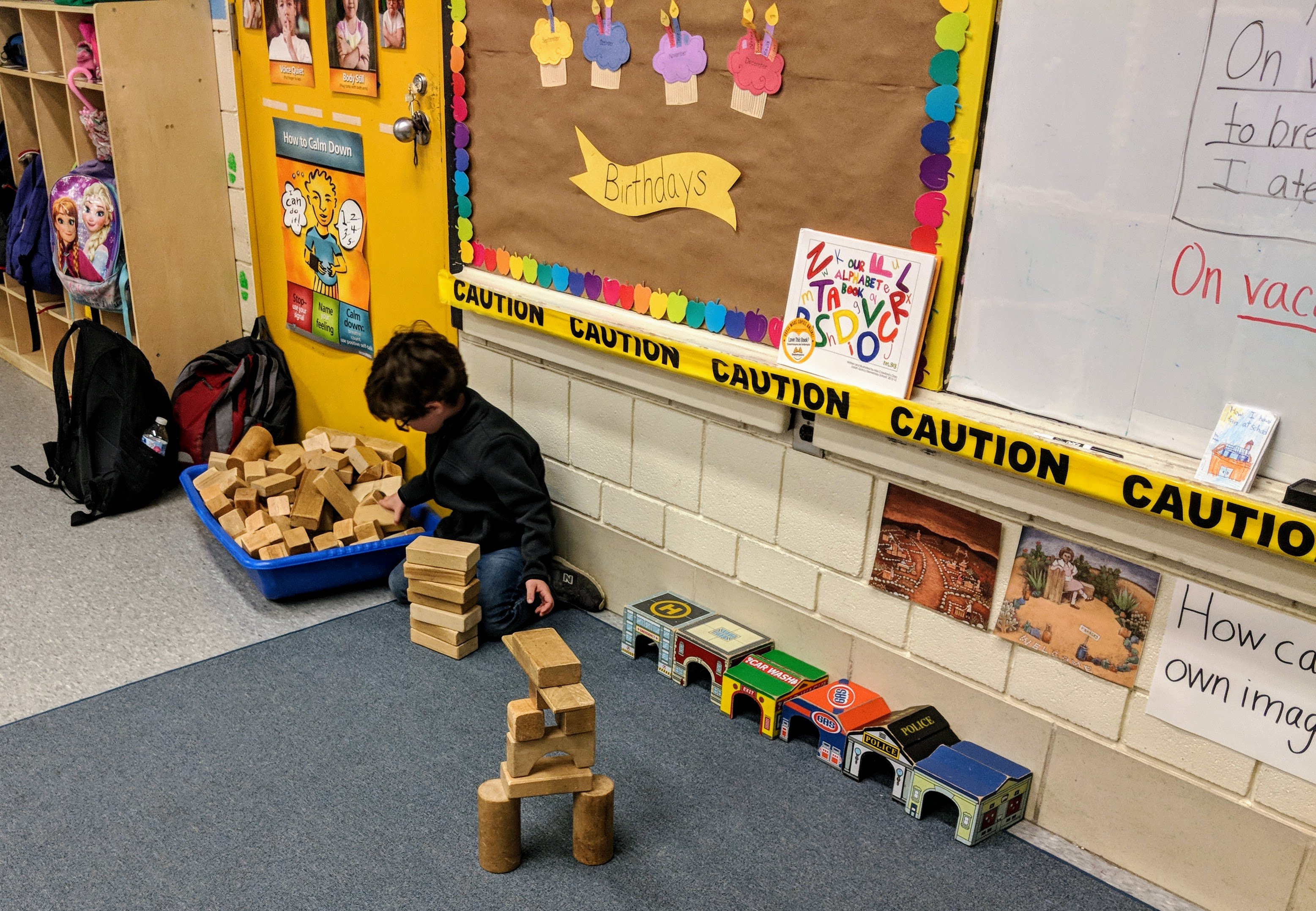
At his inauguration in 2014, Mayor Marty Walsh pledged to double the enrollment of four-year-olds in high-quality, full-day pre-K in the city by 2018 through the use of a mixed-delivery system that included BPS classrooms as well as center-based pre-K providers.58 Because BPS elementary schools are at capacity and have no room for additional K1 classrooms, further K1 expansion will need to take place in center-based pre-K programs. Therefore, a major goal of both BPS and the early childhood team over the next several years is to continue the work started by the Boston K1DS and Preschool Expansion Grant programs to expand access and provide high-quality K1 in center-based pre-K programs while creating formal pathways to elementary schools throughout the city. This will require continued investment in professional development and coaching for teachers at center-based pre-K programs.59
DEC also plans to continue expanding access to the Focus curriculum in first and second grade across the district, as well as continue to align and deepen instructional practices from K1 and K2 to first and second grade. There are also efforts underway to strengthen family engagement in the curriculum by expanding the use of family activities in K1 and K2.
The success of pre-K in Boston and the early childhood team’s work to transform the preK–second grade span has drawn national attention and interest from others in Massachusetts and beyond, including school districts in Rhode Island and Maine. So the team is now working to extend its reach beyond Boston. The team provides some training and coaching to other communities on implementing the curriculum, as well as assistance in strategic planning, coaching, and research and evaluation. The Focus curriculum is open source and DEC is currently working to add a Creative Commons license to their materials so other districts can share, use, and revise the curricula to best fit their particular needs. Supports to other states and districts range from one-time informational sessions to year-long training series tailored to fit the particular professional development needs of a community.60
Continuous Improvement
DEC hopes to find answers about the best way to improve its reform efforts through the results of various longitudinal studies led by MDRC in partnership with the University of Michigan and the Harvard Graduate School of Education. One of these studies, mentioned earlier, will leverage the district’s lottery-based school assignment process to compare outcomes for children assigned to K1 to those who were not assigned to K1. The researchers seek to answer two main questions: 1) What are the impacts of K1 on student skills at the beginning and end of K2 and third grade; and 2) What factors help explain whether gains in skills are sustained through the third grade. The outcomes will be examined for differences between key subgroups, including dual language learners, students from low-income families, and students from different racial and ethnic groups.61
Part of the study will include a survey about teachers’ use of the Focus curriculum in K1 and the early elementary grades, as well as an investigation of the sustainability of K1 impacts. The study could find that academic gains are sustained more in classrooms with larger numbers of students who had access to K1, providing yet another reason to provide more K1 throughout the city. Researchers might also find that students in elementary school classrooms with teachers who faithfully implemented the Focus curriculum made the largest gains, providing evidence for the importance of instructional alignment through K1 and the early elementary grades.62
One study will leverage the district’s lottery-based school assignment process to compare outcomes for children assigned to K1 to those who were not assigned to K1.
As the BPS early childhood team plans to use the results of this study to guide practice, it is also moving forward with efforts to improve the professional development and coaching process for teachers. For example, efforts are underway to provide principals with specific “look-fors” to use when evaluating K1–second grade teachers. The team is also working to develop teacher leaders to increase early education knowledge within each school; it is piloting an Early Childhood Leadership Team model in nine schools that have already earned NAEYC accreditation in order to help develop teacher leaders capable of offering school-based support for curriculum implementation, NAEYC accreditation maintenance, and other school and district priorities. The early childhood team is also working to synchronize professional development and coaching cycles to the district’s teacher evaluation cycle and continues to work on methods to measure and encourage fidelity when it comes to implementation of the Focus curriculum.
Pieces Left to Tackle
According to Sachs, a big goal for next year is better supporting special education students and English learners. The early childhood team is working with the Office of Special Education and Student Services to better support students with disabilities, both those learning in inclusion classrooms and those in substantially separate classrooms. DEC is also working with the Office of English Language Learners to modify Focus curriculum materials so they work more effectively in bilingual classrooms.
Another goal for DEC is implementing a new kindergarten assessment. In the 2017–18 school year, the team piloted a new kindergarten rubric to help teachers document children’s learning in key areas. DEC staff have held several feedback sessions and is working with teachers to develop a tool that is comprehensive, useful, and reasonably easy to complete.
And two additional goals include continuing the expansion of pre-K into center-based settings and refining the model for helping other districts who want to reform early and elementary education.
One important challenge left for DEC to address is how to expand all BPS elementary school principals' knowledge and understanding of strong learning environments and instructional practices in PreK–third grade. DEC staff work closely with principals at schools undergoing the accreditation process, but these principals have elected to go through the process. There are many more principals across the district left to reach.
Finally, BPS will have yet another School Superintendent. Tommy Chang departed in July, and Interim Superintendent Laura Perille took the helm. To continue the early grade transformation, it will be important for Sachs—as he has done several times in the past—to make the case for the current work underway and DEC’s ambitious strategic plan.
Citations
- City of Boston (website), “Mayor Walsh Announces Universal Pre-Kindergarten Advisory Committee,” May 6, 2015, https://www.cityofboston.gov/news/Default.aspx?id=8613
- Jason Sachs, “New P-2 Early Childhood Strategic Plan & Update on Boston Universal Preschool,” (presentation to the BPS School Committee, April 26, 2017), https://www.bostonpublicschools.org/cms/lib/MA01906464/Centricity/Domain/162/Early%20Childhood%20Strategic%20Plan%2020172022School%20Committee%20presentation.pdf
- “How to Bring Focus on Early Learning to Your Community,” http://bit.ly/AdoptFocus
- Meghan McCormick, Joann Hsueh, Christina Weiland, and Michael Bangser, The Challenge of Sustaining Preschool Impacts: Introducing ExCEL P–3, a Study from the Expanding Children's Early Learning Network (Washington, DC: MDRC, July 2017), https://www.mdrc.org/sites/default/files/ExCEL_SustainingPreschoolImpacts.REV_.pdf
- Christina Weiland, (assistant professor, University of Michigan School of Education), interview with authors, July 19, 2018.