Automation Nation
Abstract
This report examines how three cities—Phoenix, Indianapolis, and South Bend—are preparing for the work of the future. Like most communities around the country, the three cities highlighted in this report are just beginning to address the challenge of automation. The steps they have taken, including the areas in which they are experimenting or seeing progress, as well as the gaps that remain, offer instructive lessons for leaders around the country.
These case studies document the lessons that New America has learned with these cities over the past year through our ShiftLabs program. New America launched ShiftLabs in the spring of 2018 as a design lab and pilot program, with a mission to empower workers through community action to respond to automation. To date, New America has organized ShiftLabs in Phoenix, Indianapolis, and the South Bend-Elkhart region. In each region, we brought together key stakeholders from across sectors, mapping automation trends to the specific skills profile of each city and identifying priorities for action. Through our engagement in Phoenix, Indianapolis, and South Bend, we have catalyzed, promoted, and assisted with community-led innovations that connect workers to careers, skills, and support. The goal of this report is to share our lessons learned and identify promising initiatives.
Acknowledgments
We would like to thank the Rockefeller Foundation and Walmart Giving for their generous support of this work. The views expressed in this report are those of its authors and do not necessarily represent the views of these organizations, their officers, or their employees. This research brief also benefited from the support and insight of many New America colleagues, including Cecilia Muñoz and Maria Elkin. We would like to thank the many individuals working in education, entrepreneurship, worker training, innovation, and other fields in Arizona and Indiana who attended ShiftLabs and who continue to shape our work.
Executive Summary
About ShiftLabs
ShiftLabs’ mission is to empower workers through community action to respond to automation. In this briefing, we share our experiences, identify promising initiatives, and document examples of automation-resiliency planning in three cities: Phoenix, Indianapolis, and South Bend. We discuss the context for the future of work in each city, emerging priorities, and political and employer buy-in. Although this briefing certainly is not definitive, we hope that these case studies will be a helpful and thought-provoking starting point for leaders and concerned citizens looking for ways to prepare their cities for automation.
Work as we know it is shifting rapidly. Automation, artificial intelligence, and emerging technologies are changing the way we work and the work we do. Technology promises to boost economic growth, create new ways to make money, and unleash productivity and creativity. Yet the benefits of these gains do not apply equally to everyone. Changes to the economy will disproportionately hit women, people of color, and workers with less education and economic stability. Without purposeful effort, progress risks leaving too many workers behind.
Mayors, city leaders, activists, educators, and employers across the country want to know what to do about these concerns. They want the benefits of technological progress to be broadly shared, and they want to create workforces that are prepared for the changes ahead. To date, there has been widespread media attention on the challenges of new technology, including automation, and the income volatility it can introduce—yet few concrete, generalizable solutions have emerged from current studies and discussions
This report examines how three cities—Phoenix, Indianapolis, and South Bend—are preparing for the work of the future. Like most communities around the country, the three cities highlighted in this report are just beginning to address the challenge of automation. The steps they have taken, including the areas in which they are experimenting or seeing progress, as well as the gaps that remain, offer instructive lessons for leaders around the country.
These case studies document the lessons that New America has learned with these cities over the past year through our ShiftLabs program. New America launched ShiftLabs in the spring of 2018 as a design lab and pilot program, with a mission is to empower workers through community action to respond to automation. To date, New America has organized ShiftLabs in Phoenix, Indianapolis, and the South Bend-Elkhart region. In each region, we brought together key stakeholders from across sectors, mapping automation trends to the specific skills profile of each city and identifying priorities for action. Through our engagement in Phoenix, Indianapolis, and South Bend, we have catalyzed, promoted, and assisted with community-led innovations that connect workers to careers, skills, and support. The goal of this report is to share our experiences and identify promising initiatives.
Lessons Learned in Our Local Engagement through ShiftLabs
You can’t act when you don’t know. “Why don't more people know this?” was a refrain we heard repeatedly during ShiftLabs engagements about the topic of technological change and automation. Although some ShiftLabs participants were aware of general aspects of artificial intelligence and automation, most were not as familiar with the national trends and the specific local effects that automation might have on jobs and skills. The awareness gap was especially true with regard to automation’s disproportionate impact on lower-skilled occupations. In followup engagements with ShiftLabs participants, participants expressed a desire to address some of the risks raised, but acknowledged their lack of knowledge and expertise on the topic. A sense of “not being an expert” on the topic of automation was pervasive, and continues to impede proactive action from implementing partners, government entities, employers, and civic groups.
Communities are hungry for information. Our work in Phoenix and Indianapolis reaffirmed our starting assumption that sharing original, localized data fills demand and provides a fresh way to ignite public discussion, create a sense of urgency, and attract media attention. Across all of our local engagements this year, including with prospective new ShiftLabs partners and communities, we have found a strong hunger for locally tailored data—which do not yet exist for most regions and communities. In Phoenix and Indianapolis, for instance, our automation risk reports were the first of their kind locally. In Indianapolis, multiple think tank and academic reports have focused on workforce and economic development, but none of these resources look specifically at technological change and the risk of automation.
Automation is an interdisciplinary issue. Understanding how automation will impact jobs and designing solutions is no one person’s job and requires everyone to be involved. Education, workforce development, and social sector and economic development are all important components of a holistic approach to the issue.
Go with what works. Local partners expressed some trepidation at the prospect of the effort involved in building an automation-resilient workforce, claiming that it can feel like trying to boil the ocean when a community sets out to “prepare people for the future of work.” Yet some of the most important action that was catalyzed through our ShiftLabs engagements involved adapting existing programs to take into account the ways work is changing. In Phoenix, for instances, when ShiftLabs presented automation impact data on the region’s retail sector, the local Workforce Investment Board began to investigate whether to provide government retraining funds to the retail sector. Small, concrete actions matter, whether they involve a local partnership revising its strategic plan, a local job fair asking its network to add a program or handout about what “future-proof skills” are, or a local Rotary meeting inviting a speaker on the topic. Cultural change often begins with a proverbial conversation around the watercooler.
All (automation) politics is local. One clear lesson we learned in ShiftLabs engagements was the impact of (and vast differences in) local context and history in each region, and way in which local factors shaped the extent to which the pilot communities proactively embraced planning for the changing nature of work. Individual characteristics of cities lend themselves to certain types of solutions, such as the development of innovative, tech-forward solutions to workforce and economic development issues in Phoenix.
However, the desire for “easy wins” locally is a facet of one of the greatest concerns that the program has encountered: because the strongest momentum in initial ShiftLabs communities has been around preparing for and growing the upside of technology, far less focus has been centered on making sure that no one is left behind. Consistently, from Indiana to Phoenix, we discovered that local actors are most enthusiastic about embracing, growing, and preparing local talent for the upside potential of technology to create good jobs. These types of programs make for strong public relations copy, but on their own are not a comprehensive approach to automation or to the future of work in general. It is much more difficult to develop of policies, solutions, and strategies to ensure that the future of work is equitable and that the most economically vulnerable workers, who are at disproportionate risk of automation, are not forgotten. Both types of initiatives are important. One attracts new opportunities and the other ensures that existing residents can take advantage of those opportunities.
Contact Us: Email us at [email protected]
Preface
Work as we know it is shifting rapidly. Automation, artificial intelligence (AI), and emerging technologies are changing the way we work and the work we do. Technology promises to boost economic growth, create new ways to make money, and unleash productivity and creativity. Yet the benefits of these gains do not apply equally to everyone. Changes to the economy due to automation will disproportionately hit women, people of color, and workers with less education and economic stability. Without purposeful effort, progress risks leaving too many workers behind.
Mayors, city leaders, activists, educators, and employers across the country want to know what to do about these concerns. They want the benefits of technological progress to be broadly shared, and they want to create workforces that are prepared for the changes ahead. To date, there has been widespread media attention on the challenges of new technology, including automation, and the income volatility it can introduce—yet few concrete, generalizable solutions have emerged from current studies and discussions.
This report examines how three cities—Phoenix, Indianapolis, and South Bend—are preparing for the work of the future. Like most communities around the country, the three cities highlighted in this report are just beginning to address the challenge of automation. The steps they have taken, including the areas in which they are experimenting or seeing progress, as well as the gaps that remain, offer instructive lessons for leaders around the country.
These case studies document the lessons that New America has learned with these cities over the past year through our ShiftLabs program.1 New America launched ShiftLabs in the spring of 2018 as a design lab and pilot program, with a mission to empower workers through community action to respond to automation. To date, New America has organized ShiftLabs in Phoenix, Indianapolis, and the South Bend-Elkhart region. In each region, we brought together key stakeholders from across sectors, mapping automation trends to the specific skills profile of each city and identifying priorities for action. Through our engagement in Phoenix, Indianapolis, and South Bend, we have catalyzed, promoted, and assisted with community-led innovations that connect workers to careers, skills, and support. The goal of this report is to share our experiences and identify promising initiatives.
SHIFTLABS
What is it?
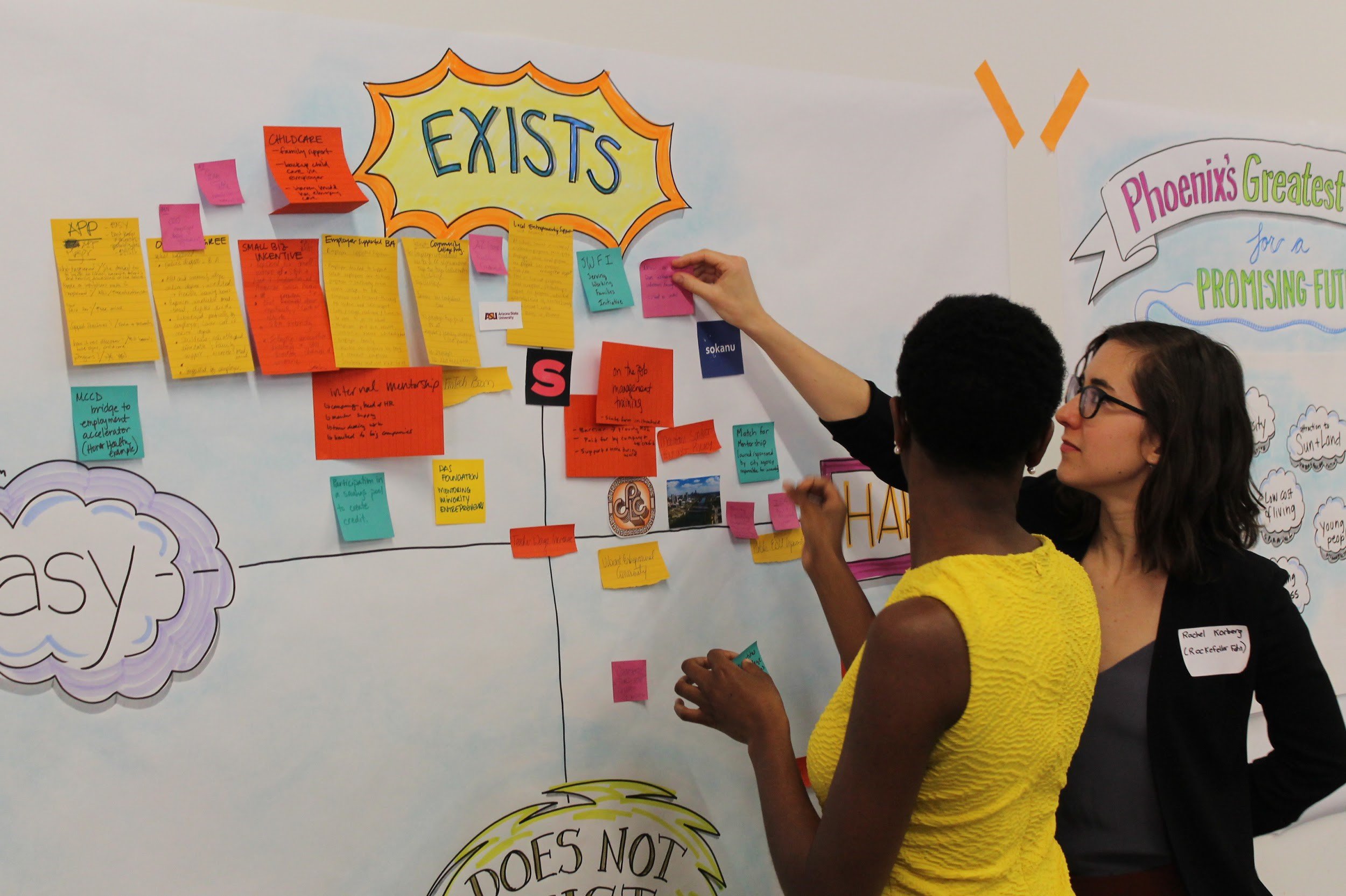
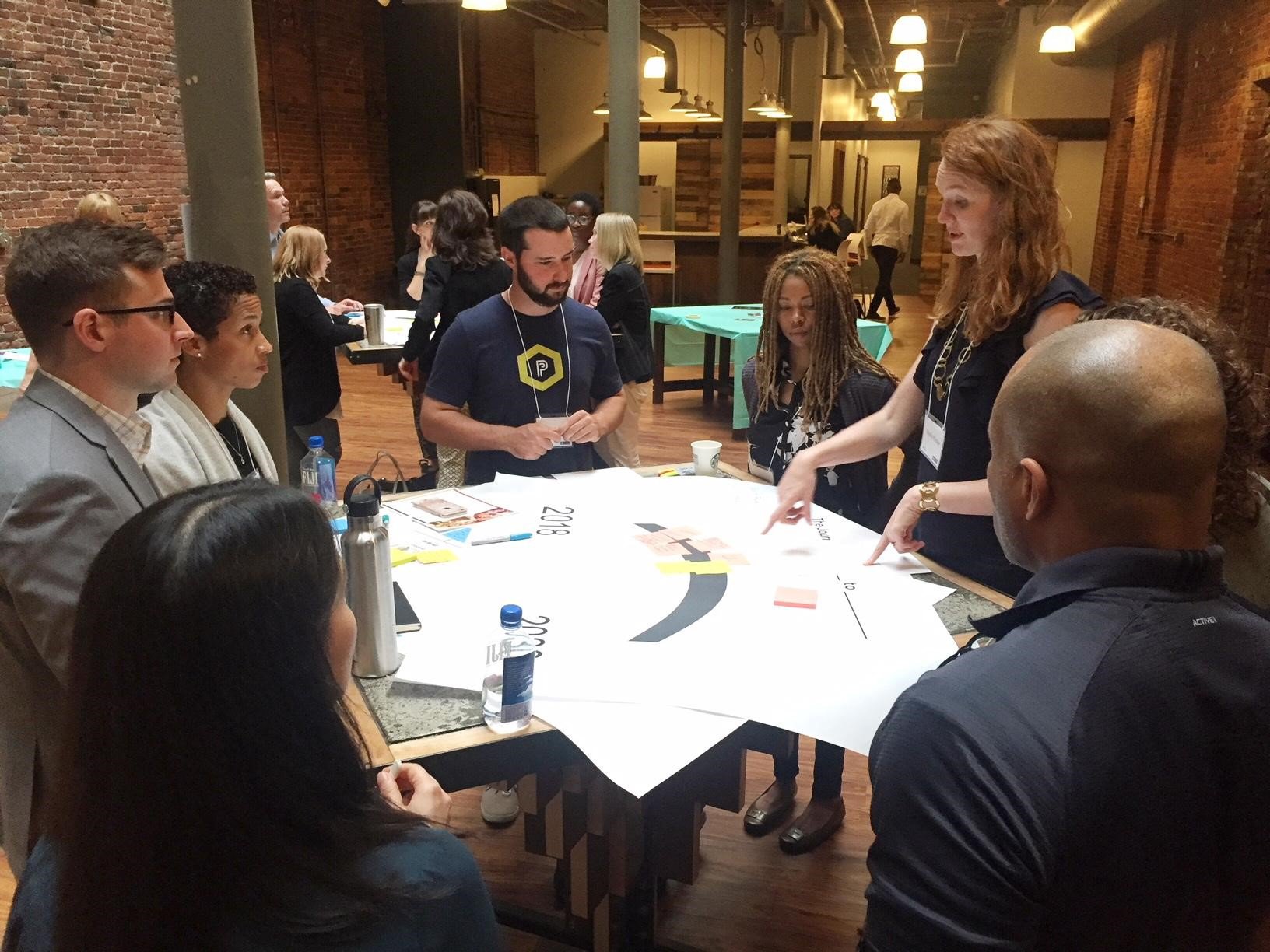
In the spring of 2018, New America launched ShiftLabs, in partnership with the Rockefeller Foundation, as a design lab and pilot program. ShiftLabs responds to the changing landscape of work by connecting community leaders across sectors. Through ShiftLabs, New America works with communities to diagnose local automation risk, consider potential responses, build a long-term vision of economic vibrancy, and design and implement new ways to connect workers to emerging opportunities. A typical ShiftLabs design workshop might bring together several mayors, members of leadership from major employers, innovative educators, entrepreneurs, worker training providers, philanthropists, artists, and other creative community leaders. In 2019, New America launched Rural ShiftLabs, which expanded the work to rural communities and smaller towns in order to examine the myriad challenges and opportunities confronting rural communities across the country.
Where is it?
To date, New America has organized ShiftLabs in Phoenix, Indianapolis, and South Bend, and is convening a pilot in Detroit. In Phoenix, New America brought more than 40 regional leaders together with national CEOs and donors for a day-long discussion and series of human-centered design sessions, led by then-mayor of Phoenix Greg Stanton, Arizona State University president Michael Crow, and New America Chief Executive Officer Anne-Marie Slaughter. New America published a first-of-its-kind analysis of the automation potential of jobs in the Phoenix region, which generated widespread print and radio media coverage.2 In May 2018, New America convened 55 leaders in Indianapolis.
In December 2018, Rural ShiftLabs began work in northern Indiana. We focused on Elkhart and Goshen, areas reported by Brookings to be the third highest at risk in the nation for automation-related job change and loss.3 In 2019, we will extend Rural ShiftLabs' work to northwest Arkansas, the 11-county region of southern Indiana, and southern West Virginia.
What’s the outcome?
Through the ShiftLabs process, we seek out local partners; engage workers; provide data-driven technical assistance; facilitate community design labs; and co-lead efforts to help communities expand, create, or consolidate programs and policies to connect their residents to social and economic opportunities in the face of automation. Our hands-on approach is not meant to yield a one-size-fits-all solution or series of meetings. Rather, by bringing together leaders from industry, policy, philanthropy, civil society, culture, and technology, ShiftLabs is meant to harnesses each region’s strengths, help communities identify emerging jobs, and prepare workers to do them. The convenings have created new momentum in each region to prepare for automation, and have generated ongoing activities to prepare workers for tech-enabled work.
For example, in Indianapolis, New America is working on three initiatives with ShiftLab participants:
- “Credentializing” certifications for the start-up experience of entrepreneurial, vocational workers, makers, and creators;
- Identifying innovative ways to address social barriers to participating in the future of work; and
- Partnering with local leaders to design tech-enabled training tools for tradespeople and agro-talent in the face of increased automation.
In Phoenix, New America is expanding an existing program to help first-time entrepreneurs build credit, identify new sources of capital, and hire new employees. In all of the ShiftLabs locations, community-driven priority setting has generated enthusiasm about tackling the overwhelming, multisector problems that automation may create.
Citations
- Kristin Sharp, Molly Kinder, and Rachel Korberg, “Announcing ShiftLabs: A Community Design Lab on the Future of Work,” New America, February 27, 2018, https://www.newamerica.org/work-workers-technology/shift-commission/announcing-shiftlabs-community-design-lab-future-work/.
- Molly Kinder, Automation Potential for Jobs in Phoenix: An Economic Analysis of the Phoenix Metropolitan Area (Washington, D.C: New America, April 19, 2018), https://www.newamerica.org/work-workers-technology/reports/automation-potential-jobs-phoenix/.
- Mark Muro, Robert Maxim, and Jacob Whiton, Automation and Artificial Intelligence: How Machines Are Affecting People and Places (Washington, D.C.: Brookings Institution, January 24, 2019), https://www.brookings.edu/research/automation-and-artificial-intelligence-how-machines-affect-people-and-places/.
Overview
Automation Nation is a resource for leaders and workers who are interested in how cities are preparing for automation. This report begins with an overview of automation risk before moving to case studies of Phoenix, Indianapolis, and South Bend—three cities grappling with the future of work in different ways. Following the case studies, we offer brief observations about lessons learned from their efforts to mitigate automation risk. We also provide Action Steps for Implementers and Additional Reading for more information.
We explain our methodology for calculating automation potential and outline who might be at greatest risk. Read to learn more about the nuances and limitations of automation predictions.
Case Studies
Phoenix: A Tale of Two Cities: Phoenix is a city of contrasts. Income inequality is high and a large share of the workforce works in low-paid work. Although the number of highly-paid technology and knowledge economy jobs have increased, a portion of Phoenix residents work for lean hourly wages in service, hospitality, and retail. Will future gains from automation be shared widely, or captured by a privileged few?
Indianapolis: The Crossroads of Change: Previous decades of automation in Indiana’s manufacturing sector have raised the consciousness of Indianapolis residents about technology’s capacity to dramatically change the nature of work. Yet most of Indianapolis’s future-facing initiatives are focused on fostering a technology sector that will be able to accommodate only a fraction of the residents whose jobs will be altered by automation. Will more vulnerable workers be able to secure a foothold on opportunity and support their families?
Case Brief
South Bend: Reinventing a “Dying City”: Less than 10 years ago, Newsweek declared South Bend, Ind. a “dying city.” However, with several recent flagship initiatives, the city has attracted national attention as an early pioneer in preparing for the future of work. We examine South Bend’s achievements in automation resiliency and preview areas for further development.
We share how the successes and failures of Phoenix, Indianapolis, and South Bend can jumpstart the automation conversation in other cities.
Understanding Automation Risk
What Do We Mean by Automation and Risk of Automation?
The automation risk data presented in this report come from analyses conducted as part of our ShiftLabs initiatives in 2018. In our analyses, automation risk describes the technical feasibility of automating part or all of the tasks within a job, using currently available technology. The data on automatic risk come from Burning Glass Technologies, and are derived largely from a well-known 2013 study by Oxford University researchers Carl Benedikt Frey and Michael A. Osborne.4 To calculate automation risk, Frey and Osborne examined approximately 700 occupations, broke them down into individual tasks, and evaluated the ability of automated systems to perform some or all of the tasks within that occupation.
- “High risk” occupations are the top quartile of risk, with at least an 85 percent risk of automation for a given occupation.
- “Medium risk” occupations are in the second quartile of risk, between 50 percent and 85 percent risk of automation for a given occupation.
- “Low risk” occupations are in the bottom two quartiles, with less than 50 percent risk.
A few key caveats are important to consider when interpreting the data.
First, automation risk level is not a prediction that a specific job will be fully automated. Something that can be automated will not necessarily be automated. A range of legal, logistical, business, financial, political, and social factors could lower the real rate at which businesses and employers adopt technology and automate functions. Moreover, predictions about technology have a relatively high degree of uncertainty.
Second, even jobs at high risk of automation will not all be eliminated. Instead, the nature of many jobs will change—in some cases, dramatically—but will remain recognizable occupations. McKinsey estimates that just 5 percent of jobs will be outright eliminated, but that half of all tasks that workers currently perform could be automated.5 The implication of this change is that workers in at-risk occupations will need to continuously upskill—to learn additional career skills to improve one’s chances of keeping one’s current job or finding a new one—in order to keep pace with the changing job requirements.
Finally, even though technology and automation will displace some jobs and change others, new jobs will be created and others will expand. Our analysis does not capture the impact of projected job creation: the number of new jobs created through technology or other means.
For more information about our methodology and data, please see the methodology section of the Indianapolis and Phoenix automation risk reports.6
Notes on the Data
- Automation potential data come from Burning Glass Technologies, derived from Carl Benedikt Frey and Michael A. Osborne’s 2013 study “The Future of Employment: How Susceptible Are Jobs to Computerisation?”7
- Data on national averages of women in occupations come from the Bureau of Labor Statistics.
- Data on education levels of employed individuals come from the American Community Survey (ACS) five-year estimates (2011–15).
Citations
- Carl Benedikt Frey and Michael A. Osborne, The Future of Employment: How Susceptible Are Jobs to Computerisation?, Oxford Martin School, September 17, 2013, https://www.oxfordmartin.ox.ac.uk/downloads/academic/The_Future_of_Employment.pdf.
- James Manyika et al., A Future That Works: Automation, Employment, and Productivity (New York: McKinsey Global Institute, January 2017), https://www.mckinsey.com/~/media/mckinsey/featured%20insights/Digital%20Disruption/Harnessing%20automation%20for%20a%20future%20that%20works/MGI-A-future-that-works_Full-report.ashx.
- Kinder, Automation Potential for Jobs in Phoenix.
- Frey and Osborne, The Future of Employment.
Phoenix: A Tale of Two Cities
Overview

Phoenix is a city on the rise, characterized by rapid growth, a robust startup community, a growing technology sector, and increasing numbers of the telltale coffee shops, artists’ communities, and farm-to-table restaurants that are the artifacts of knowledge workers.8 Roughly 2,000 people move to Phoenix every week, seeking employment in a region where job growth is set to outpace the national average by more than double and the cost of living remains one of the lowest for big cities in the United States.9 The city itself is growing; cranes are visible all over the region, and Phoenix has among the fastest growth in construction jobs in the country.10
However, Phoenix’s economic opportunity is not shared equally. Phoenix is a city of contrasts. Income inequality is high, and a large share of the workforce works in low-paid jobs. Alongside the increase in high-paid technology and knowledge economy jobs are a portion of Phoenix residents who work for lean hourly wages to eke out a marginal living in the service, hospitality, and retail trades. Hourly wages and educational attainment in Phoenix lag behind national averages.11
What the Data Say: Automation Risk in Phoenix12
In 2018, New America published a first-of-its-kind analysis of automation’s potential impact in the Phoenix region.13 The analysis included four key points:
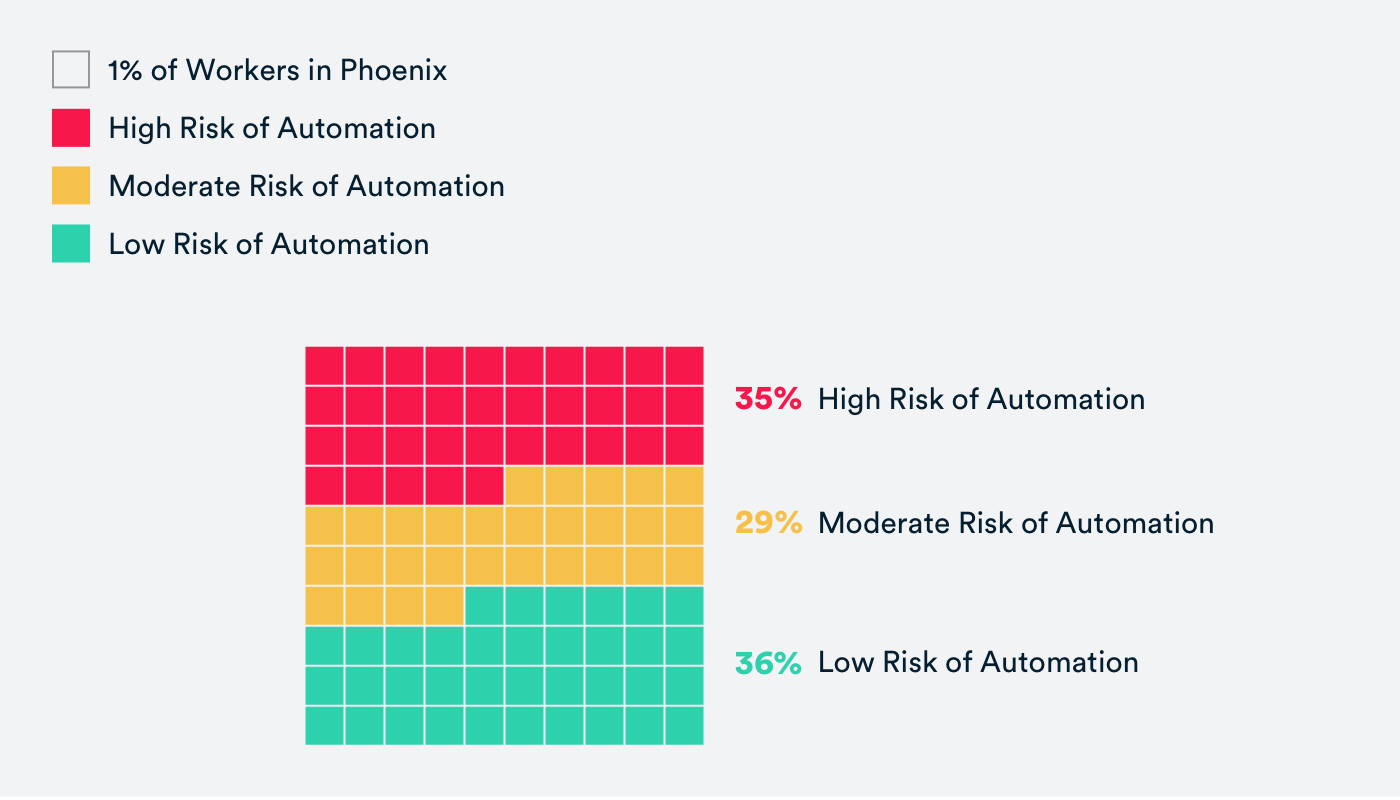
1) Just over one in three jobs in the Phoenix metro area at high risk of automation. According to our analysis, 649,040 jobs are at a high risk of automation in the Phoenix metropolitan area—35 percent of total jobs in the region. Another 537,110 jobs (29 percent of total jobs) are at moderate risk of automation. This risk is slightly above the U.S. national average.
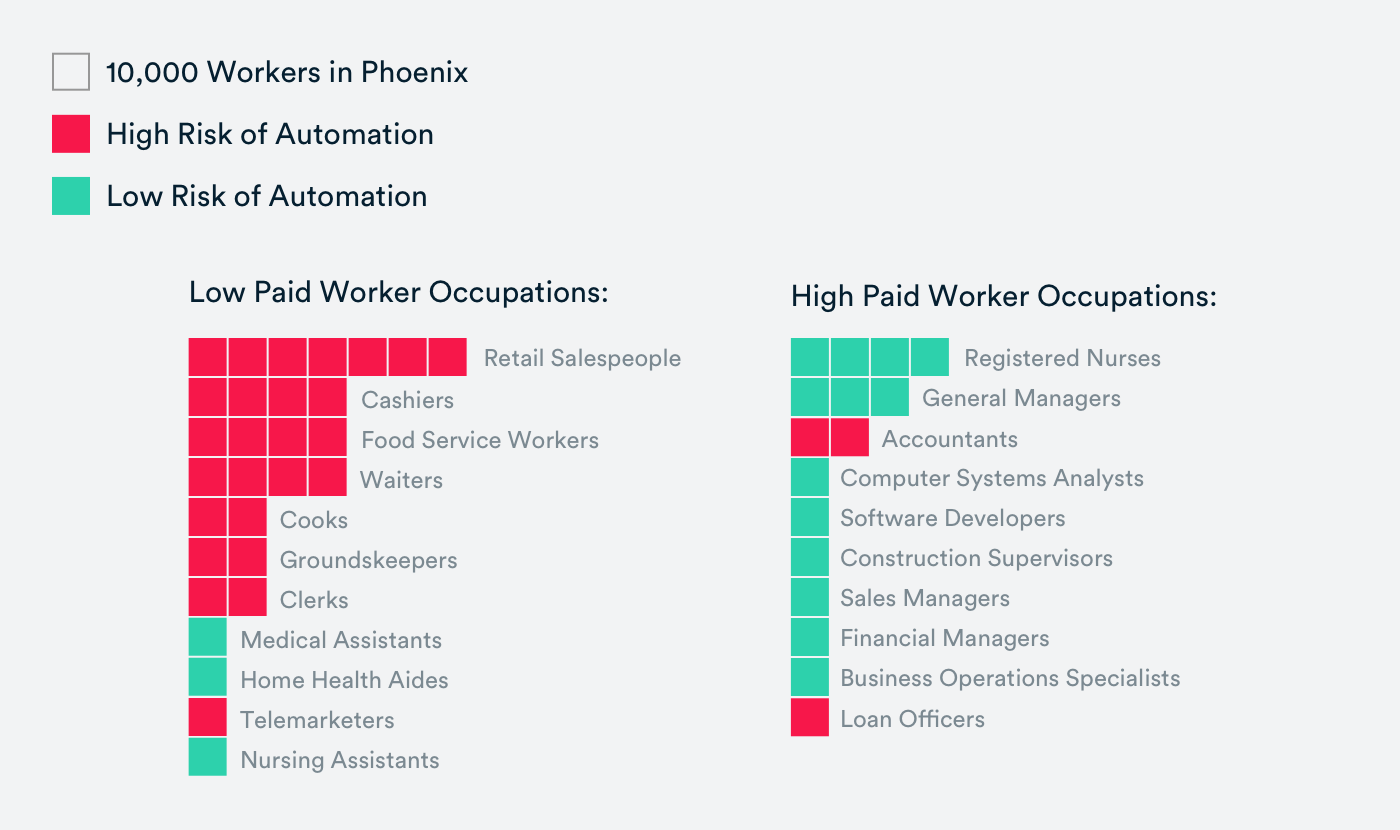
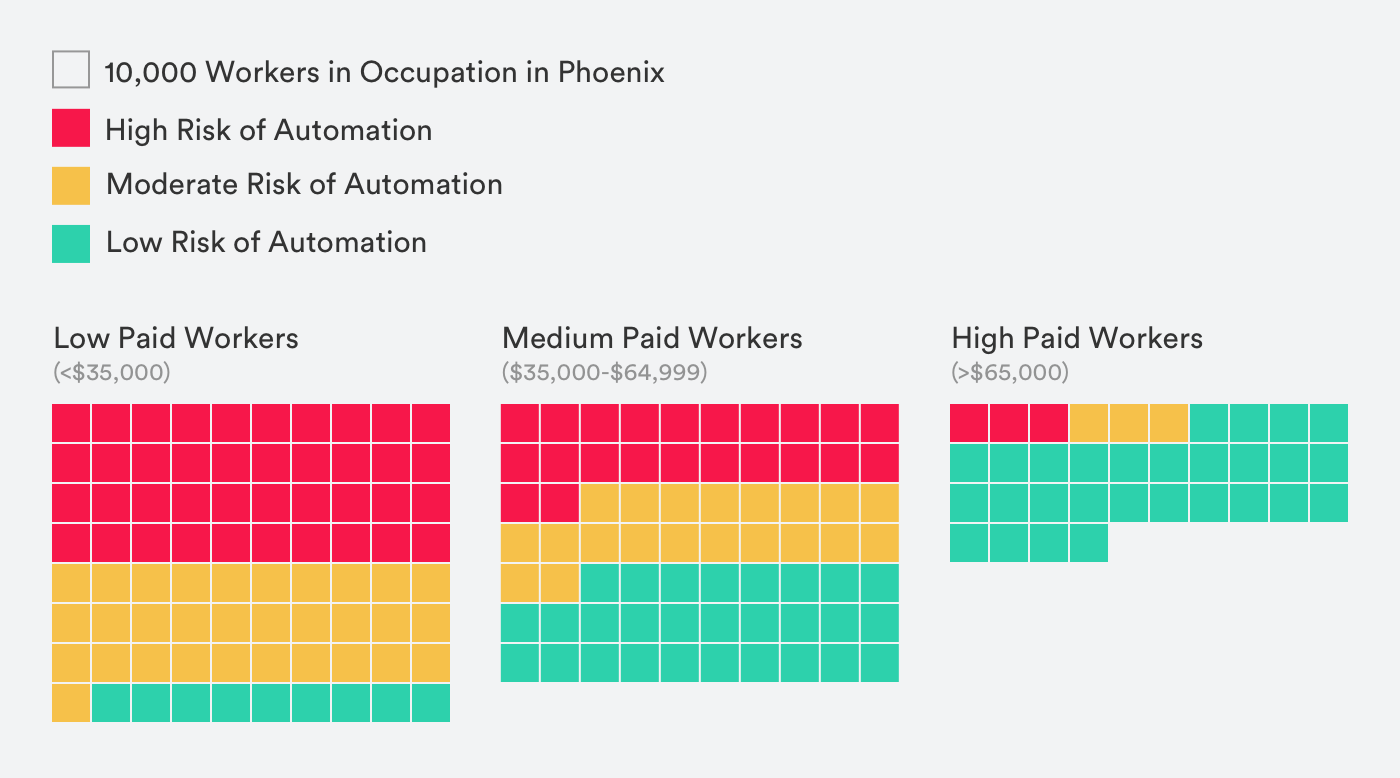
2) Phoenix’s unequal growth presents an uneven risk of automation, with lower-paid workers at greatest risk. In some ways, the Phoenix metro region is better prepared than the rest of the country for automation. As a percentage of its workforce, a higher share of Phoenix workers are in high-paid, low-risk occupations in business, management, computing, technology, and mathematics. Phoenix also has far fewer high-risk manufacturing positions than the national average. However, the region also has a higher percentage of its workforce than the nation overall in low-paid, high-risk jobs in the food industry, retail sales, and office and administrative work. In Phoenix, as in the United States overall, the burden of automation risk falls heaviest on workers in low-paid jobs. Workers making less than $35,000, and especially those earning minimum wage, are at far higher risk than those earning over $65,000.
3) Lags in educational attainment are a red flag for automation risk. Educational attainment is strongly correlated to automation risk. For workers in the Phoenix region with a bachelor’s degree or higher, the risk of automation is orders of magnitude lower than for those with a high school degree or less. The lagging rates of educational attainment pose a risk for the region. Phoenix has 6 percent fewer high school graduates than the national average, and 3 percent fewer college graduates.
4) Women are at higher risk from automation in Phoenix than men. The high-risk occupations in Phoenix disproportionately employ women. Applying national averages of women employed across occupations, women constitute 58 percent of workers in high-risk occupations in Phoenix. Women dominate in many food and retail-related industries that are especially high-risk.
How Phoenix Is Preparing for Technological Change and Automation
The Phoenix region is embracing three approaches to preparing for the future of work: pioneering new lifelong learning opportunities, embracing technology, and organizing around education.
Pioneering Lifelong Learning
A defining feature of the Phoenix approach to the future of work is Arizona State University’s (ASU) leadership in pioneering new ways for people to learn throughout their careers. Arizona State University is not a funder of ShiftLabs, however ASU does fund several New America projects and partnerships. In a recent discussion, ASU president Michael Crow pointed out: “Sixty-five percent of children entering primary school today will ultimately end up working in completely new job types that don’t exist yet”—not just different jobs, but jobs we cannot even conceptualize today.14 ASU has disrupted the traditional model of higher education by engaging learners of all ages and across multiple learning platforms in new ways, with a goal of enabling learning “anytime, anywhere, anything that you want.”15 For example, at the Osher Lifelong Learning Institute, students ages 50 and older can take low-cost courses taught by ASU faculty. Though not traditionally graded, these courses provide students the opportunity to branch out their interests and learn skills applicable to careers besides their own. ASU has also invested heavily in its EdPlus online learning platform to reach full-time students as well as adults in need of continuing education or upskilling. The platform is also explicitly designed to make inclusion a top priority.16 As the country’s largest public university, ASU is well positioned to influence the educational ecosystem in Arizona as well as the country as a whole.
Alongside ASU, several other Phoenix-based programs offer coding and high-tech training programs for high school students and adults, such as Phoenix Coding Academy and Galvanize. Although coding bootcamps and similar programs often serve an already educated population interested in moving into more technical roles, they are an important part of the learning and technology ecosystem.
Embracing Technology, Innovation, and Entrepreneurship
Phoenix city and business leaders have enthusiastically embraced technology in preparation for the jobs of the future. The Phoenix metro area has a thriving technology sector and an especially robust cybersecurity industry, which currently employs more than 11,000 workers and has over 6,000 job openings.17 The hashtag “#yesphx,” initially an easy way to share happenings within the Phoenix startup ecosystem, has spawned a standalone website and event series, assisted in the creation and growth of several successful businesses, and demonstrated the vibrancy of entrepreneurship in the area. Reflecting this culture of entrepreneurism, Arizona was recently ranked in the top 10 states for starting a business.18

Over the past few years, the Phoenix metro area has also become a testbed for autonomous vehicles (AVs). Waymo, Uber, Lyft, General Motors, and Intel are all testing AVs in the area, creating a mini high-tech jobs boom based on the operations of those ventures, and ensuring that Arizona will be one of the first states to see AV deployment when the time comes.19 The Phoenix metro area has several attractive features for testing AVs, including its wide, sprawling freeway system and hospitable year-round driving conditions.
At the state level, Arizona has created a flexible, encouraging regulatory environment, with an eye toward attracting companies and entrepreneurial activity from neighboring California. For example, in 2015, Governor Doug Ducey signed an executive order permitting AV testing, so long as the car had an insurance plan and a passenger with a license was present.20 Escalating the AV arms-race against California, in 2018 Ducey updated the executive order to remove the provision mandating the presence of a passenger, making Arizona one of the most permissive locations for testing fully autonomous vehicle use.21 Arizona also has used its competitive advantage in corporate tax rates (roughly half those of California) to attract business.22
Organizing to Improve Educational Attainment
The Phoenix region, and Arizona overall, lags behind the country in educational attainment. Arizona ranked 46th in Education Week’s 2018 analysis of state education systems, earning a D− rating.23 Only 18 percent of Arizona public high school students will graduate from college in six years.24 Arizona’s college attendance rates are some of the lowest in the nation (40th overall) at slightly greater than 50 percent, well behind the 75 percent attendance rates in top-performing states.25 Furthermore, fewer than 4 of every 10 working adults in Arizona today have earned a certificate or degree.26
Lower levels of postsecondary completion likely will expose the Phoenix metro area to greater risk from automation down the road. The education deficit also presents challenges today; Arizona businesses are struggling to fill high-skilled jobs and recruit talent from outside the state. However, a coordinated civil society movement recently has emerged to galvanize progress. Achieve60AZ, founded in 2016, is an alliance of more than 75 member organizations and more than 40 municipalities working toward the goal of 60 percent of Arizona adults holding a postsecondary credential or degree by 2030. With support from the office of Governor Doug Ducey, Achieve60AZ is the most visible effort in Arizona to improve postsecondary outcomes.
Despite this emerging emphasis on the importance of education, other indicators of the health of the education system, such as teachers’ salaries, still lag behind other states. As a result, Arizona’s teachers walked out en masse in 2017. The #RedForEd movement, led by teachers who demanded higher salaries and more school funding, quickly grew and garnered nationwide media coverage, and in response state leaders proposed increasing Arizona teacher pay by 20 percent by 2020.27
The Unfinished Agenda in Phoenix: Challenges Ahead
The Phoenix region is only at the beginning stages of addressing the challenges of uneven growth, and is even less prepared for tomorrow’s challenges of automation. Phoenix has been largely untouched by the previous waves of automation that hit industrial towns over the past several decades, especially in the Midwest. The current optimistic outlook toward the future risks decreasing the sense of urgency necessary to prepare for challenges brought on by automation. We identified the following challenges that remain unaddressed in current efforts to prepare Phoenix for technological change and a shifting workforce.
Reckoning with Risk in Retail and Front-line Service Jobs and Planning for an Equitable Future of Work
Like so many states in the Sun Belt, Phoenix’s economy gains much of its strength and employment from the retail and service industries. Although the region traditionally is known for its real estate and health sectors, retail also makes up a large portion of its economy and workforce. Twelve percent of the region’s workforce was employed by retailers in 2015, and the retail sector contributed just under $16 billion (8 percent) to the state’s gross regional product.28 That is a higher footprint than nationally, where retail only contributes 5.9 percent to gross domestic product (GDP).29
In our work in the Phoenix metro area, we found low levels of awareness locally about the high levels of risk to automation in these sectors. Training programs, by and large, are not taking into account the reality that technology is likely to disrupt many entry-level retail and service jobs. Overall, like many others, the region lacks a plan for addressing the challenge of an equitable future of work to ensure that workers on either end of the income scale, and those in between, have access to the opportunities that technology provides.
Training programs, by and large, are not taking into account the reality that technology is likely to disrupt many entry-level retail and service jobs.
Confronting the Role of Race in Opportunity, Education, and Automation Risk
One of the striking findings of our data was the higher exposure to automation risk faced by the region’s Latino and African American communities. This automation risk correlates to existing economic vulnerability in terms of wages, occupational mix, and education. Median income for Latinos in Phoenix (41 percent of the total population) was only $37,400, while the median income for whites (42 percent) was $59,600.30 When race emerged as a topic in our Phoenix ShiftLabs discussion, there was uneven acknowledgment of the role that race and racism plays in the region. Compared to other communities, including Indianapolis, there is less consensus and common ground in Phoenix about whether to proactively confront racial dynamics as part of the discussions of economic inclusion and the future of work.
Strengthening Regional Collaboration
A challenge that ShiftLabs participants highlighted for Phoenix is the difficulty of collaborating given geographic constraints. The Phoenix metro area comprises 33 cities and towns, in addition to unincorporated communities, and covers a large geographic area with only limited public transportation. This complicated terrain renders active regional collaboration more difficult. The competition between the East Valley and the West Valley can add further difficulty to efforts to harmonize approaches across the metro area. However, the Greater Phoenix Economic Council and the Arizona Chamber of Commerce have brought cohesion to several efforts, including the creation of Achieve60AZ and Arizona@Work, a statewide workforce development network that helps employers recruit, develop, and retain talent. As new workforce and education efforts blossom, the cities and institutions of the Phoenix metro area will have to prioritize working together to scale the most promising new efforts in order to reach significant portions of the region.
Improving Connectivity Between Education and Industry to Create a Talent Pipeline
ShiftLabs participants voiced the need for greater connectivity between employers and education providers to improve the regional talent pipeline and ensure that Phoenix has the human capital and specific skills that are in demand. Employers in the region struggle to hire the high-skilled talent that they need, leaving thousands of jobs unfilled in sectors like cybersecurity. Employers involved in the ShiftLabs design convening often found that the young people they were hiring lacked the skills they needed to perform well. The skills most often cited as lacking in high school and college graduates were communication, strategic thinking, and problem-solving.
The Phoenix Coding Academy is one high school that actively works to bridge the gap between employers’ needs and its curriculum. The high school was founded with help from employees at large technology companies like Google, and maintains strong relationships with those companies. The school leadership places high school graduates at companies as interns and in entry level roles and regularly seeks feedback about the skills companies are looking for in new employees. The Phoenix Coding Academy then ensures that those skills are embedded in what and how they teach. This is a model that could be replicated in Arizona and elsewhere as educational institutions struggle to keep up with employers’ needs in real time.
Conclusion
There is little question that opportunity will continue to exist in Phoenix, even if automation changes the structure of the workforce. But what will it take to make sure everyone can access opportunity? Will the gains from automation be shared widely, or captured by a privileged few? Technology is not destiny. Decisions made by businesses, elected officials, and community leaders now will determine how opportunity will unfold in Phoenix, who will be able to access those opportunities, and who will benefit from them.
Leaders in the region have focused on harnessing the upside of technology to attract new industries, start businesses, and create high-skilled and highly paid employment. This competitive spirit helped power Arizona’s dramatic turnaround following the Great Recession, where the national housing crisis hit especially hard given Phoenix’s reliance on real estate and construction growth. In fact, as a whole, a greater share of workers in Arizona lost their jobs during the crisis than in any other U.S. state aside from Nevada.31 Now, not only has Phoenix surpassed prerecession employment levels, but it has done so while championing the fast-growing, high-tech jobs of the future. Yet this growth strategy alone will not enable all—or even most—Phoenix residents to thrive in a rapidly changing economy. Growth and technology change will leave far too many Phoenix workers behind unless more is done to prepare for automation’s impact on the region’s jobs.
Citations
- United States Census Bureau, “Census Bureau Reveals Fastest-Growing Large Cities,” Table 1, May 24, 2018, https://www.census.gov/newsroom/press-releases/2018/estimates-cities.html#table1.
- Organisation for Economic Co-operation and Development (OECD), “Economic Forecast Summary – May 2018,” May 2018, http://www.oecd.org/eco/outlook/united-states-economic-forecast-summary.htm
- BLS, “Occupational Employment and Wages in Phoenix-Mesa-Scottsdale — May 2017,” April 26, 2018, //www.bls.gov/regions/west/news-release/occupationalemploymentandwages_phoenix.htm.
- Ibid.
- For purposes of this analysis, Phoenix is defined as the Phoenix-Mesa-Scottsdale Metropolitan Statistical Area (MSA), which is inclusive of Pinal and Maricopa counties.
- Kinder, Automation Potential for Jobs in Phoenix.
- Mary Beth Faller, “ASU’s Vision of Future: Learning Across Lifespan — Anytime, Anywhere, Any Age,” ASU Now, March 1, 2018, https://asunow.asu.edu/20180301-creativity-asu-crow-community-conversation-lifelong-learning-future.
- Ibid.
- ASU EdPlus, “Why It Matters,” n.d., https://edplus.asu.edu/why-it-matters.
- Cyber Seek, “Cybersecurity Supply/Demand Heat Map,” 2018, https://www.cyberseek.org/heatmap.html.
- Adam McCann, “2018’s Best & Worst States to Start a Business,” WalletHub, July 2, 2018, https://wallethub.com/edu/best-states-to-start-a-business/36934/.
- Cecilia Kang, “Where Self-Driving Cars Go to Learn,” New York Times, November 11, 2017, https://www.nytimes.com/2017/11/11/technology/arizona-tech-industry-favorite-self-driving-hub.html.
- Governor Douglas Ducey, “Executive Order 2015-09: Self-Driving Vehicle Testing and Piloting in the State of Arizona; Self-Driving Vehicle Oversight Committee,” Arizona Memory Project, 2015, http://azmemory.azlibrary.gov/digital/collection/execorders/id/752.
- Governor Douglas Ducey, “Executive Order 2018-04: Advancing Autonomous Vehicle Testing and Operating; Prioritizing Public Safety,” 2018, https://azgovernor.gov/sites/default/files/related-docs/eo2018-04_1.pdf.
- Tax Policy Center, “State Corporate Income Tax Rates,” 2018, https://www.taxpolicycenter.org/statistics/state-corporate-income-tax-rates.
- “Quality Counts 2018: Report and Rankings,” Education Week, January 17, 2018. https://www.edweek.org/ew/collections/quality-counts-2018-state-grades/index.html.
- Achieve AZ, “What’s the Issue”, n.d., http://achieve60az.com/whats-issue.
- Arizona’s Public University Board of Regents, “College Going, Completion Rates on the Rise in Arizona: New Tool Provides Useful College Consumer Data” (press release), September 14, 2016, https://www.azregents.edu/sites/default/files/news-releases/ABOR%20releases%20college%20going%20and%20completion%20data.pdf.
- Achieve AZ, “What’s the Issue.”
- Ryan Randazzo, Richard Ruelas and Ricardo Cano, “Ducey Proposes 20 Percent Pay Increase for Teachers by 2020,” Arizona Republic, April 12, 2018, https://www.azcentral.com/story/news/politics/arizona/2018/04/12/ducey-teacher-pay-plan-arizona/512509002/
- Shawn Neidorf, “Retail Trade in the Phoenix Area,” Center for the Future of Arizona, 2016, https://www.arizonafuture.org/retailworks-az/overview/.
- U.S. Bureau of Economic Analysis, “Value Added by Private Industries: Retail Trade as a Percentage of GDP,” Federal Reserve Bank of St. Louis, March 7, 2019, https://fred.stlouisfed.org/series/VAPGDPR.
- United States Census Bureau, “ACS 1-Year Estimate,” 2018, https://www.census.gov/programs-surveys/acs/.
- Ronald Hansen, “At Last, Arizona Recovers from Great Recession,” Arizona Republic, March 24, 2016, https://www.azcentral.com/story/money/business/jobs/2016/03/24/arizona-jobs-recovery-great-recession/82167332/.
Indianapolis: The Crossroads of Change
Overview
Indianapolis is at a crossroads. In Indianapolis, unlike in Phoenix, labor upheaval and technological disruption are wholly familiar. Previous decades of automation in Indiana’s manufacturing sector have raised residents’ consciousness about technology’s capacity to dramatically change the nature of work. Hoosiers understand what it looks and feels like when a factory closes. Indianapolis’s labor history reveals the origins of its strong, deep-seated bipartisan will to tackle workforce development issues.32
At the same time, the region is moving toward the future. Indianapolis has emerged among cities in the country with the greatest growth in technology jobs and was shortlisted for Amazon’s second headquarters. The recent expansion of Salesforce, its acquisition of local company ExactTarget, and its move into the biggest building in the state, ignited a new sense of possibility of Indianapolis as a tech hub.33 Salesforce’s expansion was followed by the arrival of international tech company Infosys and its subsequent takeover of a large corporate space in downtown Indianapolis.34 Together, the companies added thousands of tech-centric jobs to the Indianapolis economy.
For some workers, especially those with advanced skills and a higher education, technology will create a superhighway to the jobs of the future at companies like Salesforce and Infosys. But who will be able to access this path? Will there be a bridge for more vulnerable workers to get a foothold on opportunity and support their families?
The growth in the regional tech industry has raised concerns about the current talent pipeline and whether Indianapolis has the right skills profile to meet labor demands. Like many neighboring Midwestern cities, Indianapolis has struggled to retain talent. Overall, the state is a net out-migration state. Indiana also falls behind the national average on many educational metrics, including per-pupil spending, associate’s degree attainment, and bachelor’s degree attainment.35
What the Data Say: Automation Risk in Indianapolis
In 2018, New America published a first-of-its-kind analysis of automation’s potential impact in the Indianapolis region.36 Four key points we identified were:
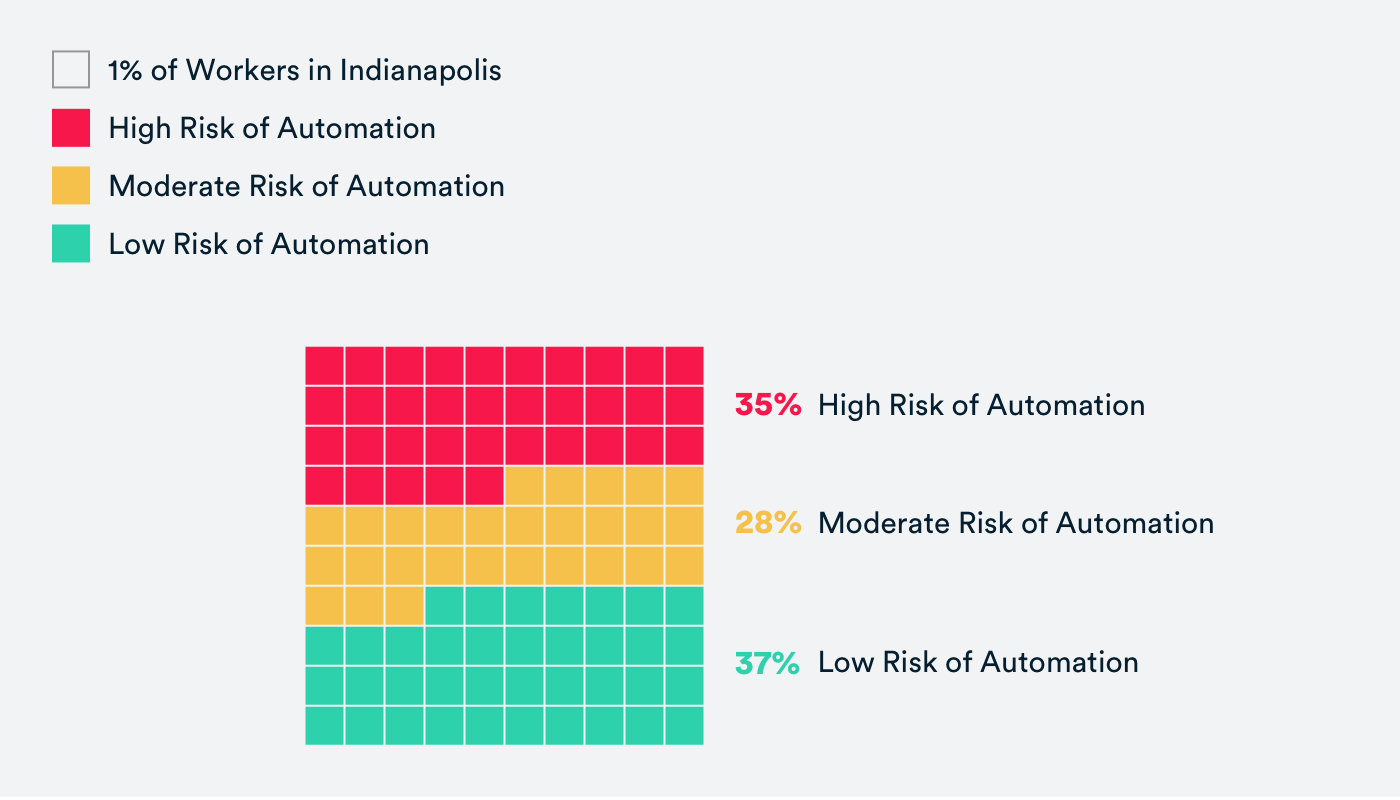
1) Just over one in three jobs in the Indianapolis metro are at high risk of automation—the same as the United States overall. Indianapolis’s automation risk exactly mirrors the national average. In the Indianapolis-Carmel-Anderson metro area, 337,900 people are employed in occupations that are at high risk of automation—35 percent of total jobs. Another 272,760 jobs (28 percent of total jobs) are at moderate risk of automation. Only a little more than a third (37 percent) are at low risk.37
2) Tomorrow’s automation looks different from the automation of Indiana’s past. Although local manufacturing jobs (e.g., assembly work) continue to face a high risk of automation as they have in previous decades, the majority of workers at highest risk of automation in the future are employed in a much broader range of low-paid, frontline service jobs and clerical positions that employ more Indianapolis workers than production jobs alone. These high-risk jobs include retail salespeople, cashiers, fast food workers, and office clerks.
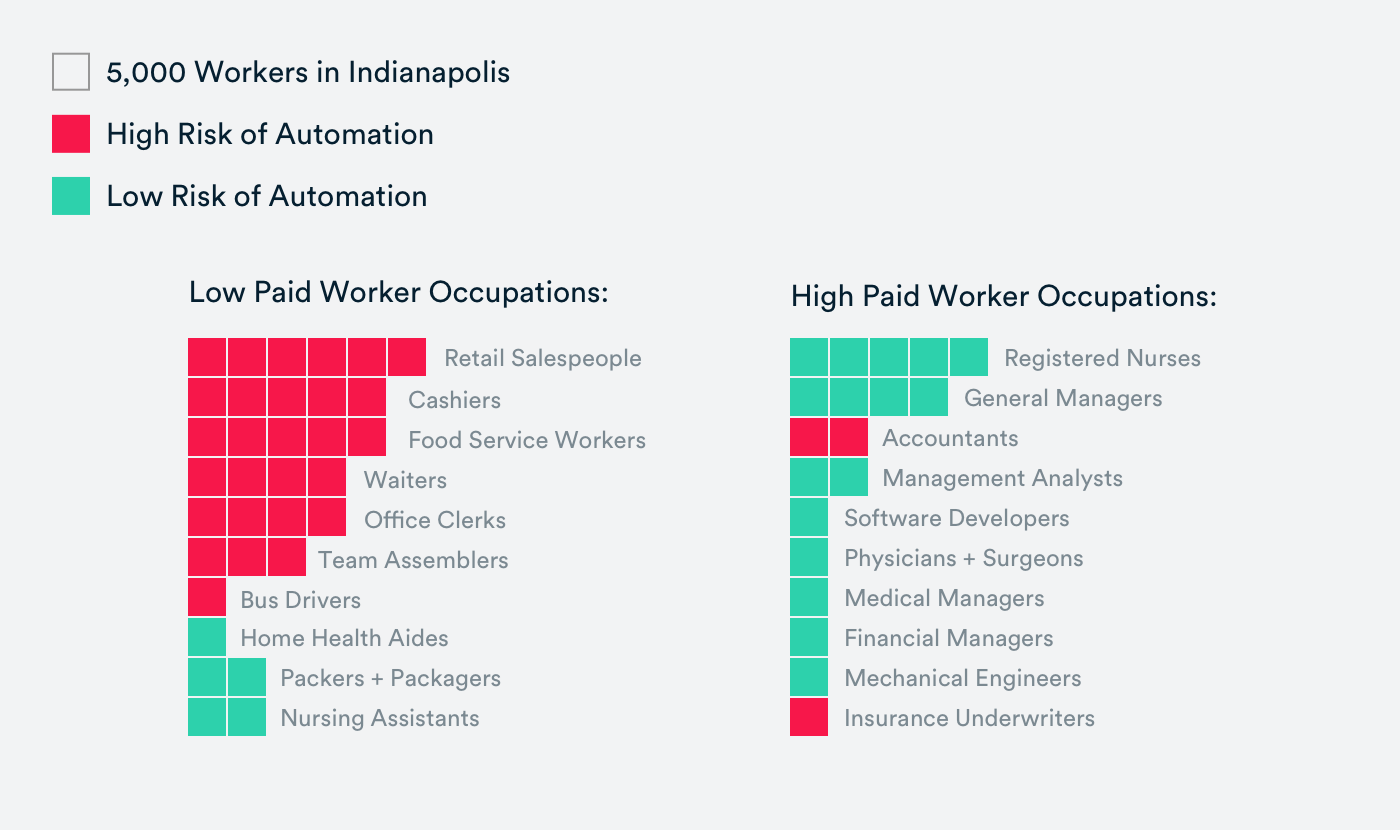
3) Low pay is associated with higher risk of automation. In Indianapolis, as in the United States overall, the burden of automation risk falls heaviest on workers making the least pay. Workers making less than $35,000, and especially those earning minimum wage, are at highest risk. High-paid workers earning over $65,000 face little risk in comparison.
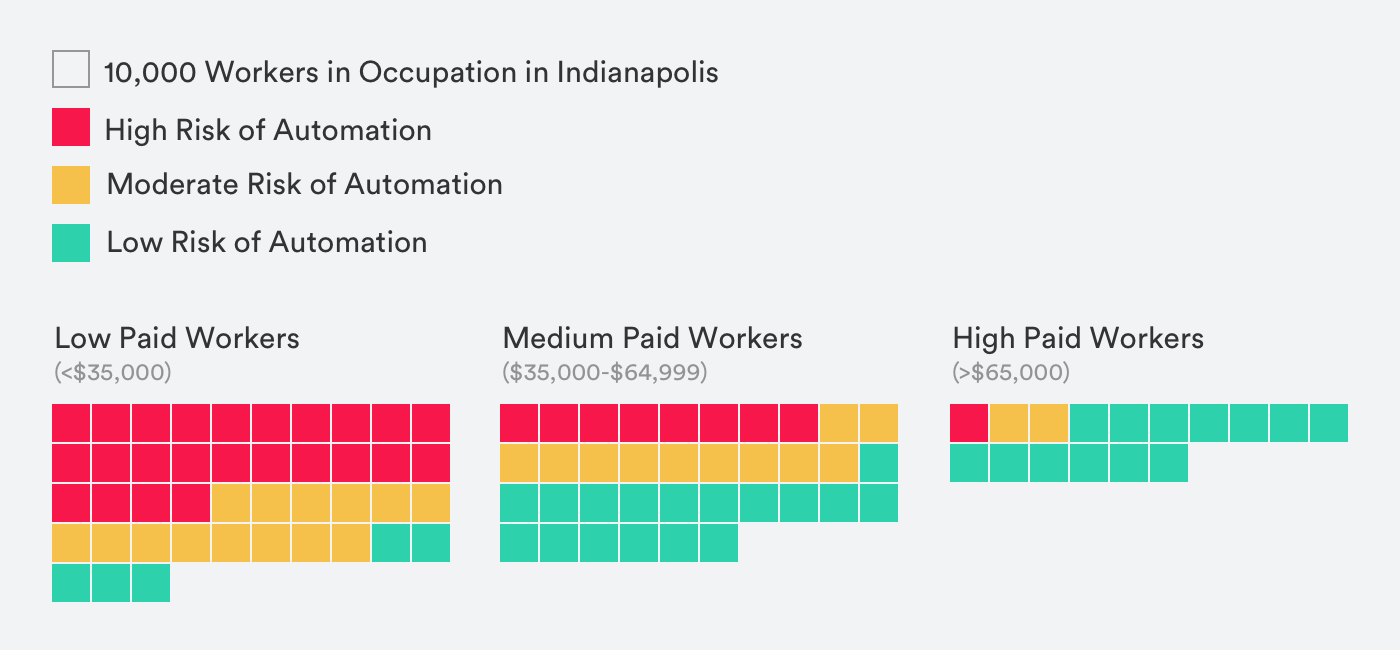
4) Contrary to popular perception, women are at higher risk of automation than men. Despite the association of Indianapolis with male-dominated jobs in manufacturing, transportation, and material moving, our data found that women in Indianapolis have a slightly higher risk of losing their jobs to automation than men. Women constitute 55 percent of workers in high-risk occupations. This concentration stems from occupational segregation; women constitute at least 70 percent of the workforce in many high-risk jobs that are abundant in Indianapolis, including cashiers, office clerks, and waiters and waitresses.
How Indianapolis Is Preparing for Technological Change and Automation
The Indianapolis region is pursuing four approaches to prepare for the future of work: embracing innovation and building a tech talent pipeline, reskilling, increasing postsecondary educational attainment, and confronting issues of race and equity. In these efforts, Indianapolis is leveraging its strong culture of collaboration. As a midsize city with a “flat” hierarchy, interested stakeholders can more easily access influencers and gather collaborators and decision-makers than in a larger city, which theoretically helps them address tough issues like the future of work.
Embracing Innovation and Building a Tech Talent Pipeline
A top priority for leaders in Indianapolis is growing the technology ecosystem. This approach includes efforts to attract new technology companies and startups to the region, grow the number of high-skilled jobs, and retain and attract talent. Indianapolis has leveraged low corporate tax rates and a business-friendly regulatory atmosphere to help attract Salesforce and Infosys to the city and to be competitive in Amazon’s HQ2 search. The city has invested more than $75 million in infrastructure spending on the 16 Tech innovation district in northwest Indianapolis, which it hopes will become a hub for the life science and information technology sectors.38 Situated near the region's largest research institution, Indiana University – Purdue University Indianapolis (IUPUI), 16 Tech will look to tap into the local talent pipeline to reach its 3,000-job target. Already, the newly created Indiana Biosciences Research Institute has chosen to set up its home base on the 16 Tech campus. Construction broke ground in December 2018.
Indianapolis is also investing public dollars to bolster quality of life as part of the effort to attract high-skilled labor to the area. For example, the Central Indiana Transit Task Force has long sought to actualize a regional transit initiative to remedy some of Indianapolis’s mobility concerns, organizing roughly 200 public meetings on the topic. The project, which features a rapid transit bus line called the “Red Line,” connects the University of Indianapolis to the Broad Ripple neighborhood along a 28-stop route. The line was finally greenlit in 2018 and began construction in February 2019. The local development authority also recently recommended capital investments in outdoor recreation, bikeways, and trails.39
Reskilling and Tech Education
Perhaps the greatest shared energy and understanding among key Indianapolis stakeholders around the future of work is in the K–12 education, reskilling, and tech training spaces.
- Coding academies like Kenzie Academy, which include apprenticeship, immersive training, and income-based repayment programs that partner with leading tech firms to both develop talent and attract new tech firms to Indianapolis, have enjoyed high levels of local buy-in.40
- Techpoint Foundation for Youth focuses on the city’s most underserved students, working with partners to provide in-school and afterschool immersive exposure to robotics education, focusing on future-proof skills like communication, problem-solving, project management, and collaboration. The program also explicitly encourages students to pursue careers in STEM (science, technology, engineering, and mathematics) fields.41
- Purdue Polytechnic High School adds to Indianapolis’s history of public charter schools focusing on immersive STEM education. The school has expanded to two locations in the city and operates with a special attention to design thinking.42
- Ivy Tech Community College and the Indiana National Guard have together launched an immersive, one-of-a-kind cybersecurity program at the Muscatatuck Urban Training Facility just south of Indianapolis. The program offers associate’s degrees and certifications and caters to returning adult students and first-time, full-time students.43
It is important to note that “tech” is a term understood with nuance in Indianapolis, and that reskilling, lifelong learning, and future workforce preparation programming is not limited to careers centered in the “tech sector,” strictly constituted. Indiana is the most manufacturing-intensive state in the country, and job growth—and job change—in advanced manufacturing is top of mind.
- Conexus Indiana tackles the issue through a variety of initiatives, including its dual-enrollment Hire Tech experiential learning program for high school students, where students wrestle with innovations changing manufacturing and logistics from 3D printing to drone delivery.44
- Project Indy, an effort by EmployIndy and the City of Indianapolis, partners with employers to make youth employment more productive and accessible, focusing on the career-ready skills that will make future workers more flexible and adaptable across multiple industries.45
- Several local employers work with local education providers like Ivy Tech Community College and Western Governors Indiana to co-create certification programs or inform program design.
- A state program making local impact on adults looking to reskill or reenter the workforce in advanced manufacturing—and also in other high-need fields like healthcare or construction trades—is Indiana’s NextLevel jobs program. NextLevel provides free statewide training in high-paying, in-demand industries, and provides employers with reimbursements of up to $50,000 to train their employees in select high-growth fields.46
In general, the lifelong learning and reskilling conversation is fairly sophisticated in Indianapolis and has local leadership. There is shared ownership from the community college system, IUPUI, Marian University, University of Indianapolis, Butler University, several major employers, Lumina Foundation, the IndyChamber, IndyAchieves, and the Indiana Commission for Higher Education.
Reskilling, lifelong learning, and future workforce preparation programming is not limited to careers centered in the “tech sector.”
Increasing Postsecondary Educational Attainment
A signature initiative of Indianapolis Mayor Joe Hogsett is the launch of IndyAchieves, which has the ambitious goal of increasing the proportion of Indianapolis adults with high-quality postsecondary credentials to 65 percent by 2027, up from 42 percent today. Mayor Hogsett aims to reach this goal by providing additional funding and programmatic support to the existing Indiana Higher Education Award and 21st Century Scholars program, which provides last-dollar scholarships and completion grants to cover all unmet financial need for eligible students. IndyAchieves also plans to improve postsecondary completion rates by tying financial aid to easily enforceable eligibility requirements, in partnership with recipient institutions. The program launched in 2018 with $2 million newly available to low-income residents.
A Focus on Economic Inclusion and Race
Indianapolis is a city that struggles with economic and racial inclusion—and those focused on workforce and economic development are keenly aware of the need for tough conversations on the subject. One in five residents live in poverty in the city overall (with higher rates in the city center) and Indianapolis experienced one of the nation’s largest growth rates of both children living in poverty and in overall economic inequality.47 It is also a city that, while being home to a rich history of African American entrepreneurialism and culture, has a history of explicit and implicit segregation, followed by decades of inequitable educational and economic outcomes. Many organizations have openly called for workforce development and postsecondary attainment initiatives as a tool for dismantling racial inequity, but design efforts still need to involve more residents and leaders who represent communities currently left behind by economic development. Many key leaders also tacitly agree that automation preparation goals must explicitly name and address racial inequity.

Time vs. Need
Indianapolis is not lacking in innovation or options for workforce and economic development activity. However, practitioners do not have sufficient space, time, or resources to focus on how swiftly automation is affecting and will affect residents’ ability to earn income and maintain social and economic mobility. One of the major reasons for this mismatch is the dire economic need faced by so many Central Indiana residents facing multiple barriers to employment. Providers need to place impoverished residents in work that provides income as quickly as possible; likewise, many residents understandably prioritize finding income quickly to meet their daily needs. The city will need to set aside time, resources, and capacity to future-proof vulnerable residents’ pathways to income rather than disrupt their pathway to immediate stability.
The Unfinished Agenda in Indianapolis: Challenges Ahead
In Indianapolis, the level of discourse around workforce development, automation, and reskilling is advanced, and programs proliferate. However, important challenges and gaps remain. We identify four missing pieces of a comprehensive approach to automation.
Recognizing the Shifting Paradigm of Automation and the New Workers It Will Impact, Including Women
Indianapolis’s history of manufacturing-based job disruption and widespread awareness of the issue can be a double-edged sword. People may be familiar with mechanical automation, but they are also more susceptible to a cognitive lock about who and what is implicated in a labor crisis. The next waves of automation will affect not only blue-collar, male, manual laborers, but also an even greater number of workers in the service sector, clerical roles, and even some professional roles. Women, people of color, and young workers will be disproportionately impacted. Although the historical context of the region and previous experience with automation in the manufacturing sector have primed Indianapolis leaders and residents to be more open to the possibility of change, a “we-have-been-there-before” mentality may also create overconfidence in the region’s readiness for the next changes, which will look different than the past.
Thus, a big challenge in Indianapolis is raising awareness that the future challenge does not look only like the past pain of factory jobs leaving, but rather is a much larger wave of automation that puts a greater cross-section of jobs at risk than any previous disruption. A state that is so proud of and invested in manufacturing certainly grasps the need for new talent pipelines, but there is still work to be done to help translate the need and inspire program design into more layman’s spaces. More visible activity or pressure should focus on designing programs to help workers in less obviously vulnerable roles, such as insurance adjusting, administrative roles in financial services, and fast food. The region also could use this massive opportunity to help lead a conversation about how AI and automation could drive transitions to meet a need for a larger workforce in some less automation-vulnerable spaces in Indiana, such as early childhood development.
The next waves of automation will affect not only blue-collar, male, manual laborers, but also an even greater number of workers in the service sector, clerical roles, and even some professional roles.
Even though women face a disproportionately high risk of automation nationally and in Indianapolis, programming to support women in lower-paid middle-skill jobs, such as office clerks and waitresses, is severely underdeveloped in the city. General programs like IndyAchieves are a good start, but few programs focus on the specific challenges of working women. Those that do, like The Last Mile, enjoy very limited funding.
Balancing the Urgency of Now with the Challenges Looming Ahead
A key challenge for Indianapolis is managing the tension between addressing urgent social and economic challenges today and preparing for longer-term challenges that automation will present to vulnerable populations. In Indianapolis, the strong focus from partners on the urgency of addressing today’s challenges related to economic mobility, racial equity, and workforce development risks clashing with a parallel focus on preparing for future-oriented challenges, even within these same vulnerable communities.
This tension mirrors the long-standing gulf between economic development and workforce development initiatives in the city. Indianapolis has a long history of racial segregation and severe inequality, featuring some of the most segregated schools in the country. Today, Indianapolis youth born in poverty are far more likely than the national average to remain in poverty.48 The Martindale-Brightwood ZIP code has a 40 percent poverty rate, as well as almost a 10-year difference in life expectancy than the richest areas in the city.49 Against this backdrop of racial inequities and economic inequality, city leaders have long put Indianapolis’s long-term workforce development agenda on the backburner as they attempted to deal with these more immediate economic disparities.50
The urgency of the challenges today has spurred a lengthy list of immediate priorities, limiting the space for newly emergent priorities like the future of work. For instance, Indianapolis has prioritized improving public transportation access issues, which limit the ability of many to get to work. Although such initiatives are important for addressing short-term problems, failure to resolve the tensions between today’s priorities and tomorrow’s challenges risks setting back the city’s ambitions for addressing the stark poverty rate and breaking multigenerational cycles. It also sets up vulnerable workers to be ill-suited for the changing economy and demand for skills. For instance, traditional workforce development programs typically place more vulnerable workers in currently-in-demand jobs, such as commercial driving and fast food service, but these same positions face a high risk of automation and change.
Putting Worker Constraints and Social Barriers at the Center of Program Design
Despite the existence of workforce and training resources, more needs to be done to make these programs and subsidies more user-friendly to the workers that need them most. To ensure that programs are accessible, program designers must take into account the very real constraints and often tricky circumstances that vulnerable workers face. For instance, many vulnerable workers are unable to take advantage of evening classes outside of work hours, or to pay for training upfront and wait for reimbursement. To ease the accessibility of offerings, training programs might be improved by being made available on-the-job and/or paid for by a worker’s current employer.
In addition, the social barriers that workers face are an important component of any future solutions to an equitable future of work. Greater government support for workers and families in transition will be crucial when automation hits. Indianapolis is in need of high-quality, affordable, flexible childcare options, especially ones that suit workers who have alternative or third-shift work schedules. In Indiana, children are not required to attend a school until they reach age seven, deepening the demand for daytime care beyond most metro areas.
Creating Entry Points and Diversifying Funding
One downside to the fact that Indianapolis is home to so much workforce activity is that it can be hard for new funders, organizations, or entrepreneurs to understand the best point of entry for action. It can be hard to know which lever to pull or who the ultimate authority is on some issues, and it can be hard to be bold and effective if one cannot get a sense of how to add value or where to invest time or money. And, perhaps as a function of “Indiana nice,” there is little appetite for telling someone that new action or investment is simply not needed.
As for spurring new social enterprise to solve workforce development issues; success will rely heavily on social capital. There is not as much capital—social or otherwise—in rotation in a market the size of Indianapolis, and culturally, investors or “idea-backers” can be risk averse. People tend to back “the guy who knows the guy who backed the last idea”—in essence, someone who is new on the scene may find it difficult to advance in Indianapolis. Innovators may be welcomed, but may be shut out of certain spaces, and this aspect of local life may discourage new founders.
Another concern is that, despite the spirit of collaboration, people will be unable to consolidate—after all, the various organizations already working in the region need to operate and raise money as well. They are competing for limited resources in a small pool and they need to maintain ownership of some of the work in order to maintain operation support. But right now, there is so much activity that it can be hard to tell where funders, volunteers, and national partners should invest their time and money. Sometimes, this murky environment results in people building solutions on top of existing solutions.
In the long run, Indianapolis must diversify away from its reliance on philanthropic support to fund many of the successful pilots mentioned above. This need may not be immediate, but the reality is that private philanthropic support has been a huge lynchpin, and few in Indianapolis are talking about how to support and drive the preparation for automation without philanthropic dollars.
Conclusion
The density of workforce development efforts in Indianapolis indicates that city leaders understand that the economic winds are changing. At the same time, most of these initiatives focus on fostering a technology sector that will only be able to accommodate a fraction of the residents whose jobs will be altered by automation. Deciding how best to serve the lowest-skilled Hoosiers is the next step in Indianapolis’s evolution and the true indicator of whether Indianapolis can overcome the automation challenge in the long run.
Indianapolis is home to many programs at the nexus of workforce development and automation
| [Indy Achieves](https://www.indyachieves.org/) | A cross-sector, cross-population focus on preparing a future workforce and helping residents navigate and resource postsecondary options. |
| [Ascend Indiana](http://ascendindiana.com/) | A deliberate and intentional talent development pipeline with high-demand employers who are focused on high-growth markets for the state |
| [Purdue Polytechnic High School](https://pphs.purdue.edu/) | An innovative class experiential learning model |
| [The Last Mile](https://thelastmile.org/) | A reentry program that begins with coding instruction during incarceration |
| [Project Lia](https://www.projectlia.org/) | A program to help women who are reentering society postincarceration develop employability, maker, and entrepreneurial skills |
| [Muscatatuck Cyber Academy](https://www.in.gov/ago/cyber-academy.htm) | An innovative partnership across the National Guard and Ivy Tech Community College to develop associate’s level cybersecurity talent and also provide training and simulation services for organizations across the world |
| [Next Level Jobs](https://www.nextleveljobs.org/) | A system to connect Indiana residents with free state-wide training in high-paying, in-demand industries. NextLevel Jobs also provides Indiana employers with reimbursements of up to $50,000 to train their employees in these high-growth fields |
| [LISC Indianapolis](http://liscindianapolis.org/opportunity/) | A local office of a national organization that, among others things, provides leadership and direct service in neighborhood-based workforce development leadership |
| [Indy Chamber of Commerce](https://indychamber.com/entrepreneurship/) | The city Chamber of Commerce supports inclusive economic growth, entrepreneurial training, and place-based initiatives that locate residents closer to opportunities. |
| [Indy Black Chamber of Commerce](http://indybcc.org/) | A membership and advocacy organization that provides entrepreneurial training, support, and advocacy |
| [EmployIndy](https://employindy.org/youth-services/job-ready-indy/) | The director of the local workforce ecosystem, providing—among other services—the Job Ready Indy online badging system (which validates the attainment of job skills by participants, signaling value to the market), Project Indy (a job, soft-skill, and work-readiness training program provided by local employers to in- and out-of-school youth in Marion County), and career advising services to adults throughout the city |
| [TechPoint Foundation for Youth](https://www.techpointyouth.org/) | An organization providing guidance and direct service to inspire more underserved central Indiana youth to pursue STEM careers |
| [Conexus Indiana](https://www.conexusindiana.com/) | A partnership to promote the state’s manufacturing economy that offers several talent development efforts in advanced manufacturing |
Citations
- Dan Carden, “Governor's Workforce Cabinet Begins Big Task of Aligning Indiana's Education and Job Training Programs,” Times of Northwest Indiana, May 2, 2018, https://www.nwitimes.com/news/local/govt-and-politics/governor-s-workforce-cabinet-begins-big-task-of-aligning-indiana/article_3c5646fd-dc0e-56ed-a324-692644a121a4.html; and Indiana Commission for Higher Education, “Frank O’Bannon Grant”, n.d., https://www.in.gov/che/4506.htm.
- James Briggs, “Salesforce to Rename Chase Tower, Hire 800,” Indianapolis Star, May 6, 2016. https://www.indystar.com/story/money/2016/05/06/salesforce-expected-rename-chase-tower-hire-800/83973780.
- “First Phase of Infosys’ $245M Airport Campus Will Be $35M Training Center,” Indianapolis Business Journal, April 26, 2018, https://www.ibj.com/articles/68581-first-phase-of-infosys-245m-airport-campus-will-be-35m-125000-square-foot-training-center.
- United States Census Bureau “2016 Annual Survey of School System Finances,” 2018, https://www.census.gov/data/tables/2016/econ/school-finances/secondary-education-finance.html.
- Kinder, Automation Potential for Jobs in Indianapolis.
- Ibid.
- Central Indiana Regional Development Authority, “Indy’s Metro Momentum Agenda – Regional Development Plan,” August 2015, https://iedc.in.gov/materials/downloads/Download/390f259c-34ce-6748-857a-ff0000c19905/.
- Ibid.
- Kenzie Academy, https://www.kenzie.academy/.
- Techpoint Foundation for Youth, https://www.techpointyouth.org/.
- Purdue Polytechnic High School, https://pphs.purdue.edu/.
- “Muscatatuck Cyberacademy,” Adjutant General’s Office, Indiana National Guard, n.d., https://www.in.gov/ago/cyber-academy.htm.
- Conexus Indiana, https://www.conexusindiana.com/.
- Project Indy, http://projectindy.net/.
- NextLevel Jobs, https://www.nextleveljobs.org/.
- Ryan Donahue, Brad McDearman, and Rachel Barker, Committing to Inclusive Growth: Lessons for Metro Areas from the Inclusive Economic Development Lab (Washington, D.C.: Brookings Metropolitan Policy Program, September 2017), https://www.brookings.edu/wp-content/uploads/2017/09/metro_20170927_committing-to-inclusive-growth-iedl-report.pdf.
- Ibid.
- Hayleigh Colombo, “1 in 5 Indianapolis Residents Lives in Poverty. And Many Areas Are Getting Worse,” Indianapolis Business Journal, May 11, 2018, https://www.ibj.com/articles/68785-in-5-indianapolis-residents-lives-in-poverty-and-many-areas-are-getting-worse.
- Jodi Moon and Lauren Krull, Examining the Cross-Roads School Segregation in Indiana (Bloomington, Ind. Indiana University Center for Evaluation & Education Policy, May 2017), https://www.civilrightsproject.ucla.edu/research/k-12-education/integration-and-diversity/examining-the-crossroads-school-segregation-in-indiana/Summary_School_Segregation_in_Indiana.pdf.
South Bend: Reinventing a “Dying City”
Overview

Less than 10 years ago, Newsweek declared South Bend, Ind. a “dying city.”51 Today, South Bend is teeming with palpable energy, optimism, and new momentum as it repositions its economy for the digital age.
For most of the twentieth century, South Bend enjoyed a robust industrial economy. Much of this growth was driven by the Studebaker Corporation, a major U.S. auto manufacturer headquartered in South Bend. In the 1800s, Studebaker was founded as a blacksmith’s shop, then became a major wagon manufacturer during the Civil War, before entering the auto industry at the turn of the century. For the first half of the twentieth century, Studebaker was one of the “big four” automobile manufacturers, with sales exceeding $100 million.52
The company’s success spurred its sponsorship of prominent buildings across town and contributions to the community’s commercial, social, religious, and civic life. Rebounding from bankruptcy during the Great Depression, the company operated until 1963, when it finally shuttered operations in the region for good, eliminating 7,000 local jobs. The closure devastated the city—a situation that current mayor Pete Buttigieg called “an economic equivalent to a tornado”—and ushered in a long and steep downturn.53
In the intervening years, the city focused on education, healthcare, and small business growth as its economic priorities while struggling to maintain levels of manufacturing critical to the aerospace and automotive production that is the hallmark of the region, but failed to recover the level of productivity, economic growth, or population it enjoyed as home to Studebaker.
While the leadership of Honeywell, local hospitals, and the University of Notre Dame certainly showed interest and leadership in resuscitating the city, many cite the election of Mayor Pete Buttigieg in 2012 as the start of a new era. The new era saw South Bend's future as an innovation center, using its origins as an industry leader to build new technology, develop and support entrepreneurialism, repurpose industrial spaces, and experiments with new approaches to public works and education.
Led by Mayor Pete, South Bend has emerged from economic decline and positioned itself toward the future. With several flagship initiatives, the city has attracted national attention as an early pioneer in preparing for the future of work. Buttigieg has taken national leadership on issues at the intersection of technology and workforce development, chairing the U.S. Conference of Mayors’ automation task force and giving keynote addresses to workforce and technology-based summits all around the country.54 His views on automation look at both the risks and promises that technology can offer to American workers in all fields.55
What the Data Say: Automation Risk in South Bend
South Bend’s exposure to automation follows similar trends to the United States overall.
1) South Bend’s automation risk mirrors the United States as a whole. Just over one in three jobs are at high risk of automation in the greater South Bend–Mishawaka metro area.

2) Automation risk in South Bend is associated with lower paying jobs, while high paying jobs are at least risk. Examples of high risk, low paid jobs include occupations that employ a large number of South Bend area workers, such as retail salespeople, cashiers, fast food workers, office clerks, secretaries, and administrative assistants, as well as workers on the assembly line. On the other hand, higher-paying jobs that face low risk of automation include registered nurses, general managers, financial managers, physicians, and software developers. A few occupations buck this trend. For instance, several low-paid health and care jobs have a low risk of automation, while accountants and loan officers are examples of highly skilled, highly paid positions that are at high risk to automation.

How South Bend Is Preparing for Technological Change and Automation
Embracing Technology, Data, and Innovation
Mayor Pete Buttigieg has aggressively embraced technology, data, and innovation as the cornerstones of a plan for the city’s economic transformation. In a highly visible and symbolic move, the city of South Bend has repurposed the old, hulking Studebaker complex into the centerpiece of the city’s new tech-forward vision. “This building now, which was a symbol of our decline, is going to be a symbol of our renewal,” said Buttigieg.56 The renovated Studebaker complex is now home to a growing number of technology firms taking advantage of infrastructural vestiges from the Studebaker glory days, including a vast road and railway system and a fiber-optic cable “highway” that runs through the Studebaker building.57 The region’s naturally cold climate is also ideal for limiting data center cooling costs.
Lifelong Learning
With philanthropic support and a partnership with the Drucker Institute, the city of South Bend is setting an ambitious vision to become the “City of Lifelong Learning” to help its residents continue to gain skills and knowledge throughout their life.58 Supported by Google.org and Walmart, the South Bend Lifelong Learning System has an explicit focus on inclusion, with an emphasis on making learning accessible to economically vulnerable residents. The multiyear initiative’s aim is provide all of South Bend’s roughly 100,000 residents with access to an online portal that comprehensively maps skills needs for the city and helps connect citizens to educational opportunities to attain and receive recognition for those skills. In addition to this digital component, the program also will offer lifelong learning in physical spaces in partnership with the local library system.
Leveraging the Resources, Talent, and Research of Local Universities
In recent years, the city of South Bend has engaged in more proactive partnership with the University of Notre Dame to harness the potential of the university’s research, resources, innovation, and talent pipeline. Since 2006, the university has and invested in two local technology parks.59 Notre Dame and the city of South Bend have also partnered more closely in efforts to retain local talent in the region. Mayor Buttigieg has prioritized tapping the highly educated graduates from Notre Dame—students who historically have migrated out of the region after their education is complete—for the South Bend workforce. In 2012, Notre Dame and South Bend introduced a to offer recent graduates an opportunity to stay in South Bend to work on a civic project in the community for a year.60
Stronger Together
South Bend has benefited greatly from a holistic approach to preparing for a future in which people earn income differently and expect different services from their community—from quality-of-place initiatives to transit planning—and has demonstrated an understanding that preparing workers also means preparing to give workers a place to make an affordable, enjoyable life.61 The region’s leadership knows that weather, size, and perception all present not only a talent attraction challenge, but also a retention one.
Around this issue, the community’s workforce and economic development leaders have shown a deep collaborative energy. One such example is the city’s robust work-based learning scene, led in part by the Chamber of Commerce. South Bend also understands its identity as both a city with unique challenges and a hub within a region facing broader questions of resident migration, mobility, and opportunity. South Bend has played a vital role in efforts like the South Bend | Elkhart Regional Partnership, which does innovative talent connection work in northern Indiana.62 Among other things, the partnership is focusing on the importance of building social capital for students and workers who lack networks as a means of preparing them for an increasingly fluid world of work in the future.
South Bend has benefited greatly from a holistic approach to preparing for a future in which people earn income differently and expect different services from their community.
Conclusion
South Bend enjoys an energized leadership team and the blessing of being small enough to get things done and big enough to do things that will matter to cities much larger than itself. It has made great strides in focusing on work-based learning, building on local university resources, and seeing its manufacturing history as an asset and not a deficit.
However, there is work yet to be done. Like many other cities, the key challenge is ensuring that automation-resiliency plans are truly comprehensive. With such a strong legacy of manufacturing and so much energy around building data realty, tech, and entrepreneurialism, design conversations (and participants) are in danger of being male-dominated. Paired with the disproportionate immediate vulnerability of South Bend’s women workers in fields like retail, food service, and administrative support, the region will need to design automation response efforts that engage women. Additionally, South Bend is more than 40 percent nonwhite, and leaders must make sure that program design and implementation involves people of color to ensure that the future workforce is representative—and that opportunity is equally accessible.
Citations
- “America’s Dying Cities,” Newsweek, January 21, 2011, https://www.newsweek.com/americas-dying-cities-66873.
- Denis O’Shea, “Death of Studebaker a Blessing in Disguise for South Bend,” Union Press International, December 4, 1983, https://www.upi.com/Archives/1983/12/04/Business-WorldNEWLNDeath-of-Studebaker-a-blessing-in-disguise-for-South-Bend/9659439362000/.
- Sonari Glinton, “A Company Town Reinvents Itself in South Bend, Ind.,” NPR All Things Considered, June 28, 2012, https://www.npr.org/2012/07/05/155916837/a-company-town-reinvents-itself-in-south-bend-ind.
- Zack Quaintance, “Connecting Talent with Purpose: Why Cities Must Collaborate with Academia on Gov Tech Innovation,” Government Technology, December 13, 2017, https://www.govtech.com/civic/Connecting-Talent-with-Purpose-Why-Cities-Must-Collaborate-with-Academia-on-Gov-Tech-Innovation.html.
- “Automation Is Coming for American Workers, Says Mayor Pete Buttigieg,” NowThis News, January 28, 2019, https://nowthisnews.com/videos/politics/automation-is-coming-for-american-workers-says-mayor-pete-buttigieg.
- Zack Quaintance, “South Bend, Ind., Could Be a Glimpse of the Future for Mid-Sized Cities,” Government Technology, January 8, 2018, http://www.govtech.com/civic/South-Bend-Ind-Could-be-a-Glimpse-of-the-Future-for-Mid-Sized-Cities.html.
- Adam Doster, “The Mayor of Nowhere, U.S.A.”, Politico Magazine, February 16, 2018, https://www.politico.com/magazine/story/2018/02/16/pete-buttigieg-president-2020-profile-feature-217001.
- “Drucker Institute Announces New Initiative to Help Turn South Bend, Indiana, into ‘The City of Lifelong Learning,’” PRWeb, April 24, 2018, http://www.prweb.com/releases/2018/04/prweb15435107.htm.
- Pete Buttigieg, “Mayor Pete Buttigieg, Coming Back Strong,” Accelerator for America, August 2, 2018, http://www.acceleratorforamerica.com/media/2018-08-02/mayor-pete-buttigieg-coming-back-strong.
- enFocus Inc., https://sbenfocus.org/.
- See “My South Bend Parks and Trails,” City of South Bend Venues Parks & Arts, http://sbvpa.org/my-south-bend-parks-trails/; and South Bend Public Transportation Corporation, http://sbtranspo.com/.
- South Bend | Elkhart Regional Partnership, https://southbendelkhart.org/.
Lessons Learned in Our Local Engagement Through ShiftLabs
You can’t act when you don’t know.
“Why don't more people know this?” was a refrain we heard repeatedly during ShiftLabs engagements about the topic of technological change and automation. Although some ShiftLabs participants were aware of general aspects of AI and automation, most were not as familiar with the national trends and the specific local effects that automation might have on jobs and skills. The awareness gap was especially true with regard to automation’s disproportionate impact on lower-skilled occupations. In follow-up engagements with ShiftLabs participants, participants expressed a desire to address some of the risks raised, but acknowledged their lack of knowledge and expertise on the topic. A sense of “not being an expert” on the topic of automation was pervasive, and continues to impede proactive action from implementing partners, government entities, employers, and civic groups.
Communities are hungry for information.
Our work in Phoenix and Indianapolis reaffirmed our starting assumption that sharing original, localized data fills demand and provides a fresh way to ignite public discussion, create a sense of urgency, and attract media attention. Across all of our local engagements this year, including with prospective new ShiftLabs partners and communities, we have consistently found a strong hunger for locally tailored data—which do not yet exist for most regions and communities. In Phoenix and Indianapolis, for instance, our automation risk reports were the first of their kind locally. In Indianapolis, multiple think tank and academic reports focus on workforce and economic development, but none of these resources look specifically at technological change and the risk of automation.
Automation is an interdisciplinary issue.
Understanding how automation will impact jobs and designing solutions is not any one person or sector’s job; it requires everyone to be involved. Education, workforce development, and social sector and economic development are all important components of a holistic approach to the issue.
Go with what works.
Local partners expressed some trepidation at the prospect of the effort involved in building an automation-resilient workforce, claiming that it can feel like trying to boil the ocean when a community sets out to “prepare people for the future of work.” Yet some of the most important action that was catalyzed through our ShiftLabs engagements involved adapting existing programs to take into account the ways work is changing. In Phoenix, for instances, when ShiftLabs presented automation impact data on the region’s retail sector, the local Workforce Investment Board began to investigate whether to provide government retraining funds to the retail sector. Small, concrete actions matter, whether they involve a local partnership revising its strategic plan, a local job fair asking its network to add a program or handout about what “future-proof skills” are, or a local Rotary meeting inviting a speaker on the topic. Cultural change often begins with a proverbial conversation around the watercooler.
All (automation) politics are local.
One clear lesson we learned in ShiftLabs engagements was the impact of (and vast differences in) local context and history in each region, and way in which local factors shaped the extent to which the pilot communities proactively embraced planning for the changing nature of work. Individual characteristics of cities lend themselves to certain types of solutions, such as the development of innovative, tech-forward solutions to workforce and economic development issues in Phoenix.
However, the desire for “easy wins” locally is a facet of one of the greatest concerns that the program has encountered: because the strongest momentum in initial ShiftLabs communities has been around preparing for and growing the upside of technology, far less focus has been centered on making sure that no one is left behind. Consistently, from Indiana to Phoenix, we discovered that local actors are most enthusiastic about embracing, growing, and preparing local talent for the upside potential of technology to create good jobs. These types of programs make for strong public relations copy, but on their own are not a comprehensive approach to automation or to the future of work in general. It is much more difficult to develop policies, solutions, and strategies to ensure that the future of work is equitable and that the most economically vulnerable workers, who are at disproportionate risk of automation, are not forgotten. Both types of initiatives are important. One attracts new opportunities and the other ensures that existing residents can take advantage of those opportunities
Action Steps for Implementers
Cultivate resilience. McKinsey’s America at Work report defines a location’s resiliency along five key dimensions: ability to innovate, rate of economic development, production base, population capacity to participate in the workforce, and level of human capital.63 Activities that improve one or more of these factors increase a new idea’s chance of success and contribute to a region’s response to automation.
Be specific. When considering automation-response options, communities often shied away from specific, well-articulated ideas (for instance, designing an entrepreneurial training program for a vulnerable population) for fear of being too narrow. But narrow ideas give other stakeholders something to react to and advocate for and against. Sometimes the most specific ideas got the most traction in discussions and program design.
Vision matters. From ASU president Michael Crow’s idea (to provide step-by-step coaching to all incoming students) to South Bend mayor Pete Buttigieg’s initiative (use of the public library as a community technology development site), the ability to see and communicate a new way of organizing resources matters a lot.
Work together. One of the most common refrains in idea design days across all three cities was, “I had no idea [x] leader operated here, or that our work overlapped so much.” Educators, employers, city leaders, and workforce advocates repeatedly found that they had had no idea how siloed they really were.
Create new choices. The end goal of any project connecting workers to new opportunities is for the workers themselves to feel that they have more control and choice in how to earn income. Whenever possible, seek to show community members emerging job possibilities and pathways to achieving them.
Citations
- Walmart with McKinsey & Company, America at Work A National Mosaic and Roadmap for Tomorrow, 2019, https://corporate.walmart.com/media-library/document/america-at-work-report/_proxyDocument?id=00000168-dec5-d9f9-a7f8-deed73c70001.
Recommended Resources
Big Picture
Brussevich Mariya, et al. “Gender, Technology, and the Future of Work.” International Monetary Fund (IMF) Staff Discussion Notes 18/07. Washington, D.C.: IMF, October 8, 2018. https://www.imf.org/en/Publications/Staff-Discussion-Notes/Issues/2018/10/09/Gender-Technology-and-the-Future-of-Work-46236.
Frey, Carl Benedikt, and Michael A. Osborne. The Future of Employment: How Susceptible Are Jobs to Computerisation? Oxford Martin School. September 17, 2013. https://www.oxfordmartin.ox.ac.uk/downloads/academic/The_Future_of_Employment.pdf.
Hegewisch, Ariane, Chandra Childers, and Heidi Hartmann. Women, Automation, and the Future of Work. Washington, D.C.: Institute for Women’s Policy Research, March 13, 2019. https://iwpr.org/publications/women-automation-future-of-work/.
Kinder, Molly. “Learning to Work With Robots: AI will change everything. Workers must adapt — or else.” Foreign Policy. July 11, 2018. https://foreignpolicy.com/2018/07/11/learning-to-work-with-robots-automation-ai-labor/
Kinder, Molly, and Kristin Sharp. “The Workforce Dilemma”. Craftsmanship. Spring 2018. https://craftsmanship.net/the-workforce-dilemma/
Manyika, James, et al. A Future That Works: Automation, Employment, and Productivity. New York: McKinsey Global Institute. January 2017. https://www.mckinsey.com/~/media/mckinsey/featured%20insights/Digital%20Disruption/Harnessing%20automation%20for%20a%20future%20that%20works/MGI-A-future-that-works_Full-report.ashx.
Muro, Mark, Robert Maxim, and Jacob Whiton. Automation and Artificial Intelligence: How Machines Are Affecting People and Places. Washington, D.C.: Brookings Institution, January 24, 2019. https://www.brookings.edu/research/automation-and-artificial-intelligence-how-machines-affect-people-and-places/
New America and Bloomberg. “Shift: The Commission on Work, Workers, and Technology.” May 16, 2017. https://www.newamerica.org/new-america/policy-papers/shift-commission-report-findings/.
Tesfai, Lul, Kim Dancy, and Mary Alice McCarthy. Paying More and Getting Less: How Nondegree Credentials Reflect Labor Market Inequality Between Men and Women. Washington, D.C: New America, September 13, 2018. https://www.newamerica.org/education-policy/reports/paying-more-and-getting-less/.
Walmart with McKinsey & Company. America at Work A National Mosaic and Roadmap for Tomorrow. 2019. https://corporate.walmart.com/media-library/document/america-at-work-report/_proxyDocument?id=00000168-dec5-d9f9-a7f8-deed73c70001.
World Economic Forum. Towards a Reskilling Revolution: A Future of Jobs for All. Geneva, Switzerland: World Economic Forum, January 2018. http://www3.weforum.org/docs/WEF_FOW_Reskilling_Revolution.pdf.
Books
Baldwin, Richard. The Globotics Upheaval: Globalization, Robotics, and the Future of Work. New York: Oxford University Press, 2019.
Brynjolfsson, Erik, and Andrew McAfee. The Second Machine Age: Work, Progress, and Prosperity in a Time of Brilliant Technologies. New York: W. W. Norton, 2014.
Ford, Martin. Rise of the Robots: Technology and the Threat of a Jobless Future. New York: Basic Books, 2015.
Goldin, Claudia, and Lawrence F. Katz. The Race between Education and Technology. Cambridge, Mass.: Harvard University Press, 2008.
Hacker, Jacob S. The Great Risk Shift: The New Economic Insecurity and the Decline of the American Dream. New York: Oxford University Press, 2008.
Hyman, Louis. Temp: How American Work, American Business, and the American Dream Became Temporary. New York: Viking Press, 2018.
Kaplan, Jerry. Humans Need Not Apply: A Guide to Wealth and Work in the Age of Artificial Intelligence. New Haven, Conn.: Yale University Press, 2015.
Oppenheimer, Andres. The Robots Are Coming! The Future of Jobs in the Age of Automation. New York: Knopf Doubleday, 2019.
Shell, Ellen Ruppel. The Job: Work and Its Future in a Time of Radical Change. New York: Currency Books, 2018.
Susskind, Daniel, and Richard Susskind. The Future of the Professions: How Technology Will Transform the Work of Human Experts. New York: Oxford University Press, 2015.
More About the Authors

Megan E. Garcia

Molly Kinder

Molly G. Martin
Vice President, Development & Strategy
Kristin Sharp

Margaret Streeter