A Chapter of: Worker Voices: Technology and the Future for Workers
Technology on the Job Today

From the vantage point of the workers we interviewed, the future is already here. In the front-end of grocery, food, and retail stores, workers see new and immediately visible technology like mobile payment, self-checkout lanes, ordering kiosks, and food and grocery delivery. Often, workers viewed these technological shifts through the lens of stability and financial security. Many were resentful of labor-displacing technologies like self-checkout machines, which they viewed as taking away hours, jobs, and benefits from workers, while offering little or negative value to customers.
The changes noted by clerical and administrative workers were often more gradual in nature, including mainly software-based technology. Frequently, they described these technologies as complementing, rather than substituting, their labor, and helping them do their jobs more quickly or more effectively. Other times, administrative workers highlighted instances when technology automated their jobs and displaced either all or part of the activities they had previously performed.
Several workers lamented that their employer failed to consider the impact on workers in the design and deployment of technology. Older workers struggled to adapt to technological changes.
Food, retail, and grocery workers weather rapid technological change
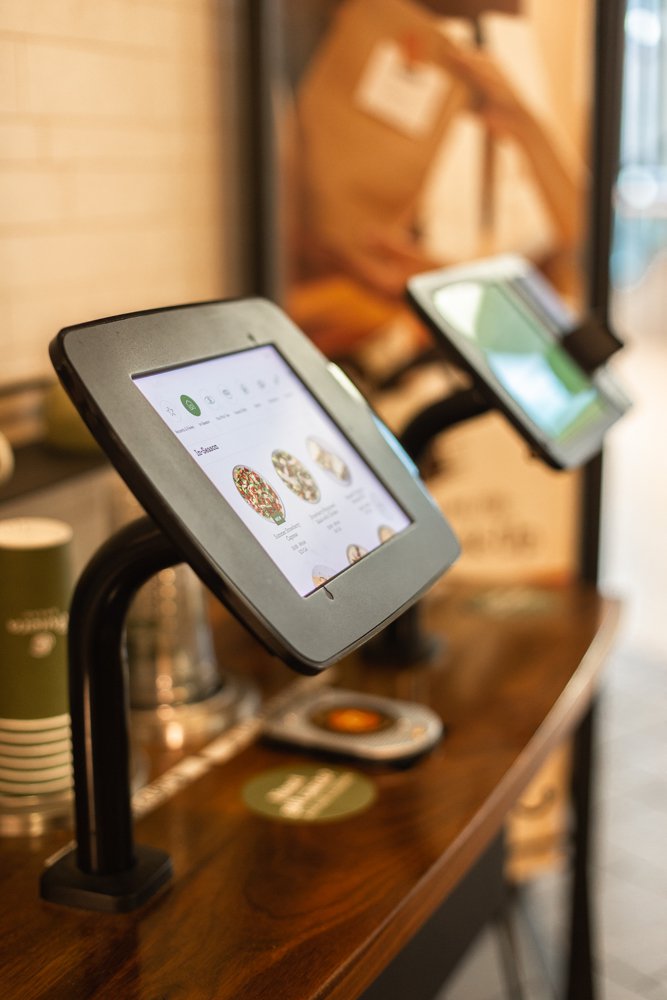
The food, retail, and grocery workers we interviewed reported rapid change in recent years at the front end of stores, and to a lesser extent, in the back. The changes they pointed to were often visible hardware and physical infrastructure like self-order kiosks, grocery self-checkout lanes, and curbside pickup lanes. In several instances, workers described their stores temporarily closing to undergo renovations to introduce new technological innovations and hardware—technology changes were literally happening before their eyes. One retail cashier, 18, said, “things are changing every day. There are new things on the app, a new mobile device at self-checkouts that gets lines moving faster.”
Other changes that workers noted were software innovations, new business models, and a move to online shopping. Several workers described rapid changes in the ways customers are shopping or dining, with sweeping implications for the stability of their jobs and the nature of their interactions with customers.
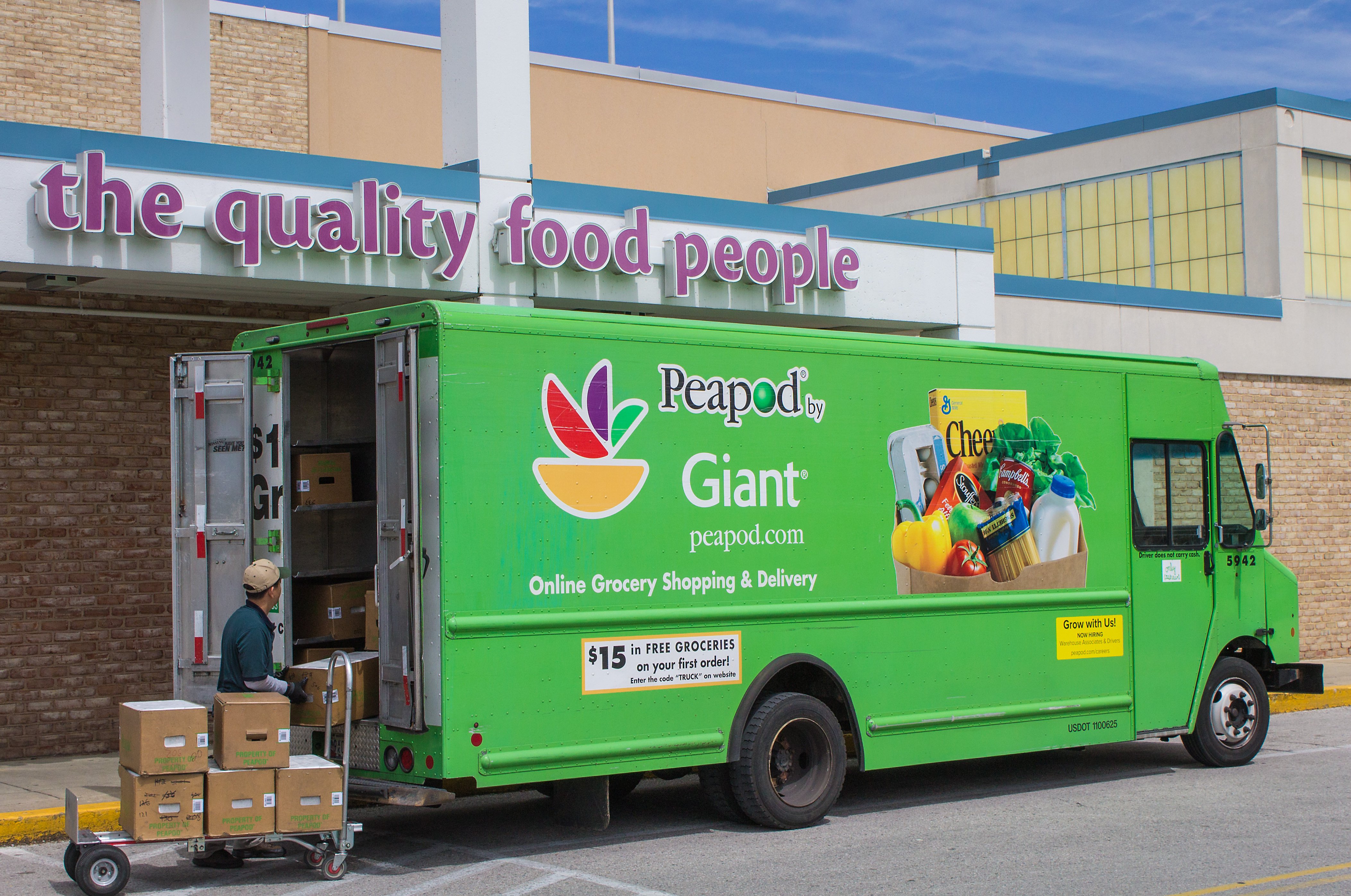
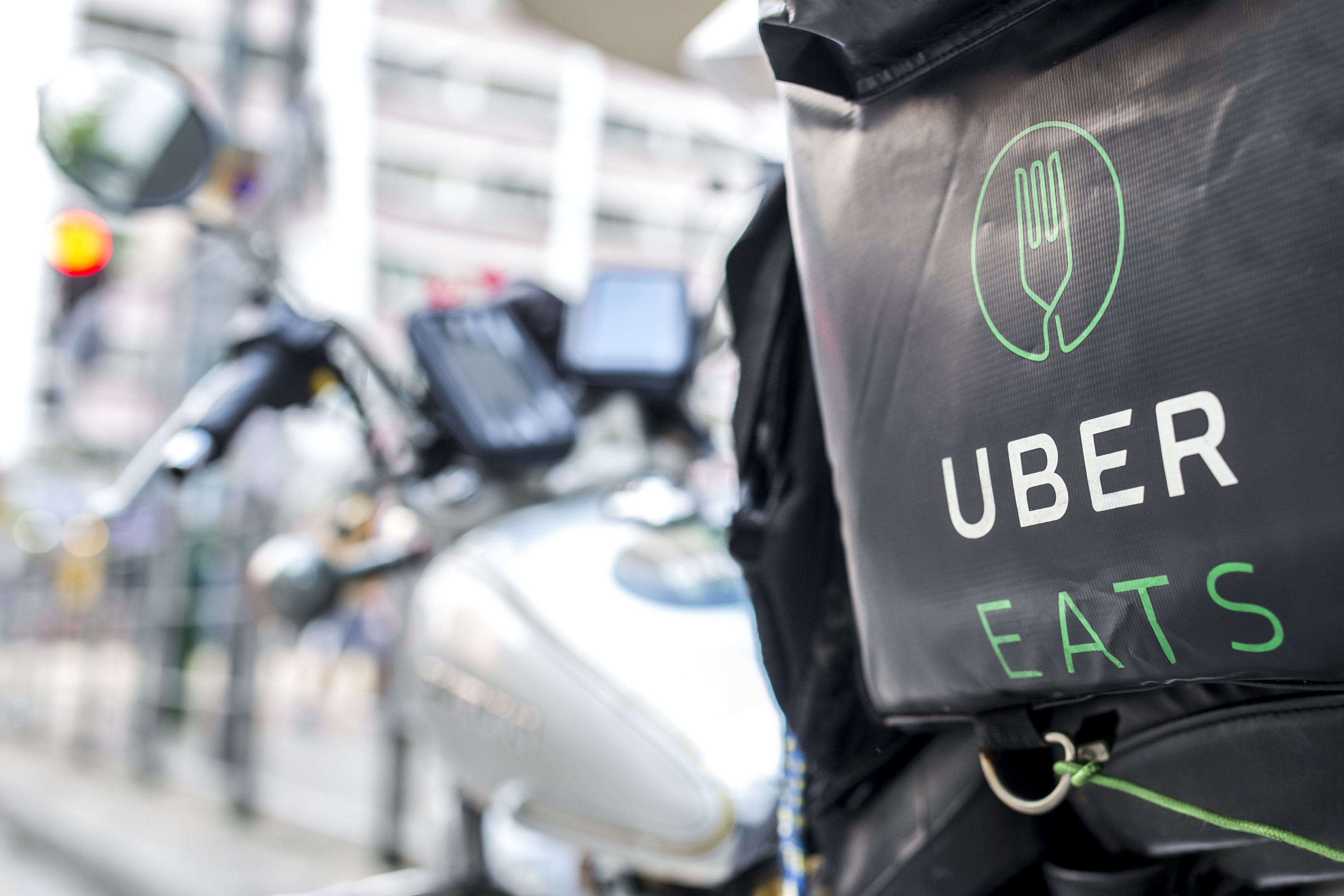
In addition to the ubiquitous self-checkout lanes and self-ordering kiosks, Uber Eats, mobile payment, store apps, online shopping, curbside pickup and grocery delivery are among the many new technology-enabled innovations that workers highlighted as driving changes in the way their workplaces operate. Retail and grocery workers noted a sharp increase in their online sales. One retail chain team manager, 45, told us, “internet sales have drastically changed our sales model and the way we work, so I have less control now….Online ordering has changed our stores so that it's more like a fulfillment store now. We get more freight and product in the store, so maybe 10 percent of our sales are solely online. We ship them directly from the store.” A retail cashier, 39, agreed, saying, “online shopping is a big thing. We have pickup today, where you can order online and then go to the store and pick it up. Our grocery pickup doubled just in the last year. I know that the company needs more people for those positions. They absolutely hate to pay unemployment, so they’ll reposition workers in things like grocery pickup and online ordering, because that’s huge.” This worker added, “I absolutely love that work; it doesn’t seem like it’s going to be that hard of a job.”
Country Gate Productions / Shutterstock
The individuals we interviewed who work in fashion stores described the shifts to online sales occurring alongside the shuttering of shopping malls and the closing of other store locations. Other workers discussed technological changes that have been introduced in the back of stores. An employee of a major retailer described new technology that helps unload and sort products from trucks in the back of the store. Other retail workers described scanning technology that aided them in tasks involving inventory and stocking.
Often, workers spoke with amazement at the scope and pace of change. A 29-year-old fast food veteran (featured in Jasmin’s Profile) described her reaction to discovering Apple Pay. After three years of incarceration, she visited the fast food chain downtown where she had previously worked. “The first time I saw that I was like, ‘Wait, what?’ The technology is crazy. There isn't going to be any more fast food.” She described the introduction of ordering kiosks: “Now you can mobile order on the phone. Now the [fast food chain] has a computer; you don’t go to the cashier to order at the computer. We used to have three cashiers there; now there’s computers and one cashier. That’s the busiest [fast food chain outlet] in the city. But the computer makes the order more accurate….In 20 years, I don’t think they’ll have cashiers.”
Many clerical and administrative workers described an incremental transition where technology complements their work and is accompanied by training
The clerical and administrative workers we interviewed described a workplace where technology is always evolving, generally incrementally, and often accompanied by on-the-job training. This incremental change, especially for long-tenured workers, normalized technological advances and rendered it less threatening. A legal assistant, 65, described the changes over her career. "When I first started, I was typing on a typewriter. So that has been a revolution all in itself, going from a typewriter to working on computers and then all these different (software) applications. It's a whole new universe.”
A 32-year-old administrative assistant in a medical office explained the move from paper to electronic records: “When I first started working, I noticed there were still paper charts in some places. It’s totally different now. We had to file…and that just doesn't happen anymore. Everything now is electronic, in pretty much every office I've been to. So it requires learning the medical software systems. There's a bunch of different medical software systems and we get to learn different programs, which is good for any job placement if you're going to move.”
Several workers described how technology has assisted them in doing their jobs. “Technology has made life a lot easier for us,” an administrative assistant, 58, said. “In real time, we send documents and it tells us when they’ve viewed the documents. If they don’t view it, it expires within 14 days, and we get a notification that its expired. It’s made life a lot easier for us.”
One legal assistant, 59, saw technology as a mixed blessing and said, “IT changes so fast it's crazy. To me it's good and bad. You just finally figure out how to do Word whatever version and they come up with an updated one and everything's changed. So then it's like OK, this used to work but now it doesn't. Email is wonderful because you can pretty much get answers quickly, but in other ways it's a lot more work. IT continually changes and it has changed our lives so much. Hopefully it makes our lives better.”
Automation has already impacted clerical and administrative work, displacing some jobs
Sometimes, the introduction of a new technology raises fears of job dislocation. An administrative assistant, 28, noted several recent changes in her work. She and her colleagues were in the midst of adapting to a new software system that shifts from producing manual reports for headquarters to partially automated reports. Adjusting to the new automated system was challenging for a lot of her colleagues. Her company is also introducing a new app that will use push notifications. She noted that her colleagues were concerned about this news, “but when you hear stuff about all this new technology, my bosses are always like, ‘Don't worry, no one’s losing their job.’” The boss “always says that, because people are like, ‘Oh, what am I going to do?’"
These fears can be well founded. As described in the box below, Three Examples of Labor-Displacing Automation, several administrative workers with whom we spoke have already experienced automation in their current or previous roles.
Three Examples of Labor-Displacing Automation
1) Partial automation: software replaced the HR functions of a job. Naomi is a 27-year old assistant manager of an apartment complex. She has been in the position for four years. Her role is a mix of administrative work, accounting, answering phones, human resources, and property maintenance. When she was hired, HR activities were a large part of her job. She was responsible for onboarding, training, documentation, and some recruiting.
This portion of her job has changed dramatically with the introduction of software programs that automate several functions. “When I first started, the company just moved into ADP. At first, we started out with the basic. We moved up to starting adding packages, so now it includes my whole job on the HR side. We switched over so the full HR and onboarding process is automated, where it used to be actual paperwork. We used to have the person come in, but now they can do it from home and if they need help, they can call ADP. The onboarding process pretty much disappeared. They won’t come to me for benefit questions anymore because it’s all there through ADP.”
Naomi finds the technological changes worrying and threatening to her job. “This is not a great thing because it means one person can do it. They could get rid of me and eliminate my job. The most annoying thing is that your fate is in someone else’s hands. If technology or AI comes in, your job can be lost just like that.”
2) Gradual automation: automated technology reduced the number of payroll clerks through attrition. Gabriela is a 27-year-old administrative assistant. Before she began her current role, she worked for several years as a payroll clerk, which required her to manually enter employees’ hours and codes from paper timesheets into QuickBooks and resolve any discrepancies that arose. As she was leaving the company, her job was in the process of being automated and the company was downsizing from employing three people in her role to two. “They were transitioning out of having paper timesheets into the scanned ones. Coworkers would just get in, swipe, and then that's it. So at one point they did tell us that they weren't going to hire another payroll clerk. And then it was just two of us and things would be smoother, which meant that there wasn't going to be a lot of work.”
3) Full automation: a machine replaced an accounting position in the back office. Rebecca is a 36-year-old retail cashier. Previously, she held an accounting and bookkeeping position in the same store. Her job entailed “counting out the money that came in the store and making sure all the tills came out fine. If anybody had any charges on their receipts, looking for money that was supposed to be there.” When she started the position, it was a two-person job to count the cash and coins, research discrepancies, record the information in the computer, refill the tills, and bag up the remaining money for the bank.
She did this role full time for several months. Then one day, her boss notified her that role was changing. The store would bring in a new machine that takes all the money and coins from the tills each night and automatically counts everything and prints out a report. Initially, the introduction of the machine reduced her hours in that role but did not eliminate the accounting position altogether. Her boss explained, “‘instead of having two people, we will have one and then a part-time one two days a week. You're going to be the two-day-a-week person, and the other three days you're going to be on the sales floor doing whatever we tell you to do.’” For two years, Rebecca worked this part-time role alongside other work as a cashier. Then the company eliminated the accounting role altogether, shifting the few remaining hours of work to the responsibilities of a manager.
Rebecca resents the machine that replaced her role. She calls the new machine “Irma,” and says, “I'm not friends with Irma.” She really enjoyed the accounting work that was eliminated. “I absolutely loved the work—I loved looking through transactions to try to figure out where the money went and doing the research of it. It was fun, it was a mystery. It was like, ‘Oh, we have these three transactions that could possibly be it, but maybe it's not. So let's look at the videotape and see what happened.’"
Rebecca was repositioned to a customer-facing cashier role. She misses the quiet and solitude of the position that was eliminated. “Before, I got less than 1 percent interaction with customers. They might call and say, "Hey, I lost my credit card," or "Hey, I'm double charged for this.” Looking into all of that, that was the only customer transaction or stuff I had to deal with. You are away from everybody; it was quiet and you did your thing. And now that I'm on the floor, it's noisy and it's loud, and there's customers everywhere. Some of them are awesome and I have this one old guy who I absolutely adore. But there are some that are just ridiculous. There are days where you're like, ‘Really?’’”
The stories and experiences of Naomi, Gabriela, and Rebecca illustrate the varied nature of the impact of technology on work. In some instances, a specific set of activities and roles were automated, but the job was not eliminated. In other cases, the entire position was eliminated. And in still other instances, the number of employees was reduced through attrition.
More research is needed to better understand the specific ways automation and technology are changing jobs, including in administrative and low-wage service jobs. More granular and specific insights into the intersection of automation, technology, and jobs will move the future of work conversations beyond high-level, abstract discussions of automation.
Workers are frustrated by technologies like self-checkout that reduce hours and sometimes eliminate whole jobs but offer little or negative value to customers
The fast food, grocery, and retail workers we interviewed expressed negative views about technology that could replace humans. They strongly disliked self-checkout technology and felt it was already displacing jobs and hours from workers. These perceptions were influenced by the frustration that workers felt with their struggle to get enough hours to pay bills and meet hours-related eligibility requirements for benefits.
Samantha Webster / New America
Against this backdrop, the introduction of labor-displacing technology like self-checkout lanes was perceived as exacerbating an ongoing struggle to secure sufficient hours and was met with strong resistance. One manager, 45, did not mince words: “We have self-checkout. I despise it. You’ve eliminated four jobs.” A front-end supervisor, 29, said, "I could be coming in at 6:30, but they have those self-checkouts, so they don’t schedule me until 9. I think that we all wish they weren’t there. It takes away from us." A 55-year-old cashier said the same thing: “It’s sad; it takes away jobs. It’s hard enough to find jobs as it is….If it’s not broken don’t fix it. It’s just another way to cut costs without having to pay people. If they can cut a cost, they will.” Finally, a 41-year-old cashier said, “We have eight self-checkouts at our store, and a lot of people use them there. They use them because they cut us out. Cut our hours, cut our manpower."
Many grocery and retail workers also felt that self-checkout is a technology that is bad for customers and ultimately for their employer’s business. A retail cashier, 39, said
The customers hate self-checkout. I was on one of the registers and a customer said to me, “Well, I don't work here, so I don't want to ring my own stuff up.” I was working in the self-checkout another day and a guy told me, “Hey, give me your discount card. I rang my own stuff up, so I work here. I should use your discount card.” I walked away.
The company doesn't realize that what they're doing doesn't work for every store. My store is a high-theft and high-risk store. You can see YouTube videos of things that have happened in our store. So putting in more self-checkouts is not the answer for a high-theft store like mine. But for other stores, for a little podunk town store, they'll be like, “Hey, this is awesome. This is perfect.” But for something like us, no.
The strong negative feelings workers expressed about self-checkout machines reflect concerns raised by prominent MIT economists Daron Acemoglu and Pascual Restrepo. In a recent paper, they describe “so-so” technology like self-checkout machines, which displace workers but offer limited productivity gains and low quality.27 A report from an MIT taskforce echoed the customer quoted above, describing self-checkout as a “so-so” technology that simply passes the checkout tasks from the trained cashier to the “amateur” customer.28 Unlike other automated technologies, which raise productivity and deliver economic benefits that can help offset the impacts of displacement, “so-so” technology may deliver limited benefit while adversely impacting workers.
More nuanced discussion is needed about the merits of specific types of automation and technology, such as self-checkout. Can we define “good” and “bad”—or, perhaps, “worse”—automation? How should we evaluate companies’ choices for technology adoption, the impact of the technology on their workforce, and their process for decision-making? How do incentives and policies encourage adoption of different types of automation?
Workers resent poorly designed technology that creates extra work
Workers also expressed frustration when new technologies in the workplace were poorly designed, made jobs harder, and inconvenienced customers. A grocery cashier, 55, said
I'm going to be honest, the machines don't work well. The screen gets frozen. One day we stopped for two hours and the store couldn't sell anything because the whole thing came down. The self-checkout machines are the worst. The company decided to go the cheapest software for the machines. Every time the machine goes down, you need to turn it off and wait like 15, 30 minutes for the machine to recover and come back again. Sometimes the items are not in the right position, and it won’t work. The customers get mad at us. I saw [another company] and they have really good machines; they don’t have the problems with self-checkout that we have.
Other times, poorly designed technology created a lot of extra work for the interviewees. One administrative assistant, 54, described a new document management system that was so hated by other assistants that they considered buying t-shirts with quotes printed on them that expressed their frustration.
We were told the new document management system would be much easier. Well that's not the case, unfortunately. I mean, I hate it. So many parts of the system don't work the way we were told they would. It sounded great, but once we got it and those people who have worked with document management systems that were really good have said, “Oh, we had this system and it was awesome and it saved us so much time and this one does not.”
A legal assistant, 59, echoed this feeling: “Coming here the biggest change was everything is supposed to be paperless, but it's not. It's twice as much work to be paperless. When I first started here, I dreamt all the time about saving emails. It was horrible. It was really horrible.”
On the flip side, many workers appreciated and positively embraced technologies that made their jobs better or easier. A retail cashier, 39, told us, “our store app is actually really cool. You can scan the barcode of any item and it will show you which aisle has that item. It even has a store map to show you exactly where that aisle is. Whenever you pass customers in the store, they're always asking, ‘Excuse me, do you know where this is?’ Before, I'd be like, ‘Oh, it's in the hardware section by the paint,’ but I don't know where that is. I love being able to tell a customer, ‘this is exactly where it is. Would you like me to take you to it?’ When I can tell them exactly where it is, that's been awesome.”
The co-manager of a clothing retail store, 22, agreed, saying, “in the last year, they gave us iPads. We can scan items in the store and it gives us all the inventory details. When a new shipment comes in, it will tell us what is in the boxes….The new technology has made it more interactive and easier.” Furthermore, “the store is introducing an app. If you want an item, if they have the item in the store, we can hold it for them. I think it is a good thing, I really do. We need to be more technology savvy—we are kind of behind. Technology is great, it makes life easier.”
Older workers report difficulty adapting to technological change
Several interviewees in the retail and grocery industry expressed their concern that older colleagues face the most difficulty adapting to technology. A grocery pricing clerk, 55, said
Technology with self-checkout has eliminated a bunch of jobs. I know some older people whose jobs were affected. They retired. It ends up being their choice to retire early because they can’t learn to adapt with the technology. It’s too hard or too frustrating for them. Absolutely. I mean, what do you do when a self-checkout replaces your job, where do you go? What if that happened to you? If that happened to me, being older, it would be harder to find another job. I probably would try to find something within the company. That’s the problem with being forced to retire earlier than what they are supposed to or want to.
Similarly, an administrative assistant in a medical office, 32, described how some of the older workers who had to make the transition from paper found it challenging, saying, “I think the people who used to work in the offices back when it was paper, they had a really hard time. Like my mom. She had an awful time. She's not a technology person anyway.” An older administrative assistant, 58, agreed: “The young people pick up these new tech things so quickly. They are tech-savvy. Not me—give me a book to read. Older people, like me, some of them are like, ‘what’s the use of this? Prove its useful.’”
Some interviewees contrasted their own ease in picking up new technologies with the struggles of older workers around them. A pricing clerk, 55, admitted
I use computers a lot more now than I did before. If you aren’t tech savvy, you’re kind of in trouble. I love it, and I’ve been fine. I adapt to technology pretty well, but that’s who I am. A lot of people can’t. A lot of the older people can’t grasp a lot of the technology. For instance, we use computers for online grocery order and pickup. It’s not so simple for somebody who’s older to go and figure out how to track the customers’ online orders, figure out how to get their order and make sure they’re billing them right. For years, I have been training colleagues in other stores on new technology and how to use our technical equipment. It was a lot harder for some people to learn what I taught. A lot of the people that were older had a bit of a hard time. I had to adjust how I taught them, with a little more patience, so they can absorb it.
It is not only older workers who struggle to adapt. An administrative assistant, 25, described how her young colleagues have had a hard time adapting to a new digital system: “People are really bad at adapting to change, even if they're young. The people on my team are not that old, 23, one's 32. They should be able to adapt to it, but they weren't logging their information correctly. So sometimes the new technology also makes my job harder but also easier at the same time.”
Many workers are nostalgic for the human connection they had with customers before technology changed their work
For the most part, interviewees lamented that technology replaces or greatly reduces human interactions. Especially for those workers who possess strong customer service skills and who enjoy the social components of their jobs, the introduction of mobile apps and payment, grocery pickup, and self-checkout and self-ordering kiosks were viewed negatively. One fast food worker, 28, said, “with computers, you don’t get to talk to customers, but that is what I like.”
Other interviewees highlighted the value that their customer service and human interaction brings to customers, and the ways technology lacks human connection. An experienced grocery cashier, 60, said, “little by little, you see them cutting us out a bit. The way I try to keep my job is I still have some of my same customers, so I can call them by name and remember their kids. There’s things we talk about that the machine can’t talk to them about. Whereas the new people in jobs that are automated, they’re not intimate as I would be with people.”
Yulia Vizel / Shutterstock
A younger worker agreed: “With retail, I love when I go to a store, I love the human interaction. That is really important. With online, you don’t get to talk to a real person. When you go into a boutique, you get to see the person who owns that place, learn their story, and talk to them.” This fashion retail chain co-manager, 21, continued: “With online, you miss that. You just see that thing that you want to buy. You don’t get to see the story behind it. You don’t get to feel it. With fashion, you need to feel what you are going to buy and put it on. It is different online."
But sometimes the feelings expressed were more ambivalent, reflecting mixed feelings about customer service. Often, interviewees with front-end jobs identified dealing with customers as both the best and worst parts of their job. Negative interactions with difficult or rude customers was frequently cited as a demanding aspect of their job. A young retail cashier summarized these mixed feelings
I don’t like to work self-checkout. It is boring. Not a lot of interaction. But sometimes I like it because I don’t want to interact with people. [Retail chain] is changing to all self-checkout. I’m just an 18-year-old kid, but I don’t think it will be good. People will get laid off and other companies will follow. They don’t need as many people to watch lanes. It will all be electronic, you won’t be getting that human interaction—that is the part that it is frustrating, but sometimes it isn’t. I can fix your coupon problem and will keep your kids from crying by giving them a sticker. There are good people who won’t get to work here because the company won’t need them.
David, a 26-year-old barista, described the negative impact that these new technologies can have on his interactions with customers
Technology can be good, it can be bad. It can change the interactions between people and in the long term, the personal connections can be severed. At our store, when technology comes in, people start walking in and out of the store using mobile orders. We won’t even know they came in; they will just slide in and slide out. “Hey, you didn’t say hi or good morning!”
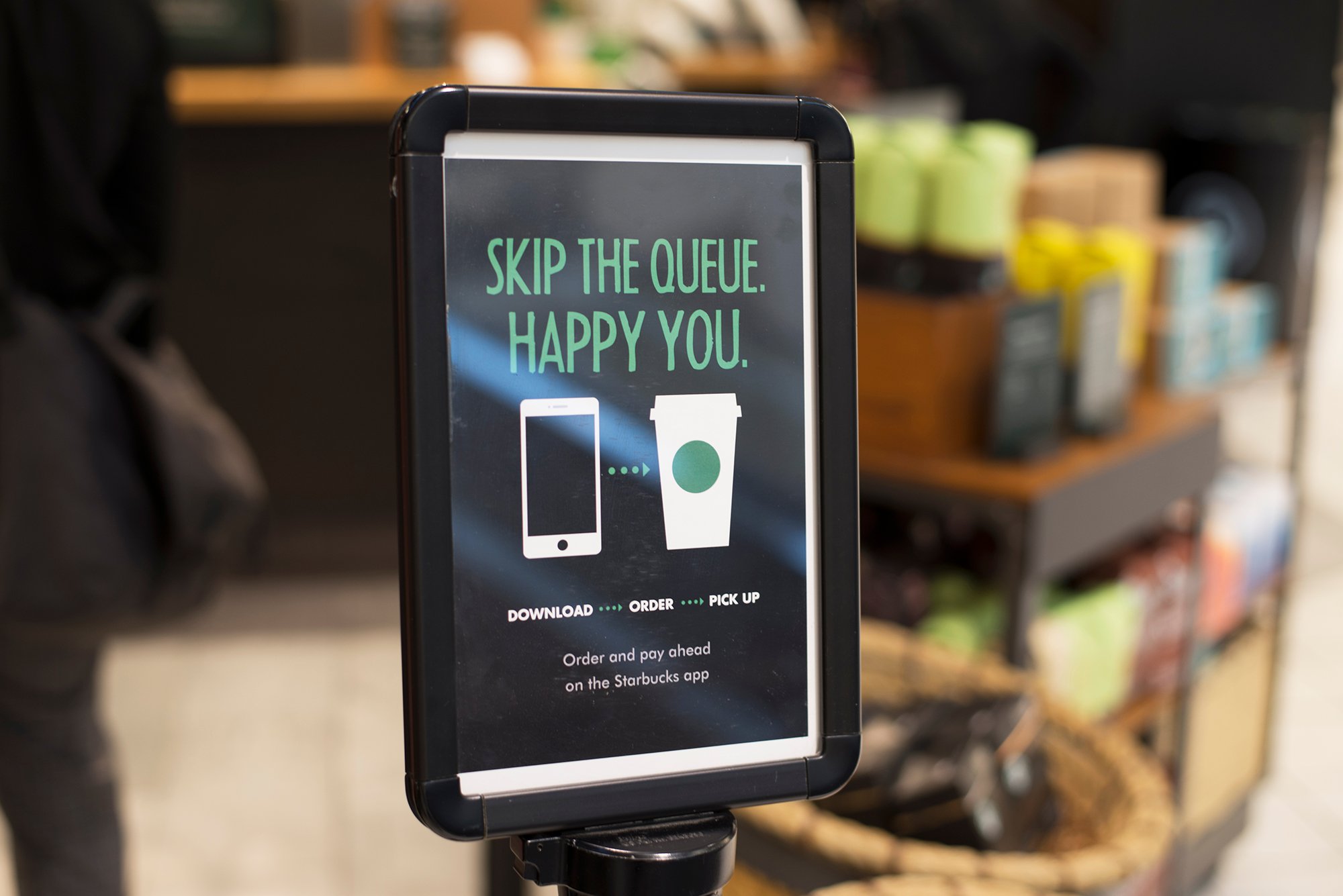
Right now, there are guides everywhere to encourage everyone to use mobile order or Uber Eats. This is the first thing you see when you come into our store. The company wants a few more minutes back of my time. You can now order ahead of time, so you don’t have to wait in line, which saves time for the customer. I still try to make a personal connection with customers before they leave, but they are on the go. Maybe 60–70 percent of the time, people won’t say good morning. They have music in their ears, they are trying to make it to the office on time. They are on their phones and they skip the line.
It is different from when I started. Now we print out a sticker with the order. Before we would write their name out personally with a pen, which was more interaction. Now we have Uber Eats and people don’t want to leave their house. It makes me feel bad. I don’t get to see the people I used to interact with years ago. It makes you wish the technology wasn’t there. I have big people skills and it makes me wonder, if the technology wasn’t in place, we would have to give people the bathroom code, write their order. Technology is cutting down on the interaction. It is making it bad, at least for me.
CatwalkPhotos / Shutterstock
Employers should understand the value of their employees and the shortcomings of technology—and give more voice to the workers in their decisions
Several workers emphasized that if their employers spent time empathizing with workers, they would recognize that workers actually do a better job than the technology the company adopts. "I would hate to see any new technology come in and take jobs from people,” a grocery bookkeeper, 47, told us. “If they can come in and spend some time seeing what we see. Just spend a week in there with us, doing what we do. See how we are treated and how the equipment is no good. They wouldn’t need no technology. A robot can’t do what we can do. They can’t give that service to the customers that we do."
A young retail cashier, 18, agreed. “Self-checkout is the worst. It is a super picky machine. Sometimes I have to put in the numbers four times. Do you know the show Undercover Boss? It would be cool if our corporate people did that.” The cashier added, “visiting isn’t the same as working here. If every time they went through self-checkout and something bad happened, they wouldn’t want to come here anymore. Especially when our competition is cheaper.”
The workers’ statements echo a common theme: they did not feel they had voice or agency in the decisions that impact them, including around technology design and adoption. To give more voice to workers, employers should engage more directly in the design of technology and empower workers to be involved in decision-making around their adoption. While unions can be an important voice for workers in decisions around technology, many of those who will be impacted by technology lack any union representation. Additional forms of worker representation and ways to enhance worker voice are required.
Worker Voices: Technology and the Future for Workers
- Executive Summary
- Acknowledgements
- Introduction
- Economic Insecurity and the Future for Low-Wage Workers
- The Search for Stability While Work is Changing
- Workers Want to Feel Respected and That They Matter
- Technology on the Job Today
- How Workers Imagine Their Jobs in the Future
- Barriers to a Better Future for Workers, Especially Women
- Obstacles to Obtaining Skills and Degrees
- Career Transitions are Difficult and Often Out of Reach
- Conclusion and a Human-Centered Agenda for the Future of Work
- Appendix: Study Methodology
Citations
- Daron Acemoglu and Pascual Restrepo. “Automation and New Tasks: How Technology Displaces and Reinstates Labor,” Journal of Economic Perspectives 33, no. 2 (Spring 2019): 3–30, https://www.nber.org/papers/w25684
- David Autor, David A. Mindell, and Elisabeth B. Reynolds, The Work of the Future: Shaping Technology and Institutions (Cambridge, MA: MIT Work of the Future, September 2019), https://workofthefuture.mit.edu/sites/default/files/2019-09/WorkoftheFuture_Report_Shaping_Technology_and_Institutions.pdf