Understanding Evictions: A Guide to Using Local Court Data
Abstract
Most of what we understand about eviction trends in a given city or county comes from local court records. While court data can offer valuable information on how, when, and why evictions happen, efforts to capture these insights are often hindered by data gaps and limitations, and the process can be daunting. This resource serves as a how-to guide for leveraging local court data to better understand the scope, scale, and outcomes of eviction lawsuits. It offers a set of research inquiries that can be answered using court eviction data, outlines the types of data needed to answer these, and identifies key challenges that researchers might face related to data access and analysis. Developed for local community stakeholders, legal aid providers, housing policy advocates, or anyone seeking to deepen their knowledge on evictions in their area, the guide features 14 questions to explore using court data—along with examples of practical applications from across the country.
Acknowledgments
We would like to extend gratitude to a cohort of local and national eviction and housing data experts and researchers whose engagement with this guide informed its structure, content, and real-world applicability. Specifically, we would like to thank Bruce Rich, Casey Chiappetta, Holly Stevens, Jeff Reichman, Katherine Clardy Key, Lauren Sudeall, Logan Pratico, Margaret Hagan, Nathan Law, Nicole Summers, Ryan Brenner, Samira Nazem, and Yuliya Panfil for their insights and feedback. The authors would also like to thank Jacob Kepes and Natasha Khwaja for their early contributions to the concept and development of this guide.
We also would like to extend our sincere thanks to those who shared their eviction data and court experiences with us as part of the case studies embedded in this report, including Brent Page, Kathryn Hensley, and Lillie Schneyer from the Access to Justice Division in the Administrative Office of the Illinois Courts; Katherine Clardy Key from the City of Alexandria; and Nicole Summers from the Georgetown University Law Center.
And lastly, we would like to show our appreciation for New America colleagues Jodi Narde, Kelley Gardner, and Naomi Morduch Toubman, and graphic designer A’lysia Alcorn, for their support in the design, layout, and editing of this guide.
Support for this project was provided by The Pew Charitable Trusts. The views expressed herein are those of the author(s) and do not necessarily reflect the views of The Pew Charitable Trusts.
Downloads
Introduction
Evictions have become one of the most visible manifestations of the housing affordability crisis in the United States. Each year, nearly four million eviction lawsuits are filed against renter households, most of which are for non-payment of rent. As rent prices reach record highs, understanding the scale and impact of eviction is more critical than ever.1
Most instances of eviction in the United States occur informally, outside the legal system.2 Formal evictions that run through the legal system when a landlord files an eviction lawsuit in court, however, have been shown to have lasting negative impacts on physical and mental health and create barriers to securing future housing, notably for Black women and children who face disproportionate risk of eviction.3
What we know about formal eviction in the United States is from eviction court records—or the information amassed as an eviction lawsuit makes its way through the court system.4 But access to eviction court records varies widely across the U.S. These records are not commonly standardized across (and often even within) court systems, meaning this data is often incomplete, inaccurate, or inconsistent.5 As a result, collecting and analyzing this data can be extremely resource-intensive and difficult to replicate. But just as high-quality court eviction data is critical to understanding evictions, so too is high-quality eviction analysis.
“Just as high-quality court eviction data is critical to understanding evictions, so too is high-quality eviction analysis.”
Digging into court eviction records can help reveal the story behind an individual eviction court case that, when aggregated, provides a powerful account of how forced displacement impacts communities across the United States. For eviction data analysis to be impactful, it must address questions that are meaningful for understanding and preventing eviction in a local context. Due to the wide disparities in data quality and accessibility across the U.S., however, determining which eviction-related questions can reasonably be answered with available court data can be challenging.
To address this challenge, Understanding Evictions: A Guide to Using Local Court Data offers 14 common questions that can be explored through court eviction data. By offering a road map and key considerations, the guide seeks to support those looking to use court data to better understand and prevent evictions in their communities.
This guide is organized into three sections. The first section describes the guide’s purpose and how it can be used. The second section covers the elements of good stewardship of court eviction data. The third section presents five areas of inquiry to gather insights on key aspects of eviction lawsuits, with 14 common questions that can be addressed using court eviction data. Throughout the guide, case studies highlight local initiatives that seek to improve eviction data and analysis in jurisdictions across the United States.
Terminology
- Court eviction data6: Refers to any information related to the forced removal of a tenant from a home that is collected by a court system.
- Eviction lawsuit: A type of civil court case that allows a property owner to regain possession of a property or lay claim to unpaid rent and other monetary damages. Unlawful detainer is another term commonly used for eviction lawsuits.
- Formal eviction: The legal process pursuing the forced removal of a tenant from a home through the court system. This is in contrast to an informal eviction, or the process by which landlords use intimidation, force, or neglect to either force a tenant to move or enforce rent collection outside the court system.
- Eviction filing: When a landlord or property manager officially opens an eviction lawsuit with the court system, asking the court to formally order the tenant to move.
- Plaintiff: The party that initiated the lawsuit by filing for eviction. This is generally a landlord, property owner, or property manager.
- Defendant: The party who is being filed against for eviction. This is generally the tenant(s) of the property the plaintiff is laying claim to.
- Eviction judgment: The decision made by the judge at the end of the eviction court case, either in favor of the defendant (tenant) or in favor of the plaintiff (landlord).
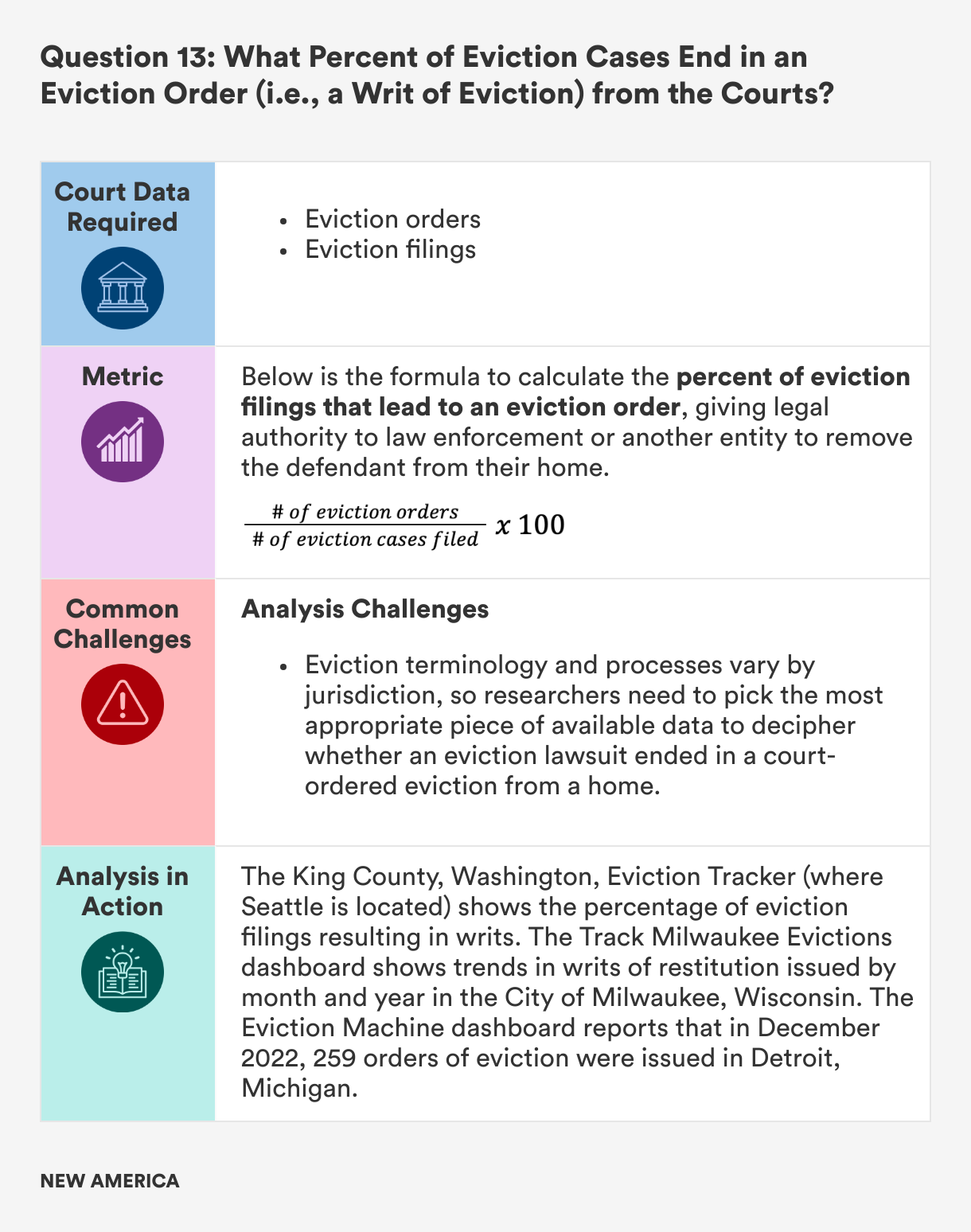
- Eviction order: A legal notice from a judge for law enforcement to remove a tenant from a home. In some court systems, this may be called a “writ of eviction.”
- Withdrawal: A case outcome in which a plaintiff (landlord) withdraws an eviction filing.
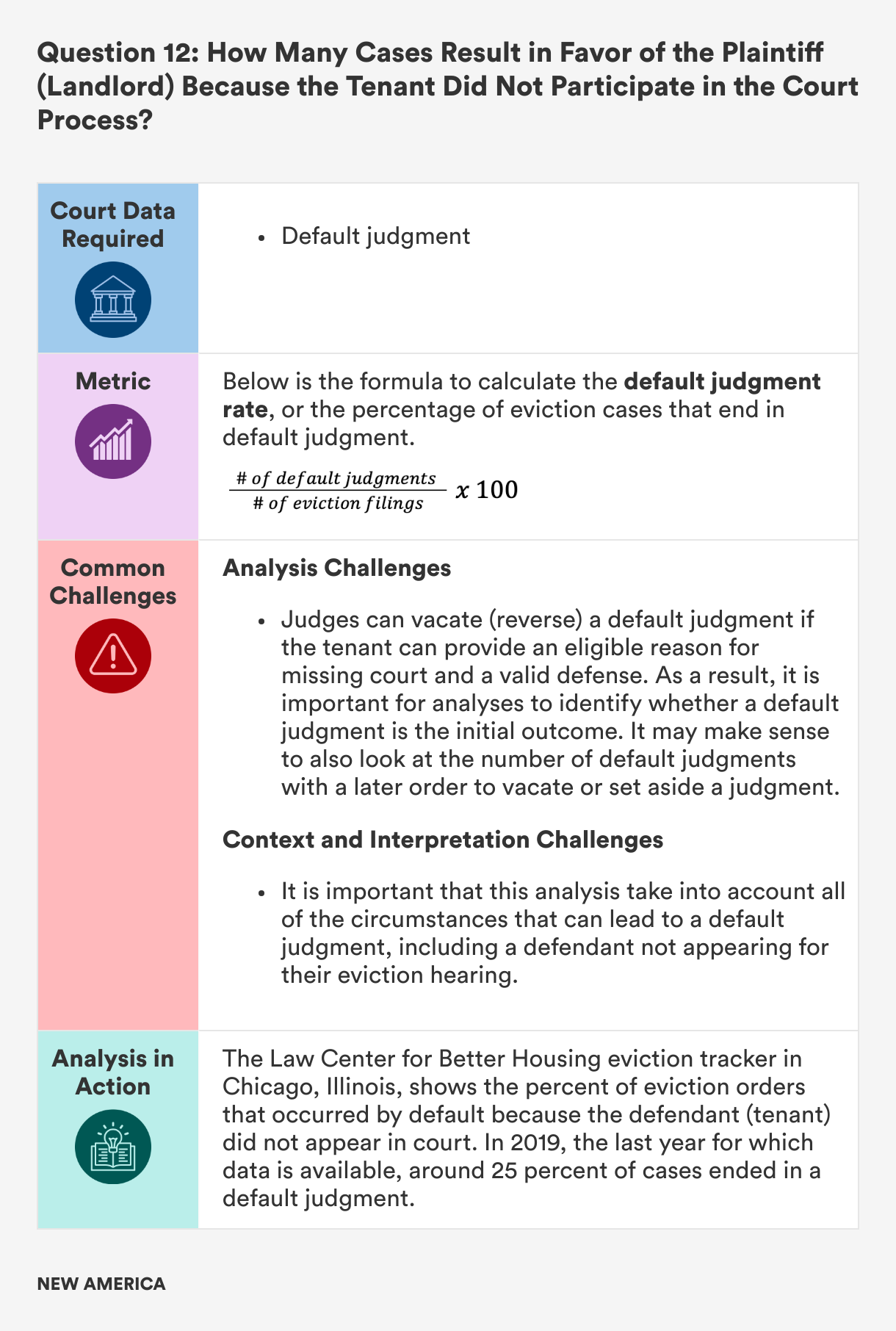
- Default judgment: A case outcome in which the judge rules in favor of the plaintiff (landlord), often because the defendant (tenant) did not appear in court.
- Dismissal: Eviction lawsuits can be dismissed if neither a landlord nor a tenant appear for their scheduled hearing, a landlord fails to properly notify a tenant of the lawsuit or makes other procedural errors, or a tenant has already vacated the property and the landlord decides to no longer pursue the case.
- Settlement agreement: A case outcome resulting from the plaintiff (landlord) and defendant (tenant) entering into an agreement before a judgment is issued by the court. These settlements spell out actions that tenants and landlords agree to, such as repayment schedules, move out dates with certain stipulations, or repairs a landlord must make.
Citations
- America’s Rental Housing 2024 (Cambridge, MA: Joint Center for Housing Studies of Harvard University, 2024), https://www.jchs.harvard.edu/sites/default/files/reports/files/Harvard_JCHS_Americas_Rental_Housing_2024.pdf.
- Sabiha Zainulbhai and Nora Daly, Informal Evictions: Measuring Displacement Outside the Courtroom (Washington, DC: New America, 2022), https://www.newamerica.org/future-land-housing/reports/informal-evictions-measuring-housing-displacement-outside-the-courtroom/.
- Julia Craven, “Eviction Is One Of The Biggest Health Risks Facing Black Children,” New America, December 7, 2023, https://www.newamerica.org/better-life-lab/articles/eviction-health-risks-black-children.
- Sabiha Zainulbhai, What Can Court Data Actually Tell us About Evictions? (Washington, DC: New America, 2023), https://www.newamerica.org/future-land-housing/reports/us-eviction-court-data/.
- Adam Porton, Ashley Gromis, and Matthew Desmond, “Inaccuracies in Eviction Records: Implications for Renters and Researchers,” Housing Policy Debate 31, no. 3-5 (2021): 377–394, https://doi.org/10.1080/10511482.2020.1748084.
- While court data is necessary to understand eviction lawsuits, this data alone does not provide a complete picture of evictions. Emergency Rental Assistance Program (ERAP) data, data from legal aid providers, and other housing metrics can complement court data to offer a more holistic view of evictions.
How to Use This Guide
Who Is This Guide For?
This guide is designed to support those seeking to use court eviction data (referred to throughout as “data users” or simply “users”) in leveraging court eviction data to better understand eviction trends and impacts in their area. This includes but is not limited to court staff, social service agencies, city or county housing or human service departments, elected officials and their staff, legal aid organizations, researchers, and journalists.
While court data can be accessed through various methods, this guide covers data typically accessed directly from courts through data-sharing agreements, docket review, or bulk extract from courts.
What Is the Purpose of This Guide?
Court eviction data serves multiple purposes. Courts utilize this data to more effectively adjudicate cases. Civil legal aid providers and community-based organizations use it to directly intervene and provide legal aid and other resources. Policymakers and researchers use it to track and better understand evictions over time.
This guide offers a framework for understanding the kinds of questions that can be addressed using court eviction data. It outlines the types of data needed to address each question and identifies key challenges related to access and analysis that experts in the field commonly face. Given the variation in the data, and in eviction legal processes and terminology, the framework provided in this guide must be tailored to fit the specific data and eviction context and cannot be universally applied to all court eviction datasets.
How Might I Use This Guide?
This guide seeks to:
- Demystify terminology and make court eviction data and analysis more accessible and transparent;
- Enable data users to make multi-state and multi-year comparisons to better assess the impact of eviction lawsuits on courts and communities;
- Further data-informed decision-making and understanding of eviction court processes;
- Mitigate misunderstandings of evictions and their impact; and
- Empower social services and other community-based service providers to better assist and distribute aid to communities impacted by evictions.
Learn more about improving eviction data with research and analysis from New America’s Future of Land and Housing program.
Good Stewardship of Eviction Data
Good stewardship of eviction data is critical for protecting the privacy of sensitive information, as well as ensuring that data collection and analysis is adequately addressing the potential for data misinterpretation and misuse. For eviction lawsuits in particular, protecting the privacy of an individual’s data is critical as eviction court records contain sensitive personal information about tenants, including their names and addresses, and this information is commonly used by tenant screening companies and landlords to screen housing applications.
While some courts may have privacy protocols in place when sharing this data with users, it is also the responsibility of data users to implement the proper protections and protocols. Collection and analysis are also critical steps because the complexity and variation in eviction legal processes across court systems, in combination with often poor-quality data, presents an opportunity for misinterpretation.
To help users promote good stewardship, this section offers a high-level checklist to ensure all efforts to collect, store, analyze, and disseminate eviction data are conducted ethically, transparently, and with privacy protection as a top priority.
Checklist for Good Stewardship of Eviction Data
Data Collection: Addressing Data Limitations and Gaps
☐ I understand where the data comes from and who owns the data that I am accessing (e.g., the court or a case management system).
☐ I understand the scope of the court eviction data that I was able to source.
- For example, If I accessed the data through a bulk extract for all civil cases, I would be able to separate out eviction cases from other kinds of civil cases.
- Does the data include residential and commercial evictions? If I’m only interested in residential eviction cases, is there a way to separate out commercial eviction cases?
- Does the data cover eviction cases in which a plaintiff (landlord) is filing a lawsuit only to regain possession of the property, or does it also include monetary damages?
- Does the data include sealed or expunged eviction cases?
Data Storage and Privacy: Protecting the People in My Data
☐ I understand the privacy-protecting protocols in place governing my use of this data, and I have a plan in place for ensuring compliance.
☐ I have access to the necessary data structures for secure warehousing of datasets or data with personal information.
Data Analysis: Ensuring Accurate Conclusions
☐ I understand what each data field in the court data means, and how it relates to the eviction legal process in my jurisdiction.
- If there are gaps in my understanding, I have consulted with and integrated the knowledge of court clerks, civil legal aid providers, or others knowledgeable about the data and eviction legal processes.
☐ I have the necessary court data, in a comprehensive, granular, and high-quality format to undertake the analysis I am interested in.
☐ I am appropriately defining the universe of eviction cases for each analysis and adjusting each metric accordingly (i.e., the numerators and denominators).
☐ Any comparisons to other jurisdictions take into account the highly varied nature of laws and legal processes across jurisdictions.
Data Interpretation and Dissemination: Doing No Harm When Communicating Results
☐ The eviction data analysis that I will share includes a clear description of:
- How the data was obtained;
- The scope of the court data included in the analysis;
- Any limitations of the data and the analysis, including those inherent to all court data (e.g., court data will not include informal evictions, illegal evictions, and de facto evictions that occur outside the court process), and those specific to your dataset (e.g., the data does not include sealed eviction cases filed after a certain date); and
- Definitions of the methods and metrics used to analyze the data and any assumptions made in the process (e.g., eviction cases filed over $10,000 are likely commercial evictions and thus excluded from analysis).
☐ When sharing the results of the analysis, I provide the necessary context to understand why a specific eviction metric is important and advise how it should be interpreted and used.
☐ The data analysis I share publicly is anonymized and summarized so it cannot be linked to any one defendant (tenant). I am communicating the minimum amount of personal information for the analysis to be meaningful but still privacy-protecting.
Note: While this checklist is not exhaustive, it reflects key considerations that users must grapple with and offers a starting place to build off of for good stewardship of eviction data.
Case Study: Privacy and Transparency in Eviction Data-Sharing in Alexandria, Virginia
Type: Data Management Practice
Policy/Action: Responsible Data Governance
Eager to better understand eviction trends impacting residents, local leadership in the City of Alexandria, Virginia, leveraged funding from the American Rescue Plan Act to hire a full-time data analyst to create an eviction database.7 By automating data collection across several sources, including the General District Court’s online case management system, the Alexandria Sheriff’s Office, and local legal aid, the analyst built and maintained a publicly accessible eviction dashboard for the city.
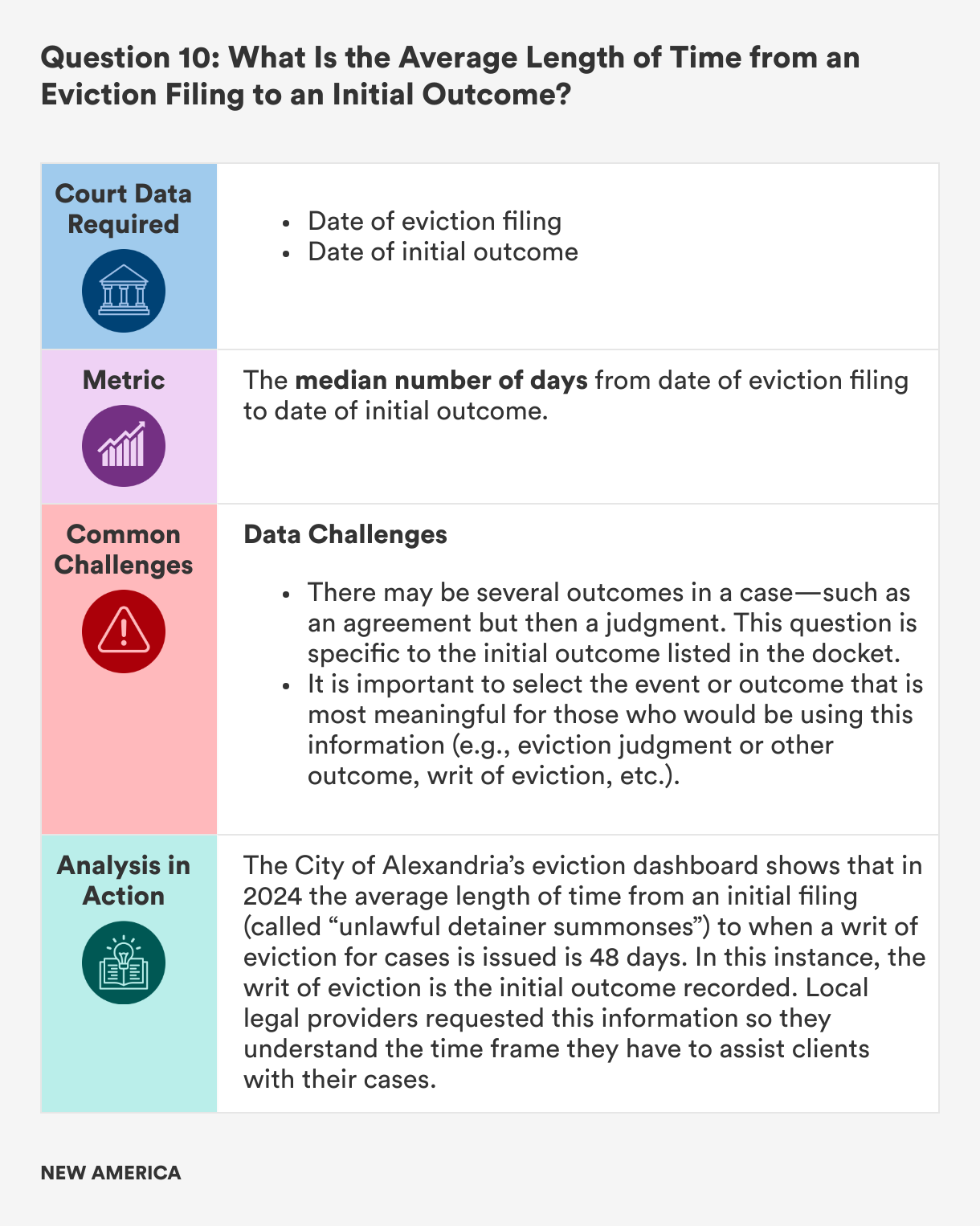
Using an automated computer program, or custom scraper, the analyst collects data from each source weekly, analyzes it, and uploads it to the public dashboard. The dashboard shows trends in key eviction metrics, including eviction filings, writs of eviction (legal notices from a judge or law enforcement to carry out an eviction), percent of cases decided in favor of the landlord, and the average amount of unpaid rent owed by each tenant. The analyst also sends reports on that week’s eviction case details to local legal aid, housing service providers, and other community-based organizations to identify eviction trends, target resources to tenants most at risk of eviction, and evaluate the effectiveness of current interventions.
How does the City of Alexandria ensure that this data—which contains personally identifiable information on a deeply traumatic experience—is being used responsibly and is understood by community partners?
Through a data-sharing agreement with the Sheriff’s Office, the City of Alexandria developed a memorandum of understanding (MOU), reviewed by the City Attorney’s office, that outlined terms and protocols for how the data could be used for each party. To adhere to the MOU, the public dashboard shows only city-wide metrics and no information about individual cases, while legal aid partners govern access to private data that contains identifiable information.
Responsible data stewardship includes transparency about data sources, limitations, and clear definitions for legal processes and eviction terminology. The Alexandria dashboard defines the rates of eviction filings and eviction writs clearly and contextualizes these trends against a timeline of pandemic-related court changes in Virginia courts, including their closure at the start of the pandemic and their observance of eviction moratoria. At the height of the pandemic, the city analyst shared biweekly eviction trends with an eviction prevention task force, aligning data with qualitative information from firsthand accounts of court outreach staff.
Proper data stewardship is an ongoing and iterative process, as this case shows. To be sustainable, it requires maintaining privacy and contextualizing data, devoting human resources, and committing to be responsive to the changing data landscape and audience needs.
Citations
- This position was created within the Office of Performance Analytics within the City of Alexandria’s Department of Community and Human Services.
Common Questions to Address Using Court Eviction Data
This section walks through common questions that can be explored using court eviction data. This section is organized into five main areas of inquiry:
I. How many eviction lawsuits are taking place, and why?
II. Who is filing eviction lawsuits?
III. Who is facing eviction lawsuits?
IV. How do tenants and landlords engage in eviction lawsuits?
V. What are the outcomes of eviction lawsuits?
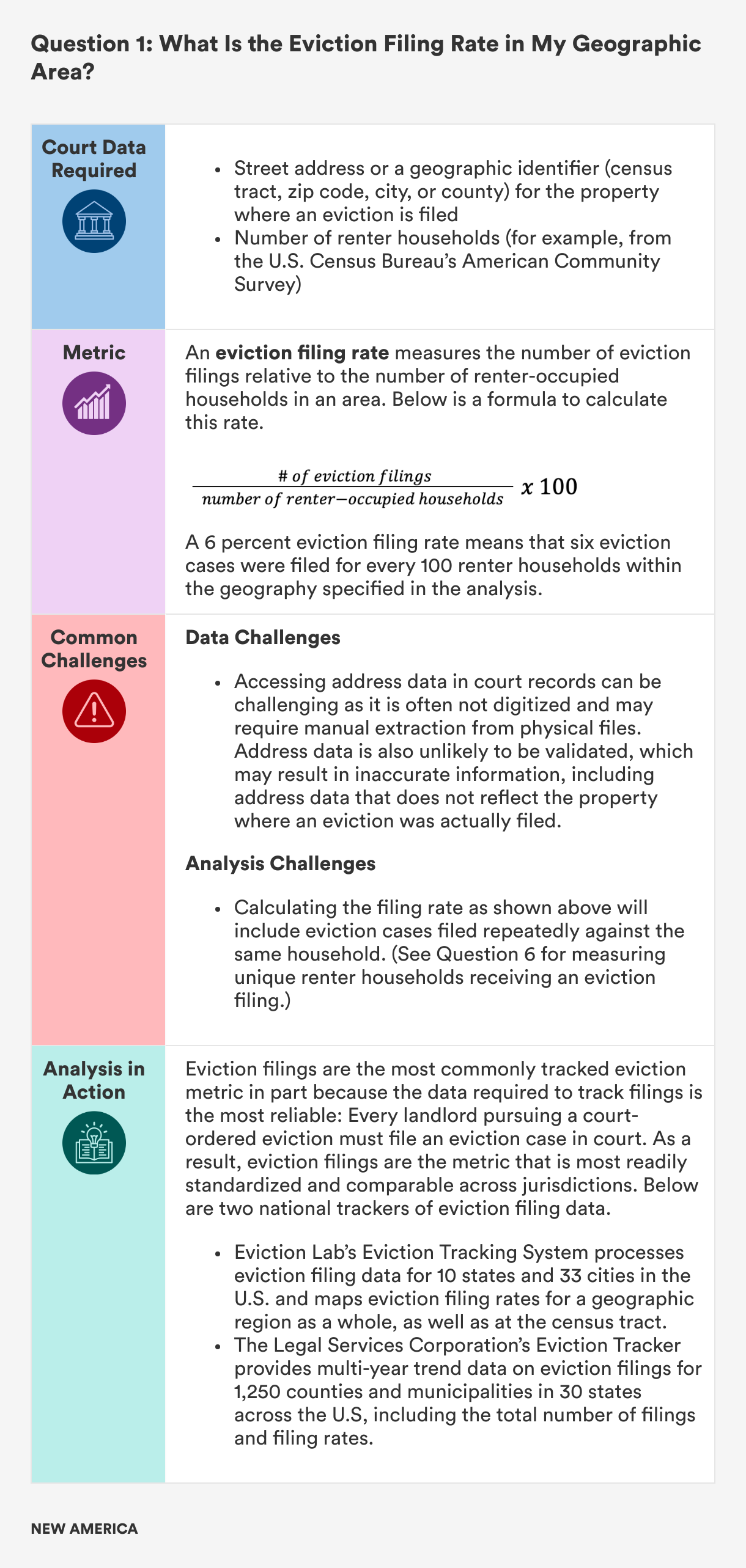
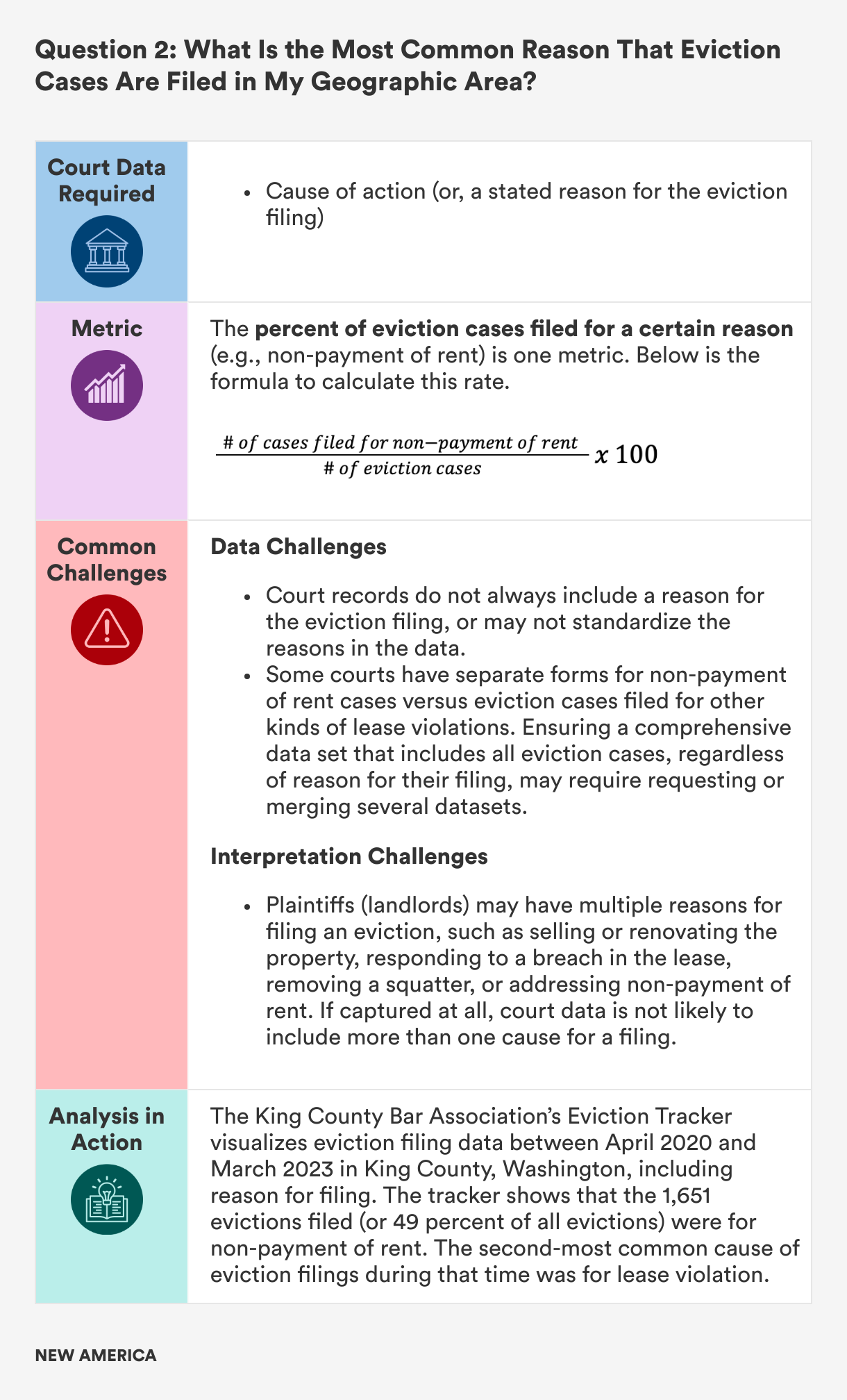
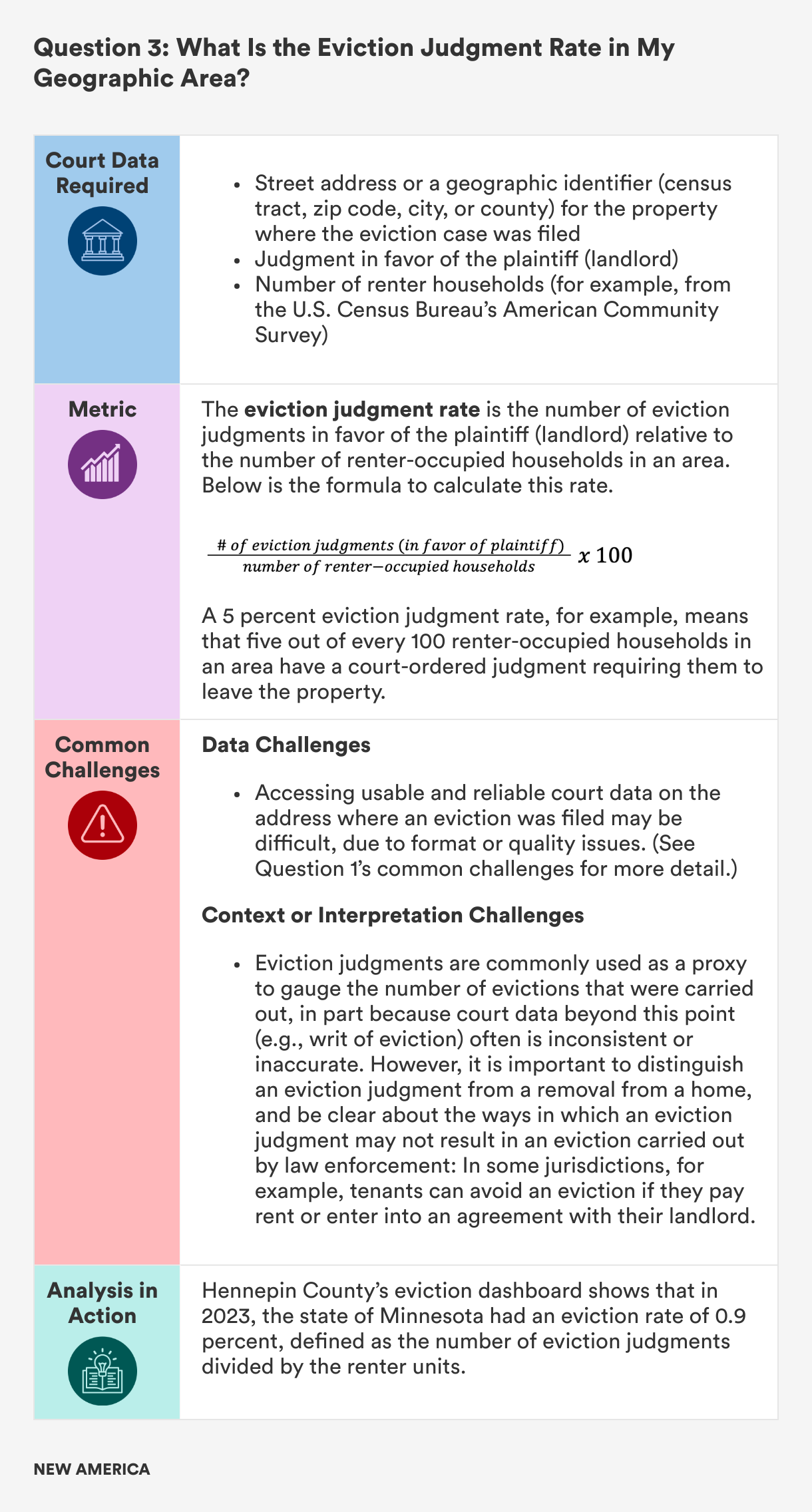
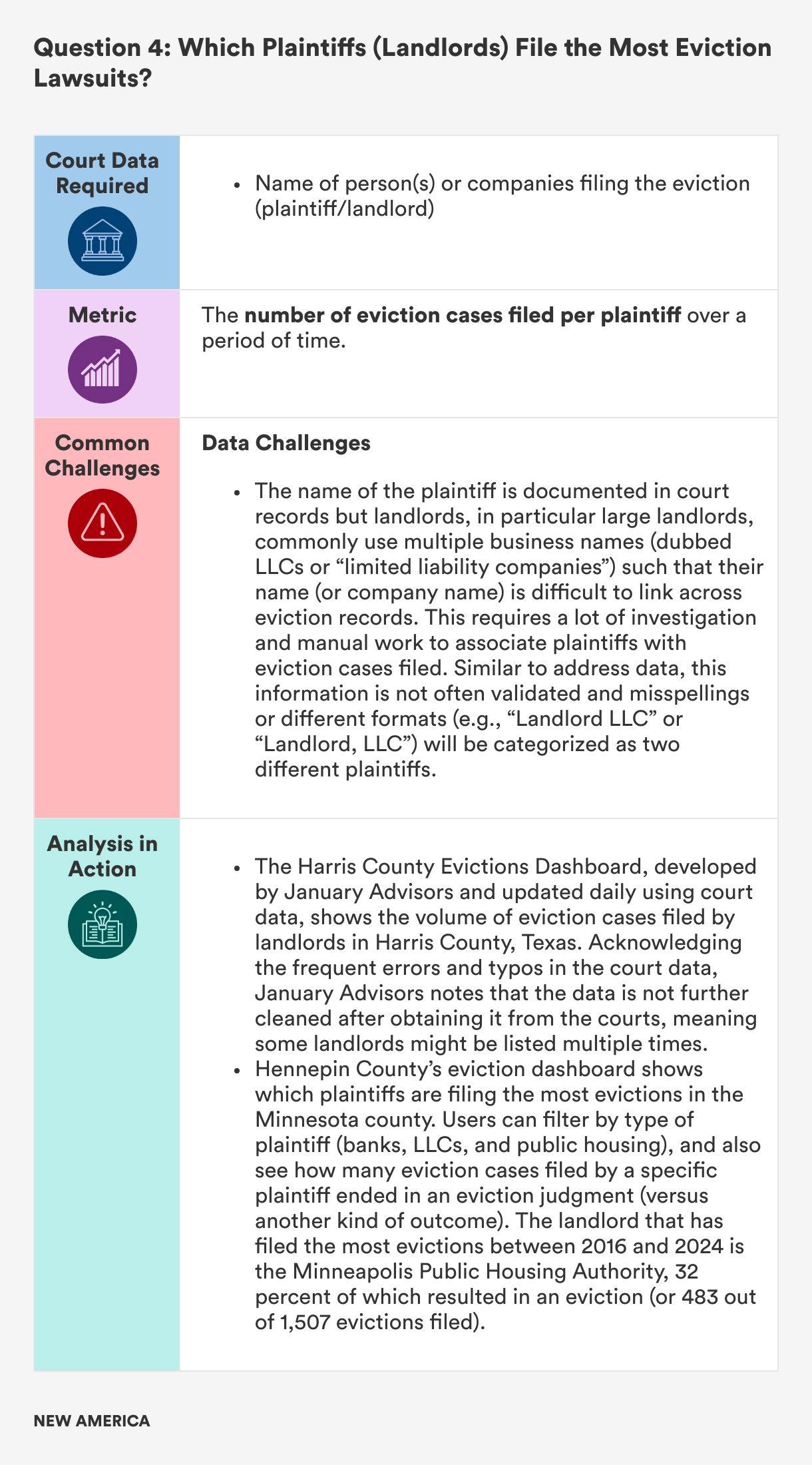
Within each area of inquiry is a set of more specific questions to help users dig deeper into these areas—a total of 14 questions. Each question includes the same set of information, including court data necessary to answer it; a metric to use, if applicable; common challenges related to the data, analysis, or interpretation; and examples of this analysis in action. The table below provides a detailed breakdown on what is included for each of the 14 questions.
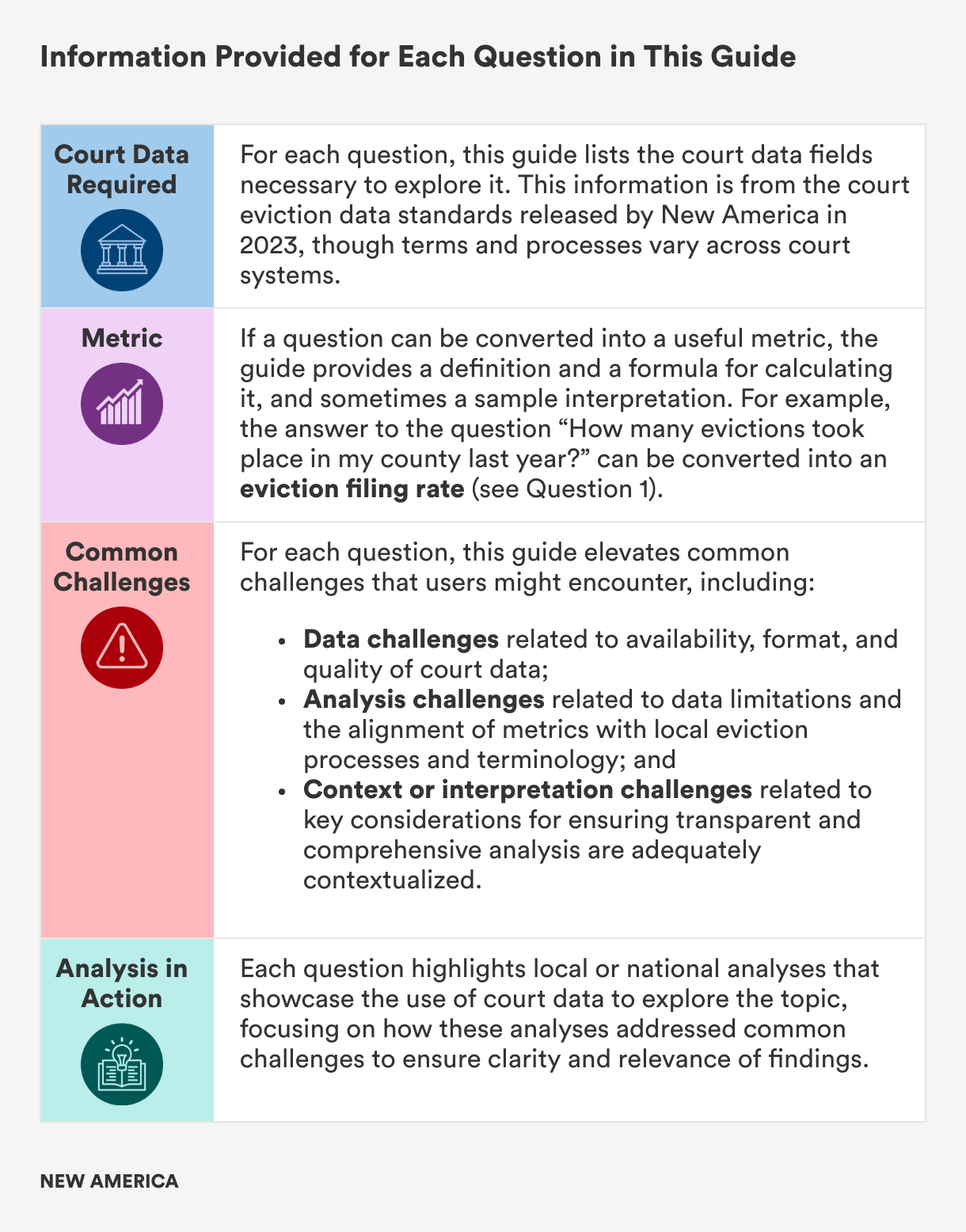
Note to Users: To apply any of these questions to eviction data, users must define the time period and geographic scope for analysis. That is, users should add “in [insert geographic location] over [insert time period of interest]” to each question. For example, for Question 1, “What is the eviction filing rate in New Orleans, Louisiana, from January 1, 2023, to June 30, 2023?” Because this is universal in exploring any of the 14 questions in this guide, we do not specify the need for date data, despite its necessity in conducting any analysis related to evictions.
I. How Many Eviction Lawsuits Are Taking Place, and Why?
Understanding the volume of eviction filings and judgments in a jurisdiction is critical for tracking housing instability over time. While eviction filings do not necessarily result in court-ordered displacement, they represent a risk of future eviction and can create future barriers to housing stability as landlords consider filing information when screening tenants. Eviction filings also represent a critical moment when interventions—in the form of legal aid, financial assistance, and other services—can help tenants in understanding their rights and navigating the legal process. Eviction judgments shed light on the number of families who face court-ordered removal from their homes, offering a clear picture of forced displacement.
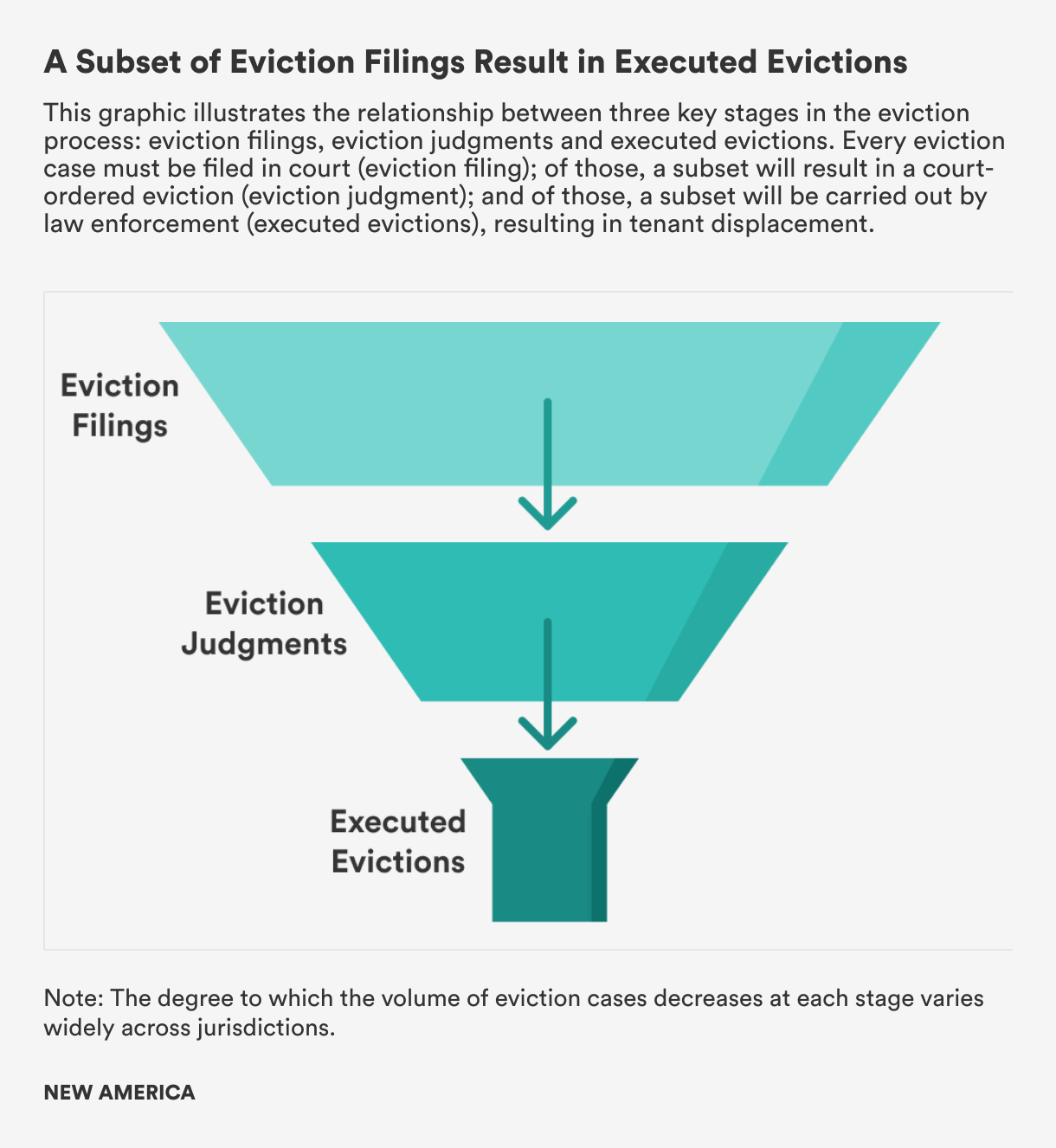
Detailed insights on the number of eviction filings and judgments and where they occur can also support efforts to evaluate the impact of housing policies and programs on eviction prevention.
Case Study: Prioritizing Court Form Standardization to Improve Eviction Data Collection in Illinois
Type: Court Policy (Supreme Court Rule 10-101 and M.R. 25401)
Policy/Action: Standardized Forms
In 2012, the Illinois Supreme Court created the Access to Justice (ATJ) Commission, composed of 11 appointed members (judges, attorneys, and other court stakeholders), to improve the legal system for self-represented litigants in civil courts across Illinois. That same year, the Commission developed the standardized court forms project. Initially an ambitious but small-scale effort led by one full-time employee at the Administrative Office of the Illinois Courts (AOIC), the project has since grown into a robust initiative. Since its inception, the project has overseen the development of 56 standardized court form sets and 350 individual documents.
Not only are standardized, easy-to-understand forms critical from an access-to-justice perspective, they also streamline data entry for court clerks. This is especially important for eviction cases, where accurate court data is essential to inform service delivery, as local leaders have emphasized.
Today, three full-time employees in the AOIC’s ATJ Division oversee the creation and development of standardized forms across 13 subcommittees on different civil court case types. Composed of volunteer experts across the state, including judges, court personnel, lawyers, and legal aid groups, each subcommittee is responsible for driving the form development process, including a plain language review, user testing, and public comment period. All form sets are approved by a committee, a 10-member governing body, before they are published on the Illinois Courts’ website.
The eviction subcommittee, formed in 2016, has overseen the development of numerous standardized forms, including 11 eviction complaint forms, six forms for responding to an eviction complaint; seven eviction order forms; and four forms to remove an eviction court file from public record. As codified in Supreme Court Rule 10-101, all courts in Illinois are required to accept the standardized forms and are prohibited from creating or promoting alternate forms that fulfill the same legal purpose.
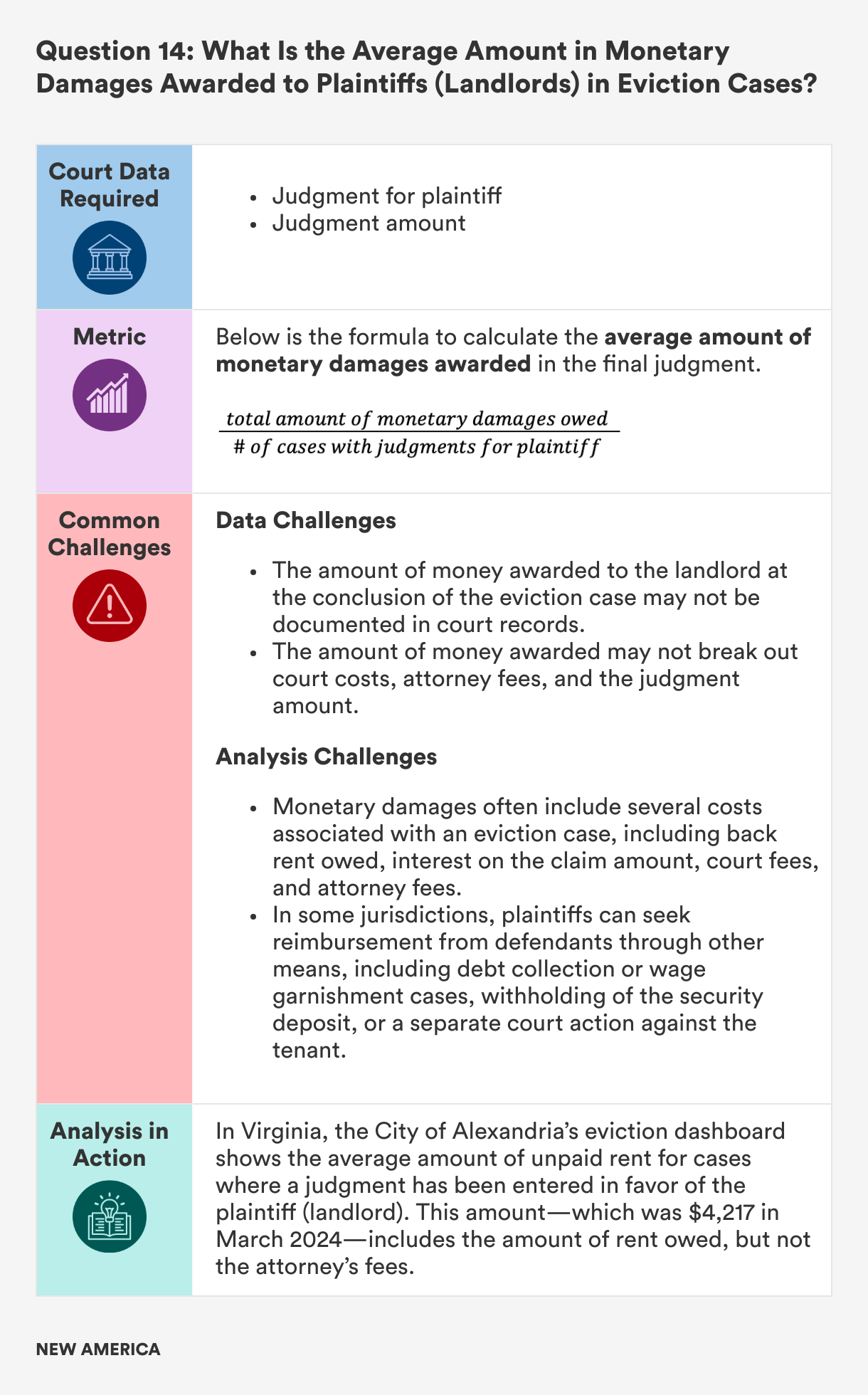
The Eviction Order form, which outlines the judgment terms, is required to be used by all courts.8 This means that for every eviction lawsuit in Illinois in which a plaintiff wins a judgment against a tenant (for possession, money, or both), courts are capturing identical information, including which parties were present in court at the time the order was entered; whether a judgment is by default, after a hearing, or by agreement; and a detailed breakdown of the money owed in the order (e.g., for rent, court costs, or attorney fees). While not all forms are required, the seven eviction order forms—each one corresponding to a different potential outcome (e.g., agreed dismissal, agreed settlement, or a judgment entered into by a judge after a hearing)—offer detailed information on the range of potential outcomes, now collected in a standardized way.
Each set of forms is accompanied by an easy-to-interpret and detailed road map that offers guidance for court staff and the parties. These road maps help demystify legal terminology and provide structured entryways into the court system for self-represented litigants. Further, the road maps may benefit court staff in providing consistency in how legal terms are defined and interpreted statewide.
While collecting information via standardized court forms is necessary to produce high-quality and meaningful eviction data, the impact on data quality still relies on how courts process, store, and share this information. Because Illinois does not have a unified court system, courts differ in how they incorporate forms into existing processes, and in what case management technology they use. While it is premature to assess the impact of standardized forms on the quality of court eviction data in Illinois, many benefits are already clear.
II. Who Is Filing Eviction Lawsuits?
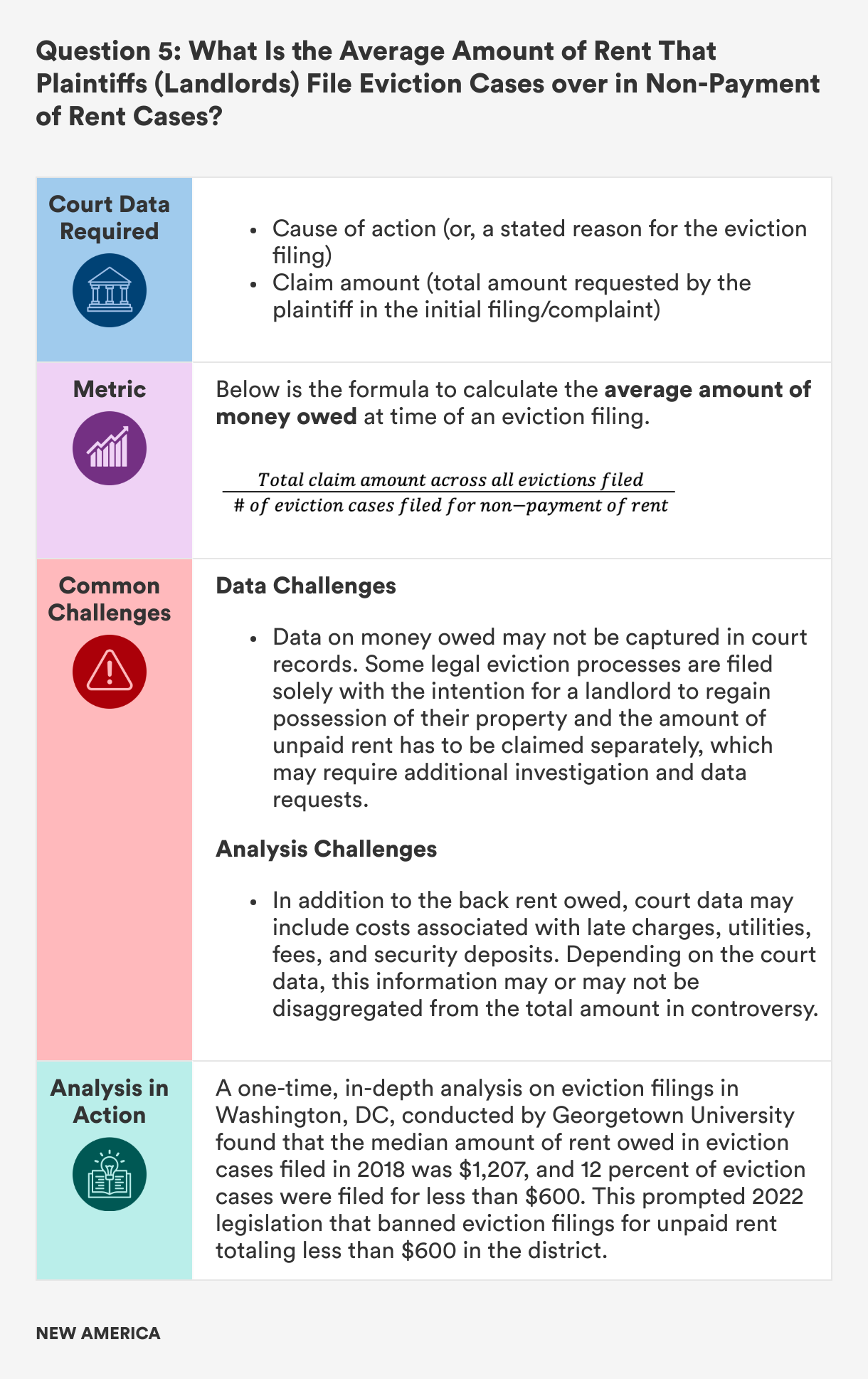
Understanding who is filing evictions is important for tracking which landlords are filing for eviction most frequently, and for identifying opportunities for direct intervention with landlords. In cases where property owners may use the legal eviction process as a way to collect rent and other fees, for example, policy interventions—such as requiring landlords to address all outstanding code violations before filing or increasing the fee for filing an eviction—may be considered.
III. Who Is Facing Eviction Lawsuits?
While court records do not collect demographic information or other characteristics of defendants, it is critical to understand the populations who experience eviction most frequently. This understanding is essential for delivering resources more effectively and addressing racial, gender, and other inequities within the system. To account for this gap in court data, researchers often append demographic data from other sources to reveal sociodemographic trends among those experiencing eviction.
The Foreclosure and Eviction Analysis Tool, or FEAT—a data tool developed by New America and DataKind—joins around 70 variables from the U.S. Census Bureau’s American Community Survey (ACS) to eviction data summarized at the census tract level and measures the strength of the association as a proxy of which communities are most at risk. A 2023 Eviction Lab study linked court eviction data from across the country with ACS data at the household level to identify the race, ethnicity, gender, age, and place of birth of households with an eviction filing between 2007 and 2016.9
This analysis should be undertaken thoughtfully, with appropriate caveats in place outlining the limitations of what we can understand about individual defendants through appending other data sources. For example, making assumptions about a defendant’s race or gender based on their name could potentially lead to inaccuracies in findings about the way evictions impact a certain group.
IV. How Do Tenants and Landlords Engage in Eviction Lawsuits?
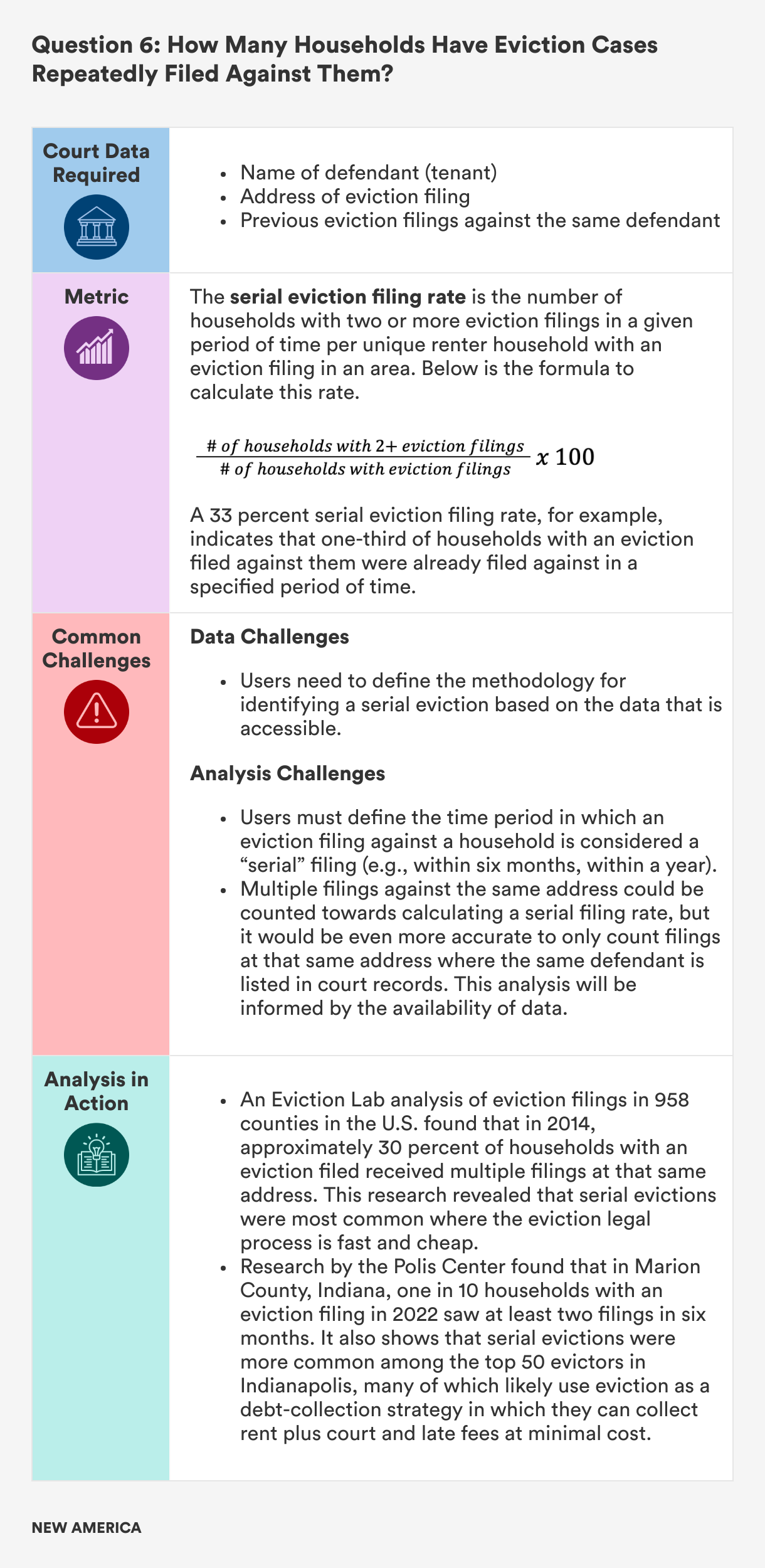
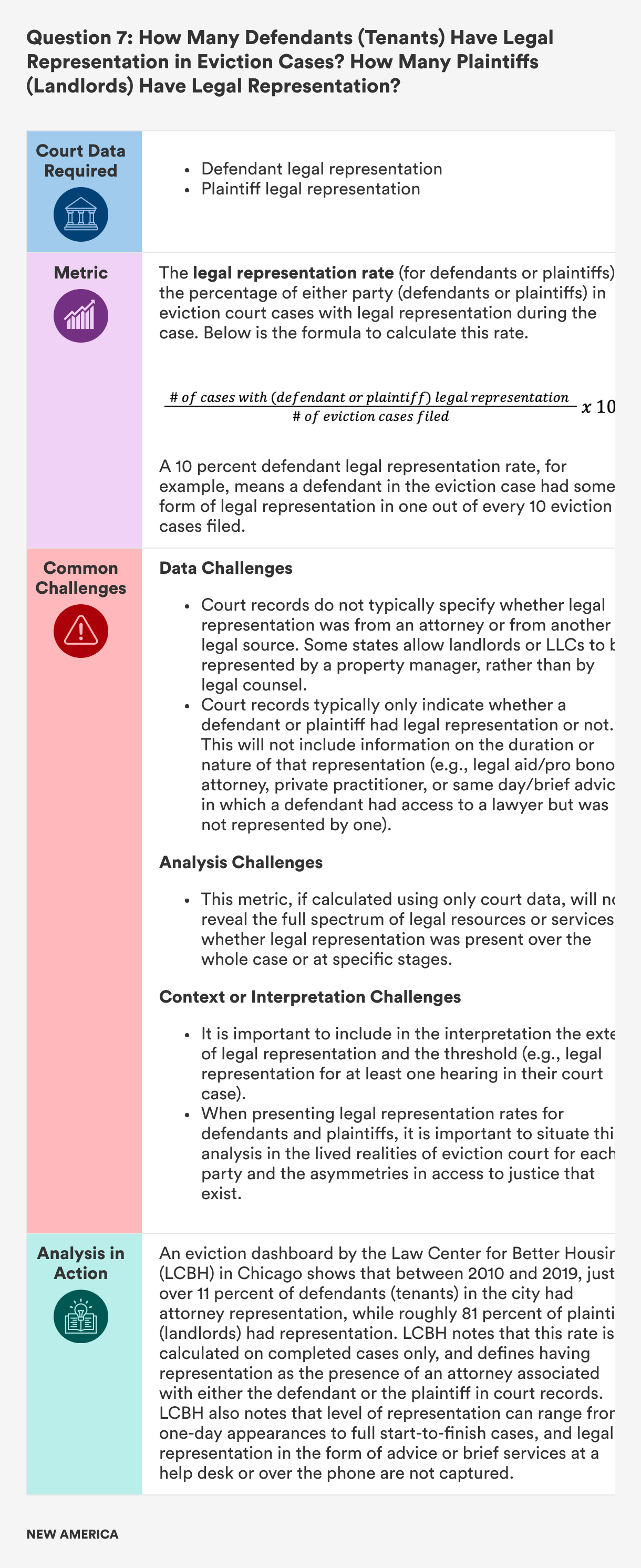
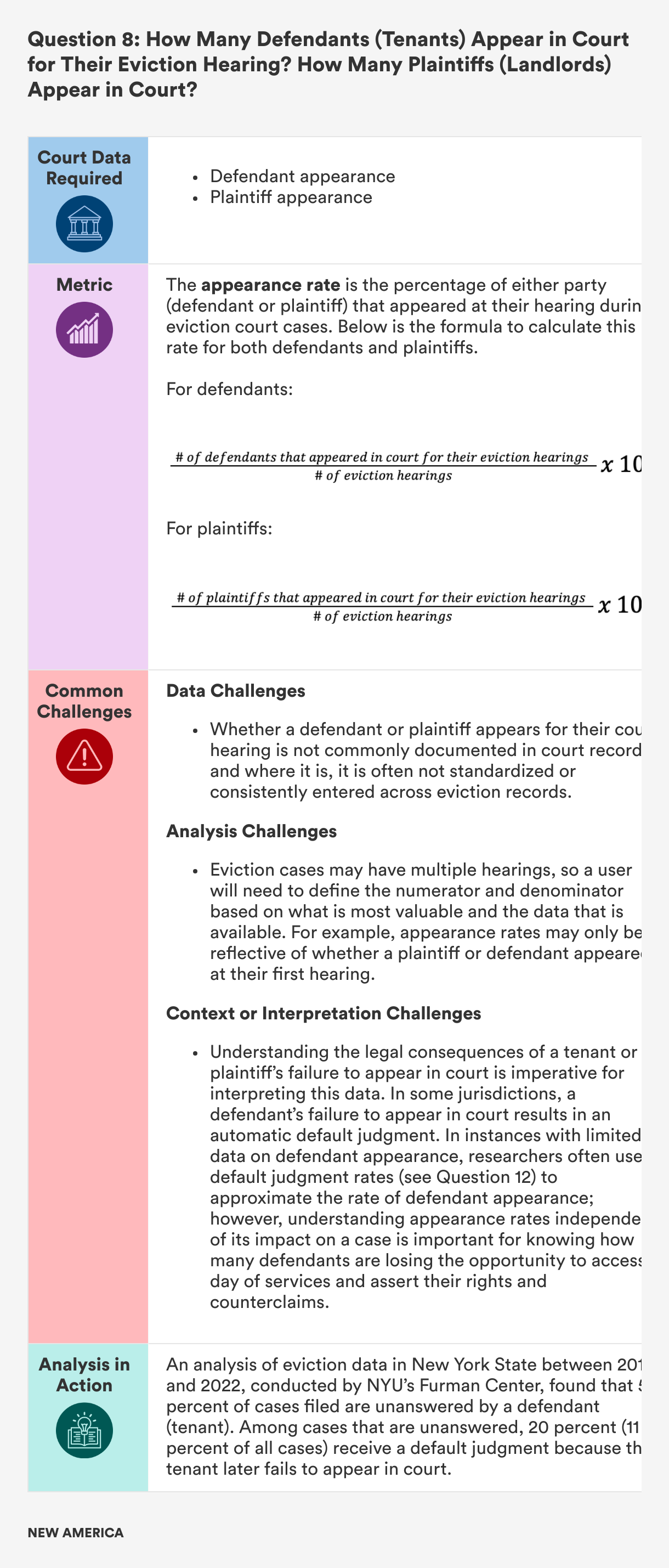
This question is critical to better understanding which interventions are most effective for preventing unnecessary evictions. Eviction proceedings are intended to provide tenants the opportunity to present counterclaims to the case filed against them, but the speed at which the eviction process unfolds, and their complexity, can lead to stark imbalances of power in eviction cases, potentially resulting in unnecessary evictions.
V. What Are the Outcomes of Eviction Lawsuits?
Understanding the different outcomes of eviction court cases is critical for understanding not only the scope of displacement as a result of an eviction filing, but also for evaluating the impact of eviction prevention policies.
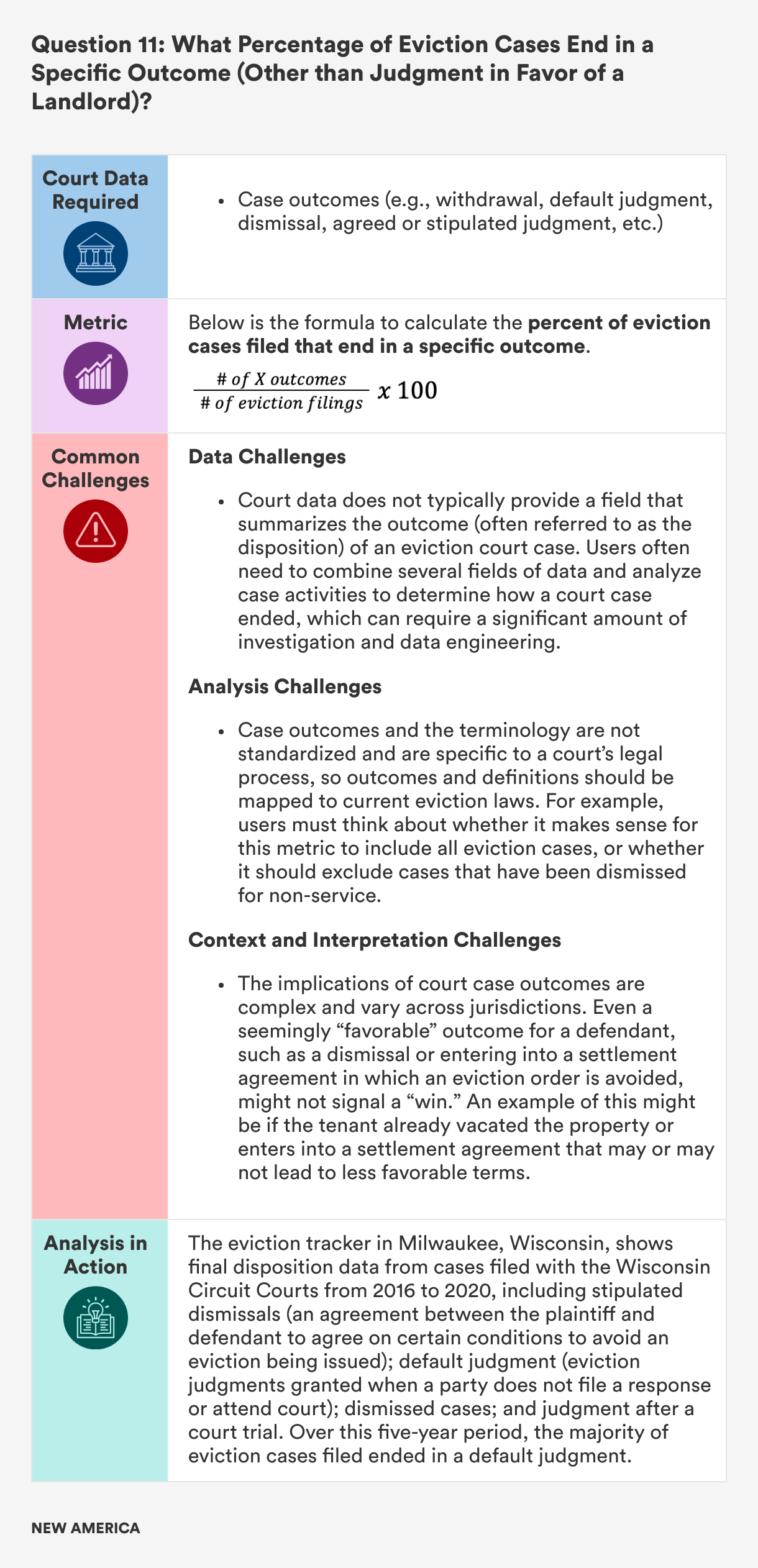
Information on an eviction judgment in favor of a plaintiff, however, is harder to define from jurisdiction to jurisdiction, as court systems have different legal processes and terminology for what constitutes a court-ordered eviction. As a result, both within and across court systems, data on what constitutes a court-ordered eviction is context-specific. Aggregating this information across cases can often require manual investigation and coding by someone with knowledge of local eviction processes and court systems.
Case Study: Leveraging Eviction Court Displacement Rates to Assess the Role of the Legal System in Shaping Eviction Outcomes
Type: Research and Analysis
Policy/Action: Court Displacement Rates
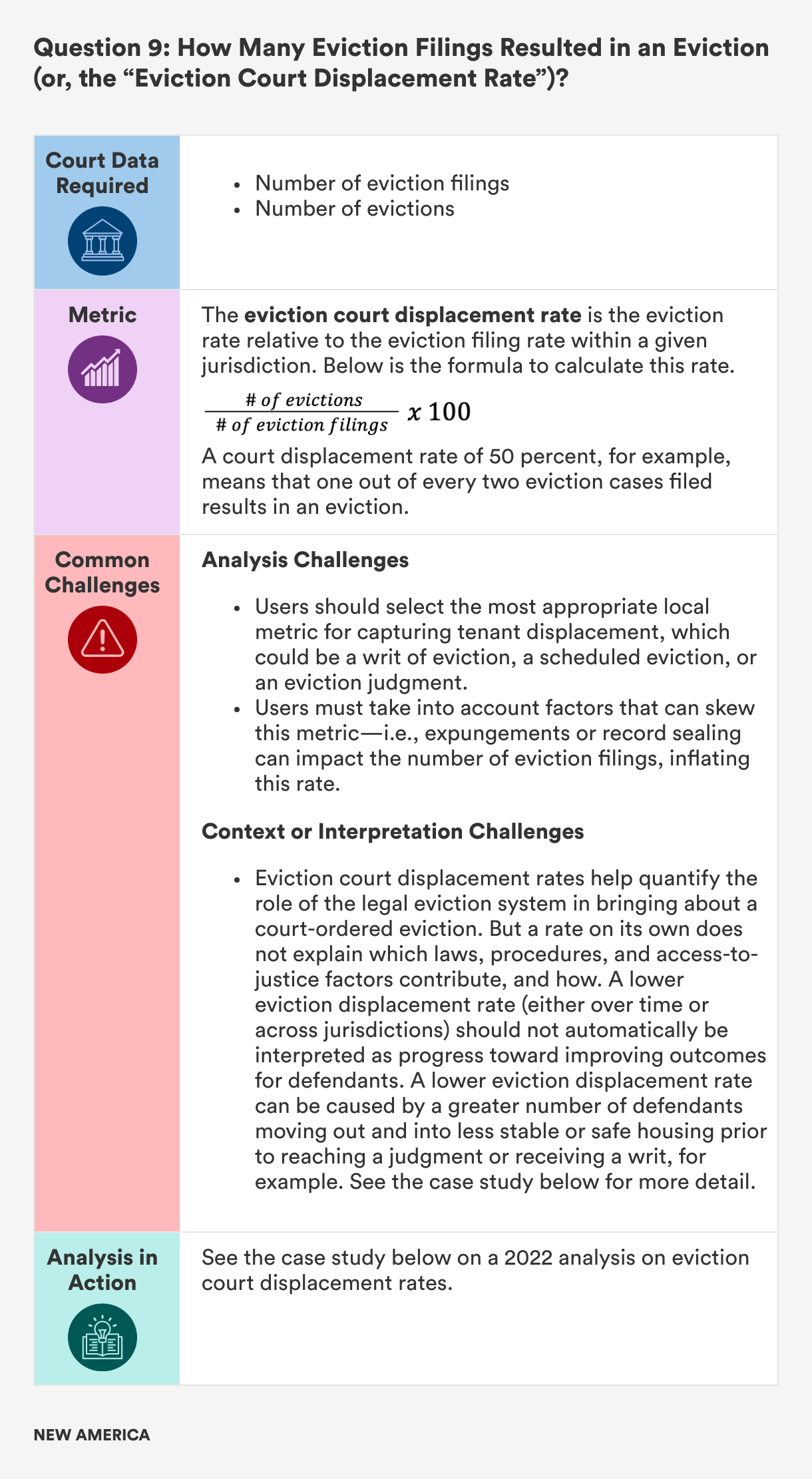
In the field of eviction research, rates of eviction filings and forced tenant moves as a result of eviction are commonly used to understand the volume and impact of residential displacement. A 2022 essay by Georgetown University law professor Nicole Summers introduces a metric that explores the relationship between these two rates—the eviction court displacement rate.10 This metric, detailed in Question 9, captures the rate at which defendants (tenants) are displaced from their homes after eviction cases are filed.
Court displacement rates are a powerful metric because they assess the role of the legal eviction system in determining eviction outcomes and provide an entry point for further inquiry. In Washington, DC, for example, only 5.5 percent of eviction filings result in displacement, while in Kansas City, three-quarters do.
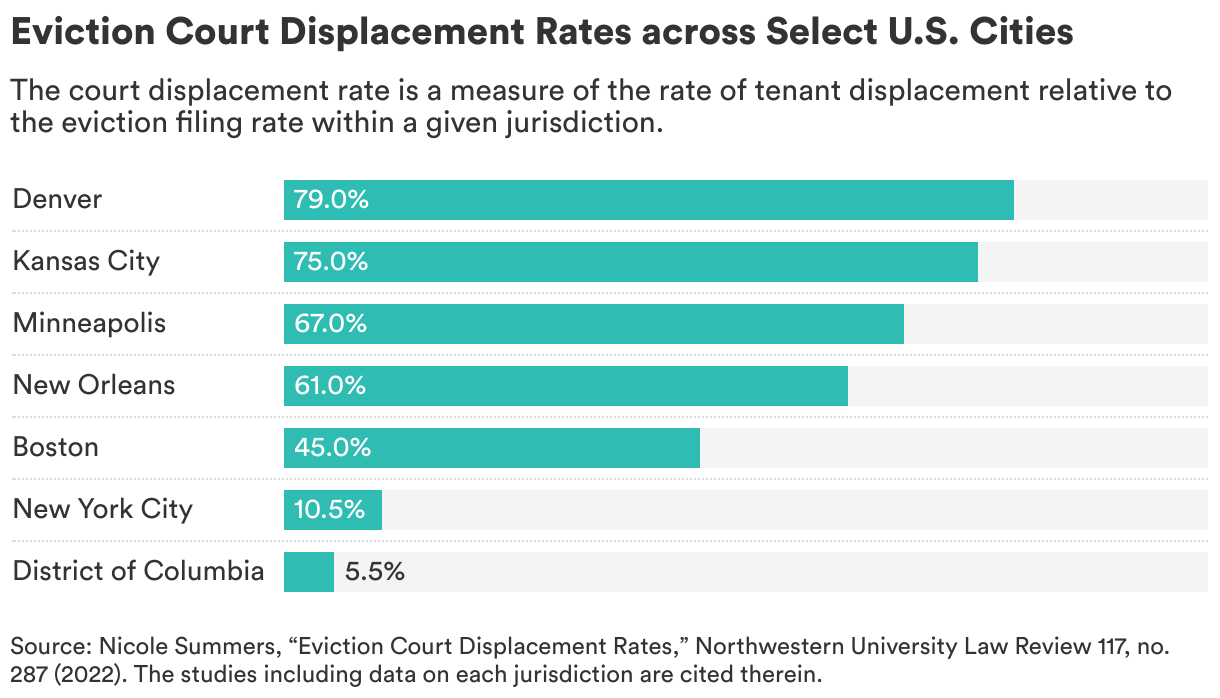
Does the high court displacement rate in Kansas City, for example, signal that eviction filings are more likely to be greenlit by the legal system, or perhaps that landlords are using eviction filings as a tool for rent collection? On the other hand, does DC’s relatively low displacement rate suggest that the court policies or procedures play a role in discouraging tenant displacement?
There is still so much that we do not understand about eviction in the United States, and court displacement rates on their own do not provide the answers. This metric highlights how widely court systems vary in facilitating eviction, and in exploring why that is, researchers can deploy it to investigate which laws, procedures, or access-to-justice factors are most effective in preventing court-ordered eviction.
Citations
- See Illinois General Assembly Statute 735 ILCS 5/9-109.6, 2018, https://www.ilga.gov/legislation/ilcs/fulltext.asp.
- Nick Graetz, Carl Gershenson, Peter Hepburn, Sonya R. Porter, Danielle H. Sandlerand, and Matthew Desmond, “A Comprehensive Demographic Profile of the U.S. Evicted Population,” Proceedings of the National Academy of Sciences 120, no. 41 (2023), https://www.pnas.org/doi/10.1073/pnas.2305860120.
- Nicole Summers, “Eviction Court Displacement Rates,” Northwestern University Law Review 117, no. 287 (2022), https://scholarlycommons.law.northwestern.edu/nulr/vol117/iss1/10/.
Conclusion
Eviction data can be complicated. Transforming a spreadsheet or .csv file into accurate, actionable insights on a locality’s state of evictions requires methodical and time-consuming work. Generating high-quality analysis also requires a critical understanding of court data’s limitations. This guide is intended to help users balance the urgent need for this data with the inherent challenges of working with and drawing conclusions from it. As discussed earlier in the “Good Stewardship of Eviction Data” section, communicating any necessary context or caveats to the audience of data analysis is essential for navigating this tension.
Understanding where, how, and why evictions happen is one of many early steps in successfully addressing the ongoing affordable housing crisis and its impacts. The analyses informed by this guidance will hopefully go on to influence policymaking in a variety of jurisdictions and aid in keeping more residents stably housed.
More About the Authors

Sabiha Zainulbhai
Deputy Director, Future of Land and Housing Program

Helen Bonnyman
Policy Associate, Future of Land and Housing