We believe in the power of youth-centered and youth-led policy design.
Youth America is a storytelling-for-action project between New America's Indianapolis office and VOICES (Indianapolis, IN), helping youth policy advocates safely share their stories and ideas to improve and reinvent the systems intended to serve and protect young people.
EDITOR'S NOTE: Today we hear from Madison, a VOICES Youth Policy Fellow about her own experience and recommendations for improved education on sexual health and consent in Hoosier communities. The following essay contains references to sexual harassment and assault. If you need to talk to someone you can call RAINN (the Rape, Abuse & Incest National Network), the nation's largest anti-sexual violence organization at 800.656.HOPE (4673).
Also, you can support Madison's work to improve sexual health education and to end sexual violence by taking and sharing this survey.
"Smile." I peered over the edge of my book from the corner of the library where I had holed up waiting for my mother to find a book of her own. "It’ll make you prettier." A few feet away from me was a middle-aged man with a balding head who smelled faintly of smoke. He waited. I smiled and it felt like I had been doused in something toxic and sticky with a memory that would last for years. I was eleven years old.
It's now fifteen minutes to curtain. I'm stage manager for my 7th grade musical and I have never felt more alive. The muted conversations of the audience as they fill their seats washes over me as I walk backstage. As I run through final checks with the crew, the male lead walks by me. He slaps my behind as he passes me and all of the oxygen leaves my lungs. I feel two inches tall. I was thirteen years old.
I'm on the track warming up for my next race. It's still March and the winter air slices through my heavy sweatshirt. A group of boys from the other team walk up. They run the race before mine so we make small talk. As I walk away, one of the boys grabs me. It was so fast I barely realized what had happened. I got home that night and stood under the burning hot water desperately scrubbing at my body with a bar of soap. Nothing could make me feel less dirty. I was fifteen years old.
Not once did I consider talking to anyone about it. My self-imposed silence was overwhelming and consuming. Yet, it wasn’t until years later I finally found my voice and a community of people who could empathize with me and my experiences and were ready to create change.
The #MeToo Movement
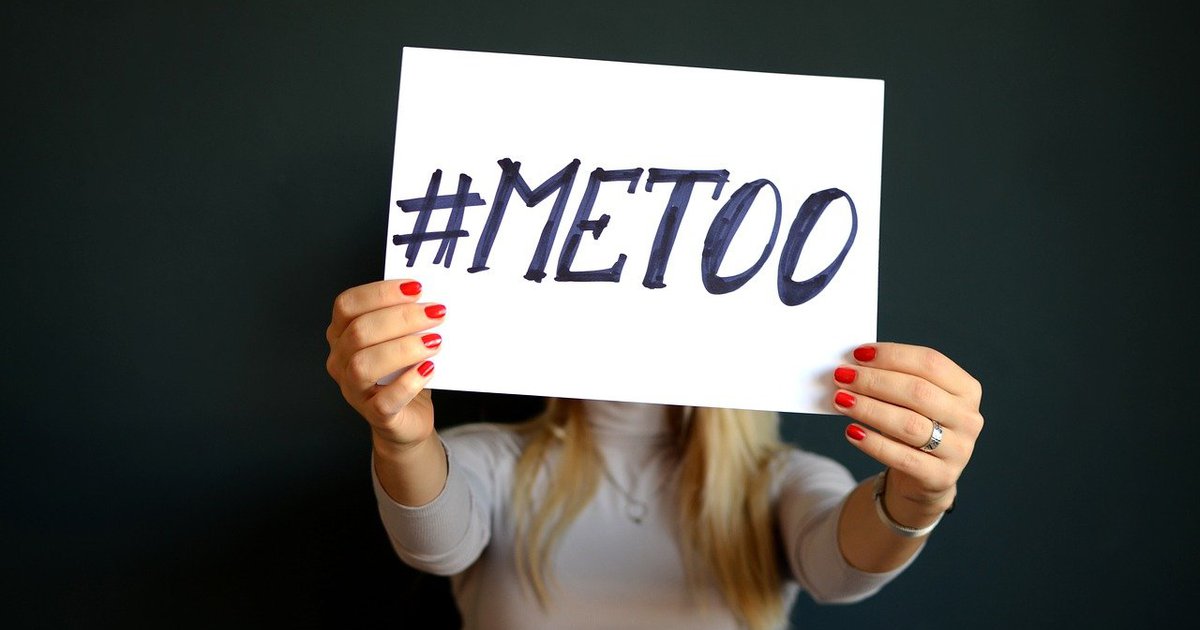
In 2017 #MeToo went viral and it was no longer me against the world. Suddenly, I was having conversations with my friends about our experiences with sexual violence in the school hallways. My mom and I would talk about sexual harassment in the car on our way to pick up my younger sister from rehearsal. Conversations rooted in this collective reality of the female experience were everywhere. There was this shift in the cultural mindset from silencing the voices of survivors to a mindset of empathy and solidarity with the millions of women across the globe who have all experienced the same trauma.
The #MeToo Movement brought about this radical possibility of “a movement against sexual violence, led by survivors of sexual violence.” It provided a support system for survivors and encouraged healing through empathy, advocacy, and inclusive, effective resources.
My #MeToo Journey
My participation in the #MeToo Movement was the beginning of my journey through what I would later identify as healing-centered engagement, a holistic approach to well-being that provides healing through attacking the roots of trauma.
I began advocating for an end to sexual violence in my community. I partnered with The Domestic Violence Network to create convocation around sexual violence after a senior boy assaulted a girl with no repercussions at my high school. I worked with Prevail to organize webinars on teen dating violence and sexual harassment. I also had the opportunity to collaborate with teens across my city and propose legislation regarding sexual violence in the workplace.
However, it wasn’t until this past year I began to question how I can attack the roots of this issue. This question was sparked by my engagement with VOICES in partnership with the Commission on Improving the Status of Children in Indiana, and funded by the Annie E. Casey Foundation. Their Power & Promise program was designed for young adults across Indiana who have been involved in different systems. We spent 8 weeks learning about healing-centered engagement and how we can use our lived experiences to create collective change. At the end of the eight weeks, we advocated for important youth issues to over 400 legislators and systems leaders.
My experience with VOICES inspired me to interrogate and attack the root my trauma surrounding sexual violence. I wanted to work to end sexual violence, not just mitigate its effects. As an advocate of the power of knowledge and education, I started to investigate the role that public school sex education plays in sexual violence. This led me to conduct an in-depth research project evaluating Indiana’s sexual education curriculum in public high schools using a case study method of the two high schools in my school district.
A Deep Dive into the Roots
I began my research on my school district’s sex education by reaching out to teachers and administrators in my district to gather information on how sex education is implemented, what resources are provided, etc. However, I quickly discovered that no one was particularly willing to answer my questions. There appears to be little guidance provided to health teachers teaching sex education and little continuity of curriculum between teachers on the subject. The lack of responses and common language at the administrative level surrounding sex education suggests a lack of prioritization of this subject.
This led me to focus my research on the people most effected by this sex education: the students. I sent out a survey to high school students in my school district who have already taken the state required health class where sex education is taught. I received over 100 responses, and the results were quite shocking.
For background, currently, Indiana does not require sex education to be taught. However, there must be education on STDs and HIV, and if a school does choose to teach more, it must be abstinence based in order to receive any funding.Conversely, the CDC recommends that sex education cover those topics as well as “to establish and maintain healthy relationships” among others.
On the topic of consent, when asked what must be present for there to be consent and given a list of options to choose from, 44% of students did not say consent must be freely given. Additionally, males were more likely than females to say this. Around one-fifth of respondents said previously given consent should be a factor when checking for consent.
There was not a single student who accurately selected the correct five of seven responses: freely given, reversible, informed, enthusiastic, and specific. 94.6% of students said consent must be verbal. While verbal consent is the most common and safe method to confirm consent, it is not the only way, as explained by the University of California, Riverside. Non-verbal consent is still a valid form of consent. This illustrates an understanding of consent that lacks any depth.
The most shocking results, however, were in relation to sexual harassment. 85% of all students had experienced at least one form of sexual harassment in high school. Nearly twice as many women as men had experienced sexual harassment. The most common forms of sexual harassment were receiving unwanted sexually explicit photos, catcalling, and being touched without consent. Over half of students had experienced more than one type of sexual violence. Students are severely lacking an understanding of consent, and it is apparent that this misunderstanding is leading to a plague of sexual violence in our schools.
Despite Indiana’s arguably overemphasis on STDs, HIV, and abstinence, this too does not appear to have transferred to the students. 43% of respondents had no long-term plan to avoid or reduce the risk of transmission of HIV and other STDs. Around 80% of students were not able to correctly list 3 symptoms of HIV. Over half of those could not even list one.
When asked on a scale of 1 to 5 (1 is strongly disagree, 3 is neutral, 5 is strongly agree) how much they agree that abstinence is the best choice, the average student response was '3.' Additionally, almost 31% of students reported being sexually active. This illustrates how even the limited goals of Indiana’s sex education are not being met. The entire focus of this sex education is to encourage students to choose abstinence. However, most do not support this idea, nor follow it. They are supposed to leave their sex education class understanding STDs and HIV, yet they fail to be able to list basic symptoms.
Respondents were also given the opportunity to comment on what topics they felt their sex education missed. The top two responses were alternatives if a student does not choose abstinence and consent. Additional contenders were LGBTQ+ sex education, female anatomy, sexual violence, and a general lack of depth in education.
These results are unacceptable, but changeable. Schools are supposed to be a safe place to learn. However, based on this data, I am neither safe nor learning at school. I should not feel the need to have a boy I trust walk me out to my car after musical rehearsal, or avoid the boys football team entirely. I shouldn’t have to rely on social media and the internet to understand how to be sexually healthy. It is time our school and state education systems be held accountable for their lack of action.
What We Can Do
The ‘me too.’ Movement is the start of a revolution. These conversations about consent and sexual violence have shifted the spotlight to accurate, unbiased content about bodily autonomy and sexual health. It appears that many parents do want sex education in their children’s schools, and students also want to learn more.
It is time we rethink the direction of Indiana sex education curriculum. Currently, all Indiana sex education is abstinence-based, like what was seen in my study. However, it is time to move toward a comprehensive sex education program. Public high schools should be required to educate students on more than just abstinence and STDs. Students must be prepared for every scenario, and a proper comprehensive sex education can do that. Not only will students be prepared to make healthy decisions, they should fully understand consent and sexual violence.
The United Nations Educational, Scientific and Cultural Organization (UNESCO) has provided international guidance on what a good sex education program should include based on the most prevalent issues facing youth. It addresses consent, the LGBTQ+ community, sexual violence, and contraception among other topics. I believe if Indiana implements this guidance, those shocking numbers from my study could disappear.
We are certainly a long way from a world without sexual violence, but I choose to remain hopeful that one day the ‘me too’ Movement will be irrelevant and the conversations will end, not because we are uncomfortable talking about sexual violence, but because there is nothing left to talk about it. In order to get there, we must empower women. Women must rise up and manifest their talents and abilities to interrogate systems and address these issues. No longer must we be limited by the systems built to work against us.
We cannot do this alone. We can look to local programs already addressing root issues like Women4Change. This is a nonpartisan, grassroots, collaborative organization focused on empowering and mobilizing women across Indiana. Their work on El Tendedero / The Clothesline Indiana project has brought together women from across the state advocating for an end to sexual violence and has caught the eye of the Indiana legislature. In partnership with Women4Change and other groups like them, we can finally dig deep and pull out the diseased roots of sexual violence that have a death grip on our state and on our children.
Join me in this advocacy by taking this survey as I expand this research across Indiana. Together, we can be a part of the solution.
Madison Harris is an Indiana high school student and VOICES intern and youth leader. She has served as a policy fellow through VOICES and the Commission on Improving the Status of Children in Indiana's YES program. She is a passionate advocate who seeks to end sexual violence, improve sexual health and consent education, and improve youth mental health both in her community and at the state level. These passions, combined with her national involvement on her high school speech and debate team, have motivated her to pursue dual undergraduate degrees in International Law and Nonprofit Management at Indiana University.
Issues
Programs/Projects/Initiatives
Topics
Related
American enough: A transracial adoptee grapples with expectations
We Live Here