Lee Drutman
Senior Fellow, Political Reform Program
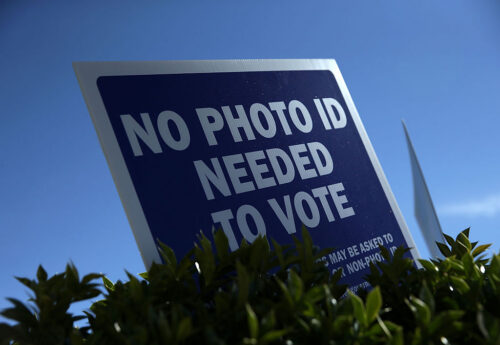
The SAVE America Act, which passed the House in February on a party-line vote, would require every American to produce a passport or birth certificate to register to vote. Twenty-one million Americans don’t have those documents. The bill provides no funding and no phase-in period. It criminalizes election workers who make honest mistakes, requires states to submit their voter rolls—or voter registration lists—to the Department of Homeland Security. And it was passed by the same party that has spent half a century opposing federal control of elections.
The SAVE Act’s underlying premise, that American elections need more federal consistency, is not entirely wrong. But the legislation doesn’t address the most pressing weaknesses in our current system, and in some cases, it produces new ones.
The United States runs roughly 10,500 separate election systems, with different rules for registration, identification, and ballot counting. That patchwork is a real problem, making the ease of voting and even how much your vote counts vary wildly across the country.
The federal government is already playing a larger role in elections (whether Congress admits it or not): The Justice Department has demanded full voter rolls from multiple states, DOGE personnel within the Social Security Administration shared voter data with an outside group seeking to overturn election results, and the FBI seized 2020 ballots from a Georgia election center. But the question is whether that role will be structured and nonpartisan, or improvised and weaponized.
On a recent podcast, President Trump suggested that Republicans should “nationalize the voting” in at least 15 states. At the State of the Union, Trump called upon the Senate to approve the Save America Act to “stop illegal aliens and others who are unpermitted persons from voting.” He has even floated canceling the midterm elections entirely, which the White House dismissed as a joke. Two days after the House passed the SAVE America Act, he declared on Truth Social that there would be voter ID for the midterms “whether approved by Congress or not,” threatening an executive order if the Senate failed to act.
The idea that non-citizens are voting is the bugbear that refuses to disappear. Utah recently reviewed its entire voter roll of more than 2 million registered voters. It found one noncitizen registration. Zero noncitizen votes.
When states have run their rolls through the federal SAVE database, just 0.04 percent of cases are returned as noncitizens. Even that overstates the problem because the tool itself is a mess.
The test is no longer whether you are a citizen. It is whether you have the right papers.
A recent investigation by ProPublica and the Texas Tribune found that DHS rushed the SAVE database into use, and then had to correct information sent to at least five states. A quarter of those flagged as potential noncitizens in Travis County, Texas, had already provided proof of citizenship. In Boone County, Missouri, officials barred flagged voters from casting ballots before verifying the data, which showed that more than half of those flagged turned out to be citizens. Voters flagged in error were also referred to DHS for possible criminal investigation. When Kansas tried a similar documentary proof requirement between 2013 and 2016, it blocked 31,000 eligible citizens from registering—roughly 12 percent of new applicants, while noncitizen registration ran at 0.002 percent.
The test is no longer whether you are a citizen. It is whether you have the right papers, according to the administration’s moving target.
When two-party competition becomes an existential zero-sum contest over the rules of the game itself, the incentive shifts from persuading voters to controlling the machinery of voting.
The SAVE Act is the clearest expression of that incentive. But opposing it is not enough. We need to build a federal election system that actually works.
What would that look like? Here’s my idea: an independent federal elections agency, structured like the Federal Reserve—nonpartisan commissioners, staggered terms, independent funding, and insulated from the White House and Congress. Not another toothless advisory board. An agency with actual authority to set and enforce baseline national standards for voter registration, election security, and voting access. Setting floors rather than ceilings. Supporting local administrators rather than replacing them.
Unlike the SAVE Act, which routes election control through a politicized Department of Homeland Security with zero independence safeguards, this agency would be built to resist partisan capture. Commissioners would be barred from party affiliation and subject to removal for violating their mandate. The whole point is to take election administration out of the partisan war.
The need is urgent. Turnover among local election officials hit 41 percent in 2024, the highest rate in at least 25 years, and half of all counties in 11 Western states have lost their chief election official since 2020. Veteran county clerks are quitting under threats to themselves and their family. Meanwhile, federal election funding has collapsed from $825 million in 2020 (including pandemic relief) to $15 million in 2025. The Trump administration froze election security support and cut funding for the cybersecurity network local officials used to share threat intelligence. The SAVE Act would pile criminal penalties onto an already hollowed-out workforce.
An independent agency would do the opposite: fund, protect, and professionalize the people who make elections work.
This agency could also do what the SAVE Act claims to do, without disenfranchising millions. Rather than forcing every citizen to produce a passport at the registration counter, a federal agency would verify citizenship through government databases that already exist, putting the burden on the government rather than the voter. Back-end verification instead of front-end documentation. More accurate, less burdensome. And it would not require 21 million Americans to locate a birth certificate they may not have.
In February, the SAVE Act secured more than 50 Republican co-sponsors in the Senate, but not the 60 votes to break a filibuster. Republican leadership is weighing whether to change filibuster rules to wear down Democratic opposition. The bill will likely fail—but those trumpeting the fraud narrative can easily spin a conspicuous legislative defeat into a talking point: “We tried to secure the elections and they wouldn’t let us.”
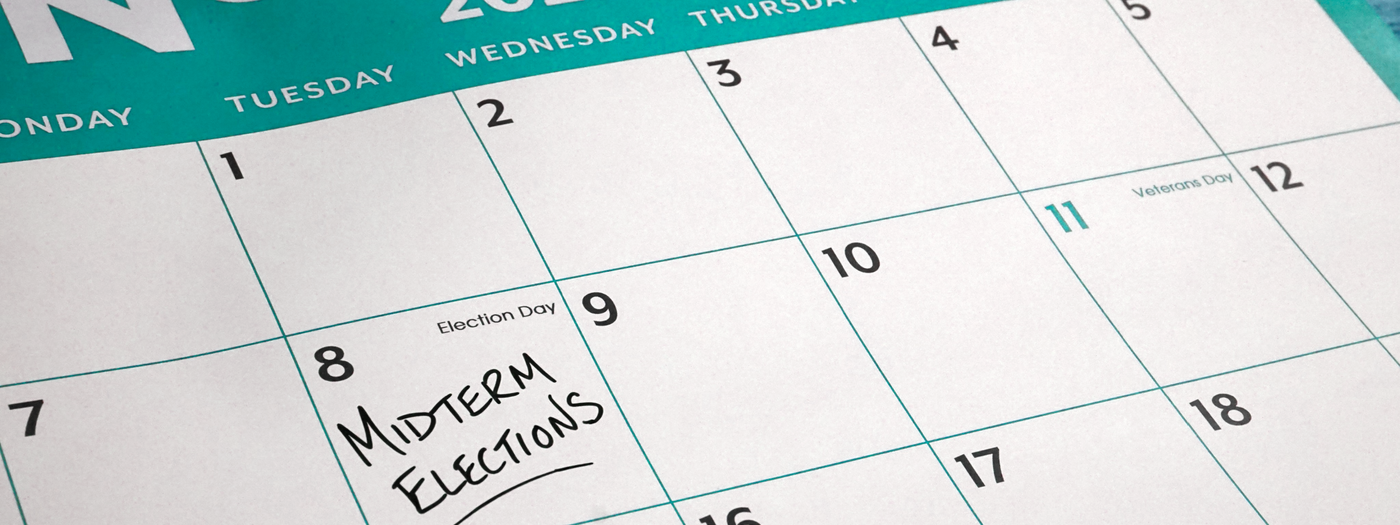
The midterms are eight months away. The patchwork is fraying. The partisan pressure to control the rules will only intensify. The question is no longer whether the federal government will play a larger role in elections. It is whether that role will be designed to strengthen democracy or to undermine it.
Senior Fellow, Political Reform Program