
David Sterman
Deputy Director, Future Security
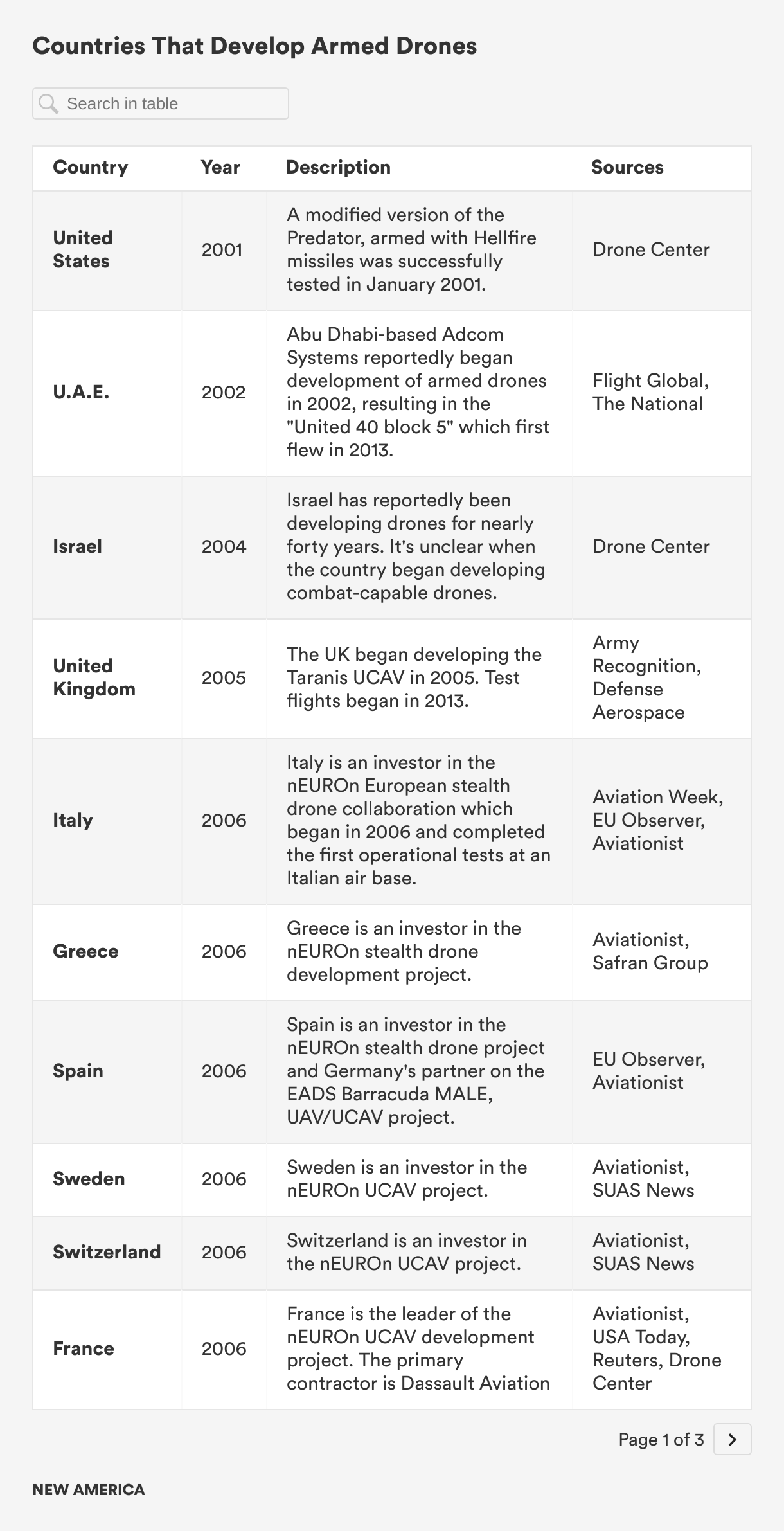
This report examines the proliferation, development, and use of armed drones. The World of Drones database draws on media reporting and other open-source information to track countries and non-state actors that possess armed drones, are developing them, or have deployed them in combat. It also documents non-state actors, such as ISIS, who have artificially equipped over-the-counter drones with improvised explosives or those who have obtained military-grade unmanned aerial vehicles (UAVs), like Hezbollah.
The International Security Program would like to thank previous authors from whom this current version is built. Thank you for the time and effort you dedicated to making this database as strong as possible. A special thanks to Alyssa Sims, Albert Ford, and Christopher Mellon.

Drones have unequivocally changed the character of warfare in strategy, action, and perception. The era of armed drone use has arrived, and the rapid proliferation of drone technology among states and militant groups alike poses a new threat to the international community.
Who has drones? How are they getting them? This site seeks to answer those questions, using an analysis of hundreds of news reports and government documents to track which countries possess armed drones and how they acquired them.
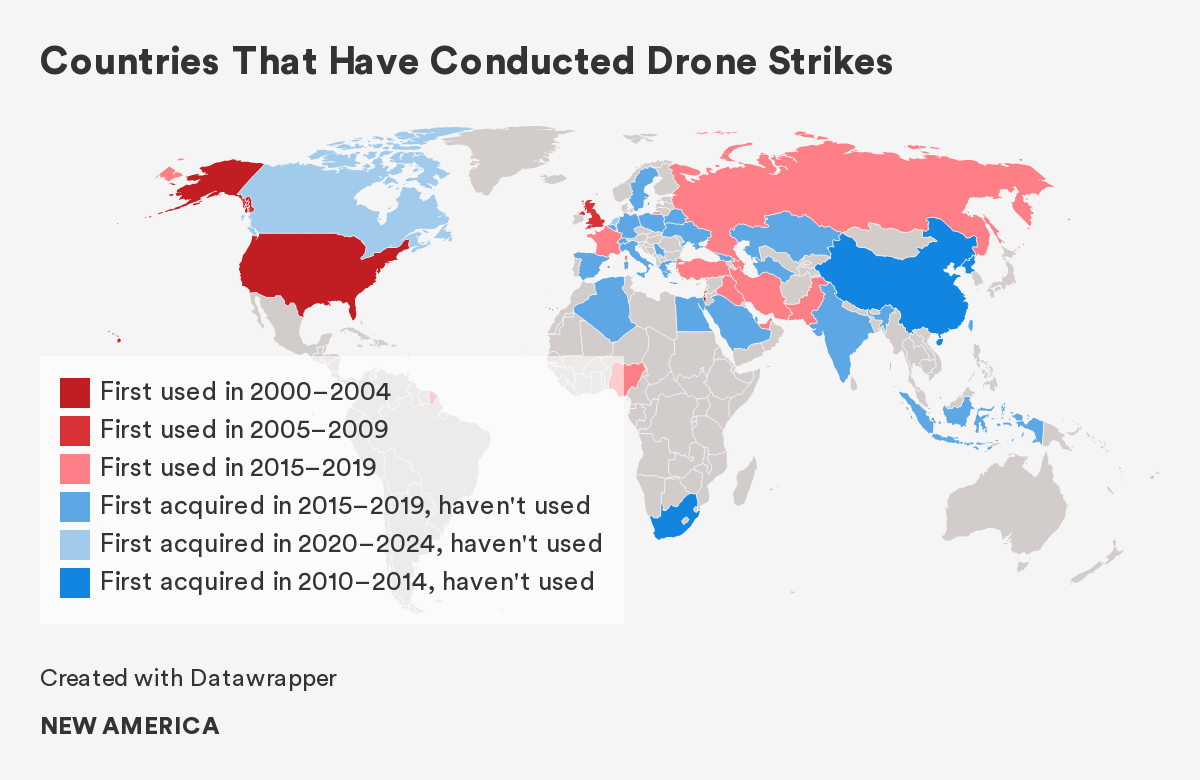
More than ten countries have conducted drone strikes: the United States, Israel, the United Kingdom, Pakistan, Iraq, Nigeria, Iran, Turkey, Azerbaijan, Russia, and the United Arab Emirates. But many other countries, including Saudi Arabia, India, and China, among others, maintain armed drones in their arsenals.
In New America’s World of Drones database, countries are sorted into three groups: those that use drones in combat, those that possess armed drones but have not used them in combat, and those that are developing armed drones. A country’s drone capabilities are classified according to the U.S. Air Force tier system. Tier I includes low altitude, low endurance drones like the Orbiter; Tier II is comprised of medium altitude, long endurance drones like the Reaper or the retired Predator; and Tier II+ applies to high altitude, long endurance drones like the Global Hawk. Mini and micro drones are not classified in the tier system.

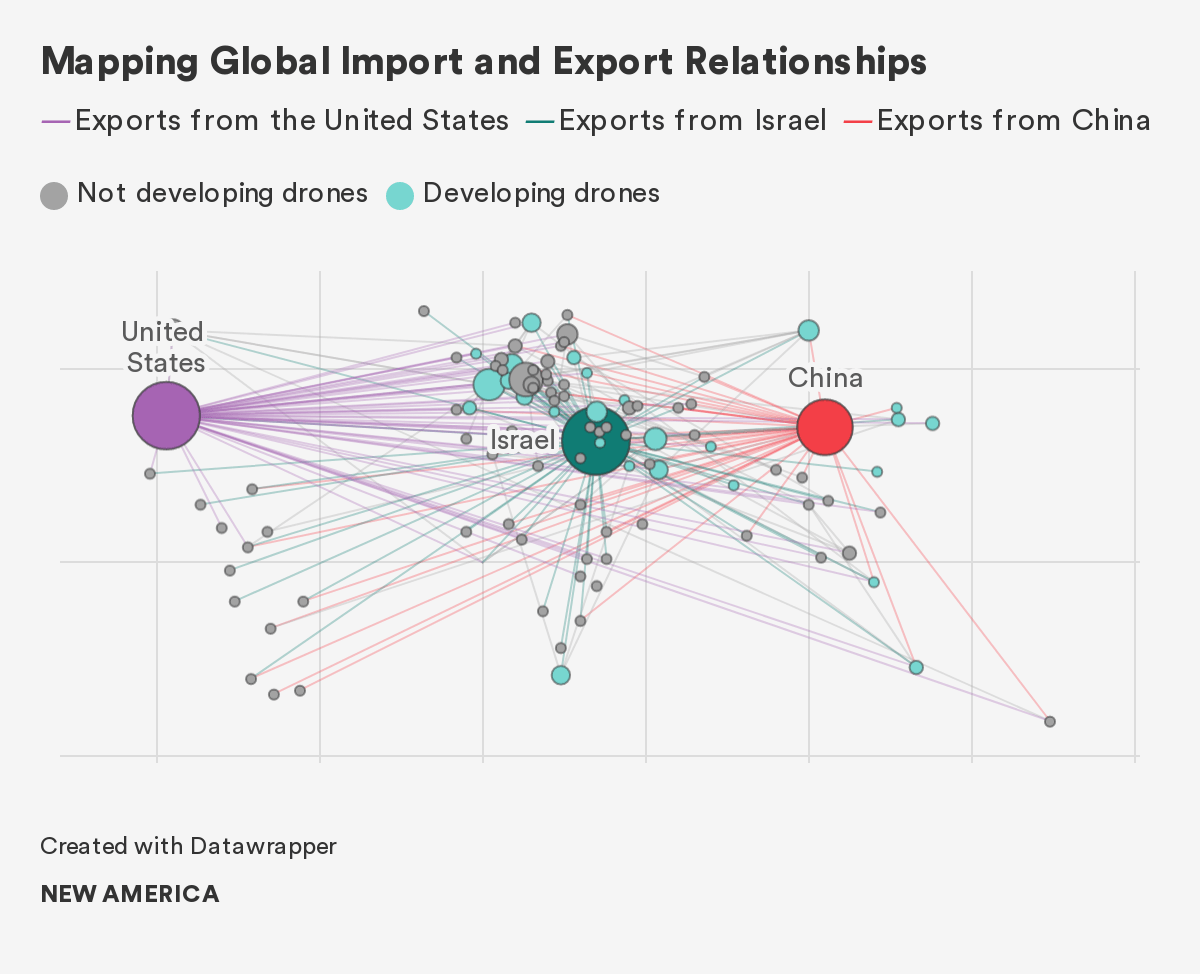
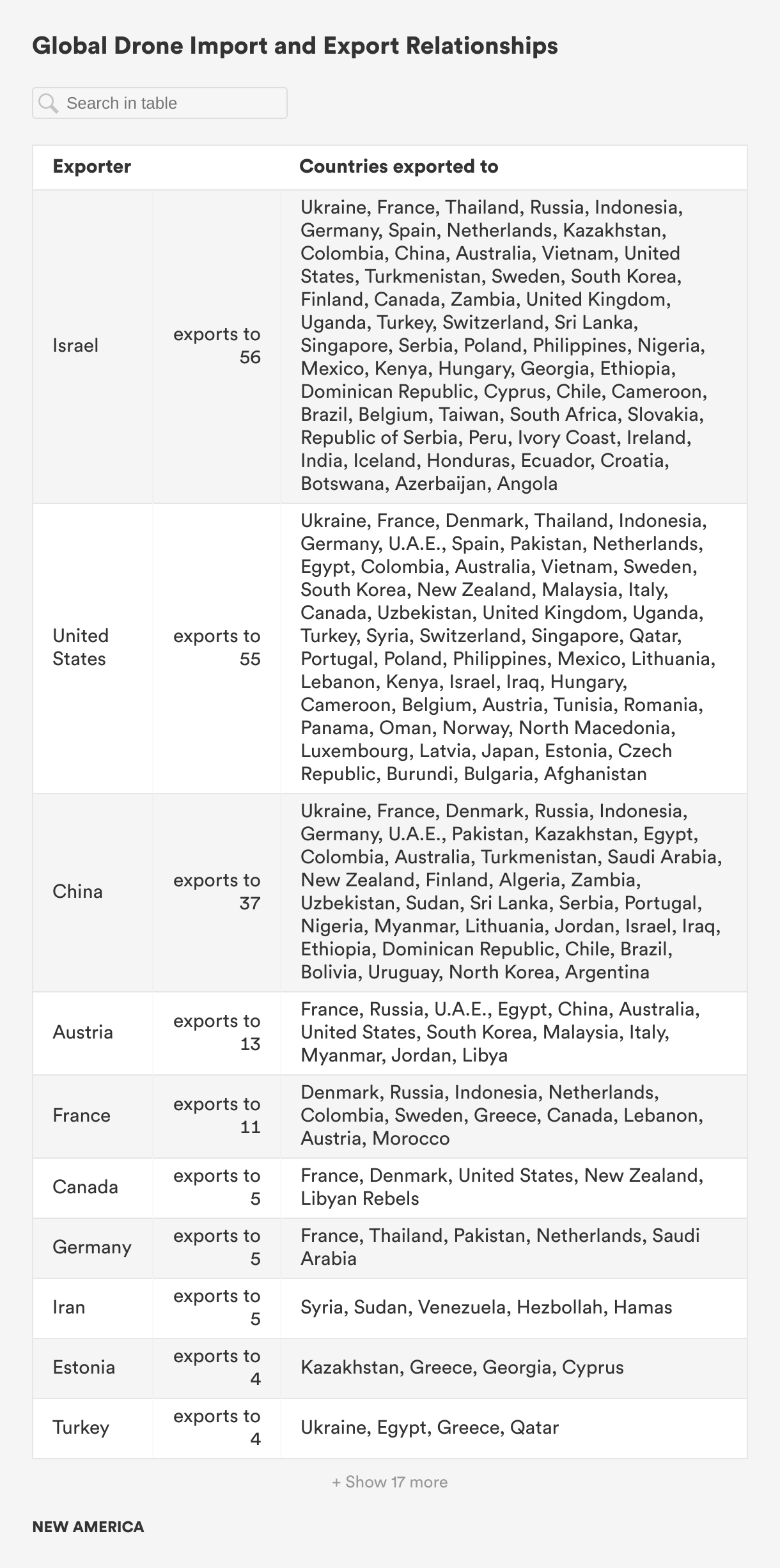
The United States, Israel, and China are the biggest producers and sellers of drones.
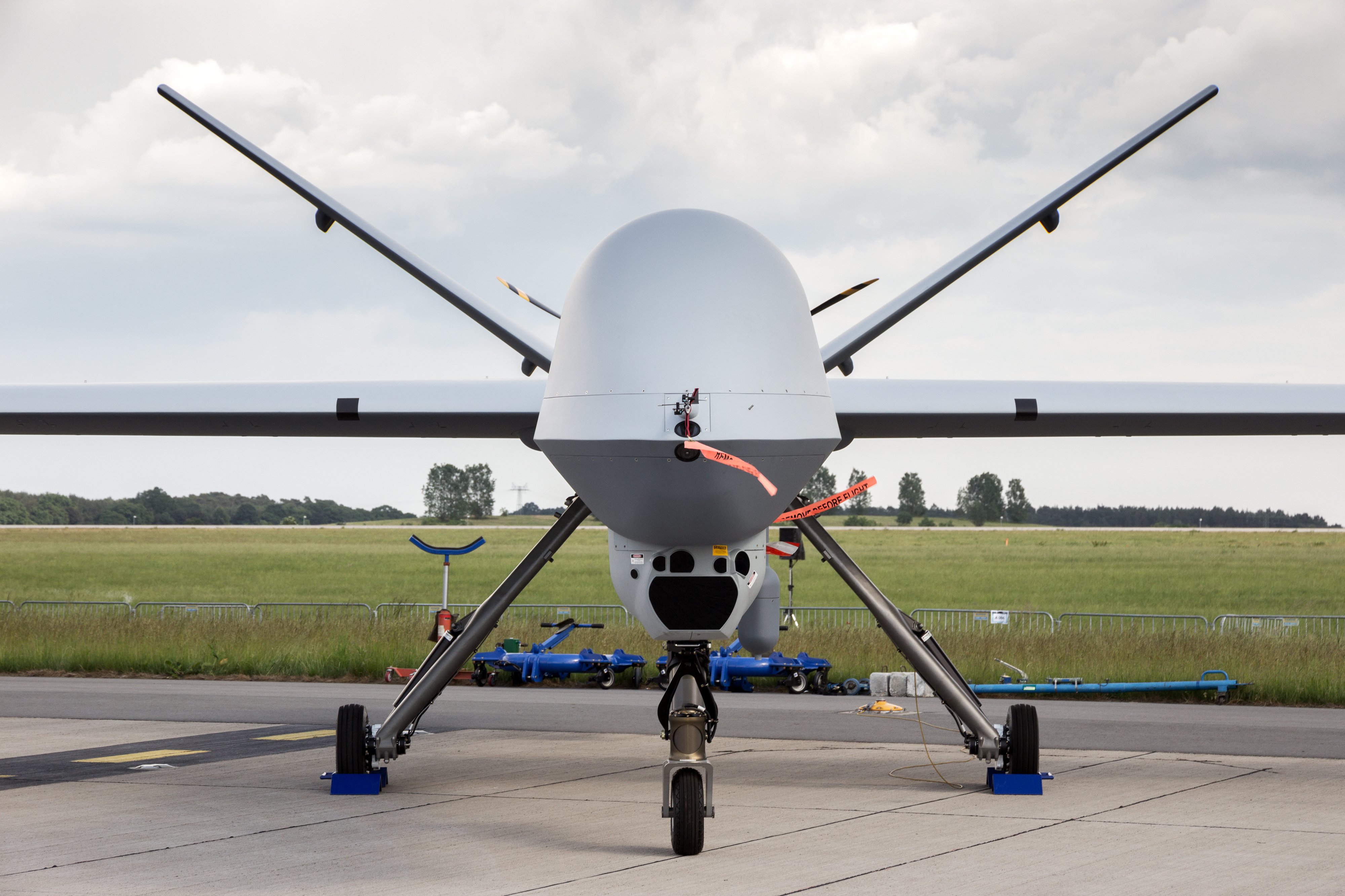
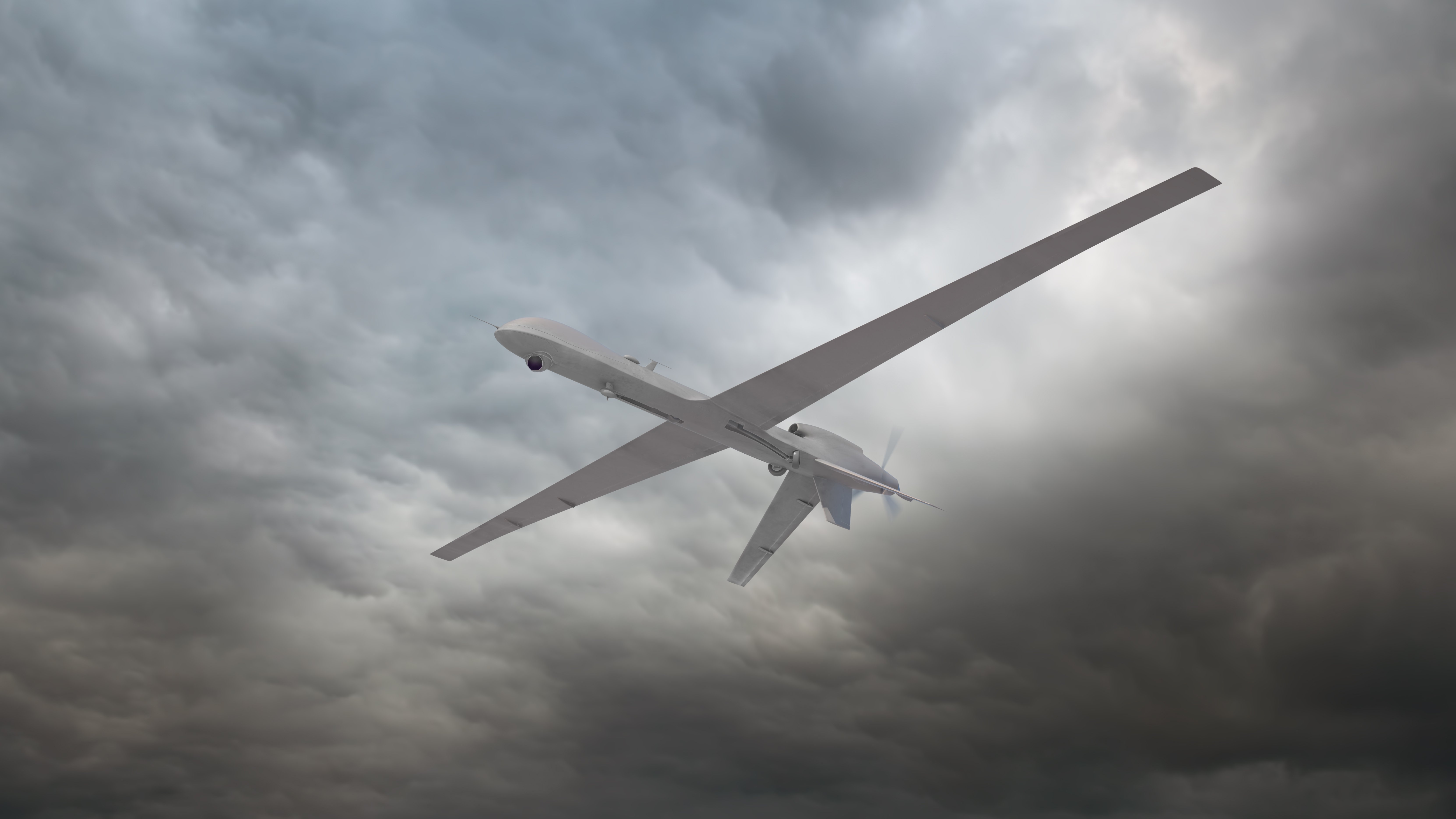
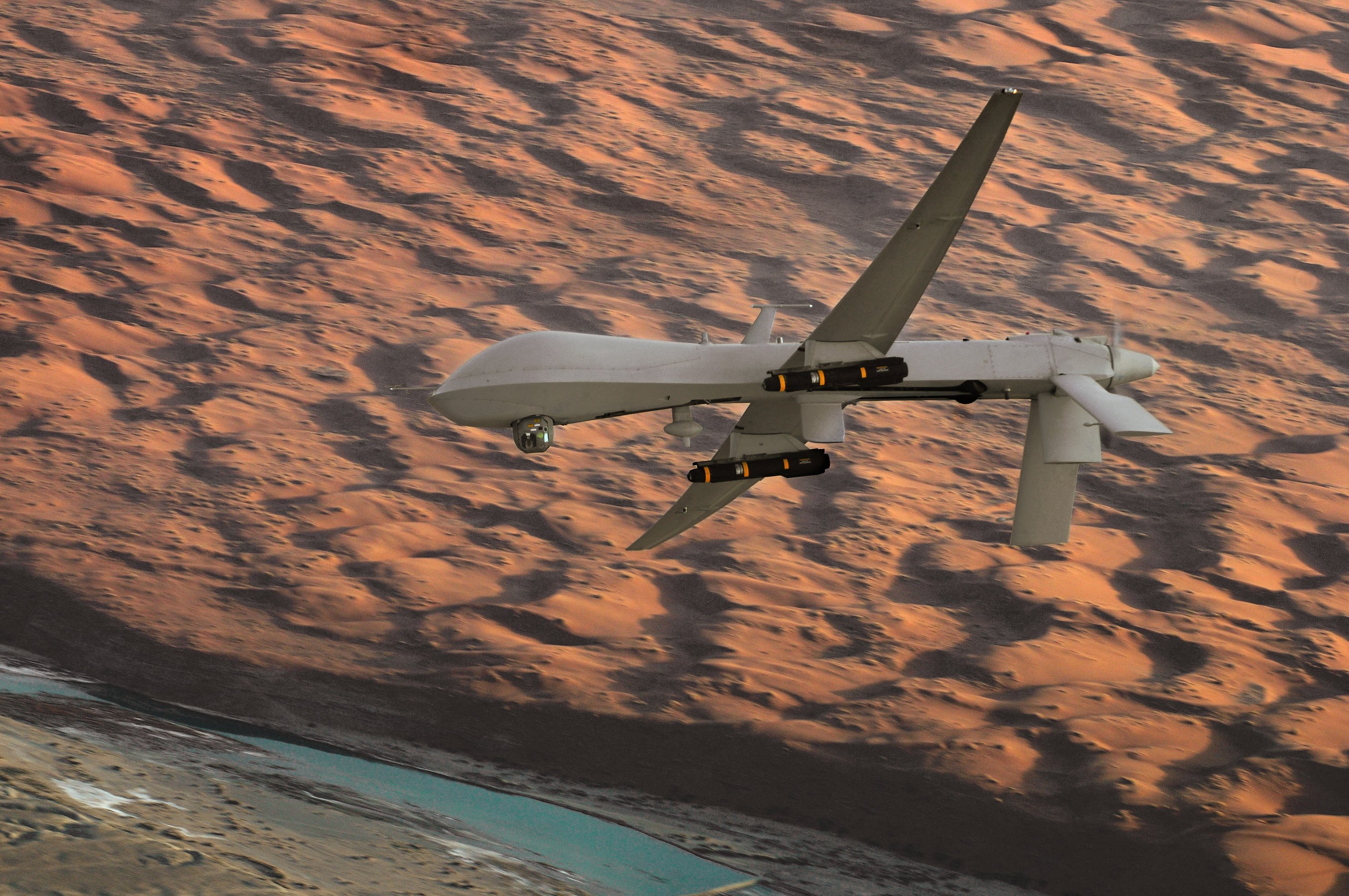
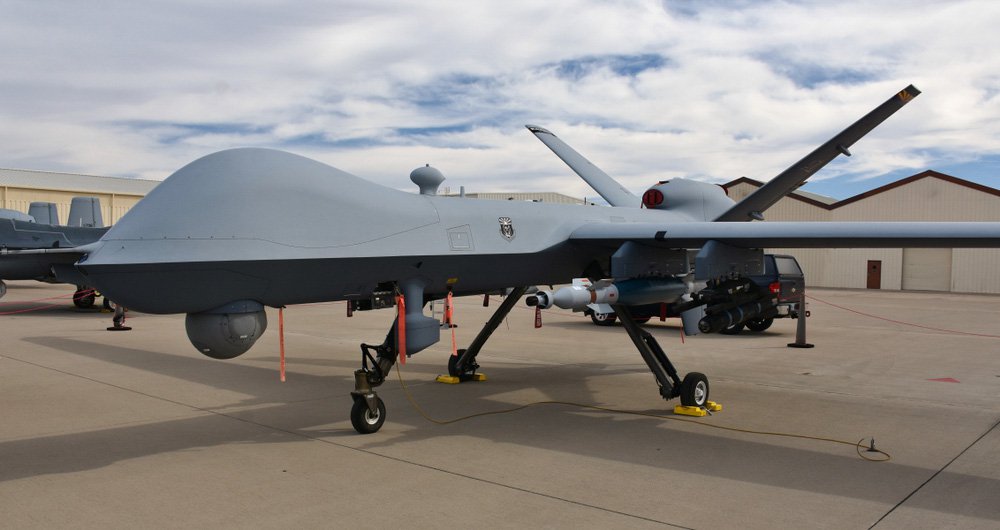
The United States and Israel are the biggest producers and sellers of drones. America’s leading combat drone is the MQ-9 Reaper, manufactured by General Atomics, which the Air Force has used to support operations around the world for over a decade. After the September 11th attacks, the United States conducted the first strikes under the burgeoning U.S. drone program using the MQ-1 Predator, which the Air Force flew in combat for 21 years. On February 27, 2017, the Department of Defense announced the retirement of the Predator drone to “keep up with the continuously evolving battlespace environment.” The United States has sold drones only to NATO members, but approved selling to India in 2018 If the deal goes through, this will be the first non-NATO sale the United States has initiated.
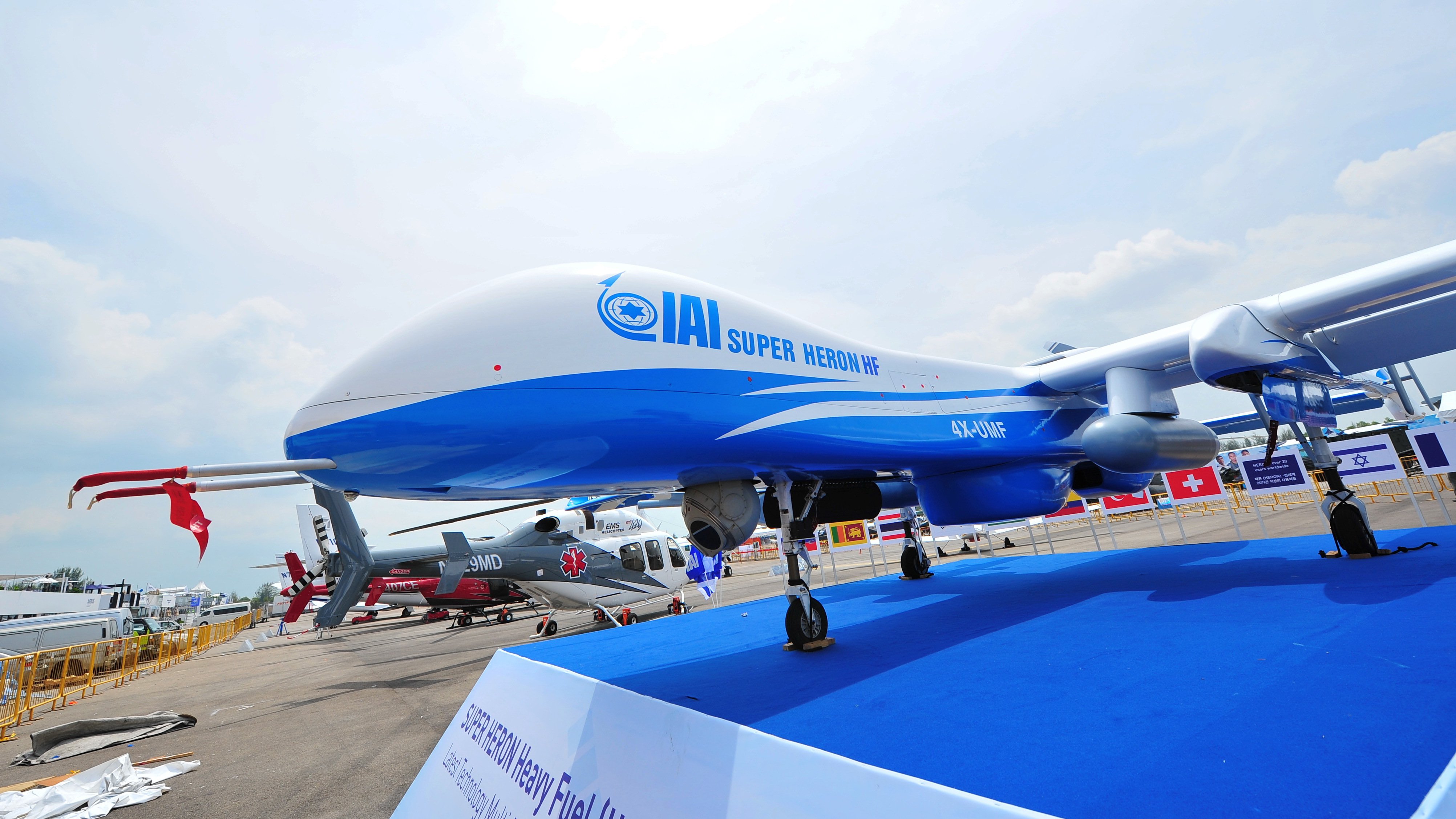
Israel’s IAI Heron is designed to compete with the Reaper. Israel is the largest exporter of drones in the world. Israel accounted for 41 percent of all drones exported between 2001 and 2011, according to a database compiled by the Stockholm International Peace Research Institute (SIPRI), though Israel refuses to release the full list of countries to which it has sold military arms. A partial list of recipients includes the United States, the United Kingdom, Canada, France, Australia, Germany, Spain, Brazil, India, China, the Netherlands, Azerbaijan, and Nigeria.
China is a growing drone exporter and has filled gaps in the market with its more liberal export policy. In 2015, Pakistan, Iraq, and Nigeria all conducted strikes using armed drones supplied by, or developed in coordination with, China.
In November 2013, Pakistan’s military unveiled two domestically produced drones that experts say appear to be based on China’s CH-3, a model which Pakistan also has in its arsenal. The CH-3 is one of China’s most popular models, with exports to both Pakistan and Nigeria, and an upgraded Chinese model, the CH-4, has appeared in arsenals across the Middle East. On December 6, 2015, Iraqi armed forces released footage of a CH-4 in action, striking an ISIS position in Ramadi. Saudi Arabia, the UAE, Egypt, and Jordan are reported to have purchased the CH-4 as well. Saudi Arabia and the UAE have operated unarmed versions of the CH-4 in their campaign in Yemen.
A new addition to the Caihong family, the CH-5, debuted in 2016. The CH-5 has increased altitude, operational, and payload capacities. In addition to many others, China has the Wing Loong II, which is its large reconnaissance and strike system, as well as the AV500W, China’s first strike capable unmanned rotorcraft.
According to SIPRI’s arms transfers database and Statista, India and the United Kingdom are the largest importers of drones internationally. According to a Business Insider report based on SIPRI data, India accounted for 22.5 percent of drone imports between 1985-2014. In addition to its imports, India also has indigenous Unmanned Combat Aerial Vehicles (UCAVs) in its drone arsenal. On November 16, 2016, India’s Rustom-II, an armed Medium-Altitude, Long-Endurance (MALE) drone, successfully completed a test flight.
From 2010-2014, the United Kingdom was the largest importer of drones, accounting for 33.9 percent of drone imports for this period. The United Kingdom produces small, MALE, and Watchkeeper drones, which are based on an imported Hermes 450 drone from Israel.
The United Kingdom Protector RG MK1—a General Atomics MQ-9B Sky Guardian—will replace the previously used MQ-9 Reapers and will enter the market by 2024. The United Kingdom will also launch its efforts to develop drone swarms in the 2020s.

For nearly a decade, the small group of countries that had conducted drone strikes was limited to the United States, the United Kingdom, and Israel. But, that club expanded with the entry of Pakistan in 2015. Pakistan used its domestic model, the Burraq—modeled after the Chinese CH-3—to strike militants in the North Waziristan tribal region. The Pakistani government announced the strike publicly.
Nigeria and Iraq both used versions of China’s popular Caihong drone when striking at militants within their borders. Turkey first launched a strike in 2016 against presumed ISIS militants on its border region just a year after demonstrating armed drone development capability. Iran also launched its first strike in 2016, though it has been developing its drone capability for decades.

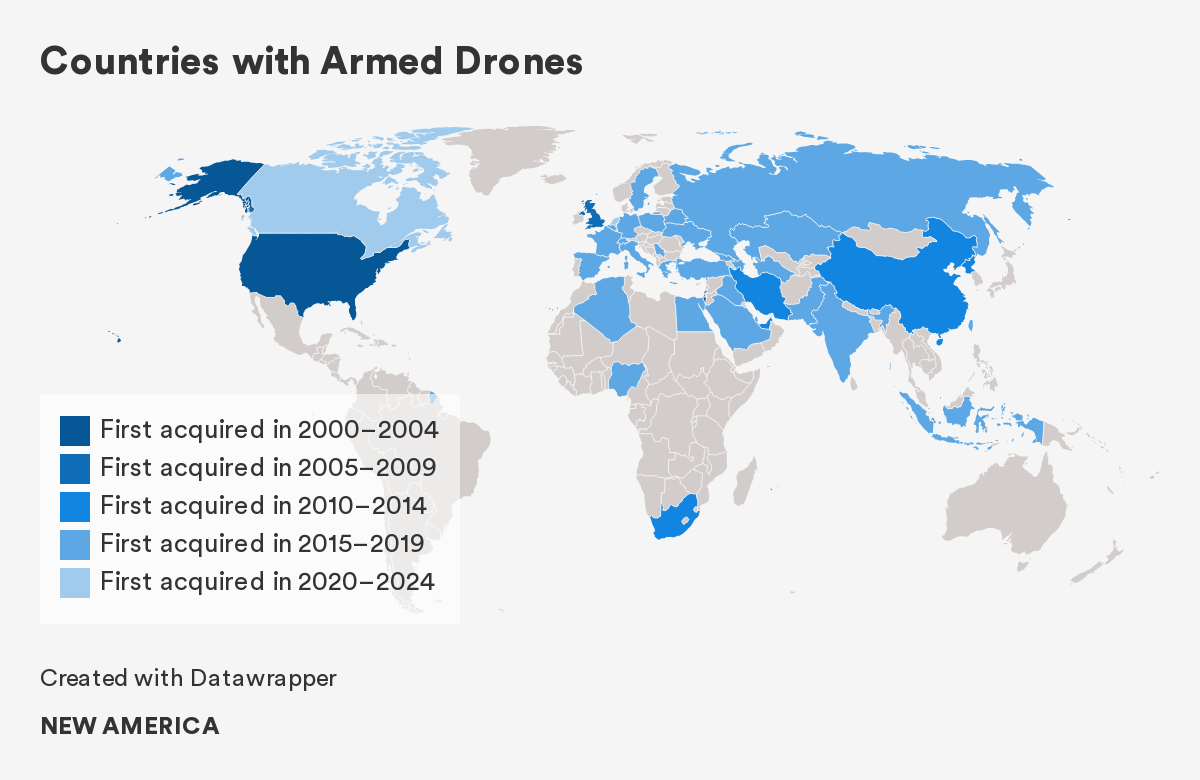
Over three dozen countries in this World of Drones database have armed drones, but not all of them produced their UCAVs at home.
Many countries seeking armed drone capability without the capacity to develop UCAVs domestically have turned to China. Chinese-made drones have been used extensively to combat extremism outside of China, but the Chinese military has avoided conducting lethal strikes themselves. However, in 2013, The New York Times reported that China considered using a drone to kill a Burmese drug lord, but opted to capture and try him in court. He received a death sentence.


European nations have acted collectively to develop the next generation of armed drones, most notably the nEUROn UCAV technology demonstrator and the MALE unmanned aircraft. Resembling the American X-47B, a drone primarily operated by the U.S. Navy in carrier-based operations, but purportedly more advanced than present-day “Predator-class” drones, the nEUROn UCAV demonstrator unveiled on January 20, 2012 in France is a product of a joint European effort involving France, Italy, Greece, Spain, Switzerland, and Sweden. It is the first stealth combat drone developed in Europe.
In another showcasing of cooperative European stealth drone design, the “drone users club,” consisting of France, Germany, Greece, Italy, the Netherlands, Poland and Spain, agreed on November 19, 2013 to jointly develop armed MALE drones.
The desire to develop armed drones domestically extends beyond European borders. Pakistan, Turkey, Iran, Russia, Taiwan, and India have taken steps toward independent armed drone production with varying results. Seeking protection against neighboring China and Pakistan, India developed Rustom-I UAVs in 2009 and armed Rustom-II MALE UAVs in 2015. In August 2019, Russia’s Ministry of Defense released footage of its Okhotnik, or Hunter, drone. While Taiwan remains in the research and development stage, Pakistan, Iran, Turkey, and Russia have succeeded in developing armed drones.


Several non-state actors have incorporated drones into their operations. While rebel groups from South America to the Middle East have used commercially available rotary-winged drones to surveil enemy positions, more tech-savvy groups such as ISIS have armed these over-the-counter drones and used them in combat.

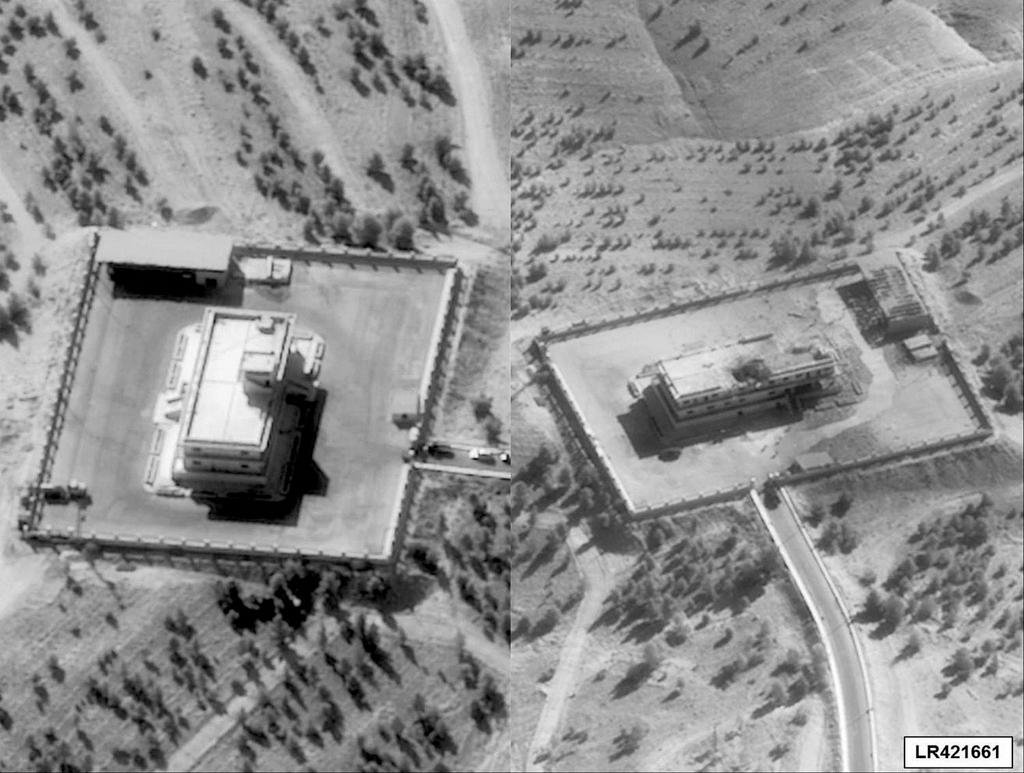
The United States and the United Kingdom have used drones to kill their own citizens abroad. Pakistan, Iraq, Nigeria, and Turkey have struck militants within their borders, and Israel has conducted strikes within the occupied Palestinian territories. The legality of drone strikes is unclear under international law, and the legal status of using drones to kill citizens abroad—or within controlled territory—is even less so.
Where Citizens of the United States and United Kingdom Were Targeted

Anwar al-Awlaki was targeted and killed by a U.S. drone strike in Yemen on September 30, 2011, along with three other al Qaeda militants. One of these three was Saudi-born American citizen Samir Khan, editor of al Qaeda’s English language online magazine, Inspire. Anwar al-Awlaki’s American-born son, 16-year-old Abdulrahman Anwar al-Awlaki, was killed in an October 14, 2011, drone strike on an outdoor cafe in Shabwa, Yemen. The target of the strike was reportedly not Abdulrahman, but Egyptian al-Qaeda leader Ibrahim al-Banna. According to a BBC report, a memo from U.S. Assistant Attorney General David Barron to Attorney General Eric Holder “cited a 2006 Israeli Supreme Court decision that targeted killings were a legitimate form of self defence[sic].”
Mohammed Emwazi, the Kuwaiti-born British ISIS member known as “Jihadi John” was killed on November 12, 2015, when his vehicle was targeted by British and American drones in Raqqa, Syria. His car was hit with a hellfire missile fired from an American Reaper drone. Two British citizens, Reyaad Khan and Ruhul Amin, were killed in a targeted RAF drone strike in Raqqa, Syria on August 21, 2015.

Where Pakistan Conducts Strikes at Home
On September 7, 2015, Pakistan conducted a drone strike—using an indigenously built drone—in Shawal Valley in North Waziristan, a semiautonomous tribal region bordering Afghanistan. Three “high-profile” terrorists were killed, according to the Pakistani Army’s spokesman.

Where Iraq Conducts Strikes at Home
On May 25, 2016, Iraq’s Army Aviation unit published a video on YouTube that showed four drone strikes that reportedly killed 10 ISIS fighters. The Iraqi military conducted the strike with China’s Caihong 4 (CH-4).

Where Nigeria Conducts Strikes at Home
On February 3, 2016, Nigeria reported the military’s first use of an armed drone, striking at the militant group Boko Haram. Nigeria used the Caihong 3 (CH-3) to conduct the strike.
As export laws loosen internationally and drone technology proliferates, nations mired in internal conflict (i.e. insurgent and terrorist threats) may choose to strike within their own borders at higher rates.

Where Turkey Conducts Strikes at Home
In 2016, Turkey deployed armed Bayraktar TB2 drones in domestic counter-terrorism operations against PKK militants in the southeastern Hakkari province. According to Turkish Defense Minister Fikri Isik, the drones killed 72 people in strikes on militants in the first two months of their deployment.

Where Israel Conducts Strikes within Controlled Territory
Israel has made extensive use of armed drones in the Gaza Strip. Israeli drones have targeted a number of Hamas leaders, including senior military commander Ahmed Jabari, who was killed on November 14, 2012.

When the Houthi rebels in Yemen first used maritime drones in January 2017, the assault on a Saudi frigate highlighted the little-known development of sea-capable semi-autonomous weapons. While maritime drone technology is not yet proliferating at the pace of aerial drones, countries like the United States, the United Kingdom, and Russia are already looking seaward in terms of drone development.
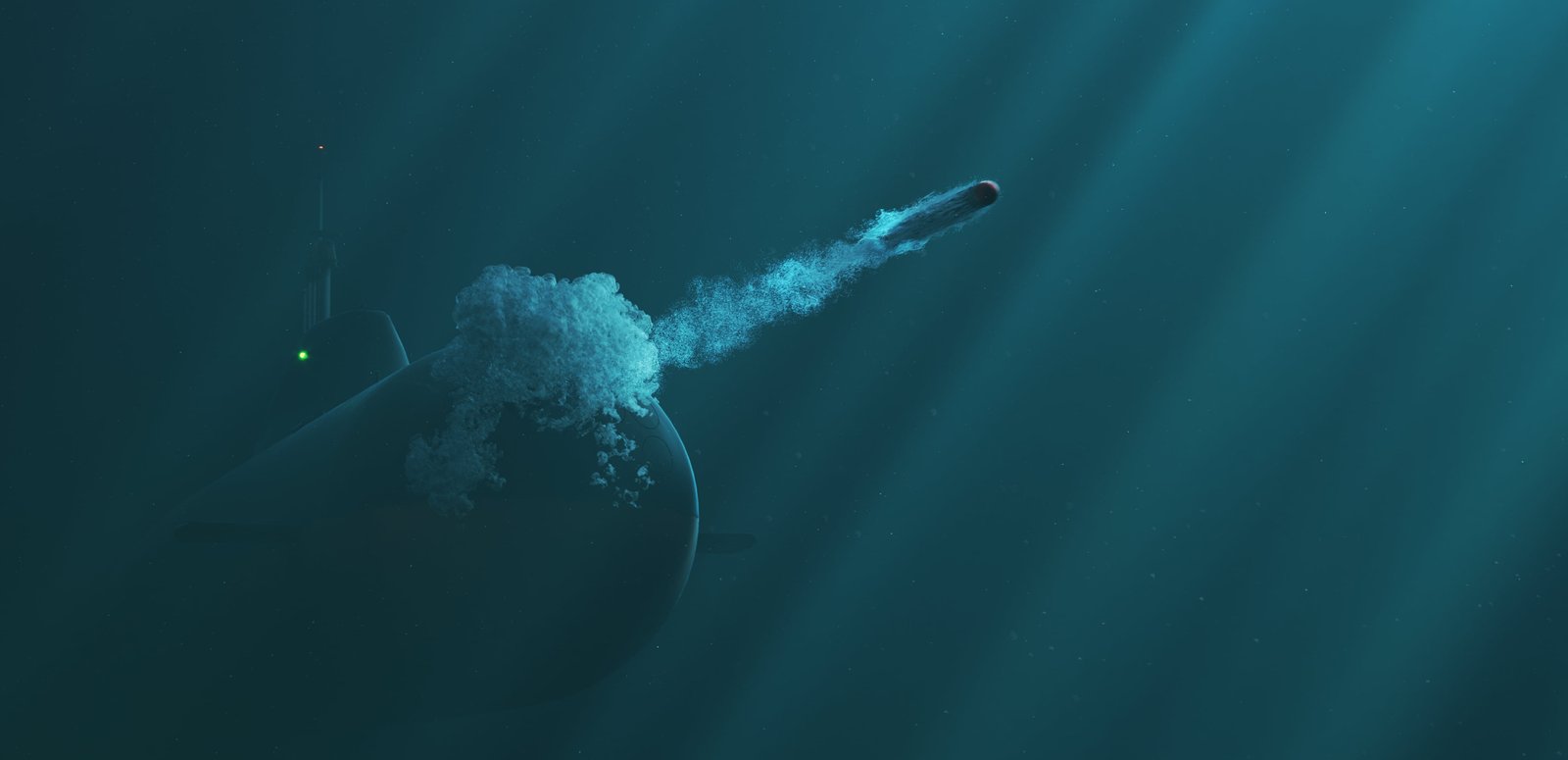
The U.S. Navy sees maritime drones as a key part of the Third Offset strategy, which seeks to leverage next-generation technologies against America’s adversaries. Unmanned Underwater Vehicles (UUVs) enable the creation of an underwater intelligence, surveillance, and reconnaissance network that mirrors U.S. aerial and land-based networks. According to a 2016 DoD report entitled “Autonomous Undersea Vehicle Requirement for 2025,” Submarine based UUVs will be used to extend the effective range of the host submarine’s sensors and weaponry. These drones will be used to carry out missions considered too dangerous for crewed vehicles, like mine countermeasures, and to serve as decoys to disguise the locations of manned submarines.
In remarks delivered aboard the USS Princeton on February 3, 2016, Defense Secretary Ash Carter said the United States would invest “$600 million over the next 5 years” in UUVs. In September 2017, Unmanned Undersea Vehicle Squadron (UUVRON) 1 was established. The U.S. Navy highlighted that “UUVRON-1 has been developing the tactics, techniques and procedures that will shape how the Navy will use the unmanned undersea vehicles.” In June 2019, the Navy reported that the Naval Undersea Warfare Center partnered with UUVRON-1 to create micro UUVs to assist with “extend[ing] the reach of the fleet; including near-shore and denied areas.” Technologists have started developing micro unmanned underwater vehicle and unmanned surface vehicle swarm technology, as well as mine-hunting UUVs for the Navy.
In April 2016, the Defense Advanced Research Projects Agency (DARPA) christened the Sea Hunter, a 132-foot autonomous ship designed to locate enemy submarines. The Sea Hunter made its first autonomous round-trip from California to Hawaii between late 2018 and early 2019.
In December 2016, the U.S. Navy demonstrated that a swarm of autonomous surface vessels could work cooperatively to patrol a harbor. The drone boats are programmed to identify and track potentially threatening vessels, both surface craft and submarines. The Echo Voyager, introduced in 2016, is a large reconnaissance UUV that can operate autonomously for six months and surface to send data to its operator via satellite. In August 2019, the Navy announced its plan to build larger, corvette-sized USVs to keep the United States competitive against other great powers.
The British Royal Navy shares the United States’ interest in maritime drones. The United States and United Kingdom staged the first Unmanned Warrior exercise in Scotland in October 2016, where drones from different countries were networked together to work as a unit.
In August 2015, Russia launched a retrofitted SSBN capable of launching crewed mini-subs as well as UUVs like the deepwater surveillance drone Klavesin-1R. In September 2015, the Washington Free Beacon reported that Russia was developing a stealthy, nuclear-armed UUV called the “Status-6”. In 2018, a leaked copy of the draft Pentagon Nuclear Posture Review confirmed Russia’s underwater nuclear weapon operability.
In June 2018, China launched its UUV swarm technology. China also has sophisticated underwater drones, such as the Qianlong III and Haiyan UUV glider.
Deputy Director, Future Security

Fellow, Future Security

Vice President, Global Studies & Fellows; Professor of Practice, Arizona State University