
Why Does it Matter that Eviction Data is Bad?
The U.S. housing and real estate space is increasingly data driven. The Department of Housing and Urban Development (HUD), for example, utilizes its Voucher Management System to fund, monitor, and manage the use of Housing Choice Vouchers by public housing agencies. Real estate companies such as Zillow, CoreLogic, ATTOM, and Black Knight comprise a lucrative industry focused on collecting granular real estate data, bundling it, and selling it to brokerages, rental sites, insurance companies, and even government agencies.
And yet, a core component of the housing space—evictions—suffers from a surprising paucity of quality, accessible data. As tens of millions of Americans face eviction risk due to the economic fallout of COVID-19, states and cities are discovering that little data exists on where evictions are happening, currently and historically, and who is most at risk.
The U.S. government collects almost no eviction data, and research from New America found that one in three U.S. counties have no available annual eviction figures—to say nothing of data showing which neighborhoods experience evictions most acutely, who is affected, or how much rent tenants are being evicted over.
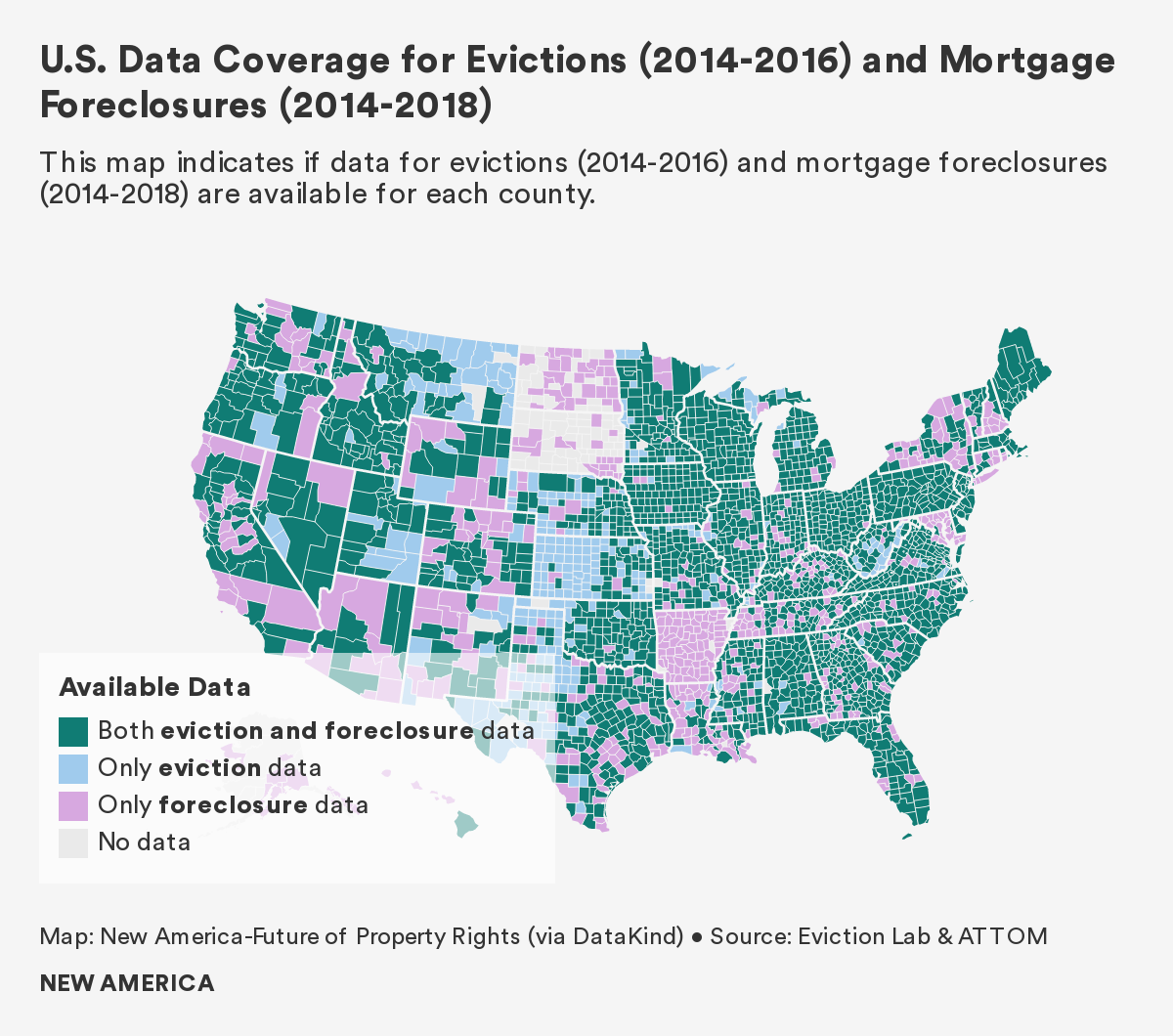
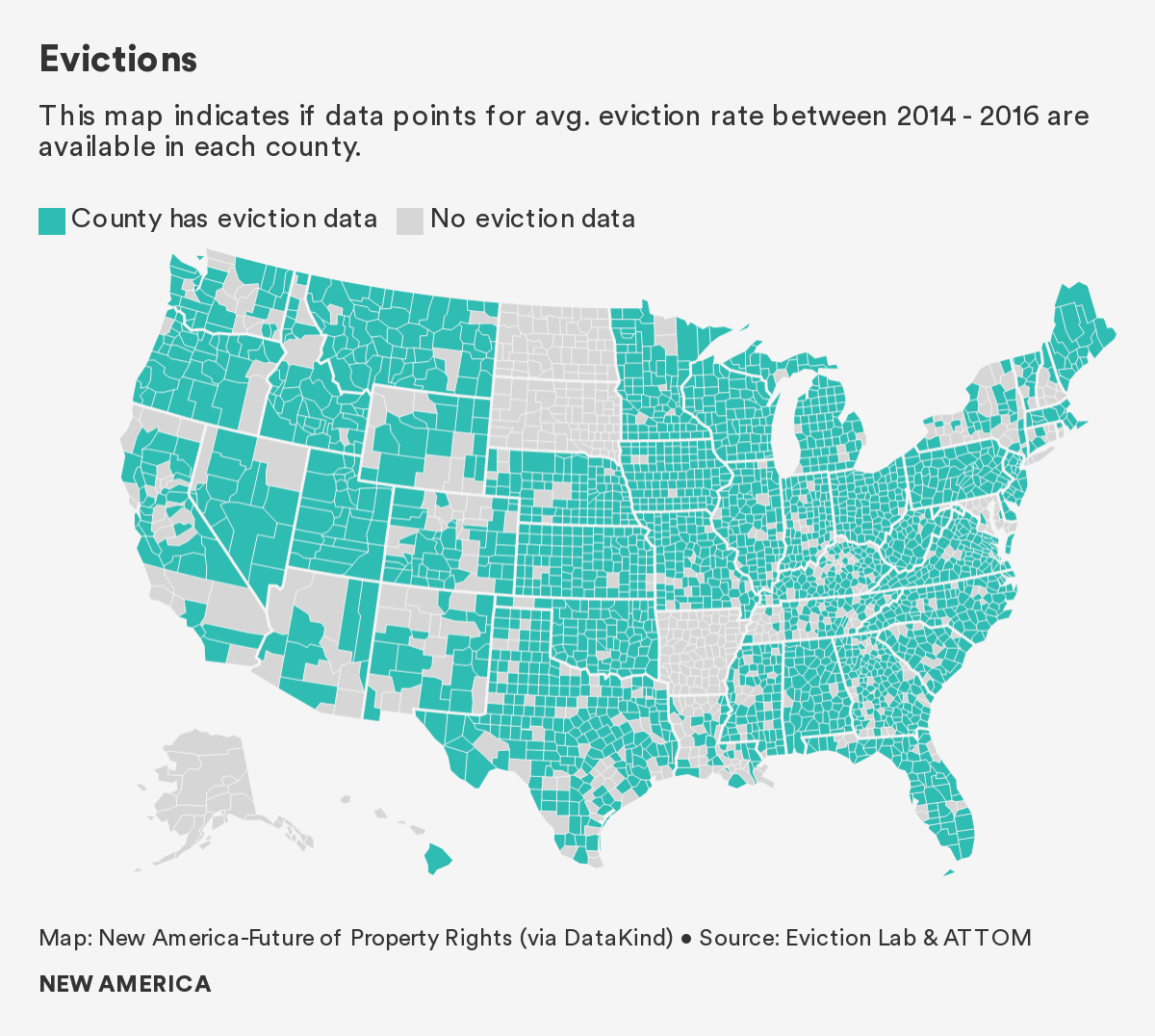
Much like the CDC (Centers for Disease Control and Prevention) abdicated its role in reporting COVID-19 data, leaving nonprofits like the COVID Tracking Project to fill the gaps, the HUD and other government agencies have dropped the ball on collecting, analyzing, and providing eviction statistics. National groups like the Eviction Lab and local researchers and advocates like those at City Life/Vida Urbana, the Anti-Eviction Mapping Project, and JustFix NYC have filled the gaps, but because eviction data is so decentralized and opaque to begin with, their success has been limited.
Experts agree that improving the quality, coverage, and accessibility of eviction data is crucial to solving our nation’s housing loss crisis. Policymakers are starting to pick up on this need as well: in 2019 Colorado Sen. Michael Bennett (D-Colo.) introduced the Eviction Crisis Act, which would have created a comprehensive database of evictions across the country, and Rep. Ayanna Pressley (D-Mass.) introduced a House bill to create a similar database.
And yet, as millions of renters wait in dread for eviction moratoria to expire, there is still no national conversation about how to go about improving eviction data.
Looking over this landscape, New America’s Future of Land and Housing Program (FLH) saw an opportunity: bring together housing, data, and innovation experts and municipal leaders from across the country, and harness their energy and frustration over the paucity of eviction data to table concrete solutions for fixing the county’s eviction data gaps. This report is informed by those conversations, along with New America’s independent research.