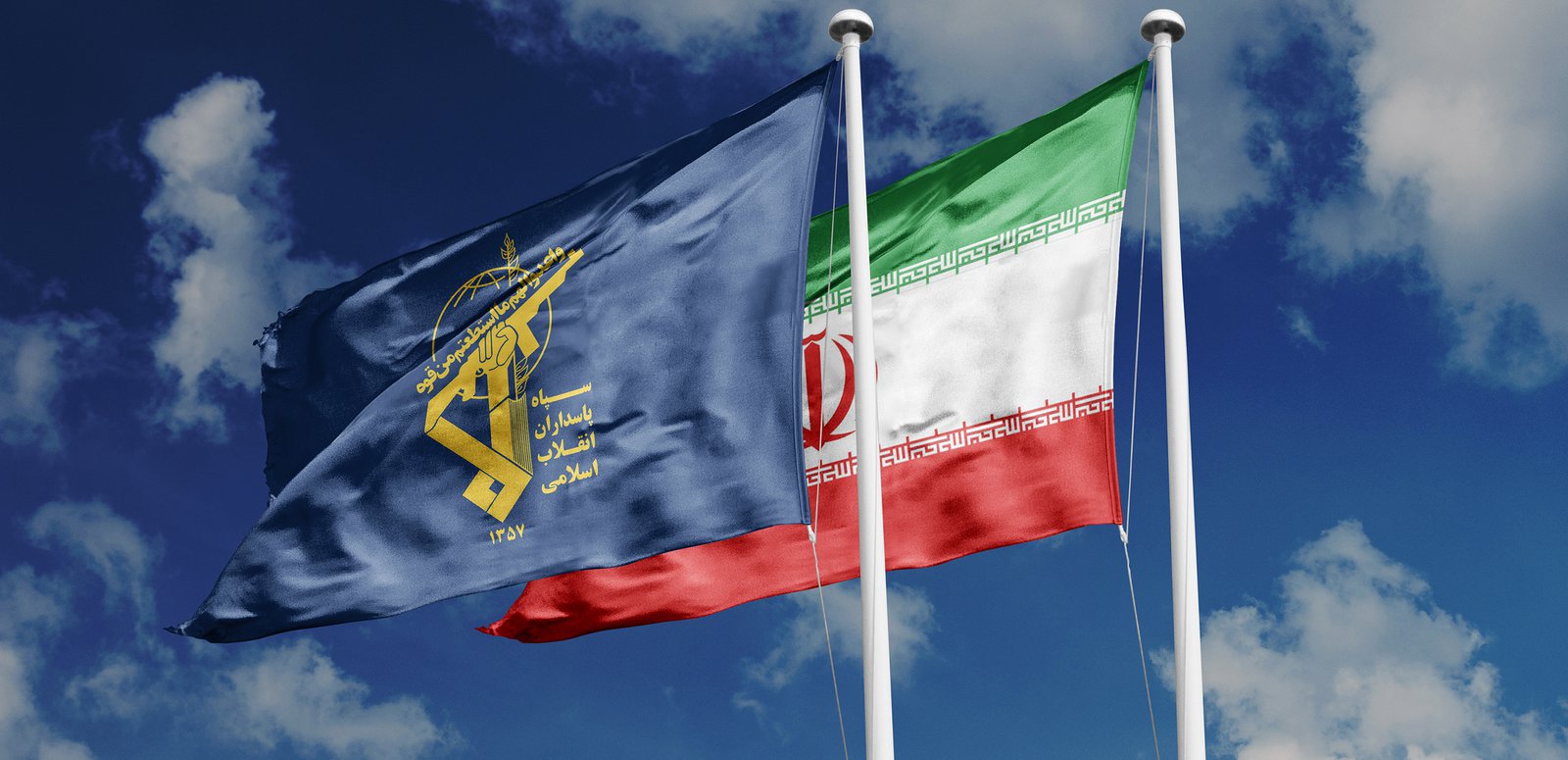
III. Soleimani Ascendant: The Origins of Iran’s “Forward Defense” Strategy
The geopolitical feud between Iran and the United States dates to 1979 when Ayatollah Ruhollah Khomeini and his militant Islamist supporters overthrew the Shah of Iran and soon after took control of the U.S. embassy. Though many historians have assessed that the CIA-backed coup that led to the ouster of Iran’s Prime Minister Mohammed Mossadegh in 1953 planted the initial seeds of mistrust between the United States and the Iranian people, it was Khomeini’s rise to power that earned the United States its most-hated-nation status in Iran among anti-Shah forces. Following the hostage crisis at the U.S. embassy in Tehran in November 1979, Washington responded in kind, casting the Khomeinists as the source of nearly all wrongdoing in the Middle East.1
For nearly half a century, the U.S.-Iran conflict was largely characterized by mutual restraint. Neither Washington nor Tehran judged an open military conflict to be in their interests. Instead, a kind of crisis stability anchored in a proxy war paradigm of covert action shaped the normative bounds of American and Iranian strategy. Hit and run attacks on American targets by Hezbollah in Lebanon in the 1980s and later by proxy elements currently allied with the Popular Mobilization Forces or the PMF in Iraq punctuated by American-backed counterattacks in the form of cyber-strikes and targeted assassinations of nuclear scientists on the streets of Tehran have long been part of the backdrop. Each element of this tit-for-tat proxy war between Washington and Tehran always rested on one simple element: plausible deniability.2
The Iran-Iraq War, Soleimani, and Iran’s Geopolitical Approach to Proxy Warfare
Iran’s proxy warfare strategy of using regional non-state militant groups paralleled Qassem Soleimani’s rise as a military commander during the 1990s on the heels of the Iran-Iraq war. Born in 1957, Soleimani came from a poor family in the central province of Kerman. As a teenager he became an anti-Shah Islamist activist before the revolution of 1979 but he did not stand out at that time.3 The revolution began and prevailed in Tehran but droves of young men—mostly from impoverished rural backgrounds—jumped on the bandwagon. Soleimani was one of them. While he had no formal military training, his chance in life came at the outbreak of the Iran-Iraq War (1980-1988). He enlisted as a volunteer with the Guards and quickly moved up through the ranks of the IRGC, the group of ragtag, armed young men that were empowered and mandated by Ayatollah Khomeini to defend the Islamic Republic against all domestic and foreign enemies.
In late 1980, a few months after the war with Iraq had begun, the 23-year Soleimani was given the command of a volunteer force from his home province of Kerman in what became the 41st Sarallah Division.4 This newly formed division was deployed to Iran’s Kurdistan province, an area both known for heavy ethnic Kurdish separatist militancy but also as a staging ground into Iraq. On the other side of the border was Iraqi Kurdistan where Tehran, from the days of the Shah, had cultivated anti-Saddam Iraqi Kurds as allies against Baghdad.5 It is here that Soleimani experienced first-hand the utility of co-opting and deploying foreign militants as part of military strategizing.6
Ideological or religious reasons were, at best, secondary drivers at this point. The ideological and religious-based reasoning that later came to dominate the narrative to justify forward defense had yet to be born. Nonetheless, it is during the first years of the Iran-Iraq War, which began in September 1980, that the Qods Force, the expeditionary branch of the IRGC, was born, although its mission would evolve over time.7 Its actions were centered on cross-border operations along the Iran-Iraq battle lines and on recruiting Iraqis.8 Mostafa Chamran, an Iranian Islamist revolutionary who had seen military training with Shia militants in Lebanon in the 1970s, was a key driver behind the adoption of asymmetric warfare tactics and became the Islamic Republic’s first defense minister.9 While Soleimani was not a key player in the formation of this new outfit, he would be a key participant in the application of the new approach, which mirrored the missions of special operations forces in countries like the United States, including covert action and reconnaissance behind enemy lines.10 In time, what would make the Qods Force stand out was its use of Shia Islamist rallying cries and its recruitment among Shias outside of Iran.
The Qods Force’s mission was not centered on exploiting religious or sectarian fervor at first. The Iraqi Kurds that Iranian commanders like Soleimani collaborated with were not Shia but secular Sunnis. Iranian support for them was an early signal of the Islamic Republic’s willingness to collaborate with an assortment of non-Shia or non-Islamist actors as long as the partnership advanced Iran’s perceived geopolitical interests. In a decade’s time, Iran would be militarily supporting a range of Sunni groups deemed as important to Islamic Republic national interests including the Sunni Afghan Northern Alliance in Afghanistan to the Sunni Bosnians11 in the Yugoslav civil war to the Sunni Hamas in Gaza.12 As Zalmay Khalilzad put it in regards to Iran’s modus operandi in Afghanistan during the 1990s, being Shia “was not sufficient to gain Iranian support.”13 This was also evident in Iran’s support for Christian Armenia against Shia Muslim Azerbaijan in the war between the two countries over the disputed territory of Nagorno-Karabakh in the early 1990s.14
In all of its efforts involving military partners and operations outside of Iran, certain characteristics stand out. Tehran always performed a careful cost-benefit analysis and, as David Menashri argues, it “diligently sought out opportunities in areas, or in movements, that seemed ripe to respond” to its ideological overtures.15 The Shia Islamist Iraqis, many of whom moved to Iran to fight Saddam Hussain’s regime under Ayatollah Khomeini’s spiritual and political leadership during the Iran-Iraq war, were one such group. It was during the early 1980s that some of the most prominent present-day Iraqi militia leaders—men such as Hadi Ameri and Abu Mahdi Al Muhandis, who was killed alongside Soleimani in January—launched their collaboration with their sponsors in the IRGC.16
The Badr Corps, composed of Shia Iraqi Islamists who looked to Iran, began as a brigade and remained under tight IRGC control. This oversight angered Mohammad Baqir Al-Hakim, the Iraqi Shia cleric who headed the political wing of the Badr movement.17 He complained to the then President Ali Khamenei and Speaker of the Majlis, Akbar Hashemi Rafsanjani. Still, the senior IRGC commanders backed by the political leadership in Tehran were determined to maintain strict Iranian control of the foreign forces they were arming and funding. The dispute over command-and-control was somehow resolved and the relationship continued.18 Since the dispute, however, Iran has continued to have lingering doubts about its ability to effectively organize and control its foreign proxies as it sees fit.
Soleimani held the post of commander of the 41st Sarallah Division throughout the Iran-Iraq War. He was one of the youngest military commanders but never a specially celebrated one during the war and his fame would only come years later in the 2000s as he began to cultivate a public image.19 The one factor that appears to have counted in his favor is that he developed a personal bond with the then President Ali Khamenei who frequently visited the war front. The future supreme leader, who took over after Khomeini’s death in June 1989, never forgot that Soleimani had kept him in the highest esteem when many other IRGC commanders viewed Khamenei suspiciously throughout his presidency (1981-1989).20
It was precisely this close personal bond between Khamenei and Soleimani that many analysts have considered as pivotal to the rise and relative independence of the Qods Force during Soleimani’s command from 1998 until his death in 2020. Soleimani’s death thus raised questions about whether the organization would maintain its stature within the power structures of the Islamic Republic without Soleimani at the helm.
Lessons from a Neighbor Under Siege: Soleimani’s First Forays in Afghanistan
After the Iran-Iraq War, Soleimani was given the mission of dealing with rampant organized crime, including arms and drug trafficking coming out of Afghanistan, a country ravaged by civil war where a new breed of extremist movement under the banner of the Taliban was on the rise. Tehran viewed the movement not only as anti-Iran and anti-Shia but as a creation of its regional rivals, Pakistan, Saudi Arabia, and the United Arab Emirates.21
In early 1998, as Iran was still recovering from the devastation wrought by the eight-year war with Saddam Hussein’s Iraq, Soleimani was named head of the Qods Force.22 At the time, Soleimani was barely known to the Iranian public, but he was a known figure among warring factions in neighboring Afghanistan where he had served as Iran’s key military liaison to anti-Taliban forces in the Northern Alliance.23 Little analysis has been conducted in the English language about Soleimani’s efforts to aid and guide Northern Alliance forces then under the leadership of Ahmad Shah Massoud, a Sunni and ethnic Tajik leader who was among the top opponents of the Taliban.24 What is known is that Soleimani had been in his new role less than a year when Taliban forces in August of 1998 captured the northern Afghan city of Mazar-i Sharif and promptly arrested nine diplomats at the Iranian consulate.
The Taliban forces, after they had by one account received instructions from Pakistan’s ISI (Inter-Service Intelligence), killed all the Iranians except one who managed to escape.25 Tehran made a show out of its response, mobilizing tens of thousands of troops on the border ready to go into Afghanistan. Still, after lengthy deliberation, Iran’s Supreme National Security Council (SNSC) opted against a conventional military retaliation against the Taliban, in part fearing being drawn into a quagmire.26 Instead, under the auspices of the Qods Force, Tehran increased its financial and military support for its anti-Taliban partners like Ahmad Shah Massoud.27 Tehran not only welcomed but actively sought to assist the U.S. military campaign against the Taliban in 2001 following the terrorist attacks of September 11.28
Soleimani’s close links with the Northern Alliance would prove enduring and critical for bolstering his assertions about the value of proxy relations for maintaining a forward defense and deterrent against potential aggression or overreach by adversaries. This kind of patronage also gave Iran leverage not just in the military theater but also on the political and diplomatic stages. Foreign Minister Javad Zarif has claimed that the December 2001 Bonn conference that led to Afghanistan’s first post-Taliban government could not have succeeded without Soleimani’s mediation and ability to pressure the various Afghan political groups that he had cultivated ties with throughout the 1990s.29
During the Afghan civil war of the 1990s, the Qods Force and its top commanders, including Soleimani but also Esmail Ghaani, proved to the political leadership in Tehran that the supply of arms and funds to Afghan militants had not only given Iran a say in the battlefield but also had given Tehran a role as a principal powerbroker in that country. This gave Soleimani much personal confidence, which he soon put on public display. By 2008, Soleimani famously sent a message to the top U.S. military official in Iraq: “General Petraeus, you should know that I, Qassem Soleimani, control the policy for Iran with respect to Iraq, Lebanon, Gaza, and Afghanistan.”30
The War on Terror and the Arab Spring Years: Iran’s Efforts to Consolidate Forward Defense in Lebanon, Iraq, Syria, and Yemen
The U.S. invasion of Afghanistan in 2001 and then Iraq in 2003 prompted a period of reorganization and consolidation of Iran’s military expeditionary forces under the Qods Force. Not only did Soleimani have direct access to Khamenei, which meant he could bypass the rest of the IRGC bosses, but the leadership in Tehran had never had more reason to invest in forward defense. In early 2002, the Bush administration named Iran, along with Iraq and North Korea, as part of an “Axis of Evil.” It was not unreasonable for the Iranians to think they might be next in a broader U.S. military campaign in the Middle East following 9/11. Keeping the Americans bogged down elsewhere in the region presented an attractive strategy for Tehran. Despite the risk it took in angering Washington, the strategy was worthwhile if it meant preventing or stalling a possible American attack on the Iranian homeland.
The newly reenergized Qods Force reflected hard lessons learned from several different phases of strategic realignment. From support for Hezbollah in Lebanon beginning in the 1980s to backing for the Northern Alliance in Afghanistan in the 1990s and various groups in Iraq and Yemen in the 2000s, Soleimani’s way of war led to mixed results. Yet, each case allowed Qods Force commanders to adapt and refine their proxy war strategy, and modulate the response to increasing American pressure in the form of covert counter attacks and sanctions. Meanwhile, Soleimani significantly elevated the degree of freedom of operation provided to Qods Force commanders.
As part of the Qods Force organizational structure, each region of operation is given to an individual commander. This “One Country, One File, One Commander” was Soleimani’s brainchild and gives individual Qods Force commanders extraordinary freedom to design and implement policy; but it also makes them responsible for the outcome, according to Morad Veisi, a journalist with Radio Farda, the Iranian branch of the United States’ Radio Free Europe/Radio Liberty and an expert on the IRGC.31 In those most delicate theaters where the Qods Force required maximum policy control, its officers have often been the ones Tehran has dispatched as its top diplomatic envoys. In the case of Iraq, all three of Iran’s ambassadors to Baghdad since 2003 have come from the Qods Force.32
To the Qods Force leaders in Tehran, Iran’s support to a long list of militant groups across the Middle East translates into leverage. These groups are seen as a vindication of the mobilization and financing of the so-called forward defense. The militant groups help to project Iranian military reach and, at times, ideological influence. While Iran’s consolidation of a forward defense strategy was driven by overarching regional dynamics including a growing perception of a U.S. threat and the rise of new opportunities and challenges with the Arab Spring, its character varied across different national contexts. This was so despite growing public references to transnational mobilization and connections between groups.
Hezbollah in Lebanon: An Enduring, Ideologically Close Relationship with Geopolitical Value
Hezbollah in Lebanon is the best example of Iran’s forward defense concept.33 This should not be surprising. Iran’s own IRGC began as a militia in the aftermath of the Iranian revolution in 1979 and, 41 years later, it is the most formidable political-military-economic actor in the country. This IRGC has diligently worked to replicate its success domestically and turn its foreign proxies into powerbrokers in their respective home countries.
In the case of Hezbollah in Lebanon, the IRGC and its Qods Force foreign branch did not only ideologically indoctrinate and arm the group, but selected and groomed its leaders, including Hassan Nasrallah, its present leader, and Imad Mughniyeh, the group’s top military planner who was assassinated in a joint American-Israeli operation in 2008.34
Hezbollah’s nearly four-decade alliance with the Islamic Republic is the ultimate successful embodiment of the application of forward defense. Unlike many of the other groups that Tehran has backed since 1979, Hezbollah not only shares the Shia Islamist ideological model adopted in Tehran but provides Iran with a platform from which to militarily exert pressure on its top regional nemesis, Israel. From Tehran’s perspective, Hezbollah represents the best the forward defense model can offer: an effective tool of national interest combined with a close and enduring relationship strengthened by both material and ideological ties.
Iran in Syria and Iraq: Key Geopolitical Partner, Contested Ties, and the Role of Ideological and Transnational Mobilization as Stopgap
Yet Iran’s military interventions in Syria since the outbreak of the Arab Spring in 2011 demonstrate that ideological conformity is not a prerequisite for Tehran’s support. Hezbollah may be a particularly successful case of forward defense, but it is far from the only model for the strategy, which often relies on proxies whose ideological ties to Iran are often far weaker than those of Hezbollah. The Syrian case also illustrates the limits and risks of Iran’s pursuit of proxy warfare reliant upon relationships of a less enduring and ideologically bound character.
The Islamic Republic has nothing in common in terms of creed with the secular Baathist regime of Bashar Al Assad.35 Despite this, Iran intervened militarily on behalf of Assad in close partnership with its ideological offspring, Hezbollah.
Iran’s Syrian intervention demonstrated its versatility. It also showed Iran’s ability to compartmentalize its regional ambitions and work with foreign partners while awkwardly attempting to publicly cast the mission in Islamist clothing. Iran’s key objective was to save a geopolitical ally with a secular system while minimizing costs to Iran itself.36 Notably, Iran’s primary foreign cohort in the mission in Syria has been Vladimir Putin’s Russian Federation, hardly a vanguard of Islamism.37
The biggest departure in Syria, when compared to the situation in Iraq, was the need for Iran to bring in droves of non-locals—such as Iraqis, Afghans, Pakistanis—to fight under Iranian leadership to keep the Assad regime from collapse.38 Unlike in Shia-majority Iraq, where the indoctrination of a generation of pro-Islamic Republic sympathizers had been under way before Saddam’s fall, Syria’s sectarian realities meant that the manpower shortage was a problem for Tehran. This also differentiated Syria from Lebanon, where Iran could rely upon a close ideological ally in Hezbollah. The Qods Force proved agile in circumventing this impediment. In doing so, it sharpened the essence of what forward defense means in practical terms in the post-Arab Spring Middle East by drawing upon transnational networks to resolve the challenges of proxy warfare in a particular context.
The manifestation of forward defense in Iraq and in Syria, since 2003 and 2012 respectively, highlights two basic facts. First, Iran has demonstrated agility in defining and implementing security policy in the region. Second, Iran’s activities in Iraq and Syria reveal a consensus among Iranian policy-makers that the appetite of the Iranian public for forward defense is finite.
Tehran did not engage in large-scale recruitment of Iranians to be dispatched to Syria. The few thousand Iranians sent to Syria, ostensibly as military advisors, were overwhelmingly drawn from volunteers in the ranks of the IRGC and not the conscripted Iranian army.39 Iran thus depended upon its ability to appeal to and recruit among non-Iranian Shia in the region in order to mobilize the transnational networks.40 While national interest was the primary motivator for Iran’s defense of Syria, the limits imposed by Iranian society required an emphasis upon sectarian and religious appeals in the means of accomplishing those goals.
The mobilization of non-Iranian forces was a double-edged sword. It helped resolve Iran’s manpower problems. But in strengthening appeals to transnational ideological claims, Iran provided its regional rivals with a convincing argument that Tehran was indoctrinating, funding, and arming a new generation of Shia militants and hence, fueling a regional Shia-Sunni sectarian divide. Iran, a non-Arab and Shia majority country with aspirations to lead the Islamic world, has always been highly sensitive to the charge of acting as a Shia sectarian power and it has invested heavily in countering this complaint levelled against it. However, the priority of keeping Assad in power superseded Tehran’s wish to maintain its credibility in the eyes of the Sunni street.41 As a result, Iran’s approach helped mobilize opposition to Iranian policy and stoked fears that Iran was seeking more revisionist aims.
The IRGC bosses were undeterred and unapologetic. In August 2012, as Tehran’s military intervention in Syria became increasingly public, then-IRGC Deputy Commander Brigadier General Hossein Salami said “our doctrines are defensive at the level of (grand) strategy, but our strategies and tactics are offensive.”42 IRGC commanders proudly defended the ability to practice “deep-attack doctrine.”43 In April 2019, Khamenei appointed Salami to become the head of the IRGC, and Soleimani’s nominal boss, even as Soleimani retained his direct and much publicized access to the Supreme Leader.44 Meanwhile, Khamenei’s support for forward defense became increasingly overt. “We mustn’t be satisfied with our region. By remaining within our borders, we shouldn’t neglect the threats over our borders. A broad overseas vision, which is the IRGC’s responsibility, is our strategic depth and it is of the utmost importance,” he told the IRGC bosses.45
Support for the Houthis in Yemen: Loose Ties and a Low Level of Interest
Iran’s role in the Yemeni civil war starting in 2014 demonstrates both the limitations of forward defense war and how Tehran has been selective and careful in applying the strategy. It is commonplace to read that Tehran is the sponsor of the Yemeni Houthi rebels fighting the UN-recognized Yemeni government. In reality, when the last round of conflict began in Yemen in 2014, few Iranians were familiar with the term “Houthis” or “Ansar-Allah,” the official name of the group. The lack of historic ties between Tehran and the Houthi movement and an exaggerated sense of the importance of sectarian bonds between the two only underscore that their relationship has mostly been a marriage of convenience.46
Neither Soleimani nor any other senior IRGC commander ever made a public appearance in Yemen. This stands in contrast to prominent public visits to Lebanon, Afghanistan, Iraq, and Syria.47 Tehran has not made extensive efforts to spread its religious ideology among the Houthis, who are mostly followers of the Zaidi sect in Islam.48 The export of Khomeinism to the Houthis of Yemen has happened, but only in small doses as compared to Iraq or Lebanon. Yemen is, from Tehran’s perspective, too far-flung, too fractured, and unripe to be a good host for Iran’s forward defense doctrine.49
Iran has compared the Houthis to Hezbollah in Lebanon.50 If the latter could be a spear aimed at Israel, the Houthis could be Tehran’s pawn against the Saudis. Ali Shirazi, Supreme Leader Khamenei’s representative to the Qods force, expressed such a view to the Iranian press in January 2015 and on other occasions.51 But Yemen was never a core priority for Tehran and the Houthis were never as submissive to Tehran as Hezbollah or the pro-Iran Shia Iraqi groups. Instead, the dynamic in the Iran-Houthi partnership has depended overwhelmingly on the policy decisions of third-party actors, most notably Saudi Arabia, the United Arab Emirates, and the United States.52 For example, since late 2019, when the Houthis began the latest round of peace talks with the Saudis and the Americans in Oman, the Iranians were effectively sidelined. The Houthi-Saudi peace talks began shortly after Iran’s Ayatollah Khamenei received a senior Houthi delegation in August.53 Either Tehran was urging the Houthis to sue for peace or it had little influence over their strategic decisions (or both). Even in Washington a new message began to be disseminated that downplayed the closeness of Tehran and the Houthis.54
Nevertheless, the Houthis continue to provide Iran with a possible staging-ground from Yemen should Tehran opt to pursue a more militant posture against Riyadh, including via the use of Houthi-controlled Yemeni territory as a launchpad for Iranian-supplied missile strikes. The case of Iran’s relations with the Houthis shows that when examining the extent and appeal of the Iranian proxy model of forward defense, it is critical to look for the depth in relations, which is an indicator of Tehran’s ability to consolidate its regional alliance against the United States and its allies under the banner of the “Axis of Resistance.”
Citations
- For an overview of the history of U.S.-Iran relations see for example: Ervand Abrahamian, The Coup: 1953, the CIA, and the Roots of Modern U.S.-Iranian Relations (New York: The New Press, 2013); Kenneth M. Pollack, The Persian Puzzle: The Conflict between Iran and America, Paperback ed. (New York: Random House Trade Paperbacks, 2005); Mark J Gasiorowski and Malcolm Byrne, Mohammad Mosaddeq and the 1953 Coup in Iran, 2017; James A. Bill, The Eagle and the Lion: The Tragedy of American-Iranian Relations (New Haven: Yale Univ. Press, 1988); Ali M. Ansari, Confronting Iran: The Failure of American Foreign Policy and the next Great Crisis in the Middle East (New York: Basic Books, 2006).
- David Crist, The Twilight War: The Secret History of America’s Thirty-Year Conflict with Iran, 2013; Uri Friedman, “The Blueprint Iran Could Follow After Soleimani’s Death,” The Atlantic, January 4, 2020, source.
- Ali Alfoneh, “Brigadier General Qassem Suleimani: A Biography” (AEI, January 24, 2011), source.
- This division was also comprised of volunteers from Baluchistan and Hormozgan provinces, located in the far south and far south east of Iran.
- The Iranians worked both with the forces loyal to the Barzani and Talibani families in Iraqi Kurdistan. See: Arash Reisinezhad, The Shah of Iran, the Iraqi Kurds, and the Lebanese Shia, Middle East Today 14803 (New York, NY: Springer Science+Business Media, 2018).
- “Haj Qassem and Commanding 41st Sarallah Division (حاج قاسم و فرماندهی در لشکر ۴۱ ثارالله),” Iranian Students’ News Agency, January 4, 2020, source.
- “Iran’s Networks of Influence in the Middle East” (IISS, November 2019), source; Alfoneh, “Brigadier General Qassem Suleimani: A Biography.”
- “How Was the Quds Force Formed (سپاه قدس چگونه تشکیل شد؟),” Iranian Students’ News Agency, January 5, 2020, source.
- “Mostafa Chamran: The Founder of Asymmetric Warfare,” Tasnmin News, June 19, 2016, source.
- Morad Veisi, “From Ahmad Vahidi to Esmail Qa’ani: Three Decades of the Qods Force,” Radio Farda, January 4, 2020, source.
- Richard J. Payne, The Clash with Distant Cultures: Values, Interests, and Force in American Foreign Policy (Albany, NY: State University of New York Press, 1995), 193.:
- Daniel Levin, “The Iran Primer: Iran, Hamas, and Palestinian Islamic Jihad,” United States Institute of Peace, July 9, 2018, source.
- David Menashri, “Iran’s Regional Policy: Between Radicalism and Pragmatism,” Journal of International Affairs 60, no. 2 (Spring/Summer 2007), source.
- Menashri, 156–57.
- Menashri, “Iran’s Regional Policy: Between Radicalism and Pragmatism.”
- Michael Knights, “The Evolution of Iran’s Special Groups in Iraq,” CTC Sentinel 3, no. 11–12 (November 2010), source.
- Veisi, “From Ahmad Vahidi to Esmail Qa’ani: Three Decades of the Qods Force.”For more background see:Mehdi Khalaji, “The Future of Leadership in the Shiite Community” (Washington Institute for Near East Policy, 2017), 50, source. See also: “(Mohsen Rezai Speaks of an Important Selection) محسن رضایی از یک انتخاب بزرگ میگوید,” Iranian Students’ News Agency, January 19, 2016, source.
- Khalaji, “The Future of Leadership in the Shiite Community,” 45.
- Maryam Alemzadeh, “Ordinary Brother, Exceptional General,” Foreign Affairs, January 15, 2020, source.
- Alex Vatanka, “Iran’s IRGC Has Long Kept Khamenei in Power,” Foreign Policy, October 29, 2019, source see: Veisi, “From Ahmad Vahidi to Esmail Qa’ani: Three Decades of the Qods Force.”
- Alfoneh, “Brigadier General Qassem Suleimani: A Biography,” 5.
- Alfoneh, 4.
- Alfoneh, “Brigadier General Qassem Suleimani: A Biography”; Sayed Jalal Shajjan, “Afghanistan Reacts to Soleimani’s Death,” The Diplomat, January 6, 2020, source.
- For background information about Iran’s role in the Afghan civil war, see: Nader Uskowi, “Chapter 9: Unfinised Business in Afghanistan,” in Temperature Rising: Iran’s Revolutionary Guards and Wars in the Middle East (Lanham, Maryland: Rowman & Littlefield, 2019).See also: Alex Vatanka, Iran and Pakistan: Security, Diplomacy and American Influence, International Library of Iranian Studies 57 (London: Tauris, 2015), 209–19.
- Vatanka, Iran and Pakistan, 217–19.
- Mohsen M. Milani, “Iran’s Policy Towards Afghanistan,” Middle East Journal 60, no. 2 (Spring 2006), source.
- Fereydoun Azhand, “(What Afghans Remember About Qassem Soleimani) آنچه افغانها از قاسم سلیمانی به یاد دارند,” Independent Persian, January 3, 2020, source.
- Milani, “Iran’s Policy Towards Afghanistan.”.
- “Zarif Sees the Martyrdom of Soleimani as the End of U.S. Presence in the Region (ظریف: شهادت سردار سلیمانی پایان حضور آمریکا در منطقه را رقم زد),” Mehr News, February 6, 2020, source. See also: “The Americans Will Feel the Impact of the Criminal [Assassination] in the Coming Years,” Iranian Ministry of Foreign Affairs, January 4, 2020, source.
- Tim Arango, Ronen Bergman, and Ben Hubbard, “Qassim Suleimani, Master of Iran’s Intrigue, Built a Shiite Axis of Power in Mideast,” New York Times, January 3, 2020, source.
- Veisi, “From Ahmad Vahidi to Esmail Qa’ani: Three Decades of the Qods Force.”
- These ambassadors were: Hassan Kazemi Qomi, Hassan Danai-far, and Iraj Masjedi.
- There are no definite data on Iran’s financial support for Hezbollah. The Trump administration has claimed that Iran provided up to $700 million per year before U.S. sanctions. See: Liz Sly and Suzan Haidamous, “Trump’s Sanctions on Iran Are Hitting Hezbollah, and It Hurts,” Washington Post, May 18, 2019, source.
- Veisi, “From Ahmad Vahidi to Esmail Qa’ani: Three Decades of the Qods Force.” See also: “'Imad Mughniyeh Was Killed in Joint Mossad, CIA Operation’,” Times of Israel, January 31, 2015, source.
- For analysis of the complexity of and regional interests behind the Iran-Syria relationship see: Fred H. Lawson, “Syria’s Relations with Iran: Managing the Dilemmas of Alliance,” Middle East Journal 61, no. 1 (Winter 2007), source.
- Aniseh Bassiri Tabrizi and Raffaello Pantucci, “Understanding Iran’s Role in the Syrian Conflict” (Royal United Services Institute, August 2016), source.
- Eprhaim Kam, “Iran-Russia-Syria: A Threefold Cord Is Not Quickly Broken” (Institute for National Security Studies, March 1, 2018), source.
- Alex Vatanka, “Iran’s Use of Shi’i Militant Proxies” (Middle East Institute, June 2018), source.
- Vatanka.
- Ali Alfoneh, “Four Decades in the Making: Shia Afghan Fatemiyoun Division of the Revolutionary Guards,” The Arab Gulf States Institute in Washington, July 25, 2018, source.
- For a discussion on Iran’s efforts to bridge the gap with skeptical Sunnis see: Alex Vatanka, “The Islamic Republic’s Cross-Sectarian Outreach,” Hudson Institute, April 12, 2011, source.
- “Israel No Longer a Threat to Iran: IRGC Deputy Commander,” Mehr News, September 23, 2012, source.
- Amr Youssef, “Upgrading Iran’s Military Doctrine: An Offensive ‘Forward Defense’” (Middle East Institute, December 10, 2019), source.
- Rick Gladstone, “Iran’s Supreme Leader Replaces Head of the Revolutionary Guards,” The New York Times, April 21, 2019, source.
- Youssef, “Upgrading Iran’s Military Doctrine: An Offensive ‘Forward Defense.’”
- Thomas Juneau, “Iran’s Policy towards the Houthis in Yemen: A Limited Return on a Modest Investment,” International Affairs 92, no. 3 (May 2016): 647–63, source.. For more background information see: “Who Are the Houthis? What Is the Relationship between Ansarallah and Iran?,” BBC Persian, May 18, 2019, source.
- “Iran News Agency Reports Visit of New Quds Chief to Syria,” Middle East Eye, June 27, 2020, source; Qassim Abdul-Zahra and Joseph Krauss, “Protests in Iraq and Lebanon Pose a Challenge to Iran,” AP, October 30, 2019, source; Robin Wright, “Iran’s Generals Are Dying in Syria,” The New Yorker, October 26, 2015, source.
- Mohammed Almahfali and James Root, “How Iran’s Islamic Revolution Does, and Does Not, Influence Houthi Rule in Northern Yemen” (Sana’a Center for Strategic Studies, February 13, 2020), source.
- “Iran’s Priorities in a Turbulent Middle East” (International Crisis Group, April 13, 2018), 23, source.
- Benham Ben Taleblu, “Analysis: Iranian Reactions to Operation Decisive Storm,” Long War Journal, March 30, 2015, source.. See the original Persian source: source.
- Alex Vatanka, “Iran’s Yemen Play,” Foreign Affairs, March 4, 2015, source.
- See: Alex Vatanka, “Iran’s Role in the Yemen Crisis,” in Global, Regional, and Local Dynamics in the Yemen Crisis, 2020, 149–64.
- “Leader Urges Resistance against Saudi-UAE Bid to Split Yemen,” PressTV, August 13, 2019, source.
- Matthew Petti, “The Trump Administration Denies That It’s Fighting Iran in Yemen,” The National Interest, December 10, 2019, source.