
Table of Contents
Recommendations
Addressing low levels of civic engagement requires recognizing the public's expertise as advocates for their neighborhoods and as individuals who know, firsthand, their communities’ most pressing needs. That means an openness to listen to traditionally marginalized voices and a willingness to experiment with new ideas. Foundations’ investments in civic infrastructure and human-centric design experiments in Philadelphia are examples of this kind of approach. Solutions that focus on social capital have the opportunity to engage communities beyond the voting booth, with the potential for sustainability and scalability.
Regardless of the many challenges yet to come, the civic engagement models we studied in Philadelphia could change the way advocates and policymakers think about what civic and community engagement looks like. The recommendations below are both short- and long-term ideas based on an eight-month long learning process about Philadelphia’s civic engagement ecosystem, philanthropic funding, and the likely future of these “expertise meets experience” initiatives.
Long-Term Recommendations
Adopt an If-Then Model
If the Philadelphia Rebuild case illustrates one lesson, it is the way that political timelines can slow down progress, and how city officials and policymakers can easily miscalculate them. After many months of political hurdles and objections to the soda tax after Rebuild was approved and announced in December 2017, the future is looking secure. As of July 2018, the Philadelphia Supreme Court ruled in favor of the soda tax, enabling the work of Rebuild to get underway.1
Over the last few months, the funding faced political hurdles, and maintaining momentum for Rebuild was a challenge. Multiple coordinators noted fatigue from volunteers in friends groups and advisory councils because of this delay. Other volunteers were more cynical, noting that they never expected the money to really make a difference for them or their groups.
Planning for unforeseen events throughout a project, like Rebuild and the projects funded through the Knight Cities Challenge can be challenging. Heidi Grant, a social psychologist who studies the science of motivation, proposes that organizations adopt what she calls an “if-then”model to how they approach hurdles and challenges. She writes: “If-then plans work because contingencies are built into our neurological wiring. Humans are very good at encoding information in “‘if x, then y’ terms and using those connections (often unconsciously) to guide their behavior.” This means that once individuals have a plan of action, they tend to be able to adhere to it and follow through. Grant adds, “when people decide exactly when, where, and how they will fulfill their goals, they create a link in their brains between a certain situation or cue (‘if or when x happens’) and the behavior that should follow (‘then I will do y’). In this way, they establish powerful triggers for action.”2
In the case of foundations’ philanthropic investments in Philadelphia, “if-then” planning can be a useful strategy to keep grantees motivated and funders prepared for political challenges, like delays to the soda tax legislation, getting council members to select sites for renovation, or even overcoming resistance to change from civil servants. But, as Grant points out, “creating goals that teams and organizations will actually accomplish isn’t just a matter of defining what needs doing; you also have to spell out the specifics of getting it done, because you can’t assume that everyone involved will know how to move from concept to delivery.”3 Thus, by ensuring that alternative scenarios are built into grantmaking, funders can be better positioned to tackle setbacks, delays, and unforeseen changes as politics and contingencies unfold.
Plan for “Sailboats, Not Trains”
Another built-in problem in Philadelphia's civic engagement ecosystem has been the city’s municipal power structure. Having council members approve sites—a necessary democratic approach to implementing Rebuild—has at times created roadblocks because council members naturally want their own districts to receive the financial benefits and residential investments that are up for grabs.
Rachel Kleinfeld, senior fellow at the Carnegie Endowment for International Peace, has argued that in development work, donors should plan for sailboats, not trains. That means abandoning the old ways, where there’s a focus on “short-time horizons, rigid planning, and unproductive evaluation,” and instead plan for long-term investment and flexible, adaptive implementation, as well as realistic means of evaluation.4
The same applies to grantmaking at the domestic level. It is unlikely that a project will follow its planned course from beginning to end. According to Kleinfeld, this includes focusing on “changing incentive systems and other ‘rules of the game.’” For foundations’ grantmaking in Philadelphia, that could mean looking into other opportunities for disrupting systems that do not work or that render change harder, and being accommodating to the lack of linearity that is usually inherent in the civic engagement space. Additional examples could include funding work that looks into the “engagement gap” of who is not engaging and why.
Design Sustainable Funding Streams
In July 2018, the Pennsylvania legislature considered a bill to kill the soda tax and preempt other municipalities from levying similar taxes. An amicus brief urging the Pennsylvania Supreme Court to strike down the tax was signed by two Democratic and dozens of Republican lawmakers.5 But the opposition’s efforts failed, and the bill was upheld by the court. Since the tax went into effect on January 1, 2017, $85 million has been collected ($13 million less than expected for the first year) due to an overestimate of revenue, common when calculating new tax projections. Because of the lowered estimates, the city is likely to borrow less money, not meeting the initial goal of $300 million in bonds that had been anticipated.6
Donors can act fast, injecting funding that civic organizations would take a significantly longer period of time to raise. In the current environment of fiscal austerity and budget constraints, many civil society and government organizations struggle to fund existing staff, let alone new initiatives. Setting a realistic timeline between funding and achieving proposed goals helps keep donors and grantees aware of what they can accomplish, as well as the constraints that are attached to their roles.
Beyond fulfilling the tenets of a grant, grantees should also consider how to make funding sustainable. This can help ensure city governments do not shrink funding because they have philanthropic capital, but rather use philanthropic assets to demonstrate the need for public dollars. The catalytic investments from philanthropy can demonstrate early wins and continue to build momentum for the benefits of various aspects of civic engagement. As the first major U.S. city to implement a soda tax, the ambition of Philadelphia’s project is worth celebrating.
The Design Lab has been able to add important capacity to city services in part through the funding of fellows. But what happens when the funding dries up and Olin and Menon’s one-year fellowships end? More sustainable funding mechanisms could turn these fellowships into multi-year appointments within city hall. Local university partners may be able to help sponsor longer-term fellowships, such as Harvard Business School’s Leadership Fellows program, which helps place people into nonprofit, government, and social sector opportunities.7 Partners could pledge multi-year funding. Organizations including the NetGain challenge, the Ford Foundation, the Knight Foundation, the MacArthur Foundation, the Mozilla Foundation, and the Open Society Foundations are already starting to do this.
The civic engagement component of the capital improvements and human-centric design experiments that are being funded by Knight do not have to be one-off events. They could become self-sustaining, continuing even after the grant ends. The parks department and the Conservancy have tried to raise their own money. One successful method has been the Parks on Tap program, a mobile beer garden that offers drinks, snacks, activities, and a family-friendly atmosphere. The friends groups get a cut of the proceeds. These community-targeted events can raise as much as $500,000 from a turnout of around 100,000 people during the season. Friends groups have hosted their own similar happy hours and have made around $4,000.
Elena Souris
Private philanthropy generally assumes its funds will be used in one of two ways: as a substitute for public investment, or as a way of lobbying for larger public investment, either directly or by showing that innovative programs can work. We suggest a third model, in which philanthropic dollars are a kind of down payment on expected public investment that might be subject to political delays or otherwise unreliable.
Acknowledge the Role of Other Reforms
Fostering and sustaining civic engagement is only one side of making American communities stronger, democracy more responsive, and policies more equitable. While experiments in deliberative democracy, and other changes that promise to expand participation, are crucial to democratic processes that are open and fair, they are not enough. A comprehensive approach to the crisis of trust, representation, and participation must also include broader structural and political reforms. One example is creating public engagement and dialogue around the role of money in politics and the amount of influence that lobbyists have in the policymaking process.
Other reforms might include instant-runoff voting and proportional representation, nonpartisan primaries, and a Congress that is capable of handling policy challenges and legislating accordingly. In addition, new electoral procedures, such as ranked-choice voting, could make American politics more fluid, competitive, and responsive to a diverse set of voters.
Medium- to Short-Term Recommendations
Build a Civic Layer
Political participation is often thought of as it relates to the individual: individual votes, winners and losers, and solitary candidates. However, this belies the inherent community-based nature of American civil society and political institutions. There is always a tension—a healthy one—between the individual focus and community impact.
To build a civic layer means to create a spectrum of engagement for individuals that meets them where they are in their civic life. It can evolve into opportunities to influence policy as well as the ability to work towards collaborative problem-solving. That can happen via in-person engagement or crowdsourcing expertise.
Elena Souris
One way to think about the variety of engagement that can comprise a civic layer is the concept of thin versus thick participation. Matt Leighninger, vice president of public engagement and director of the Yankelovich Center for Public Judgment at Public Agenda, and Tina Nabatchi, associate professor at the Maxwell School for Public Administration, define thin participation as activating individuals to work on their own. Some examples would be activities like voting, signing a petition, or reporting a pothole. Thick participation, in contrast, enables large numbers of people to work in small groups.8
Ideally, civic engagement initiatives will combine both thick and thin participation; both are on display in these Philadelphia case studies. In thick participation, for example, through the friends groups and advisory councils, individuals are able to form identities as participants and in relationship with one another. Thick participation is time-intensive by design. Thin participation, in contrast, is cheaper and requires less time. Examples include more passive forms of community outreach, such as putting up a graffiti board near a proposed development that engages residents by asking for written feedback. Some thin participation has been referred to as “slacktivism” or “clicktivism,” online activity that concerns scholars such as Dave Karpf and Evgeny Morozov.9
But civic engagement is not a zero-sum game. Both forms of engagement are valuable, and often happen in tandem. While thick participation typically leads to more lasting civic outcomes, thin participation can help spread a message, mobilize a movement, and, most importantly, allow for residents with less time or fewer resources to get involved in their communities.
Instead of debates about the “best” forms of civic engagement, the question is: how to best ensure different types of meaningful engagement for diverse populations? For example, when community engagement is limited to community meetings with no neighborhood-level outreach, it excludes residents who work jobs with hours outside of the traditional 9–5 workday, those with evening caretaking responsibilities, or those who are non-mobile or have limited access to transportation. In this kind of situation, “community engagement” can be misused to recharacterize passive outreach attempts as due diligence by a variety of actors, including businesses or neighborhood revitalization organizations. Community engagement efforts in Philadelphia are trying to become more flexible, as evidenced by the Fairmount Park Conservancy, Free Library, and PPA show. A potential next step could be deploying a pop-up style event to meet people where they are.
Invest in Civil Society Leaders and City Staff
Equity and inclusion should always be an important goal of funders when investing in initiatives that seek to get more people engaged. Currently, there are high obstacles to civic work, such as the over-reliance on unpaid internships and well-established networks. Rotational fellowships can help ensure a more inclusive civic workforce.
Dedicated resources can be deployed for tech literacy training for city employees and civil society leaders, including community organizing, empathy, ethics, ethnography, design thinking, and digital technologies. Federal agencies (including the Department of Commerce) and city governments (including San Francisco and Kansas City) have already begun data academy programs to up-skill their employees.10 There is a push underway in cities to leverage evidenced-based decision making and human-centered design.11
To meet these broader personnel goals, local government should also think of creative ways to bring in new voices to the table, as it also needs a more sustainable pipeline of talent.12 This means recruiting both along traditional indicators of diversity—such as socioeconomic status, race, ethnicity, gender, and education levels—and from diverse skill sets, expertise, and backgrounds. Outreach to traditionally marginalized communities can help provide various on-ramps into government work. An obvious example of meaningful outreach would be rethinking the persistence of unpaid internships, which create barriers to entry for many young professionals who simply cannot afford to not get paid. Government also needs to create incentives for officials to learn new skills and be exposed to creative thinking.
Funders and practitioners should invest in leaders and demonstrate the value of multi-sector or “tri-sector” (government, nonprofit, and for-profit) expertise. However, unlike fellowships that put a premium on business expertise and translating findings into profits, the goal of these “civic fellowships” is to create leaders who will remain place-based and tied to their communities. This requires gaining expertise outside one’s community, but the goal is ultimately to build a cadre of leaders who think globally but act locally.
Develop an Ongoing and Iterative Policy Input System for Residents
In the near term, there is an opportunity to tap into energy and excitement at the local level to re-engage residents in governance and to solve public problems. People are inspired by their ability to affect change on the local level and spend more of their time in local communities being active participants in civic, social, and communal life because of this.
Managing the implications of the bureaucratic and political structure is one aspect of making civic engagement accessible to a more inclusive group of residents. Another aspect is that when local government structures are defined by power struggles, residents with the expertise, social clout, and the time to stay involved and see progress that aligns with their interests are privileged over those with fewer resources. Community engagement innovations need to take these structures and challenges into account. For example, this might mean public discussions on term limits for Philadelphia’s city council members, or on changing parks and rec funding to different city government departments based on the number of these facilities instead of a flat amount for everyone. Such a change has the potential to make the system more equitable, though less equal.
Participatory budgeting (PB), for example, enables community residents to allocate a portion of taxpayer dollars to public projects. Originating from the Brazilian city of Porto Alegre in 1989, PB can be broadly defined as the participation of residents in the decision-making process of budget allocation and in the monitoring of public spending. While Philadelphia does not offer participatory budgeting, its volunteer groups system does allow for a similar space for resident feedback and contributions. To make this kind of inclusion more ongoing and iterative, the city should continue investing in the system infrastructure, volunteer trainings, and new volunteer outreach. Another promising model happening on the local level is the citizens jury method, pioneered by the Jefferson Center. In this model, a randomly selected and demographically balanced group of roughly 15–24 citizens meet over several days to examine an issue of public importance. Residents hear from key witnesses and deliberate over the issue to put out final recommendations to inform the public.
Another example would be creating a resident advisory council. Philadelphia already has lasting structure to empower community members, but other municipalities lacking this support can invest in similar ways to develop new leaders. In 2015, the Richmond, Virginia mayor’s office established an initiative to reduce local poverty and economic inequality. Leaders quickly learned that a family’s journey to economic stability was complex and required more than just getting a job. The new Office of Community Wealth Building13 set out to rebuild that trust. Unlike most city offices, this office actively engages the constituents its policies are meant to help, which includes hosting listening sessions on Fridays and establishing an open-door policy by asking residents to call ahead and stop by to talk about their strategies for reducing poverty. Most importantly, a resident advisory council, composed primarily of people living or working in high-poverty neighborhoods, vets any recommendations from the OCWB.14 The goal is to create a mechanism for the people impacted by a policy—be it getting out of poverty, finding a home, or paying taxes—to have a sustained role in co-designing the policy.
Philadelphia and Richmond are two examples of how to create a formalized structure for the very residents most affected by a policy to have a say over decision-making. Capitalizing on these opportunities will require that people’s time, expertise, and privacy are honored and adequately compensated in some form. Even without having the resources to establish a fully-formed resident advisory council, steps like opening access to public data can be a good way to start.
Bring Engagement Into the Twenty-First Century
Civic tech can facilitate the implementation of processes, outreach, and project development in challenging and ambitious circumstances such as that of Rebuild in Philadelphia and some of the projects under the Knight Cities challenges. Government, both at the national and local levels, has recognized the value of digital service units and how they can help improve the way individuals interact with government.
Studies have demonstrated that technology alone does not effectively reduce barriers to entry; effort must be made in order to ensure that traditionally marginalized communities are heard. British NGO mySociety describes civic tech in richer and more developed countries as having a “clear bias in users towards the group that has often been referred to as ‘male, pale, and stale.’”15

Elena Souris
Traditional outreach models are still important, and sometimes are the only way to reach residents as the Philadelphia Parks Alliance demonstrates with its listening sessions, pizza dinners, and block walking/door knocking. The forms of civic engagement highlighted in this paper explore how to meet residents where they are and leverage the energy, resources, and the power of public-private partnerships to mobilize them to enact change through ambitious projects.
In Philadelphia’s parks and rec system, FGs and ACs showcase a variety of civic engagement approaches, recognizing the importance of tradition while keeping in mind the importance of staying current. Some have been around for decades and are neighborhood institutions, with benefits and drawbacks tied to their longevity.
While it is important to recognize tradition, groups should also be encouraged to expand their networks and their communication channels so that a wider variety of people are included. Especially in neighborhoods that have seen demographic change, not doing so will create resident representation that does not reflect the community.
Ultimately, the question is how to best balance tradition and innovation.
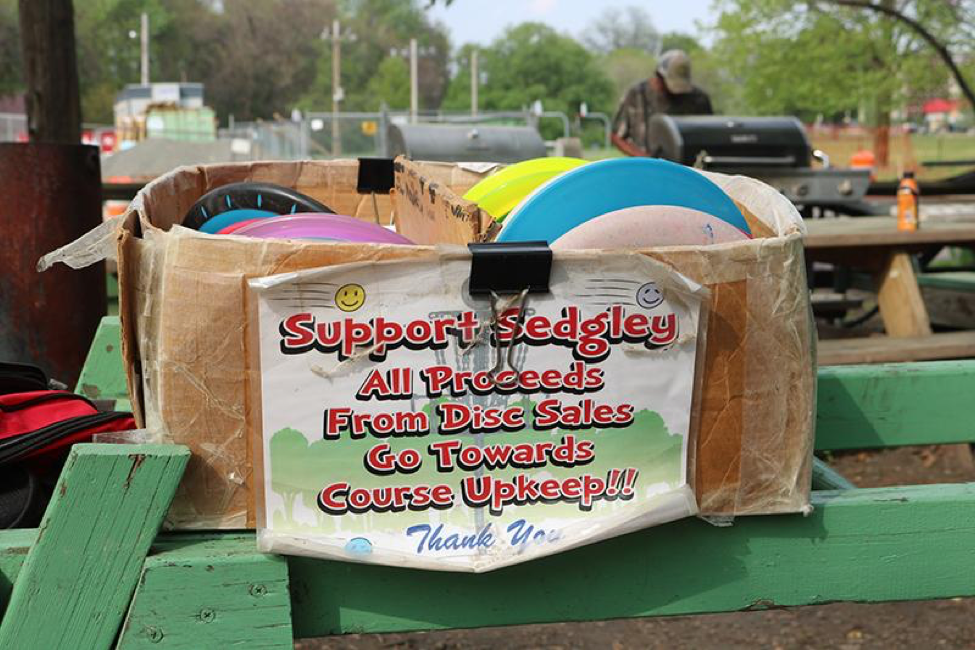
Shifting everything to a social media and online-heavy format can just as easily exclude other demographics by age, digital literacy, and socioeconomic status. For example, Sedgley Park Friends Group President DiSciascio credited Facebook with helping him to communicate with members, answer questions, and promote activities and events. But at the same time, the main way that people find out about the friends group is by going to the park. On most days, FG members go there to play disc golf and hang out around the picnic table they built themselves at the course entrance, which means they get to know almost everyone who comes through the park.
Other approaches to meet the needs of a twenty-first century city should emphasize leadership and collaborative training, leveraging FGs and ACs as much as possible. Another helpful area for investment, already underway, is developing flexible schedules for programming to better accommodate people working nontraditional hours who still want to participate. And cities or nonprofit partners should continue creating independent criteria to analyze whether these groups are reflecting their neighborhoods’ current demographics and programming needs.
Citations
- John Bacon, “Push for soda taxes across USA notches win in Philly,” USA Today, July 18, 2018, source Newall, “Now that Philly won the soda-tax fight, it’s way past time to do right by our libraries and rec centers,” Philadelphia Inquirer, July 20, 2018, source. Laura McCrystal, “Pa. Supreme Court upholds Philadelphia soda tax,” Philadelphia Inquirer, July 18, 2018, source.
- Heidi Grant, “Get Your Team to Do What It Says It’s Going to Do,” Harvard Business Review (May 2014), source.
- Ibid.
- Rachel Kleinfeld, “In Development Work, Plan for Sailboats, Not Trains,” Stanford Social Innovation Review, Dec. 2, 2015, source.
- Sarah Anne Hughes, “A bill to kill the soda tax could divide Philly’s state lawmakers,” Billypen, June 28, 2018, source.
- Malcolm Burnley, “City: 'Too soon' to say if soda tax shortfall will hit parks & rec makeover,” PlanPhilly, March 8, 2018, source.
- “Careers Leadership Fellows,” Harvard Business School, source.
- Tina Nabatchi and Matt Leighninger, Public Participation for 21st Century (San Francisco: Jossey-Bass, 2015)14- 17.
- David Karpf, Analytic Activism: Digital Listening and the New Political Strategy (New York, NY: Oxford University Press, 2016).Evgenzy Morozov, The Net Delusion: The Dark Side of Internet Freedom (New York: PublicAffairs, 2012).
- “Data Academy,” DataSF, source Davis, “Data. Data. Data. Introducing Kansas City’s Data Academy,” KCMO Data, source.
- Sasha Tregebov and Elspeth Kirkman, “Eight Things Cities Can Do Today to Generate Evidence and Outcomes,” Medium, October 16, 2017, source.
- See also: William D. Eggers and Steve Hurst, “Delivering the digital state,” Deloitte Insights, February 07, 2018, source
- “Office of Community Wealth Building,” Richmond Gov, source.
- Hollie Russon-Gilman and K. Sabeel Rahman, Building Civic Capacity in an Era of Democratic Crisis (Washington, D.C.: New America, 2017). Hollie Russon Gilman and Elena Souris, “All Politics Is Local,” Washington Monthly, January 5, 2018, source.
- Rebecca Rumbul, “Who benefits from civic technology? Demographic and public attitudes research into the users of civic technologies,”mySociety (October 2015) 23.