Weed Whacking the Economy
Trump's FCC Chairman targets policies that create jobs and prosperity
Telecom lobbyists rejoiced last month when President Trump
selected Ajit Pai to lead the Federal Communications Commission. Pai, a former
Verizon lawyer and first-term FCC commissioner, has vowed to take a “weed whacker” to the agency’s
regulatory regime. But the FCC’s rules aren’t just a bunch of red tape—they
protect consumers, foster innovation, create jobs, and serve as a vital check
on the gatekeeper power of big telecommunications companies. If Pai razes the
rules he’s criticized in the past, the harm to the American economy will be
substantial.
Chairman Pai has made clear that he plans to reverse course
from his predecessor on many issues. A closer examination of three issues
before the FCC reveals just how damaging his weed-whacker approach could be.
NET NEUTRALITY.
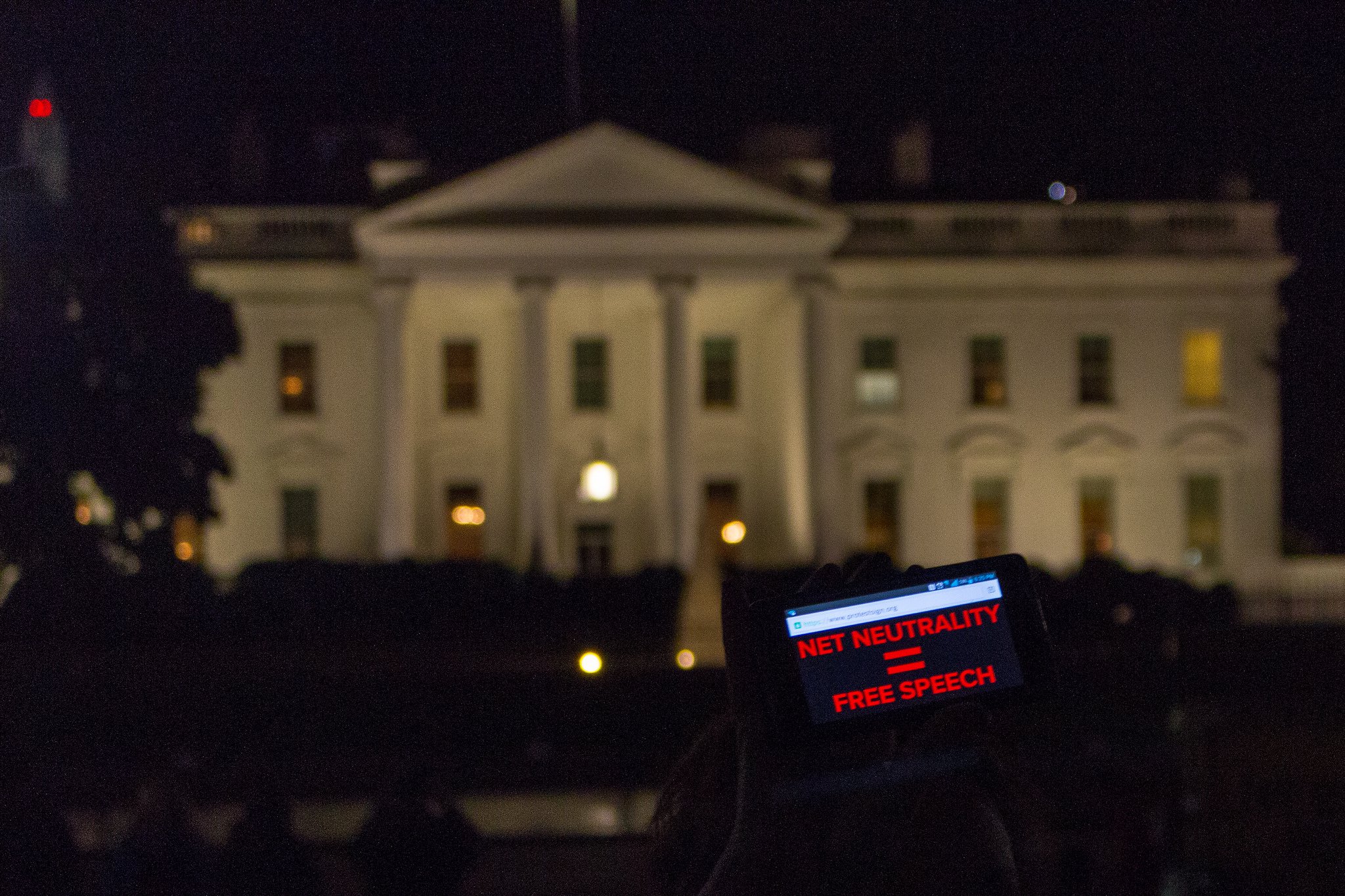
Chairman Pai’s top priority is dismantling the FCC’s 2015 net neutrality rules, which mandate
nondiscriminatory access to online content and businesses. He is also committed
to eliminating the FCC’s legal authority to protect net neutrality (a statute
known as Title II). Axing these laws would give broadband monopolies like
AT&T and Comcast unprecedented control of America’s internet economy. These
companies would be free to create “fast lanes” for online traffic that are only
available to the highest bidder, thereby shutting out competitors and increasing
consumer prices. These pay-to-play deals would also add enormous upfront costs
for startups, undermining the innovation that has made the internet one of
America’s greatest engines of economic growth and job creation.
Despite claiming to support net neutrality, Pai sought to
undermine the FCC’s rules at every turn. After voting against the rules in
2015, he repeatedly asked Congress to cut off the FCC’s funding so the agency
can’t enforce them. As chairman, Pai could move to repeal the rules entirely,
or ask Congress to do it legislatively. Either approach would be harmful and
deeply misguided. The FCC’s rules preserve free market ideals of competition
and openness. Removing them would create a climate of uncertainty in Silicon
Valley and chill investment on Wall Street. The FCC should not inflict this
kind of economic harm on the country.
SET-TOP BOX REFORM.
As commissioner, Pai thwarted efforts to fix the market for set-top boxes—the
clunky, expensive devices that most Americans rent from their TV provider. The
FCC has been working for two years on a proposal, dubbed “Unlock the Box,” that would create a market
for third-party devices and end cable’s stranglehold on their widely-loathed
boxes. The cable industry, which collects an estimated $20 billion per year in
device fees, lobbied hard against the effort. Aided by Pai’s opposition,
lobbyists successfully stalled a vote on the proposal last fall. Last week, in
one of his first acts as chairman, Pai shelved “Unlock the Box” indefinitely.
Killing “Unlock the Box” also kills the prospect of consumer
choice and new jobs. In 1968, the FCC ordered AT&T to allow its customers
to use third-party telephone equipment rather than rely on AT&T’s
proprietary devices. This unleashed a wave of innovation that led to answering
machines, wireless phones, and thousands of jobs. Indeed, today’s smartphone
industry and app ecosystem might not exist if not for the 1968 order. A similar
dynamic today could lead to better, cheaper set-top boxes—or more innovative
devices that don’t yet exist. This is why retailers like Best Buy supported
“Unlock the Box,” and it’s another reason Pai’s agenda is so damaging for
American workers.
MERGER REVIEWS.
After decades of consolidation, the telecom sector is dominated by a handful of
big companies. The lack of competition is especially acute among broadband
providers; most Americans have few, if any, options, and the market is almost entirely
controlled by just four companies: Comcast, Charter, AT&T, and Verizon.
Consumers are rightly fed up, but Pai doesn’t seem to think this is the FCC’s
problem. As commissioner, he’s routinely rubber-stamped mergers and criticized
the FCC’s role in reviewing deals. He even attacked the FCC for approving two big
mergers—AT&T/DirecTV in 2015 and Charter/Time Warner Cable last
year—because he disliked the Commission’s modest conditions to protect
consumers.
The selection of Pai to lead the FCC suggests that President
Trump’s tough talk on mergers during the campaign was little more than empty
rhetoric. Industry analysts regard Pai as a presumptive green light for mergers
and anticipate a new wave of consolidation,
including a possible Sprint takeover of T-Mobile. While these deals might be
good for a handful of corporate executives, they’d be terrible for the American
consumer. For example, T-Mobile has disrupted the wireless market in recent years,
freeing customers from anticompetitive contracts and forcing competitors to do
the same. If Pai allows a merger to effectively remove T-Mobile from the
marketplace, prices will likely go up and AT&T, Verizon, and Sprint could
regain cartel-like control of the wireless market.
The American people need an FCC that protects innovators and
job creators rather than telecom monopolies. They need a cop on the beat that
fights for consumers and small businesses. Chairman Pai could find prudent ways
to make the FCC work better for consumers and industry, but these actions would
likely require garden pruners, not a weed whacker. Wholesale repeal of vital
consumer protections is a blunt instrument that risks destroying the internet
as we know it. It’s a recipe for higher prices and lower economic growth—and a
giant missed opportunity to create jobs.
More About the Authors
Related

Steps Leaders Can Take to Center People

Families Know What They Need. We Just Need to Ask Them.

Meet the Commissioners