
Ben Dalton
Program Manager, Future Frontlines
Drawing on five years of intensive research, this report is part of a series investigating the Wagner Group, Russia's shadowy paramilitary cartel, to shed light on its deception operations and map its expansive reach.
In early September 2022, seven months into Russia’s protracted invasion of Ukraine, one of Russia’s most influential pro-war ultranationalist bloggers decided to pick a public fight with the Kremlin’s military brass. Better known by his nom de plume Vladlen Tatarsky, Maksim Fomin co-moderates Reverse Side of the Medal, or RSOTM, a collection of social media sites that serve as a mouthpiece and community hub for Russian contract soldiers of fortune operating under the banner of the Wagner Group. Already a presence in conflict zones across Africa, the Wagner Group has become one of Russia’s most prominent and effective fighting forces. The private mercenary army, recently designated as a transnational criminal organization by the U.S. government, seized territory back from Ukraine after months of retreats by the Russian military. In a post viewed 676,600 times, Fomin called for Russia’s Prosecutor-General to punish the military “commanders who allowed these kinds of things,” referring to Ukraine’s reconquest of territory near Kharkiv. Fomin’s public critique came three weeks after a well-placed Ukrainian artillery strike on August 14 and near the town of Popasna decimated the headquarters of a Wagner Group contingent operating in the eastern region of Donbas.
Since joining up with a pro-Russian separatist contingent in Donbas in 2014, Fomin has amassed a sizable online following. Along with his anonymous co-moderator, he transformed RSOTM into a social media juggernaut and must-read for anyone trying to understand how the deliberately opaque Wagner Group operates. RSOTM started as a series of short video clips on VKontakte, the popular social media platform often described as the Russian Facebook. Set to Russian pop, the enigmatic videos depicted Russian soldiers of fortune roaming from one battlefield to the next across Syria. As user engagement picked up on VKontakte, the project expanded to a full-scale YouTube vlog under the RSOTM heading. A Telegram channel came in 2019.
Militant bloggers and vloggers like Fomin, with their scorched earth rhetoric, have become a force in Russian politics. On September 21, when Russia’s President Vladimir Putin announced a partial mobilization that would call up military reservists, he was following calls for action that bloggers like Fomin had been trumpeting for months. When Russia illegally annexed Ukrainian territory on September 30, Fomin was invited to a celebratory government reception in Moscow. From the Kremlin’s glamorous St. George’s Hall, he declared on video, “We will defeat everyone, we will kill everyone, we will rob everyone we need. Everything will be as we like.”
Fomin’s brand of violent militarism appears to have the Kremlin’s ear and support, while his close ties to Russia’s mercenary community make his content an invaluable source of insights into how the Wagner Group and related units operate. The fact that Fomin and others selected VKontakte as the first port of call for building the Wagner Group band exploits a synergy of interests between Prigozhin, Putin, and Putin’s longtime friends and political backers, brothers Yuri and Mikhail Kovalchuk. Yuri Kovalchuk is CEO of SOGAZ, which owns a controlling stake in VKontakte. In short, Fomin is one of several online influencers who have profited from and exploited the blend of interests among higher level investors in the state run business empire that has built the Wagner Group brand.
An in-depth review of mercenary-linked Telegram channels shows that figures like Fomin are key nodes in an expansive online network that uses cryptocurrencies and bank transfers to raise thousands of dollars and ship vital military equipment to frontlines in Ukraine. Designed to sidestep financial sanctions, this network draws on bloggers, bankers, and bundlers—individuals who purchase equipment using funds from multiple, often small donors—to help Russian fighters adapt and rebound in the face of Western pressure and the Russian military’s own logistical deficiencies. This network’s public face, a selection of Wagner-connected bloggers on Telegram, gives us a window of sorts into the relationships that sustain the Wagner Group but are often concealed by misdirection, propaganda, and bluster.
The world of Russian military blogging can be as shadowy and deceptive as the mercenary fighters they track and valorize. Fomin makes little effort to conceal his identity, but other bloggers—particularly those engaged in active fighting in Ukraine—post pseudonymously. Some vloggers wear bandanas to conceal their faces or distort their voices to a deep pitch. Anonymity has allowed scammers and impersonators to flourish, as Wagner founder Yevgeny Prigozhin’s company Concord Management has acknowledged. On October 8, Concord posted a message from Wagner commander Andrei Troshev warning that several Telegram channels purporting to speak for the Wagner Group have no actual connection to the organization. Given the large sums of money that pro-Russian fighters have been able to fundraise online, there are real incentives for impersonating Wagner and Wagner-linked channels.
“The world of Russian military blogging can be as shadowy and deceptive as the mercenary fighters they track and valorize.”
Bloggers like Fomin push back against interlopers by joining ranks with other established accounts and bloggers. They appear in each other’s content, explicitly endorsing one another, and routinely forward posts from each other’s Telegram channels. Using open source techniques, our team at New America and Arizona State University can analyze these networks to determine who is legitimate and who isn’t. By monitoring, archiving, and analyzing dozens of pro-Russian Telegram channels covering the war, we can identify those channels that document and purport to speak for soldier-of-fortune contingents fighting in Ukraine. Among these, four Wagner-associated channels have some of the clearest ties to existing units: RSOTM, the Grey Zone, Topaz Speaks, and Task Force Rusich. Examining these channels more closely can give us insights into their activities, which include recruitment, crowdfunding, and disseminating propaganda. At the same time, they reveal the subculture, goals, and mentality of the jingoist actors who have a loud and growing voice in the Russian public square.
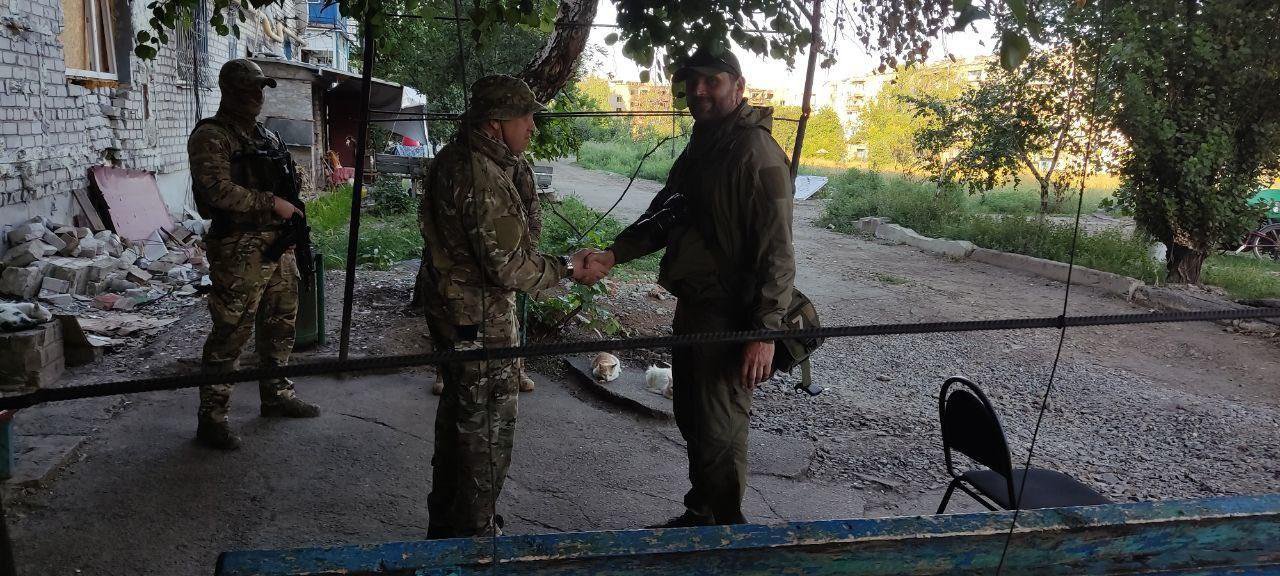
RSOTM runs accounts on Telegram, VKontakte, and YouTube. YouTube banned RSOTM in October 2022 for posting hate speech, but as of February 2023 RSOTM had created a replacement channel. Together, RSOTM social channels are a valuable source of original photos and videos depicting Russian military contractors in Syria, Libya, Ukraine, and other theaters in which Wagner fighters operate.
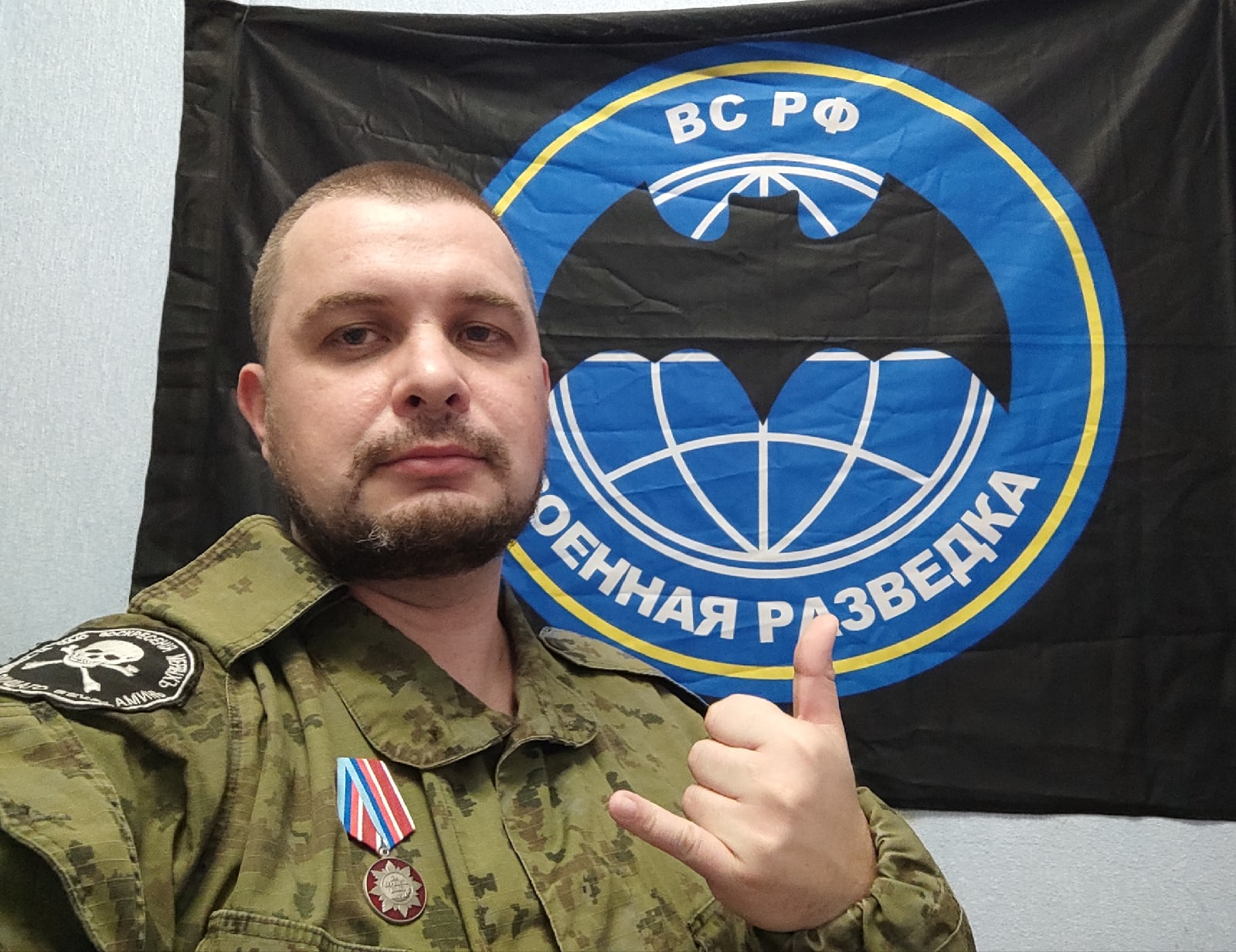
Fomin is one of two administrators who runs RSOTM accounts, as Russian media have described, and Fomin himself features heavily in RSOTM’s content. According to an interview with the Russian news outlet Lenta, Fomin was born in Ukraine and has a criminal background. He reportedly robbed a bank in 2011, for which he was sentenced to eight years in prison. According to Fomin’s own account, when hostilities broke out in 2014, the leadership of the separatist Horlivka militia freed him from his penal colony, and he promptly signed on as a fighter. He subsequently joined a series of units associated with the separatist Luhansk People’s Republic (LPR), including the Vityaz Regiment, the Vostok Brigade, and battalion reconnaissance in the LPR’s People’s Militia.
According to U.S. and Ukrainian media, both the Vityaz and Vostok units contained Russian contract fighters during 2014 and 2015, when Fomin served in them. Several well-known commanders now fighting under the Wagner Group banner also claim to have served in Vityaz and Vostok after serving in related units like the Batman Battalion, Sparta Battalion, and Somalia Battalion.
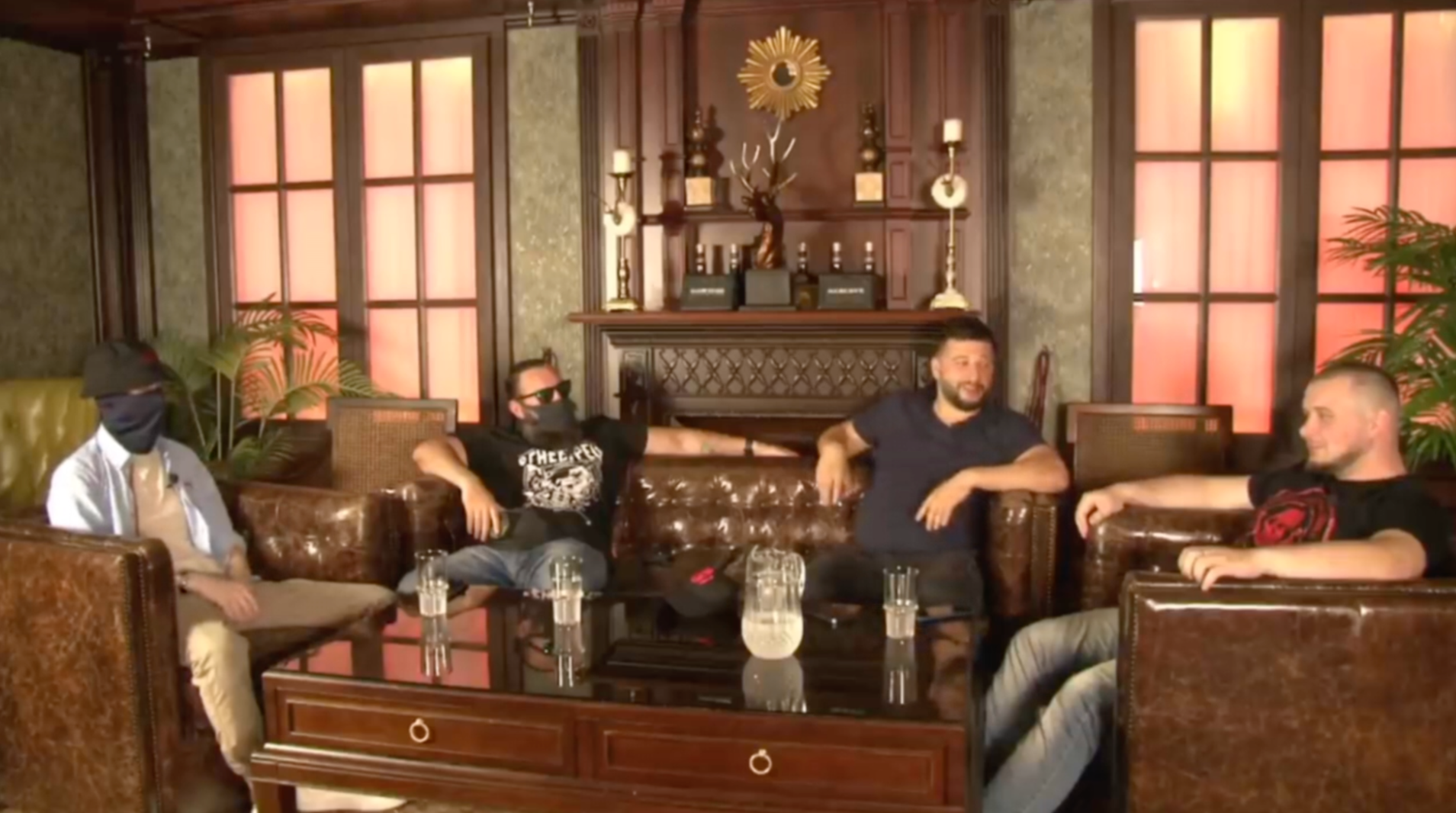
Fomin’s RSOTM co-moderator is anonymous, posting under the name “admin” and appearing in photos and videos wearing a bandana or face mask and sunglasses to obscure his features. Despite his anonymity, he has appeared in numerous videos discussing his background. In one conversation with Fomin, he said that he joined an unnamed special forces unit in 1998 and fought in the Second Chechen War. In 2002, he joined SOBR, a special forces rapid response unit of Russia’s National Guard, and served until 2012, when a personal conflict with leadership led to his firing. However, “admin” counts this as a lucky turn because “then I became, shall we say, a freelance artist.” When hostilities broke out in Ukraine, he “without hesitation, took part in them.”
In another interview, he is more explicit about joining the Wagner Group: “I was immediately in the Wagner PMC, and immediately I got to fight on the territory of Donbas as a…PMC operator.” After Ukraine, he worked in Syria, a common trajectory for Donbas contract fighters.
RSOTM’s close ties to the Wagner Group have made its social channels a semi-official mouthpiece for the network of veterans, contract soldiers, and private security personnel who form Wagner’s ranks. When the Wagner Group began recruiting as part of Russia’s 2022 invasion of Ukraine, RSOTM’s Telegram channel was among the first to get the word out, sparking a flurry of comments and reposts in which users discussed salary details and how to sign up. RSOTM also publishes original photos and videos from the field, as they did in August 2022 with photos depicting the aftermath of a Ukrainian high mobility artillery rocket system (HIMARS) strike on a Wagner base in Popasna.
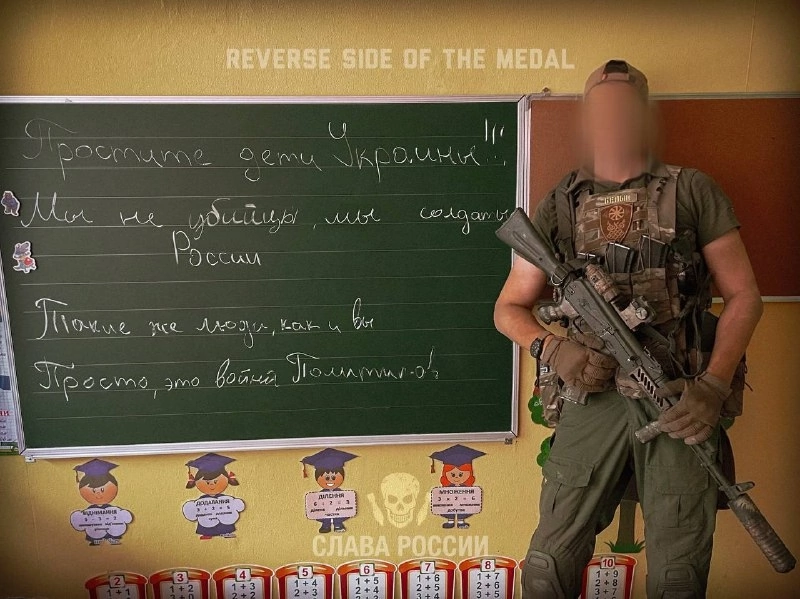
The Telegram channel that today calls itself Reverse Side of the Medal is not the original. That honor belongs to the Grey Zone channel, created in October 2019. Much like its sister channel RSOTM, Grey Zone is a source of original content and news relating to Russia’s soldier-of-fortune community, particularly the Wagner Group.
The channel is run by an anonymous administrator who uses the nickname “500th” and the battlefield call sign beliy, or white in Russian. Photos, videos, and text posts on the channel indicate that the author is currently fighting in Ukraine, and thus is intermittently unable to post updates.
500th and “admin” worked together in the Grey Zone’s early days. “Admin” claims he chose 500th to run the Grey Zone channel as an administrator, and the two men appeared together as coworkers in a 2020 video that also featured Maksim Fomin, but over time, 500th took the channel in an independent direction. The two men separated amicably in July 2022, citing disagreements about how to cover the war. Grey Zone became the exclusive property of 500th, while “admin” christened a side channel: the new RSOTM.
When Ukraine struck a Wagner base in the town of Popasna on August 14, 2022, open source researchers speculated that the attack had killed 500th, who had been posting photos from the area in the days prior. Aric Toler, head of research and training at Bellingcat, speculated that the photos—which contained an unredacted street address—might have tipped off Ukrainian intelligence as to the base’s location. However, a week after the attack, 500th posted photos of himself alive and in the field, albeit with his face obscured, and wrote, “Comrade Khokhols [an ethnic slur for Ukrainians], your HIMARs are, of course, the best, but not enough to kill me.”
Grey Zone was the original publisher, on November 13, 2022, of a brutal ISIS-style videotaped execution by sledgehammer, allegedly wielded by a Wagner enforcer, of a Russian man named Yevgeny Nuzhin. According to his own account, Nuzhin joined the Wagner Group in July 2022 in order to win early release from a 28-year prison sentence. On the frontlines, Nuzhin quickly surrendered to the Ukrainians and sat for interviews that attracted significant media attention. The circumstances under which Nuzhin was returned to Russian custody remain murky, but Russian media reported that Nuzhin was part of a prisoner exchange that took place on November 11, 2022.
The primary audience for Nuzhin’s grisly and highly public execution was likely his fellow Wagner recruits, part of a system of punitive measures designed to prevent defections to Ukrainian forces. The broader goal was to impress the Wagner Group’s Ukrainian adversaries and the West with the organization’s brutal and uncompromising warrior culture, which Wagner leadership self-consciously contrasts with Western liberalism, humanism, and rule of law. The video went viral on Telegram and garnered praise from Prigozhin himself, who seems to have adopted the sledgehammer as a symbol. The use of a sledgehammer in the killing is significant and evokes the 2017 murder of Syrian national Hamdi Bouta: Russian-speaking men, believed to be Wagner fighters, tortured Bouta with a sledgehammer before they killed him, and they recorded his torture and murder in a video, which also spread far and wide on Russian-language social media. After members of the European Parliament demanded that the Wagner Group be designated as a terrorist group, Prigozhin sent the European Parliament a sledgehammer engraved with the Wagner logo and smeared with fake blood. With characteristic showmanship, Prigozhin was thumbing his nose at the very notion that he or his men would ever be accountable to international justice. After that incident, stores in Russia began hawking “Wagner Sledgehammers” and other promotional gear.
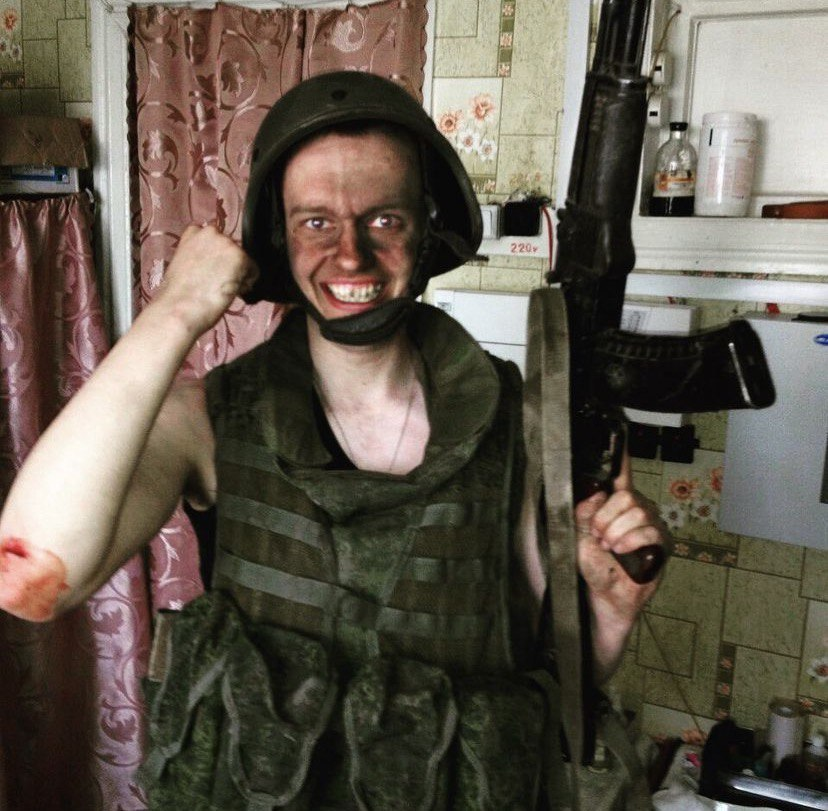
Topaz Speaks is the Telegram blog of Yevgeny Rasskazov, also known as Topaz.1 During 2014 to 2015, at age of 18 according to reporting by Meduza, Rasskazov volunteered with the ultranationalist Russian unit Task Force Rusich, which committed some of the most egregious human rights violations of the early Donbas war. (For details, read our January 2022 article that presented evidence that Rusich was once again on the move.) In a December 2016 video also featuring Rusich founder Alexey Milchakov, Rasskazov recounted how, in spring 2014, he disobeyed an order to report to Mariupol for military service and instead joined Rusich along with a friend. According to Milchakov, Rasskazov and his friend soon distinguished themselves. “They handled themselves well,” Milchakov said in 2016. “These were people who could be relied on.”
In the years since, Rasskazov has worked as a blogger and streamer on Czar.tv, a pro-monarchy, ultranationalist podcast and streaming service. During one of his regular appearances on the platform, Rasskazov stated that he derives sexual pleasure from killing Ukrainian soldiers and making their families cry. Rasskazov also hosts a panel show on YouTube.
Rasskazov is well connected within the Russian soldier-of-fortune community. He uses his Telegram channel to fundraise for units and individuals. He also solicits funds through the crowdfunding platforms Boosty and DonationAlerts. On Telegram, his posts are frequently reposted on Wagner-linked channels, including RSOTM and Grey Zone. In August 2021, Grey Zone administrator 500th posted a fundraising appeal for the family of a deceased Rusich fighter named Alexander Voskanyan, who had worked in Syria along with several other Rusich fighters, likely as part of the Wagner Group. The bank account and name listed for donations was Rasskazov’s own Sberbank account. This suggests that Rasskazov plays a “banker” role within Rusich and Wagner circles, using his platform to attract donations and then doling out funds as needed.
Rasskazov uses his Telegram channel to promote friends’ accounts and call out imposters. A post from October 7 listed 19 accounts that Rasskazov recommended, including both Grey Zone and RSOTM. Another from September 26 declared that two supposed Rusich accounts have “no relation to the unit.” Notably, Rasskazov’s October 7 list of approved channels included an account purporting to speak for Rusich itself, a Telegram channel posting under the handle @dshrg2.
On Telegram, the DShRG Rusich account (@dshrg2) describes itself as “the official mouthpiece of the unit, created on behalf of the commanding staff” (DShRG, a transliteration of ДШРГ, stands for Sabotage Assault Reconnaissance Group). The account posts original photos of the unit training or in action, many of them featuring Rusich founder and commander Alexey Milchakov. It also posts appeals for donations and claimed on October 13, 2022, to have raised $144,000 in cryptocurrency donations between February 24 and June 28, 2022. However, the channel was only created on September 23, 2022, during a tumultuous period that saw the group’s original home on Telegram, @rusichdshrg, banned for violating the platform’s terms of service.
On September 22, 2022, the original @rusichdshrg account posted detailed instructions on how to torture and interrogate Ukrainian prisoners of war. After extracting useful information, the post called on soldiers to execute the prisoners, record the coordinates of their bodies, and extort money from families to learn the location of their deceased relatives. Rasskazov amplified the post on his own Telegram channel, writing, “Oh, I accidentally reposted this, do not pay attention…”
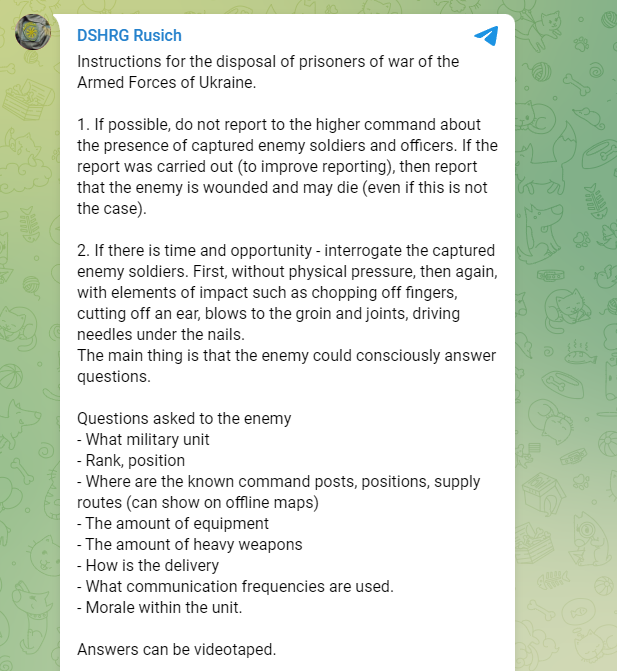
Telegram removed the post within a day, only for the @rusichdshrg channel to repost a screenshot of the same text the following day. In response, Telegram deleted the entire account on September 23, the same day that the new @dshrg2 account was created. Rasskazov lamented the loss of the account on his own channel, writing, “the piglets were offended by our unit just because we’re especially effective at fertilizing the black earth of southern Russia with their carcasses and threw complaints at us.”
Still, without a clearly identifiable administrator, and with so many fake accounts circulating on Telegram, how can we be certain that @dshrg2 and, before it, @rusichdshrg speak for the actual Rusich unit? First, well-established bloggers like Rasskazov with verifiable links to Rusich vouch for it, explicitly recommending the channel to their readers. Second, large accounts like RSOTM and Grey Zone repost and interact with the Rusich channel. Third, both iterations of the channel routinely post original content, such as this photo of Rusich fighters operating a machine gun. According to a reverse image search on both Google and Yandex, the image is original to the @dshrg2 channel.
Russia’s invasion of Ukraine has proven a boon to a rising generation of militant ultranationalist bloggers, who have seen their audience balloon since February 2022. While it can be tempting to dismiss the often lurid and hate-filled content on these blogs as cheap talk from Russia’s far-right fringe, the Kremlin has shown itself sensitive to their criticism and eager to cultivate their support. These channels also contribute materially to Russia’s war effort, acting as focal points for crowdfunding campaigns, often via sanctions-resistant cryptocurrencies, that supply units with combat and reconnaissance equipment.
Most importantly, for Prigozhin, the Wagner Group’s chief financier, ultra-right Russian social media verticals like RSTOM are key to maintaining support from the Russian oligarchs with close ties to Putin who rely on the former St. Petersburg convict to protect their business interests. As we detail further in this series, far from being fringe actors they represent a new and rising vanguard within Russia’s political and economic life, and they will not be easily contained no matter what the outcome of Russia’s war of aggression in Ukraine.
Putin’s government has a complicated relationship with the Russian far-right, at once seeking to harness ultranationalist passions to buttress regime legitimacy and strength, while periodically cracking down on movement leaders. Since launching a full-scale invasion of Ukraine, however, Putin has allowed far-right voices to flourish and even criticize government officials at a time when virtually no other dissent is permitted. As one of Russia’s most combative and uncompromising figures, Yevgeny Prigozhin recognizes that the war has created a unique opportunity to elevate his star, and he has accordingly launched aggressive campaigns to make himself the face of Russia’s battlefield success in Ukraine. Among their many roles, Wagner-linked bloggers act as tools in Prigozhin’s campaign and willingly back him because his victory is theirs, too. Commanding huge audiences, these bloggers have become a potent factor in Russia’s efforts to mobilize fighters for the war, as we will explore in the next publications in this series.
Program Manager, Future Frontlines