Table of Contents
- Executive Summary
- Preface
- Americans Broadly Agree on the Core Values of Higher Education, Despite Some Disagreements
- Americans Are Frustrated with the High Cost of College but Disagree on Who Should Pay
- Historical Trends: Even in Challenging Times, Americans’ Perceptions of Value and Investment Have Stayed Relatively Steady
- Explore the Data
- Appendix: Methodology
Americans Broadly Agree on the Core Values of Higher Education, Despite Some Disagreements
Higher education in the United States is a remarkably diverse system, with more than 6,000 institutions providing a wide range of academic offerings to serve the needs of varying populations of students. Each of these institutions prides itself on its own culture, mission, and educational focus. A public four-year university in a major city that enrolls tens of thousands of students will have a very distinct culture from a private liberal arts college in a rural area with just 2,000 students. Likewise, a community college that serves mostly part-time and adult students will function differently and provide academic offerings that are not often found at a four-year college that serves mostly students who just graduated from high school. But, regardless of the look and feel of each campus, when it comes to what colleges and universities should do and the outcomes students should expect, Americans share a common vision.
According to our survey, nine in 10 Americans believe that colleges and universities should equip students with the skills and knowledge needed to succeed in their field of study (96 percent). Yet Americans also believe institutions need to go beyond just a narrow career focus and help students become critical thinkers (93 percent) and informed citizens (91 percent). Most Americans believe colleges need to create an environment to help students of all backgrounds feel supported (91 percent), provide a platform to help students explore diverse ideas (84 percent), and help foster cross-cultural understanding (81 percent) (see Figure 1).
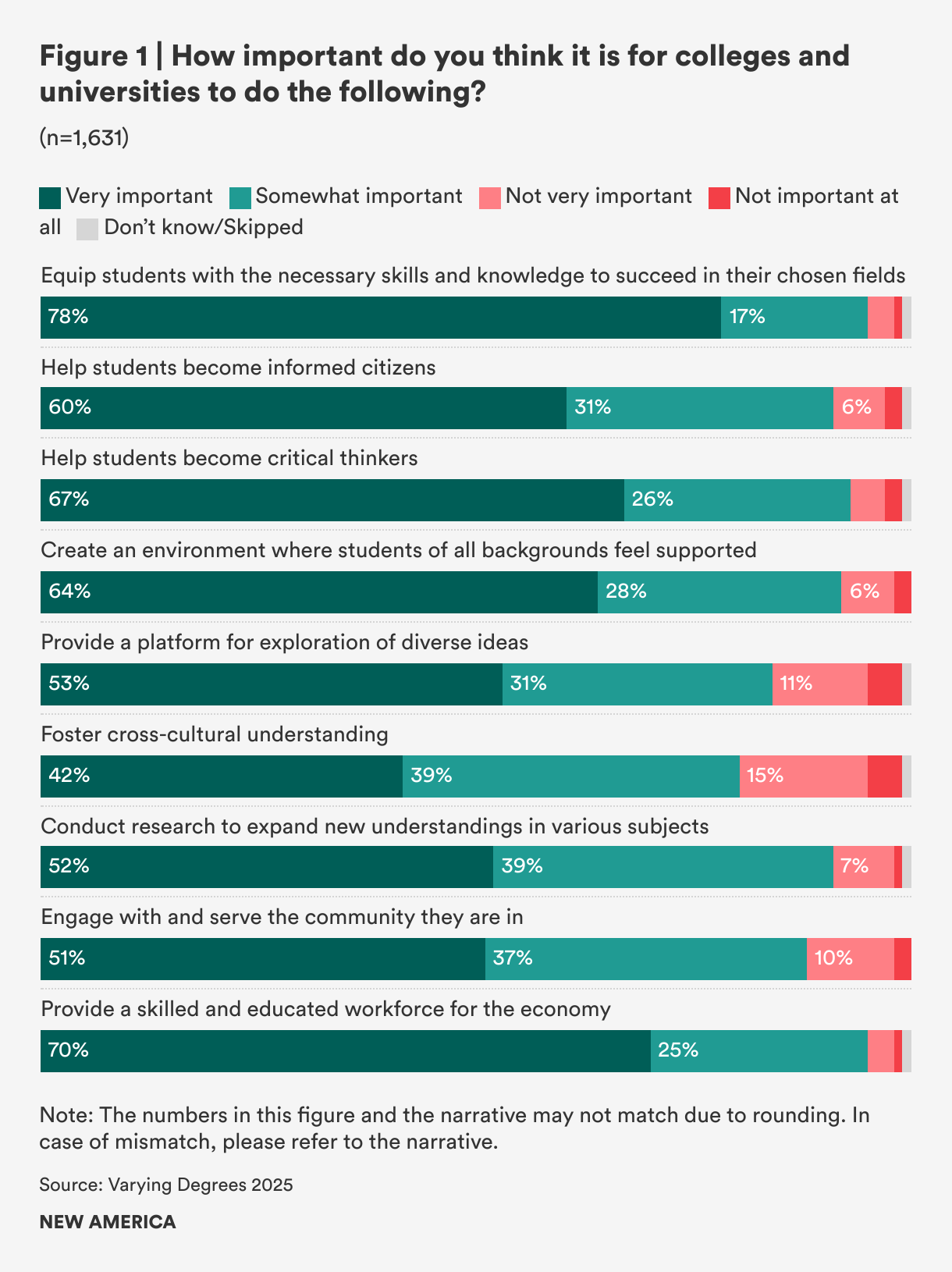
Supporting students is not the only purpose of colleges and universities: Americans believe that institutions of higher education should also provide a skilled and educated workforce for the economy (95 percent), conduct research to advance knowledge (92 percent), and engage with and contribute to the community they are located in (88 percent).
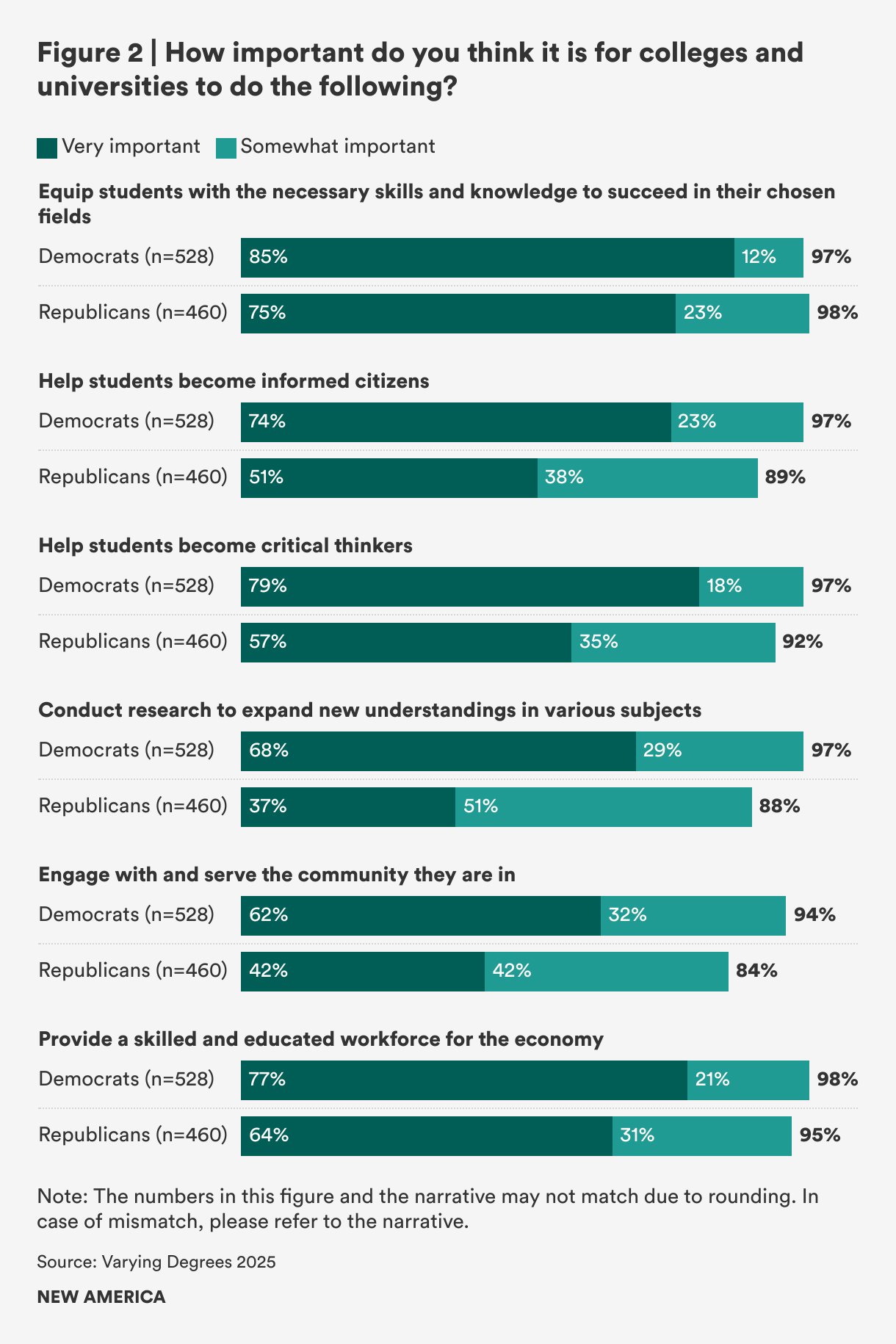
In Congress, Democrat and Republican lawmakers often fight over what they think colleges should do, but Americans, regardless of political identification, are more aligned in their thinking. Both agree that colleges need to prepare students for the workforce and help them become informed citizens and critical thinkers (see Figure 2). They also believe that colleges have a commitment not just to students but also to the country and the community that they are in, although Democrats are more likely to say these areas are “very important.”
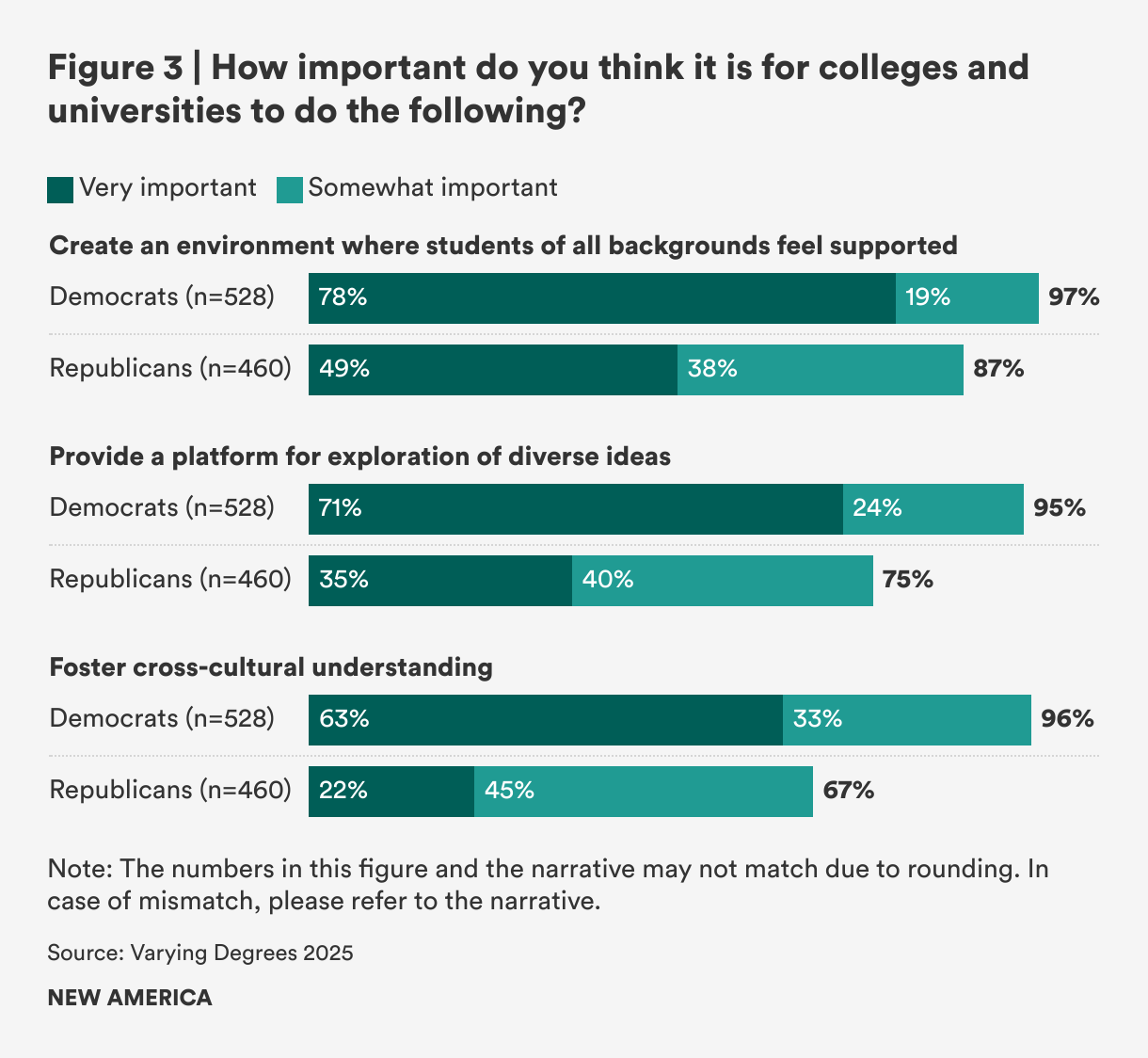
Republican lawmakers and President Trump’s allies often attack diversity, equity, and inclusion (DEI) programs on campus, accusing them of discriminating against white students, but 87 percent of Republican Americans (and 97 percent of Democrats) believe that colleges should create an environment where students of all backgrounds feel supported, which is the goal of these inclusion efforts. A majority of Republicans also believe that it’s important that colleges promote the exploration of diverse ideas and foster cross-cultural understanding, albeit at lower rates than Democrats (see Figure 3).
Americans Believe Educational Quality Requires More than Just Skills Training
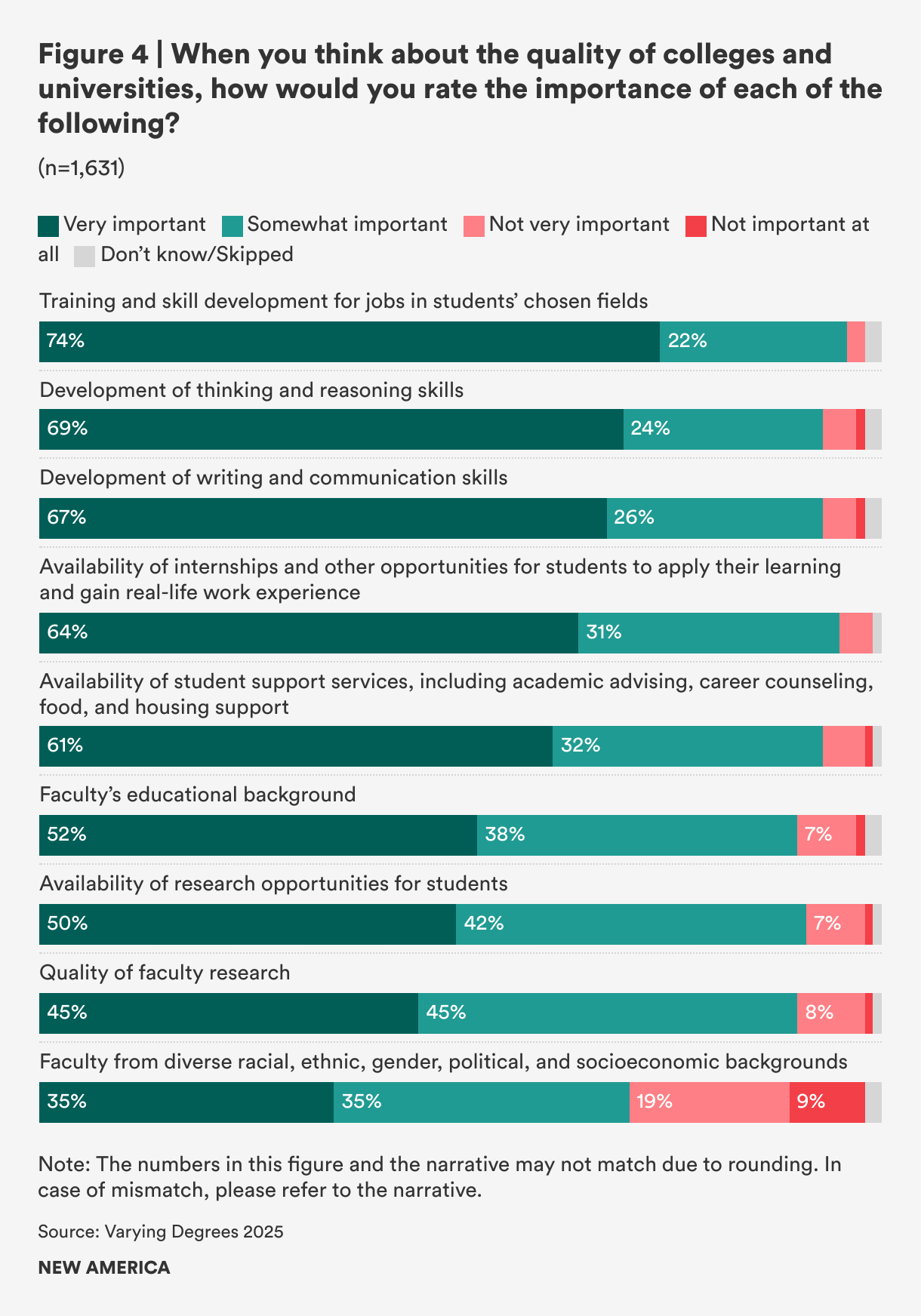
When it comes to the quality of higher education, nearly all Americans believe skills training is an important indicator of quality (96 percent), but it’s not the only one. Ninety-four percent believe that the development of competencies such as writing, reasoning, and communication is important (see Figure 4). Access to research and internship opportunities, as well as robust student support services, contribute significantly to the perception of institutional quality. Americans also consider the qualifications of faculty, including their educational background and the quality of their research, as important. A majority of Americans believe faculty diversity matters too: 70 percent think that having professors from diverse backgrounds, whether in race and ethnicity, gender, political views, or socioeconomic status, is an important indicator of higher education quality.
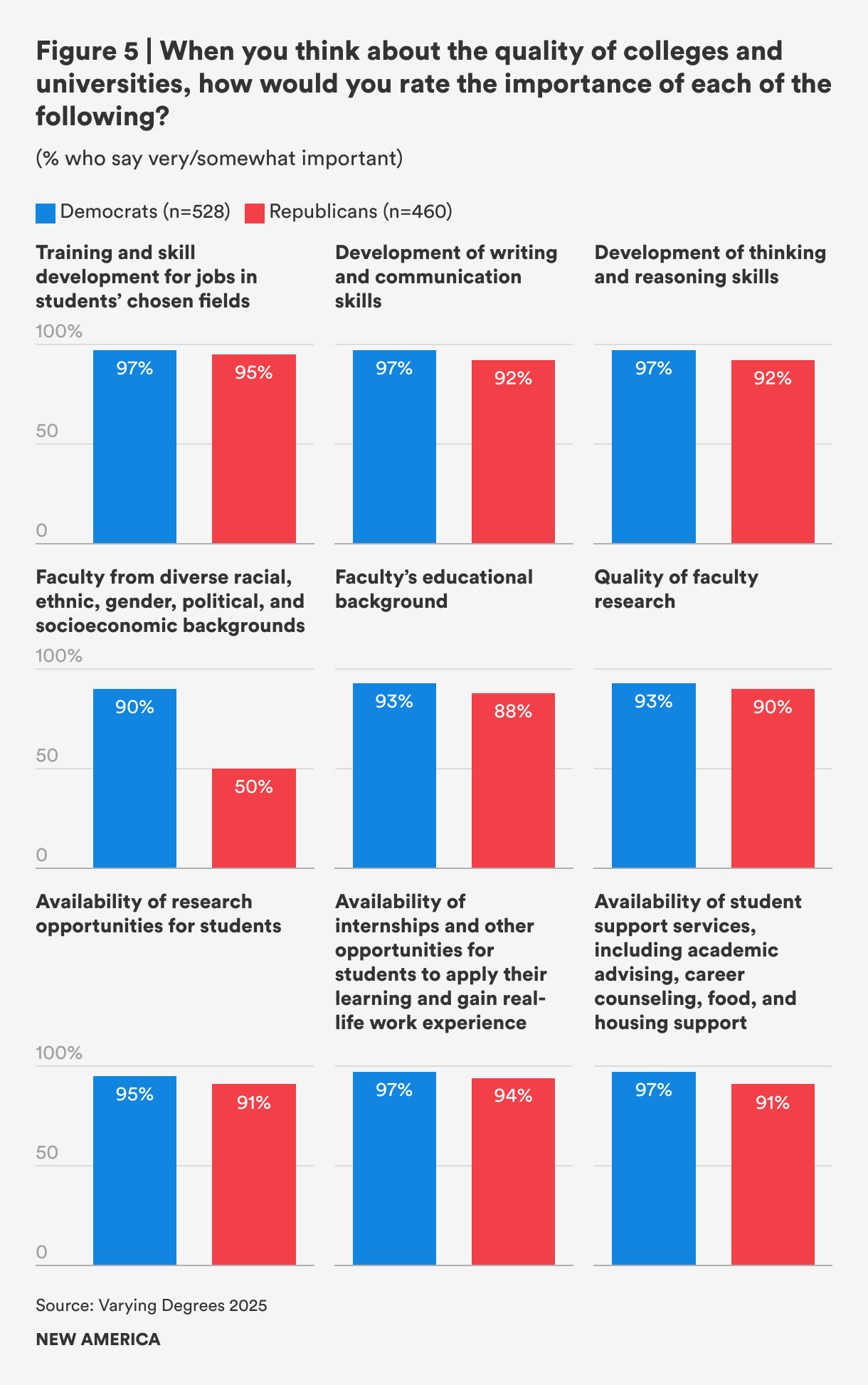
Democrats and Republicans are mostly aligned in the perception of what makes a quality higher education, except for when it comes to faculty diversity. Nine in 10 Democrats believe faculty diversity factors into the quality of higher education, compared to only half of Republicans (see Figure 5).
Public Confidence in Colleges and Universities Has Declined, but Americans Still Believe That the Benefits Outweigh the Costs
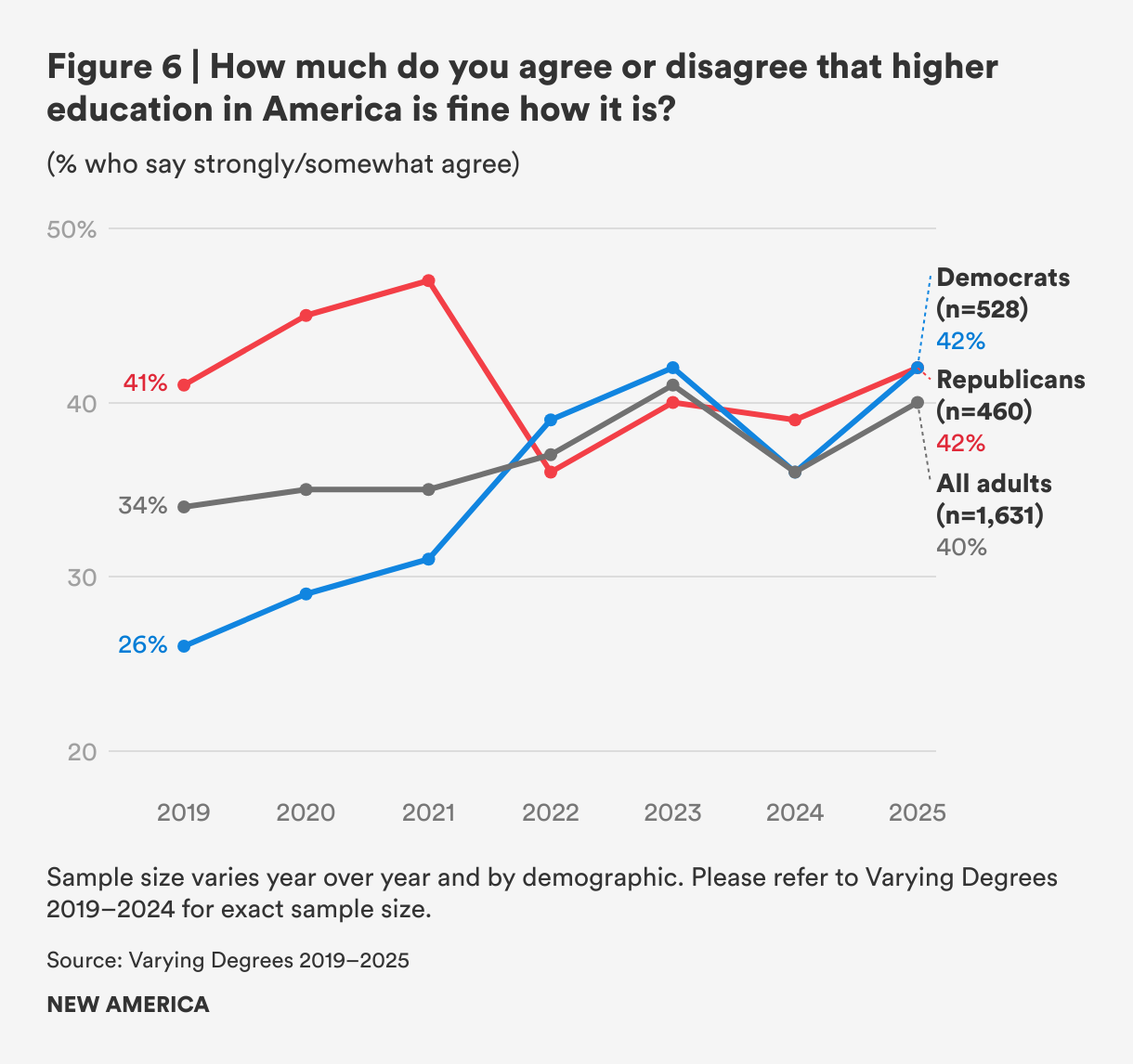
Only 40 percent of Americans in 2025 think that higher education is fine as it is, and only around half think colleges and universities are having a positive effect on the country. Despite some fluctuation, responses to these questions have largely stayed the same in recent years (see Figure 6).
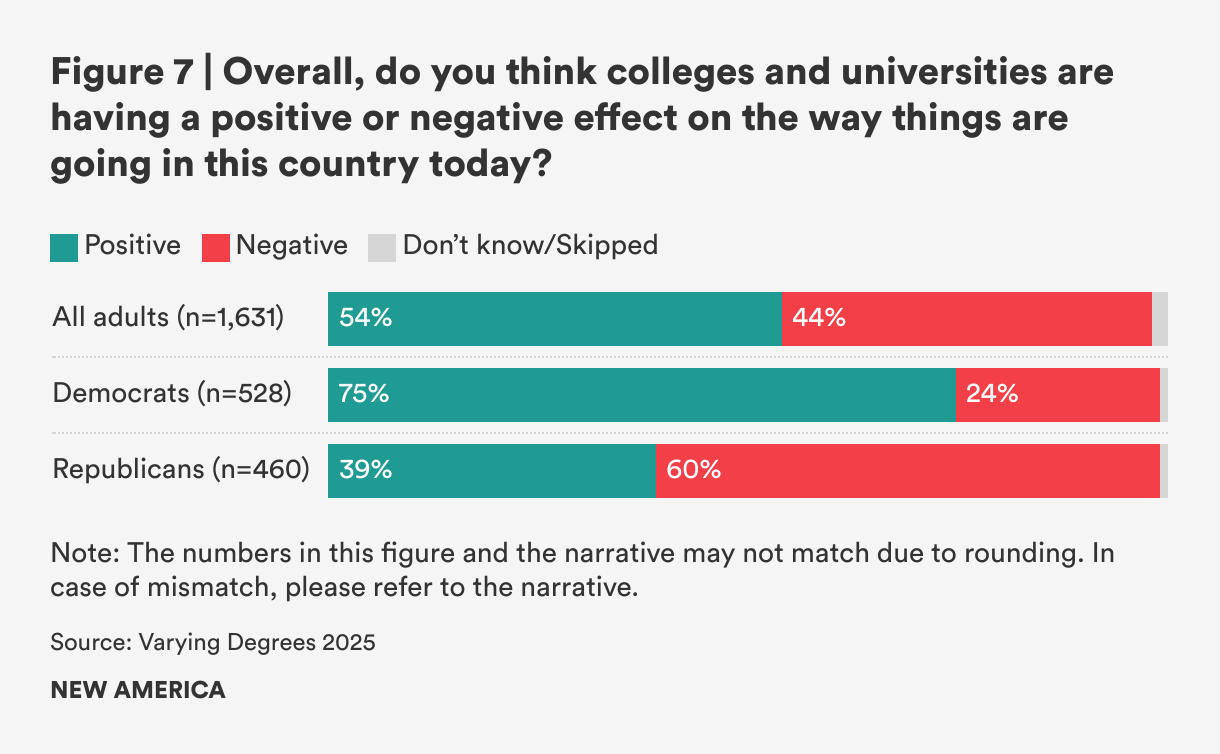
While Democrats agree with Republicans about the current state of higher education, and while they agree about what is needed for a quality higher education, when it comes to how colleges and universities are making an impact on the country, Democrats and Republicans are divided. A majority of Democrats (74 percent) believe that institutions are creating a positive impact on the nation, compared with a minority of Republicans (39 percent) (see Figure 7).
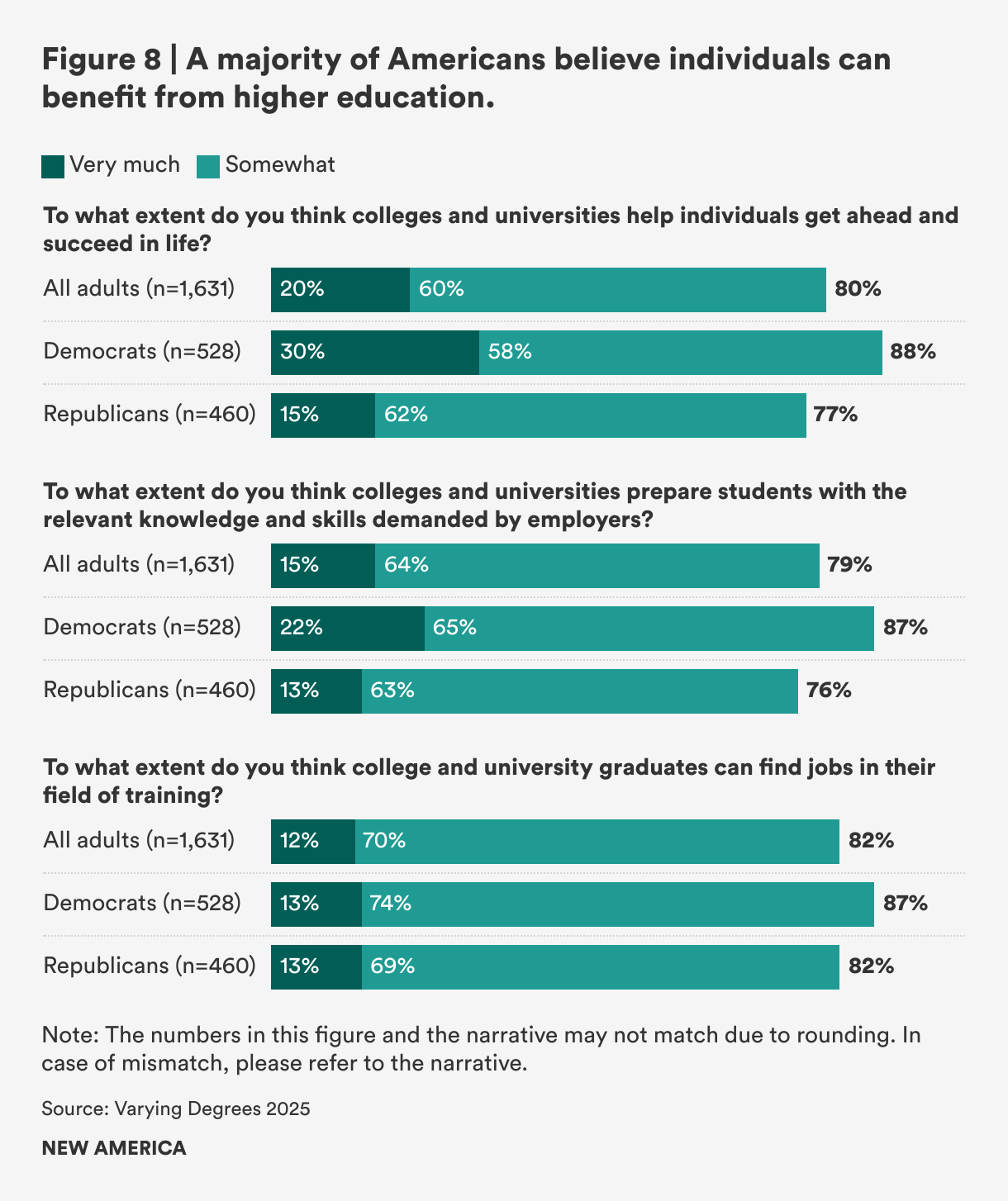
The partisan split on higher education impact is notable and surprising, considering Democrats and Republicans align on their confidence in what higher education can do, both for individuals and society. Eight in ten Americans, including large shares of both Democrats and Republicans, believe that colleges and universities help students succeed and get ahead in life. Nearly eight in 10 Americans think colleges and universities prepare students with relevant knowledge and skills required by employers, and 82 percent believe college graduates can find jobs in their field of training (see Figure 8).
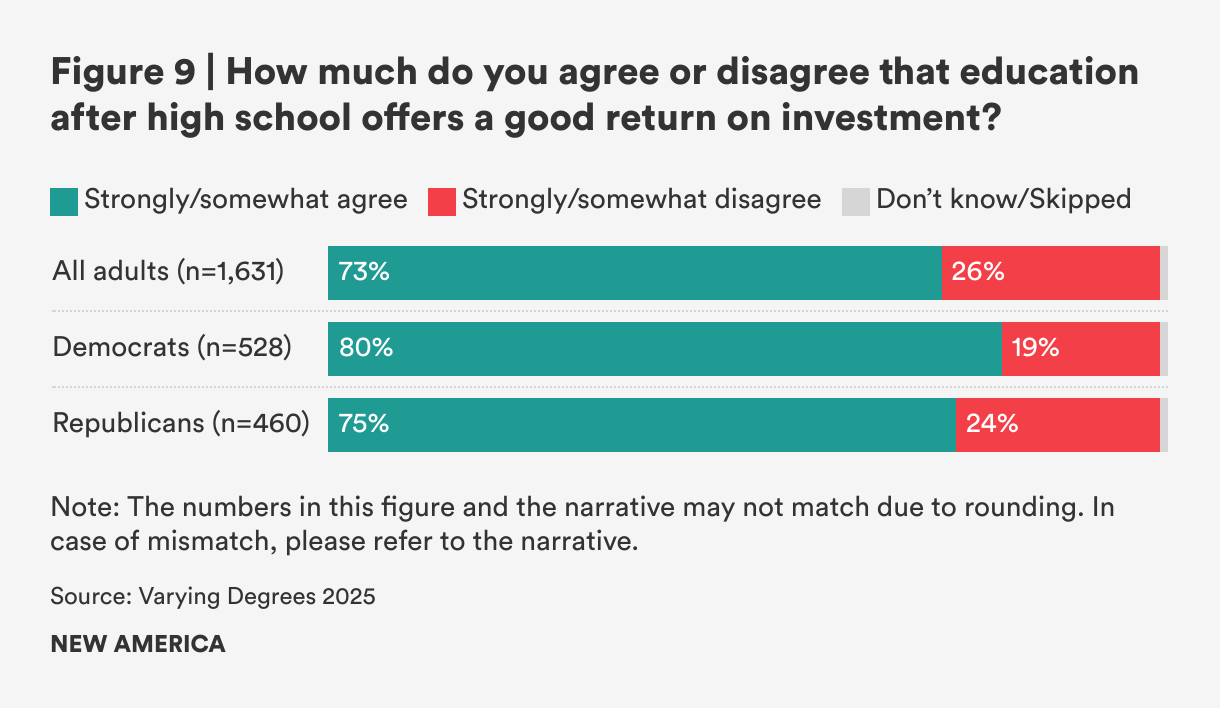
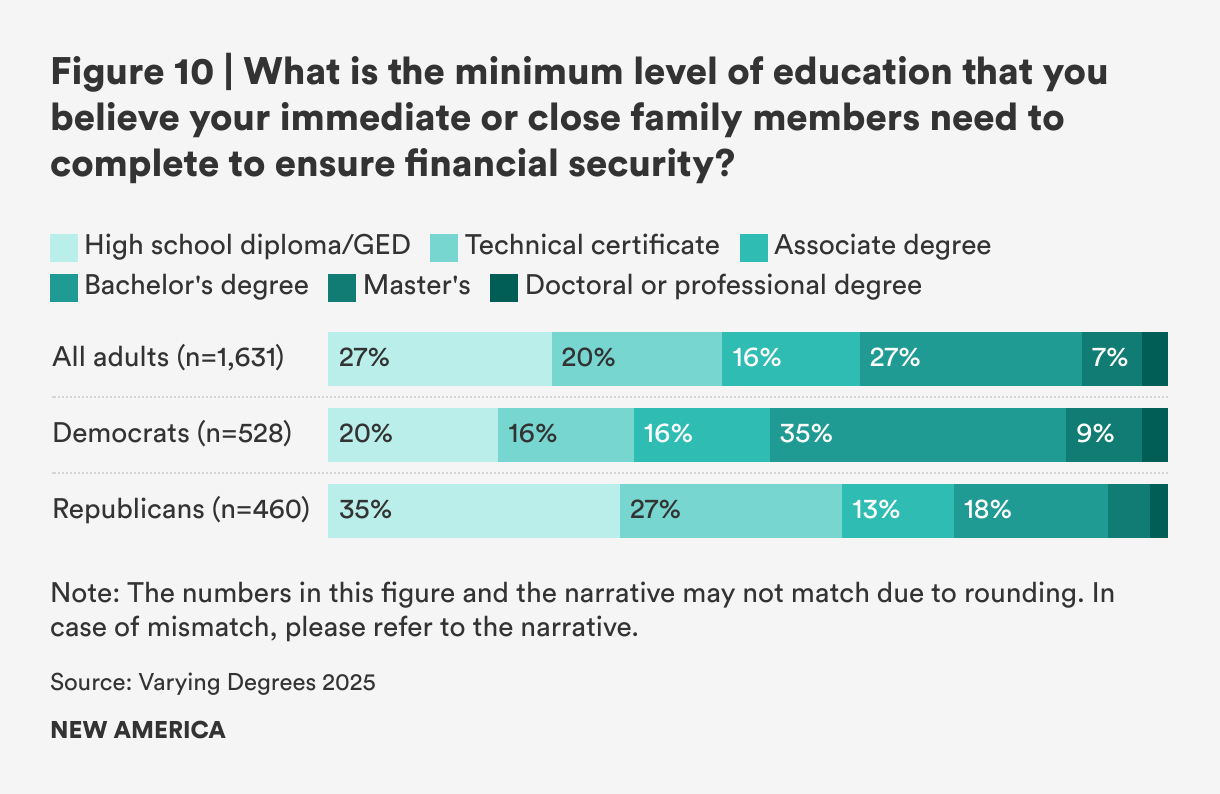
Three in four Americans, across the political spectrum, still believe that education after high school offers a good return on investment for students (see Figure 9), and 72 percent would recommend their children or close family members to have at least some education after high school for a financially secure life (see Figure 10).
A Slight Majority of Americans Find Colleges and Universities to Be Left-Leaning—a Major Pain Point for Conservatives
Given the agreement on value, perhaps what can help explain the significant partisan divide on the positive impact, or lack thereof, of colleges and universities has more to do with the perception of campus climate and free speech issues that have been heavily reported in the news.
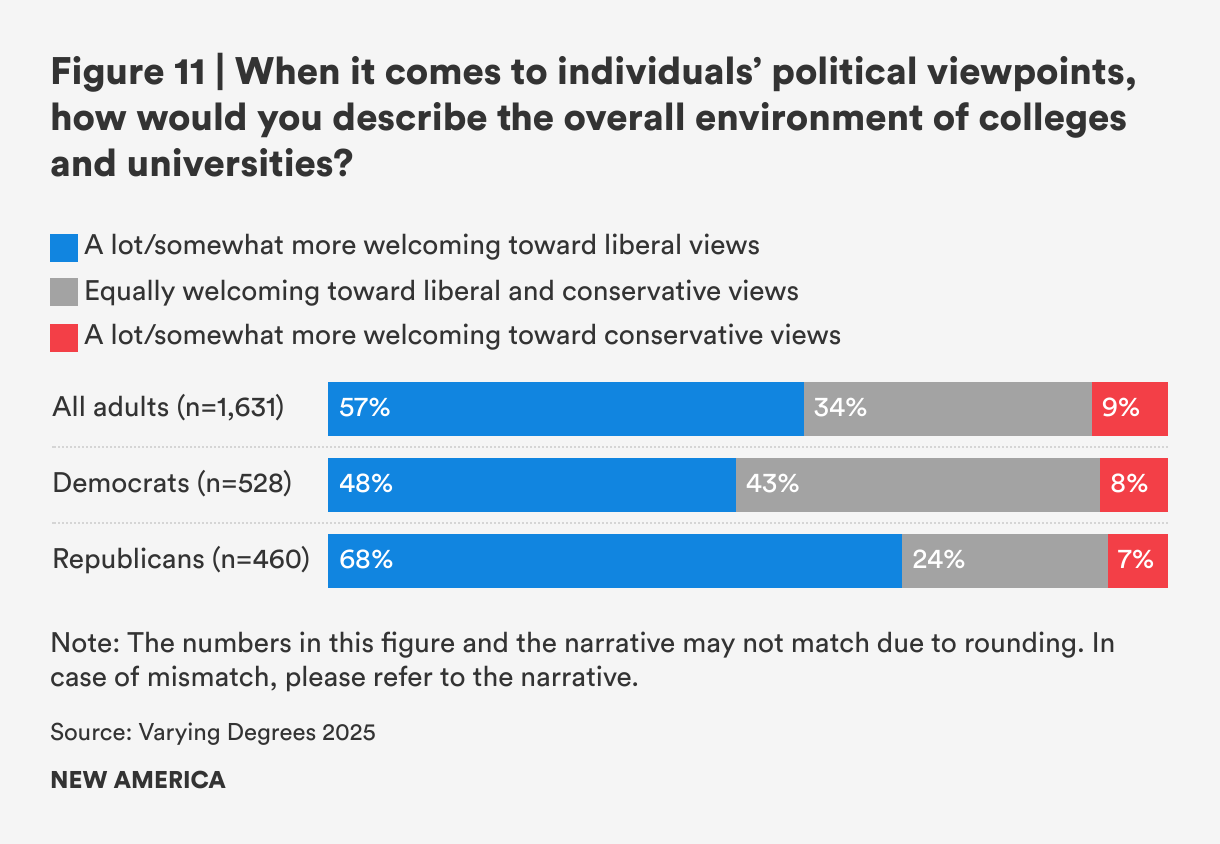
Just over half of Americans believe, when considering individuals’ political viewpoints, colleges are more welcoming toward liberal views, a third think colleges equally welcome liberal and conservative views, and only 9 percent think that they are welcoming towards conservative views (see Figure 11). Two-thirds of Republicans think colleges are more welcoming towards liberal views, compared to half of Democrats who think so.
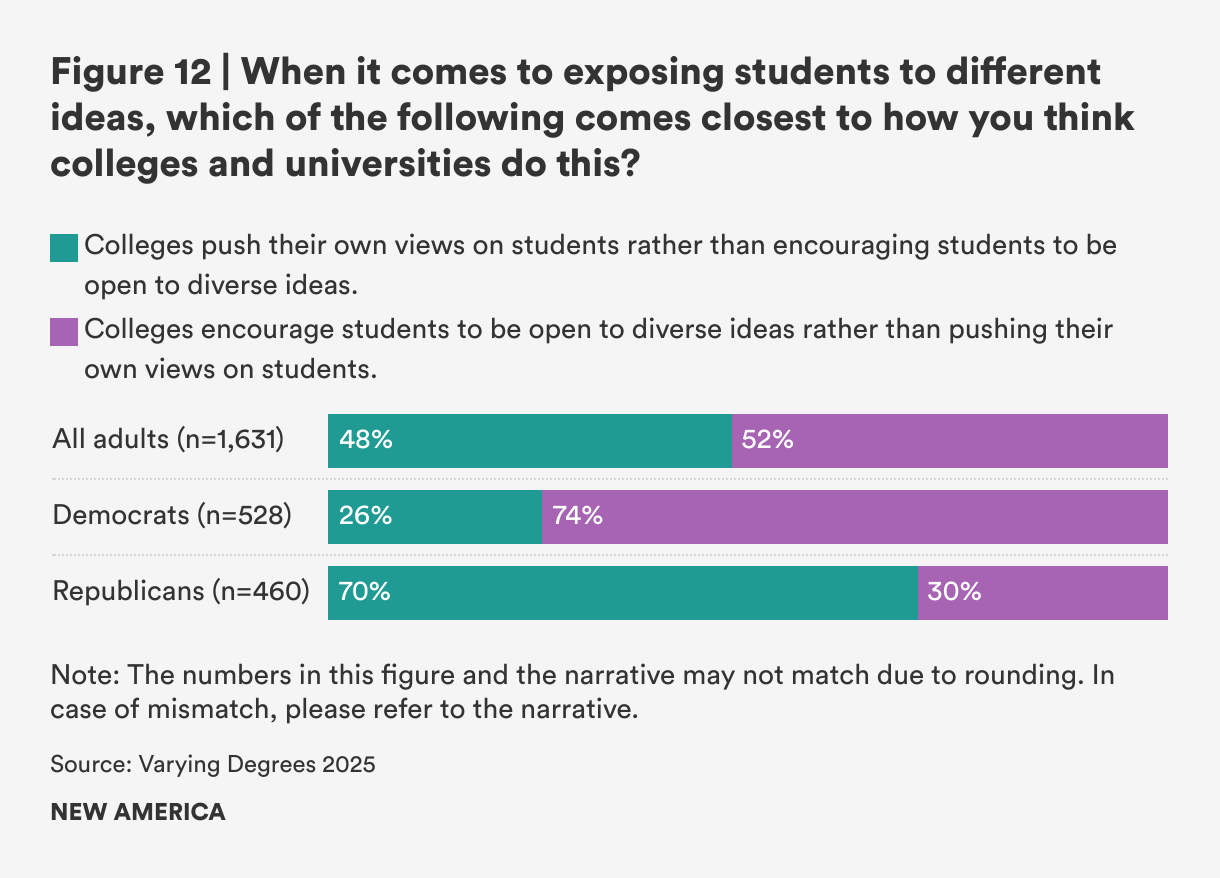
Americans are split on whether they think that when exposing students to different ideas, colleges push their own views on students versus encouraging students to be open to diverse ideas. Only 25 percent of Democrats believe colleges are pushing their own views on students, while 68 percent of Republicans think so (see Figure 12).