Value
Varying Degrees has been keeping track of how Americans perceive higher education value since its inaugural survey in 2017. Our value questions focus on how Americans feel about the benefit and return on investment of postsecondary credentials, whether higher education is worth investing in, and different sectors of higher education.
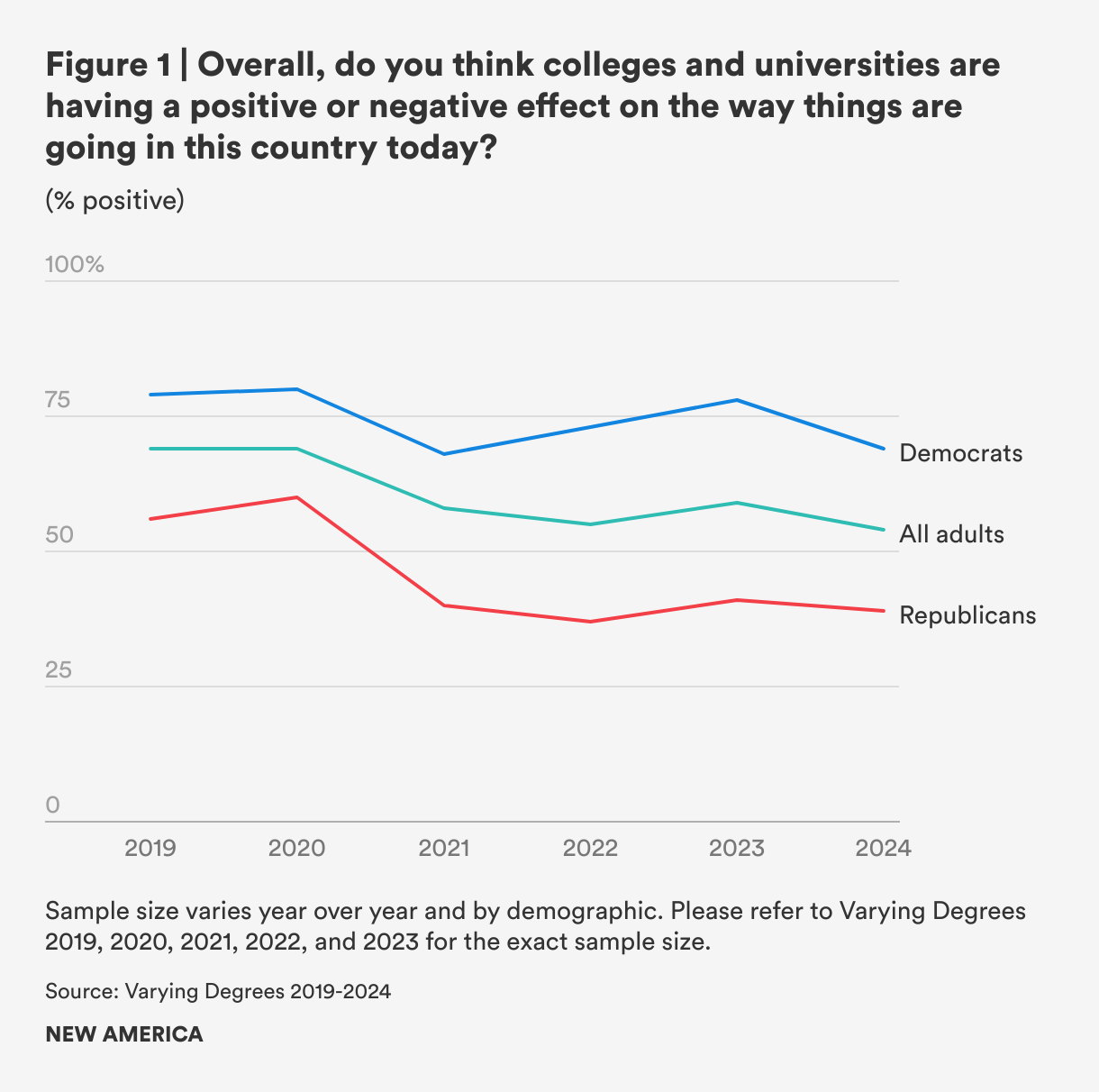
The decline in Americans’ confidence in the value of higher education is shown in many questions this year. Just half of Americans (54 percent) think colleges and universities are having a positive impact on the ways things are going in the country today, dropping slightly from 59 percent in 2023. There has always been a gap between Democrats and Republicans in their response to this question, and this gap has been widening since 2021 (see Figure 1). In 2024, 69 percent of Democrats, compared to 39 percent of Republicans, think colleges and universities are having a positive impact.
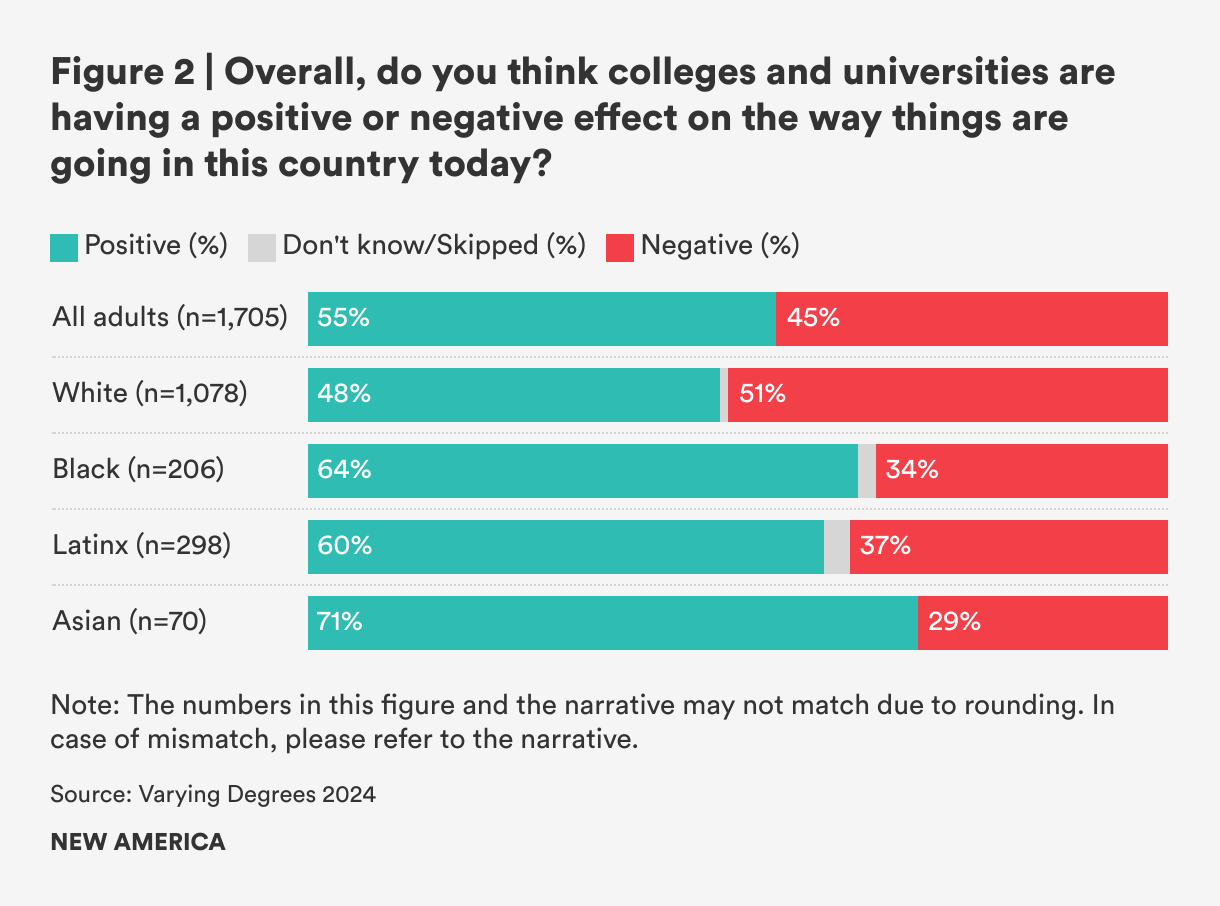
There is also a gap between how white Americans and people of color perceive the impact of colleges and universities. While only around half of white Americans think colleges are having a positive impact, 64 percent of Black, 60 percent of Latinx, and 71 percent of Asian Americans think so (see Figure 2).
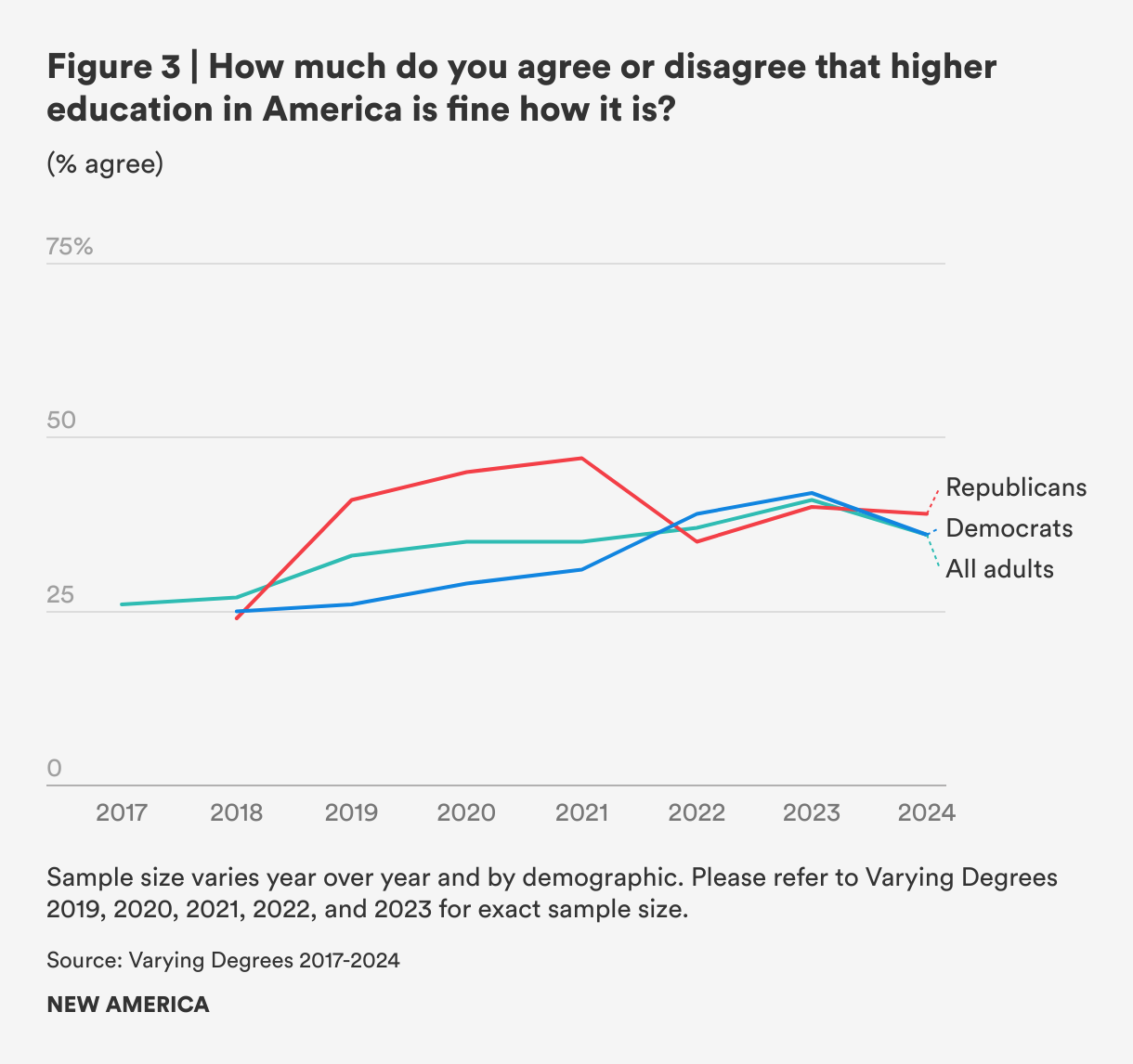
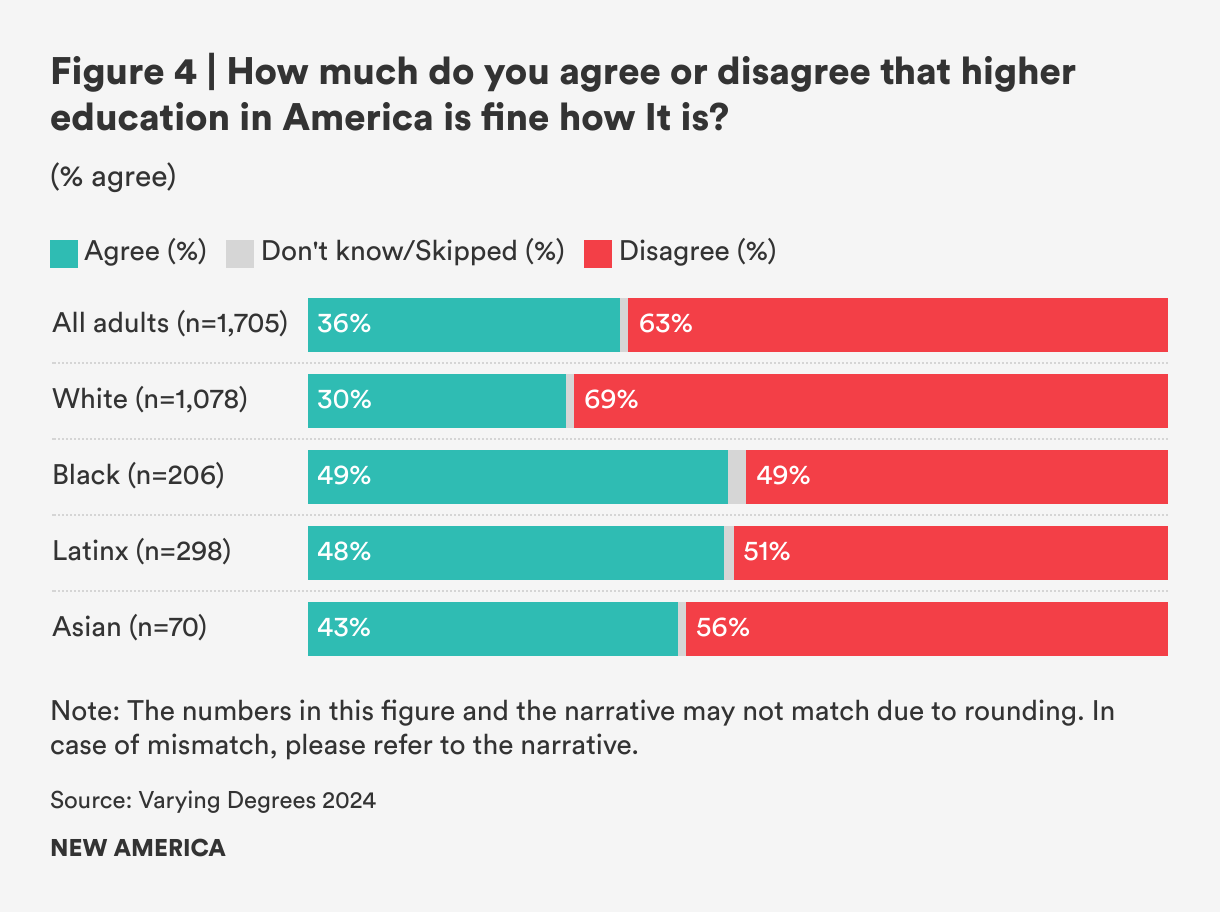
Americans continue to be unhappy overall with the direction of higher education in this country. While the number fluctuated and has trended slightly upward since 2017, a majority of Americans still do not believe higher education is fine how it is. This year, the number of Americans who agree that higher education is fine declined five percentage points from 2023, to 36 percent. Democrats and Republicans, who do not often see eye to eye, turn out to be aligned on this question: only 36 percent of Democrats and 39 percent of Republicans agree (see Figure 3). As shown in the figure, the alignment between Democrats and Republicans is a more recent trend, starting in 2022.
White Americans and other groups, on the other hand, differ significantly on this question. While only 30 percent of white Americans agree with the statement, nearly half of Black and Latinx and 43 percent of Asian Americans agree. Like the alignment between Democrats and Republicans, the difference between white Americans and people of color on this question first appeared in 2022 (see Figure 4).
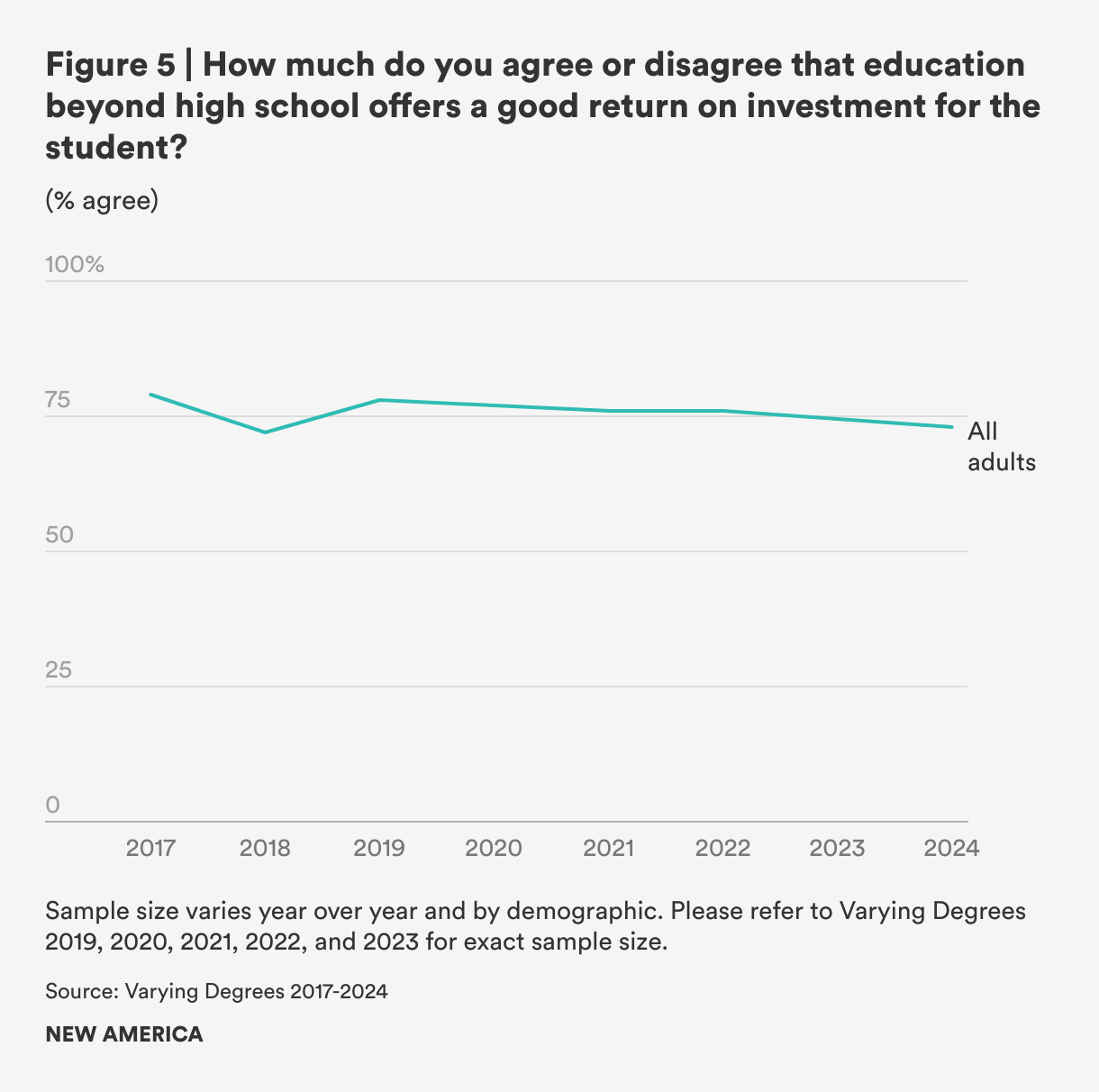
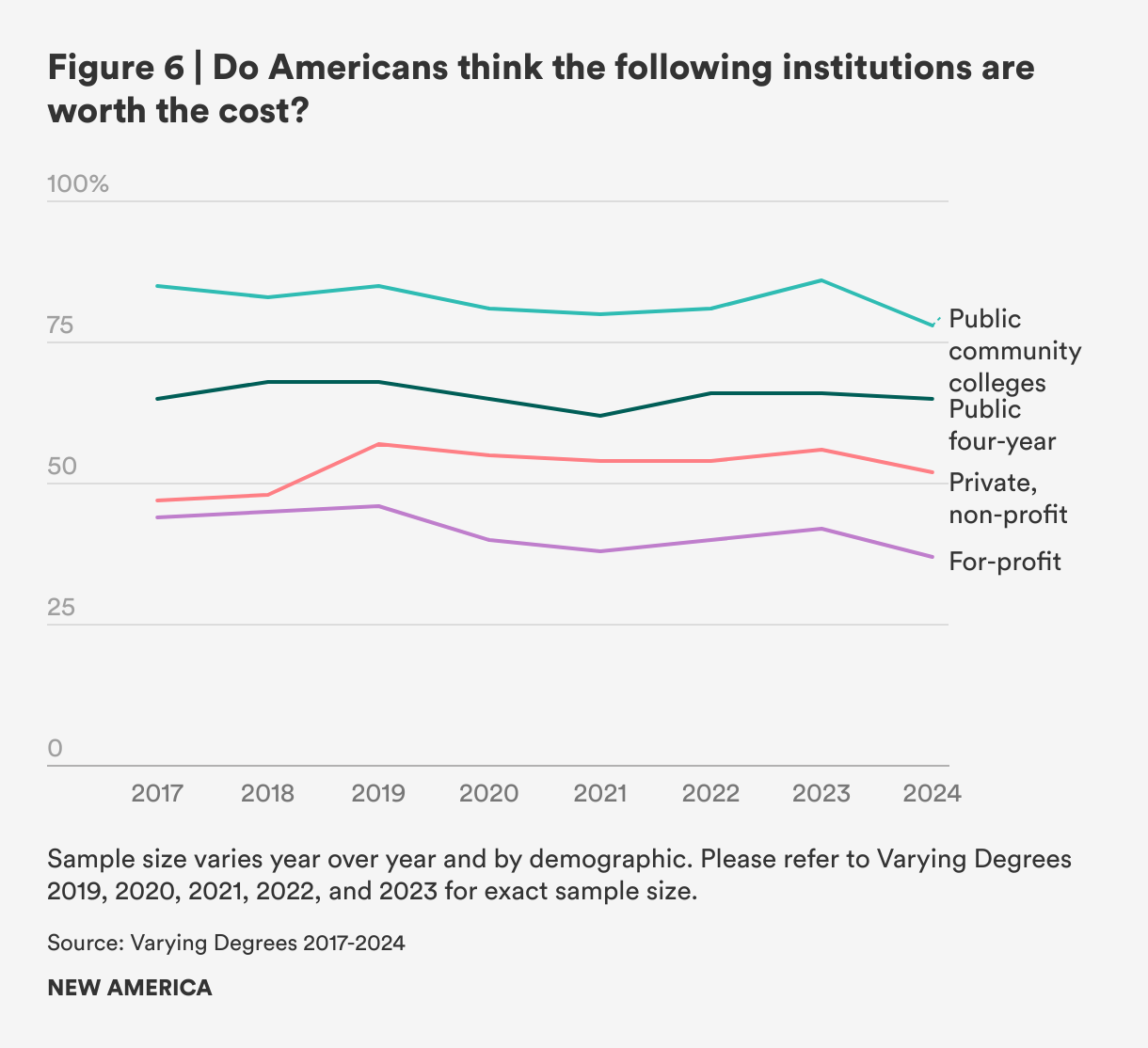
Three in four Americans think higher education still offers a good return on investment for students; however, this number has been on a downward trend since 2019 (see Figure 5). And even when a majority still think public higher education is still worth the cost, all sectors of higher education, from community colleges to for-profit institutions, have experienced a decline in this number since 2019 (see Figure 6).
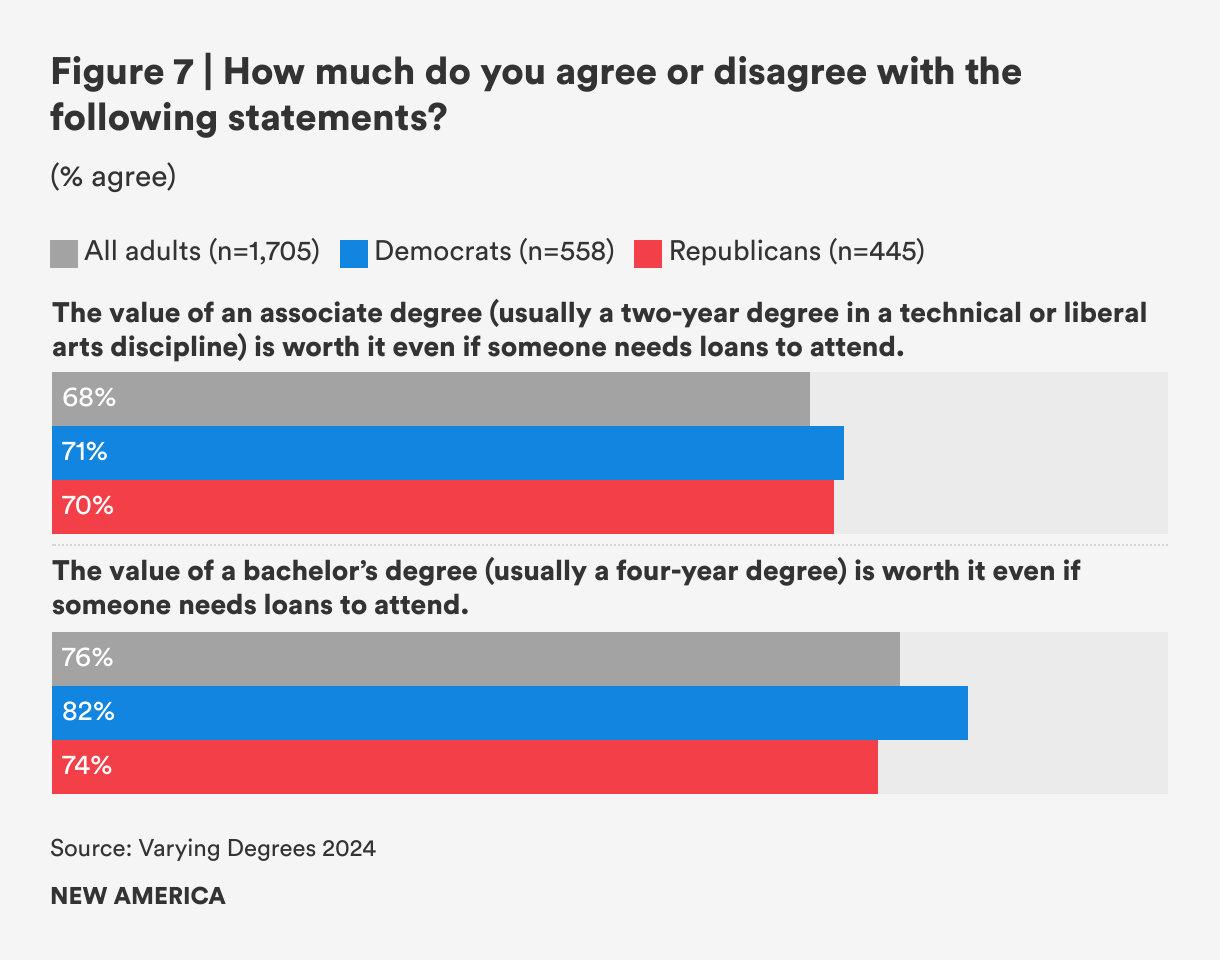
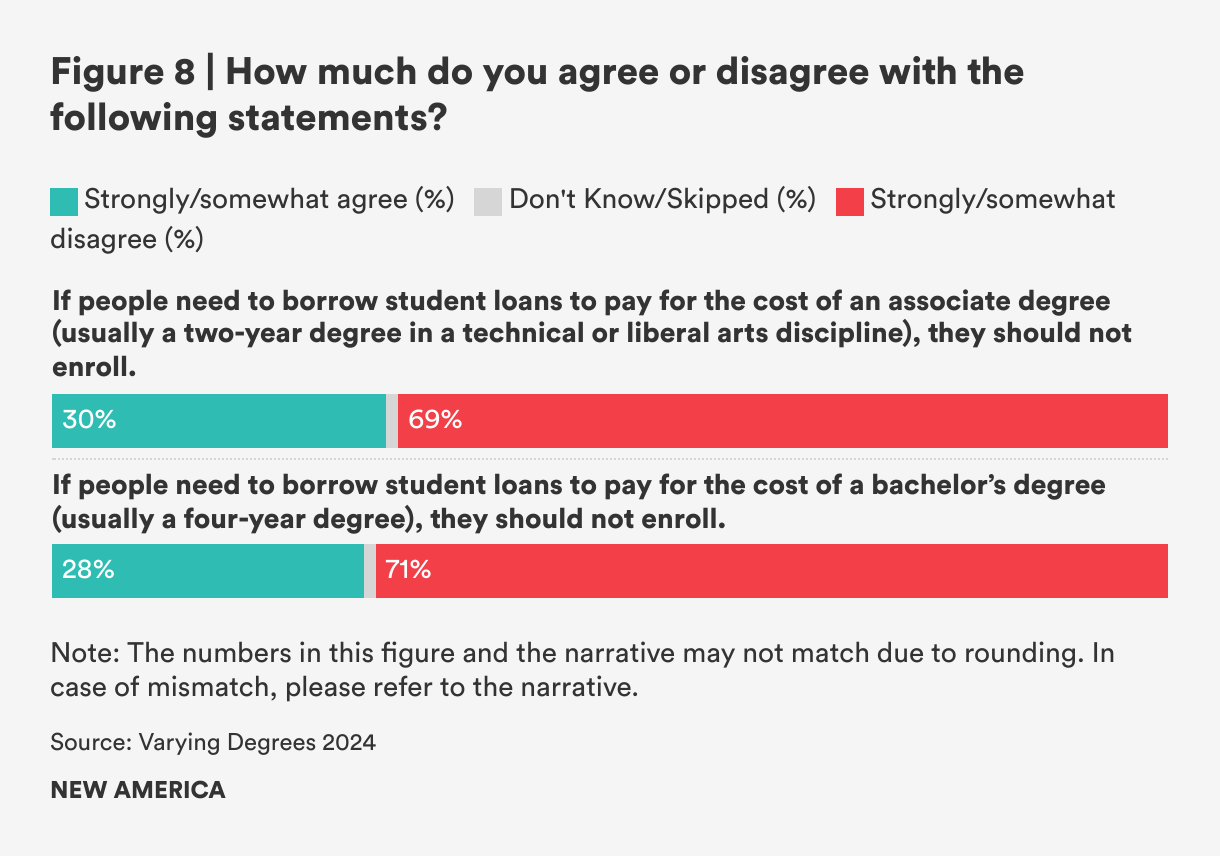
For the first time this year, we asked whether the value of an associate and bachelor’s degree is worth it, even if students need to borrow: 68 and 76 percent of Americans, respectively, agree it is (see Figure 7). A majority of both Democrats and Republicans also agree with these statements. Only three in ten Americans think that individuals should not enroll in an associate (30 percent) or bachelor’s (28 percent) programs if they need to take out loans to do so (see Figure 8).
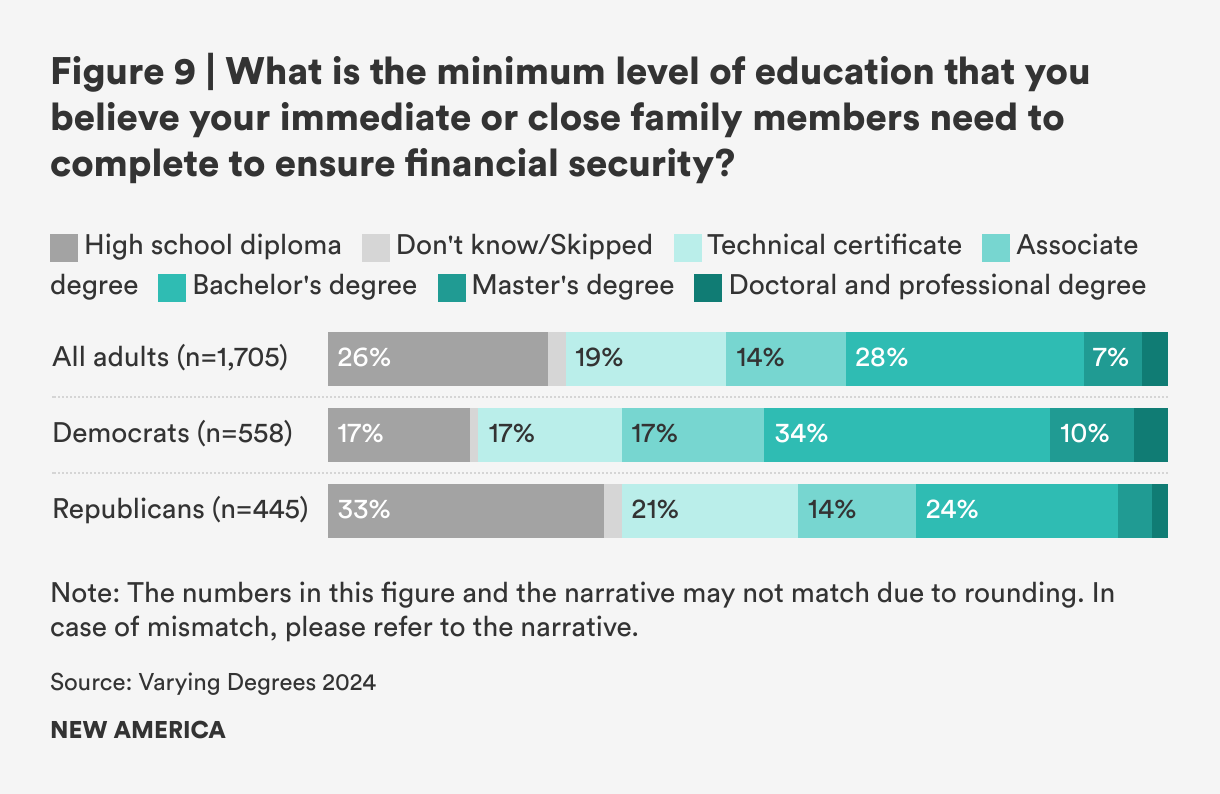
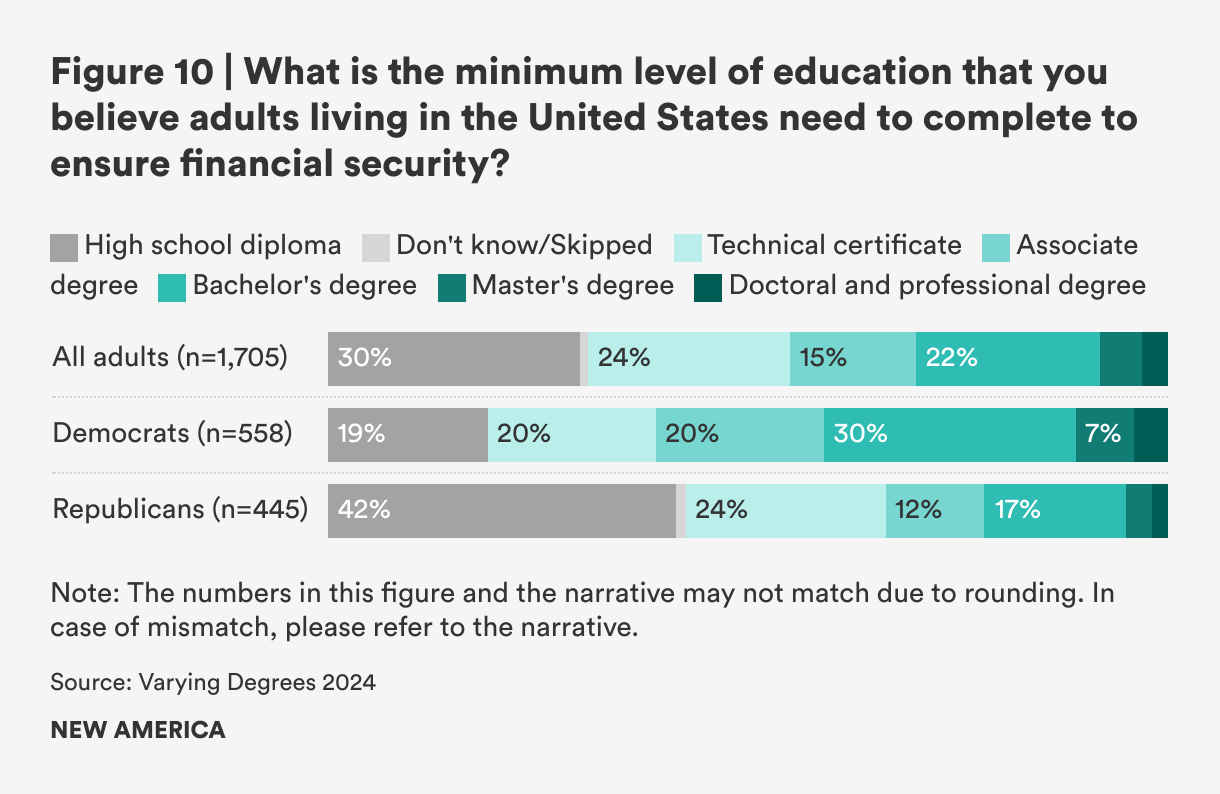
Probably one of the strongest indicators of how people feel about the value of a higher education degree personally is the finding that just one in four Americans believes that their children or family members and that less than a third believe that other adults in the U.S. need a high school diploma to ensure financial security (see Figures 9 and 10). Among those who would like their children and close family members to have at least some education after high school, a majority would like them to have at least a bachelor’s degree.
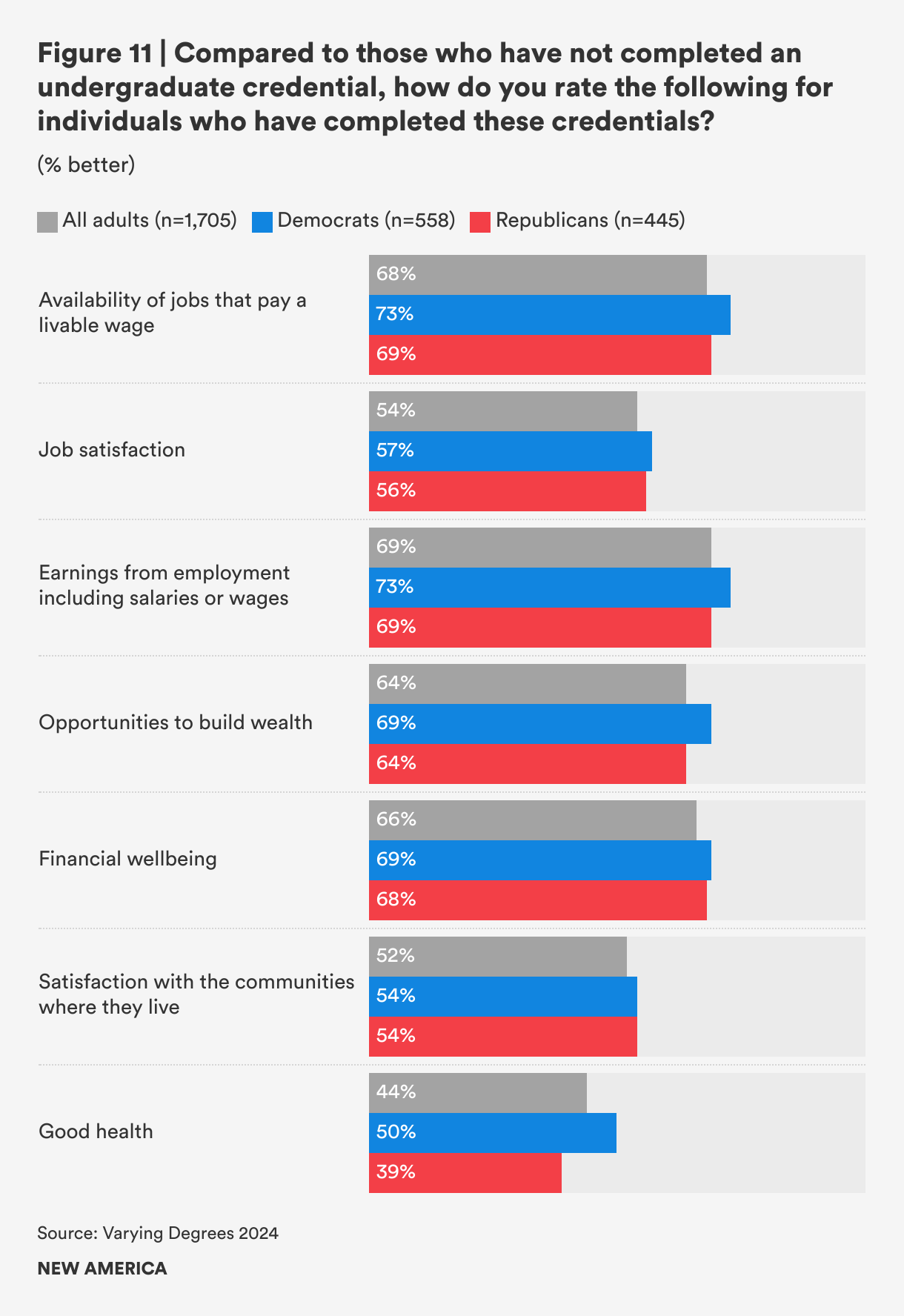
Americans might feel mixed about the value of higher education depending on the question, but they still believe there are overall benefits to individuals and society that higher credentials bring. Two-thirds agree that those with at least some higher education will have better access to good jobs, better earnings, and greater financial well-being (see Figure 11). Democrats and Republicans agree at similar rates.
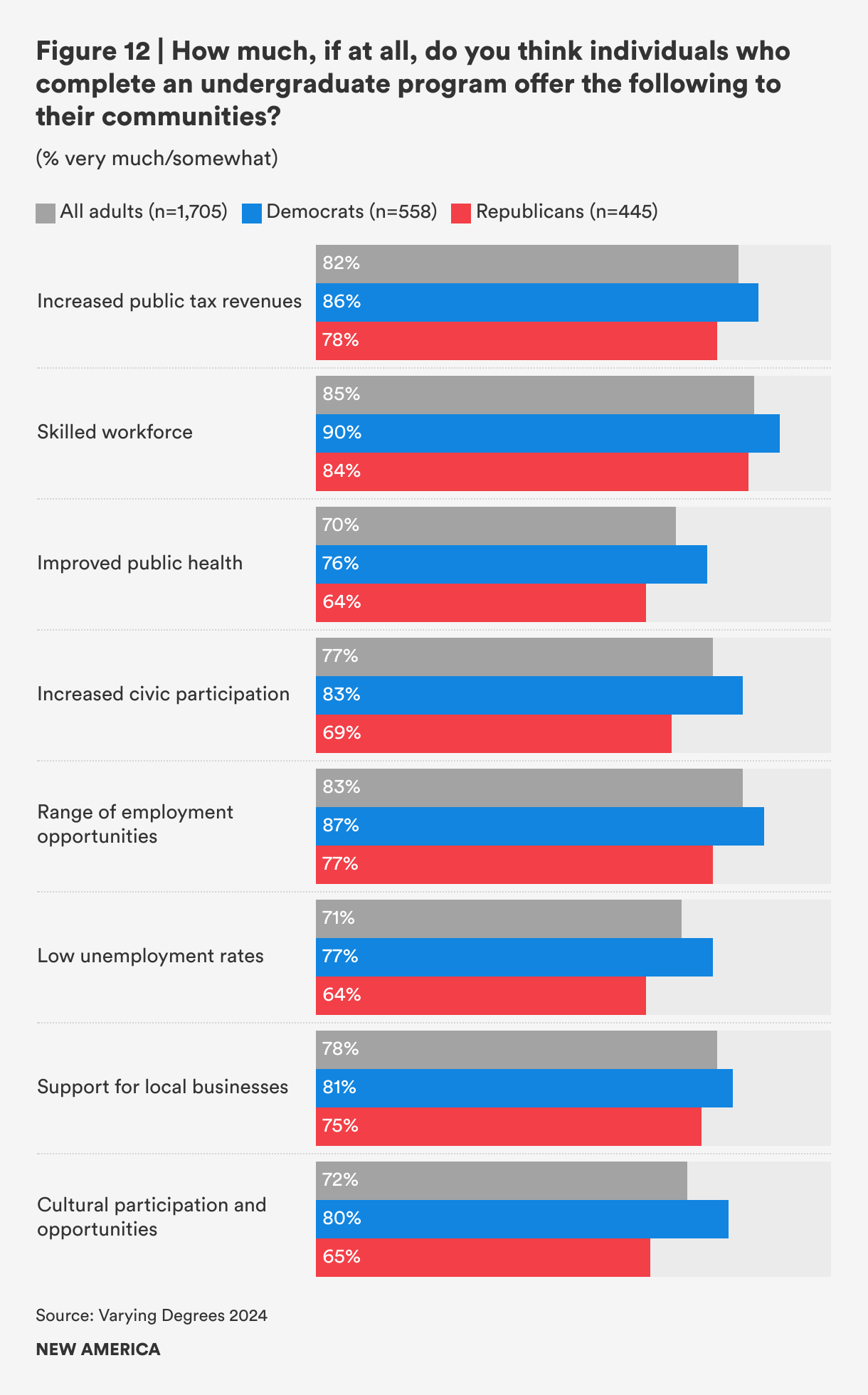
When it comes to the benefits that those with higher education might bring to their communities, more than 80 percent of Americans agree that they increase tax revenues, contribute to a skilled workforce, and create more jobs. Three in four believe that those with postsecondary credentials vote and volunteer more often and offer greater support for local businesses (see Figure 12). And while there is some gap in their responses, a majority of both Democrats and Republicans agree with these statements.