Table of Contents
Introduction
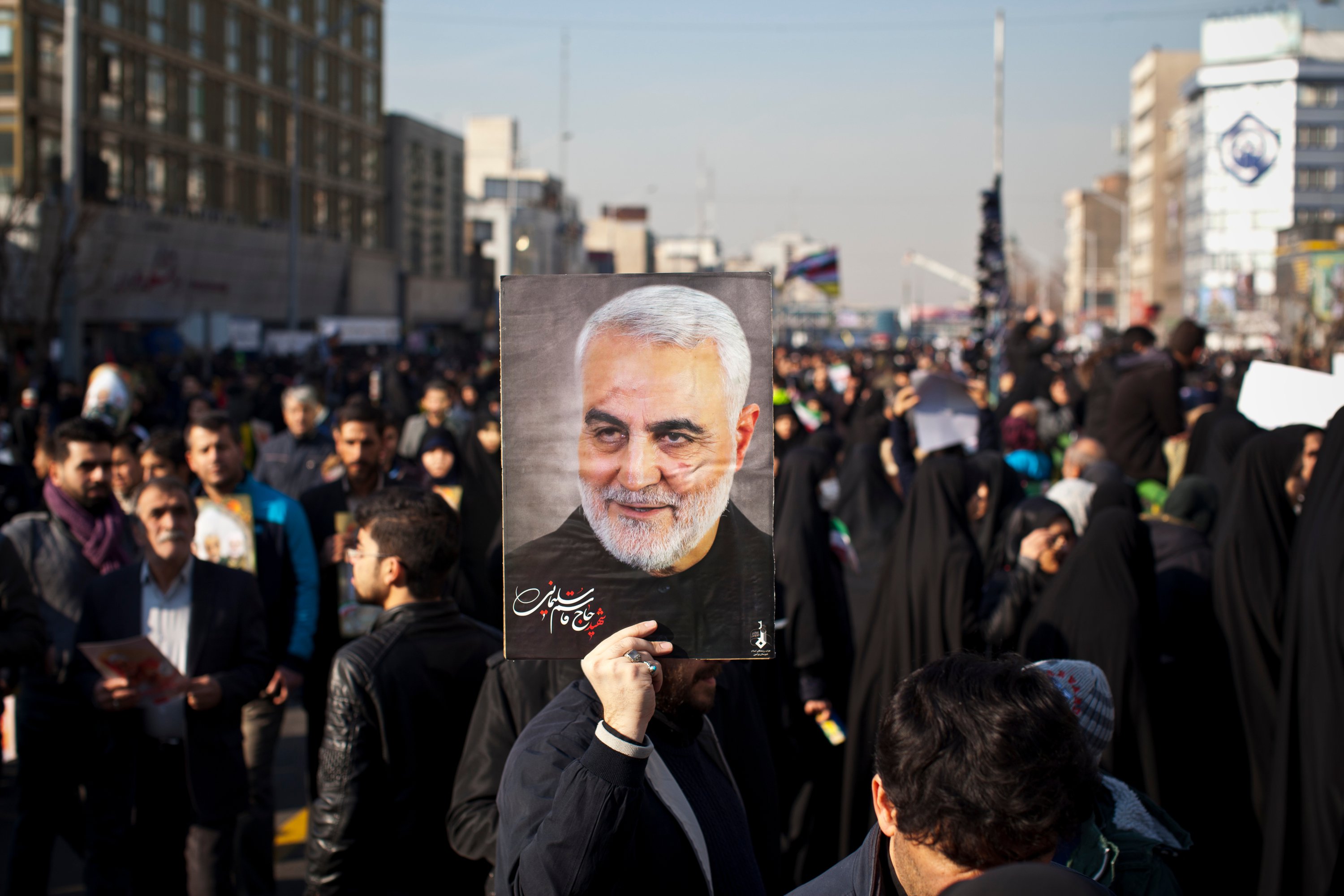
In January 2020, the long-simmering proxy war between the United States and Iran exploded into direct engagement, verging on open war.1 A U.S. drone strike killed the leader of Iran’s Islamic Revolutionary Guard Corps (IRGC)'s Quds Force, Qasem Soleimani, while he was travelling from Baghdad airport in Iraq.2 For decades, Soleimani was the mastermind behind Iran’s network of militias and proxy allies across the region and the architect of Iranian campaigns in Iraq, Syria, and Lebanon, among others.3
Soleimani’s killing was precipitated by a year of escalating political and security tensions between the United States and Iran, and very real and credible threats and attacks by both sides. But it also appeared to be triggered by the way that proxy threats and relationships are interpreted in Iraq, often mistakenly so. Without question, proxy competition is a very real dynamic in Iraq—external intervention has long shaped Iraq’s domestic relations and the potential for proxy manipulation is arguably greater than it ever has been before. However, the narrative of proxy warfare tends to overstate external puppeteering as the driver of political and conflict dynamics in Iraq, and understates the role of Iraqi actors’ agency and interests. This too often results in misattribution and misinterpretation of threats, in ways that can escalate an already volatile situation, as with Soleimani’s killing.
This report, part of New America and the Arizona State University Center on the Future of War series on the future of proxy warfare, will examine the nature of proxy competition in Iraq, and its influence on Iraqi-domestic political and security dynamics. The Iraqi case illustrates how deeply enmeshed regional and international agendas and conflicts are in even very localized conflicts and political stand-offs in Iraq; however, it also helps illustrate the limitations of external intervention and external states’ ability to exert proxy control.
The post-2014 dynamics in Iraq incentivized proxy intervention but they also made it more difficult to manage. A multiplicity of armed actors, complex and constantly fluctuating relationships between them, and a domestically driven zero-sum competition challenged external actors’ ability to develop consolidated relationships of control. Within this environment, proxy competition has been much more regularly driven and exercised by Iraqi actors themselves, in relationships that might be described as part of a sub-state proxy competition.
These dynamics suggest a need to rethink standard assumptions about proxy warfare, both within Iraq and in other potential proxy war arenas. Proxy competition is likely to emerge in environments like those in Iraq, with complex, multi-polar, and interconnected internal political dynamics. In such environments, external actors can play a big role, but will struggle to fully control domestic sub parties and contests. Rather than proxy manipulation, an analytical framework that understands external influence as the product of a convergence of interests between external and internal actors, may be more accurate, and less likely to lead to misattribution and escalation.
This report is divided into five sections including this introduction. The second section provides background on the history of external intervention and proxy competition in Iraq. The third section examines the particular dynamics that emerged in the wake of the crisis of 2014. The fourth section will then use a discussion of the relationship between the United States and its partners, and then by Iran and its partners, to illustrate some of the limitations of proxy intervention in the current environment. The fifth and concluding section examines the relevance of these findings for the broader Middle East and the future of proxy warfare.
Citations
- With a direct U.S. attack on an Iranian general on January 3, 2020, and Iranian missile attacks on two bases that house U.S. troops a few days later, the conflict arguably moved from indirect or proxy war to direct engagement in hostilities between the two countries. Allissa J. Rubin et al., “Iran Fires on U.S. Forces at 2 Bases in Iraq, Calling It ‘Fierce Revenge,’” The New York Times, January 8, 2020, source; Maya Gebeily, “Pro-Iran Factions Ramp up Pressure on US in Iraq with Missiles, Warnings,” Agence-France Press, January 8, 2020.
- “Qasem Soleimani: US Kills Top Iranian General in Baghdad Air Strike,” BBC News, January 3, 2020, source ; Tim Arango, Ronen Bergman, and Ben Hubbard, “Qassim Suleimani, Master of Iran’s Intrigue, Built a Shiite Axis of Power in Mideast,” The New York Times, January 3, 2020, source
- Arango, Bergman, and Hubbard; Stanley McChrystal, “Iran’s Deadly Puppet Master,” Foreign Policy, January 22, 2019, source ; Dexter Filkins, “The Shadow Commander,” The New Yorker, September 30, 2013, source