
Table of Contents
- Executive Summary
- Introduction
- Finding 1: Practical Urgency Drives Naturalization
- Finding 2: Voting is a Motivation, But Not Always a Catalyst
- Finding 3: Fear of Anti-Immigrant Policies Can Inhibit or Enable Action
- Finding 4: Traveling with a U.S. Passport is a Strong Benefit
- Finding 5: Stressful Immigration Interactions Delay Naturalization
- Finding 6: Support Helps Overcome Barriers
- Finding 7: The Naturalization Process is a Deterrent
- Finding 8: Common Milestones Are Underutilized
- Recommendations to Improve the Naturalization Process
- Recommendations for Nonprofits
- Recommendations for Groups Developing Naturalization Technology
- Recommendations for Local and State Governments
- Recommendations for the Federal Government
- Potential Intervention Points in the Immigration Journey
- Opportunities for Further Research
- Appendix: Testing
- Methodology
Methodology
Since our research problem is explorative and covers a broad topic, our team used multiple qualitative methods to uncover and dig deeper into patterns. In five months, we conducted 63 directed interviews, spoke with over 20 subject-matter experts, conducted 117 in-person surveys, and completed 22 testing sessions.
Our conversations covered a range of perspectives from the immigration ecosystem including nonprofits, city/state government agencies, lawyers, immigrants, and their family members. However, all of our 63 interviews were with immigrants who are, were, or will be (in the next three years) eligible for naturalization. After each interview, we sifted through the motivations a person experienced in their desire for citizenship. We discovered that a large number of applicants went through a catalysting event or process that ultimately assisted them in overcoming obstacles around naturalizing—what we called catalysts. These catalysts differed from motivations because they were often the primary element responsible for direct action towards naturalization. For example, an eligible LPR may know they should secure their right to stay in the United States. (their motivation) but they may not feel pressure to initiate their citizenship application until an upcoming Green Card renewal – their catalyst. We also investigated barriers to naturalization, which were events or situations that stopped someone from naturalizing. These were different from concerns, which tended to be issues LPRs foresee in their naturalization applications, but nothing that would stop them from applying.
Box 5
Most Commonly Cited Motivations
- Security from deportation
- Travel without getting visas
- Voting
- Access to better opportunities
Catalysts
- Becoming eligible
- Green Card expiring
- Anti-immigrant policies
- Underage LPR child asks parent to naturalize Family/Friends pressure
Barriers
- Life events taking priority (moving, having children, looking for a job, etc.)
- English proficiency
- Cost
Concerns
- Extended travel
- Legal issue
- Distrust of government
- Distrust of Trump administration
- Fear of interview
Over time, we refined our interview questions and recruitment to fill gaps in our learnings and to create a robust sample set. When possible, we also conducted short, open-ended surveys at citizenship workshops to dig further into an insight found in long-form interviews. Finally, we explored many ideas in depth through various testing approaches including card sorting, questionnaires, and moderated prototype testing. Through this iterative approach, we were able to refine our findings and provide actionable opportunities for those looking to assist immigrants in their path to citizenship.
Who We Spoke With
Since our research goal did not apply to a specific group of LPRs, we ambitiously strove to reach a sample as broad and representative as possible compared to the general U.S. LPR population. To do this, we aimed to recruit participants with a range of characteristics including, but not limited to, country of origin, age, Green Card class of admission, level of interest in naturalizing, wait-time to naturalize, and application method (such as applying on their own or assisted). While we did not directly ask for one’s income level, we do understand this can factor significantly into available resources for an individual. We spoke with individuals with a variety of different backgrounds in education, English, and use of nonprofits as a way to ensure we were speaking with a range of social classes. We also hoped to talk with people located in different regions of the country, since this might influence one’s exposure to pro-immigrant services or sentiments. To cover this, we traveled and interviewed individuals in Boston, New York City, Los Angeles, and Indianapolis. Additionally, we were able to run remote interviews and/or testing sessions with people from Albuquerque, Chicago, Dallas, Houston, San Francisco, and Washington D.C. These conversations were conducted from September 2018 through January 2019.
Interviewee Sample Set
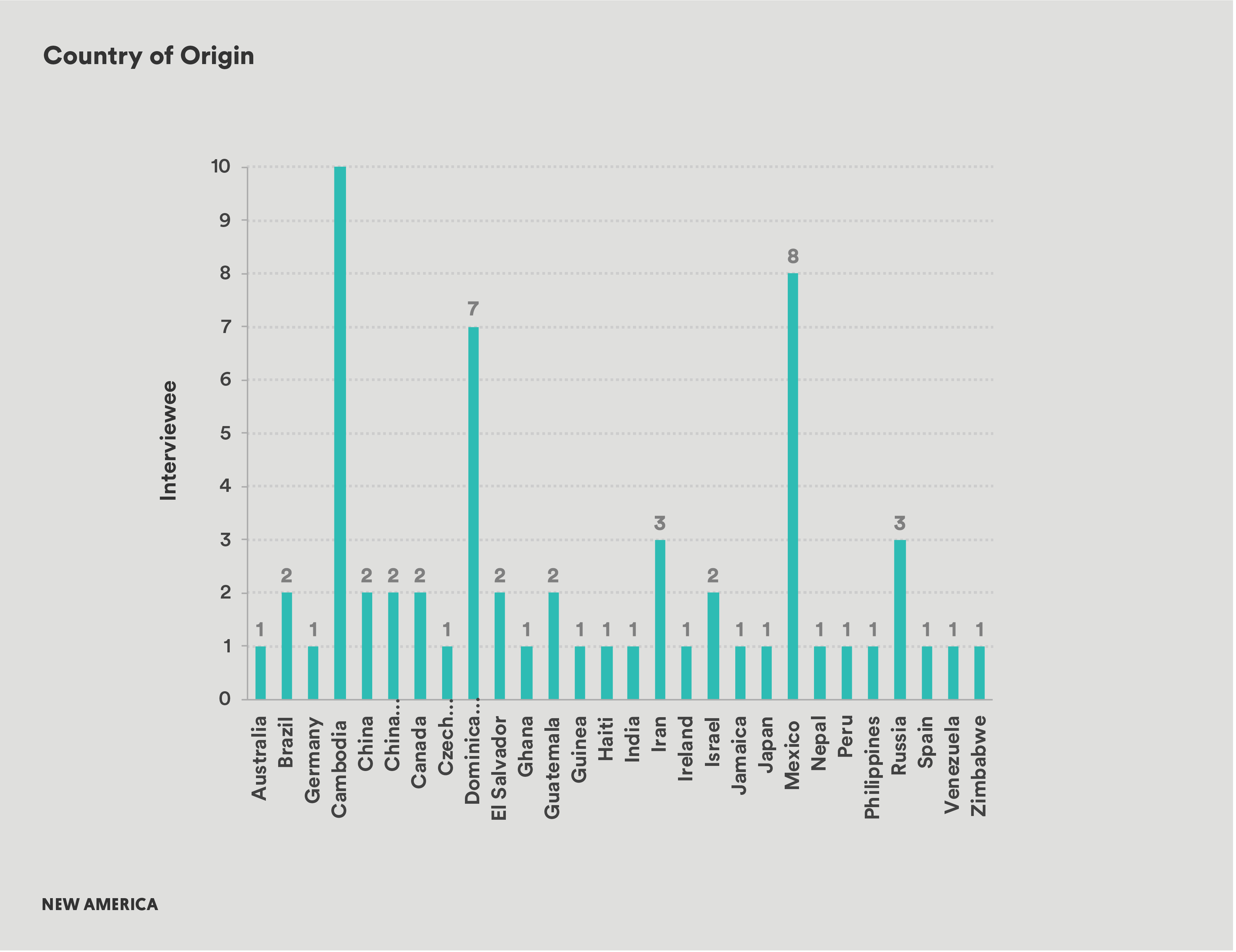
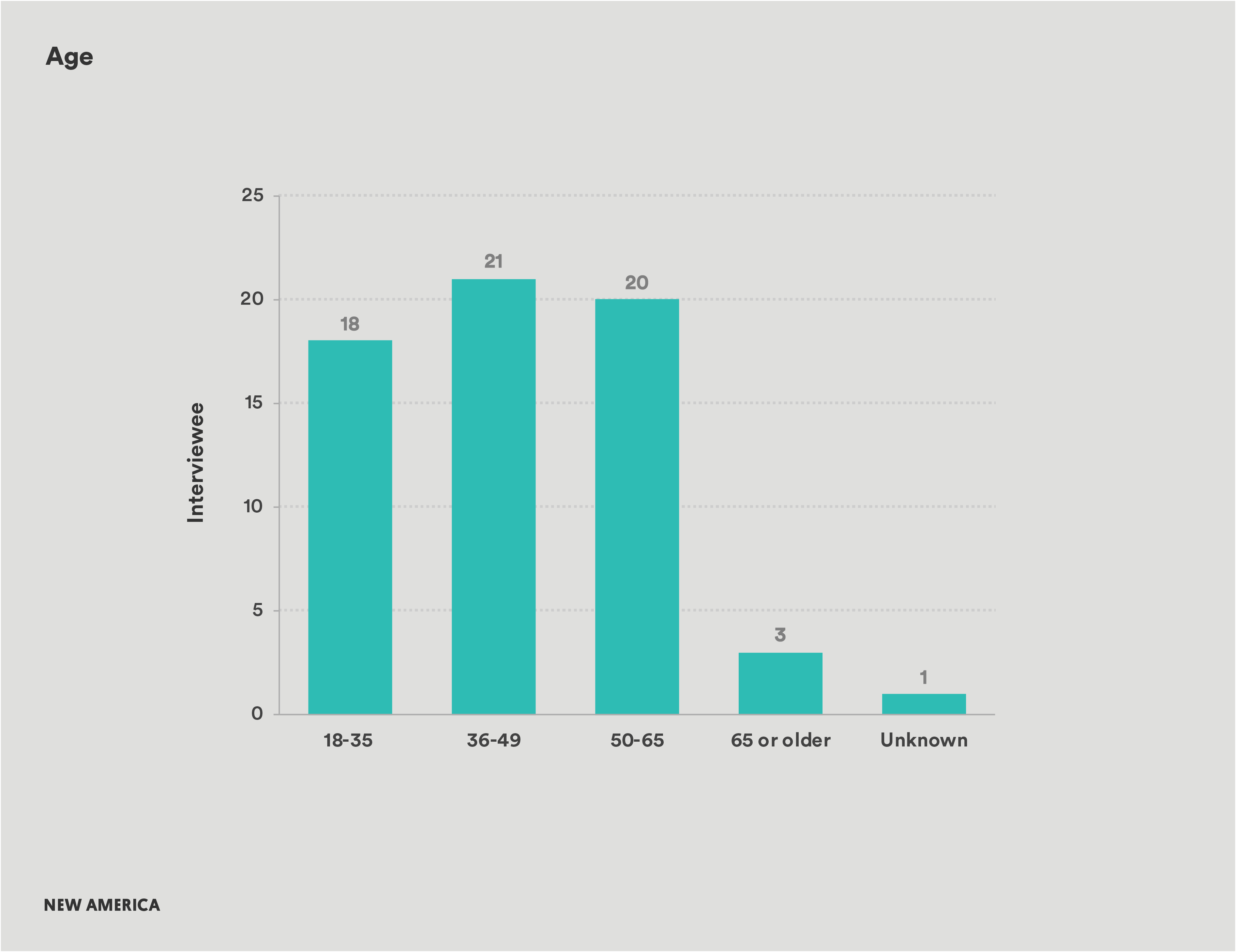
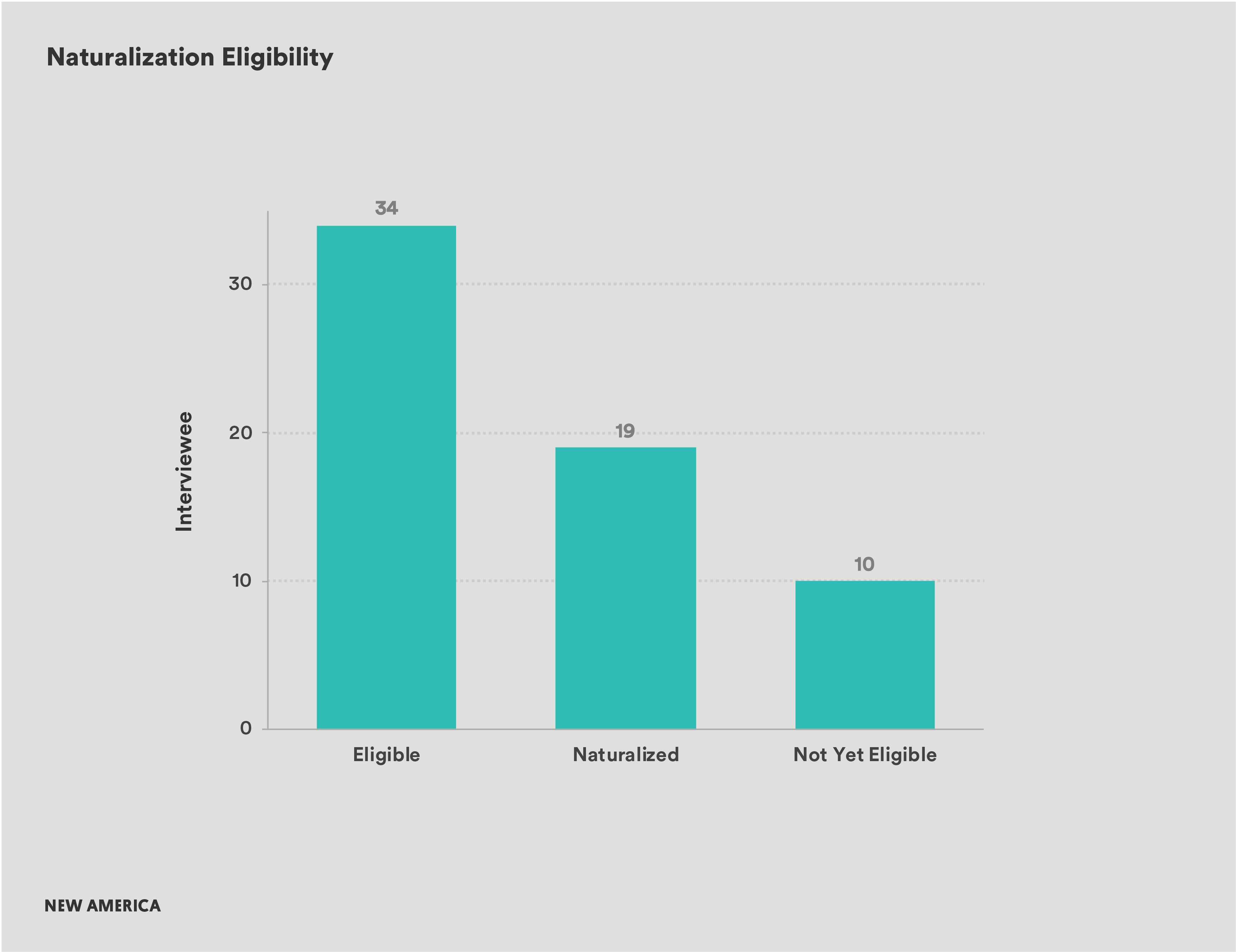
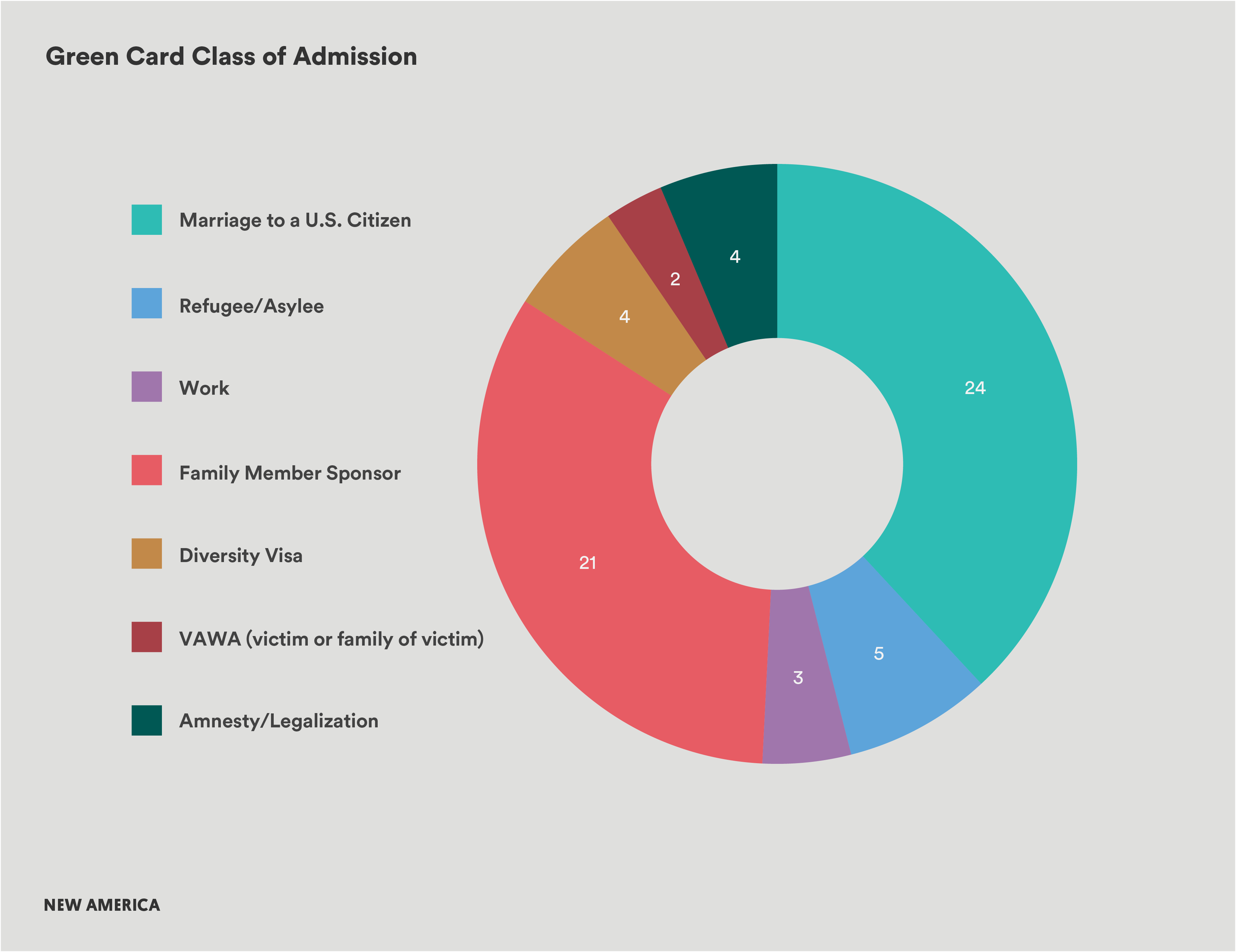
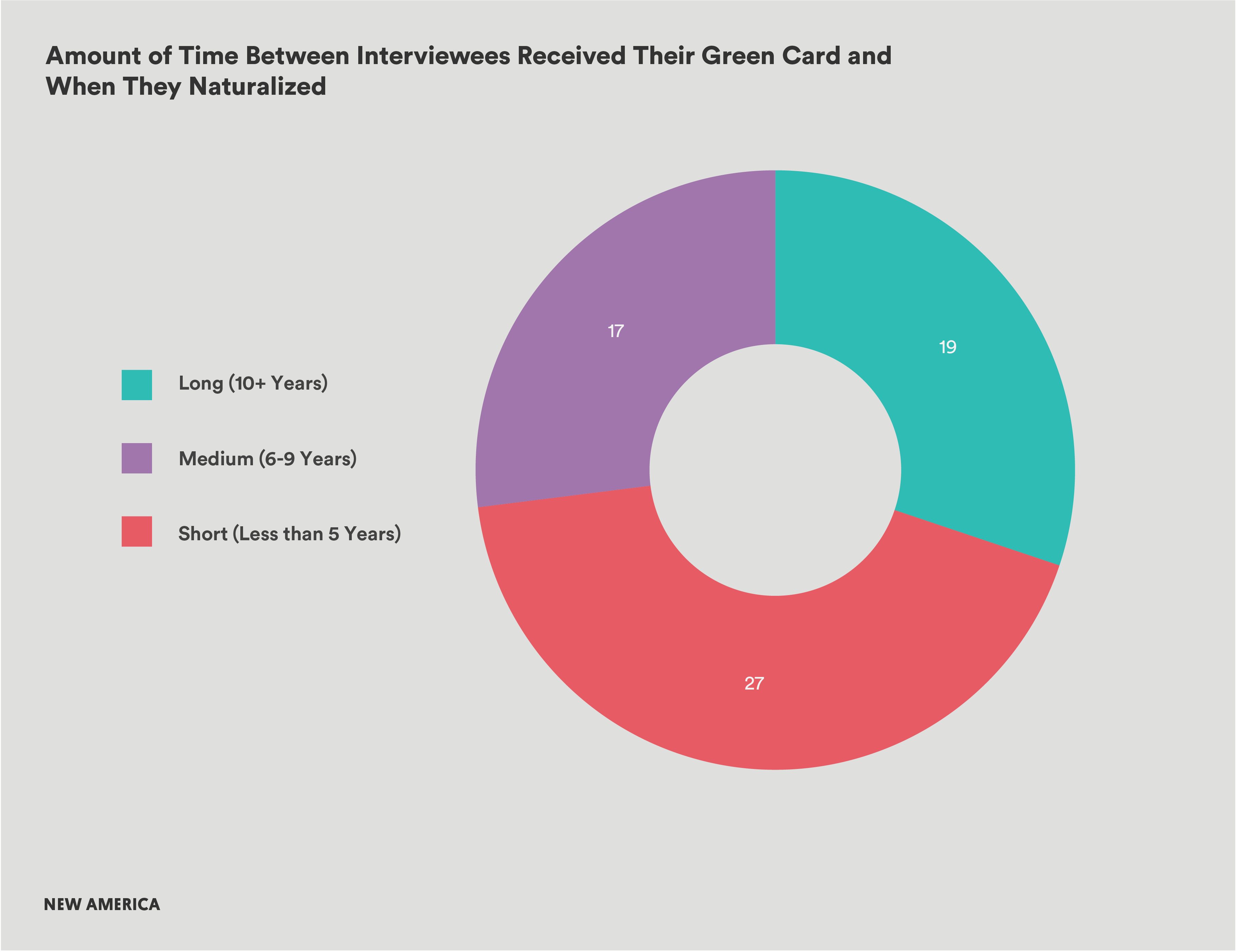
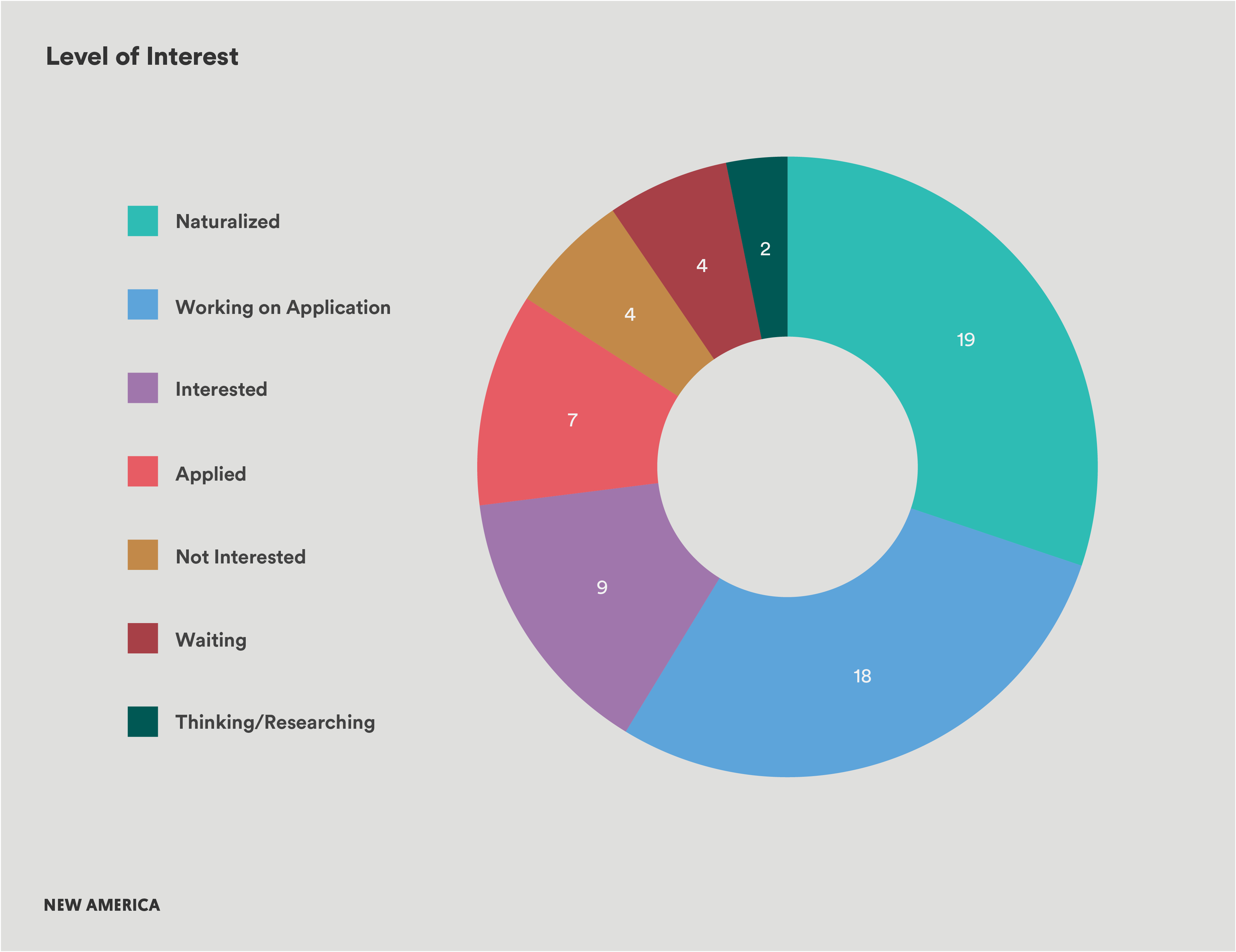
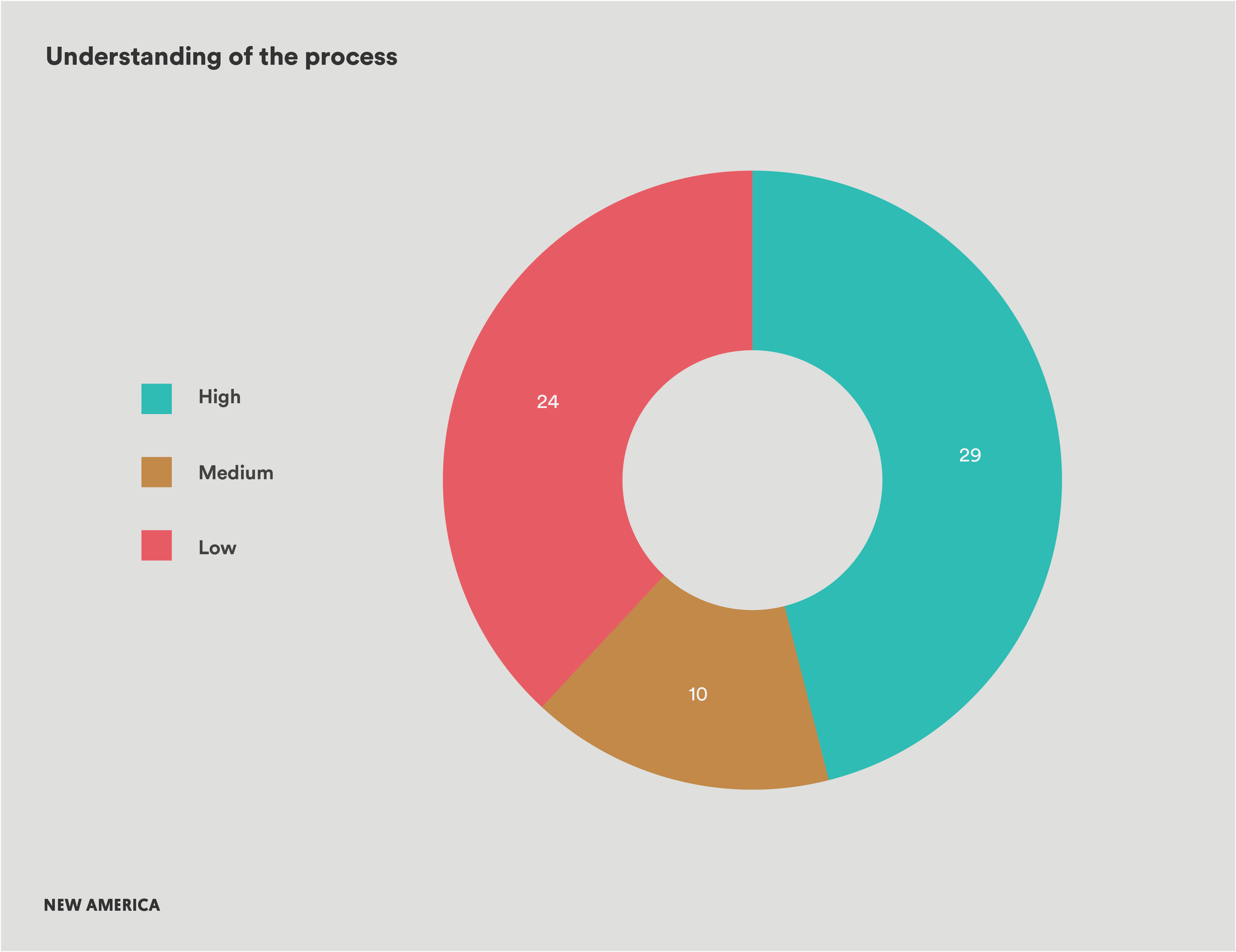
The above breakdown represents 55 of the 63 participants interviewed with the exclusion of 8 older participants from Cambodia (see Sample Set Adjustments below). Within this adjusted sample, we spoke to individuals between 25 to 61 years old, from 28 different countries. 45 out of the 55 were eligible LPRs or had naturalized already. The other ten individuals provided our research with a perspective on beginning one’s permanent residency.
It was important for us to speak with a broad set of individuals based on their timing to naturalize in order to determine difficulties that delay or prevent applying. We were able to achieve a mix of naturalization wait times, the time between receiving the green card and deciding to apply for naturalization, by requesting the date they received their Green Card, their current immigration status, and what year they naturalized, if applicable. Additionally, we assessed their citizenship interest by noting what stage of research or application work they had begun. We found it challenging to recruit those disinterested in citizenship—particularly those that mapped to a trend most nonprofits observed, in which fear of the current administration dissuaded immigrants to naturalize. Even still, we were able to uncover factors preventing an individual from naturalizing, which we broke down into barriers and concerns. Barriers represented strong impediments that prevented a person from applying to naturalize. Our study was largely focused on English-speaking interviewees, but an applicant’s English proficiency still came up as a frequent barrier. However, this alone didn’t tell the whole story. Applicants often also carried concerns, which differed from barriers in that they didn’t stop them from applying, but weighed on their decision and attitude towards, throughout, and even after the naturalization process. During our interview process, we adjusted recruitment to focus on longer waits to apply for naturalization as we continued to narrow in and track factors associated with delays in naturalizing.
Participants had a range of Green Card sponsorships, which were predominately marriage-based like the general LPR population. Methods of applying for their Green Card were a mix, with some applying on their own, some receiving assistance from their petitioner, from a lawyer, or from another third-party.
Sample Set Adjustments
During one recruitment sprint we interviewed many older immigrants from Cambodia. While each story was enlightening, 8 of the 11 interviews conveyed very similar experiences, which felt misleading during analysis. To maintain a more representative data set, we have removed 8 of the 11 interviewees’ data from our coding analysis. We did retain three because their personal stories served a range of experiences. Two of these individuals had unique journeys based on their age and initial entries with refugee and diversity visas. The third participant we chose to keep resembled the other eight individuals in age, use of a family visa, low English proficiency, and experience with trauma.
Recruitment
We used a variety of recruitment tactics including (in order of highest to lowest acquisition of interviewees) partnering with service providers, personal networks, social media, ads, and referrals from participants. To our surprise, we found many of the interview participants recruited via partnerships with service providers did not originally receive assistance for their Green Card or naturalization through a nonprofit but had become involved with the nonprofit later. This may be due to a variety of reasons, like funding. One factor that may skew our data is that many of the organizations who helped us and the events from which we recruited predominantly served specific demographics. Another factor that may skew our sample set was the use of digital tools, which may have excluded participants with less access to technology. However, participants recruited through these methods represent a small portion of our sample and other sources provided participants with low technology literacy.
Research Methods
Interviews
Interviews ranged from 20 minutes to over an hour. During our discussions, the moderator would begin with the participant’s initial entry to the United States. and inquire about details regarding their entire immigration journey including their experience applying for a Green Card or citizenship (if applicable), information resources, motivations or concerns throughout their journey, and exposure to the citizenship process. We also interviewed five family members of our interviewees, asking them about their roles as supporters and testing ideas.
Surveys
As we completed a substantial amount of interviews, the team began to notice that despite having strong motivations, many individuals delayed their application until a specific event or factor catalysted them to take action. To understand more fully why individuals may delay beginning their application, we intercepted 117 individuals at five citizenship workshops in Boston, New York, and Los Angeles (DominicanosUSA, MIRA, Asian Americans Advancing Justice – Los Angeles), National Association of Latino Elected and Appointed Officials, and Mexican American Opportunity Foundation). Each was asked questions about their wait time, age, catalysts, concerns, and how they heard about the clinic.
Testing
As we fulfilled our intended interview sample, we identified several patterns and areas of opportunity. We moved towards testing ideas around messaging and potential tools by incorporating card sorting, questionnaires, and moderated low fidelity prototype testing into our sessions.
First, we focused on citizenship messaging. Via card sorting, we had folks rank a range of marketing messages one could use for citizenship based on the various motivations and sentiments we heard in our first interviews. We presented each individual with a list of messages where they could choose and discuss the ones that motivated them. Additionally, we used questionnaires to understand which settings and delivery methods for citizenship marketing would be positively received.
Lastly, we presented ideas on tools to help those applying for citizenship. With card sorting, we compared a range of features that could assist in one’s application journey. Then we asked participants to perform a think out loud exercise with a clickable prototype of a collaborative checklist app to understand how certain features would be perceived, if they would be accepted, and how they might affect their journey.
We also ran testing sessions with supporters of applicants, interested in learning about their level of involvement in the process. In those sessions, we focused on features and the supporter use case in the app prototype.