Table of Contents
- Overview
- Property Restitution and Compensation in Ukraine
- The Diia Portal and the eRecovery Property Compensation Program
- Strengths of Diia and the eRecovery Program
- Challenges of Diia and the eRecovery Program
- Recommendations for Improving Diia and the eRecovery Program
- Conclusion
- Additional Resources
Overview
“Ukrainians consider the following three issues to be the most significant: war (96 percent), corruption (88 percent), and destruction of infrastructure and housing (82 percent).”
—Info Sapiens research agency, December 7, 2023
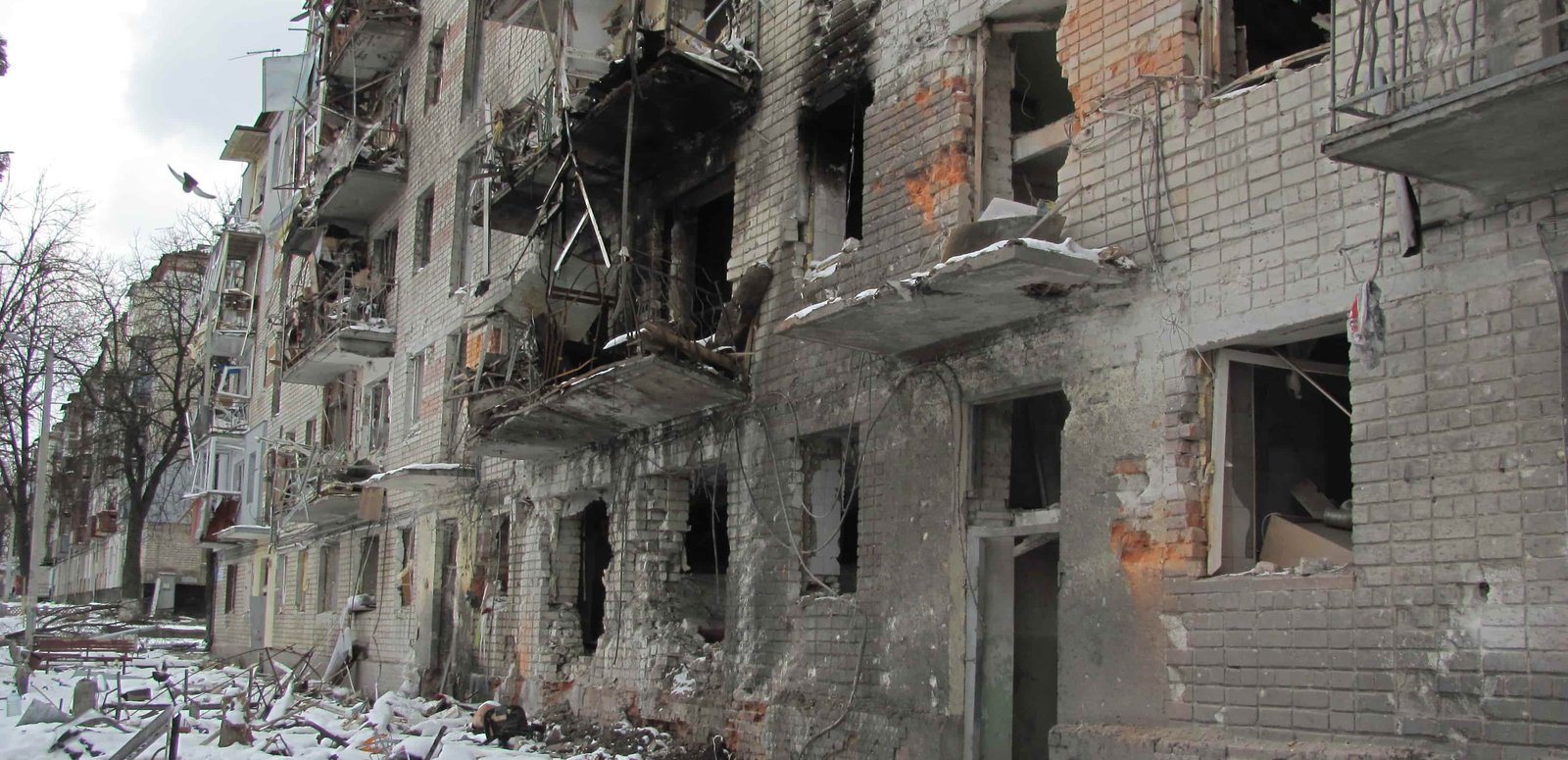
On February 24, 2022, Russia launched a full-scale invasion into neighboring Ukraine. Over the ensuing two years, Russian aggression has displaced at least 11 million people with heavy bombing, drone strikes, and urban combat that have damaged or destroyed well over a million homes. There have been massive casualties, widespread targeting of civilian infrastructure, and the catastrophic destruction of the Kakhovka Dam, leading to thousands of civilians displaced by unprecedented flooding. As of December 2023, 5.9 million Ukrainians remain displaced across Europe marking the fastest and largest displacement of people in the continent since World War II. An additional 3.7 million people are internally displaced within Ukraine.
Property destruction and forced displacement are among the most widespread and disruptive outcomes of war. After a conflict ends, it can take decades for displaced persons to return to their homes or receive adequate compensation for property damage. Displaced people often cannot prove they are the rightful occupants of the homes they left behind, because their property records are missing, destroyed, or inaccurate or because they are unable to present the necessary evidence to prove the extent of destruction to their property. These challenges complicate recovery efforts and prolong conflict and instability.
The Government of Ukraine’s innovations in digital public infrastructure provide an opportunity to transform post-conflict property restitution and compensation. Despite ongoing hostilities, the government is already strategically rebuilding the country and addressing humanitarian challenges with the help of local and international partners from both the public and private sectors. The administration of these efforts is substantially supported by the digital public infrastructure Ukraine deployed well before the Russian invasion.
In 2020, the Ukrainian government launched Diia, an e-government platform that helps residents store, access, and share digital documents for official use. The initiative is led by the Ministry of Digital Transformation. Before the 2022 invasion, millions of Ukrainians used Diia (pronounced DEE-ah) for everything from accessing digital IDs to paying taxes, receiving pensions, and registering companies.
Diia has over 21 million users, more than half of all Ukrainians. The app has been downloaded on 70 percent of the smartphones in Ukraine. New features are added regularly, and every government ministry has a chief digital transformation officer to help shepherd the digitization of public services and processes.
During the first weeks of the 2022 invasion, the Government of Ukraine added several new functionalities to Diia, including a portal that allows residents to file claims of property damage and destruction as a result of Russian aggression. In the first year after the 2022 invasion, Ukrainians used Diia to file more than 370,000 initial property damage reports. In spring 2023, the government launched eRecovery, a digital-first program in Diia that allows Ukrainians to convert crisis-related property damage reports into compensation claims. Damage claims are first evaluated by a local commission. Approved and processed claims are paid to claimants through an electronic bank card.
The potential for the Diia-powered eRecovery program to help transform the post-war property compensation and restitution processes globally is hard to overstate. This innovation may mark the first-ever example of a digital property claims process implemented at scale while hostilities are ongoing. If managed effectively, the portal and the associated eRecovery program could significantly reduce the time and costs of getting displaced persons back into their homes, while both increasing the transparency and security of the property return process and decreasing the potential for corruption. The real-time nature of the effort is critical for claimants by allowing Ukrainians to submit claims before evidence is lost or destroyed and to rebuild their homes without waiting for the conflict to end.
The current moment presents a significant and time-sensitive opportunity to share strategic considerations that could help Diia and the eRecovery program better serve the needs of all Ukrainians. Ukraine is expanding its reconstruction efforts, even as the war is on the verge of dragging into its third year. Diia will likely continue to evolve as the conflict persists and Ukraine’s recovery needs change over time. The eRecovery program, especially, will require modification as user needs and the scale and nature of reconstruction efforts become better known. Recovery plans around a stalemate could differ drastically from planning around a clear negotiated settlement for peace.
This report contains recommendations for strengthening the eRecovery program. Recommendations fall broadly into two categories, recognizing the difficulty of this time for the Ukrainian people and government, and are largely aimed at Ukrainian administrators and outside partners supporting reconstruction, humanitarian, and recovery efforts. There are opportunities to harness tech efficiently to improve the functionality of the system and boost transparency. There are also ways Ukraine could foster and plan for a more trusted and cohesive system, both online and offline, for effective reconstruction efforts. Urgent recommendations include revising the legal framework to account for a broader range of property damage and ownership scenarios, improving the technical aspects of the portal to accurately reflect property rights and ownership, and finding comprehensive and inclusive solutions to ensure payments reach all who need them.
Local nongovernmental organizations working with residents have already identified ways to strengthen eRecovery to better align with global property compensation best practices and local context. Encouraging public collaboration and opportunities for civil society feedback is an integral component to the long-term success of the overall recovery program.
Although an end to Russia’s invasion could be years away, Ukraine must continue to plan now for the building and restoration of communities. A road map, even a flexible one that can accommodate unknown twists and turns on the road to a rebuilt and peaceful Ukraine, is critical for stable communities and livelihoods. There are still millions of Ukrainians living outside of Ukraine and those displaced within who will eventually decide to return home and contribute to recovery efforts, or not. But the country’s potential for sustaining an effective recovery era must be built on a strong and trusted foundation designed to maximize people-centered outcomes.
Ukraine’s dexterity and innovative approach to digital tools to enable property compensation may provide an essential case study for reconstruction efforts that can serve as an example of how to improve the provision of public services and inspire similar public interest technology initiatives around the world.