Table of Contents
- Overview
- Property Restitution and Compensation in Ukraine
- The Diia Portal and the eRecovery Property Compensation Program
- Strengths of Diia and the eRecovery Program
- Challenges of Diia and the eRecovery Program
- Recommendations for Improving Diia and the eRecovery Program
- Conclusion
- Additional Resources
Challenges of Diia and the eRecovery Program
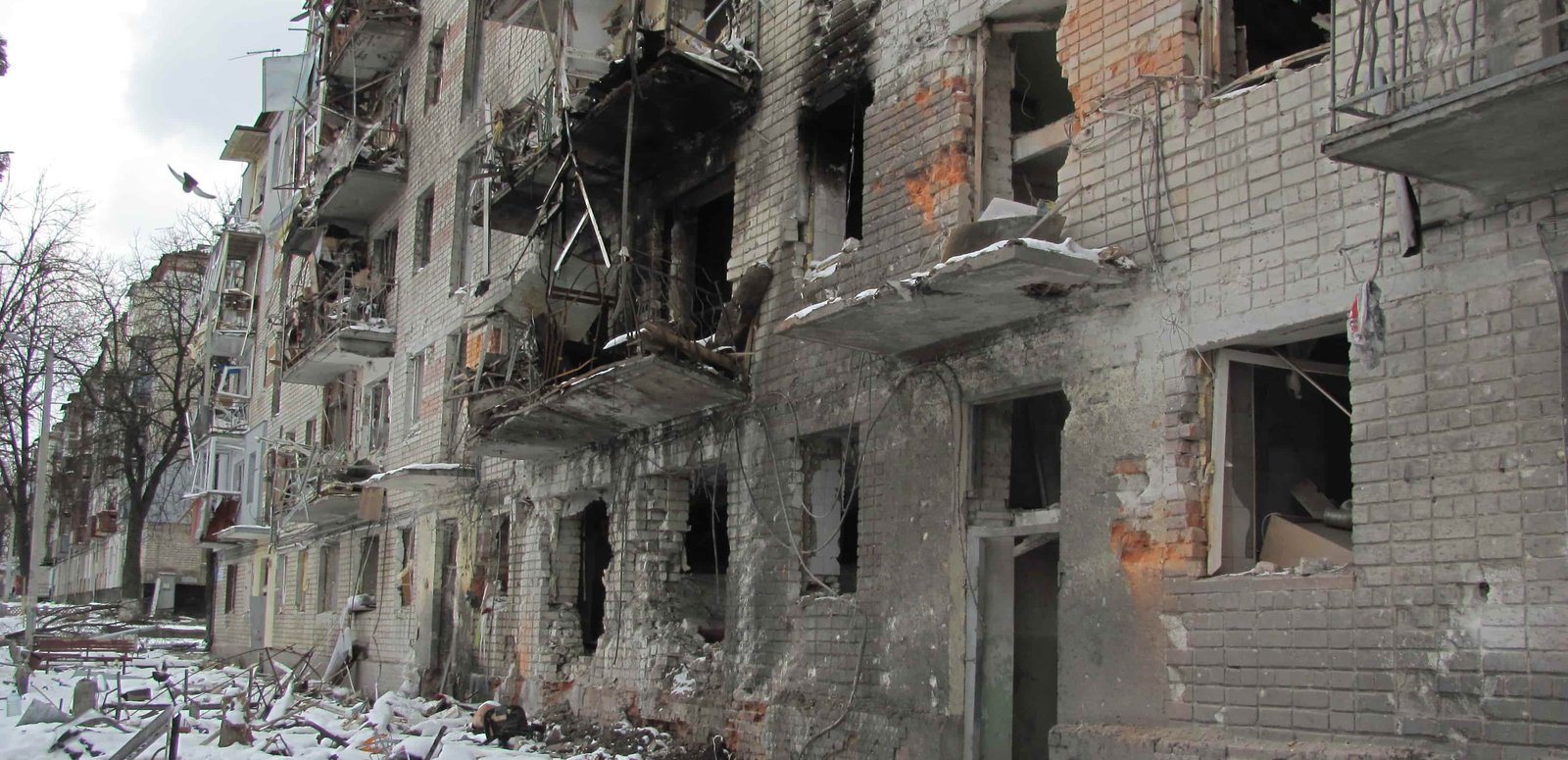
The eRecovery property compensation process is not without its challenges. This is not surprising, as the Ukrainian Ministry of Digital Transformation is rapidly building a new digital service with several other e-government features in the midst of a major conflict. That said, it is essential that the challenges are identified and duly addressed in future iterations of the system and through legal and regulatory reform, ensuring that no property owner is left without recourse to claim damages or destruction. The challenges with respect to property compensation identified in our research fall into three categories:
Legal and regulatory: The eRecovery process is guided by a set of laws and regulations, including Ukraine’s newly promulgated Compensation Law No. 2923 and its companion regulations. In some cases, provisions within these laws do not align with best practices for property compensation and return, or they contain limitations and impracticalities that have become obvious as the property compensation process has begun in earnest.
Technical: These challenges relate both to shortcomings in the overall design of Diia that could be addressed to improve user experience (UX) and user interface (UI) of Diia’s damaged property portal, and with platform governance and delivery choices that program administrators have made in interpreting the Compensation Law and other relevant laws and regulations. In some cases, these challenges can make it difficult for claimants to meet program requirements as defined by the platform and to submit their claims.
Implementation and compensation delivery: These challenges relate to how the compensation process is physically implemented after an application is submitted through Diia. For example, staffing and accessibility of the compensation commissions, and the fact that, in some regions, eRecovery does not operate within a certain distance of the front line.
The Government of Ukraine is actively working with the legal, humanitarian, and housing communities to address some of these challenges. For example, Compensation Law No. 2923 initially precluded property owners from retroactively claiming compensation for self-made repairs; this provision presented obvious impracticalities, given that compensation for property damage began flowing 15 months after the war’s outbreak and many victims of property damage had undertaken repairs in that time period. The government amended this provision in October 2023 to allow homeowners to retroactively submit claims, beginning January 1, 2024.
Examples of Challenges within the eRecovery Program
East-SOS, a Ukrainian nongovernmental organization that, among other things, assists conflict-affected persons and internally displaced persons, has been helping Ukrainians submit property damage reports and compensation claims through the Diia application and the eRecovery portal. The organization has hosted several regional roundtables to surface opportunities, challenges, inefficiencies, and inequities in the eRecovery process. Below are obstacles shared by East-SOS, supplemented by additional New America analysis.
- Claimants who registered their property before 2013 experience difficulties proving ownership in the Diia app. To verify property claims, Diia pulls in digitized property ownership records from the State Register of Property Rights. As noted, however, the SRPR is only 40 percent complete and is largely populated with property registered after 2013, when Ukraine began digitizing property records into the SRPR. The SRPR also lacks most property records from Crimea and from occupied territories in the Donetsk and Luhansk regions. As a result, claimants whose property records are not contained in the SRPR must take the extra step of registering their property in the SRPR prior to seeking compensation.
- eRecovery requires consent from all co-owners prior to filing for compensation for damaged property. This is often impractical. If a property is owned by multiple parties, all owners must provide written notarized consent, or consent through the Diia application, to file for property damage compensation. This creates numerous challenges and delays. For example, if one of the property owners is deceased, the remaining applicants must complete inheritance processes and obtain an inheritance certificate prior to filing an application. Or, if one of the property owners cannot be located or refuses to give consent for any reason, the remaining owners are unable to receive compensation. In November 2023, the government amended its regulations to allow co-owners of property that has been destroyed to individually file for compensation for their share of the property. This provision, however, has not been applied to damaged properties.
- Claimants find it difficult to file individual claims when elevators, roofs, lobbies, and other common areas of residential buildings are damaged. According to Ukrainian legislation, the eRecovery program will reject individual compensation claims for residential buildings in which common areas are damaged and have not yet been repaired. For example, a claimant whose apartment has been damaged cannot receive compensation until the damaged lobby or roof of the building has been repaired. Beyond financial compensation, this challenge is significant because common areas provide core structural support for buildings and therefore should be urgently repaired. According to East-SOS, the World Bank and the Ukrainian Ministry of Infrastructure are drafting legislation to address this issue.
- Claimants cannot legally apply for compensation for damage to auxiliary dwelling units and other structures on the grounds of the main property. Currently, the eRecovery program allows users to file claims for private homes, apartments, residential premises, and dachas. But it lacks the legal ability to process claims for outdoor kitchens and other structures that are located on the property but are not in the main residence.
- Heirs cannot receive compensation for destroyed property. Due to a loophole in Ukraine’s legislative framework, heirs of a property owner whose property was destroyed cannot exercise their inheritance rights to that piece of property. This is because notaries, who are responsible for notarizing inheritance certificates, do not have the ability to determine the value of a fully destroyed piece of property. Without an inheritance certificate an heir is unable to transfer ownership of the property in the SRPR, and thus is barred from filing a compensation claim.
- Digital application primacy can exclude vulnerable populations. The eRecovery program’s reliance on digital claims filed through the Diia platform poses a major barrier for the 28 percent of Ukraine’s population that lacks reliable internet access. It is technically possible to apply for compensation in person, by visiting a local administrative office where a staff member will use Diia to help submit an application; however, the process is cumbersome and opaque. The challenges of near-exclusive reliance on a digital platform are particularly acute in rural areas, conflict zones with damaged infrastructure, and among elderly populations. The current conflict may exacerbate this digital divide, leaving even more people without equal access to necessary compensation services. To effectively reach these underserved groups, the program needs to incorporate alternative methods such as offline applications, local support centers, and mobile registration units. Addressing this digital divide is imperative to ensure equitable access to the eRecovery program for all affected individuals, regardless of their technological capabilities or connectivity.