Table of Contents
Executive Summary & Key Findings
Proxy warfare will shape twenty-first century conflicts for the foreseeable future. Cold War norms, however, no longer apply in a highly networked, multipolar world. The erosion of state power, rise of transnational social movements, and proliferation of advanced military and communications technology are shifting the horizons of strategic surprise. The enhanced military capacity of former Cold War client states to engage either covertly or overtly in conflicts is erasing front lines, transforming alliances, and reshaping battlefield dynamics. Whereas Moscow and Washington once set the rules of the game, the number of state and non-state sponsors of proxy forces is growing in today’s globalized market. Today a complex mesh of partnerships among states, corporations, mercenaries, and militias is changing the way wars are fought and won.
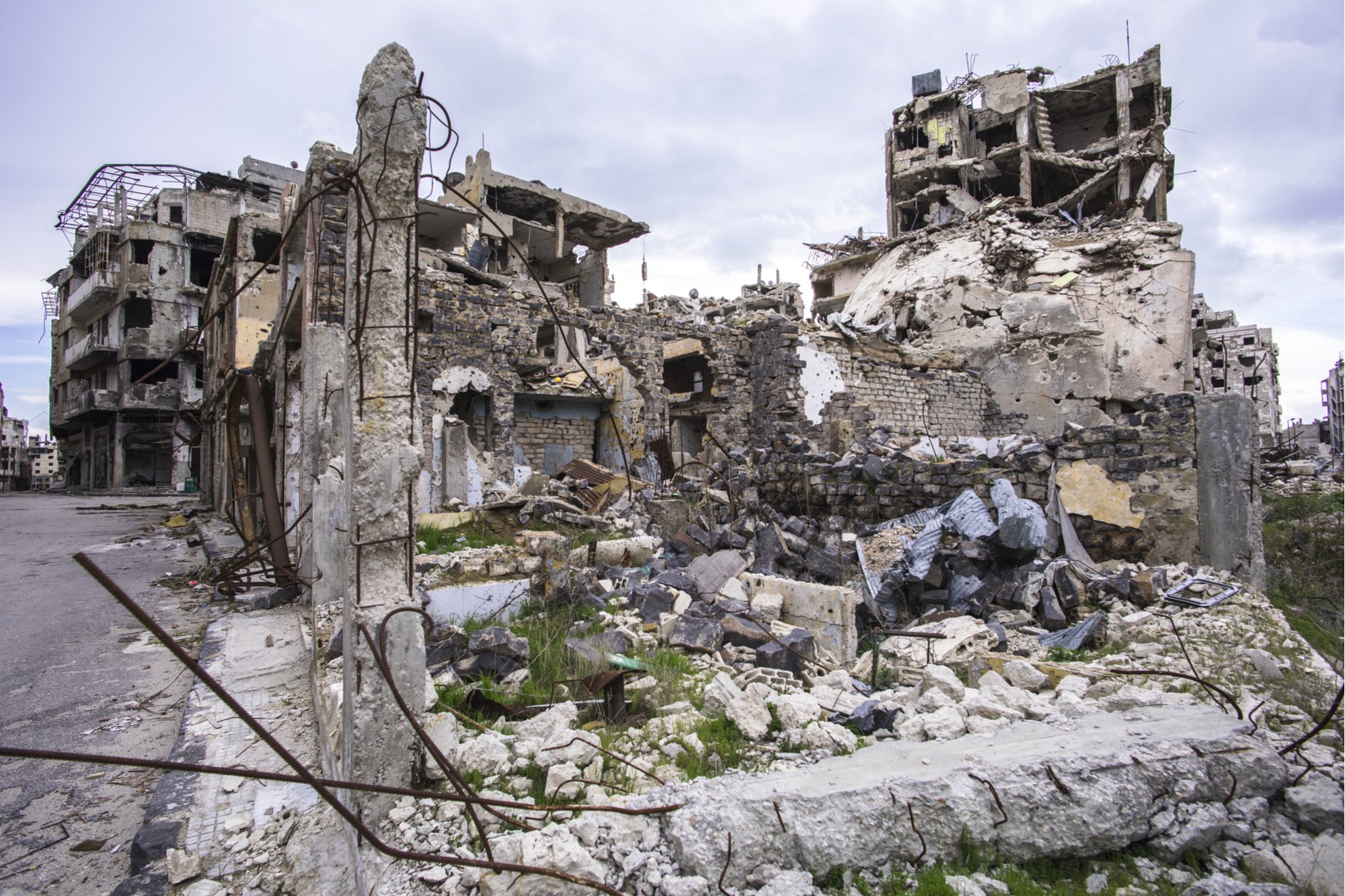
The devastating impact of proxy war is keenly felt in the Greater Middle East and its periphery. While conflicts in Ukraine and Afghanistan appear stuck, for the moment, in a precarious status quo, Syria, Iraq, Libya, and Yemen stand out as ground zero in multi-sided proxy wars that are testing international norms. From U.S.-backed Kurdish forces and Russian private military security contractors in Syria, to Iranian-backed Houthi rebels and UAE-supported militias in Yemen, proxy fighters today play an outsized role in the grand strategy of multiple states. They have developed relationships with a diverse range of sponsors for their own, often divergent, ends—at times apocalyptic and revolutionary—while creating their own networks of sub-state proxies.
U.S. policy—in flux since the Arab Spring—has yet to integrate this new reality. Unable and unwilling to commit to direct military intervention after long, costly wars in Afghanistan and Iraq, the U.S. national security establishment is doubling down on proxy warfare, gambling on a strategy that advances U.S. interests “by, with, and through” local partners. This is a risky wager and it is still unclear whether it is a winning bet. Civil wars raging in the so-called “arc of instability” spanning littoral zones of the Mediterranean Middle East, Black Sea, and Persian Gulf regions today remain among the greatest threats to international security. Conflict there has displaced tens of millions of people, killed hundreds of thousands, and devastated large swaths of the region’s economy and infrastructure. Competition among Iran, Saudi Arabia, Turkey, and Israel for regional primacy and renewed rivalry with Russia and China are forcing Washington to reconfigure its grand strategy.
Current conceptions of proxy warfare do not account for the paradigm shift underway. Proxy warfare today is best defined as sponsorship of conventional or irregular forces that lie outside the constitutional order of states. In the Greater Middle East and its periphery, multiple states have adopted limited war strategies predicated on murky command structures that allow sponsors and proxies to cross red lines and bend international legal norms seemingly without consequence. This raises serious questions about command responsibility and has implications for states that provide direct material support to proxy forces or allow their citizens to support proxy groups with impunity. Proxy warfare needs a clear-eyed cost-benefit analysis to make U.S. strategy more effective.
Key Findings
Today’s conflicts are more complex and more intertwined than those of the Cold War era when the term proxy warfare became a staple of international affairs. Today proxy warfare is best defined as sponsorship of conventional or irregular forces that lie outside the constitutional order of states.
- Analytical attention on conflict has generally fixated on outdated Cold War models or focused on state-sponsored terrorism, the impact of external support in civil wars, and the efficacy of counterinsurgency campaigns.
- State-centric definitions of proxy warfare do not sufficiently reflect the tightly networked nature of post-Cold War conflict and the ability of new types of actors to project power beyond traditional borders.
- Failure to accurately define the parameters of twenty-first century proxy warfare poses policy challenges, especially when the interests of sponsors and proxies diverge on the battlefield and at the negotiating table.
Multipolarity has supplanted bipolarity. Globalization has transformed the role of sponsors and proxies, elevating transnational social movements, an array of armed actors enabled by interconnected supply chains, and conflict entrepreneurs.
- Transnational social movements have redefined front lines and erased the borders of conflicts once geographically bound by territorial limits imposed by a Cold War order.
- Many of these transnational social movements have revolutionary or apocalyptic ideologies that hardly fit the vision of proxy warfare as the “great game” of old, with great powers moving proxies like chess pieces on the global map.
- Paramilitaries, militias, and private military security forces play an outsized role in the grand strategies of the United States, Russia, Iran, Saudi Arabia, Turkey, and regional actors in the Greater Middle East and its periphery.
- Globalization, with its attendant liberalization of markets and currencies and integration of transportation, information, and economies, is knitting together a new network of state, corporate, and individual interests that have a stake in proxy conflict outcomes.
In the Greater Middle East and its Eurasian periphery, proxy warfare is back with a vengeance, rivaling and perhaps exceeding the threat it posed during the late Cold War. Several prevailing trends are driving the shift.
- Inter-state competition between a resurgent Russia, a rising China, and the United States is intensifying, along with regional rivalries stoked by sectarian divides.
- Military modernization and expanded access to remote targeting capabilities among many former Cold War client states in the Greater Middle East and its periphery have shifted the regional balance of power.
- The proliferation or threat of proliferation of weapons of mass destruction, standoff capabilities, and weaponization of narratives among regional rivals such as Israel, Turkey, Iran, India, Pakistan, Saudi Arabia, and other Gulf States is reshaping alliances.
- Successive shifts in communications, electronics, and computing have produced profound acceleration in technological synthesis that has transformed the ways ideas and goods are distributed.
Analysis of proxy warfare has suffered from politicization and a “good for me but not for thee” problem that fails to question prevailing U.S. policy assumptions.
- Much of the English-language research on the subject takes a distinctly Western viewpoint and rarely draws on field data and primary source analysis in other languages.
- While some case studies have been examined in depth, like U.S. support for the Afghan mujahideen and the Contras in Nicaragua, other more recent cases, such as current wars in Syria, Iraq, and especially Libya and Yemen, have not received enough attention.
- Much of the field-based case study work that does exist has been journalistic, leaving other methods—including the use of open source intelligence and analysis of social media data and satellite imagery—ripe for further exploitation.