
Daniel Goetzel
Fellow, Reimagining the Economy Project

This is a guest post for New America’s Future of Work & Innovation Economy initiative. All positions are those of the author.
The next president will need a day one strategy for addressing the economic opportunity and political risk of a raging artificial intelligence debate. Today, much of the AI policy debate centers on how to regulate AI technologies and mitigate negative impacts on workers, including future job losses. These are important debates that will continue in the run-up to the 2028 election.
However, once elected, presidents are rarely measured by their policy or regulatory frameworks. They are measured (fairly or unfairly) by the state of the economy—including how many jobs they create, and the affordability of basic goods and services, during a four (or eight) year term. As such, it is critically important for the next president to harness the unprecedented levels of private sector investment pouring into AI today to build an economy that works for more people, creating more opportunity in more places.
To do that, the next presidential administration must rethink the way that it deploys capital, shapes technology and financial markets, and perhaps most importantly rebuilds government capacity.
The charts below are meant to ground that governing agenda in data, rather than rhetoric. Together, they tell the story of where AI investment is concentrating, who is capturing its gains, and where geographic, political, and talent gaps are already widening. Presidential candidates who internalize and act on this data will define the next era of the American economy.
Private companies are spending more money on AI infrastructure than the federal government spent on the interstate highway system, NASA Apollo program, the Manhattan Project, and the railroad system.
Source: The Wall Street Journal
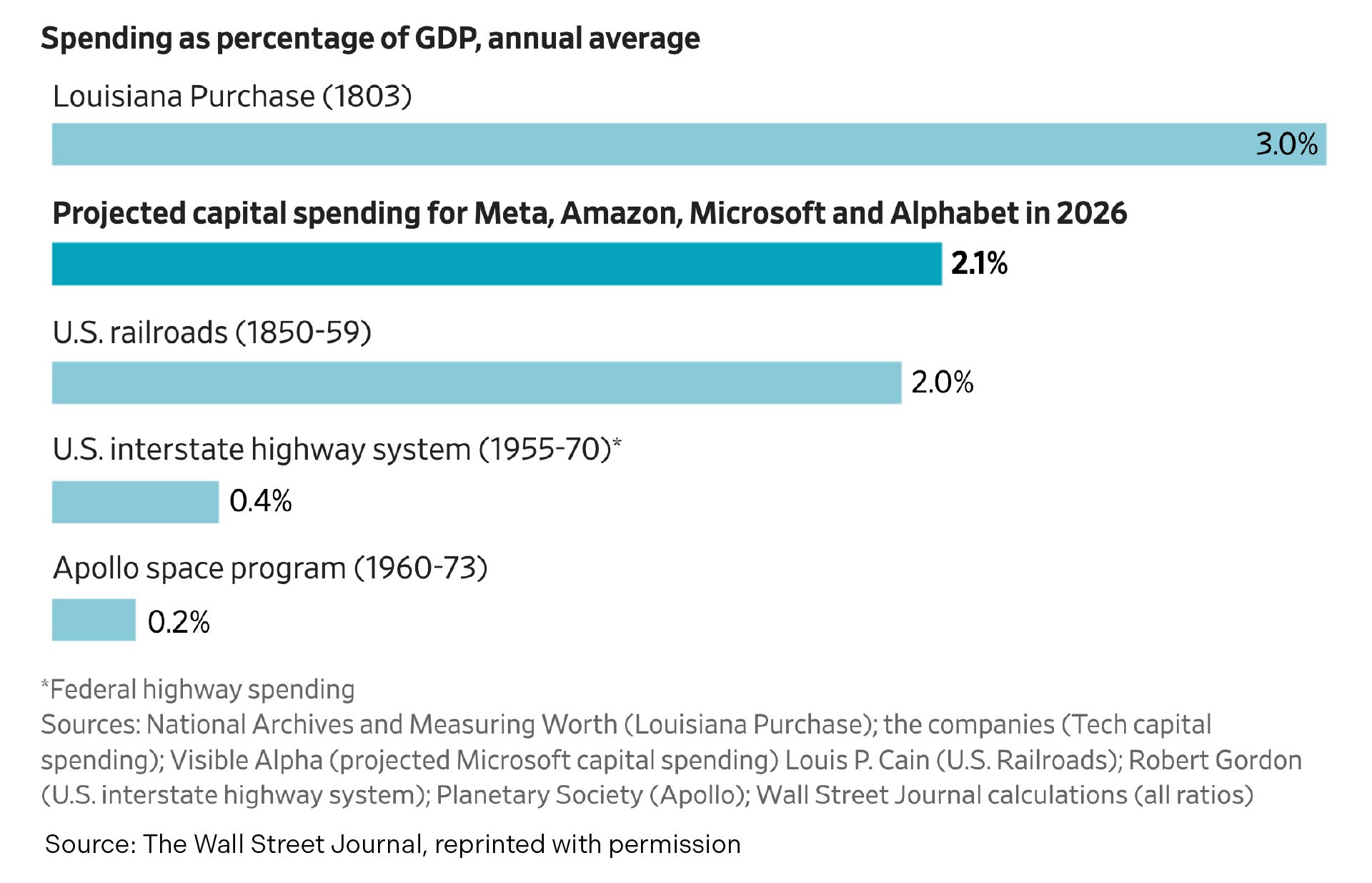
Why this matters: Where and how you build scientific and physical infrastructure matters. Contrary to popular belief, much of AI investment is taking place outside of Silicon Valley through an ever-growing network of data center campuses, often referred to as AI Factories. In past technology and industrial revolutions, the design and placement of these projects directly impacted the trajectory of local communities. The location of highway exits, railroad spurs, U.S. Department of Energy National Labs, and NASA launch sites led to the clustering of innovation workers, supply chains, and housing across America’s history.
However, historically these investments have left people behind, whether it was highways historically segregating communities or the “China Shock” hollowing out manufacturing jobs and factory towns across the Northeast and Midwest. We are building the AI equivalent of the “highway system” today and the next presidential administration will play a meaningful role in shaping these infrastructure investments.
We are reaching an inflection point where we are spending more money to build data centers than office buildings in America. This development, combined with the shift to remote work, is reshaping America’s downtowns, cities, and economic development strategies for governors and mayors nationwide.
Source: Bloomberg
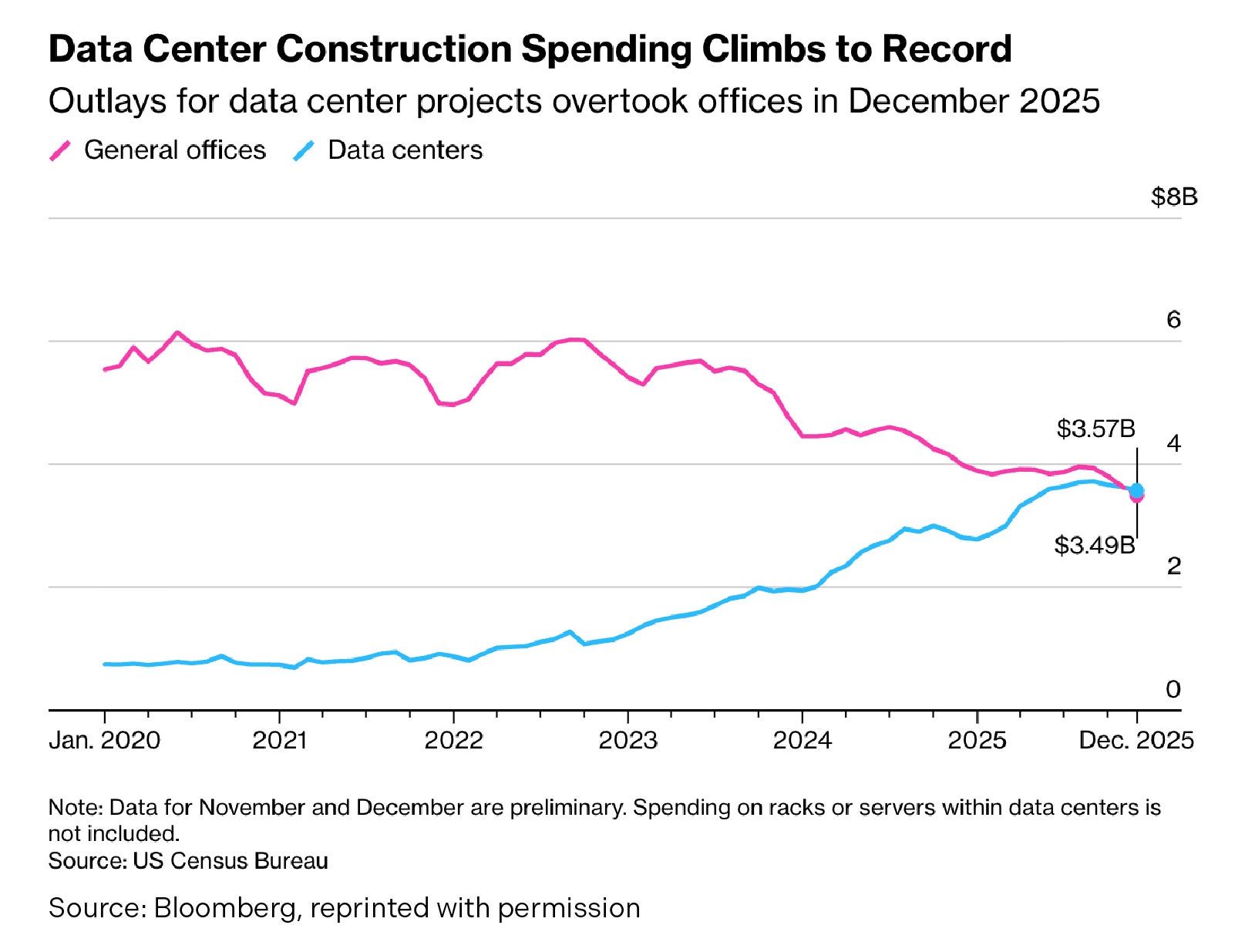
Why this matters: Data center buildouts are becoming increasingly contentious as they expand into more communities, straining local water and energy resources, while economic data shows their job creation benefits fade after initial project construction. As moratoriums spread across the country, politicians are being pushed into a false binary: pro- or anti-moratorium.
The next presidential administration will need to balance these legitimate local concerns against a competing reality: AI infrastructure and its supply chain are both a job creator (particularly for skilled-trades workers building these projects, jobs that don’t require a college degree for well-paying work) and a national security imperative. However, short-term jobs should not be an end goal in itself, long-term economic development strategies must be the north star vision.
While polling shows that views are beginning to calcify, there is a shrinking swath of the American public who are persuadable on data center development. That is dependent on how these projects are designed and whether the financial upside of these projects is redistributed back into their local economies.
Source: Politico Poll (January 2026), Politico Poll (July 2026)
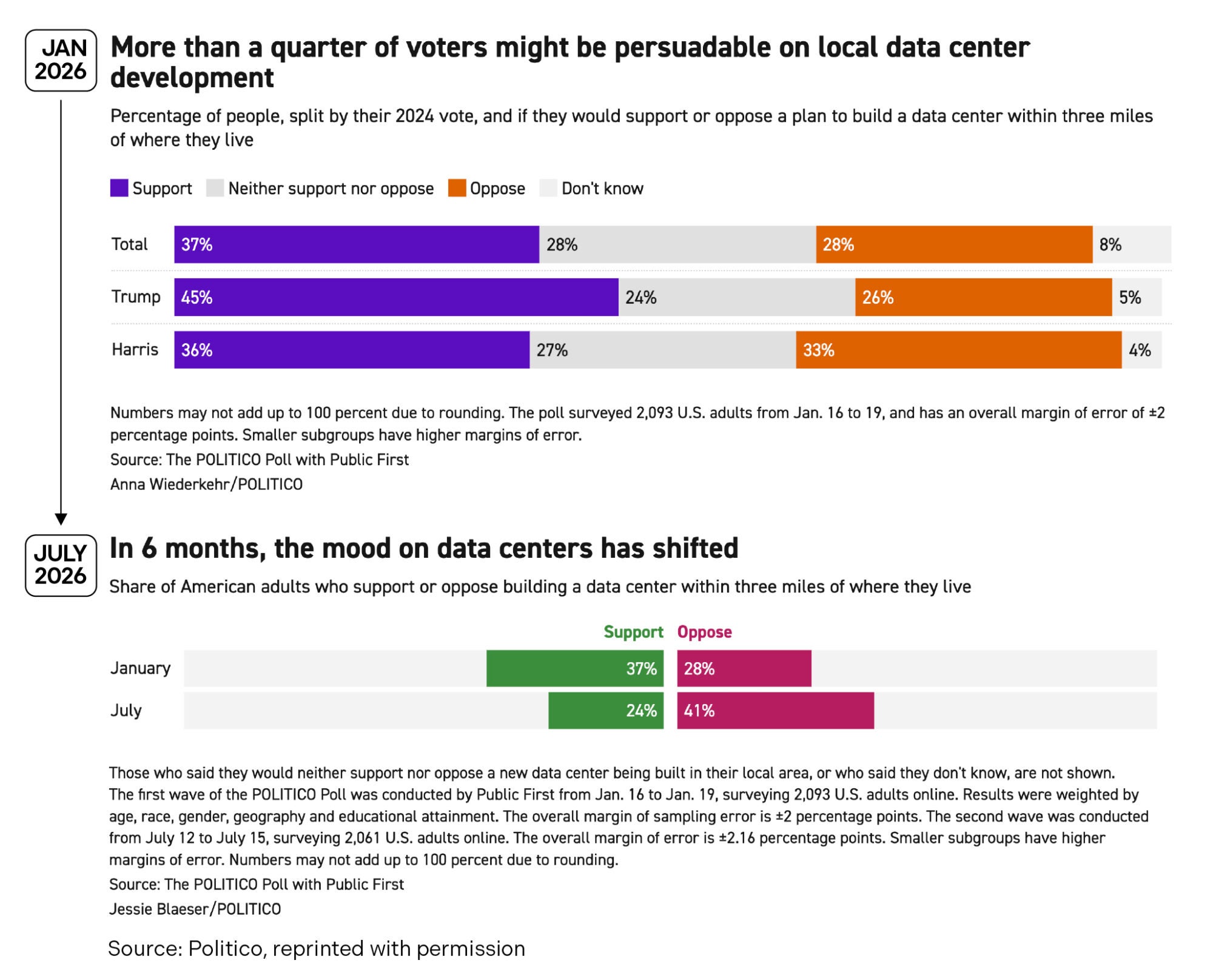
Why this matters: There may be opportunities to transform disconnected data center islands into inclusive AI Hubs through intentional federal and local policies. Winning the support of “AI undecideds” is dependent on how these projects are designed and whether they fit into the longer-term economic development vision for a region and the ambitions of its residents. But neither the vision nor the strategy behind it can come from the private sector alone.
There are wide disparities in how prepared different communities across the country are for this “AI moment.” For example, women without college degrees are uniquely at risk due to their overrepresentation in clerical and administrative roles.
Source: Brookings Metro
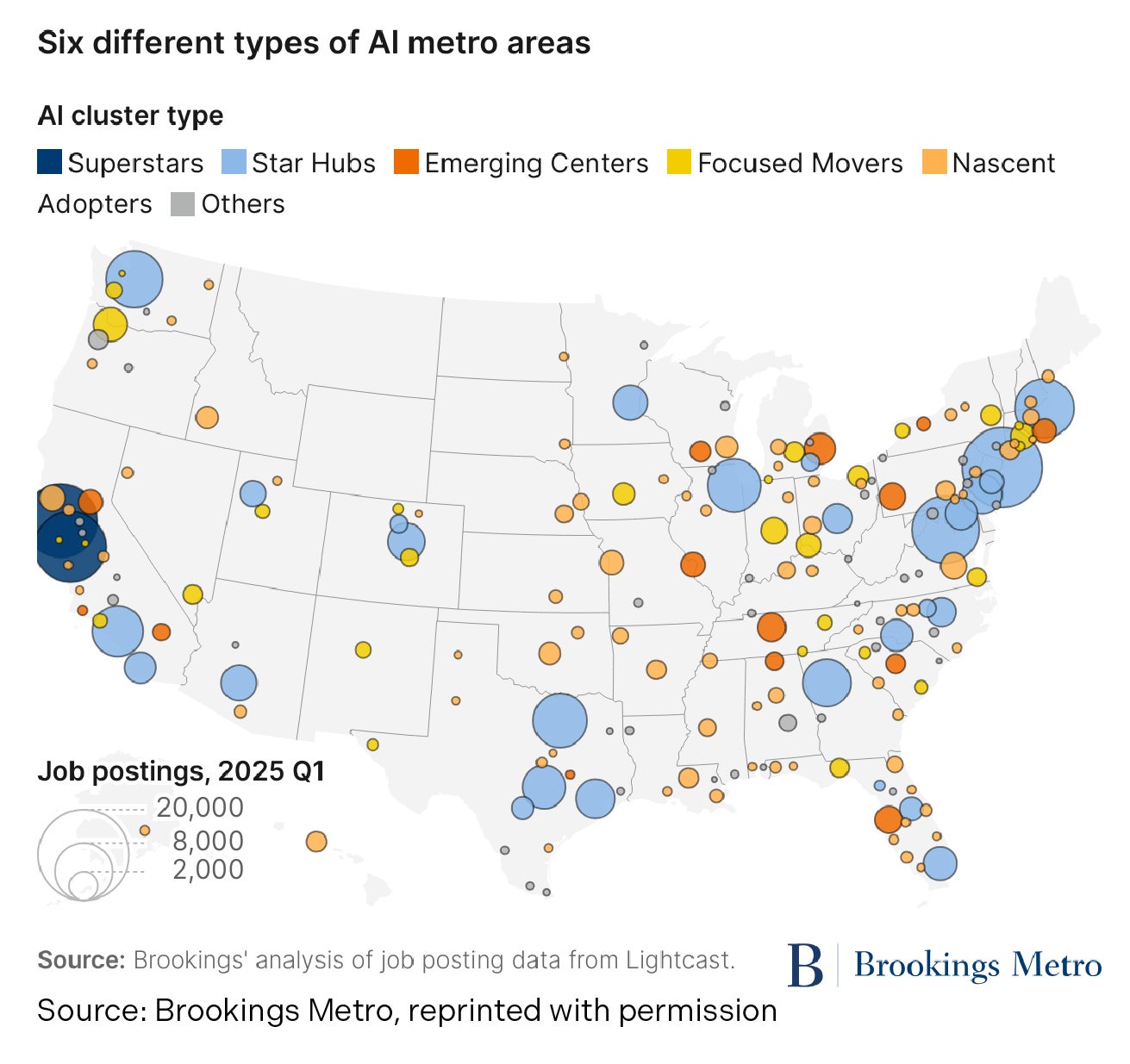
Why this matters: The fastest growing technology in modern history has the potential to transform local communities if there is an intentional government approach to how we structure our portfolio of scientific, infrastructure, and workforce investments, alongside streamlined project approvals and market shaping activities.
The what, where, and how we build is not a foregone conclusion, or one that will be dictated by the private sector alone.
The government has a track record of spurring ambitious projects, and recently did so with the implementation of the CHIPS and Science Act.
Source: The Institute for Progress
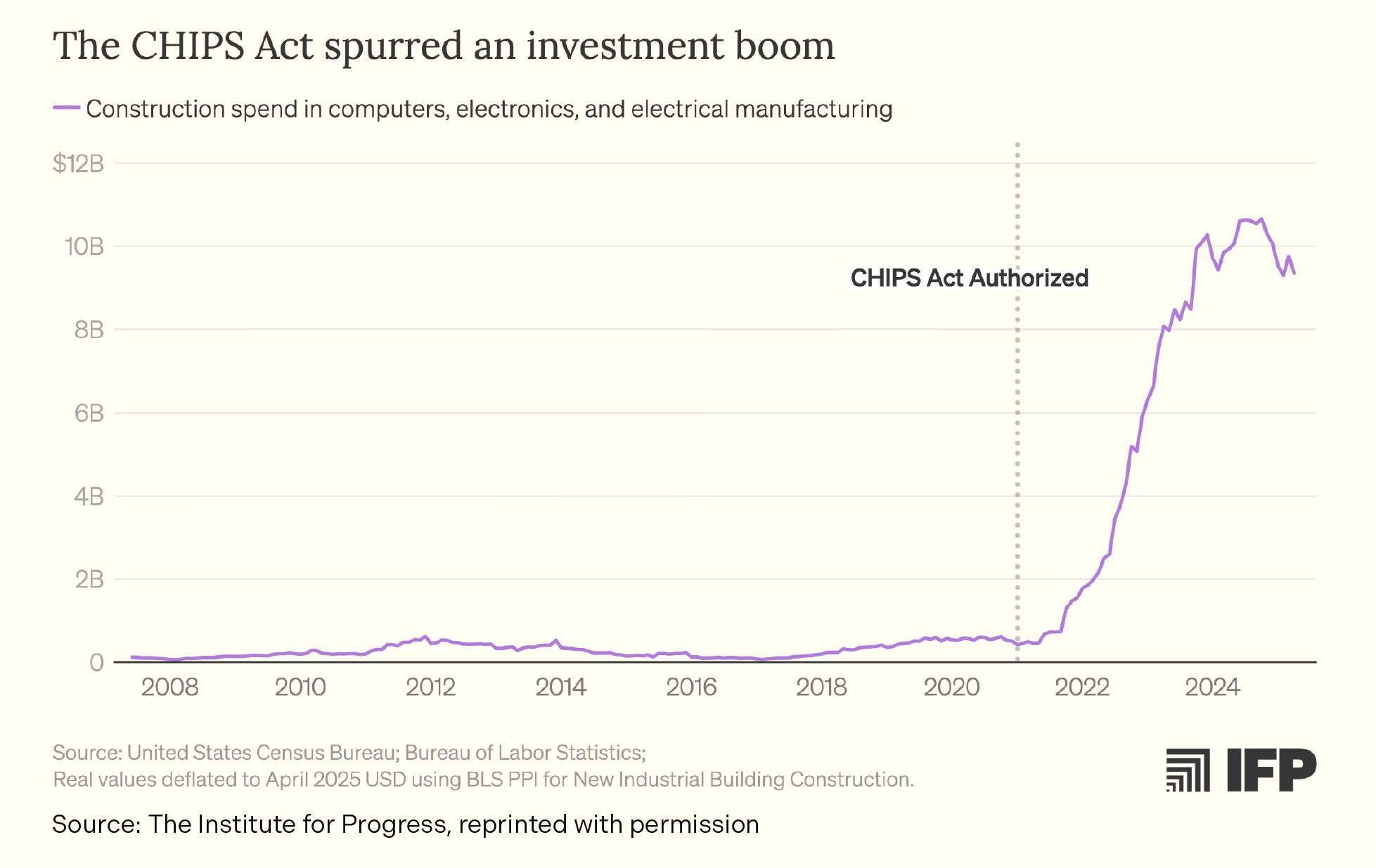
Why this matters: The way that the government designs industrial and technology interventions matters and you need the right staff and staff structures in places to do that.
But scientific and operational expertise is being hollowed out within government, especially within the scientific agencies that created the fertile ground for America to be the global leader in AI.
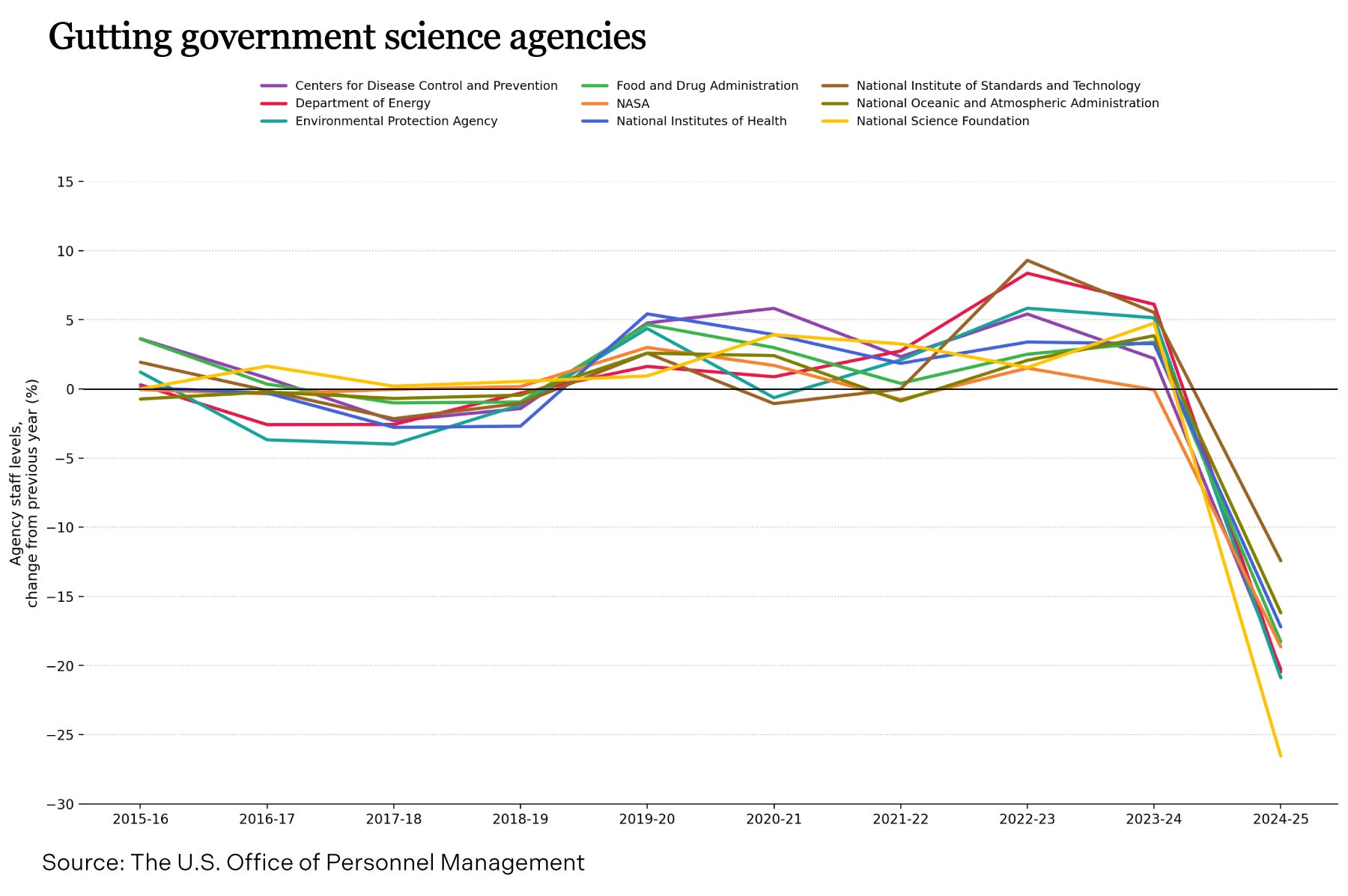
Why this matters: DOGE cuts, agency restructurings, and fewer employees with PhDs means that there is less capacity to innovate and implement. Our government is less expert today, especially in emerging technologies like AI and quantum and surrounding regulatory infrastructure (e.g. EPA, FERC). This will be a recruitment challenge and morale challenge for the next president.
This capacity gap is a day one challenge for the next presidential administration, especially since he/she is going to inherit billions of dollars in equity stakes in public and private companies, negotiated during the four years of the Trump administration.
Source: Council on Foreign Relations
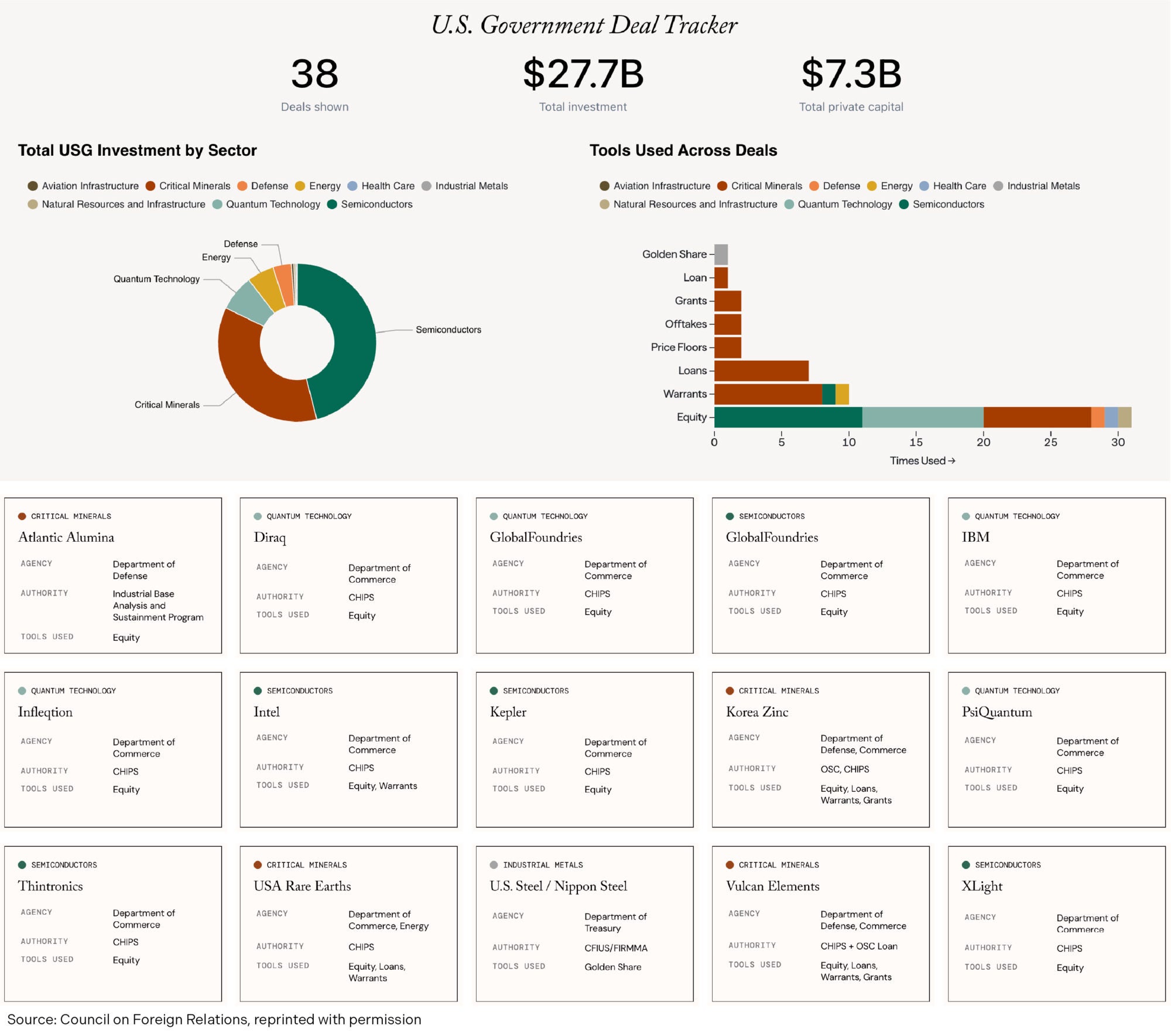
Why this matters: A future government without an AI, jobs, and innovation agenda will be caught flat-footed. But, a forward-looking strategy developed today can transform this risk into a job creating opportunity.
In future pieces, we will lay out implementation strategies for how the next presidential administration should approach this moment to ensure that the forthcoming AI revolution is one that works for workers, regions, and communities that past technological waves left behind.
Fellow, Reimagining the Economy Project