Tough Call

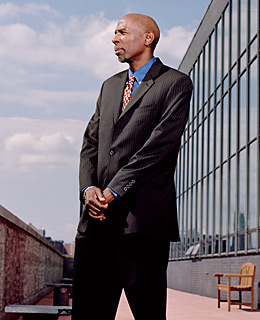 Talking Points Memo is hosting a discussion of journalist Paul Tough’s new book, Whatever it Takes, which profiles Geoffry Canada, the creator of Harlem Children’s Zone, an audacious, multi-faceted initiative that seeks to break the cycle of poverty for more than 7,000 low-income children living in a 97-block section of Manhattan by providing an array of services for them and their families, including parenting classes, quality early education, high-quality charter schools, healthcare, and afterschool and youth development programs. With a smart line-up of panelists—author Alex Kotlowitz, Teach for America’s Kira Orange-Jones, Education Sector’s Andy Rotherham, Education Trust’s Amy Wilkins, and Tough himself—this promises to be an interesting discussion, although given the prominence of early childhood interventions in Canada’s strategy, I wish TPM had sought out someone with a focus on early education to participate in the conversation.
I haven’t had a chance to read Tough’s book yet (look for a review later this fall), but I have been wanting to comment on an article he wrote for the New York Times Magazine a week ago that elucidates similar themes. One of the points Tough’s work reiterates again and again,–in his writing about Harlem Children’s Zone; in a highly influential Times Magazine piece he wrote two years agon about KIPP, Achievement First, and other high-performing charter schools serving disadvantaged kids; on his excellent blog–is that disadvantaged kids can succeed in school (and, ultimately, beyond), but they need a lot of extra support that goes above and beyond what schools are traditionally expected to provide to students. Tough’s most recent Times Magazine article highlights three individuals who are, in very different ways, making the case for these kinds of extra supports for low-income kids—James Heckman, Susan Neuman, and Canada.
In particular, all three of these individuals make the case for dramatically expanded early interventions targeted to children well before the traditional age of school entre. Nobel prize winner Heckman has become an unlikely champion of increased investment in proven interventions for very young children, especially pre-k programs targeted to low-income youngsters. Neuman, a prominent reading researcher and former assistant secretary for elementary and secondary education, recently completed a book that highlights, and calls for expansion of, a specific set of interventions demonstrated by research to positively affect children’s outcomes, inlcuding Early Head Start, David Olds’ Nurse Home Visiting Program, and Bright Beginnings, a North Carolina pre-k program that targets 4–year-olds who score poorly on cognitive screenings. Canada’s Harlem Children’s Zone invests in numerous supports for preschool-aged children, including the “Baby College” parent education program and high-quality pre-k.
Heckman, Neuman, and Canada are welcome allies in highlighting the effectiveness of high-quality early education interventions and calling for their expansion. But it’s just as striking that each of them fits early interventions into a broader vision of supports and interventions to shepherd children on the path to successful adulthood. Heckman’s support for early education investments come out of a larger model of human skill development in which “skill begets skill”–and his research demonstrates that later skill interventions have a bigger payoff when the individuals receiving them previously benefitted from early education interventions. Neuman is a reading researcher who has spent much of her career focused on understanding and explaining how schools can be most effective in teaching children to read. Canada has opened charter schools to give children in the Harlem Children’s Zone access to high quality public education from children through high school. Their examples are arguments for the importance of nesting early education interventions within a larger framework for helping children succeed that also seeks significant improvements in the quality of education children receive within the public school system.
 That’s important because, as Tough has written elsewhere, there is a divide within the education and progressive communities (and also the Democratic party) between “education reformers” who believe there’s a social justice imperative to overhaul how our public education system serves poor and minority students, and other educators and policymakers who are highly skeptical of the reformers’ suggestions and believe that improving educational outcomes requires first tackling broader issues of social and economic inequity. That divide has already come under discussion in the TPM forum on Tough’s book, and we expect that similar issues will come up at a New America forum later this morning.
Yet what Tough argues, and what the examples he highlights–from Harlem Children’s Zone to KIPP–illustrate, is that this divide is very easily overstated. The best strategies working to improve outcomes for disadvantaged kids offer both high-quality educational services and supports–be they early childhood interventions, social services, or cultural experiences–that we traditionally think of as being outside the purview of public schools. The dominant policy question, then, is not whether we should prioritize early education on K-12 school improvement, health care or education reform, but how we build new institutions and sets of supports for kids that are capable of delivering the mixture of services and supports that evidence shows help improve disadvantaged youngsters’ chances of success. This is a much more difficult question, and one that engages many of the same thorny issues–How do we create public systems that effectively deliver high-quality services to children? How do we ensure that programs we invest in are effective? Where do we get high-quality human capital? What kind of incentives do we need to create for adults? How do we scale up the programs that are working?–that K-12 reformers are currently dealing with. These issues don’t go away when we broaden our focus from traditional public schools to early education and other services for children; they only get more complex.
Tough writes that, “the longstanding and sharp conceptual divide between school and not-school is out of date.” In fact, that conceptual divide remains firmly established in the structure of our institutions, our public debates, and even the ways we’re capable of thinking about what young children need. But it’s very much true that that division should be out of date. From an early education perspective, it’s particularly necessary that we break down divisions between “early childhood interventions” and “school reform” so that individuals working on both sets of strategies to improve children’s achievement can align their work with one another’s, and so that the early childhood and school reform communities can learn the best lessons of one another’s experiences. Harlem Children’s Zone offers one great example of that, which both reformers and early educators elswhere should seek to learn from and replicate.
More About the Authors
Issues
Programs/Projects/Initiatives
Related

Confronting Harmful Federal Disability Policy in Health and Human Services

Federal Early Education Update: March 2026
A Bureaucratic Shakeup Threatens Future Child Care Research