
Laura Bornfreund
Senior Fellow, Early & Elementary Education
In order to ensure seamless transitions for children, families, and educators, state and local government officials must work to create systems that enable supportive and effective transitions. This toolkit provides steps and policy ideas to help leaders take action now on improving transitions and aligning children’s early learning experiences.
This project is a collaboration between New America and EducationCounsel.
Thank you to our local and state partners and national colleagues who offered expertise and insights that informed this toolkit. We appreciate Amaya Garcia, Iheoma Iruka, Carlise King, Scott Palmer, Elliot Regenstein, Elena Silva, and Albert Wat for reviewing the toolkit and offering helpful suggestions. We’d also like to thank Sabrina Detlef for her expert and editorial insight; Danielle Ewen for being a thought partner on this project, and Julie Brosnan, Fabio Murgia, Riker Pasterkiewicz, and Joe Wilkes for their help in the design, publication, and dissemination of this toolkit.
We are grateful to the Heising-Simons Foundation, the Alliance for Early Success, the Bainum Family Foundation, the Richard E. and Nancy P. Marriott Foundation, and the W. Clement & Jessie V. Stone Foundation for supporting this work. The views expressed in this paper are of its authors alone.
This project is a collaboration between New America and EducationCounsel.
What’s New? In July 2021, EducationCounsel and New America published “A Toolkit for Effective and Supportive Transitions for Children, Families, and Educators.” This 2.0 toolkit includes two new sections: “Federal COVID Relief Dollars & How They Can Help Fund this Work” and “Takeaways from Our Work with States, Districts, and Communities.” It also includes new state and local examples; new discussions on the state of children, families, and educators; new resources; and other updates throughout.
Another school year has passed where children, families, and educators dealt with disruption and uncertainty because of COVID-19. Many families are stronger and more connected and parents are engaged in their children’s learning in a way they have not been before. Yet, while most students did return to in-person learning, school experiences did not return to normal.
Our youngest learners and their families and educators will feel the effects of the pandemic for years to come. For many, especially Black, Indigenous, and people of color and those in low-income communities, the pandemic has left lasting damage. And for many young children, the trauma, uncertainty, and loss they endured will last a lifetime. We now know the extent of some negative effects, including infants’ and toddlers’ language development and disrupted learning in the early grades.
Supportive and effective transitions from early childhood programs into kindergarten and the early grades will be crucial to begin to address these issues. Strong transitions set children up to succeed and get the supports they need in elementary school. States, school districts, center-based and family child care programs, Head Start programs, and the communities in which they are located must work together and thoughtfully connect children’s and families’ experiences across these years. Families and educators will need more support as they work to meet young children’s needs and help them thrive.
Transitions are rarely the direct responsibility of any one official. Leadership, vision, supportive policy, and careful planning are needed to ensure transitions remains a priority. Despite its importance, transitions are often overlooked or neglected and too often left to discrete activities leading up to the start of a new school year.
In order to ensure seamless transitions for children, families, and educators, state and local government officials must work to create enabling conditions for supportive and effective transitions. They must also align what children and families experience and how they experience it, as well as continuous improvement efforts.
The ongoing response to COVID-19—coupled with extended availability of resources, like American Rescue Plan (ARP) funds—provide an opportunity to enhance children’s transitions experience, reimagine and align learning environments in early childhood and elementary education, rethink how we value and support educators, and strengthen family and community engagement. It is up to states and local communities to make those changes by strengthening systems to support the prenatal through third grade (P–3) continuum.
This is an update to the original toolkit published July 22, 2021.
We consider the system of transitions in two main ways: (1) children’s transition from a home or community-based early childhood setting to the public-school setting of pre-K, kindergarten, or the early elementary grades; and (2) children’s transition in and out of different settings during COVID-19.
We take both a short-term and long-term view of strengthening transitions. There are immediate steps needed to strengthen children’s transitions this year and beyond. And this period of change and uncertainty presents a moment to reimagine children’s pre-K, kindergarten, and early grade experiences while also laying the foundation for improved, integrated systems across early care and education ECE and K–12.
While this toolkit focuses on what state and local officials should consider as they enact solutions, other interested parties play an important role in ensuring this work gets done. In coordination with early childhood groups, philanthropy, and advocates, officials should prioritize policies that improve outcomes for those who have suffered the most disruptions and harm. They should also be working to transform the ways children, families, caregivers, teachers, and other interested parties experience the transitions process.
In addition, state and local advocacy organizations can elevate under-recognized issues and those that need the most attention. They can also help connect decision-makers with educators and families. Philanthropy can help spur state and local innovation to find solutions to complex problems, make targeted investments for meaningful engagement with families and educators in policymaking and implementation, and help sectors collaborate on the best ways to enable children, families, educators, and communities to thrive. Those working in libraries, museums, and other community hubs provide educational, cultural, and recreational experiences and can be good partners for engaging families.
In the updated sections that follow, our team (1) delves into challenges stemming from the COVID-19 pandemic that will impact future school years, and (2) provides state and local policy solutions.
In section 3, we explain the definitions and terms that we use throughout the toolkit.
In section 4, we discuss the state of children, schools, and educators in the United States and offer ideas for addressing the most pressing needs in your state and community.
In section 5, we offer a framework for state and local decision-makers and questions to consider. The nine areas in the framework will help leaders decide what is needed to create systems that enable effective and supportive transitions.
In section 6, we lay out a six-step process for addressing and prioritizing the needs uncovered by the framework questions in Section 5.
In section 7, we share takeaways from our 2021–22 work with state and local leaders on building systems that enable effective and supportive transitions policy and practice.
In section 8, we put forward policy ideas and provide implementation examples from states and communities.
Section 9 and section 10 highlight sources of funding that can be used to strengthen transitions, alignment, and coordination across the early learning continuum up through third grade.
The appendices provide additional resources to help you get started.
More than two years out from the onset of COVID-19, public schools are left to navigate declining public school enrollment, particularly in the early grades; uncertainty around long-term funding to support school programs; and a politically charged environment, where public trust in educational systems and institutions is challenged. Education, as always, must be aimed at meeting the needs of children and families. These challenges come at a time when a demonstrated learning lag exists for incoming children, who display increased social and emotional fragility compared to children pre-pandemic.
How are these needs best met for young children transitioning into school? Simply continuing to operate schools as we did in 2019 would be a missed opportunity. The supports and structures designed for student success in the past were plagued with inequity, failed to meet the needs of individual children, and resulted in an ever-growing gap in achievement. If there were ever a time to rethink and enhance the public school experience for young children, it is now.
The pandemic has had a profound impact on enrollment. In 2020–21, public school enrollment fell by 3 percent compared to the previous year, marking the first enrollment decline since the start of this century. The declines were mostly concentrated in pre-K, which saw a 22 percent decrease on average, and kindergarten, which experienced a 9 percent dip. Pre-K and kindergarten (in many places) are not typically a required part of children’s schooling.
Pre-K enrollment varied across state programs, with declines ranging from 15 to 41 percent according to the National Institute for Early Education Research (NIEER), which cites three main reasons for this drop: (1) lack of in-person options, (2) families concerned about the safety of in-person schooling, and (3) cuts in pre-K funding.
The enrollment loss in pre-K was quantified in NIEER’s most recent State of Preschool report, which said the pandemic erased “a decade of growth with a decline of more than 298,000 children in one year,” (p. 5) with the greatest negative impacts on preschoolers from families with low incomes and preschoolers of color. NIEER predicts a decade of catch-up: “even if states recuperate from losses due to the pandemic and return to prior enrollment growth rates, states are likely to enroll just 40 percent of 4-year-olds and 8 percent of 3-year-olds ten years from now,” (p. 5) conclude the authors of the report.
Enrollment is expected to rebound, but 2021–22 numbers reflect uncertainty about stable growth. In its examination of states that have released 2021–22 enrollment data, Bellwether Education Partners revealed that public schools have yet to see enrollment bounce back to their pre-pandemic levels. As an example, California experienced growth in its 2021–22 kindergarten enrollment class, but first-grade enrollment declined and overall K–12 enrollment fell by 1.8 percent from the prior year, when COVID-19 was at its peak.
Families have faced unprecedented challenges these last few years. In some cases, persisting drops in enrollment are due to family hesitancy to return, stemming from fear of COVID-19 spread, skepticism about public schools’ crisis management abilities, or a preference for virtual learning or homeschooling. For some Black families, in particular, after seeing the racial inequities and bias their children experienced in virtual classrooms, they chose to homeschool.
Because K–12 enrollment is tied to funding, school districts experiencing drops in enrollment also face funding instability. Some states waived enrollment-based cuts the last two school years, but that may not continue. Federal COVID relief dollars have helped, but some districts have hesitated to use funds for staffing and other ongoing needs and others have needed to use the federal funds to plug holes created by state cuts. In addition, inflation has made everything more expensive, so schools are having to stretch their already limited dollars even further. While the federal government has made significant funding available to schools, it hasn’t been so easy for schools to spend these dollars. And, many are trying to be strategic about how to use the funding through 2024, which is when dollars must be spent.
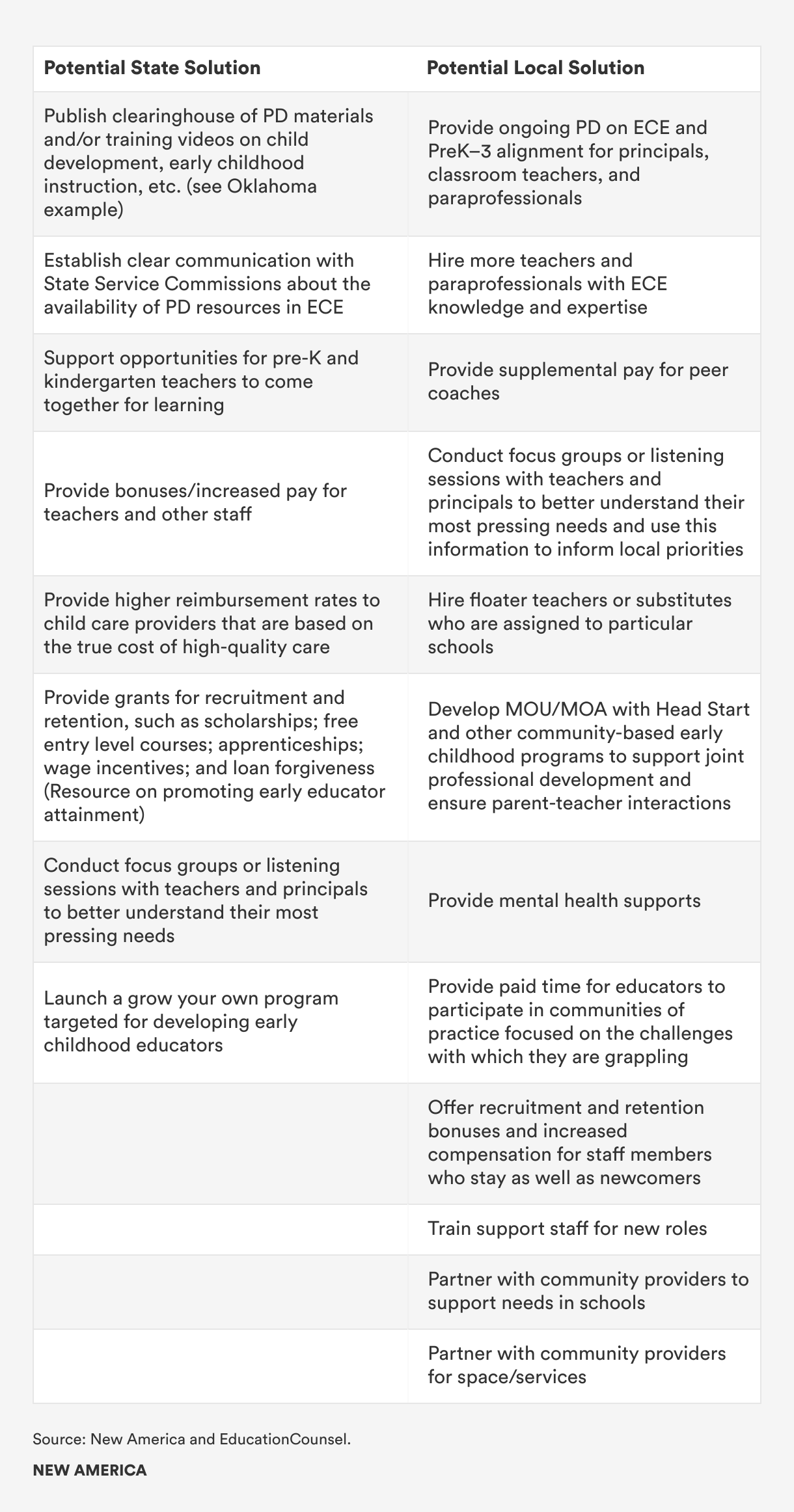
ALL of the following solutions are fundable through these funding streams, and/or a combination of them: ESSER, ESSA (Title I), state funding formulas, state pre-K dollars (if applicable), local philanthropic dollars.
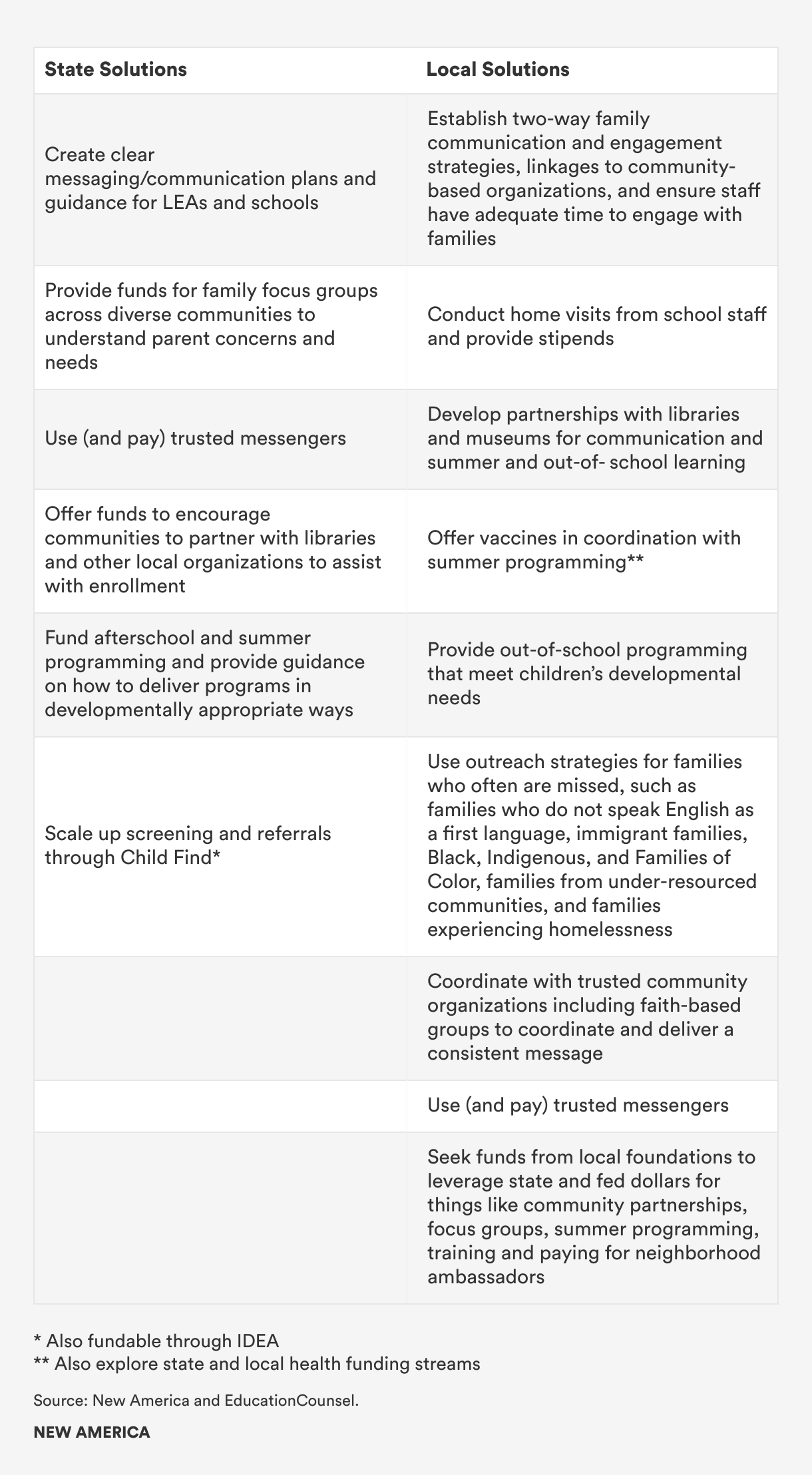
The pandemic has taken a toll on our youngest learners in many ways. It has shone a bright light on historical inequities. In an April 2022 study, McKinsey and Company reported that online learning left children, on average, four months behind in mathematics and reading before the 2021–22 school year. These findings were more pronounced in schools serving primarily Black children. Parents of Black and Latinx students also reported higher rates of concern about their students’ mental health and engagement in school. A research brief from Amplify, an assessment developer, showed reading losses were concentrated predominantly in kindergarten through second grades. And while schools worked to provide virtual instruction to dual language learners, data suggest that the reliance on remote learning inhibited the language development of many of these students. Special education students also suffered negative consequences as a result of online learning, with many forced to go months without the vital services to which they are entitled.
Children’s missed learning and lost learning weren’t just limited to academics. After periods of remote learning and limited interactions with peers, children are missing important fine motor skills such as cutting paper and tying shoes, as well as social and emotional skills such as taking turns, listening to peers, and exhibiting self-control. Children are also experiencing difficulty focusing during classwork and paying attention. A national survey of educators by Education Week found that 39 percent of respondents said that the social skills and emotional maturity levels of their current students are “much less advanced” than their pre-pandemic students.
Another effect of the pandemic is related to mental health. In spring 2021, according to a McKinsey report, one in three parents said they were very or extremely worried about their early elementary-aged child’s mental health, with rising reported levels of student anxiety, depression, social withdrawal, irrational fear, and lack of energy. Despite increased levels of concern among parents, there was a steep decline in the number of mental health assessments conducted for children compared to those conducted in 2019. Allowing student mental health issues to linger can negatively impact their quality of life, school attendance, and classwork.
Finally, chronic absenteeism is on the rise in the COVID era, a problem that leads to lower academic results, reduced emotional engagement, and a higher likelihood of dropping out of high school. Chronic absenteeism is typically defined as a child missing 10 percent or more of scheduled days in a school year. While national data are lacking, Education Week points to an analysis that documents a dramatic increase in chronic absenteeism, particularly in the elementary grades. More alarming, the number of students who missed half the school year, defined as extreme chronic absenteeism, is also increasing.
ALL of the following solutions are fundable through these funding streams, and/or a combination of them: ESSER, ESSA (Title I), state funding formulas, state pre-K dollars (if applicable), local philanthropic dollars.
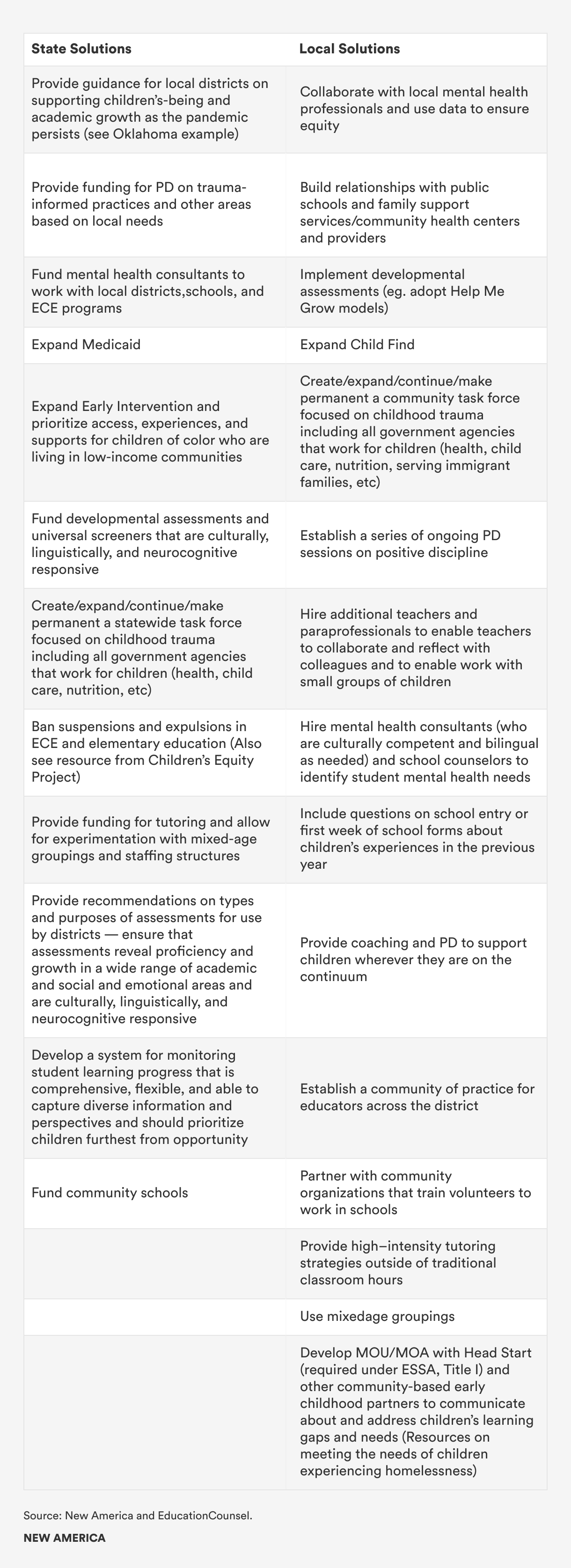
Staffing shortages are nothing new and tend to be where ECE educators are comparatively underpaid, but the pandemic has exacerbated the shortages. A federal survey conducted in December and January of 2021–22 found that nearly half of the public schools have teaching vacancies. A July 2021 survey of child care centers and homes conducted by the National Association for the Education of the Young Child found shortages in almost every state. Even before COVID, the United States faced a shortage of substitutes, but COVID certainly made things worse. When omicron hit, policymakers and education leaders took desperate measures to ensure that there was a pool of eligible substitutes. School district administrators dusted off their teaching certificates. Some states tried to entice state employees and police officers into schools. One governor called in National Guard members to volunteer.
There is an ongoing staffing issue in schools. Surveys over the last year have warned that many teachers plan to leave the classroom; as the next school year begins, teacher resignations are higher than in previous years. Educator well-being has taken a dive and work-related stress is on the rise. RAND researchers found teachers and principals alike reporting poor well-being during COVID.
Public education must confront new challenges in the court of public opinion as well. Educators are under immense pressure in today’s classrooms with openly hostile school board meetings, increasing questions about what is being taught and not taught in school and the appropriateness of books available to children, and policymaker concerns regarding instruction that supports children’s social, emotional, and cultural assets and needs.
ALL of the following solutions are fundable through these funding streams, and/or a combination of them: ESSER, ESSA (Title I), state funding formulas, state pre-K dollars (if applicable), local philanthropic dollars.
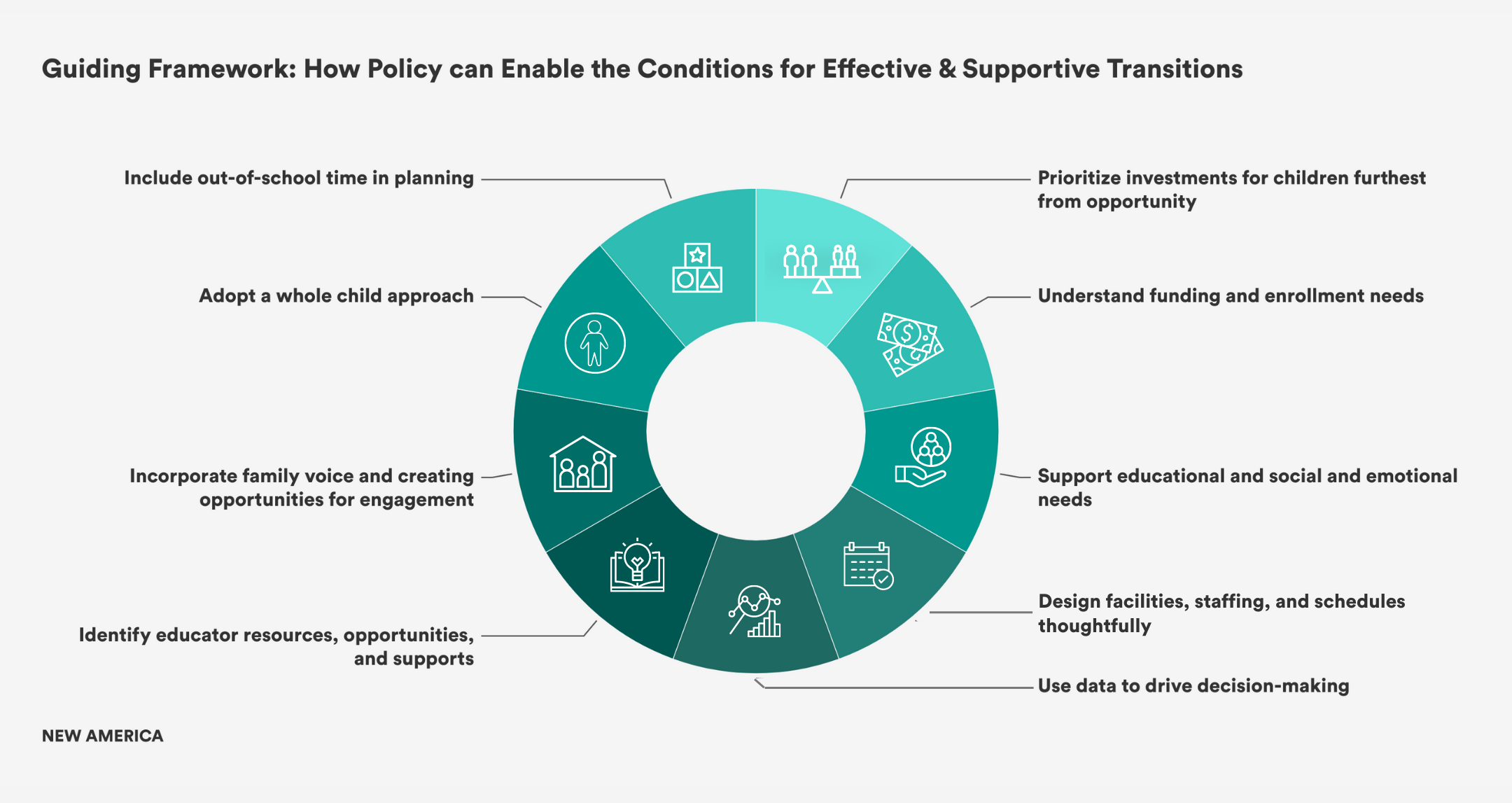
Policymakers will need to consider numerous factors as they develop transitions plans this fall, revise them throughout the year, and strengthen them for the next year and beyond. The nine areas outlined below provide a framework for states and local leaders to create effective systems that enable effective and supportive transitions. Addressing the questions that follow (through the planning process described in section 6) can help guide policy development and create an opportunity for continuous improvement to ensure that the lessons of COVID-19 are embedded in policy and practice.
1. Prioritize investments for children furthest from opportunity
2. Understand funding and enrollment needs
3. Support educational and social and emotional needs
4. Design facilities, staffing, and schedules thoughtfully
5. Use data to drive decision-making
6. Identify educator resources, opportunities, and supports
7. Incorporate family voice and creating opportunities for engagement
8. Adopt a whole child approach
9. Include out-of-school time in planning
Planning for the Future
In the spring of 2020, life changed dramatically for everyone. Businesses and workplaces closed, schools moved to virtual instruction, and child care and Head Start programs closed or reduced their capacity. Infants, toddlers, and preschoolers were too young to understand what was happening.
More than two years later, we still face uncertainties. For children under four, a significant chunk of their lives has been during this rocky time. Given what we know about the impact of stress on young children and the importance of trusted caregivers in mitigating this impact, it is critical that we enact and continuously improve policies supportive of the whole child, policies that strengthen family well-being and economic security and that elevate community needs and voices.
Our goal, though, should not be to return to normal, but instead to use this moment of crisis, the attention on early education, and the burst of federal recovery dollars, to transform ECE and K–12 education systems so they support effective transitions and set children up to thrive later in school and life.
When early learning experiences are connected from before birth and up through third grade, children and their families can more easily transition into pre-K, kindergarten, and the early elementary grades. Improving transitions for children and families requires careful planning, effective policies and practices, and sustainable funding. Educators can establish practices that put families more at ease, but the planning must begin well before the first day of school. On day one, teachers and schools should already have enough information to begin tailoring instruction, strategies, and environments to meet the needs of every student.
Children and families need activities that engage them early and provide them with information and comfort as they begin the school year. When enacting policy, state and local decision-makers and administrators must address the systems that support young children’s learning and development. Conditions must ensure consistent learning environments and experiences across settings and sectors before school, in kindergarten, and beyond.
Educators across the early learning continuum are key to making this happen, but so are state and local education officials, as they set policy goals to enable effective and supportive transitions. The work of states and school districts to align expectations, curricula, assessments, instructional strategies, accountability, family engagement, learning environments data, and professional learning may be less visible to children and families but is no less significant. In fact, these systems that enable the conditions for a strong and comprehensive P–3 continuum are the most critical for creating seamless transitions.
We propose six steps to establishing effective and supportive transitions policy at the state and local levels. Progressing through these steps must begin with a leader who is responsible for action and accountability for success. Too often the transition into kindergarten (as well as each grade thereafter) is no one individual’s responsibility or it is the responsibility of an individual without the authority to enact transformational change.
Identifying a transitions self-assessment tool and taking stock of current transitions activities at the state and local level is the place to start. A number of self-assessment tools exist for this purpose, such as New York’s transition effectiveness assessment tool. (New York’s tool was used to develop the self-assessment tool that we used with districts this year.) Results of the transitions self-assessment can provide an overview of current efforts as well as areas where more focused work is needed. This self-assessment should also include listening to families, prioritizing children and families who are furthest from opportunity, and tailoring investments to address structural inequities embedded in state and local systems.
Because the transitions process will be impacted by the lingering effects of the pandemic, transitions team members should also consider the state of children, families, and educators discussed in section 4 and answer the guiding questions posed in section 5 of this toolkit.
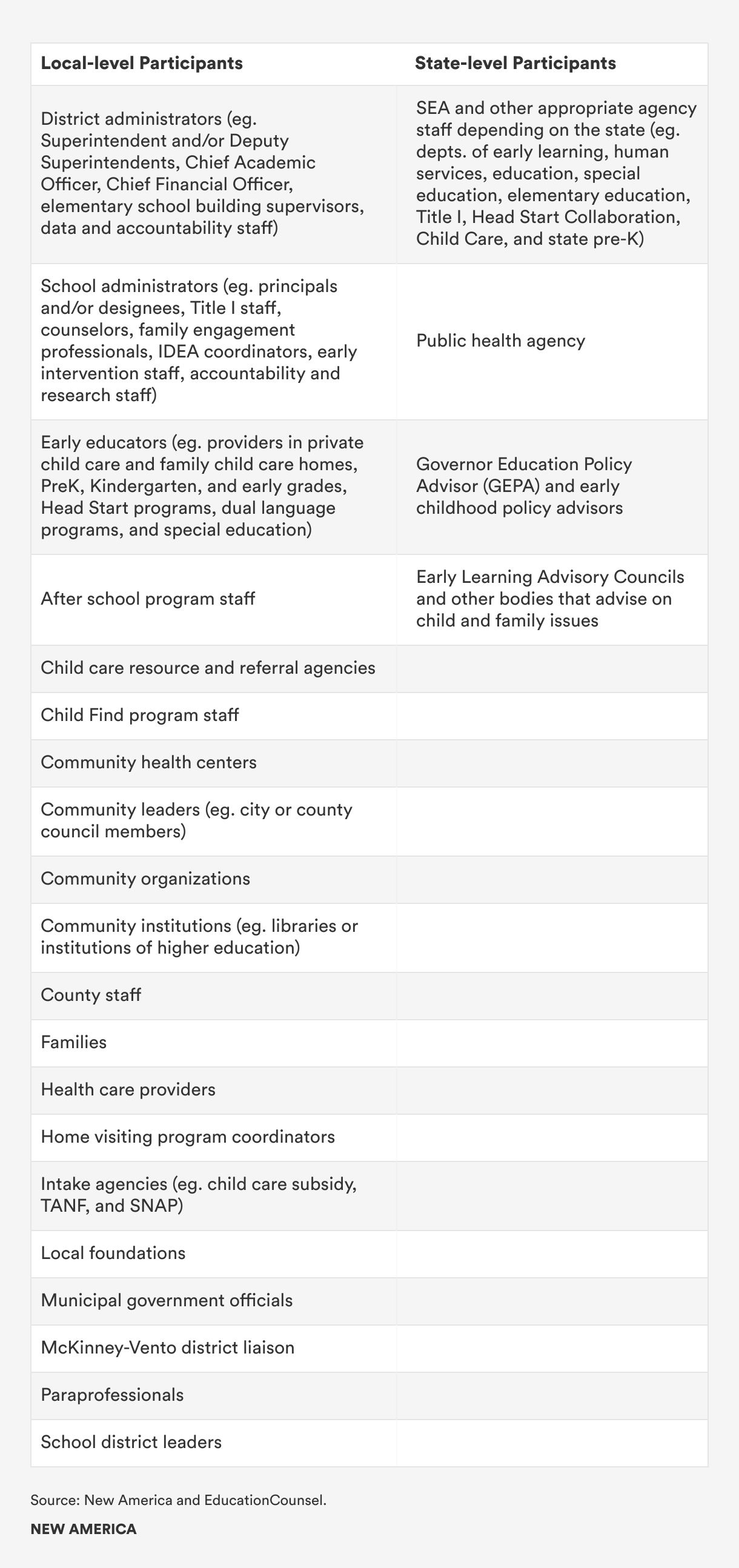
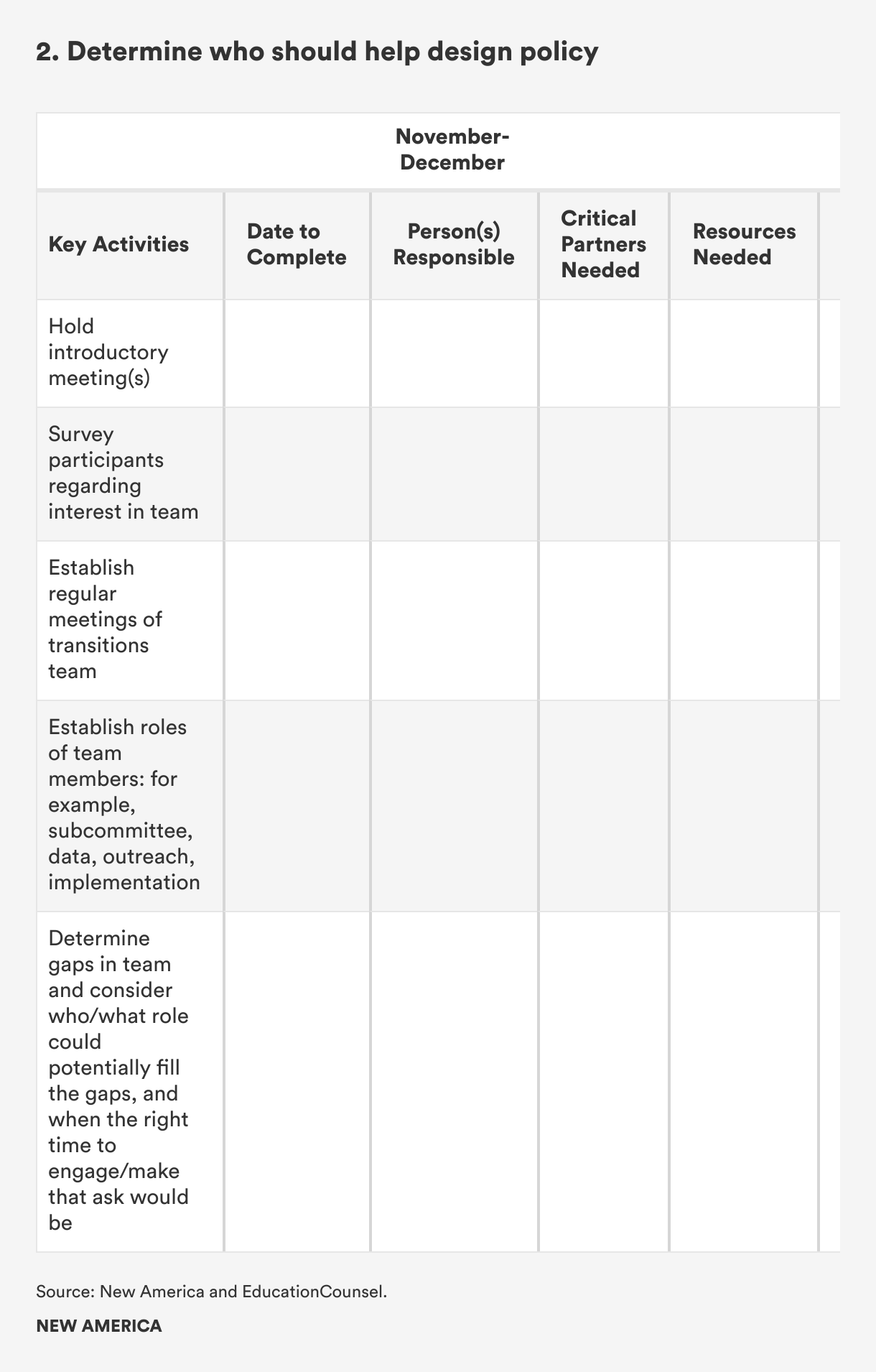
To ensure that children and families experience transitions that meet their needs, it is important for a range of interested parties to be involved in the policy design process. Policy must be grounded in the experiences of those who will be most affected by it. While classroom teachers play a crucial role in successful transitions, anyone who is in the life of a child, family, or teacher during these critical years of development can play a role in ensuring that families and educators have the information they need. Below is a list of those who might help design policy to deliver effective transitions:
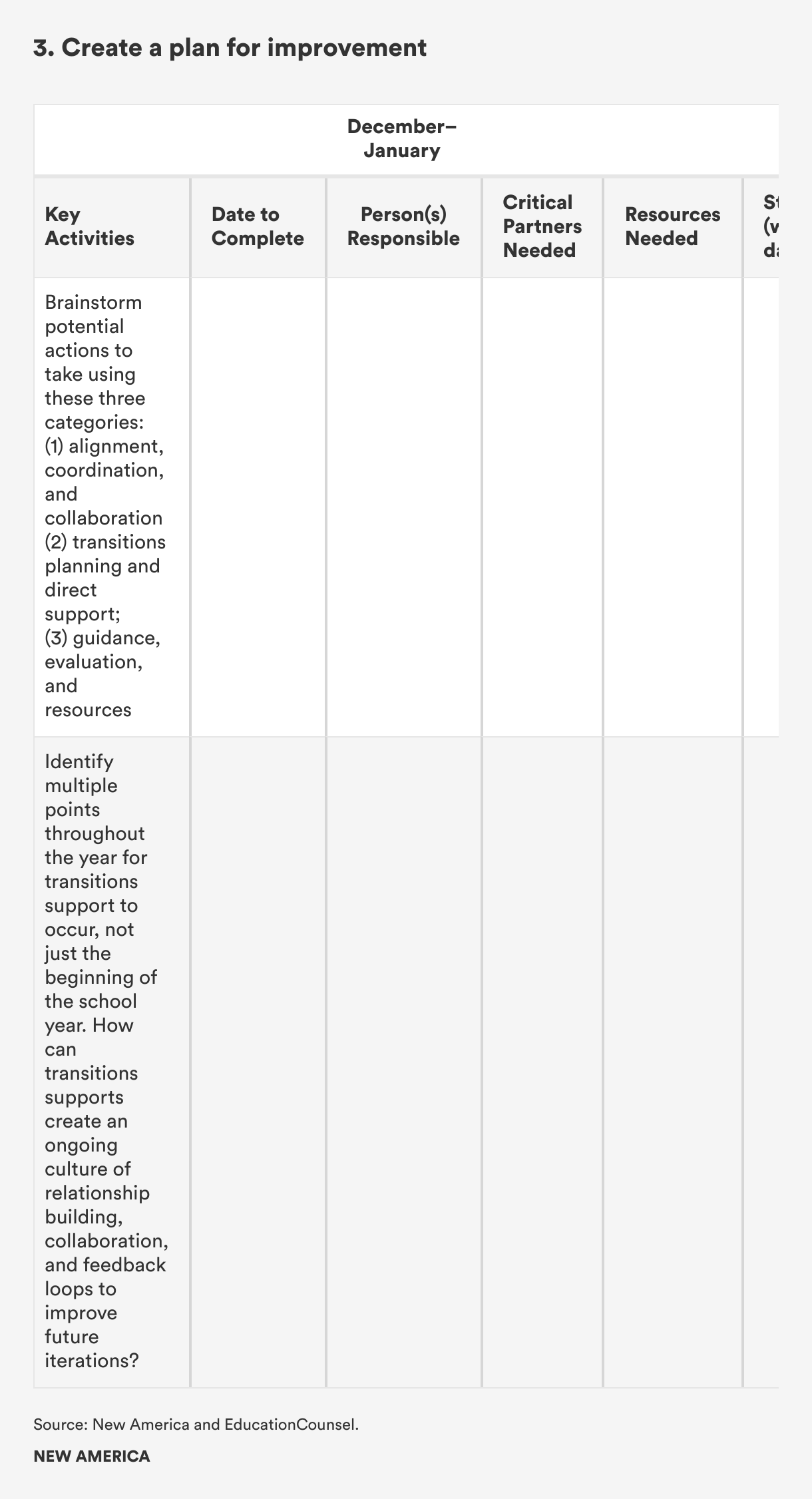
The next step is creating plans for improvement. While policy change, support for policy implementation, or updated policy guidance is the goal, these things can take time. It’s also important to consider what can be accomplished in the short term. For instance, a state or district could opt to organize listening sessions to gather information and ideas from families and educators about the transition into kindergarten or to learn how current transitions resources are being used or not used.
The long-term plan should identify the policy changes needed to help strengthen what is happening in local communities. These policy changes may require legislative or regulatory action but might also be accomplished through guidance and collaboration with other state agencies or bodies. Local leaders, school districts, and community leaders can use what they learn from the transitions policies and practices in place at their schools, community ECE programs, and other community organizations to inform the policies needed to strengthen and build upon what is already happening.
State and local improvement plans should include three categories for policy action: (1) alignment, coordination, and collaboration; (2) transitions planning and direct support; and (3) guidance, evaluation, and resources. (See section 9 for an explanation of these categories.) These categories should be used as a guide to creating transitions that don’t just occur at a single point—the start of the school year—but foster ongoing relationship building, collaboration and coordination, and feedback loops to inform future iterations. These transitions policies support a comprehensive P–3 system that values access, child, family, and educator experiences, and outcomes.
Transitions plans should be reviewed by and strengthened with ideas and experiences from diverse parties, including parents, educators, and others across the early childhood, K–12, health, and family well-being communities.
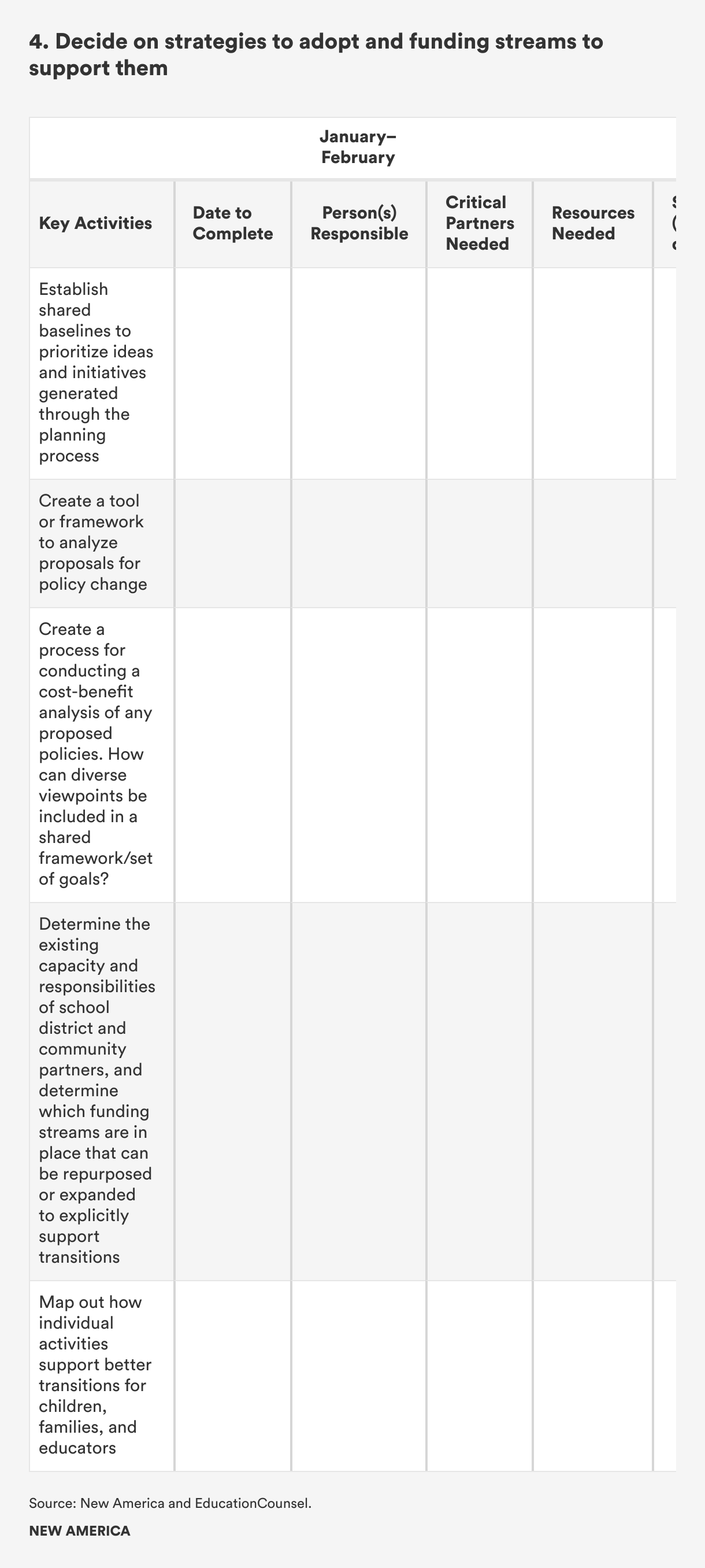
A core component of transitions team success is establishing shared baselines for ideas and initiatives generated through the planning process. In fact, an early step in kickoff meetings of state and local transitions teams is creating a tool or framework for analyzing proposals for policy change. Teams should work together to select the handful of cost and expected benefit metrics that any proposal must pass to move forward. Because costs and benefits can be diffused among a range of stakeholders, it also can be a tool for bringing diverse interest groups together under a shared set of goals.
Implementation of individual policies should be agreed upon by relevant team members and interested parties. They can also be connected to the broader systems in place for supporting young children and their families. This requires planning that accounts for, addresses, and optimizes the existing capacity and responsibilities of school districts and community partners. Planning should also consider funding streams already in place that could be repurposed or expanded to support transitions. Just as transitions teams develop a common framework for choosing which policies to evaluate, they should also map out how selected activities serve children. See section 8 of this toolkit for policy ideas and sections 9 and 10 for a comprehensive list of potential funding streams.
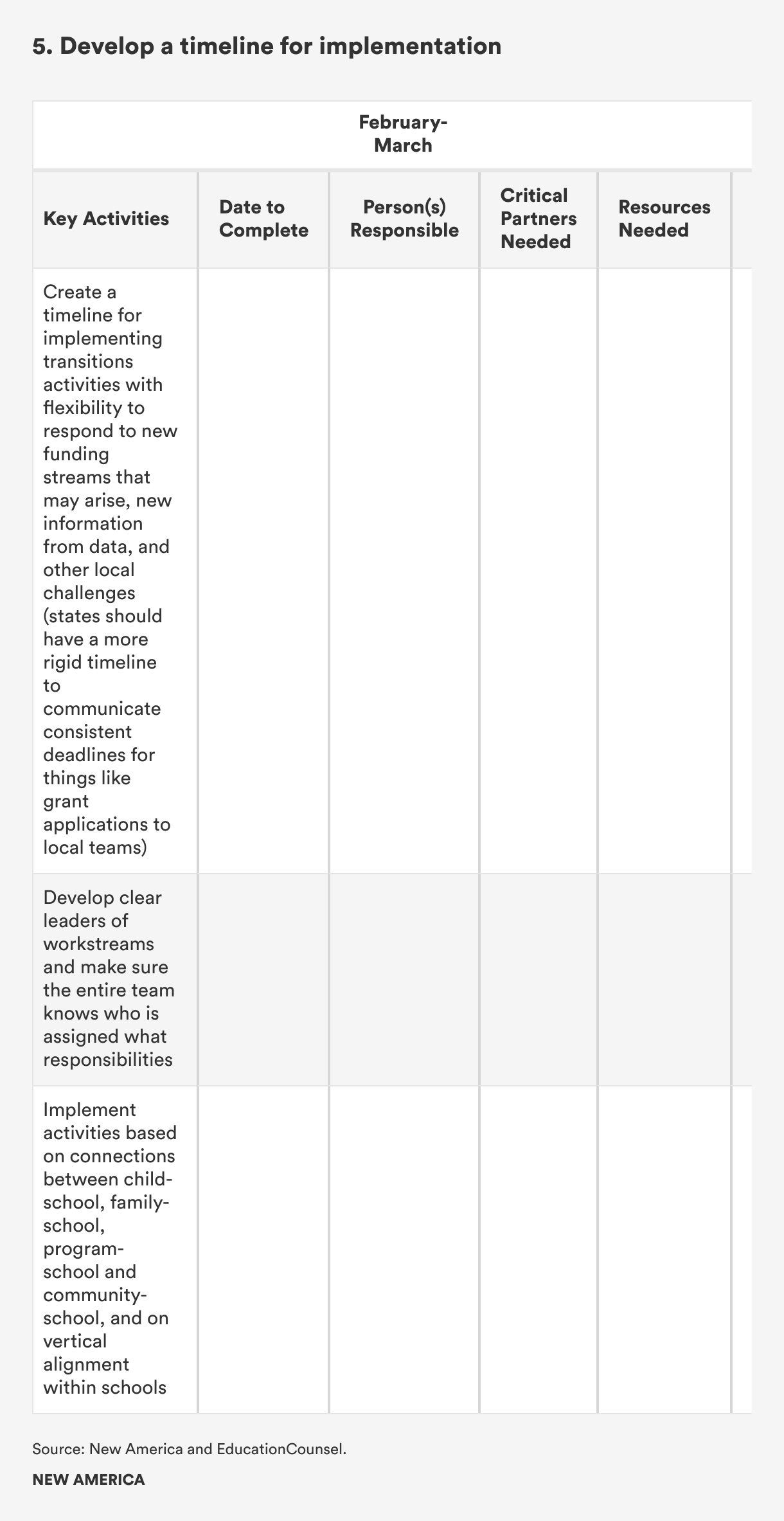
The timeline for implementing transitions activities will vary depending on the needs and priorities identified at the local level as well as the current availability of funds, future opportunities for additional funds, and the current capacity of staff. It should be nimble enough to respond quickly to new funding opportunities, information revealed from data and evaluation, and other local challenges. At the state level, timelines should be more rigid, so that local transitions teams are aware of deadlines for reporting information to state agencies, applying for grant funds, and so on.
To ensure that work plans of transitions teams at all levels are clear and actionable, anticipated time frames for development, implementation, and evaluation should be embedded throughout. Timelines should be developed with clear leaders of work streams, ensuring that team members are aware of and know who is responsible for the many moving components of implementation. It is also important to approach both the planning and implementation of transitions activities as a consistent, ongoing, and cyclical process. During any month of the year, teams can be working to revise or update plans, publish and review data, or implement activities.
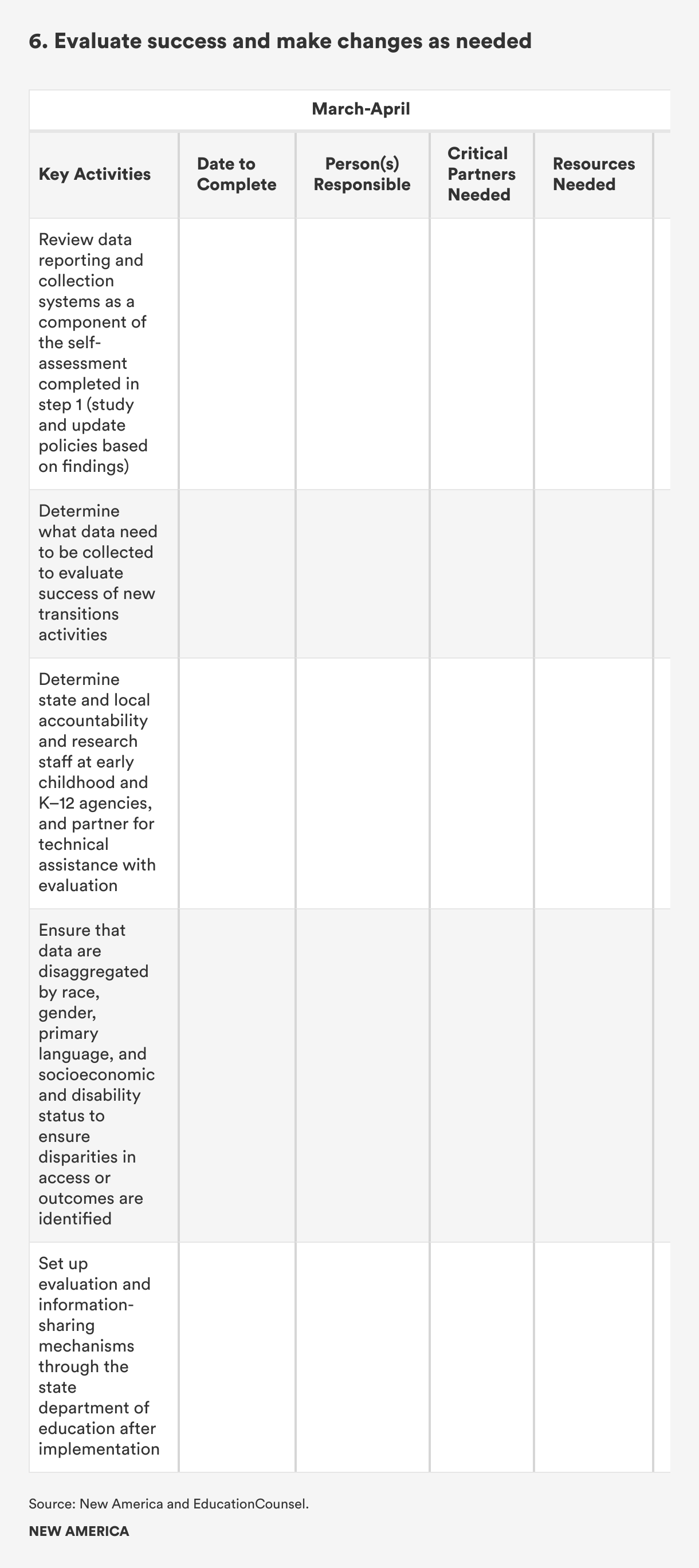
Regular assessment and evaluation of state and local transitions policies is a critical step for ensuring that initiatives remain timely and effective. Work plans should be developed with evaluation and data collection in mind.
Preparing for policy to be evaluated should at least include a review of existing data reporting and collection systems as a component of the self-assessment completed in step 1, but it should also consider plans for studying and updating policies based on findings.
As initiatives are implemented and policies are changed, transitions teams can partner with state and local accountability and research staff at early childhood and K–12 agencies for technical assistance with evaluation. Consistent with the tenets of implementation science, evaluating an initiative involves constant evaluation and mechanisms for continuous quality improvement that allow for nimble adjustments to increase effectiveness more quickly. Researchers can leverage data from existing systems of evaluation to understand how cohorts of children participating in transitions activities performed compared to their peers. They can also administer pre- and post-surveys or other methods of evaluation to parents, children, and teachers to understand how transitions planning influences family engagement, teacher satisfaction, and other goals outside the realm of traditional accountability systems. Data should be disaggregated by race, gender, primary language, and socioeconomic and disability status to ensure disparities in access or outcomes are identified.
The transitions team should also include a way to ensure that research or trends in one community inform efforts in other communities. State education agencies play a critical role in convening school districts and localities, especially through gathering and clearly displaying data in statewide longitudinal data systems. Such information-sharing post-implementation help ensure that new activities and policies for future kindergarten cohorts can be adjusted.
In fall 2021, our team began working with three states and three school districts to strengthen their transitions policies and practices. Since then we have been working through the six steps in the previous section using the tools in the appendices.
Considerations for specific parties:
• Policymakers and advocates: Child care providers, pre-K teachers, Head Start teachers, kindergarten educators, and families have the best insight into how strong transitions are helpful for students. Ask them for their stories and create opportunities for them to engage in the process.
• New to this work: Consider hosting different roundtable discussions or events that will invite diverse parties into the conversation.
Considerations for specific parties:
• Policymakers: Continuously check that proposed policies reach families furthest from opportunity and support early childhood educators. Seek policies that support restorative practices and remove current barriers.
• Advocates and those new to the work: Use your knowledge of and relationships within your community to ensure that individuals from all backgrounds are represented on your transitions team.
Considerations for specific parties:
• Policymakers: Know which agencies, offices, and teams control different aspects of the transitions process.
• Advocates: Determine which policy and practice levers need to be pulled and involve people who have the power to pull them.
• New to this work: Involve a range of individuals in the policy design process and identify how team members can influence different aspects of the work.
Considerations for specific parties:
• New to this work: Understand what types of practices can strengthen transitions and set realistic expectations about the time commitment required to meet year-round transitions goals.
Considerations for specific parties:
• Policymakers: Policy and funding for transitions do not need to stand on their own; they can be incorporated into relevant K–12 and ECE proposals.
• Advocates: Make recurring funding for transition into kindergarten part of K–12 and ECE priorities.
• New to this work: Identify which tasks can be easily and quickly fulfilled with existing resources and which will require longer-term effort/capacity and investment.
Considerations for specific parties:
• Policymakers: Make sure the transition into kindergarten is considered when focusing on reaching more children, training and recruiting more staff members, and creating stronger family and community relationships.
• Advocates: Look for areas of potential overlap between transitions activities and other requirements.
• New to this work: Remember that effective transitions can be woven into many other priorities and activities; they do not need to be separate.
Considerations for specific parties:
• New to this work: Help ensure program leaders and educators understand the importance of transitions, what developmentally appropriate practice looks like for young learners, what challenges the community is facing, and how a focus on transitions can address some of those challenges. Take time to understand how interested parties, including practitioners and parents, are viewing different issues. Focus groups, interviews, and surveys are all useful tools.
Considerations for specific parties:
• Policymakers: The transition to kindergarten is one part, but a crucial one, in the early childhood ecosystem. Use the transitions work and research that shows healthy transitions lead to greater academic and social-emotional growth in later grades.
• New to this work: Reach out to different district and community offices to learn about the expertise they can lend to your team. Think about the best person to invite community members into the work.
Considerations for specific parties:
• Policymakers: Find ways for transitions practices to be highlighted across multiple areas of policy, including education and health care priorities.
• Advocates: Work to establish relationships with local policymakers. Provide them with relevant talking points so they can help spread the word about the importance of kindergarten transitions and what resources are available to families.
• New to this work: Learn about your local politicians and vote for champions of early childhood education.
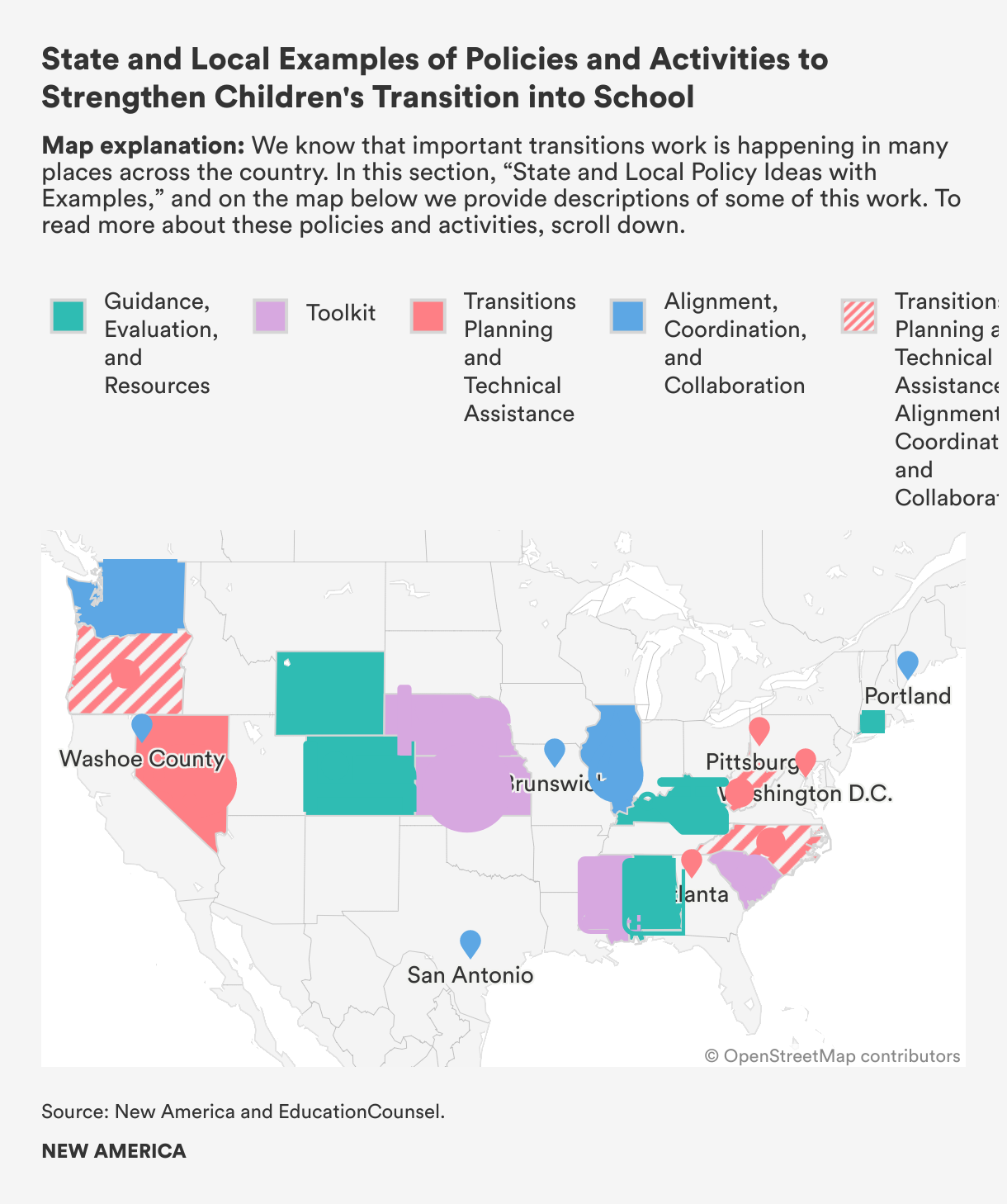
These policy ideas are organized by state and localities and grouped into themes:
We use these themes to organize the policies most important for transforming how children enter pre-K and kindergarten and move through the early grades. As we begin to move beyond the global COVID-19 pandemic, these considerations should take precedence in the next three to five years to meet children’s immediate needs:
Both state and local leaders can lead on transitions and alignment efforts. ESSA requires LEAs to form coordination agreements with Head Start programs. It also applies this requirement to coordination with other early childhood programs, if feasible. The federal law specifies the areas which these agreements must cover at a minimum: data and record sharing; joint professional development; staff communication; parent-teacher connections; and educational services. Although it is LEAs that must establish these agreements, states can facilitate, educate, and encourage LEAs to do so. States can also provide oversight by holding LEAs accountable if they don’t develop the agreements.
States can support local education agencies and communities in ensuring effective and supportive transitions in three main areas: facilitating alignment, coordination, and collaboration; supporting transitions planning; providing guidance and resources.
Alignment, Coordination, and Collaboration
Transitions Planning and Technical Assistance
Guidance, Evaluation, and Resources
Several other states have developed transitions toolkits and resources as well:
Local education agencies and communities play a critical role in the implementation of state transitions policies, but also in organizing community partners, school-level leaders, and parents to ensure that transitions activities are responsive to locally identified needs and priorities.
Alignment, Coordination, and Collaboration
Transitions Planning and Technical Assistance
Guidance, Evaluation, and Resources
In March of 2021, Congress allocated additional funds to address the challenges facing public education in light of the pandemic. With the signing of the American Rescue Plan (ARP) came an unprecedented $122 billion for the Elementary and Secondary School Emergency Relief (ESSER) Fund (known as ESSER III). Like previous ESSER investments, these funds were provided to state educational agencies and school districts to address safe school reopening and mitigate the impact of the pandemic on students. In order to access the ESSER funds, states had to submit an application describing their plans for evidence-based interventions to address learning loss, as well as the academic, social, and emotional needs of students, with a particular emphasis on addressing the disproportionate impact of the pandemic on students of color.
All 50 states, plus DC and Puerto Rico, had their state plans approved by the US Department of Education by the end of December 2021. States have until late 2024 to properly obligate and use their ESSER III funds. However, given the myriad of issues affecting fund expenditure in 2022, ED will now consider requests from school districts for an 18-month extension on spending these funds (right now) for infrastructure projects beyond the earlier September 30, 2024 deadline.
ESSER III funds can be used for early childhood education. For example, the funds can be used to prevent staff layoffs or service cuts in Head Start, state-funded pre-K programs, and child care programs that are operated by LEAs. In October of 2021, we laid out possible ways to leverage this funding specifically in support of effective early childhood transitions.
While its analysis was not focused on early childhood education, a recent report from FutureEd offers perhaps the best information yet on how school districts are planning to spend their portion of ARP funds. FutureEd analyzed spending plans submitted by more than 4,100 LEAs serving about 68 percent of the country’s public school students and receiving $77 billion in ESSER III funding. The analysis reveals that the current highest priority for districts using the funds is hiring or rewarding teachers, academic specialists, or guidance counselors. About 60 percent of the districts are planning to spend funds in this manner, though it’s unclear whether that money will go towards hiring new staff or rewarding existing staff. Approximately two-fifths of districts will spend funds on staff professional development.
Another popular use of the funds is improving school ventilation, with over half of districts planning to improve ventilation and upgrade their heating and air conditioning systems in an effort to reduce the chances of COVID exposure.
Schools are also working to effectively respond to a youth mental health crisis: over 1,400 districts plan to use ESSER funds on social-emotional materials, training, and programs.
States and districts have the opportunity to make historic investments in early childhood education, too. According to the analysis by FutureEd, nearly 60 percent of school districts and charter schools plan to use a portion of their funding on summer learning or after-school activities. Some larger districts (including Chicago, San Diego, and Hawaii) expressly state that their summer learning programs support transitions—notably, in kindergarten and other early elementary years.
In Massachusetts, summer learning opportunities aim to tackle the loss of both academic and social-emotional learning for students of all ages. For the youngest students entering kindergarten, first grade, and second grade (two cohorts also drastically impacted by out of school time during the pandemic) millions of dollars are being dedicated to targeted literacy academies that provide young learners with opportunities to both learn and socialize with peers. Another Massachusetts summer program, Summer Step Up, directs the use of ESSER funds toward solving dipping enrollment rates by identifying families with young children in the early grades that were eligible to enroll in Massachusetts public schools in the 2020–21 school year but who may have opted out of school district services.
South Carolina’s state ESSER plan provides an express focus on early learning by dedicating funds for training and instructional materials in schools where one-third or more of third graders struggled on 2019 statewide reading and math assessments. The state plan also lays out a partnership with SC First Steps, a program that supports students transitioning into pre-K and kindergarten by engaging parents, focusing on teacher recruitment and retention, and identifying children with special needs early.
Hawaii is also using these funds to address special needs in early learners, by focusing on teaching the behaviors that may be a challenge for young children with little to no school experience as they enter kindergarten.
In North Dakota, ESSER funds are being used to fund high-quality pre-K classrooms for four-year-olds through grants that are available to public, private, and religious child care providers, indicating an emphasis on providing early learning opportunities through a mixed-delivery system. The state is also dedicating funds so an additional 800 preschool-aged children can participate in the Waterford Upstart program, which will provide online early literacy lessons to the most rurally located children and give them opportunities to begin learning prior to the start of kindergarten.
Some states are using additional funds on programs to provide targeted support and early intervention for children with special needs and dual language learners to set them up for success as they transition into the K–12 system. Below are two examples:
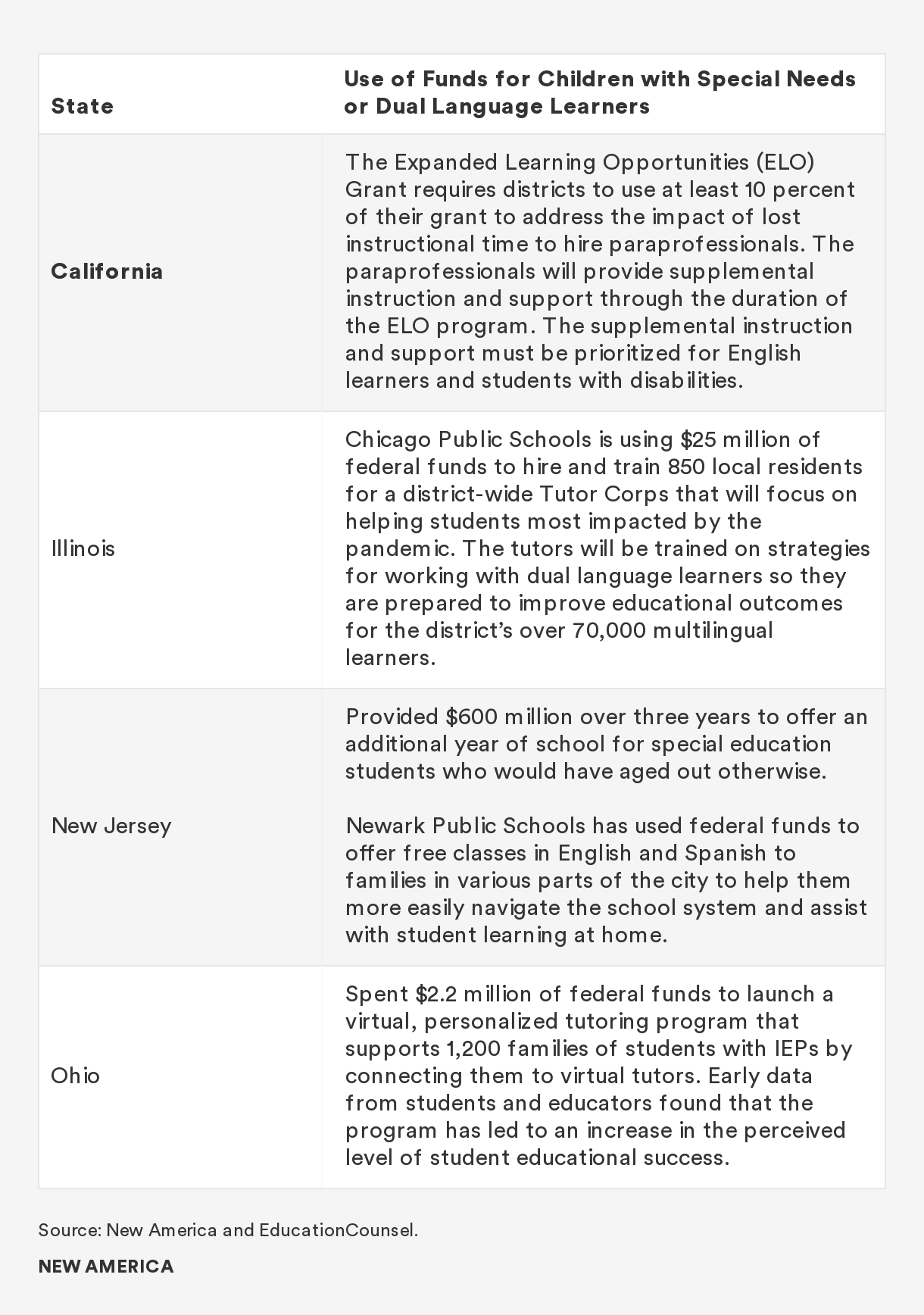
The jump from pre-K settings into kindergarten can be tough under the best of circumstances. Two years into COVID-19, the need for effective and supportive transitions is even greater. As LEAs grapple with the many competing crises exacerbated by the pandemic, it is good that this relief funding can be spread out over time as they meaningfully engage in this work.
There are numerous federal funding streams that can be used to support transitions activities. States and localities can coordinate different streams to meet goals for supportive and effective transitions. These funds can be blended and braided to create and sustain programs established with ESSER funds and to strengthen systems with the enabling conditions needed for effective and supportive transitions in broader P–3 initiatives.
ED’s 2016 non-regulatory early learning guidance suggests possible transitions activities such as sharing assessment data, offering summer learning opportunities, engaging families, and providing joint professional development opportunities. ED’s guidance also elevates the recurring themes in ESSA of alignment, collaboration, and coordination and points to vertical alignment up through third grade as one way to meet these goals. Vertical alignment means linking pre-K and K–12 data and coordinating standards, curricula, instruction, assessment, expectations, and classroom strategies, which can ease the transition for children and families. (Also see guidance in “Using Every Student Succeeds Act: Funding for Early Childhood Education.”)
Beyond these federal funding streams, there are also sources of state, local, and private money to explore. These include:
Early Learning and Development
Attendance
Every Student Succeeds Act (ESSA)
ESSER Spending
Family Engagement
Head Start
Transitions Frameworks, Road Maps, and Toolkits from the States
State Early Learning and Transition Policy and Strategies
Questions for kindergarten teachers:
Questions for pre-K teachers:
Questions specifically for community-based providers:
Questions for principals:
Questions for parents/families of current kindergarteners:
Questions for parents/families of rising kindergarteners:
Considerations for effective transitions planning:
Identifying a transitions self-assessment tool and taking stock of current transitions activities at the state and local levels is an important first step in planning. In creating this tool, we used the self-assessment tools from New York, Massachusetts, and Illinois as models. It is designed to be used by both state and district offices to understand the work districts and schools have done to improve transitions. Results from this self-assessment will show current efforts as well as areas where more work is needed. Assessment should include listening to families, prioritizing children and families who are furthest from opportunity, and tailoring investments to address their needs. Planning should include continuously checking to ensure that those farthest from opportunity are a focus of policy considerations and everyday practices.
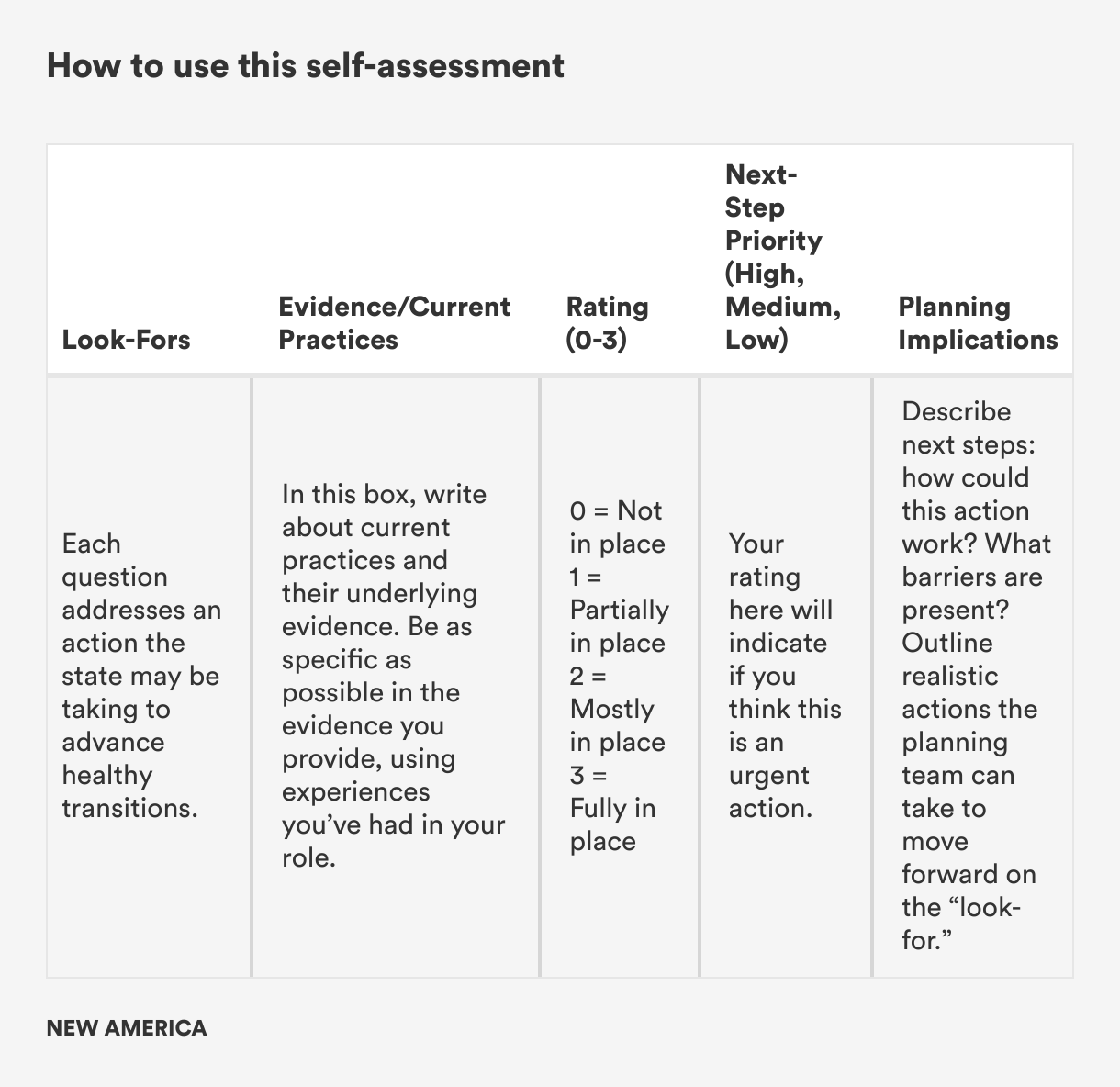
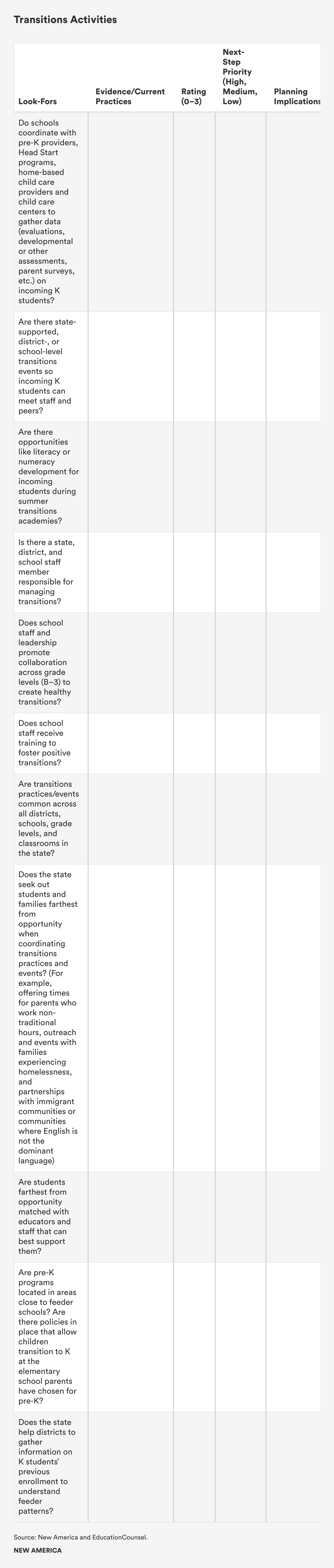
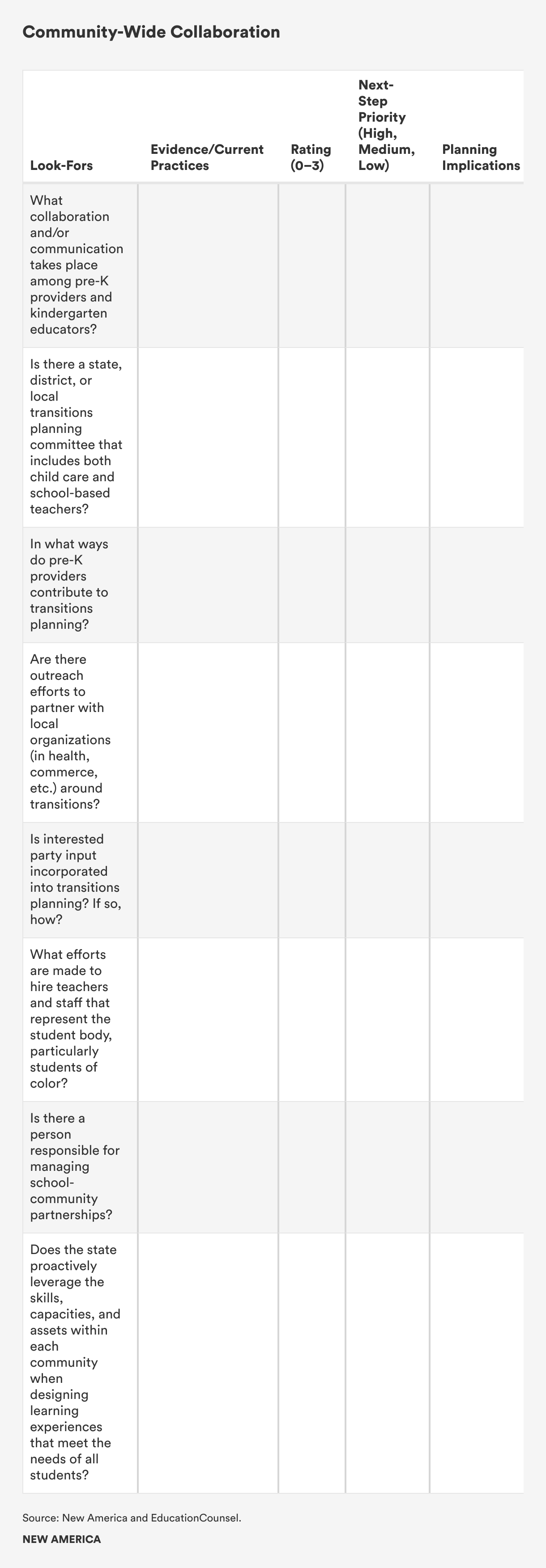
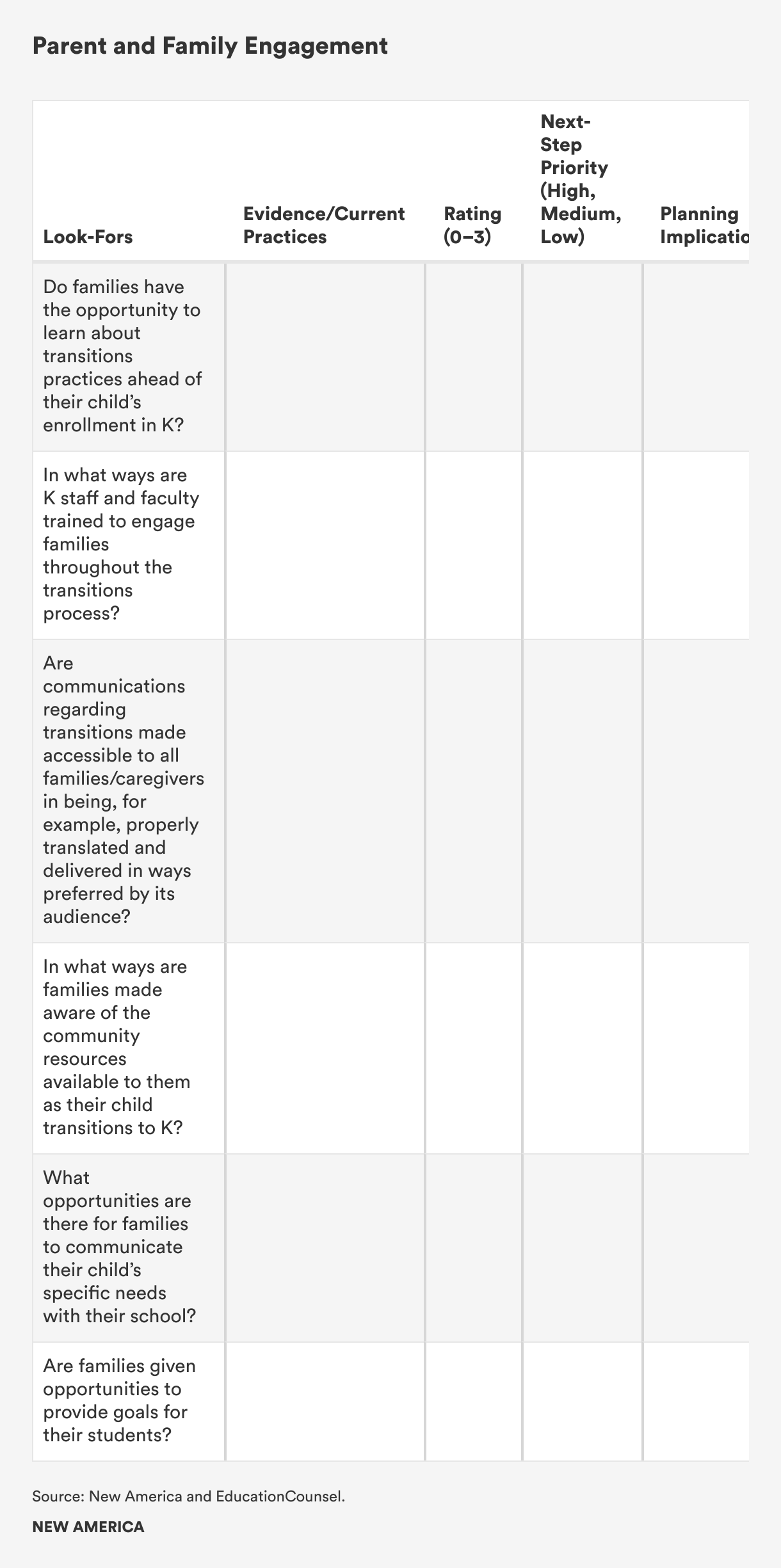
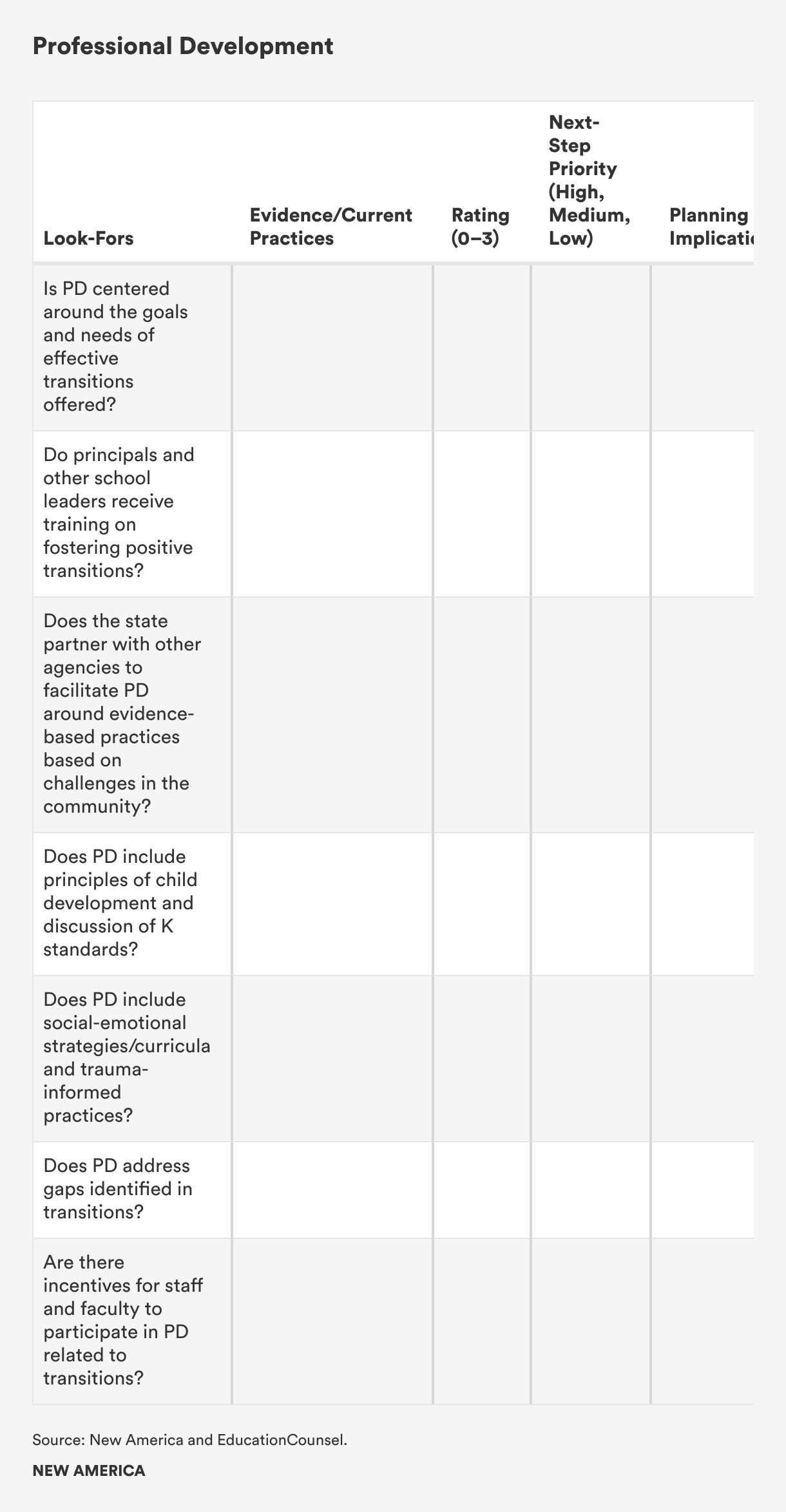
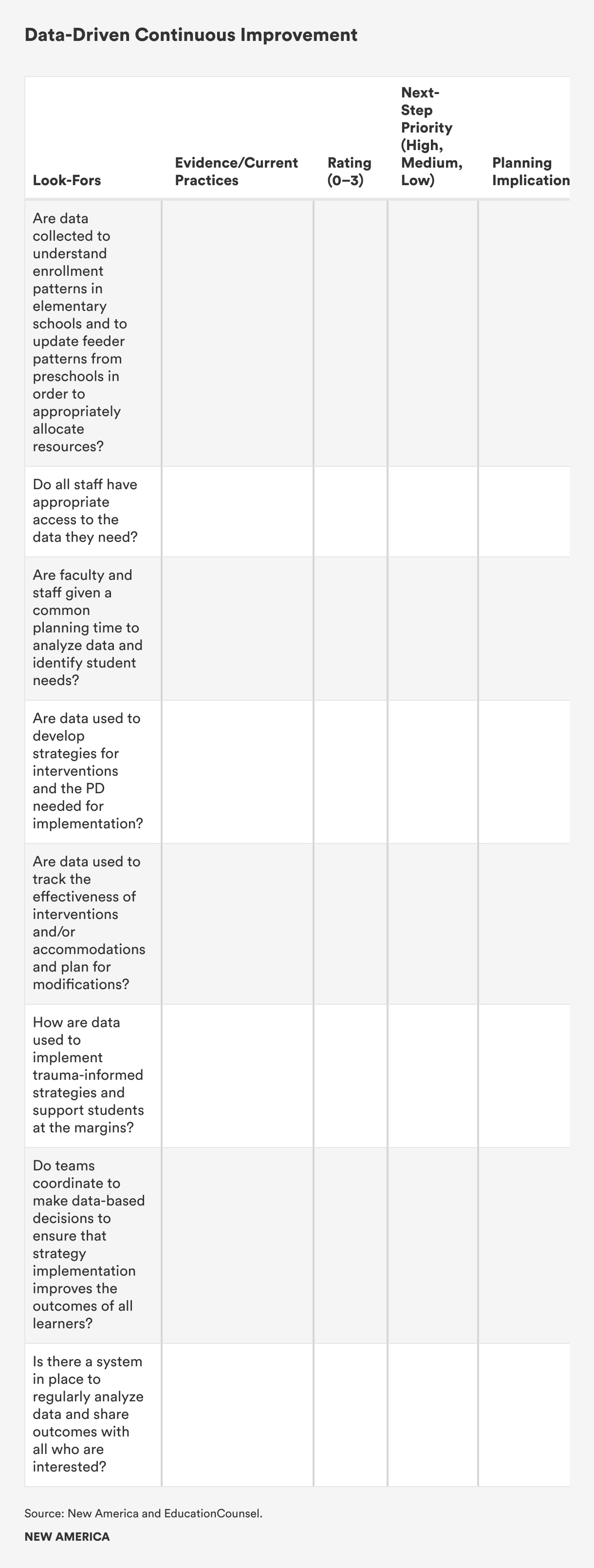
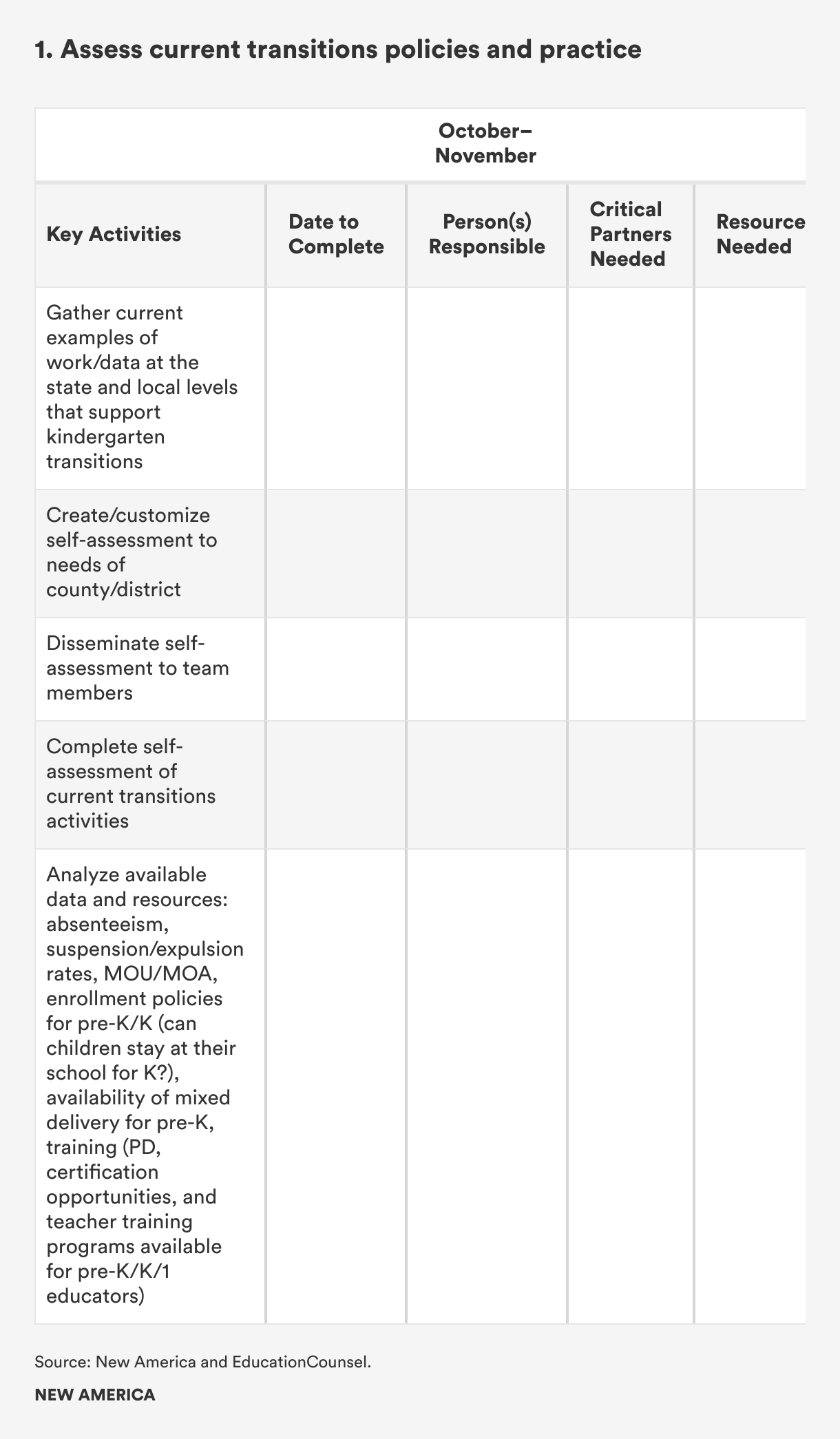
The purpose of this work plan is to create a path for transitions teams to assess their current transitions policies, create plans for improvement, and evaluate how the new plans are working throughout the course of the year and in the years after implementation. Effective transitions plans center around (1) alignment, coordination, and collaboration; (2) transitions planning and direct support; (3) guidance, evaluation, and resources. Planning should be a year-long, continuous process.
Senior Fellow, Early & Elementary Education

Policy Associate, EducationCounsel

Senior Policy Analyst, Early & Elementary Education

Senior Policy Analyst, Early & Elementary Education
Senior Policy Advisor, EducationCounsel

Senior Policy Consultant, EducationCounsel