
To Have and Have Not
Introduction
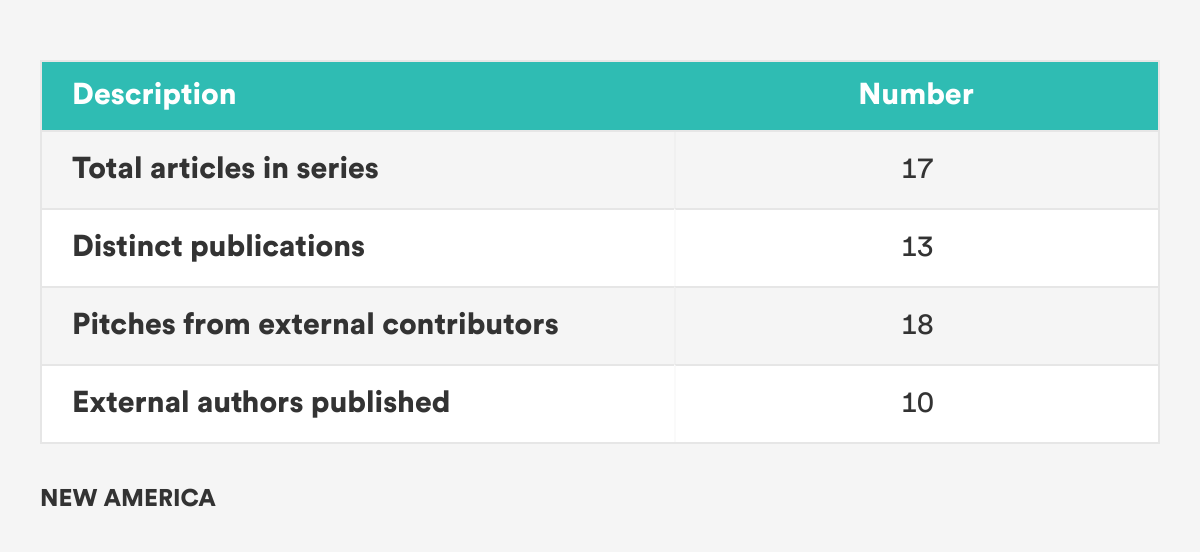
In early 2020, the Better Life Lab put out a call to journalists and writers across the country offering reporting grants for pieces that answered one simple question: What does it mean to live in a country where there is no national guarantee of paid family and medical leave? Paid family and medical leave enables people to take time away from work to care for themselves, a loved one, or a child without risking financial calamity. What are the benefits to those lucky few who have it? The Haves. And what are the consequences for so many who don’t? The Have Nots. Not long after the launch of the project, the COVID-19 pandemic brought the question into even sharper relief as workplaces, schools, and childcare centers closed and so many families, both with and without access to paid family leave, were pushed to the breaking point.
As storytellers who believe in the power of narrative to better understand the world and shift policy, practice, and culture, we encouraged reporters to look for people with similar caregiving responsibilities or life experiences. Examples included the birth of a child, caring for an aging family member, suffering through a prolonged medical illness or trauma, or tending to a loved one in their final days. We asked reporters to explore these care experiences using comparative perspectives from those who had access to paid family and medical leave and those who did not. The differences were stark. And in some cases, shaped the course of people’s lives for both good and for ill.
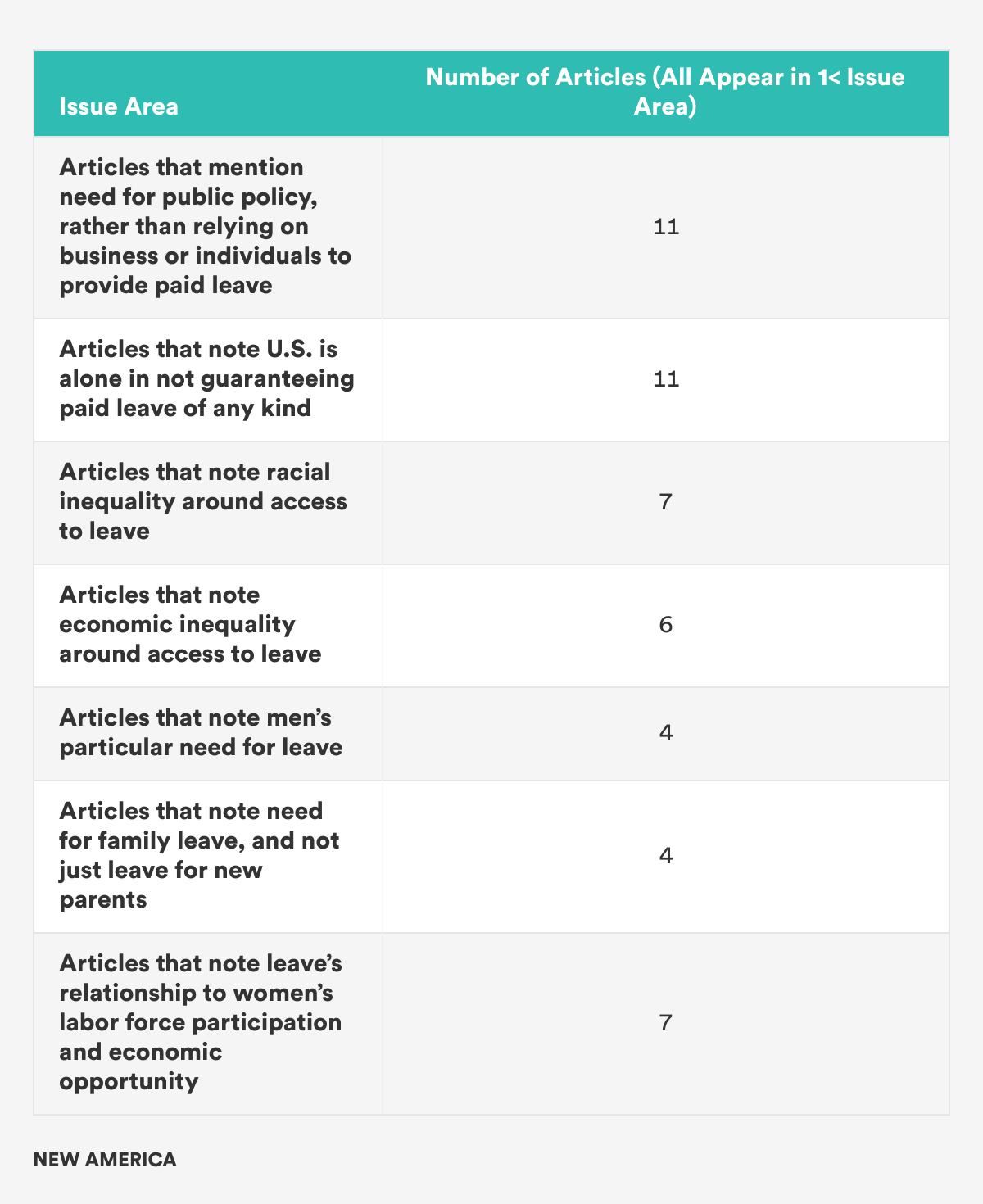
The stories of the Have Nots, unfortunately, are all too common. The United States stands alone among developed nations for failing to support families with paid family and medical leave. Slightly more than half of the U.S. workforce is eligible for 12 weeks of unpaid leave under the 1993 federal Family Medical Leave Act (FMLA). Yet given that about four in 10 Americans are unable to cover an unexpected expense, it is easy to understand how FMLA is lacking. The current U.S. system relies on employers voluntarily offering paid leave, which has resulted in coverage for just 21 percent of the civilian workforce. It should be noted that the highest-wage workers are about seven times more likely to be covered than the lowest-wage workers. Independent of wage or salary, a Better Life Lab survey found that six in 10 people—men and women alike, and even people who have no current caregiving responsibilities—anticipate needing time off work in order to care for another.
The stories of the Haves reflect the research that shows that paid family leave can have enormous benefits by improving the health and wellbeing of workers and their families—increasing breastfeeding rates, reducing rates of infant mortality, maternal depression, stress levels, and creating more family stability. Workers with paid leave no longer have to put off or forego needed medical treatment and have time to fully recover. Paid family leave and flexible workplaces can prevent family caregivers from being forced to cut back their hours or leave the workforce entirely—a phenomenon the Lab found impacts caregiving men at virtually the same rate as women. Paid leave can also boost gender equity when men take leave and promote economic and racial equity. Paid family and medical leave increases the labor force participation of women, closes gender pay gaps, and benefits businesses.
The stories of the Have Nots the Better Life Lab team and independent journalists tell in these pieces serve as a shocking wake-up call for how our current system fails to support families and children; exacerbates racial, income, and gender inequality; and is nothing short of cruel and inhuman. But perhaps more importantly, the stories of the Haves offer hope for a way forward and show the transformative power that paid family and medical can have on individual lives, families, communities, businesses, the economy, and the moral fiber and fabric of our society.
Click on the publication name before each story summary to read the full article.
The Mother’s Journey
These moms have a lot in common but faced a big difference: One got paid maternity leave and one didn’t
Joni Hess for The Lily, a product of the Washington Post
The Black maternal mortality rate in the United States is higher than that of any other advanced country. The infant mortality rate for Black infants is three times higher than for white infants. And the highest risks for new mothers occur between seven and 42 days after delivery—the time that many new mothers, particularly those who are Black, are forced to return to work because they have no paid leave.
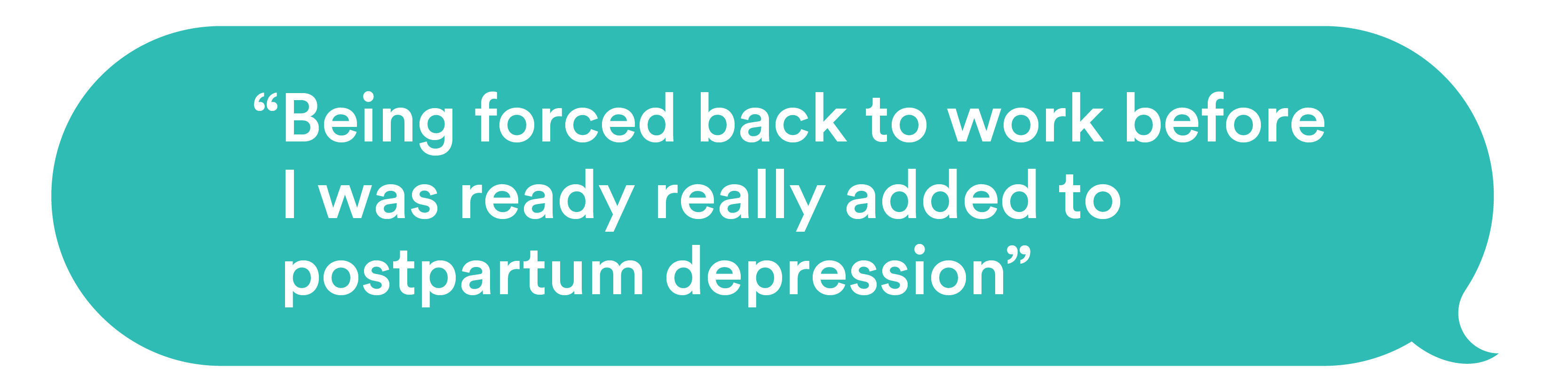
Joni Hess, a reporter who specializes in mental health and social justice and has a master’s degree in social work, told the story of two Black mothers giving birth for the first time. Shaylene Costa, a medical assistant who lives in Rhode Island, had access to the state’s public paid family and medical leave program. Dominique Jett, a healthcare supervisor in Las Vegas, had two weeks of paid vacation leave through her employer at the time but was forced to use it all up before giving birth as a result of a difficult pregnancy. While Costa had time to heal, seek treatment for post-pregnancy complications, and establish breastfeeding routines while on paid leave, Jett was constantly stressed and stopped breastfeeding after a few weeks. “Being forced back to work before I was ready really added to postpartum depression,” Jett told Hess. “No one cuts Black mothers any slack. We’re supposed to be everything in one without breaking a sweat. It’s exhausting.”
Can We Fix Our Family-Leave Policies?
Rachel Somerstein for Dame Magazine
In the United States, one in four women go back to work after giving birth. One in eight go back after one week. And we all buy into the false cultural narrative that women can or should just “bounce back” from childbirth quickly, lose the baby belly and briskly get back to work and on with life. In her deeply reported piece, Rachel Somerstein, a writer and professor of journalism at SUNY New Paltz, exposes the lie of that harmful myth. Somerstein tells the stories of two women who experienced traumatic childbirths and whose bodies needed time to heal. Molly Jewel suffered seven spinal fractures and even though she did have access to some paid family and medical leave, it wasn’t enough. For Julia Barton, a corrections officer, a difficult pregnancy and an employer that didn’t offer paid drove her to leave work and take out $10,000 in loans just to stay afloat.
Somerstein shines an important light on the paucity of research on how women heal from childbirth, and that even as childbirth in the U.S. has become safer for infants, it's become far more dangerous for people carrying babies—and for Black and Indigenous people in particular.
I gave birth with no leave and a mountain of medical bills. No parent deserves to suffer like I did.
Margaret Kingsbury for The Lily, a product of the Washington Post
For journalist Margaret Kingsbury, what should have been one of the happiest times for her and her husband instead spiraled into one of the darkest periods. Neither had paid leave, or even unpaid leave. An unexpected furnace repair in the middle of winter and unanticipated medical expenses ate up all the money they had carefully saved to pay for Kinsbury’s time off. With bills to pay, no money to pay them and high stress, the two sank into what was later diagnosed for both she and her husband as postpartum depression.
Kingsbury tells the stories of two other women who were also diagnosed with postpartum depression but who had access to paid family and medical leave. It didn’t cure their depression, but it did give them time to recover. “I had time to heal and prioritize myself without the added stress of returning to work, navigating child care, or worrying about money,” said one.
Taking it to the Voters
How Colorado Got Even Libertarians to Support Paid Family Leave
Jennifer Oldham for Slate
In the lead up to Colorado’s ballot initiative to create a state-based paid family and medical leave program, Jennifer Oldham interviewed Coloradans on both sides of the issue. The wreckage of the pandemic had made it clear to previously uninvolved stakeholders that a public paid leave policy could improve their options in the future. Even self-identified libertarians opposed to most government intervention were finding it hard to deny the benefits of such a policy for individuals and families. Oldham tracked the debate through election day, as the initiative passed overwhelmingly throughout the state including in counties that voted for President Trump. The major takeaway for readers of this piece is, as State Sen. Faith Winter (D-Colo.) told Oldham, “We have a very divided country right now and we are looking for issues that can heal us. Paid family leave can be one of those issues.”
Becoming a “Make or Break” Issue: The View from Small Business
How Small Businesses Can Offer Great Paid Leave Programs
Joan Michelson for the Harvard Business Review
Twice as many employees at large companies of 500 or more workers have access to private paid family leave through their employers (29 percent) as do those working for small businesses with fewer than 50 employees (14 percent) according to the Bureau of Labor Statistics. There is a growing debate in the small business community about whether a national public paid family and medical leave policy would hurt small business, the view of the National Federation of Independent Businesses, or help them support their workers and enable them to better compete for talent, the argument made by Small Business Majority, Main Street Alliance, and others.
Joan Michelson found that many small businesses seeking to recruit and retain top talent, often competing with large firms that can offer generous benefits, are finding that being able to offer paid family leave (or being located in a state that does) is becoming a make or break issue. Told through the stories of recruiters and small business owners, Michelson found one recruiter who nearly lost two top candidates, both men, until she could show them that they would qualify for their state’s public paid family leave program. Todd Olson, founder and CEO of Pendo, a software services firm in Raleigh, North Carolina, pointed out that making their paid parental leave available to all parents has been key to maintaining a diverse talent pool: “Supporting men also helps women get back to work, if that’s what they choose to do.”
Paid Family and Medical Leave During the Time of COVID-19
Emergency Paid Leave Helps Some Families, Leaves Others Adrift
Rebecca Gale for the New York Times
In the midst of a once-in-a-century pandemic, Congress scrambled to provide emergency assistance to families in multiple rescue packages, including the Families First Coronavirus Response Act (FFCRA). The FFCRA was also a historic first for paid family and medical leave in the United States because it provided the first federal policy allowing for paid leave. The FFCRA temporarily granted parents up to ten weeks of paid leave if they could not work because of child care or school closures or because they had to quarantine due to the virus. Though, as Rebecca Gale reported in May 2020, uptake was low because the policy was not well publicized. Kelly Newman, an attorney and mother of six in New Jersey, didn't get maternity leave when her daughter was born, but was able to access FFCRA’s paid leave provisions which kept her family afloat for a while. As Newman told Gale, “Knowing that my family is not going to be swallowed up in this tsunami of financial ruin, it’s huge. . . . Having that emergency leave could allow me that emotional bandwidth to get it together in other ways.”
Pandemic Paid Leave Is Available: Why Some Parents Aren’t Taking It
Rebecca Gale for the New York Times
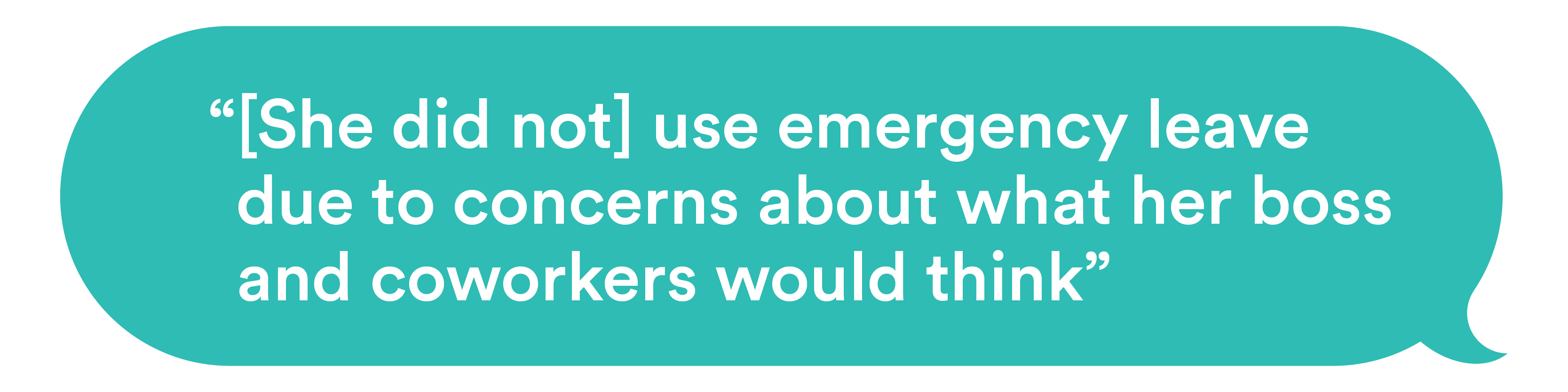
Despite the passage of the historic FFCRA paid leave provision, many parents continued working through the pandemic while juggling their growing child care and education responsibilities without taking leave. Rebecca Gale investigated why that was the case for the New York Times by focusing on the experience of Hannah Richards who decided not to use emergency leave due to concerns about what her boss and coworkers would think, her family finances, and the uncertainty of the pandemic.
The Coronavirus is Shaping the Conversation about the Need for Paid Family Leave
Rebecca Gale for the Washington Post
In Virginia, journalist Rebecca Gale followed the state’s movement for paid family leave via the story of Terrence Walker. Walker, whose wife battled colon cancer for six years before passing away, had to manage his wife’s care using the 200 hours he was allotted each year for sick and personal leave. Eventually Walker’s wife became too ill to work and Walker became the household’s sole earner (and source of health insurance).
Paid family leave advocates in Virginia have been trying to pass a bill that would set up a new paid leave program in the state. And last year, Mr. Walker shared his story with members of the Virginia General Assembly to highlight how it could have helped people like him.
87 Million Americans will Lose Paid Leave on Dec. 31. These Women’s Stories Show Us the Consequences.
Bryce Covert for The Lily, a product of the Washington Post
Samira Brooks, a home health aide who makes less than $10 an hour, had to stay home for months when she got sick with COVID-19. Because she's a low-wage worker, Brooks, like most other low-wage workers, did not have access to paid leave through her employer. Congress also initially exempted people like Brooks from FFCRA’s emergency paid leave benefits because she is a frontline healthcare worker. Brooks was eventually able to secure unemployment benefits but it was not enough to cover months of lost income. Unfortunately (but also expectedly), Brooks’s experience was not unique. Countless workers across the United States have found themselves disqualified for emergency paid leave through the FFCRA due to the many carve outs within the provision.
At the time of publication, Congress was negotiating an additional COVID-19 relief package that did not include any paid leave provisions or revise existing provisions to include ailing healthcare workers like Samira Brooks.

The Economy Could Lose a Generation of Working Mothers
Bryce Covert for Vox
Early on in the COVID-19 pandemic, Kari McCracken was furloughed from her job as a regional supervisor at a Kentucky bottling company. When McCracken was asked to return to work a few months later she was only given a week to sort out childcare for her five children. Unable to find a way to make it work and denied unpaid leave by her employer, McCracken had no choice but to quit.
Similar to the stories reported in their piece for The Lily, Covert sought out individuals whose employers were exempt from the paid leave provisions outlined in the FFCRA. (McCracken found herself exempt because of the carve out for businesses with more than 500 employees.) The FFCRA exemption and dearth of childcare options are two key drivers currently pushing women out of the workforce—a consequence that will have negative long-term impacts in the absence of social policies that address the needs of families across their life cycle.
Crisis Conversations: To Have and to Have Not — Family Leave in the Pandemic
Brigid Schulte for the Better Life Lab’s Crisis Conversations
In the early days of the pandemic, the Better Life Lab began hosting a weekly live interactive podcast featuring the voices and stories of a diverse array of workers, parents, caregivers, and others navigating work and care in the midst of a global pandemic, economic downturn, and racial justice reckoning. For this episode, the Lab explored how the new emergency FFCRA had become a critical lifeline for some families. And yet, because Congress exempted large employers and made it easy for small employers to opt out, many essential workers, like Aldi’s worker Ondrea Patrick, struggled to make ends meet, manage virtual homeschooling, and piece together childcare arrangements in order to work. “It was very difficult for me to try to juggle being a teacher, on top of a mother, on top of an essential worker,” Patrick said on the podcast. “If I would have had a chance to take a paid leave to really truly focus on my children and their education, it really would have bettered the lives of not just myself, but my kids, too.”
Patrick, a mother of four, became the family’s main breadwinner once her children’s father lost his job and twice faced foreclosure after taking a few weeks of unpaid leave following the birth of their children. “I feel like here we are trying to populate the world, trying to populate the United States, but the United States isn't helping us to be able to make ends meet while we are doing so, while we are healing from having children,” Patrick said. “[Paid family leave] really would have been helpful because I would have not had that stress of possibly losing my home with three very young children at the time.”

Paid Family Leave Changes Men
Dads, Commit to Your Family at Home and at Work
Haley Swenson, Eve Rodsky, David G. Smith, and W. Brad Johnson for the Harvard Business Review
As the COVID-19 pandemic wrought havoc on working mothers and their careers, Haley Swenson joined Fair Play Author Eve Rodsky and pioneers of men as workplace allies Brad Johnson and David Smith to contribute to Harvard Business Review’s annual Big Ideas issue. Their big idea? That equality for women at work will only come when men are as present and engaged at home as they are at work. The article cites the Better Life Lab’s Men and Care data to show that men want to be both equal caregivers and effective employees but that workplaces and policies create barriers and stigmas that stop that wish from becoming reality. The article provides evidence-based advice for individual men and for organizations to remedy this problem and push more men into open and visible care roles. Importantly, the piece recommends that organizations go beyond their own policies and cultures and work to push for public policies that broaden access to paid family and medical leave and childcare, both of which are shown to promote women’s advancement and allow men to more easily balance work and caregiving.
The Paid-leave Pioneers: A Few Japanese Dads have Sparked a Child-care Revolution
Brigid Schulte for The Lily, a product of the Washington Post
Japan has one of the most generous paid leave policies for men in the world. But few men actually use it, not quite 7 percent, and more than half take leave of five days or less rather than the year allotted. This is despite the fact that 80 percent of young Japanese men say they want to take paid family leave and share equally in the work of home and family. In this story, Brigid Schulte drew from previous reporting in Japan and focused on the pioneering efforts of a few men pushing against traditional gender norms and an all-consuming work culture. Tetsuya Ando, founder of the nonprofit Fathering Japan, said the experience of providing care changes men and caring for his daughter changed him. “There’s no better education for men than experiencing it,” Ando said. “And if fathers change, families change, communities change, companies change, then society changes.”
Schulte’s story draws from expert research and interviews on the key factors that enable men to take paid leave:
- Well-designed policies that include job protection, high wage replacement rates, an individual entitlement for men, and the flexibility to take leave intermittently rather than all at once.
- Supportive work environments and cultures that normalize men as caregivers.
- A few pioneering men to serve as role models and encourage “contagious” behavior.
The Need for Time to Care Throughout Life
Utah families — not just new parents — need paid leave
Haley Swenson for the Salt Lake Tribune
Having moved to Utah in March 2020 due to the pandemic, Haley Swenson experienced a traumatic brain injury in November. Only because of her employer’s generosity and flexibility was Swenson able to continue receiving pay while taking badly needed leave from work to rest and heal her brain. But tens of thousands of Utahans who have suffered from COVID, missed work to quarantine after possible exposure, and given birth or cared for loved ones through trying times have experienced all of this without a right to keep their income during these critical life moments.
As more states, including neighboring Colorado, build their own systems for paid family and medical leave, Utahns must grapple with what it means to be a so-called family values state where an astonishing 63 percent of workers don’t even have access to unpaid family and personal medical leave through the Family and Medical Leave Act.
Caring for dying loved ones is a luxury few can afford. I was lucky.
Brigid Schulte for the Washington Post
In this reported essay, Better Life Lab Director Brigid Schulte tells how having time to spend caring for her younger sister as she was dying of cancer was one of the most difficult and important times in her life. What she didn’t know then in 1997 was how rare it was that she had time that many call “sacred and holy” to ease the pain and fear of the person at the end of life, and to have the time to whisper last regrets and say goodbye.
“The pain of dying alone can be anguishing for the dying,” Schulte writes. “But it can haunt the living for a lifetime. “
Schulte had an understanding boss who himself had battled cancer, flexible work and paid time off. In the essay, she tells some of the stories of so many who have none of that. April Kimbrough, a hospice call center worker whose only son was diagnosed with terminal cancer, lost her job, wound up homeless and living in a car, and now gets by on waitressing and Instacart jobs all because she wanted time to care for her son. She began campaigning to help pass Proposition 118, Colorado state’s ballot initiative to create a paid family and medical leave law. “118 means not missing his last.”
Because the United States does not guarantee paid family and medical leave, Every year, many of the estimated 2 million people in America who care for a loved one at the end of life struggle to find time to work, pay bills, manage increasingly intensive care and be present with a loved one as they die and grieve after they’ve gone.
Schulte writes of her sister, “Everyday, I wear the watch she wore in life. It reminds me that time is precious. And that having time to live well, and time to die well, should never be a luxury for the few, but a basic human right for us all.”
Include Us All! A Call for Paid Leave in the Latinx Community
Roselyn Miller for the Better Life Lab's blog
Paid leave allows workers to take time off from work to care for their families or their health during health crises. However, Latinx workers are significantly less likely than their white, non-Hispanic counterparts to have access to the benefit. Immigration status, language barriers, job type, and widespread systemic inequality are just a few of the major barriers many in this community face in accessing paid leave.
When Martin Juarez and Teresa Servin-Juarez, a family with four children living in Kansas, found themselves in a difficult position after Martin contracted COVID-19 they were able to rely on FFCRA’s emergency sick leave provision. Martin recovered at home and his family stayed healthy and financially stable until he returned to work. Erendira Zamacona, a house cleaner, nanny, and mother to three children, was not as lucky. When the pandemic hit Zamacona was excluded from emergency provisions, had difficulty finding time to care for her family while searching for clients in an increasingly difficult market, and lost most of her work. “This economic crisis is something not only I’m facing but my colleagues are facing,” Zamacona shared. “It would have been helpful to have job protections, unemployment, or paid time off, even before the pandemic. There are thousands of domestic workers who do this essential work and we need an economic transformation that includes all of us. Regardless of having citizenship or not, we are humans.”
Why public school teachers need paid family and medical leave
Jahdziah St. Julien for Hechinger Report
Teachers play an essential role in society. As educators, they mold young minds and equip children with the foundational skills that will enable them to make meaningful contributions to the workforce. With the onset of COVID-19, teachers have shouldered the herculean task of transitioning from classrooms to remote learning. The impact of COVID-19, felt in every part of the nation, unveiled how integral educators are not only to the economy but also to families, many of them struggling to balance the demands of child care and work, in a nation devoid of basic care infrastructure.
Although teachers are an invaluable resource to society, many of them lack access to paid family and medical leave. In fact, these public workers are not unlike a large share of employees in the private sector who are not guaranteed access to the benefit unless it is offered by their employers or mandated by state or local law. Similarly, a teacher’s access to paid leave is riddled with variability because it depends on a number of factors: their state residency, employer (state or district), and, in some cases, their union’s ability to advocate on their behalf.
For teachers, whose labor supports the nation’s workers and families, there is no guarantee of job-protected, paid family and medical leave—there is only a patchwork of possibilities.
About the Project
Downloads
More About the Authors