David Sterman
Deputy Director, Future Security, New America; Term Member, Council on Foreign Relations
Is the War Coming to an End?
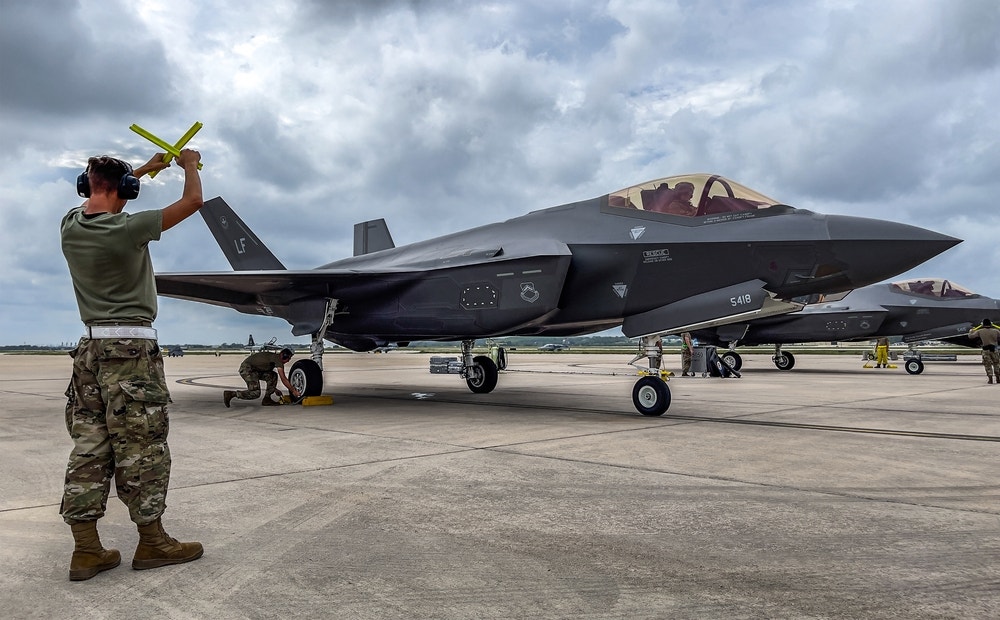
Today, August 6, 2026, marks three months without a U.S. strike on the Islamic State in Somalia. According to New America’s tracking, the last strike against the group occurred on May 6, 2026, when the United States “conducted an airstrike targeting ISIS-Somalia … in the vicinity of the Golis Mountains, about 75 km southeast of Bossaso,” per a press release issued by United States Africa Command (AFRICOM). On August 6, an AFRICOM spokesperson confirmed to New America that the May 6 strike was the latest strike against the group. The apparent three month pause in U.S. strikes is notable, as U.S. strikes against the Islamic State in Somalia played a central role in generating an unprecedented pace of strikes in Somalia over the past year and a half.
According to New America’s tracking, strikes targeting the Islamic State in Somalia accounted for just over half (53%) of all reported U.S. air strikes and ground operations in Somalia since 2025. New America’s tracking includes both strikes confirmed by AFRICOM and cases in which reports allege a U.S. operation but AFRICOM has either denied or not acknowledged conducting one.
The above percentage may underplay the importance of the U.S. campaign against the Islamic State to the escalation of U.S. military activity in Somalia. In 2025, strikes and operations targeting the Islamic State accounted for almost 60% of that year’s total. And this year, prior to the pause that followed the strike against the Islamic State on May 6, 2026, strikes targeting the group had accounted for just over half (52%) of the total number of reported strikes, but in the three months since the strike on May 6, there have been 13 reported U.S. strikes against al-Shabaab and no strikes against the Islamic State, dropping the percentage for the year to date to about 44 percent.
If the U.S. campaign against the Islamic State in Somalia has entered a prolonged lull, it raises questions for analysis of the broader U.S. war in Somalia. For example, will the pace of U.S. strikes in Somalia return to a scale similar to prior years – even if just to the elevated levels of the first Trump administration? It also raises questions about the extent to which the unprecedented number of strikes in Somalia over the past year and eight months reflects loosened guidance regarding when strikes could be conducted as opposed to being merely the result of the initiation of a new campaign against a different target.
The seeming lull also raises an opportunity to ask questions about whether the campaign against the Islamic State in Somalia has been a success. One possible reason for the lull is that the campaign has achieved many of its objectives.
While the war against al-Shabaab appears to be marked by a prolonged stalemate, at least according to a recent assessment from the International Crisis Group – an assessment the Somali government vehemently rejects, it does not necessarily follow that the campaign against the Islamic State in Somalia faces a similar situation. As the International Crisis Group has previously noted, the Islamic State in Somalia has shown far less ability to control territory and exercise resilient governance than al-Shabaab (from which it split off). Instead much of the concern regarding the Islamic State that drove the escalation in U.S. strikes derived not from its local resilience but its role in the global Islamic State network and possible threat to the United States and Europe.
There is reason to believe the U.S. and its partners have seen success on limiting those specific threats. In May 2026, Dagvin Anderson, the commander of AFRICOM, testified before Congress that “U.S. fire support and ISR, has kept ISIS leaders underground in caves, disrupting their command and control, demonstrating how small investments from the Joint Force can empower local partners to achieve outsized results. This sustained pressure has severely limited ISIS’s effectiveness and ability to communicate globally.” A UN report released in February 2026 noted “The threat presented by ISIL (Da’esh) in Somalia was significantly reduced owing to continued counter-terrorism efforts by Security Forces.” The report also noted that the group’s fighting force had declined to some 300 men, and that the flow of foreign fighters to it was “significantly constrained.” The role of foreign fighters in the Islamic State in Somalia’s force had been an important part of the rationale for U.S. military action.
On the other hand, significant questions remain. For example, the United States has not announced the death of many senior Islamic State figures in its strikes over the course of its campaign. Abdulqadir Mumin, the leader of the Islamic State in Somalia who plays some kind of senior role in the global Islamic State network and perhaps is even the global Caliph – or so AFRICOM officials have asserted – appears to remain at large.
The one exception to this absence is the killing of Ahmed Maeleninine, who AFRICOM described as “a key ISIS recruiter, financier, and external operations leader responsible for the deployment of jihadists into the United States and across Europe” on February 1, 2025 in the first strike of the current escalated campaign against the Islamic State in Somalia. U.S. special operations forces also appear to have conducted an operation that reportedly captured a senior Islamic State in Somalia financial official.
It is possible that the seeming lack of named senior Islamic State targets killed in U.S. strikes is just a reflection of a broader retreat from transparency. For example, AFRICOM stopped reporting death toll assessments for its strikes in Spring 2025. This shift in policy around reporting the results of strikes makes it more difficult for the public to assess the success or failure of the campaign. Moreover, while not demonstrating the resilient territorial control that al-Shabaab has, the Islamic State in Somalia has not been conclusively destroyed, generating uncertainty about whether future strikes will be needed to maintain the sustained pressure behind the successes the U.S. and its partners have marked.
The seeming lull also provides a reminder of the difficulty of determining when wars end in an age of endless war. U.S. strikes in other theaters of the war on terror have seen similar pauses. In some cases, such as in Pakistan, these pauses have eventually turned into what appear to be sustained ends to U.S. strikes. However, other cases have seen escalations after apparent pauses. Although AFRICOM has not conducted strikes against the Islamic State in Somalia in the past three months, it has conducted strikes and operations against the Islamic State elsewhere in Africa, notably killing Abu-Bilal al-Minuki, who AFRICOM described as the director of global operations for ISIS, in Nigeria in mid-May.
As America’s counterterrorism campaigns have increasingly been conducted with little public or congressional debate, it becomes difficult to distinguish a short pause from a more sustained end to strikes, leaving even seemingly sustained pauses – like the one in Pakistan – open to the possibility of a sudden re-escalation. The difficulty of determining when a war has ended is further complicated by the possibility that the U.S. has conducted recent covert strikes against al-Qaeda in theaters such as Yemen.
In May 2013, President Obama warned that “Unless we discipline our thinking, our definitions, our actions, we may be drawn into more wars we don’t need to fight, or continue to grant Presidents unbound powers more suited for traditional armed conflicts between nation states.” Carefully examining the seeming lull in strikes against the Islamic State in Somalia is one case, where such discipline in analysis is needed. Obama’s call for disciplining our thinking resonates in a moment when the Trump administration has conducted dubiously legal and seemingly ineffective operations in the Americas against suspected drug traffickers and launched a disastrous war with Iran without Congressional authorization.
The war with Iran is flashier and carries greater consequences, but the work of disciplining our thinking on war must include counterterrorism campaigns like the ones in Somalia, where public scrutiny has been lacking and public debate has often not accounted for the specificities of and distinctions between the various U.S. efforts in the country.
Deputy Director, Future Security, New America; Term Member, Council on Foreign Relations