Lilian Coral
Vice President, Technology & Democracy, New America
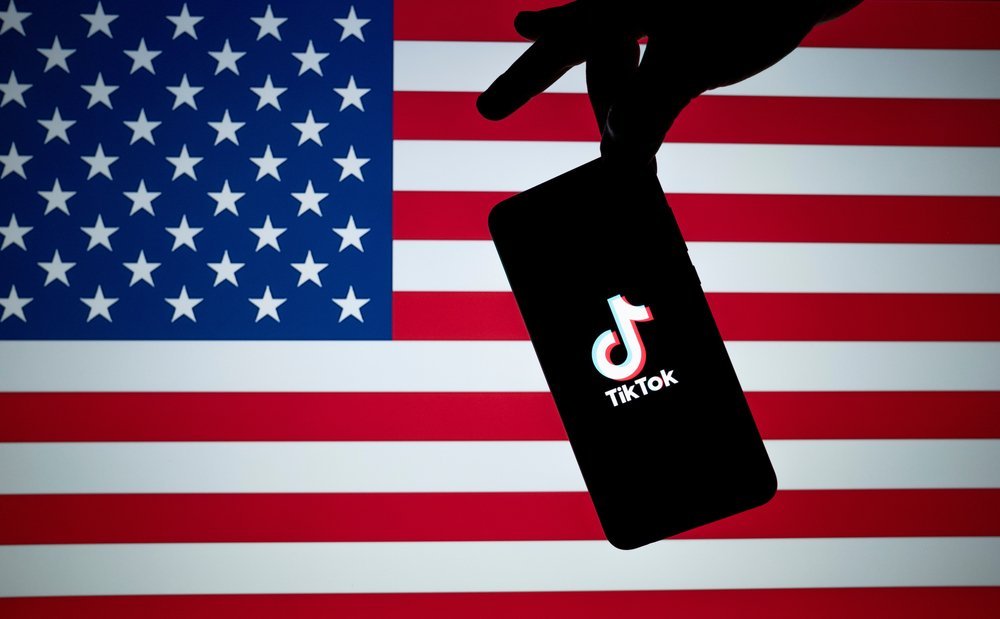
The national security debate at the heart of a federal law requiring ByteDance, TikTok’s China-based parent company, to sell the popular social media app’s U.S. operations to a U.S.-based owner to avert a nationwide ban isn’t just about TikTok—and it never was.
At New America’s Open Technology Institute (OTI), we share many of the national security and data privacy concerns that drove both Congress and the Supreme Court of the United States to stand behind the Protecting Americans from Foreign Adversary Controlled Applications Act (PAFACA), which codified the ultimatum. However, none of those considerations change the fact that this “divest-or-ban” requirement sets a dangerous precedent for free expression. It also distracts from deeper problems with our country’s approach to digital governance, including the absence of a comprehensive federal privacy law and insufficient enforcement of algorithmic accountability.
President Donald Trump claimed last Friday that his administration “would pretty much have a deal” with China as soon as sometime earlier this week—an assertion China has reportedly avoided addressing concretely. But a “deal” shouldn’t become a shortcut for avoiding real reform or a license to use national security to mask protectionist technology policy. With TikTok’s fate in flux, here are five considerations stakeholders should keep in mind:
The future of TikTok matters more than you might think. TikTok itself reports that more than 170 million Americans and 7.5 million U.S. businesses use the app. Pew Research Center estimates that nearly 60 percent of adults under 30 are on TikTok, and more than 50 percent of those users consider it their primary source for news.
Beyond the sheer reach of its userbase, an Oxford Economics report commissioned by TikTok found that in 2023, the app generated more than $24 billion in gross domestic product (GDP) and created more than 224,000 jobs in the U.S. alone.
In a recent interview with content creator Jessica Hawk, we spoke about her strategy for transitioning to other platforms, the ripple effects of a potential TikTok ban on brand partnerships and income streams, and how the creator economy might shift. While the fate of an app many young people use to share videos of themselves dancing may seem trivial, for the millions of people and businesses across the U.S. relying on the platform to make a living, the stakes are incalculable.
Outside of the detrimental impact that a TikTok ban would have on the livelihoods of its users, there is also much to be said about how PAFACA’s ultimatum perpetuates the global shift away from an open internet. As recent New America Technology and Democracy Fellow Tianyu Fang observed in New America’s The Thread, the internet has become “less open globally” in recent years due to the actions of both authoritarian governments and democracies.
Just as the Founding Fathers emphasized the importance of a separation of church and state, ensuring a separation between our government and Big Tech will be crucial to defending democracy—both nationally and globally—for years to come. TikTok is only the beginning.
Vice President, Technology & Democracy, New America