The_Transition_to_Competitive Integrated Employment_2025
Abstract
The United States is making progress in ensuring that people with disabilities have a chance to have good jobs and make fair wages. There is momentum: 20 states have already taken steps to move away from subminimum wage employment entirely, and nearly all states are working to reduce it. But this time of transition can also be difficult, especially because many people who will be affected by the changes have understandable fears and misconceptions about the purpose and potential of this change. To help policymakers chart a course for continued progress, this report analyzes the reactions of people in three different stakeholder groups and uses data from qualitative interviews, research, and public documents to highlight areas in need of attention.
Acknowledgments
The authors would like to thank each of the individuals who took the time to be interviewed for this project and provide thoughtful and meaningful input. This work would not have been possible without you. Thank you for the work you do each day.
We are grateful to the Ford Foundation for its continued support of New America’s research and analysis on disability policy. The findings and conclusions contained within are those of the authors and do not necessarily reflect positions or policies of the foundation. The authors would like to thank Lisa Guernsey, and Sabrina Detlef for their editing support; and Katherine Portnoy, Amanda Dean, and Natalya Brill for their communications and data visualization support.
The views expressed in this report are solely those of the author(s) and do not reflect the views of New America, its staff, fellows, funders, or its board of directors.
Downloads
Introduction
Disability rights have come a long way in the last 30 years. Federal laws such as the Americans with Disabilities Act (ADA), the Individuals with Disabilities Education Act (IDEA), Section 504 of the Rehabilitation Act, and the Workforce Innovation and Opportunity Act (WIOA) have reshaped access and opportunity in education and employment. Once isolated from their nondisabled peers or excluded from education altogether, more than two-thirds of students with disabilities now spend the majority of their school day in general education classrooms learning alongside their peers.1 Disabled people are also far more integrated into the workforce since the passage of WIOA. The employment-to-population ratio for people with disabilities has risen from 26 percent in 2014 to 38.1 percent in 2025,2 partly due to pandemic-era gains in remote work and other accommodations that have become more readily available.
Younger generations of workers now expect to work in fully integrated settings that provide fair wages, are supported by assistive technologies, and are accessible to all. These types of settings—known as competitive integrated employment—ensure that individuals with disabilities receive comparable pay and benefits, interact with employees without disabilities, and have the same advancement opportunities as others in similar positions.3
Unfortunately, the reality does not yet meet these expectations. Blocking the way to successful competitive integrated employment for all people with disabilities is the subminimum wage provision. This segregating and antiquated policy is an option for employers that dates back to the Fair Labor Standards Act of 1938. While it was intended to increase job opportunities for people with disabilities, this provision (which we will call subminimum wage for short throughout this report) allows employers to pay workers with disabilities below the federal minimum wage rate. Despite civil rights laws and years of progress on workforce and labor policy, the subminimum wage still exists, with workers in some cases still earning pennies on the dollar.
Recognizing the need to change, 20 states have moved toward eliminating the subminimum wage, and our analysis last year in Pennies on the Dollar: The Use of Subminimum Wage for Disabled Workers across the United States showed that nearly all states are taking some action to address subminimum wage and help workers with disabilities become economically self-sufficient.4
The federal government has also announced its intention to eliminate the use of subminimum wage employment. In December 2024, the U.S. Department of Labor gave notice of proposed rulemaking to phase out the issuance of subminimum wage certificates.5 As stated in the opening of the proposed rule, “Employment opportunities for individuals with disabilities have vastly expanded in recent decades, in part due to significant legal and policy developments. Based on that evidence, the Department has tentatively concluded that subminimum wages are no longer necessary to prevent the curtailment of employment opportunities for individuals with disabilities and thus proposes to phase out the issuance of section 14(c) certificates.”6 Simply stated, subminimum wage is viewed in the policy world as a relic of the past and competitive integrated employment as the future.
Now, a big question remains: What happens during the transition away from subminimum wage?
In this report, we seek to address this question by examining the perspectives of those most impacted by this transition: disabled workers and their families, employers, and employment support providers. We conducted individual and small group interviews; analyzed public comments, reports, and social media posts; and updated the data analysis to re-score states from the authors’ previous report7 to find that while significant progress has been made, transitions can be challenging, and people affected by the new policies are managing real and perceived risks. At the same time, these perspectives can help in building better infrastructure and advancing a culture of dignity for disabled workers. To help bring more states into the fold and to spur change at the federal level, we provide recommendations on how to smooth the transition to competitive integrated employment, fair wages, and wraparound supports for individuals and families.
Citations
- U.S. Department of Education, 45th Annual Report to Congress on the Implementation of the Individuals with Disabilities Education Act, 2023 (U.S. Department of Education, March 2024), source.
- Kessler Foundation, “Unprecedented Success Continues: 2023 Employment Gains for People with Disabilities Outshine Those of Counterparts Without Disabilities,” press release, January 30, 2024, source; and Kessler Foundation, “nTIDE January 2025 Jobs Report: Encouraging Signs in Disability Employment: A Slow but Positive Trajectory,” press release, January 10, 2025, source.
- Competitive integrated employment is defined in WIOA as “work that is performed on a full-time or part-time basis for which an individual is: (a) compensated at or above minimum wage and comparable to the customary rate paid by the employer to employees without disabilities performing similar duties and with similar training and experience; (b) receiving the same level of benefits provided to other employees without disabilities in similar positions; (c) at a location where the employee interacts with other individuals without disabilities; and (d) presented opportunities for advancement similar to other employees without disabilities in similar positions.” U.S. Department of Labor, Office of Disability Employment Policy Department of Labor, “Competitive Integrated Employment,” source.
- Lillie Heigl, Kimberly Knackstedt, and Elena Silva, Pennies on the Dollar: The Use of Subminimum Wage for Disabled Workers across the United States (New America, February 2024), source.
- U.S. Department of Labor, “U.S. Department of Labor Announces Proposed Rule to Phase Out Certificates Allowing Payment of Less Than Minimum Wage to Workers With Disabilities,” press release, December 3, 2024, source.
- Wage and Hour Division Department of Labor, “Employment of Workers with Disabilities Under Section 14(c) of the Fair Labor Standards Act,” notice of proposed rulemaking, December 3, 2024, source.
- Heigl, Knackstedt, and Silva, Pennies on the Dollar, source.
Updated State Policy Data and Rankings
To follow up on our 2024 Pennies on the Dollar: The Use of Subminimum Wage for Disabled Workers across the United States report,1 we reanalyzed state data to assess progress on reducing subminimum wage as well as changes to related employment and benefit policies (see Figure 1 and Figure 2). For a detailed methodology of the data analysis and scoring methodology, see the earlier report. We found that nearly all states are reducing the number of workers with disabilities being paid a subminimum wage since our previous review.
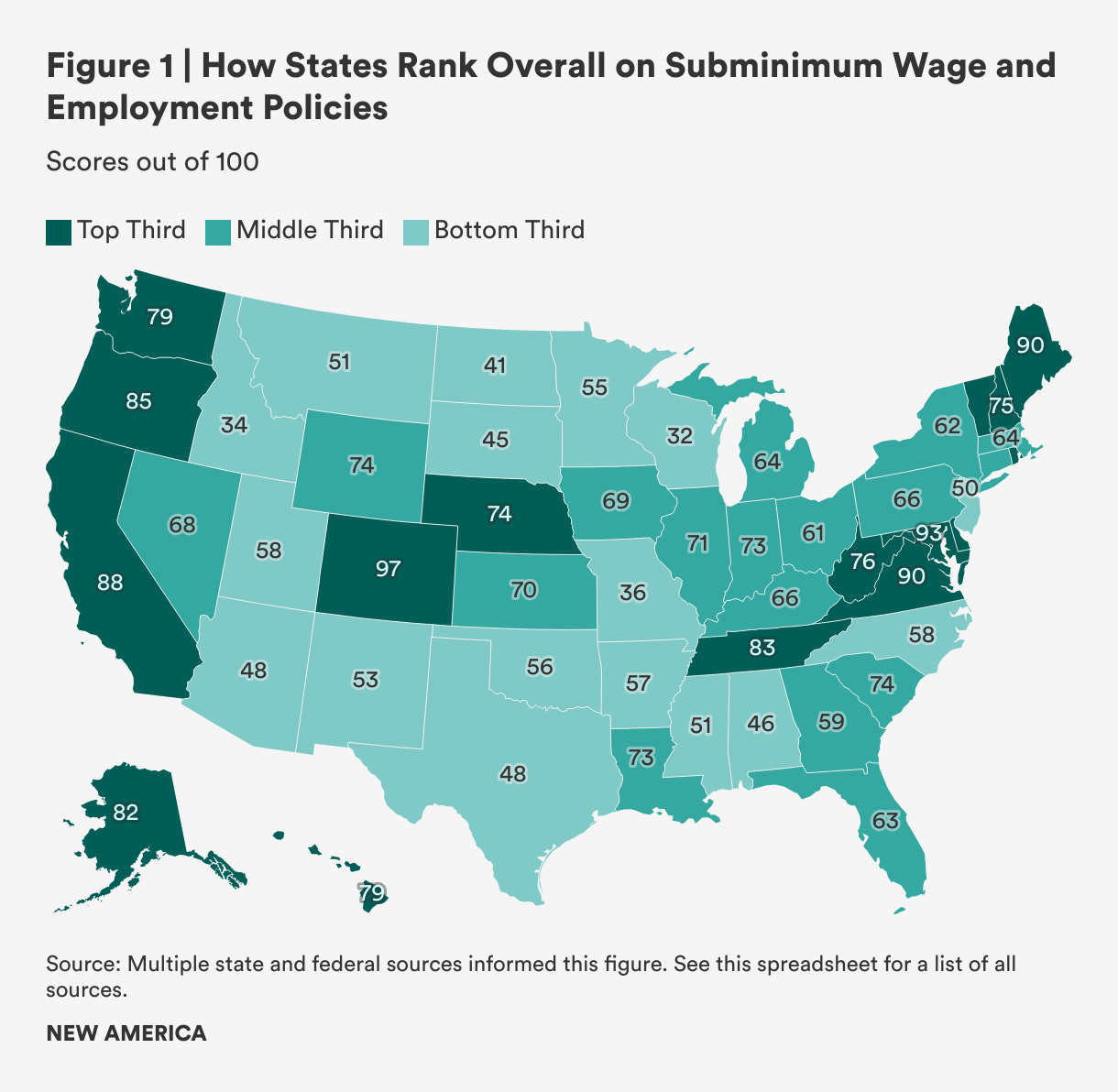
Figure 1 is a map of the United States showing the total subminimum wage score, with the updated data for each state from the average of all four categories analyzed. It also shows state rankings, color-coded into the top third of states, middle third of states, and bottom third of states by scores.
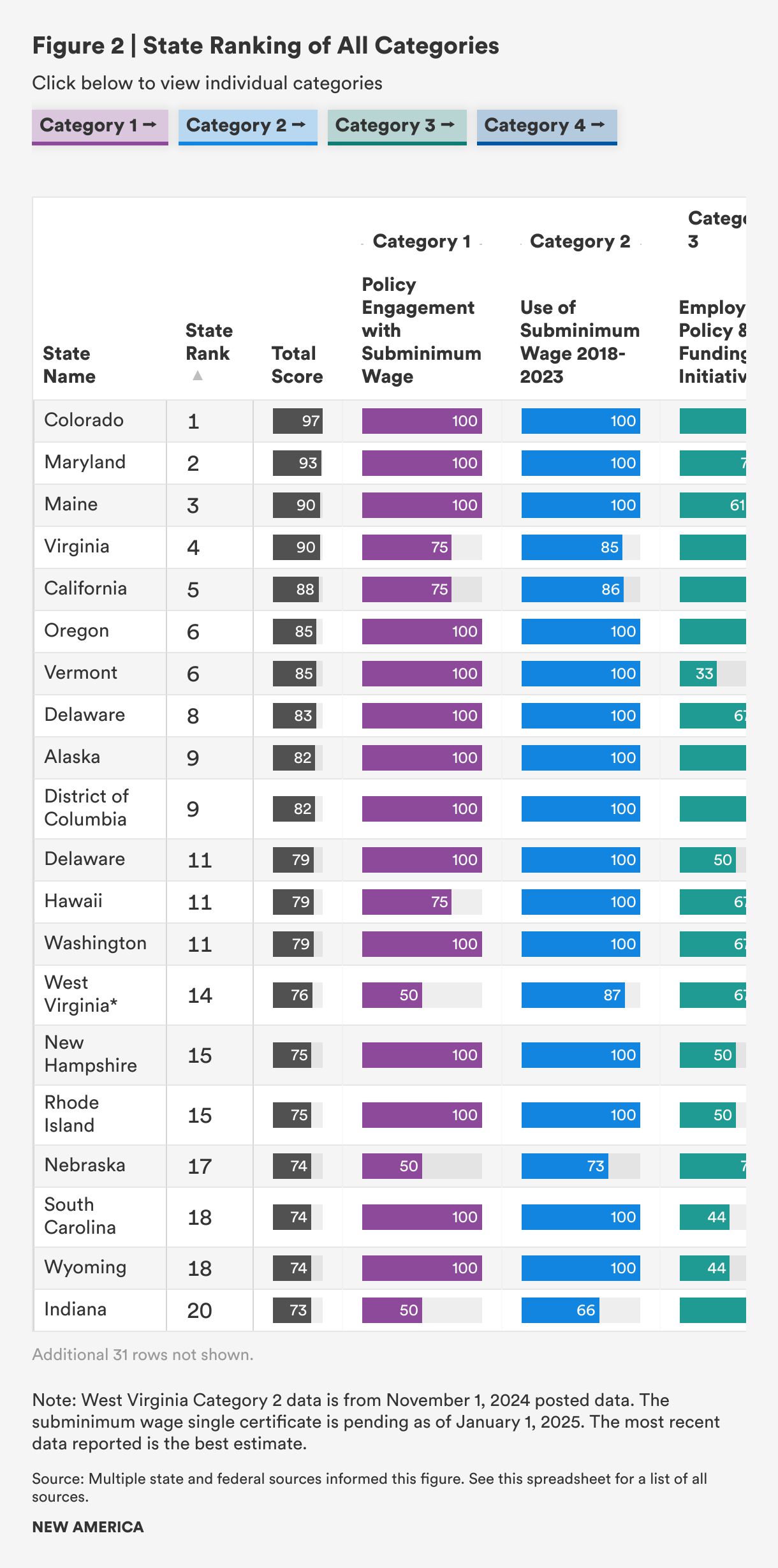
Figure 2 displays the state rankings and total scores across the four categories. It also displays the scores for each state within each category that resulted in the total score. Colorado, Maryland, Maine, Virginia, California, Oregon, Vermont, Tennessee, Alaska, and the District of Columbia received the top 10 scores, respectively. Of note, Colorado, Virginia, and California all moved into the top 10 scores from the last analysis. Ranked lowest, from 42nd to 51st, are Montana, New Jersey, Arizona, Texas, Alabama, South Dakota, North Dakota, Missouri, Idaho, and Wisconsin. Three states moved out of the bottom ranking. Kansas made the largest jump, to rank 23 overall in this analysis.
The freely available spreadsheet with the raw data can be found in this 2025 data sheet.
Citations
- Heigl, Knackstedt, and Silva, Pennies on the Dollar, source.
The Basics of Subminimum Wage
Subminimum wage was codified in law in 1938 with the passage of the Fair Labor Standards Act (FLSA). The law allows employers to pay a lower wage adjusted to a productivity level for what was referred to at the time as “substandard workers.”1 Despite disagreement about who was included in the term substandard workers, the law ultimately stated that subminimum wages could be used for workers “whose earning potential is impaired by age or physical or mental deficiency or injury.”2
At the time, many people with disabilities were institutionalized, so the law’s intent was to encourage companies to employ these individuals, while also spurring workforce engagement and training. However, the law has remained essentially unchanged, even as disability rights and education laws were passed. The provision still sits in Section 14(c) of the FLSA, hindering career development and training and keeping many people with disabilities in subminimum wage pay for their entire working lives.
Employers can pay a subminimum wage once they have received a subminimum wage certificate from the U.S. Department of Labor. According to a 2023 Government Accountability Report, workers employed under a subminimum wage certificate are making an average of $4.15 per hour, with more than half making less than $3.50 per hour.3 Note that in law, there is no floor or minimum hourly wage.
Most entities that have a subminimum wage certificate are community rehabilitation programs (CRPs), which are nonprofit organizations that provide employment and day service supports to individuals with disabilities. CRPs that use 14(c) wage certificates provide subminimum wage work to workers with disabilities and may also provide day habilitation, which includes services for personal and health care, social engagement, daily living, and community living. These habilitation services are a critical component of disabled individuals’ daily routines, as many workers with disabilities employed under subminimum wage certificates work part time and receive day habilitation services for the other hours in their day.4
Day habilitation and employment services are deeply intertwined. Medicaid, which is a major funding source, also requires some level of interconnection between day habilitation and employment services. This interdependency complicates efforts to reform one part alone and sits at the center of the challenge of transitioning away from subminimum employment.
Although the unemployment rate for disabled workers is still nearly twice as high as that for nondisabled workers,5 the employment-to-population ratio among disabled workers has been steadily rising and is now more than 38 percent among workers ages 16–64.6 Youth with disabilities are now entitled to receive career counseling and coaching as early as 14 years old in some states and 16 years old in all states, as well as transition support as they prepare for and enter the workforce.
Subminimum wage policy and practices are also changing. As described in detail in our previous “pennies” report, momentum is shifting. Many states have phased out or are in the process of phasing out the use of subminimum wage. Twenty states have either eliminated subminimum wage (14 states) as of the publication of this report or are in the phaseout process after passing legislation (six states): Alaska, California, Colorado, Delaware, District of Columbia, Hawaii, Kansas,7 Maine, Maryland, Nevada, New Hampshire, Oregon, Rhode Island, South Carolina, Tennessee, Vermont, Virginia, Washington, Wyoming, and, most recently, Illinois.
There is limited but growing evidence on the impact of transitioning away from subminimum wage policies, although a recent study of New Hampshire and Maryland found that removing subminimum wage led to increased workforce participation and potential employment improvements for people with cognitive disabilities.8 New research from Northwestern University found that eliminating subminimum wage supported higher-wage opportunities and did not develop an increased reliance on public benefits.9 Research from the Institute for Community Inclusion at the University of Massachusetts Boston offers important considerations for state and local leaders as they transition away from subminimum wage employment, including ensuring there is substantial lead time to plan for changes, providing stronger support for employers and comprehensive benefits counseling for participants, and maintaining existing support programs.10
While states are taking action to address the issue of subminimum wage, the authority to pay a subminimum wage originates at the federal level, under the Fair Labor Standards Act, Section 14(c). There are several federal bills proposed to phase out Section 14(c), with the most prominent being the bipartisan and bicameral Transformation to Competitive Integrated Employment Act (TCIEA), previously introduced in the 118th Congress by Senators Bob Casey (D-Pa.) and Steve Daines (R-Mont.) and Representatives Robert C. “Bobby” Scott (D-Va.) and Cathy McMorris Rodgers (D-Wash.). While leaders on the bill will change with the 119th Congress, there is significant momentum to discontinue subminimum wage at the federal level.
Citations
- Jonathan Grossman, “Fair Labor Standards Act of 1938: Maximum Struggle for Minimum Wage,” U.S. Department of Labor (website), source.
- Joint Hearings before the Senate Committee on Education and Labor and the House Committee on Labor, Fair Labor Standards Act of 1937, 75th Cong., 1st sess., June 4, 1937. See more in Pennies on the Dollar, “Background,” source.
- Government Accountability Office, Subminimum Wage Program: DOL Could Do More to Ensure Timely Oversight (GAO, January 2023), source.
- For more on history, practice, and controversy of subminimum wage, see Heigl, Knackstedt, and Silva, Pennies on the Dollar, source.
- U.S. Department of Labor, Office of Disability Employment Policy, “Disability Employment Statistics,” source.
- Kessler Foundation, “nTIDE January 2025 Jobs Report,” source.
- Kansas has passed a bill that works to support the transition of subminimum wage employment to competitive integrated employment. Although no phaseout date is within the bill, phaseout is expected to begin because of funding changes.
- The National Council of State Legislatures (NCSL) notes an increase in state activity to promote competitive integrated employment but also notes limited evidence of long-term consequences. See NCSL, “Trends in Disability Employment Legislation,” September 7, 2023, source. More pronounced effects were noted in New Hampshire. See Mihir Kakara, Elizabeth F. Bair, and Atheendar Venkataramani, “Repeal of Subminimum Wages and Social Determinants of Health Among People with Disabilities,” JAMA Health Forum 5, no. 11 (2024), source.
- Michelle Yin, Regina Seo, and Hoa Vu, “Subminimum Wage Elimination and Economic Inclusion: Evidence from a National Analysis (RISEI Working Paper),” under review, Northwestern Research and Innovation for Social and Economic Inclusion Lab, January 10, 2025, source.
- ICI administers the longitudinal data collection project, StateData, with funding from the Administration for Community Living and the U.S. Department of Health and Human Services. See Jean Winsor, John Butterworth, Alberto Migliore, Daria Domin, Agnes Zalewska, John Shepard, Esther Kamau, Ryan Wedeking, and Jeffrey Edelstein, “Summary of State Data: The National Report on Employment Services and Outcomes Through 2021,” Data Note Plus 88 (2023), source.
Perspectives from the Field
The transition away from subminimum wage is well underway but it is not straightforward or simple, nor without opposition. An ideal transition from subminimum wage to competitive integrated employment includes several assumptions: Employers are prepared to transition to competitive integrated employment, vocational rehabilitation and other employment supports will step in to support the transition, and day habilitation services will remain in place.
Unfortunately, these rarely occur together. This reality places enormous strain on disabled workers, their families, employers, and the network of support providers left to navigate a transition filled with challenges and uncertainty.
What follows is an examination of the perspectives of these three groups—workers and their families, employers, and employment support providers—who are most affected by the transition from subminimum wage to competitive integrated employment. We aim to unpack the reasons for opposition, detail misunderstandings among stakeholders on all sides of the issue, and provide lessons and recommendations for smoothing the transition from subminimum wage to competitive integrated employment.
Workers and Their Families
Nearly 40,000 individuals with disabilities, ages 25 to 54 years, are employed in subminimum wage settings today. Many of these individuals and their families are supportive of such settings and describe the benefits of consistent social engagement and a safe place to go each day. They also express concerns about losing a community and a daily support system that for many began as early as high school. Others demand a system that guarantees both dignity and opportunity for themselves and their loved ones, one that preserves structured and supportive environments while ensuring fair wages for their work. Across the experiences of these workers and their families, several key themes emerge, which shed light on the complexities of the transition away from subminimum wage employment.
Fear of Falling Through the Cracks
When transitions from subminimum wage to competitive integrated employment occur, whether driven by new requirements or voluntary decisions, disabled workers have several options. They can seek employment elsewhere, move solely into day habilitation services, or continue with their employer if it converts to competitive integrated employment. If these community rehabilitation programs close, however, disabled workers risk losing not only their jobs but also the critical day services they rely on, since most current subminimum wage employers are also CRPs.
Families and individuals report that employment transition support is inconsistent. They express deep concern that they or their family members will not be able to find employment and other support outside of subminimum wage.
Some interviewees felt that the assumption that competitive integrated employers are both prepared for and welcoming to disabled workers is flawed and more needs to be done to set higher expectations and prepare accommodations. The mother of a daughter with developmental disabilities said, “The expectation from the state has been one of [overcorrection]. We want people [with disabilities] to just do what everybody else does. We don’t want specialized, segregated [services]. But that assumes [community] services are welcoming.”
Others noted the fear that their family members will “fall through the cracks,” as one parent describes, and lose employment opportunities that suit their abilities. “Being able to work at a job that can be done at their skill level and without the pressure of time constraints is huge. It’s giving confidence, much-needed socialization, and a positive purpose.” Another parent described concern for her adult son with an intellectual disability, explaining that if subminimum wage work ends, employers will move on and her son will “lose all opportunities for useful work” and be stuck in “adult day care.” These concerns are fueled by the fact that even though employers paying a subminimum wage have the option to renegotiate their contracts or work to become competitive integrated employers, there have been some instances where subminimum wage employers have closed.
These fears of losing services and being “left with nothing” dominate the public narrative about phasing out subminimum wage and stress the need for more structured phased transitions. This fear of change echoes the debates during the implementation of the Education for All Handicapped Children Act (EAHCA), later renamed IDEA. At that time, families expressed fears that general education settings would not adequately meet the complex needs of their children with disabilities or would lead to bullying and insufficient specialized support. Despite these fears, decades of implementation have demonstrated significant successes in the inclusion of students with disabilities and improving outcomes for both students with disabilities and nondisabled students.1
Upending a Legacy of Low Expectations
Older workers with disabilities, those born before the ADA was enacted in 1990, who are now 40 years and older, were often funneled into subminimum wage jobs directly from high school without exposure to integrated education and employment opportunities. As one interviewee who grew up in Vermont said, she was not granted access to her mainstream high school curriculum and began earning a subminimum wage while in high school. Although she later obtained a regular high school diploma, she was counseled into subminimum wage employment. She was paid between $2 and $3 an hour to do “repetitive, mindless tasks” and suffered from what she describes as “low expectation syndrome,” in which others always expected the worst from her rather than the best.
This experience was not unusual; across the country, nearly every story we reviewed or heard had people of the same age moving directly from high school into subminimum wage employment and staying there for about 20 years. Despite legal and policy advancements for disabled people over that time period, little changed for these employees. In 2019, for example, a legislative specialist in Massachusetts who previously worked in subminimum wage employment told the U.S. Commission on Civil Rights that:
“I attended a local workshop where they had us doing jobs such as packaging items to be shipped out, and piece work. It was very boring and unsatisfying for me….It was not a good atmosphere to be in because it did not encourage us to do our best and see the results of our efforts. The agency applied for and received a waiver to pay us less than minimum wage…”2
The need for additional skill acquisition and training outside of segregated employment was emphasized by an individual who provided public testimony on the issue:
“This noncompetitive segregated environment was not designed for skills acquisition and did not present opportunities for upward mobility….Without offering additional details, my brother never achieved more. When I became blind, I thought my destiny was [the company offering subminimum wage]. Luckily, for me, I was exposed to successful blind individuals and blindness professionals that educated and supported me toward the acquisition of alternative skills of blindness, Braille, cane travel, access technology, and independent living skills. As a result of proper education and training, my sister and I have been able to improve our quality of life and achieve competitive integrated employment.”3
These accounts emphasize how deeply systems of segregation and low expectations have impacted opportunities for disabled workers. Without access to education, training, and encouragement to support their transition, generations of disabled individuals have been trapped in a cycle of low expectations.
Subminimum wage employment is not a readiness model nor is it a skill development program. In fact, disabled workers leaving subminimum wage often need support of vocational rehabilitation and other employment programs to support their transition given the lack of still acquisition to the modern workforce. The expectation that disabled workers can only work in low wage, low skill work can be upended.
Balancing Wages and Benefits
Another common fear among workers and their families is that increased wages will mean the end of other support services and benefits, including Social Security Disability Insurance and Medicaid. The reality is that any worker with a disability currently employed at a subminimum wage likely needs both: at least a minimum wage and support services and benefits. But as wages increase above the minimum wage, some individuals with disabilities worry about maintaining their benefits because the government benefits structure is tied to strict income limits and assets. Put simply, if an individual earns too much, even by a dollar, or begins to save too much, they lose access to their benefits.4
For example, the mother of a son with Down syndrome told us that he primarily had subminimum wage jobs until the state phased them out and his current employer transitioned. Now he earns above the minimum wage but the family is constantly navigating the right amount of pay to keep benefits. “He could be making, probably a little bit more, but we declined the last pay raise, because we really needed to [maintain current benefits],” she said. Some individuals were unaware that they could lose their benefits when wages increased and did not receive counseling. Others moved away from public benefits when wages increased but it was a challenging process. Several families had established disability trusts but were unaware of ABLE accounts, which are state-run tax-advantaged savings accounts for people with disabilities.5 The lack of financial counseling for individuals and families across the country navigating benefits systems is deeply concerning and adds to the fear of losing something steady, despite de minimis pay.
Workers and their families also express concerns that eliminating subminimum wage means a sudden shift to a 40-hour workweek. An effective transition to competitive integrated employment should mean that wages increase for the work performed and integrated day habilitation continues to be provided for hours that are not worked. In reality, both employment supports and integrated day habilitation supports are needed, not one or the other. Without both, the burden shifts to the family to fill hours in the day, something working parents cannot always manage. Policymakers “created [the] requirement [that] if anybody wanted a day service they had to go for employment,” said the mother of an adult daughter with a developmental disability. She explained that families needed to find both work and day habilitation, but expressed concern about losing supports.
The lack of clear support systems and established pathways makes this transition daunting to many workers and their families. Without exception, individuals and families express a strong desire for more independence and opportunity, but they are nervous about what might be lost in the shift away from subminimum wage. “With a family member that suffers from severe autism,” one interviewee said, “we feel fortunate that he has the opportunity to work at all.”6 The underlying theme for individuals and their families in our interviews was fear: fear of the unknown, fear of lack of employment, fear of losing community, fear of losing day habilitation, fear of losing benefits, and fear of family members having to fill gaps they cannot fill. These fears must be taken seriously if any transition is to be successful. The burden cannot be placed entirely on these individuals and their families to navigate a system that has already failed them. Yet, the desire from disabled workers for independence and integration into the community must not be lost. “I’d like to get a job somewhere when the time is right to make more money. Whatever they give me is fine, I’m not picky; I can do a lot of things if I put my mind to it,” said a disabled worker who is currently employed under subminimum wage, as quoted in The Washington Post.7
Employers
As of December 2024, 752 employers in the United States pay disabled workers a subminimum wage, a number that has decreased by approximately 50 percent since 2010, according to the Government Accountability Office. The vast majority of these employers (666) are CRPs, which dominate the space because of the additional services they provide outside of employment, including transportation and day habilitation services. These employers, most of which are nonprofit, play a crucial role in transitioning to competitive integrated employment. This is especially true in rural communities, where they may be among the few employers and often provide essential other services.
Proposed federal policy has sought to incentivize a transition for employers to move away from subminimum wage certificates. However, current certificate holders cite concerns about losing contracts, maintaining financial sustainability, and preserving their business models, and they say they might close if subminimum wages were eliminated nationally. These fears, combined with stigma, bias, and historic views on disability, add to the challenge of change. “Companies cannot exist without a balance between labor and profit,” says one employer. “Take away the profit and the labor goes away too.”
Still, evidence from successful transitions tells a different story. As one employer noted: “We were successful because our transformation was planned, carried out over a number of years, and supported by financial, training and technical assistance funded by our State and County funders. [We] also redirected internal resources to this effort.”8
Since 2019, large corporations have publicly taken policy stances on eliminating subminimum wage and worked internally to develop more inclusive workplaces for their disabled employees. Microsoft,9 JPMorganChase,10 and Starbucks11 each have policy positions supporting the elimination of subminimum wage in addition to proactive policy solutions to improve the workforce and economic conditions for people with disabilities. With national presence and strong influence, these companies are setting a standard for how to create better policies and inclusion for workers with disabilities in the workplace.
Employers describe the transition as a challenge to their business identity and their operations, but they also highlight new opportunities for workers and for more inclusive business models.
Rethinking Business Models
Many CRP employers, past and present, face a fundamental tension between their core mission and their business model. As employers dedicated to serving people with disabilities, they leverage resources from Medicaid, states, and private fundraising to meet the needs of the people they serve, rather than prioritizing profit. Yet, these organizations must maintain a viable business model to continue to support an extensive workforce, including support professionals and disabled workers. This tension is expressed by one person at a CRP with a subminimum wage certificate: “These work centers’ sole purpose is to serve individuals with significant intellectual and developmental disabilities. The elimination of Section 14(c) would cause many of these work centers to close because they cannot afford to pay the men and women they serve the minimum wage on top of incurring the cost of providing the necessary supports.”12
Indeed, there is a fear that eliminating the subminimum wage would cause a loss of contracts and significantly impact a company’s bottom line, yet ironically, the bottom line is often not its actual focus. One nonprofit employer said, for example, that “in the three years since our use of the Section 14(c) certificate was eliminated, [the company] has proven that the financial cost to discontinuing the use of the 14(c) program was not only manageable, but also a farsighted investment in our mission.” This employer continued, “Paying all of our employees fairly has not hampered [our] business competitiveness or our ability to create job opportunities for people of differing abilities. To the contrary, we now operate at more than 60 contract sites in [the area], and continue to develop new business opportunities to further our mission.”13 By changing the business model, this company was able to not only continue to support its workers but expand and employ even more workers. Its mission of serving and helping people with disabilities was expanded due to a thoughtful shifting of perspective.
This shift challenges the common view of disability employment as charity, which has historical roots in subminimum wage practices. “I wish people would stop calling it disability employment. It is all employment,” explained one employer from New York who is voluntarily phasing out its subminimum wage certificate. “We are employers that are good at matching people to jobs based on their ability,” the person continued. “We have to think differently about including people in the workforce and build business models that allow you to afford to do that.” This employer’s experience demonstrates the potential for success: By revamping its business model, developing new types of work and new products, and securing new contracts, it was able to rehire previously laid-off individuals and expand operations. Its workers maintain the same sense of fulfillment while receiving fair wages.
Employers’ fears about jobs being lost and company mission dissolving are real and tangible. As one employer wrote in public comments for the U.S. Commission on Civil Rights, “We just need to know that what we take away is replaced with something meaningful and realistic for those with the most significant disabilities or those that choose not to be placed in a community job but feel they need a more governed environment where rules are mandated and apply to ensure their safety and security.”14 Companies making the transition are demonstrating that not only can you replace the jobs, but you can actually create more.
Although rare, when jobs are lost and employers close, this narrative ends up being the dominant story of what will happen if and when subminimum wage is phased out. Interestingly, some of the perspectives in this report are those of employers who felt that eliminating subminimum wage would end their business and leave disabled workers with nothing. However, nearly all phased out subminimum wage and remained open and operational since their comments were made.
Managing Competing Demands
Employers have begun to acknowledge that using subminimum wage certificates discredits them in the eyes of the broader employment and disability community. A nonprofit employer who phased out a certificate voluntarily said, “It was clear, even five years ago, that this [subminimum wage] was a very toxic topic and the tide had turned.”15 Even so, employers face competing demands as they sit between the employment, day habilitation, and vocational rehabilitation sectors, and navigate various federal, state, and local requirements that are at times contradictory when working to eliminate or phase out a subminimum wage certificate. As one employer wrote in public comments for the U.S. Commission on Civil Rights, “Here in Oakland County [MI] we are currently met with many new demands and requirements and decreased funding which is a daily struggle for many programs. Having a constant threat over our heads of ‘what’s next’ that will greatly affect our structure and the lives of those we serve is very stressful and tiring, to say the least.”16
We saw, in the interviews we conducted and in the documents we reviewed, that an ideal transition for employers would include funding to support the creation of a strong business plan, external support as needed, strategic planning, renegotiation of contracts, and workplace needs assessments. These elements may be necessary to dig deeper into how best to support all staff in successfully making the transition and move forward as a nonprofit business with an even stronger mission. “Every nonprofit is ultimately a business, and it is OK to say that. Organizations that hold certificates need a new business plan and support to transition. This means making the path clear: establishing a new business plan and transition plans,” explained the CEO of a company that transitioned more than eight years ago.
Supporting All Workers
An employer transition from subminimum wage to competitive integrated employment should not leave anyone behind. This remains the biggest fear of employers and families. As one employer, who at the time held a subminimum wage certificate but later phased out use of this certificate, said, “There are many individuals who simply do not have the capability to secure and/or maintain this type of employment even with supports.” This employer added, “The bottom line is that eliminating section 14(c) would be detrimental to individuals with disabilities because programs like ours would come to an end.”17 Employers fear that the transition will hurt those with the most significant disabilities and in the end, abolish their core mission.
Yet evidence suggests that a successful and ideal transition can include everyone and result in successful, competitive integrated employment and community day habilitation.18 “I worked in the field of disability employment for over 40 years and used 14c certificates for several years, then realized that no employer would ever ask ‘Hey, can I pay this person less than the least?’” one person shared in public comments for the recently proposed rule at the Department of Labor. “I have personally worked in all 50 states, several territories and multiple foreign countries. We never employed the use of 14c certificates after 1986 and have dozens and dozens of examples of folks with the most significant disabilities succeeding at jobs matching their skills and interests, as well as many examples of successful self-employment.”19
Employers, both through interviews and public comments, express that it is possible to overcome the uncertainty of change, adapt internal practices, develop new business plans, create partnerships, and create a path to success. Their experiences provide a road map for others to follow in the transition of employers from subminimum wage to competitive integrated employment.
Intermediary Support Providers
For individuals employed under subminimum wage, work is not the only activity the individual engages in day to day. A typical day may consist of going to their job and receiving day habilitation services that may be at the same building as their work, at another location, and in the community. Their employer may also be their day habilitation provider and might even be providing transportation to and from the various activities. These support organizations, which include vocational rehabilitation agencies, workforce development programs, and community nonprofits, partner with employers to provide career counseling, benefits counseling, skills training, and job placement. They ensure that workers have the tools and resources they need to succeed on the job.
These support organizations are key actors in the transition from subminimum wage to competitive integrated employment. Their perspective on the transition away from subminimum wage reveals the need for services and providers that are coordinated, comprehensive, and tailored for the individual making the transition. Based on our interviews and review of news articles and other documents, these services are currently disjointed, disconnected, not personalized, or lacking entirely.
Conflict in Case Management
In most subminimum wage employment, disabled workers are employed by nonprofit entities that provide both employment and day habilitation services. The day habilitation services may be funded by Medicaid and other state funding. As described by one nonprofit, “Many of the [current] ‘employers’ who hold 14(c) waivers are funding pre-vocational training programs. They are not ‘employers of disabled workers’: They employ professional staff who provide vocational training and supports to individuals with disabilities.”20 The nonprofit entities do not view themselves as employers but rather as services providers. Individuals with disabilities are their clients.
When the same organization is an employer, service provider, and case manager, conflicts of interest may arise. The CEO of a national nonprofit disability employment organization explained that it’s difficult to achieve conflict-free case management, which is required by several health care laws and policies. Often the nonprofit agency providing the employment is the same agency providing the services, funneling the individual into the provider/employer’s employment setting without any other choice. It creates a closed loop system. The CEO specifically stated during a testimony in 2019 that “when Medicaid funding is involved, the law is clear—services must be integrated and the ability to earn a full wage must be the goal. To prevent people with disabilities who are being served through Medicaid from achieving competitive integrated employment is a clear violation of their civil rights.”21
Fragmented Funding and Service Coordination
The coordination of comprehensive support services is a critical component of the transition process but, as our previous report noted, fractured funding has created silos and even pitted different types of service providers against one another.22 One interviewee who provides employment services said, from a service and supports perspective, that there are not enough fiscal resources to do the work and the few financial resources out there are poorly used and coordinated.
Comprehensive service coordination statewide recently was at the forefront in subminimum wage legislation that passed in Illinois.23 Concerns were raised in previous years about the lack of service coordination across the state, put eloquently by the Illinois Council on Developmental Disabilities in a public comment in 2019: “Particularly in rural areas of Illinois, there are no options for meaningful day services or adequate employment resources/services for individuals with [intellectual and developmental disabilities], therefore making sheltered workshops the only option. There is a significant need for a broad overhaul of work and day activity options for people with disabilities.”24 The new law (1) increases rates for supported employment, (2) provides transition grants to community agencies, (3) collects data, and (4) develops agreements between state agencies and community providers, strengthening employment and service supports in order to improve the transition process. This is a model other states may use when undergoing transition and working to address fragmented funding and siloed services.
Inequity in Application of Labor Laws
Agencies that provide comprehensive support services have one of the more challenging roles in the transition from subminimum wage to competitive integrated employment. They are not solely responsible for the transition, yet they often facilitate it. A key element of these services is ensuring good labor practices as the transition occurs. This is true if the employer makes the choice to transition and if an individual moves to a new employer.
Unionization and labor rights have not always been at the forefront of the subminimum wage conversation, but they are important in the bigger picture of transition. Labor leaders shared concerns with us during interviews about the unequal application of labor laws. In a statement to the U.S. Department of Labor, an associate general counsel of a Services Employees International Union affiliate wrote:
“Without full labor rights under the [National Labor Relations Board], a worker can be disciplined or fired for talking to union organizers or coworkers about problems on the job or for advocating for changes in working conditions—like better wheelchair access or accommodations—without any remedy. Employees who enjoy the protections of the NLRA would have the right to reinstatement and back pay if their employer retaliated against them for engaging in such activity. But a worker with a disability employed by a [federal] contractor may not enjoy such protection. If two or more of them approach their employer to complain about underpayment, or to question a supervisor’s behavior, or to complain about a training provider, they would do so at their peril, while a co-worker without a disability would be protected.”25
Labor leaders we interviewed noted that disabled workers face significant challenges in organizing and establishing their employment rights within segregated work programs, where their status as employees is frequently misunderstood and contested.
Intermediary support providers are making the transition successfully, but they require well-coordinated, properly funded support services that are attentive to the worker’s interests. This means creating a system that sees people with disabilities as valuable, capable employees.
Citations
- U.S. Department of Education, Thirty-Five Years of Progress in Educating Children with Disabilities Through IDEA (Office of Special Education and Rehabilitative Services, 2010), source.
- John Anton, “Panel Testimony for the Subminimum Wages Briefing before the U.S. Commission on Civil Rights,” 2019.
- Anil Lewis, “Panel Testimony for the Subminimum Wages Briefing before the U.S. Commission on Civil Rights,” 2019.
- National Conference of State Legislatures, “Introduction to Benefits Cliffs and Public Assistance Programs,” December 27, 2024, source.
- Achieving a Better Life Experience Act (ABLE) became law on December 19, 2014. The law aims to ease financial strains faced by individuals with disabilities by making tax-free saving accounts available to cover qualified disability expenses. See source.
- Kim Knackstedt, “Department of Labor made an incredible announcement this morning,” LinkedIn, December 3, 2024, source.
- Amanda Morris, Caitlin Gilbert and Jacqueline Alemany, “Some Disabled Workers in the U.S. Make Pennies Per Hour. It’s Legal,” Washington Post, August 30, 2024, source.
- Public Comment for the Subminimum Wages Briefing before the U.S. Commission on Civil Rights, submitted on behalf of AtWork!, 2019.
- Microsoft Corporate Blogs, “Highlighting Innovations, Maximizing Inclusive Practices and Overcoming Barriers to Employment for People with Disabilities,” February 8, 2022, source.
- JPMorganChase & Co PolicyCenter, “Enhancing Economic Opportunity and Mobility for People with Disabilities Through Asset and Income Limit Reforms,” source.
- Starbucks Corporation, “Starbucks Commitment to Access and Disability Inclusion,” February 2024, source.
- Public Comment for the Subminimum Wages Briefing before the U.S. Commission on Civil Rights, submitted on behalf of Misericordia, 2019. The employer has since voluntarily eliminated the use of subminimum wage.
- Carol Ann DeSantis, “Panel Testimony for the Subminimum Wages Briefing before the U.S. Commission on Civil Rights,” 2019.
- Public Comment for the Subminimum Wages Briefing before the U.S. Commission on Civil Rights, submitted on behalf of JCI, 2019. The employer has since eliminated the use of subminimum wage.
- Megan Rowe, “Ocasio-Cortez Joins McMorris Rodgers in Backing Bill Requiring Minimum Wage for Workers with Disabilities. But It’s Complicated,” Spokesman-Review, March 16, 2019, source.
- Public Comment for the Subminimum Wages Briefing before the U.S. Commission on Civil Rights, submitted on behalf of Freedom Work Opportunities, 2019.
- Public Comment for the Subminimum Wages Briefing before the U.S. Commission on Civil Rights, submitted on behalf of Life’sWork of Western PA, 2019. The employer has since eliminated the use of subminimum wage.
- Mihir Kakara, Elizabeth F. Bair, and Atheendar S. Venkataramani, “Repeal of Subminimum Wages and Social Determinants of Health Among People with Disabilities,” JAMA Health Forum, November 15, 2024, source.
- Public Comment for the Department of Labor Proposed Rule Regarding Subminimum Wages, Docket ID WHD-2024-0001, Comment ID: WHD-2004-0001-1024, source.
- Public Comment for the Subminimum Wages Briefing before the U.S. Commission on Civil Rights, submitted on behalf of Associated Production Services, 2019.
- Julie Christensen, “Panel Testimony for the Subminimum Wages Briefing before the U.S. Commission on Civil Rights,” 2019.
- Heigl, Knackstedt, and Silva, Pennies on the Dollar, source.
- Public Act 103-1060, Illinois General Assembly, “Dignity in Pay Act,” January 21, 2025, source.
- Public Comment for the Subminimum Wages Briefing before the U.S. Commission on Civil Rights, submitted on behalf of Illinois Council on Developmental Disabilities, 2019.
- SEIU 32BJ, “Statement for the 8th Hearing of the Advisory Committee on Competitive Integrated Employment for Individuals with Disabilities,” April 27, 2023.
Lessons Learned
We learned three lessons from those closest to the transition from subminimum wage to competitive integrated employment:
- Fear of change drives resistance. Fear of change is a significant barrier to progress, with resistance driven by uncertainty and comfort in the status quo. Individuals employed in subminimum wage jobs and their families often do not know any other option, or they have tried and failed doing something different. Some employers fear that transitioning could compromise their mission to support people with disabilities, result in job losses, or even force them to close their doors. These concerns highlight the urgent need for clear evidence to show that the transition to competitive integrated employment will protect and prioritize the needs of workers with disabilities, especially those with the most significant needs.
- A more coordinated system is needed. Individuals and families want a better system of employment and support that does not pit opportunity against individual need. For workers with disabilities and their families, the transition represents a chance for financial stability and a greater sense of independence. They express hope for both continued support services and fair wages, which would allow them to achieve a level of self-sufficiency not possible under subminimum wage employment. Employers and intermediate support providers point to the possibility that transitioning out of subminimum wage employment would enhance their business and service models, and help ensure that every worker has access to the resources and guidance needed to succeed in competitive integrated employment. All parties want a more coordinated, better functioning, integrated network of support and employment. The lack of alignment across services and funding streams leaves families confused and struggling to navigate fragmented supports.
- Fair wages and integrated employment is good for business. Many employers who have successfully transitioned away from subminimum wage say that the shift has not only expanded opportunities for workers with disabilities but also strengthened their businesses. Bringing a business orientation to nonprofit work is often key to a successful transition, as it encourages thoughtful financial planning and operational efficiency. Maintaining a mission focused on social impact does not conflict with running a successful business enterprise. When done well, it can improve an organization’s reach and effectiveness. Shifting entrenched views can be a challenge, and a smooth transition requires a solid business plan, innovative thinking, and negotiation or renegotiation of contracts. But with proper planning and support, employers can achieve self-sustainability while using Medicaid and state resources to support day habilitation and integrated community services. This way, disabled workers transitioning from subminimum wage receive both fair pay and essential day supports. State policies must prioritize both, rather than placing wages and supports in opposition.
Recommendations for Change
The voices and perspectives of workers, families, employers, and support providers reinforced the need for cultural and structural change at the state, local, and employer levels. The three lessons above yield four recommendations:
- Make an economic case for transition. We know anecdotally from the employers interviewed and the documents reviewed that phasing out subminimum wage can result in better business. We also know that when people with disabilities are competitively employed, they are a substantial part of the American economy.1 The economic case for transitioning away from subminimum wage to competitive integrated employment is strong and should be the grounding argument for transition. However, more research is needed to expand the evidence base and provide guidance for the transition. Policymakers should prioritize funding for large-scale cost-benefit analyses that examine the economic impact of transitioning employers, including productivity gains, workforce retention, and reductions in public assistance reliance. Strengthening the research base will provide the data needed to inform decision-making, refine transition strategies, and demonstrate the broad economic benefits of fully inclusive employment practices.
- Create state coordination for services. While coordination is needed at all levels, states are key to improving the difficult-to-navigate patchwork of support systems and services. Individuals and families may feel as though they are like a pinball being bounced around and may get what they need once in a while or fall back down the chute. Instead, states should create one-stop shop websites and service centers that improve access and coordination, in addition to more communication about the state and federal resources available. Service coordinators must be educated and trained on the range of services, and aware of how people with disabilities and their families access such services. When funding is disjointed and prioritizes certain services over others, a holistic approach—using incentivized funding to support blending, braiding, and sequencing of federal and state resources—can enhance coordination and improve service delivery during the transition.
- Develop process improvements. The transition away from subminimum wage involves many different elements of a system. Small but important process improvements will have significant impacts during employer, local, and state transitions. For example, in subminimum wage employment, the employer is often the case manager and the service provider for day habilitation. Separating case management and service delivery could enable more choice for individuals in selecting employment and could ensure integrated day services that best match their interests. Other process changes that employers, state agencies, and local governments should consider include taking advantage of new technology like artificial intelligence; improving data collection; increasing training; creating task forces of care coordinators; and improving transportation initiatives, for example. An incremental, phased approach will help sustain lasting change.
- Seat every stakeholder at the table. During a phaseout, workers and their families, employers, labor unions, and intermediary providers should be sharing their perspectives and be engaged in the process from the start. Various stakeholders and groups must listen to one another and realize that their goal is the same: creating service models that enable businesses to thrive and that provide support, independence, and dignity for workers with disabilities. Currently, many of the support providers for those transitioning from subminimum wage are not engaged or are engaged late in the process. For example, labor unions often enter the process too late to ensure correct application of labor laws.
Citations
- Accenture, Getting to Equal: The Disability Inclusion Advantage (AADP and Disability:IN, 2018), source.
Conclusion
Eliminating subminimum wage employment for workers with disabilities, which perpetuates discriminatory practices and outdated views about disability, is a civil rights imperative. At the same time, the perspectives of those closest to the transition away from subminimum wage employment reveal a deep sense of uncertainty and fear that this change may make already tenuous circumstances worse. Without subminimum wage employment, workers are concerned that they might lose jobs, families could lose support, and employers could lose contracts. Their concerns make clear that the transition cannot occur without careful planning that supports employers and protects and enhances the support systems that many workers with disabilities and their families rely upon.
Moving forward requires a dual commitment to ending subminimum wage practices while simultaneously strengthening an infrastructure of supports that enable successful community integration and employment. Evidence from state transitions shows this is possible with proper planning, funding, and coordination. A former commissioner on Seattle’s Commission for People with Disabilities explains the benefits of a successful transition through Seattle’s phase out, for example, in a public comment on the Department of Labor’s proposed rule to phase out Section 14(c) certificates, saying, “I offer direct experience implementing similar changes in Washington State, demonstrating that ending subminimum wage practices is both achievable and beneficial to disabled workers and our broader community.” He continued, “The results of our work in Seattle proved that concerns about job losses or reduced opportunities were unfounded. Instead, we witnessed: successful transition of workers from sheltered workshops to competitive integrated employment, improved financial independence for disabled workers, better integration of disabled employees into mainstream workplaces, [and] enhanced dignity and self-determination for workers previously paid subminimum wages.”1
Alongside fear of change is hope for an effective system of employment that affords people with disabilities the same rights and dignity as everyone else. While the future of congressional action on Section 14(c) of the Fair Labor Standards Act remains uncertain, states across the country are setting their own course, phasing out and moving employment into the modern era. By listening to the perspectives of those most impacted and following through on actions that will ease concerns and curtail hardship, they set all workers up for a bright future of employment.
Citations
- Public Comment for the Department of Labor Proposed Rule Regarding Subminimum Wages, Docket ID WHD-2024-0001, Comment ID: WHD-2024-0001-1022, source.
Methodology and Source List
Interviews, material collection, and analysis took place over five months and included 12 interviews with families of individuals with disabilities, disabled individuals, employers, and experts on the network of support service, as well as analyses of existing research, public comments, policy reports, and social media posts from more than 100 people.
Interviews
Our goal was to showcase the perspectives of those often unheard during conversations about the transition from subminimum wage to competitive integrated employment. Thus, three distinct stakeholder groups were identified: (a) families and individuals, (b) employers, and (c) employment support system professionals. We did not set a target number of individuals to interview. We decided to anonymize interviews to allow for more open conversations.
Individuals were identified for interviews in a variety of methods. National experts were contacted via email for all three categories. We also posted a call for interviewees on social media. All interviewees were contacted via email with a description of the project and a request for a 30-minute phone or remote video interview. The email explained that responses would be kept anonymous and that compensation was not provided.
We collected interview information in a locked, pre populated form. This provided a confidential way to collect information into a spreadsheet to allow for theme analysis. Because our goal was to collect perspectives on the topic of subminimum wage phaseout, we did not collect demographic information about interviewees, but did ask about region and location to get a sense of political and policy contexts.
Material Collection
Collection of materials was another aspect of understanding how stakeholders are impacted during the transition from subminimum wage to competitive integrated employment. We gathered research reports from the last 10 years and collected high-profile national news articles on subminimum wage, particularly those highlighting stories about one of the three stakeholder groups. Finally, we gathered documents relevant to issues discussed during the interviews. Materials were collected in an electronic folder shared between authors. Citations for these materials include:
- Amanda Morris, Caitlin Gilbert, and Jacqueline Alemany, “Some Disabled Workers in the U.S. Make Pennies Per Hour. It’s Legal,” Washington Post, August 30, 2024.
- The Association of People Supporting Employment First (APSE), “Trends and Current Status of 14(c),” July 2023.
- Caitlin Gilbert, Amanda Morris, and Jacqueline Alemany, “Why Some U.S. Disabled Workers are Making Less Than a Dollar an Hour,” Washington Post, August 30, 2024.
- Fong Chan, David Strauser, Philip Maher, Eun-Jeong Lee, Robert Jones, and E. T. Johnson, “Demand-Side Factors Related to Employment of People with Disabilities: A Survey of Employers in the Midwest Region of the United States,” Journal of Occupational Rehabilitation 20 (2010): 412–19.
- Carli Friedman, “Ableism, Racism, and Subminimum Wage in the United States,” Disability Studies Quarterly 39, no. 4 (2019).
- Michelle Maroto and David Pettinicchio, “Worth Less? Exploring the Effects of Subminimum Wages on Poverty Among U.S. Hourly Workers,” Sociological Perspectives 66, no. 3 (2022).
- Mihir Kakara, Elizabeth F. Bair, and Atheendar Venkataramani, “Repeal of Subminimum Wages and Social Determinants of Health Among People with Disabilities,” JAMA Health Forum 5, no. 11 (2024).
- National Council on Disability, Report on Subminimum Wage and Supported Employment (2012).
- Kim Knackstedt, “Department of Labor made an incredible announcement this morning,” LinkedIn, December 3, 2024.
- U.S. Commission on Civil Rights, Subminimum Wages: Impacts on the Civil Rights of People with Disabilities (September 2020).
- U.S. Government Accountability Office, Subminimum Wage Program: DOL Could Do More to Ensure Timely Oversight (January 2023).
- U.S. Government Accountability Office, “Subminimum Wage Program: Factors Influencing the Transition of Individuals with Disabilities to Competitive Integrated Employment,” March 4, 2021.
- All public comments submitted for organizations for the subminimum wages briefing before the U.S. Commission on Civil Rights, 2019. The following are the selected comments cited in our report come from the sources listed below:
- Public comment submitted on behalf of Associated Production Services.
- Public comment submitted on behalf of AtWork!.
- Public comment submitted on behalf of Freedom Work Opportunities.
- Public comment submitted on behalf of Illinois Council on Developmental Disabilities.
- Public comment submitted on behalf of JCI.
- Public comment submitted on behalf of Life’sWork of Western PA.
- Public comment submitted on behalf of Misericordia.
- Public comment submitted on behalf of The Arc.
- All Panel Testimony Submitted for the Subminimum Wages Briefing before the U.S. Commission on Civil Rights, 2019. The following are the selected testimonies cited in our report come from the sources listed below:
- John Anton, panel testimony
- Carol Ann DeSantis, panel testimony
- Julie Christensen, panel testimony
- Anil Lewis, panel testimony
More About the Authors

Kimberly Knackstedt, PhD
Principal Consultant, Unlock Access, LLC

Elena Silva
Senior Director, PreK–12 Education
Issues
Related