Executive Summary
A decade ago, Americans most often identified “traditional” security threats, like terrorism, nuclear proliferation, and energy security, as the most pressing national security threats that the United States faced. Today, while these traditional threats remain on the table, they are joined by a set of “non-traditional” security threats, ranging from the effects of climate change to racial and economic inequality in the United States.
Much like the end of the Cold War and the September 11 attacks, 2020’s convergence of crises is testing Americans’ mental model of what national security means. The COVID-19 pandemic has laid bare governments’ limited ability to keep people safe. It exposed the inadequacy and inequities of public health systems, plunged the global economy into recession, disrupted supply chains, tested alliances, and accelerated conflict.1 A movement for racial justice in the United States has demonstrated ways that systemic racism undermines American leadership abroad and institutions at home.2 Incidents of political violence in the United States are linked to a global surge in right-wing extremist violence.3 Disinformation is increasingly coming not just from foreign actors attempting to interfere in our elections, but from Americans themselves intent on heightening and weaponizing our divisions.4 Rising economic inequality has stifled the growth of the middle class and contributed to negative health, education, and social outcomes. Twenty-two natural disasters cost the U.S. government a record $1 billion in 2020, highlighting that climate change is barreling forward in the face of an inadequate and polarized response.5 And political polarization has warped Americans’ trust in our democratic institutions at home, accelerating all of these challenges and impeding our ability to effectively respond to them.6
The idea that theoretical definitions of security do not align with most peoples’ lived experiences is not new. As Under Secretary of State-designate and WCAPS Founder Bonnie Jenkins points out, “The way that the U.S. defines threats does not adequately capture the challenges many people of color feel in America.”7 But these trends have once more made it clear that our traditional understandings of security do not capture the lived experiences of many today.
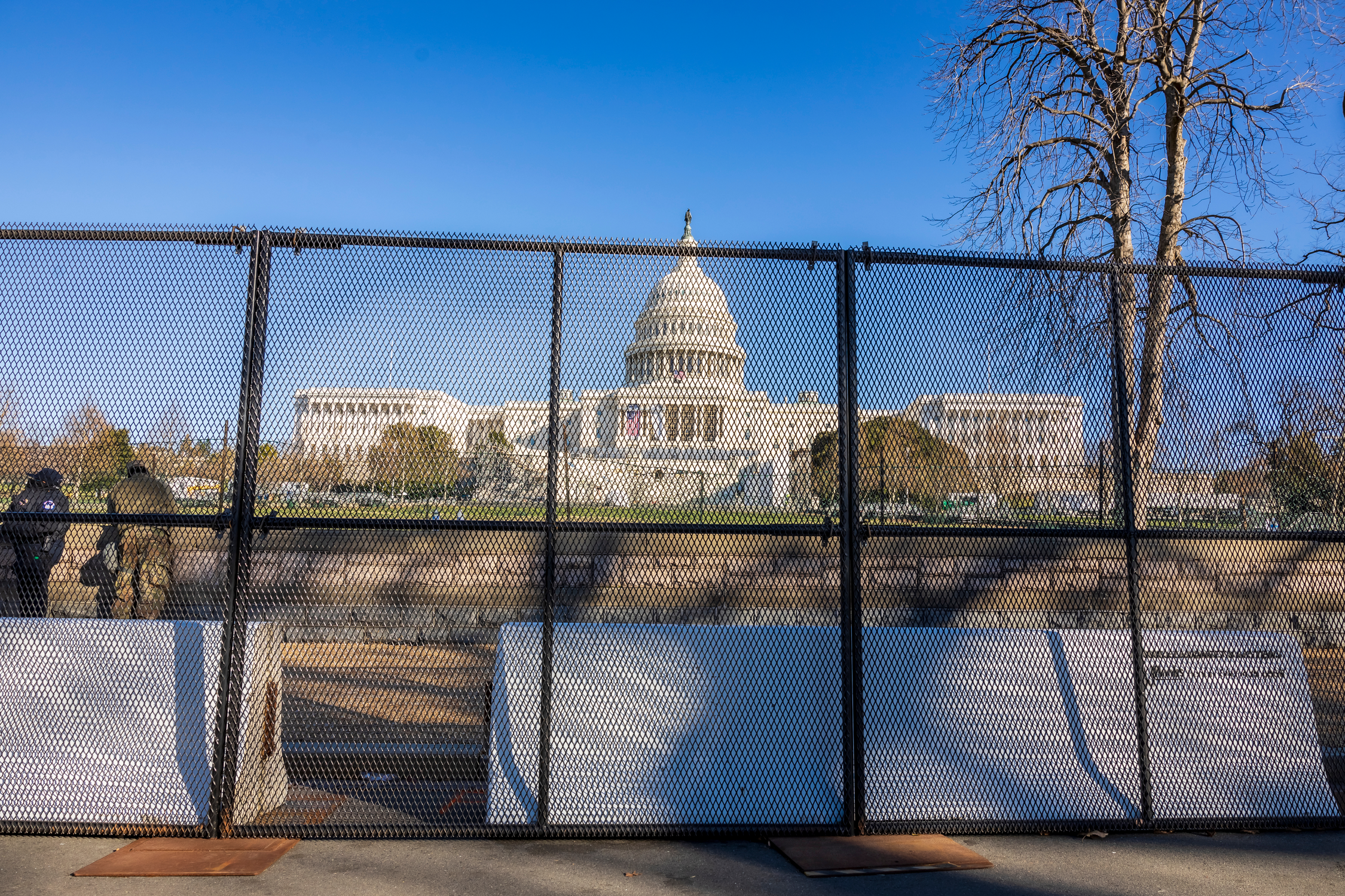
The image of violent right-wing extremists taking over the U.S. Capitol building on January 6 as Congress voted to certify the election encapsulated a number of these trends. Analysts and the media struggled to position the event in the context of American history. Rather than bring the public together in condemnation of the rioters, the event and its coverage did nothing to reduce polarization. Again, none of our traditional security tools, including $700 billion plus in annual defense spending, seemed responsive to a very real threat.
This convergence of crises has generated an inflection point for the post-1945 liberal world order, exposing weaknesses in an order that the United States helped create and championed. These growing fissures in America’s domestic social contract make us vulnerable to the risks posed by crises that do not respect borders.
While the threat landscape 10 years ago was by no means simple or easily solvable, the additional challenges we face today may be even more complex.
Neither researchers and practitioners nor the publics we serve have the language, let alone the policy, to begin confronting the national security challenges we currently face. This report maps how Americans’ perceptions of what constitutes a national security threat have changed over the past ten years, and especially over the past year. We also analyze media conversations about the pandemic and national security to consider whether how we talk about national security has evolved to meet these challenges.
Our analysis also suggests that, a year into the pandemic, the substantial challenges posed by emerging security threats are not being met by new frameworks for thinking about and addressing these challenges. We identify two critical gaps. First, we lack frameworks that update the construct of security that we have to match the challenges we face. Second, the narratives we do have about those challenges are different or even diametrically opposed across political and identity-based lines.
This has profound implications for the future of U.S. security policy. It is a commonplace of international relations theory, across ideologies, that a nation must have foundational consensus, or at least public acquiescence in an elite consensus, in order to conduct effective policy. Existing security policy thinking offers very little on what it looks like for any society, much less a democracy, to build security for a country whose residents lack shared conceptions of what threats they face. We offer a set of findings and recommendations to help begin to face that challenge squarely.
Findings
- U.S. society’s definition of national security threats is shifting, highly politicized, and closely tied to identity. The dynamics of the 2017-2020 period clarify a long-brewing trend; the post-Cold War United States has failed to develop a durable consensus understanding of what constitutes a national security threat. Instead, the notion of security threat, which was always a tool in U.S. politics, has also become a political prize, and public views change in response to elite partisan cues. Legacy national security institutions and modes of thinking persist, and have become a source of power for political factions.
- Existing narratives and theories of international security are insufficient when traditional as well as transnational threats affect and are in turn affected by choices involving domestic, international, and non-governmental actors. Similarly, challenges that are classed as purely domestic—polarization, political violence, or the functioning of internal institutions, such as public health systems—are also both affected by and potentially weapons in cross-national conflict.
- The national security narrative has not caught up with either the shifts or the reification of threat perception: We conducted content analysis of opinion pieces in major media sources’ coverage of security and the COVID-19 pandemic, identifying the most prominent debates about how the United States should respond to the pandemic as a national security threat. Our findings showed that while writers initially grappled with the potential for massive change as a result of the COVID-19 pandemic, within a couple of months the debate had settled towards conventional framings, such as how the pandemic will affect China’s rise, the international order, and globalization. Analysis of interlocking developments, such as the economic crises, issues with vaccine distribution, political violence, and the divergent effects of these crises on communities of color and women, remained largely absent from the security/foreign policy discourse.
- The national security narrative is reactive, and may be reverting to our pre-2020 understandings: While early coverage of the pandemic in relation to national security soared, this framing has since declined in the media landscape. Since we have not developed significant new frameworks for talking about these national security challenges over the past year, it is likely that our national security conversation will simply revert to something similar to its pre-2020 state. This trend means that national security policy is diverging further from U.S. domestic politics as it considers, contests, and in some instances incorporates conceptual frameworks such as systemic racism, gender, and class lenses.
- The national security narrative is not people-centered: What does it mean to have a national security discourse that is largely focused on systems, not people, during a pandemic? Has a national security community that has failed to protect people from a pandemic failed at its task? What would it look like to develop a people-centered national security narrative? We have largely failed to acknowledge the importance of these questions, let alone address them.
Recommendations: What We Should Do About It
Reconceptualize security policy for a highly polarized society. Thinking of all ideological stripes about U.S. foreign policy assumes a shared underlying public consensus about the security threats the country actually faces, or at least a public consensus to let elite experts take the lead. Those conditions simply don’t exist today, and domestic polarization means that even very serious challenges are unlikely to produce a bipartisan consensus about national security priorities in the near future. Our fsurvey analysis highlights increasing public polarization over foreign as well as domestic policy issues. Policymakers and theorists should pay rigorous and realistic attention to what few shared foundations can be teased out, and how they might be maintained against polarization. Analysts and policymakers will also need to determine what can be achieved, and what achievements can be sustained over time, in areas of national security where there is partisan disagreement. This concern is increasingly central to policymaking, and to U.S. allies and partners.
Develop paradigms to talk about new national security issues: We will need to develop new language, frameworks, and policy solutions to address these new security issues. For the pandemic, for example, we will need to address questions like:
- How should we confront economic stratification within and between nations, and stratification of vaccine distribution?
- How can we prevent the next pandemic?
- How can we better equip state and local governments to increase infectious disease testing, increase the amount of hospital beds per capita, and distribute vaccinations to people from every economic background, regardless of citizenship?
Re-evaluate international institutions: Today, the international order consists largely of twentieth-century international institutions that are not equipped to respond to the complex twenty-first-century challenges that we identify in this report. International institutions have always been the sites of competition among the major powers, but they were designed for a world in which military, political, and economic power were overwhelmingly held by states—and disproportionately held by the United States and its allies. With power redistributed, but the institutions still in their old forms, it has become dauntingly difficult to achieve transformative results. We are no longer looking at adjusting institutions at the margins—rather, this moment calls for a more systematic approach to reforming international institutions. Researchers and practitioners must drive conversations about what a renovated international system might look like, and which international institutions need to be jettisoned or revamped to confront this new set of security and foreign policy challenges.
Encourage democratic participation in foreign policymaking: The changing nature of our national security challenges suggests not just a rethink of what national security is, but who it is for. Since the post-World War II period and the creation of the modern liberal world order, American politicians have typically insisted that “partisan politics stops at the water’s edge,” while political scientists have dismissed the impact of public opinion on foreign policy as largely irrelevant. At the same time, advocacy coalitions have recently emerged around foreign policy issues like U.S. support for the war in Yemen and efforts to combat climate change. We should encourage such efforts to engage Americans in conversations about reimaging national security.
Expand the discussion about what it means to integrate domestic and foreign policy. Increasingly, these critical security challenges require an integrated foreign and domestic policy approach. Analysts and policymakers need to grapple with fundamental challenges: Does this mean reconfiguring institutions such as the Foreign Service or the National Security Council? Retraining professionals to be able to take on and manage integrated portfolios? Remaking oversight, including that of Congress? Redefining or jettisoning the construct of foreign policy?
Today, the United States faces an unprecedented array of traditional and new security threats. From the global pandemic and climate change to resurgent domestic violent extremism and a crisis of racial injustice at home, these crises interact with each other to present a threat matrix that cannot be solely addressed either at the international or the domestic policy level or by simply reverting to old paradigms and theories. As the Biden administration’s Interim National Security Strategic Guidance states, “We cannot pretend the world can simply be restored to the way it was 75, 30, or even four years ago. We cannot just return to the way things were before. In foreign policy and national security, just as in domestic policy, we have to chart a new course.”8 We will need to develop new ways of thinking about national security, and with them new tools for policymaking and for hearing what our fellow Americans have to say about these problems.
Citations
- Rachel Brown, Heather Hurlburt, and Alexandra Stark, “How the Coronavirus Sows Civil Conflict,” Foreign Affairs, June 6, 2020, source.
- “Event: Where Does the National Security Community Stand Three Months After George Floyd Changed the World,” New America, August 25, 2020, source.
- Sean Spence, “The New Wave of Global Terrorism Is Right-Wing Extremism,” U.S. News & World Reports, October 22, 2020, source.
- Will Weissert, “From vote to virus, misinformation campaign targets Latinos,” AP, March 7, 2021, source.
- NOAA, “Billion-Dollar Weather and Climate Disasters: Overview,” source.
- Susan Rice, “A Divided America Is a National Security Threat,” New York Times, September 22, 2020, source.
- Bonnie Jenkins, “Redefining our concept of security,” Order from Chaos, Brookings Institution, December 4, 2019, source.
- “Interim National Security Strategic Guidance,” The White House, March 2021, source.