Stephen Burd
Senior Writer & Editor, Higher Education

Up until now, we’ve been willing to give Philip Day the benefit of the doubt.
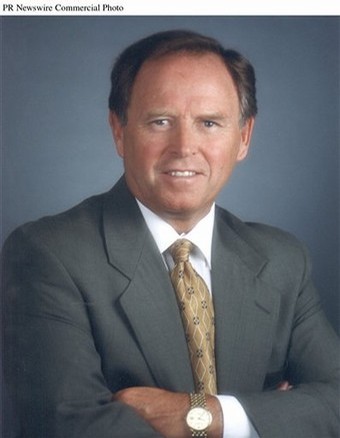 In March, Day, the former chancellor at the City College of San Francisco, became the president of the National Association of Student Financial Aid Administrators (NASFAA), a group with such strong ties to the student loan industry that in recent years its policy positions have closely mirrored those of the Consumer Bankers Association and Sallie Mae.
At Higher Ed Watch, we have been critical of NASFAA in the past. We were hopeful, however, that the organization’s first presidential change in its 32 year history — coming on the heels of reforms imposed on NASFAA by New York State Attorney General Andrew Cuomo that cut into the financial support the group receives from loan providers — would set the association on a new track.
We were especially encouraged by statements Day made shortly after accepting the job. In January, he told The Chronicle of Higher Education that NASFAA needed to “reassess” its relationship with lenders. “It’s something I don’t feel 100 percent comfortable with,” he stated. Amen to that.
But Day changed his tune after his comments caused a minor backlash among supporters of the Federal Family Education Loan (FFEL) program within the organization. In a letter to NASFAA members, he took himself and others to task for making statements that “cast the association in a negative light.”
And once Day formally took charge, it quickly became clear that our hopes have been misplaced. NASFAA continues to push policy proposals favored by lenders. The group, for instance, has been a lead player in trying to persuade federal policymakers to block state officials from policing the student loan programs. [Take that, Attorney General Cuomo!]
In addition, Day has been one of the chief proponents of legislation, which has been championed by Sallie Mae, that would provide an even more substantial government bailout of the loan industry than the Department of Education supplied to student loan providers last week. Keep in mind that not one student has gone without access to a federal student loan. And yet, Day, without any special knowledge of markets or it seems federal student aid, is calling for additional new subsidies to the lending industry.
Despite our disappointment, we had not planned to voice our concerns. After all, Day is still new, and his policy positions could evolve. But after we read this interview he gave Higher Education Washington Inc. (HEWI) a publication owned and run by a top student loan industry lobbyist, we realized we had no choice.
The interview shows that Day is not only ill-informed, but that NASFAA, in the aftermath of last year’s “pay-to-play” student loan scandal, has not changed its stripes.
In his remarks, Day argues that the scandal was overblown. “You get generalized that this is a problem for the whole, when you’ve really got a problem with just a few,” he said.
Actually, what the loan scandal really showed was that lenders were routinely providing gifts, payments, and other inducements to colleges with the express intent of getting schools to steer borrowers their way. We’re not just talking about a few isolated cases. We’re talking about how business was routinely conducted.
Don’t just take our word for it. Ask Walter O’Neill, the assistant vice president for financial aid at Roosevelt University, who has long been a fervent supporter of FFEL. In an impassioned e-mail on a message board for financial aid administrators, he recently expressed his disillusionment with the loan industry and revealed the “ugly reality” behind lenders’ dealings with colleges. “We have seen where their priority is and it is not ‘students first’ unless it is profitable to do so,” he wrote. “All of the outreach, cute little scholarship programs, participation in professional organizations and college fairs were all for the bottom line, my friends.”
In light of all the controversy the scandal created, Day acknowledges to HEWI that “we need to reassess and reevaluate things.” But he cautions against going too far for fear of driving lenders away. “If the student lenders and everybody who’s in that business suddenly decided to fold up the tent and go home, the whole student aid program in this country would collapse.”
He concluded the HEWI interview by saying, “It’s important to have an arm’s length relationship but at the end of that arm is another arm that’s being extended and we join hands in trying to continue to work together and address the needs of our students.”
Or in other words, the new boss sounds a lot like the old boss — except the new one knows a whole lot less about how the student aid programs actually work.
Senior Writer & Editor, Higher Education