Hollie Russon Gilman
Senior Fellow, Political Reform Program
A collaborative program encourages Pennsylvanians to get involved in local governance.

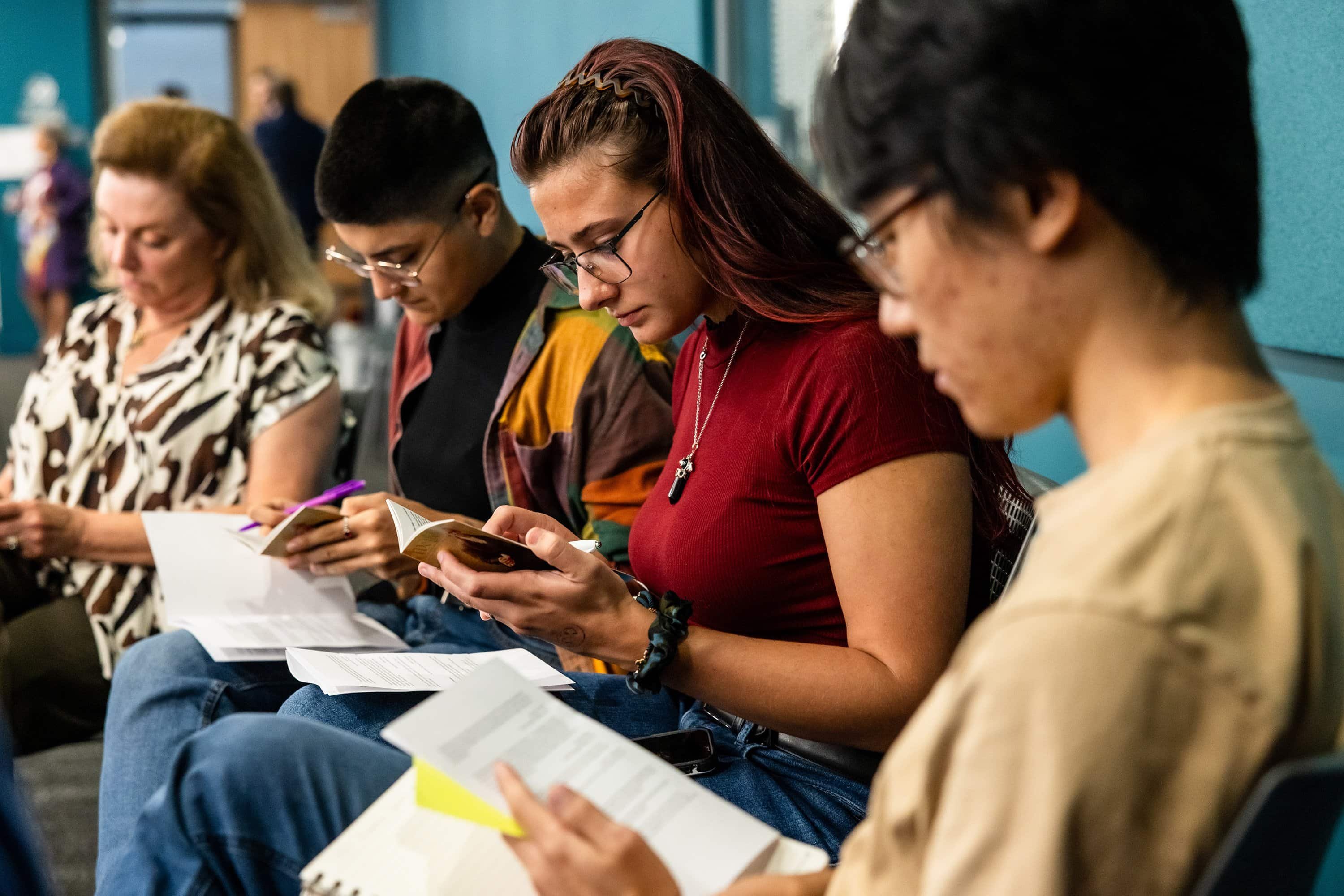
Collaborative governance—or “co-governance”—offers a model for shifting power to ordinary people and rebuilding their trust in government. Co-governance models break down the boundaries between people inside and outside government, allowing community residents and elected officials to work together to design policy and share decision-making power. Cities around the world are experimenting with new forms of co-governance, from New York City’s participatory budgeting process to Paris’s adoption of a permanent citizens’ assembly. More than a one-off transaction or call for public input, successful models of co-governance empower everyday people to participate in the political process in an ongoing way. Co-governance has the potential to revitalize civic engagement, create more responsive and equitable structures for governing, and build channels for Black, brown, rural, and tribal communities to impact policymaking.
Still, co-governance models are not without challenges. The hierarchical and ineffective nature of our current governing structure is difficult to transform. Effective collaboration between communities and politicians requires building lasting relationships that overcome deep distrust in government. So far, effective models of co-governance tend to be local and community-specific—making it critical that we share stories of success and brainstorm ways to scale.
For this interview, New America’s Hollie Russon Gilman and Sarah Jacob spoke with Jen Danifo and Laurie Zierer about PA Heart & Soul, a collaborative program from the national Community Heart & Soul organization and PA Humanities that uses the power of storytelling and shared history to help locals identify what they want for their communities and create practical plans to achieve those goals.
Can you provide us with a history of the program, a brief overview of the process you implement, and its importance?
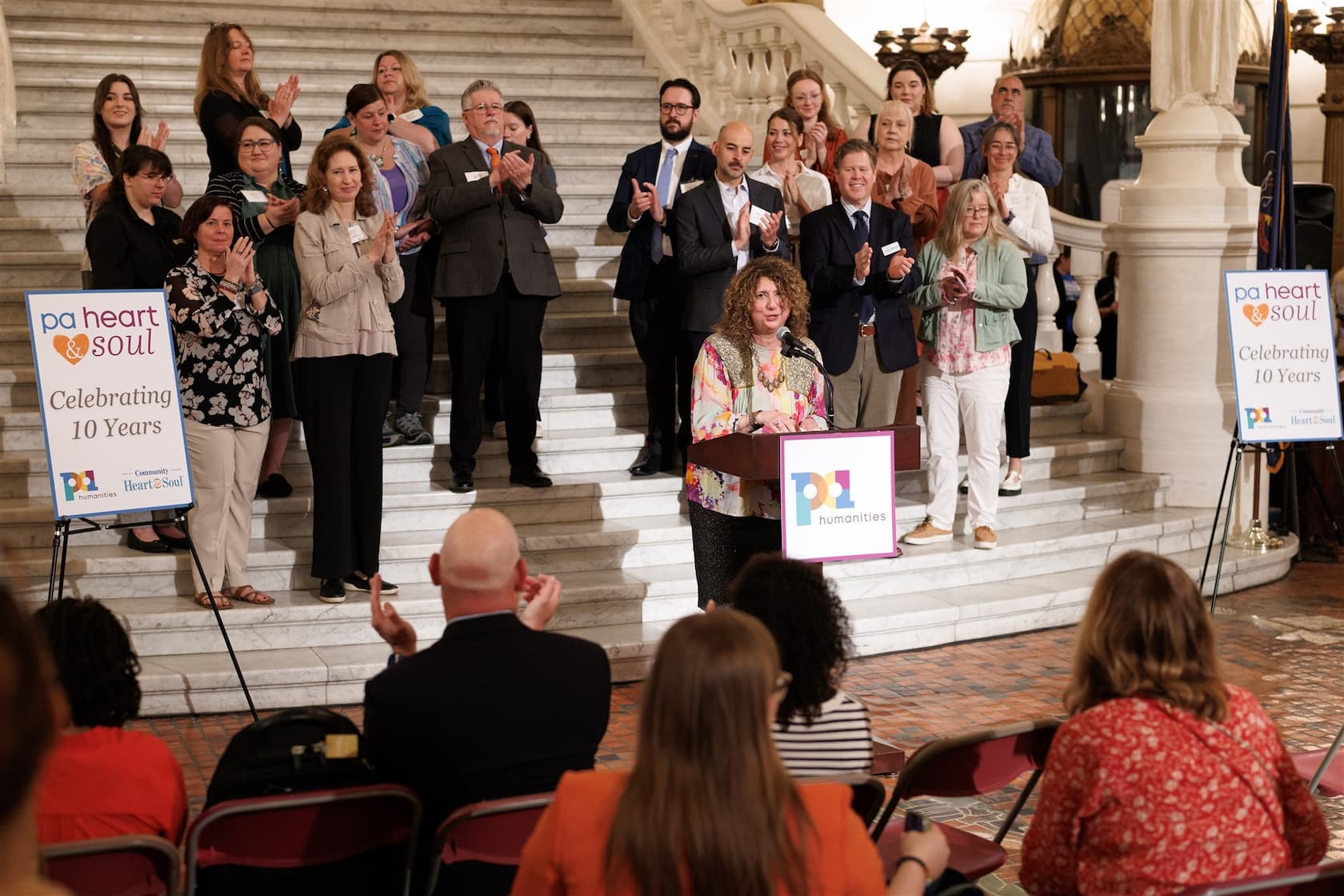
Jen: The Community Heart & Soul process originated in Vermont more than a decade ago. We actually just celebrated our 10th anniversary of bringing Community Heart & Soul to Pennsylvania. Through that partnership, we were also able to bring in the state as a funding partner. So now, the Department of Community and Economic Development, the PA Route 6 Alliance, and the Department of Conservation and Natural Resources are all partners in this work.
The model itself is based on four phases and three core tenets. The three tenets are: involve everyone, play the long game, and focus on what matters most.
Then there are the four phases. Phase One is really about organizing—bringing a team together, looking at community demographics, and understanding who lives, works, and plays in your community. Phase Two is when people come together and start answering questions like: What matters most to you about your community? What brought you here? And what do you hope for in the future? Those conversations help us build a foundation for a plan of action.
Phase Three is about building that plan of action. Normally, planning is very top-down. You hire a consultant, they do some surveys, and then tell the community what it should do. Heart & Soul flips that. It says that the people who live, work, and play in a community are the ones who truly know what their community needs.
Phase Four puts the community in the driver’s seat of making action happen, securing funding, making improvements, and honoring what the residents said they hoped for.
About 10 years ago, as a Humanities Council, we were already doing a lot around arts and culture—bringing people together so they could talk across differences, understand where they come from, and explore their identities and sense of place in the world. We do that through all kinds of humanities-based methods.
Around that time, we identified two areas we really wanted to focus more on. One was working with young people—we now have a whole stream of educational programming around that. The other was civic and community engagement. We knew people were feeling disconnected from their communities, and that’s what led us to this Heart & Soul work. The storytelling part of it really resonated with us, because it connects so deeply with the humanities.
Laurie: And a big question we get again and again when working in community and economic development is: Why the humanities? Why the Humanities Council? What do the humanities have to do with local government or community revitalization?
For us, our work with Community Heart & Soul—and the learning we’ve done right alongside them—was really a defining moment. It allowed us to redefine the importance of the humanities in people’s everyday lives. As a state humanities council, we see ourselves as leaders in this space of discovery—discovering with the people of Pennsylvania what the value of the humanities truly is, and how they can use it as a tool for change, both personally and within their communities.
And we didn’t just jump into Heart & Soul overnight. We had already been doing groundwork that led us here. When we made the shift, as Jen mentioned, it was during the economic downturn. Quite frankly, we had lost our state funding, and our support from the National Endowment for the Humanities had been cut. We had to do some real soul-searching about our value. We were being cut year after year, not seen as essential to community vitality or well-being. But we knew the humanities were essential.
That realization pushed us to step beyond the arts and culture space and work across sectors—to really explore why the humanities matter. And the most important part of that discovery was understanding that we needed to put people first—not the books, not the content, not the experts. That was a critical shift. We were activating the processes of the humanities—the very practices that support democracy—like working through resistance, coming together to hear and appreciate different perspectives, and problem solving collectively.
To do that, you have to put people at the center. You have to stop seeing the most valuable thing in the room as the knowledge or the expert, and start seeing it as the social capital and human resources that people bring with them. Relationships had to come first. We had to build trust and knowledge together.
How has your past work informed your current work with Heart & Soul?
Jen: PA Humanities just celebrated its 50th anniversary last year, so we’ve been around for quite a while—half a century of doing this work. Over that time, we’ve done everything from the really traditional, scholar-led programs—which, of course, are what most people think of when they think about the humanities—and those are valuable and really meaningful. But, as Laurie said, we’d been doing that kind of work for a long time, and we’ll always continue to.
Still, we were looking for something a little different. We wanted to find new ways to connect people and make the humanities more hands-on and community-driven. We already had some experience with that kind of work—for example, our program Chester Made, focused on creative placemaking and community storytelling. It’s very similar in spirit to Heart & Soul.
And we used to have a program called Commonwealth Speakers, where someone would come out and give a talk on a historical topic—like Civil War history, or the founding of our nation, which, of course, there’s a lot of in Pennsylvania. Those programs are meaningful, and we wanted to keep doing that kind of work. Heart & Soul can be seen as an extension of this idea—the history folks are exploring is their own, and in real time. Their lived experience becomes the text to explore.
We’re teaching people skills that are very much rooted in the humanities—critical thinking, reflection, and understanding context—but in ways that are deeply connected to their own lives. For example, participants sit down together to look at community demographics and trends, and think about what those mean. We teach them things like how to interview someone—not in a formal oral history sense, but in a conversational way: How do you ask someone about their story, their connection to the community, and their hopes for the future?
We do an exercise called “Change Over Time,” and in this activity, the community looks at one of their core values. For example, many rural communities identify “small-town feel” as a value—things like safety, knowing your neighbors, that sense of connection. We use Change Over Time to dig into what a small town looks and feels like in the community: What was this value like 10 years ago? What’s it like now? Where do we want it to be 10 years from now? And how do we see that value showing up in our community today?
While that’s not “history” in the traditional sense—there are no dates or battles or timelines—it is a kind of historical and critical reflection. It’s about understanding the history of a community through the lens of what matters most to the people who live there—things like their safety, their relationships, and their overall well-being.
And that’s what’s really powerful about this program. We train the community members themselves to lead this work. That process not only helps them feel more connected, but it also builds engagement—people get more involved in local government, volunteerism, and community projects. And by the end, they come out with something tangible: a plan of action for their community’s future.
Could you speak more to the relationships that make Heart & Soul possible? Who are the community members involved in the process?
Jen: We’re an independent nonprofit, part of the State Humanities Council coalition, but we’re not a government entity. I think a lot of people assume we are, because we’re statewide, but we actually operate independently.
Where local government comes into play is really at the community level—in the individual towns and boroughs that take part in the Heart & Soul process. We’ve worked with 17 communities so far, and that’s where you see the real grassroots work happening—where the rubber meets the road, so to speak.
Here’s how it typically works: A community will come to us and say they’re interested in doing Heart & Soul. We have mechanisms set up for them to access state funding, our own funding, and funding from Community Heart & Soul in Vermont. Then we go through an application and matching process. Once a community comes on board, we train the local team—which includes residents, community leaders, and members of the local government—on how to implement the process themselves.
Laurie: And then, in terms of who applies, the application typically comes from a borough, but it can also be a partnership between the borough and a local nonprofit. So there’s usually a mix—a collaboration between local government and what you might call civil society: nonprofits, social service organizations, or other community groups.
We’re part of that network as well, and that intentional connection between local government and community organizations is built right into the application process.
Jen: Yeah, because of the way the model is designed, it’s really about shifting from a top-down approach to a bottom-up one. When we first created the partnership with Community Heart & Soul, we asked ourselves, what if it wasn’t the local government applying? What if it were nonprofits and residents saying, “We want to do this”?
It’s a really layered approach—truly cross-sector work. Like Laurie said earlier, you’ve got arts and culture folks rubbing elbows with people who work at the local factory, alongside local government staff, small business owners, and even young people. Everyone is at the table.
We make sure teenagers are part of the process too, because when you’re doing the community network analysis, the whole idea is to involve everyone—all ages, all backgrounds, all identities. And we get a lot of great feedback and energy from young people who participate.
So it’s a very dynamic, inclusive way of engaging a community. That’s also why the process takes two to three years to complete. It’s a lot of work—but it’s relationship-based work, and that’s what makes it meaningful.
Laurie: And I think that’s important, too, because so often when you look at policymaking at the city or borough level, the approach tends to be, “How can we get an arts fellow embedded in local government or in the planning department?” But this is a totally different kind of approach.
This work crosses many different groups and really lifts up the idea that this is a process. You can’t just insert one person and expect things to change. This model respects the fact that multiple people need to be involved and that real change takes time.
I’d also really like to highlight the role of state humanities councils in all of this. The opportunity they provide—not just us, but other state councils—is significant. As part of civil society, we are a nonprofit, and I feel honored to play a role that can bring transformative change by connecting different groups and people. We can do this because we operate at multiple levels.
In this way, we act as a network catalyst. We provide the conceptual framework for change that puts people and culture first. Especially at a time when the value and existence of state councils are being questioned, it’s critical to recognize that our role is not just delivering programs—it’s about serving as a platform, bridge builder, and connector, knitting diverse groups together to create meaningful change. That, to me, is the essence of why state humanities councils are so important.
How has this process influenced local policy?
Jen: Community change or community development, and even economic development—it’s all connected. You have to pull many different levers to make real change happen. It has to work at the grassroots level and at the systems level, because all of those layers influence each other.
Policy change is difficult anywhere, but especially at the local level. Most of the communities we work with through this program are rural—places under about 30,000 people. In fact, more than half of Pennsylvania’s 67 counties are considered rural. Most of the towns we work in have populations of 5,000 to 7,000 or even less. We’ve had a few suburban communities, but the majority are small, rural places.
And honestly, sometimes it’s even harder to make change at that local level because people are so used to doing things the way they’ve always been done. There’s a lot of, “Well, we’ve always done it this way—why would we change now?”
A good example is Meadville. Through the Heart & Soul process, community members started telling stories and realized that renters’ rights were a big issue. Renters felt disrespected, and there were a lot of absentee landlords. That realization galvanized the community. Some people actually ran for office to start addressing those issues. They haven’t been able to change everything, but they’ve launched a campaign to hold landlords more accountable.
That kind of change takes time. It’s been about 10 years since Meadville went through the process, and progress is ongoing. But I think what’s really important here—especially when you talk about policy change—is how this process helps people understand policy.
A lot of folks have a general idea of how local policy works, but they don’t always know what to do about it or how to get involved. The Heart & Soul process invites them into that. It gives people a clearer sense of how their local government functions, how change happens, and, honestly, how hard it can be.
Laurie: It’s not just about building trust in how people relate to one another; it’s about shifting power. It opens up spaces for people who haven’t been involved before to step in and become active agents of change in their communities, focusing on policy issues.
We’ve seen this happen over time. Meadville is a great example, and some of our other pilot communities, like Carlisle, show this too. You can see the change over the long term, but you can also see it in the short term. Communities like Carbondale are already showing these shifts.
Jen: In Carbondale, they were seeing a lot of apathy. It’s an old coal town, coal was the main industry, and there are a lot of long-standing families. Part of the reason they decided to do Heart & Soul was because they felt the town was “fine.” People felt like things could be a little stronger, a little more engaged, and they wanted to see what they could do.
A lot of the stories they gathered reflected that apathy—people reminiscing about “the good old days” or wondering when industry would come back. Through the Heart & Soul process, they were able to wrestle with that and regain some pride in their town.
For example, they had an opening on the council. Normally, they would have to twist someone’s arm to apply, but this time, dozens of people applied because of the Heart & Soul process. They ended up filling the council seat, and the other applicants were encouraged to get involved in various committees. It was a tangible sign that engaging people in thinking about their community really lit a fire—people stepped up to be part of community life.
Additionally, the township manager ran for mayor—and won—during the process. We’re not political in terms of supporting any party, but this is exactly the kind of result that often comes out of Heart & Soul. People are inspired to take on leadership roles, either in elected office or through volunteer work, and they become deeply embedded in community life.
How are young people engaging in this work, and what trends have you noticed?
Jen: Many of the communities we work in are very rural, with limited opportunities for young people—few jobs, not much to do. So the challenge of brain drain is real: Young people go off to college or other places, and sometimes they don’t return.
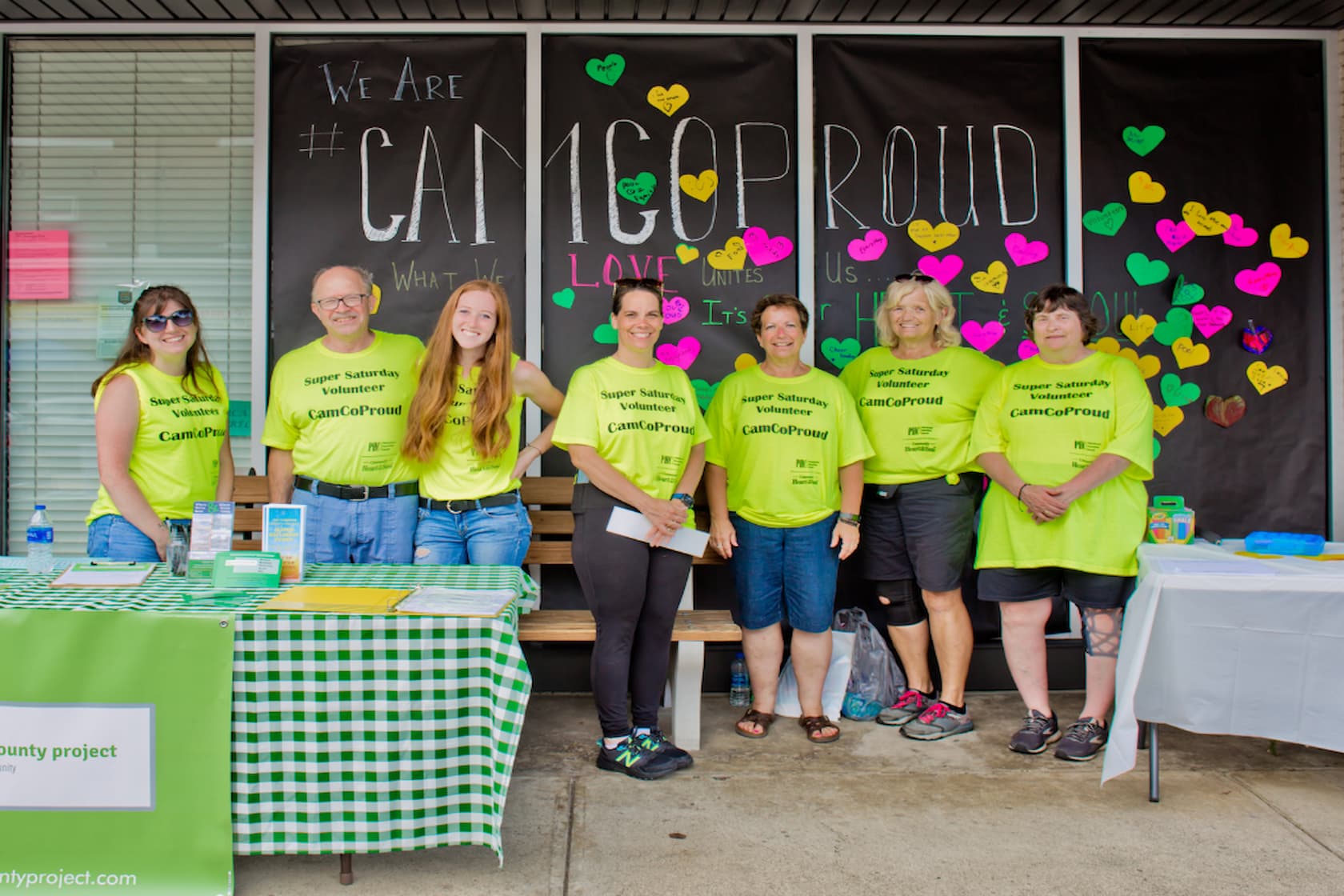
That said, youth are always involved in the process. For example, in Cameron County—which is extremely rural, with more deer than people, and a population under 5,000—they involved high school students in the project. Students asked residents questions like: What do you love about this community? What would you like to see? What concerns you?
One of the coolest outcomes was that the students themselves voiced their own needs. Naturally, they said, “It’s boring here. There’s nothing to do.” They asked for a skate park, among other things, and a temporary skate park was implemented. In the warmer months, it’s used for roller skating, and in colder months, it can be converted for ice skating. It’s not permanent, but for young people to see that their voices matter—that’s really powerful.
In Meadville, the focus has been on young adults, often recent college graduates who are deciding whether to stay in the community. Many of them, including Allegheny College grads, have stepped into leadership roles in local organizations and nonprofits. For instance, Autumn Vogel, an Allegheny College graduate, ran for city council and is now serving as a council member.
One interesting pattern we see is the generational dynamic. Many of these projects attract older residents alongside younger participants, which can create a clash of perspectives. For example, in Port Allegheny, the project coordinator—a college senior named Allie—is leading a team mostly made up of people over 60. In a recent Change Over Time exercise, the older participants reflected on what the community was like decades ago. Allie, of course, wasn’t alive then, but when the conversation turned to volunteer opportunities, she said, “If there’s nothing for us to do here, why would we stay?” That moment really resonated with the older participants, as it highlighted something they already knew but hadn’t fully acknowledged: Young people need opportunities and engagement to stick around.
Much of what you’re describing involves creating long-term infrastructure and cultural change. Is there an example that stands out where you’ve seen that shift occur?
Jen: Great question. Meadville is a wonderful example. There’s a college there, so a lot of college students and recent graduates got involved in the effort. Young people really stepped up, and that has changed the culture there for the better.
There was a lot of status quo happening—not necessarily bad, just the way things were—but this process opened the door for new leadership to emerge. People of all ages stepped up, but there was a notable group of young college grads who really led the charge. They’ve now become a core part of leadership in the community. Communities often worry about the next generation of leaders, and in Meadville, people started stepping up to fill that gap.
I’d also point to Upper Chichester as another strong example. There, the culture change was about connecting the local government to people on the ground. When running a bigger government, engaging residents can become an afterthought. The township manager, George Needles, really embraced the process. Because of that, they’ve done neighborhood planning in small pockets of the community, using the Heart & Soul process as a springboard to involve residents in decisions about redevelopment—like the downtown square, parks, or other community spaces. It was a reminder that grassroots connections matter, even in a larger municipal context.
Laurie: I always think about Heart & Soul as providing communities with tools for everyday life and long-term change. These are skills people dip into as needed because they’ve been trained in the process. Carlisle and Mount Holly Springs are great examples.
Even before the project was fully completed, a story emerged about an African American church in Mount Holly Springs, Mt. Tabor AME Zion Church and Cemetery, that had been overgrown and largely unknown in the community. Through Heart & Soul, the importance of this site was recognized—not only as an African American heritage site, but also historically, because of a nearby Civil War cemetery. The community rallied to save and preserve the church—a short-term outcome that wouldn’t have happened without people having the skills and motivation to act. Additionally, youth groups in the community used storytelling skills they learned through the process to address issues like bullying in local schools, bringing their stories to the school board.
Are there things you would tell other localities looking to implement a Heart & Soul program—like lessons you’ve learned?
Jen: I think, coming into this process, what we always tell people is that economic development is wonderful, but it can also be a trap. A lot of the people who come to us are focused on their downtowns—they want their main streets to be bustling, they want jobs, they want economic growth. And yes, all of that can be part of Heart & Soul. But really, what this process is about is changing the way a community thinks and interacts. That’s the foundational, systematic change that allows things like economic development to truly flourish.
We often hear communities say, “We want a community center that will bring everyone together. Let’s build a building.” And we say, “Okay, that could be part of it—but a building alone won’t fix the fact that people feel disconnected, that pride is waning, or that they don’t trust their government.” Those are the kinds of issues Heart & Soul works on.
I would tell anyone interested in this process to come in with an open mind and an open heart. Let go of what you think “should” happen and allow the process to unfold. Often, people enter with a very specific goal, which is wonderful, but what they end up realizing is that it’s the intangibles—the relationships, the culture, the sense of community—that really matter. And it’s those intangibles that ultimately allow the tangible outcomes to happen.
Senior Fellow, Political Reform Program
Program Associate, Political Reform Program
Senior Manager of Programs, PA Humanities
Executive Director, PA Humanities