Table of Contents
Introduction
In December 2024, Ukrainian forces planned an attack on Russian positions near the village of Lyptsi in the Kharkiv region that would have been both recognizable and utterly mystifying to prior generations.1
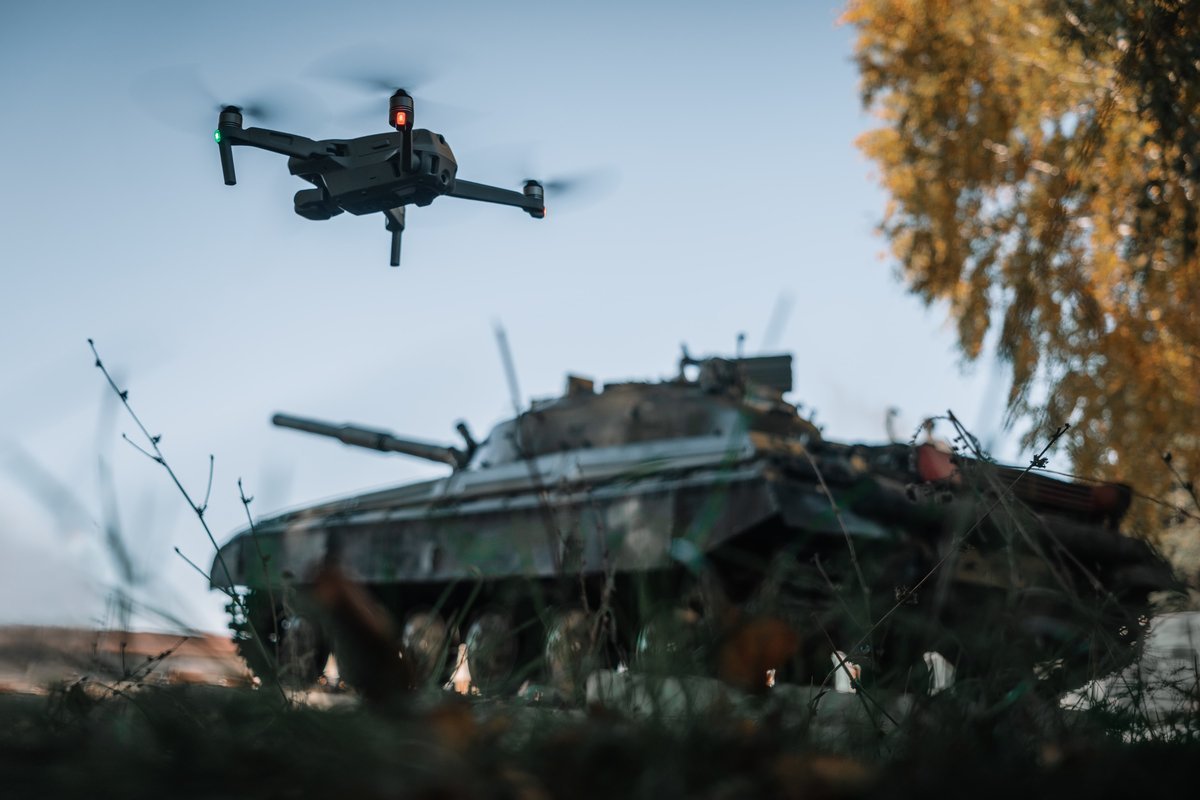
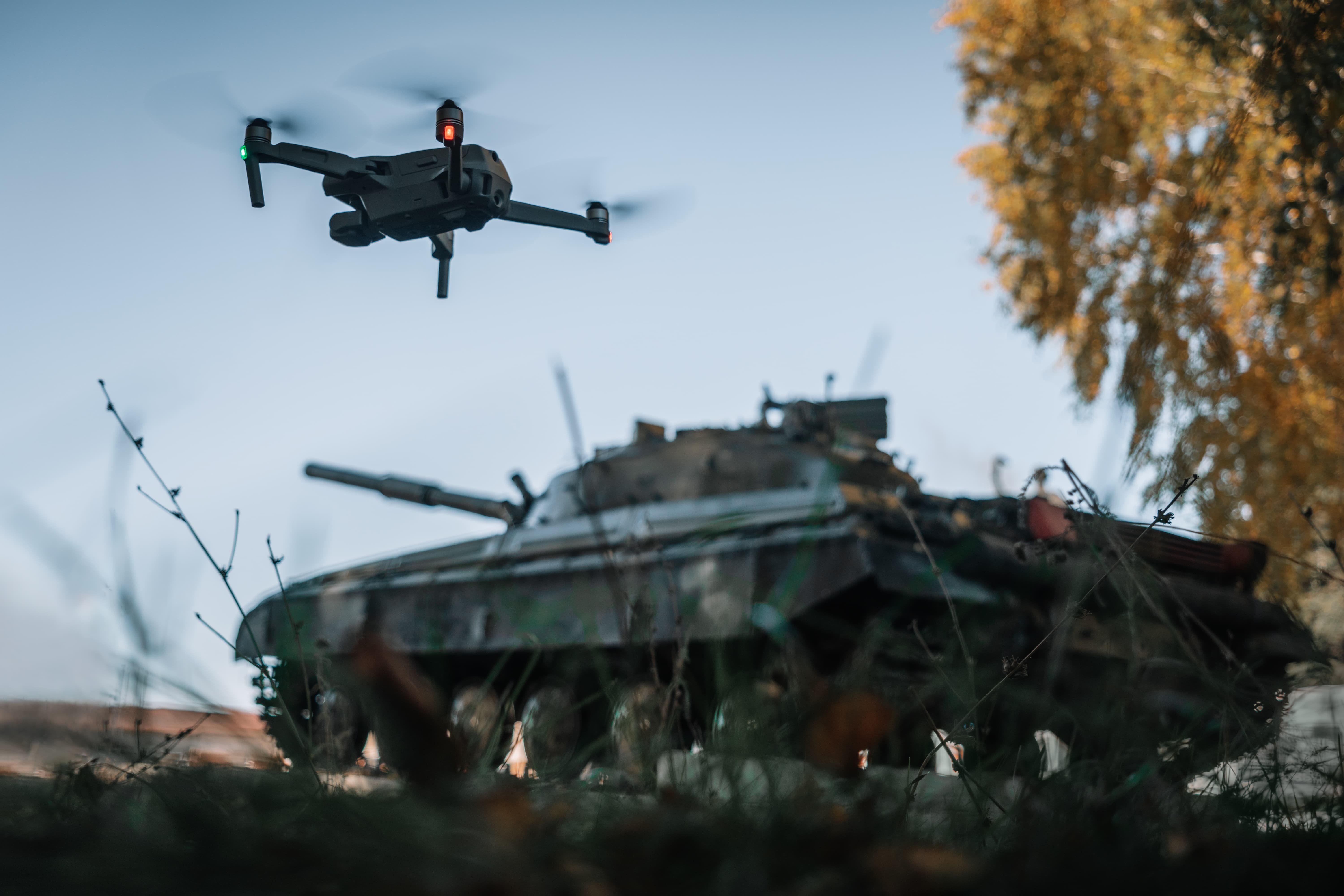
Before the attack, drones dropped speakers behind Russian lines that played digital recordings of Ukrainian voices to make it seem like soldiers were present where they were not. Then the force attacked a location the Russians were not expecting and in a form they had never faced before. Dozens of uncrewed ground combat vehicles (UGV) raced out to clear landmines and fire upon the Russian position with machine guns. Overhead, the robotic vehicles were supported by first-person view (FPV) drones, which provided both overwatch and their own attack capability. No humans directly crossed the battle line, and yet the enemy trench section was taken.
In involving a completely robotic attacking force, the Battle of Lyptsi is an important step in the transformation of the character of war from a purely human endeavor into something quite different in the twenty-first century. It also points to how militaries must grapple with how new technologies and trends, especially those emerging from contemporary conflicts like Ukraine, are both reinforcing the age-old lessons of war and updating them.
Melnikov Dmitriy via Shutterstock
Taking your enemy unawares has an enduring value in war, so much that surprise and deceptionare among the foundational lessons for young officers. As the U.S. Army’s Tactics field manual describes:
“As a principle of war, surprise is a combat multiplier that amplifies the effects of the other principles of war. Its effective use allows friendly units to strike at a time and place or in a manner that the enemy is unprepared for, which induces shock and causes hesitation. Every echelon works to achieve surprise in an operation and only by multiple echelons working together is surprise achieved. The easiest way to achieve surprise is to use deception. Units throughout history have used deception to their advantage. It is an effective way to cause the enemy to dissipate their efforts and resources. Deception enhances the conditions that allow friendly units to concentrate forces at decisive times and locations. Executing tactical deception comes with costs. These costs include time, material, and risk. However, history shows that executing deception at any scale and echelon is almost always worth the costs.”2
The reasons for this come down to who we are as humans. Our minds, and institutions, can only deal with so much information at any one time. Individuals in military organizations are thus incentivized to be orderly and generally conformist. As Martin van Creveld wrote, “The history of command in war consists essentially of an endless quest for certainty—certainty about the state and intentions of the enemy’s forces; certainty about the manifold factors that together constitute the environment in which the war is fought.”3
Yet leaders must operate in an environment that is inherently complex and often chaotic. The complicating factors range from Clausewitz’s proverbial “fog of war” to an enemy seeking to foil your every move. So leaders are also encouraged to draw conclusions and act, even on imperfect information. Deception seeks to exploit this paradox. It is ultimately founded on taking advantage of and then reshaping human behavior, decision-making, influence, trust, and the value placed on different kinds of information.
In Western culture, stories about deception extend back to the first epic poems of warfare, such as Virgil’s Aeneid, in which a large wooden horse delivered to the Trojans as a victory trophy allows Greek soldiers hidden inside to sack the city.4 Long after these myths were told around the campfires of antiquity, a “Trojan horse” remains a metaphor for many kinds of deceptive behaviors in civil life and military affairs.
Eastern tradition is similarly replete with examples of deception, from antiquity through to the modern day. Sun Tzu in his writings paid particular attention to deception, before and during wars. Notably, he did not see it as an end in itself. Rather, deception was designed to surprise the enemy, and to allow friendly forces to concentrate where they were least expected. But Sun Tzu also warned that friendly forces should “not pursue feigned retreats.”5 He therefore was also concerning himself with countering enemy deception activities. These historical antecedents provide the foundation for approaches to deception operations by the modern People’s Liberation Army (PLA).6 Deception is an important aspect of its information confrontation system, which underpins their contemporary doctrine of systems destruction warfare.7
And yet, deception is often undervalued in security studies. Of the literally tens of thousands of open-source reports on lessons from Ukraine, only a handful have explored deception.8 This information gap is nothing new. In a 2003 report for the RAND Corporation, Scott Gerwher and Russell Glenn wrote that “although the literature on deception in animal biology has only recently emerged from naturalism and become an experimental science, it is richer and more scientifically rigorous than the corresponding literature on military deception. This should not be taken as a criticism of the quality of work on military deception, but rather a comment on its nature: There is relatively little scientific literature on military deception.”9
As Gerwher and Glenn’s report notes, there is a difference between how countries such as China and Russia emphasize the centrality of deception in all forms and levels of military endeavor, and how Western nations integrate deception into military planning. In essence, this has resulted in a “deception gap” that Western military institutions need to address. Adding to the challenge, much of the literature that provides detailed examinations into deception is focused on pre-twenty-first-century examples. While these are useful in understanding the basics for planning military deception, the literature lacks a broad range of studies relating to twenty-first-century military deception. Providing insights about this gap, and initiatives that might assist in bridging it, is a key driver in the production of this report.
Consequently, the authors of this report have attempted to provide a more rigorous and contemporary focus on military deception while also illuminating potential future pathways for related operational and scientific studies. The project is multidisciplinary in its methodology and sourcing. It incorporates findings from multiple field visits; interviews and discussions in Ukraine and Israel with political and military leaders; documents, including doctrine and field manuals from the United States, NATO allies, and Russia; academic and professional research literature on deception; history studies; and finally, open-source intelligence, including social media posts.
This report builds a picture of what successful military deception might look like in coming decades, addressing the following questions:
- What is the role of deception in warfare?
- How is military deception codified in doctrine, and what are the key principles?
- What are the “maxims” of deception, to perform it well?
- What technological developments affect military deception?
- What are the key trends in military affairs changing military deception?
- What are the key implications of these trends for the U.S. military and NATO?
Citations
- News Desk, “For the First Time, Ukraine Attacks Russian Positions Using Solely Ground, FPV Drones,” Kyiv Independent, December 21, 2024, source.
- U.S. Department of the Army, Field Manual 3-90, Tactics (U.S. Government Publishing Office, 2023), 19–21, source.
- Martin van Creveld, Command in War (Harvard University Press, 1985), 264.
- Virgil, The Aeneid, trans. Sarah Ruden (Yale University Press, 2008), Book 2.
- Sun Tzu, The Art of War, ed. Ralph Sawyer (Westview Press, 1994), 117–140; Michael Handel, Masters of War: Sun Tzu, Clausewitz, and Jomini (Frank Cass, 1992), 102–6.
- Douglas Stuart and William Tow, “The Theory and Practice of Chinese Military Deception,” in Strategic Military Deception, ed. Donald Daniel and Katherine Herbig (Pergamon Press, 1981), 292–316.
- Jeffrey Engstrom, Systems Confrontation and System Destruction Warfare: How the Chinese People’s Liberation Army Seeks to Wage Modern Warfare (RAND Corporation, 2018), 67–72.
- Examples include: Katri Pynnöniemi and András Rácz, eds., Fog of Falsehood: Russian Strategy of Deception and the Conflict in Ukraine (Finnish Institute for International Affairs, 2016), source; Nicola Bonsegna, “The Strategic Role of Decoys in the Conflict in Ukraine,” Defence Horizon Journal (blog), October 31, 2024, source; Marie Snegovaya, Russia Report I: Putin’s Information Warfare in Ukraine (Institute for the Study of War, 2015), source.
- Scott Gerwehr and Russell W. Glenn, Unweaving the Web: Deception and Adaptation in Future Urban Operations (RAND Corporation, 2003), xii, source.