Table of Contents
Chapter II: Technological Trends and Their Impact on Military Deception
For as long as there have been military organizations, new technologies have shaped and influenced military forces and their operating theories. Since the first industrial revolution, new and disruptive technologies—when combined with new ideas and organizations—have underpinned military revolutions and revolutions in military affairs.1
While much may be unpredictable about the future, it is easy to project that future operating environments will be reshaped by the rapid technological trends ongoing all around us in both advanced software and hardware. Adaptive and meshed networks, decentralized command and control, and a vastly expanded ability to gather data all have fundamental implications for the generation and delivery of military capability. Rapid advances in technology allow for an evolved capacity to influence the tempo of military operations, as well as the massed delivery of precision effects, or what Michael Horowitz recently described as precise mass.2 This is potentially a much more lethal environment for all human combatants, and one where deception has a range of new possibilities and threats due to new and disruptive technologies.
The following technologies are likely to have the greatest impact on the planning, conduct, and evolution of twenty-first-century military deception.
Uncrewed Systems
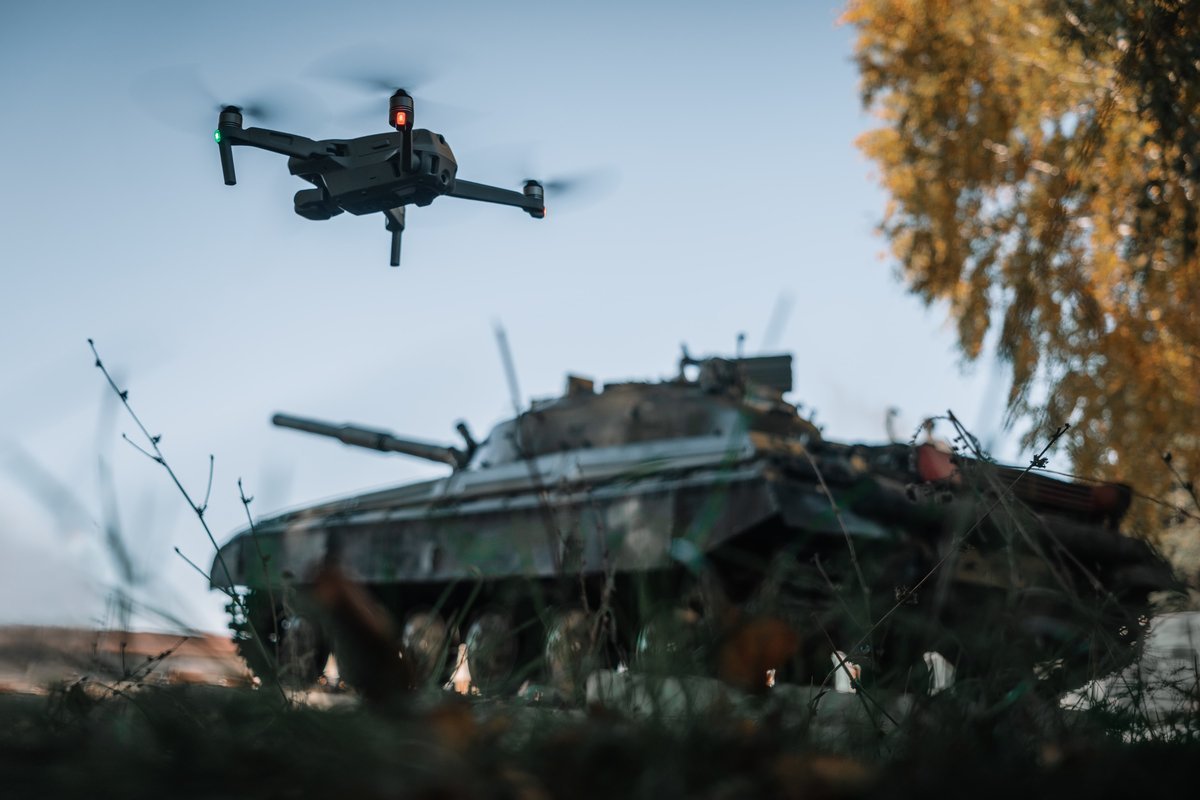
Military robotics have a wide variety of deception applications, including simulating the presence of real physical or electronic units to misdirect the enemy, undertaking missions with lower detection thresholds, or being deployed in large and disaggregated ways to deceive an adversary about friendly intentions.
Military robots have been used since the First World War and the first remotely operated weapons. However, their use has expanded exponentially during the wars spawned by 9/11. There has been a Cambrian explosion in the development and deployment of uncrewed systems since the start of the Russian full-scale invasion of Ukraine in 2022. Every Ukrainian brigade now has drone companies or even drone battalions, as do special operations regiments. Ukraine has gone from manufacturing just several thousand drones in 2022 to being able to build around 2 million over the course of 2025.3 Based on its experiences, Ukraine has become the first nation to form an independent drone service, the Unmanned Systems Force, which is an equal counterpart to the Ukrainian Army, Navy, and Air Force.4
Robotic systems have particular utility in performing tasks that are dull, dirty, or dangerous, such as contaminated areas; urban, deep sea, and subterranean environments; densely protected military sites; and also more mundane applications such as vehicle maintenance and repair, as well as basic logistics and movement tasks.5
Yet their greatest contribution in a wide variety of future military applications will be in human-machine teams (HMT). Human-robot combinations are already proving useful in training establishments to improve outcomes and test best practices in developing human-robot tasking relationships.
The scale of these HMT may be immense. A future joint military task force may comprise several hundred human personnel and several thousand (or even tens of thousands of) robotic systems of various sizes and functions. Many functions currently undertaken by humans might be better performed by robots in human-robot teams.
In turn, this has the potential to reduce the size of many types of military units by hundreds of personnel.6 The ongoing introduction of military robotics will free up personnel for redeployment into areas where the art of war demands leadership and creativity—enabling intelligence functions, training and education, planning, and most importantly, command and leadership, including deception operations.7
The war in Ukraine has also supercharged adaptation with many types of drones, including widespread use of maritime and land drones, development of fiber optic–controlled drones, and the practice of large drones piggybacking smaller ones. The U.S. Army has described in detail such an approach in a 2020 presentation called Robotic Warfare Battlefield Geometry.8
A significant development in the Russo–Ukraine War has been that while uncrewed systems in intelligence, surveillance, and reconnaissance (ISR) and strike roles have received a large amount of investment, counter-autonomy systems have now moved ahead in a variety of ways. Recent initiatives in Ukraine include drone interceptors9 and robotic machine guns to shoot down battlefield uncrewed systems, long-range Shahed drones alongside sensor networks, and integrated, autonomous reporting systems to support command and control as well as adaptation cycles. These Ukrainian efforts have been complemented by a range of American, European, and other efforts to develop cheaper ways to bring down enemy drones.10
Artificial Intelligence
There are few technologies likely to have as significant an impact on deception as artificial intelligence (AI). Some have speculated that AI may increase the advantages to those who seek to hide information or physical objects. Using data from their own operations, they can model their own forces comprehensively and then use this knowledge to build algorithms that increase the “fog of war.” Those engaged in trying to fight through the fog and friction or war and divine an adversary’s location or intentions will be forced to “rely upon noisy, incomplete, and possibly mendacious data to construct their own tracking algorithms.”11
Future military deception activities will occur at the intersection of behavior and data. Until recently, deception operations targeted the conduct of human military commanders and decision makers. Henceforth, though, state and non-state actors will attempt to target the actions of humans in military systems and the performance of algorithms that support human decision-making.12 And, with new sensors and networks delivering more data, the ability to search and recognize useful data will move beyond the comprehension of humans. Therefore, AI will be essential to counter deception by the enemy but will also be targeted by the enemy to prevent AI from undertaking this function.
There are multiple functions where AI may extend cognition and enhance military deception. For example, AI has a wide application in large-scale information analysis. It has been widely used in Ukraine for this purpose.13 It will continue to drive a large variety of autonomous systems on the ground, in the air, and on (or under) the sea. Not only is this relevant in the planning and conduct of military strategy and subordinate operations, but it is also relevant to deception and counter-deception activities.
Generative AI also offers many opportunities and risks. It permits the rapid generation of imagery, text, video, and even music (or equipment sounds) that might be used in military deception. These tools can be used against friendly forces and friendly populations, particularly in spreading disinformation for strategic deception. As a 2024 report from Freedom House found, “Over the past year, the new technology was utilized in at least 16 countries to sow doubt, smear opponents, or influence public debate.”14
Additionally, new generations of chatbots, such as the DeepSeek-R1 model released in January 2025, offer cheaper and more accessible AI. They might be used for an array of different military applications by potential adversaries, including military deception. A March 2025 report in the Asia Times indicates that China’s People’s Liberation Army (PLA) is already exploring DeepSeek-R1 applications.15
The application of AI in military deception comes with risks. There is increasing evidence that AI deceives humans. “Alignment faking”—situations where people appear to share the views or values of others but are in fact only pretending to do so—has recently been observed in AI. A research paper published in December 2024 found that large language models might also engage in this behavior. As the paper notes, “What if a model, via its prior training, has principles or preferences that conflict with what’s later rewarded in reinforcement learning? In such a situation, a sophisticated enough model might ‘play along,’ pretending to be aligned with the new principles—only later revealing that its original preferences remain. This is a serious question for AI safety.”16
As a report in MIT Technology Review noted, “AI models will mindlessly find workarounds to obstacles to achieve the goals that have been given to them. Sometimes these workarounds will go against users’ expectations and feel deceitful.”17 This means that using AI in military operations holds the potential for deceptive conduct by the same decision support tools employed by humans to plan and implement military deception.
Commercial Sensing and Networks
Commercial sensing and communication networks have an important influence on military deception. A range of new terrestrial, space, aerial, and maritime sensors, employed by non-military government and commercial entities, provide near-real-time data that can inform military operations. Networks carry and fuse sensor data used by analysts and commanders. Networks also provide the entry point for those who might wish to interfere with the perceptions of military staff and commanders by inserting false data or cutting off that data altogether as part of a deception plan.
The array of different sensors deployed by non-military entities has continued to expand in the past decade. Partially this has been due to the expansion in the use of drones for applications such as public safety, agriculture, disaster monitoring, traffic observing, and many other everyday functions. Often the data from the sensors mounted on drones is publicly available. But there is a range of other sensors, including acoustic and seismic sensors as well as ocean current and air quality monitoring systems, which might be used in an integrated way to build improved situational awareness for military and other national security endeavors. Finally, advances in passive sensing, which can receive and analyze transmissions such as television or radio signals, add to this complex mix of commercial sensing capabilities.
Space-based technologies are germane to the field of military deception because space-based sensors are now what detect many different kinds of signatures associated with military operations. These technologies underpin connectivity in sensor networks and the rapid communication that can assist in counter-deception activities. They provide a range of detection capabilities that until recently were the preserve of only the most sophisticated and well-resourced military institutions. Detection, and the ability to “see through” deception operations, is consequently available to nearly every military and non-state actor that might pose a threat to friendly forces.
The magnitude of cost reduction in space access over the past decade, as well as advances in cheaper mini satellites, has driven what has been described as Space 2.0. This shift is accelerating the pace of satellite launches with companies such as SpaceX launching hundreds of satellites to provide global internet connectivity. Its StarLink system, launching 60 satellites at a time on its Falcon 9 rockets, is intended to eventually incorporate a constellation of over 12,000 satellites orbiting at 550 kilometers above the Earth.18 This system has proved integral to communications and the use of digital command and control systems by Ukraine since 2022. The war in Ukraine has provided such a powerful demonstration of Starlink’s applications that China is developing its own version of the system called SpaceSail.19
This is both proliferating and revolutionizing space sensing and the ability of more people to access the data from space-based sensors. The kind of data collected, across all spectrums, is presenting unheralded opportunities to industries such as agriculture; energy; mining; sea, air, and land transportation; and entertainment. It also means that both friends and adversaries have the ability to see most of the surface of the Earth if they are willing to pay commercial entities for high-quality imagery and data.
Space denial is also a relevant topic in the context of military deception. The destruction or compromise of satellites and supporting infrastructure may be used by adversaries to deceive friendly forces and generate surprise.
During the Cold War, both the United States and the USSR pursued technologies to destroy or compromise the satellite capabilities of their adversaries. So too, in the twenty-first century, the United States, Russia, China, and India have all tested various forms of direct ascent anti-satellite missile capabilities like anti-satellite rockets.
However, these are expensive capabilities to develop and maintain. Consequently, several nations are developing another method of interfering with, or destroying, satellites: co-orbital weapons.20 Recently, the U.S. Space Force unveiled that it had monitored Chinese “space dogfights” in 2024, which appeared to be a rehearsal for countering American dominance in space-based sensing in a future conflict.21
A simpler approach to space denial was conducted by Russia in the early hours of its 2022 full-scale invasion of Ukraine. The Russians executed a cyberattack that disrupted broadband satellite internet access by disabling the modems that communicate with Viasat’s KA-SAT satellite network. This was an important service that provided internet access to tens of thousands of people in Ukraine as well as Europe.22
Additive Manufacturing
The potential to apply 3D printing to deception operations has been barely examined by most military institutions. However, it offers the potential to reward the imaginative commanders by allowing a more distributed logistics and repair system in the battlespace, and deny an adversary the ability to target large logistic concentrations. But it also offers the potential to rapidly create new camouflage capabilities tailored to the surrounding environment, and to produce dummy equipment or large numbers of dummy emitters to overwhelm adversary sensor networks.
Additive manufacturing, which is also known as 3D printing, is a process for creating a three-dimensional object layer-by-layer, utilizing a design that is generated on a computer. The first patent for 3D printing was filed in May 1980 by Hideo Kodama of the Nagoya Municipal Industrial Research Institute in Japan. However, his process was never commercialized. It wasn’t until 1986 when the 3D Systems Corporation developed the first commercial 3D printing system, the SLA-1, which used a method that printed objects layer by layer using lasers.
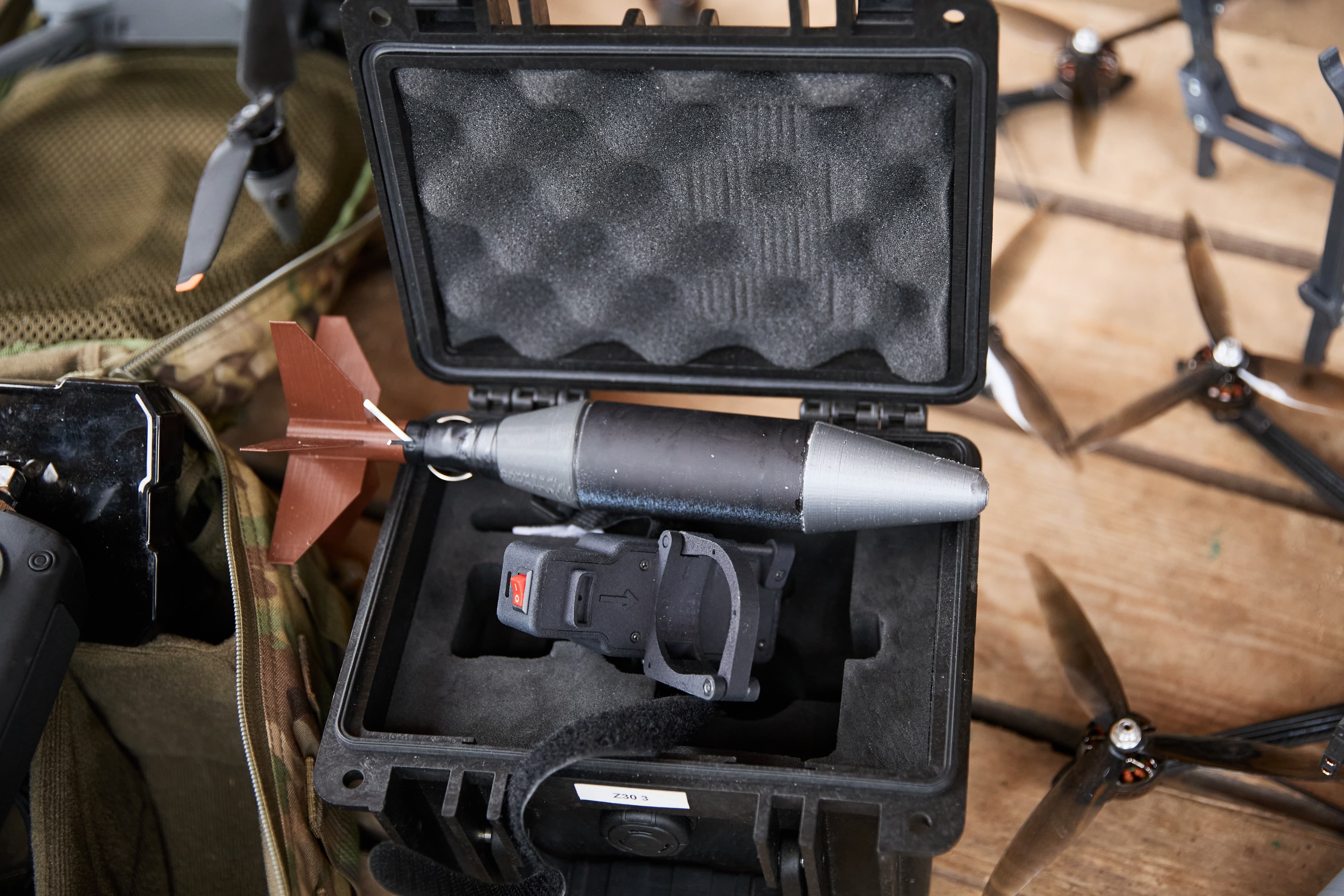
Additive manufacturing now has significant aerospace, automobile, medicine, and education applications, as well as even home use. In Ukraine, 3D printing has been used for literally thousands of applications, for roles that range from casings for Starlink satellite receivers to drone bomb launching systems.23 New versions of 3D printing technology are expected to continue advancing in capability and affordability in the coming decades. This will allow the use of new materials, faster production speeds, and lower manufacturing costs.
These advancements offer the ability to produce masses of small, cheap autonomous systems at dispersed locations throughout a military area of operations—or even outside the battlespace—in a way that has a low signature. Future iterations of these printers might also be able to rapidly produce camouflage netting tailored to a specific environment in which a military force is deployed or even produce large numbers of cheap emitters and jammers as part of a deception or spoofing approach.
Therefore, sensors in the future will need to detect not just military systems but potentially low-profile manufacturing capabilities that can rapidly produce or replace lost systems. As with many disruptive twenty-first-century technologies, military and civil institutions have only just begun to understand the impact of 3D printing. Its potential for improved military logistics and reducing the cost of mass-produced complex machines will see it deployed more broadly by military institutions over the coming decades. This has been the case in the Ukraine War.24 The potential for additive manufacturing as part of a future military deception regime is significant—we just need to imagine more use cases.
Hurricanehank via Shutterstock
New Advanced Materials
While they have not been deployed in Ukraine as of this writing, two additional technology areas merit mention: new advanced materials and quantum technology.
Developments in manufacturing, civil logistics, construction, automotive, and energy sectors over the past two decades have driven the demand for new types of materials. Generally, materials might be described as new if they are not in wide use, and advanced if their properties are superior to those which they are replacing.25
This is relevant to the conduct of military deception because some of the new and promising materials may allow military institutions to develop equipment that radiates less heat or electromagnetic emissions, or that operates on more efficient power sources, reducing exhaust emissions and logistic support needs.
These materials are being developed with the aid of artificial intelligence and machine learning, which has been explored earlier in this report.26 These processes have reduced waste and produced materials with programmable properties that allow response to external stimuli, as well as lightweight and hybrid materials that provide a range of properties such as thermal shielding or better performance in semi-conductors and energy storage.
While the list of new and evolving materials is extensive, there are several worthy of noting in this study, due to their obvious application to signature reduction and management. The first is metal foam. This is a lightweight, low-density, and large-surface-area material that has potential in noise reduction and insulation. Another new material that offers similar properties is aerogel. It has excellent thermal insulation properties, and in addition, it may assist in energy conservation—a useful property in deployed environments. Other material technologies likely to have application in military deception include thermoelectric energy harvesting, self-healing materials, and graphene and carbon nanotubes.
A final new material worth singling out is metamaterials. These are synthetic composite materials that possess properties not exhibited in naturally occurring materials. There is a wide variety of new and advanced materials that may become crucial in the conduct of military deception. They can be designed to have specific properties, as the materials interact with different wavelengths. As a 2018 report from the Australian Defence Science and Technology Organization notes, “Employing metamaterials to alter how objects interact with the electromagnetic spectrum opens up the possibility of cloaking applications.”27 While often associated with science fiction, metamaterials might allow the coating of objects so that light flows smoothly around the object, effectively rendering it invisible. This application was examined in a 2023 article for the Army Mad Scientist Laboratory.28 Other possible applications are cheaper synthetic radar sensors and smaller antenna sizes—both with obvious uses in countering military deception.
Quantum Technology
Quantum technology is relevant in the study of military deception because it offers the potential for adversaries to break the encryption systems that protect friendly secrets, including feints and deception activities. At the same time, this technology might be applied by friendly military forces to protect their operational information, including plans, locations, and other elements of friendly information. It is also likely to be suited to solving problems that possess multi-dimensional parameters, which could include breakthroughs in materials science (assisting with signature management), new approaches to machine learning for AI (analytically breaking through deception regimes), and improvements in military logistics (which might assist distributed operations).29
All of the potential applications of this technology use several fundamental properties of quantum phenomena. The concept of “superposition” refers to the ability of a particle to exist across all possible states at the same time. Another concept, “entanglement,” involves linkage between two or more particles such that their properties are interrelated. Concepts such as “tunneling,” “quantization,” and “decoherence” add to the strange properties of quantum mechanics and give them their unique power and potential.30
In 2017, China announced a project to construct the first “unhackable” computer network using quantum technologies. This built upon the 2016 launch of a “quantum satellite” by the Chinese in cooperation with European researchers. Other nations have spent decades investing in quantum technology to achieve more cost-effective and secure movement of data.31 They have done so because quantum technologies have a range of theoretical applications in the future, including secure communications, sensing, and computation.32
In October 2024, Chinese scientists reported using a locally designed and built quantum computer to crack military encryption, and they believed it was the first time this had been achieved.33 Quantum timing and navigation are another potential application with both civilian and military uses. The employment of quantum phenomena may underpin the development of quantum “clocks,” which could provide hyper-accurate timing. This would have application in areas such as algorithmic trading in the commercial world to highly precise target location systems in the military world. Such a technology might improve underwater navigation by submarines, improve the precision of weapon systems, and also serve as a useful redundant navigation system should GPS be denied by enemy jamming or spoofing.
The tech industry considers that a million physical qubits (quantum bits, or basic units of quantum information)34 will be needed on a chip to ensure there is sufficient power to both correct errors and yield a useful quantum computing capability. However a recently announced Amazon computer chip with only 100,000 qubits might offer a useful quantum computing capability, a significant reduction from the previously envisaged requirement of 1 million qubits.35 Microsoft, taking a slightly different approach, has announced a chip featuring topological core architecture.36 As Microsoft describes this technology, “The topoconductor, or topological superconductor, is a special category of material that can create an entirely new state of matter—not a solid, liquid, or gas but a topological state. This is harnessed to produce a more stable qubit that is fast, small, and can be digitally controlled, without the trade-offs required by current alternatives.”37
There are a range of other theoretical applications of this technology relevant to deception. One use of quantum technology might be to improve situational awareness through the integration of a vast array of sensors, and the improved accuracy of sensors. As the 2024 annual report to Congress on PLA developments notes, “PRC [People’s Republic of China] defense industry and universities are developing quantum imaging, navigation, and radar applications to enhance intelligence, surveillance, and reconnaissance (ISR) capabilities, including position, navigation, and timing (PNT). PLA leaders view quantum sensing capabilities as tools to improve submarine detection.”38 When such capabilities do become available, and begin to proliferate through government, commercial, scientific, and military institutions, they will revolutionize computing and potentially the conduct of military deception operations.39
Technological Advances and Battlefield Lessons
Both warfare and the employment of deception in it continues to be shaped by technological developments and battlefield lessons. This evolution holds the potential to become more striking in the future, as advanced technologies including and going beyond the above both advance and proliferate.
Importantly, these technologies will interact with each other—as well as trends in strategic competition, international relations, demography, and other factors—to force change in how military institutions prepare for and conduct twenty-first-century military activities. These trends in military affairs, and their impact on military deception, are the focus of the next chapter.
Citations
- Williamson Murray and MacGregor Knox have differentiated between these two concepts. Military revolutions are wholesale changes to societies and their ability to engage in war. They are less frequent but have more impact because they recast society and the state, as well as military institutions. Revolutions in military affairs are “clusters of less all-embracing changes” in which military organizations focus on finding new ways to destroy their enemies. See Williamson Murray and McGregor Knox, The Dynamics of Military Revolution, 1300–2050 (Cambridge University Press, 2001), 7, 12.
- Michael C. Horowitz, “Battles of Precise Mass,” Foreign Affairs, October 22, 2024, source.
- Stefan Korshak, “Ukraine Drone Production Tops 2.5 Million a Year, Aircraft Numbers on Track to Grow,” Kyiv Post, February 10, 2025.
- President Volodymyr Zelensky signed a decree establishing the force on September 16, 2024. See Martin Fornusek, “Zelensky Signs Law Establishing Ukraine’s Unmanned Systems Forces,” Kyiv Independent, September 16, 2024, source.
- This idea of employing robots for the “dirty, dangerous, and dull” tasks is examined in Peter W. Singer, Wired for War (Penguin Books, 2009).
- Sydney Freedberg, “Meet the Army’s Future Family of Robot Tanks: RCV,” Breaking Defense, November 9, 2020, source.
- Mick Ryan, Human Machine Teaming for Future Ground Forces (Center for Strategic and Budgetary Assessments, 2018), 14–15.
- In 2025, Ukraine’s military expects to form uncrewed ground vehicle companies in each of its brigades.
- The DroneFall initiative of the Come Back Alive Foundation is one such initiative. This is now being widely deployed by frontline units. See Olena Hrazhdan, “Come Back Alive Says ‘Dronefall’ Project Downed Russian Drones Worth $65M,” Kyiv Post, March 22, 2025, source.
- Joe Lacdan, “Joint Counter-Small UAS Office Conducts Successful Counter Drone-Swarm Demonstration,” U.S. Army, July 26, 2024, source; “DoD Announces Strategy for Countering Unmanned Systems,” U.S. Department of Defense, December 5, 2024, source. Companies, such as Anduril source and AIM Defence source, among many others, have also developed counter-drone technologies, but are yet to be battle tested.
- Edward Geist and Marjory Blumenthal, “Military Deception: AI’s Killer App?,” War on the Rocks, October 23, 2019, source.
- John Ferrari and Hallie Coyne, “Deception Is the Biggest Threat to American Security,” RealClear Defense, July 21, 2021, source.
- Author interview with Lieutenant General Kyrylo Budanov, Ukrainian military intelligence, conducted March 11, 2025. Mick Ryan, “What I Learnt About the Future of War in Ukraine This Week,” Australian Financial Review, March 14, 2025, source.
- Allie Funk, Adrian Shahbaz, and Kian Vesteinsson, Freedom on the Net 2023: The Repressive Power of Artificial Intelligence (Freedom House, 2023), source; see also Jessica Brandt, “Propaganda, Foreign Interference, and Generative AI,” Brookings, November 8, 2023, source.
- Yong Jian, “China Explores Military Applications with DeepSeek,” Asia Times, March 1, 2025, source.
- See Ryan Greenblatt, Carson Denison, Benjamin Wright, et al., “Alignment Faking in Large Language Models,” arXiv, December 20, 2024, source; Billy Perrigo, “Exclusive: New Research Shows AI Strategically Lying,” Time, December 18, 2024, source.
- Rhiannon Williams, “AI Systems Are Getting Better at Tricking Us,” MIT Technology Review, May 10, 2024, source.
- Currently Starlink has over 7,100 satellites in orbit approximately 550 kilometers above the Earth. Tereza Pultarova, “Starlink Satellites: Facts, Tracking, and Impact on Astronomy,” Space.com, March 28, 2025, source.
- Nivedita Bhattacharjee, Eduardo Baptista, Lisandra Paraguassu, and Ricardo Brito, “Chinese Rivals to Musk’s Starlink Accelerate Race to Dominate Satellite Internet,” Reuters, February 24, 2025, source.
- U.S. Department of Defense, Annual Report to Congress: Military and Security Developments Involving the People’s Republic of China 2019 (Office of the Secretary of Defense, 2019), 50–51; Phil Stewart, “U.S. Studying India Anti-Satellite Weapons Test, Warns of Space Debris,” Reuters, March 28, 2019, source.
- Joe Saballa, “Five Chinese Satellites Engage in ‘Dogfighting’ Drills in Space: US Officials,” Defense Post, March 19, 2025, source.
- Clémence Poirier, Hacking the Cosmos: Cyber Operations Against the Space Sector (Centre for Security Studies, 2024), source.
- David Hambling, “Volunteers Worldwide With 3D Printers Are Aiding Ukraine’s War Effort,” Forbes, June 7, 2024, source.
- Rueben Dass, “3D Printing in Conflict Zones: A Game Changer?,” Global Network on Extremism and Technology, October 14, 2024, source.
- Australian Government, New and Advanced Materials (Industry Commission, Report No. 42: March 8, 1995), xxvi.
- Susi Wallner, “Top 10 Materials Industry Trends and Innovations in 2022,” StartUs Insights, August 20, 2020, source.
- Australian Government, Advanced Materials and Manufacturing: Implications for Defence to 2040 (Defence Science and Technology Group, 2018), 10.
- “Meta-Material Magic: Demystifying the Science of Cloaking,” Mad Scientist Laboratory, November 30, 2023, source.
- Lindsay Rand and Berit Goodge, “Information Overload: The Promise and Risk of Quantum Computing,” Bulletin of Atomic Scientists, November 14, 2019, source; Michael Biercuk and Richard Fontaine, “The Leap into Quantum Technology: A Primer for National Security Professionals,” War on the Rocks, November 17, 2017, source.
- Jonathan Dowling and Gerard Milburn, “Quantum Technology: The Second Quantum Revolution,” Royal Society 361 (2003): 1656–7; Elsa Kania and John Costello, Quantum Hegemony: China’s Ambitions and the Challenge to U.S. Innovation Leadership (Center for a New American Security, 2018), 2–5.
- Tom Stefanick, “The State of U.S.-China Quantum Data Security Competition,” Brookings, September 18, 2020, source.
- Elsa Kania, “China’s Quantum Future: Xi’s Quest to Build a High-Tech Superpower,” Foreign Affairs, September 26, 2018, source.
- Matt Swayne, “Chinese Scientists Report Using Quantum Computer to Hack Military-Grade Encryption,” Quantum Insider, October 11, 2024, source.
- A qubit, or quantum bit, is the basic unit of information used to encode data in quantum computing and can be best understood as the quantum equivalent of the traditional bit used by classical computers to encode information in binary. Josh Schneider and Ian Smalley, “What Is a Qubit?,” IBM Blog, source.
- Stephen Nellis, “Amazon Unveils Quantum Chip, Aiming to Shave Years Off Development Time,” Reuters, February 27, 2025, source.
- “Quantum Computing Stocks Rise as Microsoft’s New Chip Heats up Debate over Technology,” Reuters, February 21, 2025, source.
- Catherine Bolgar, “Microsoft’s Majorana 1 Chip Carves New Path for Quantum Computing,” Microsoft, February 19, 2025, source.
- U.S. Department of Defense, Military and Security Developments Involving the People’s Republic of China, 2024 (Office of the Secretary of Defense, 2024), 26, source.
- Michael J.D. Vermeer and Evan D. Peet, Securing Communications in the Quantum Computing Age (RAND Corporation, 2020), 1, source.