Hollie Russon Gilman
Senior Fellow, Political Reform Program
Self-governing groups play a foundational role in economic development across Kenya.


Chamas, also known as Village Savings and Loan Associations, are self-governing savings and investment groups that play a foundational role in grassroots economic development across Kenya. The more than 300,000 registered Chamas nationwide serve as powerful vehicles for financial empowerment, particularly among women, providing access to savings, credit, and investment opportunities.
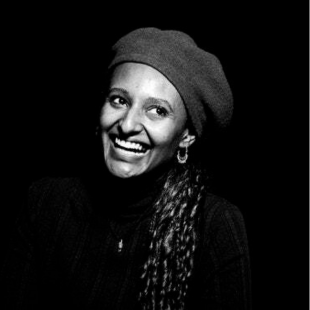
Hollie Russon Gilman and Sarah Jacob spoke with Shaila Agha, a climate justice activist and fintech expert, to explore the innovative intersection of traditional Chama governance structures and emerging Web3 technologies. Through her leadership of Chama DAO (Decentralized Autonomous Organization)—a blockchain-based pilot program researching how integration of emerging blockchain-based tools can enhance transparency, accountability, and access to climate finance for these groups—Agha’s initiative merges community-centered design, decentralized tools, and ecological finance to support local resilience in the face of climate change.
Agha supports this project through her work as a program officer with the Regen Foundation, a nonprofit global ecological monitoring and regeneration platform that harnesses the power of blockchain technology and local communities to tackle the climate crisis. Regen Foundation focuses on building capacity at the grassroots level so communities can govern and compute locally, rather than applying a predefined technical or market model. The organization is also releasing a new book, Ecological Institutions: Law, Economics, and Technology in a More-Than-Human World, as a toolkit for regenerative governance.
How did the Regen Foundation begin? What is the framework that you all work out of?
Regen Network was founded by a handful of permaculture practitioners back in 2017. The project was catalyzed when a cofounder of Ethereum asked us the question: “How could you leverage distributed ledger technology and remote-sensing science to further planetary regeneration?” We adopted the name “Regen Network” due to the influence of our teacher, Carol Sanford, and her lifetime of work developing a school around living systems through a regenerative-paradigm lens. Regen Ledger is seen as a global public utility for ecological data and claims.
Regen Foundation began as the nonprofit, commons-oriented arm of Regen Network, created around the launch of Regen Ledger to ensure that regenerative economic infrastructure is governed by the communities it serves.
It works from a framework that centers community-owned regenerative economics, local definitions of life and well‑being, and ecological institutions, operationalized through governance, education, science, and regenerative economic tools built as digital public infrastructure.
Who are some of the stakeholders Regen Foundation is trying to engage?
We place a strong emphasis on empowering grassroots institutions to own and govern the transition to a regenerative economic paradigm. With that in mind, our stakeholders are diverse, each playing a critical role in this ecosystem.
At the heart of this work are the people who already live inside these ecological institutions: chamas, mutual aid groups, elders, women’s networks, youth custodians, and land and water stewards whose daily lives are inseparable from the health of their ecosystems. They are not beneficiaries, but co-authors. Alongside them, we engage anthropologists, ecologists, and Indigenous knowledge scholars who help translate lived protocols into legible institutional forms without stripping them of meaning. We also work with local governments, customary land bodies, and legal thinkers where recognition and protection of commons governance becomes necessary. On the enabling side, we collaborate with regenerative technology builders and civic governance practitioners who are willing to let culture guide tooling, not the other way around. Finally, we engage storytellers, educators, and movement builders who ensure these ideas travel with integrity, because ecological institutions only endure when knowledge, care, and accountability can be inherited across generations.
How are you engaging local communities in the design process for Chama DAO? It’s mentioned in phase 1 that the problem statement are crafted in co-collaboration. What are the criterias for a pilot region?
Our pilot initiatives emerge from an ongoing engagement process that helps us build and strengthen relationships with grassroots organizations. This process is rooted in listening, learning, and collaborative sessions informed by human-centered design. We also establish a Memorandum of Understanding—or as we prefer to call it, a covenant—which we co-create with each organization, using the Free Prior Informed Consent principle. This living document details our relationship and stipulates how we engage. We also develop our DAO tooling through direct community feedback loops.
The Ecological Institutions book, now available, explores how ancient protocols of care, consent, and collective responsibility—still alive in Chamas and mutual aid networks—can inform the design of institutions capable of sustaining life, land, and kinship into the future. Through shared exercises and practical guidance, the book invites communities to engage together and co-create real-world pilots that bring these living protocols into practice.
Our criteria for pilot regions fall under these four categories: representation, bioregional necessity, maturity of governance processes, and existence of complex governance of the commons. The representation category falls onto a community lead who can act as bridge.
What does the co-creation of visions look like within Chamas? How is the management of land or projects organized?
Co-creation of visions usually happens at the onset or emergence of the Chama. Members usually get together with an aim in mind, which evolves as each milestone is reached. The significance of the Chama lies in its coordination of in-person meetings where these topics are thoroughly discussed. Ownership of projects is usually individual; however, in the case of a business, it remains registered as a collective entity with shareholders.
What are some of the projects that have come out of Chamas?
Chamas have had a transformative impact in Kenya, with a vital role in economic development, social empowerment, and sustainable entrepreneurship. For instance, the Women Integration into Renewable Energy (WIRE) Programme, in partnership with M-Changa, launched Energy 4 Impact—a crowdfunding community that supports women-led micro-enterprises in the clean energy sector. The initiative has assisted 450 women entrepreneurs in raising funds for clean cooking and off-grid lighting businesses, promoting sustainable energy solutions in rural Kenya and Tanzania.
In Kisumu, the Smart Eagles Girls Community-Based Organisation, founded by Jullian Achieng, evolved from a women’s Chama into a registered community-based organization. It focuses on empowering teen mothers and survivors of gender-based violence through vocational training, mentorship, and economic activities. The organization has helped hundreds of girls restart their lives.
Furthermore, Fountain Enterprise Programme (FEP Holdings), founded by John Kithaka and seven friends, has diversified into various sectors, including MobiKash, a mobile money platform; Citadelle Security; Fountain Credit Services; Fountain Schools in Tigoni and Mwea; Fountain TV and Newspaper; real estate developments like Kisima Gardens and Kisima Park; and hospitality ventures such as Hotel Suntec Sagana and Suntec Supermarkets in Kitui, Narok, and Kapenguria.
Although these groups are unregulated, they do require registration in some circumstances. What does this process of registration look like?
Chamas are encouraged to register with their local chief, although many do not. This registration primarily helps with conflict resolution. However, once a certain financial threshold is reached, the Sacco Societies Regulatory Authority (SASRA) requires them to transition into a Savings and Credit Cooperative Organization (SACCO) and comply with specific regulations, such as maintaining minimum holdings.
What are the typical governance roles within a Chama? How is responsibility delegated?
The governance of a Chama naturally supports democratic participation, with leadership roles rotating to ensure organizational sustainability through knowledge transfer. Responsibilities are typically divided among five key roles: chairperson, treasurer, secretary, committee members, and chief. The chairperson oversees operations, chairs meetings, and ensures adherence to the group’s constitution. The treasurer is primarily responsible for collecting payments and repayments, issuing financial statements to the group, and calculating penalties and interest. A secretary is responsible for organizing meetings, keeping minutes, following up on action points, and ensuring compliance with fines. Committee member roles are adaptable and fit the needs of the Chamas, from organizing events to managing relations. The area chief is often seen as a mediator, a government official who can advise and assist in times of conflict.
What are methods of accountability in family-run Chamas? How do you approach difficult conversations of trust in tightly knit communities? How is conflict approached?
Because most Chamas are unique to their members, there is no blanket statement to answer this. However, I can speak to examples of Chamas I am subscribed to. Each Chama has three principle leads: chairperson, treasurer, and secretary. Although it is common for the chair to aid in conflict mitigation and resolution, the default mediator might not be appropriate when a family is involved. In this regard, it is often a trusted reconciler within the family, like a respected family elder (outside the Chama), who will assist with this dispute. In many families, this could be a first-born child (uncle, grandfather, mother, etc.). Approaching difficult conversations is likely the reason many of these Chamas eventually share out the proceeds and dissolve.
How do we scale local solutions to be adaptable and change with the times? How do you all see new technology (such as web3, decentralized platforms, etc.) as part of the solution?
The important thing is not being afraid to fail. Through pilots, decentralized building, and learning from the voices of the marginalized, we can create adaptable and flexible solutions. It is important that we see grassroots communities as equal stakeholders and continuously involve them in dialogue.
This idea of shifting language to meet the community—how important is it to have place-based specific language for larger movements (like web3)? How does that impact the buy-in of community members?
This is a question I grapple with daily. At the beginning of last year, we formed a DAO called KamusiDAO, which translates complex web3 terminology into Swahili to improve comprehension. We discovered that language plays a crucial role in both technology adoption and maintaining agency within the grassroots communities we work with. In our communications and workshop materials, we strive to respect groups by using clear, straightforward text. Language can be exclusionary and dramatically affect a group’s mindset. When our communications consider the bioregion, education levels, and other local factors, it demonstrates our genuine commitment to the community.
Senior Fellow, Political Reform Program
Program Associate, Political Reform Program
Program Officer, Regan Foundation