
Introduction
[Building an open source Cash Assistance Platform] Domestic workers are the ones who take care of our children, our eldery, the disabled, they keep our homes and our offices safe and clean. And when the pandemic hit, domestic workers were particularly hard hit as they are excluded from the formal social safety net and government economic relief.
The National Domestic Workers Alliance (NDWA) has been focused on improving the conditions of domestic workers across the United States for the last 14 years which enabled them to see the outsized impact of the pandemic on this community and the need for immediate relief. In response, NDWA quickly formed a coalition of organizations, Open Society Foundation, Google.org, and local governments like Philadelphia to provide emergency cash relief to workers via their platform, Alia Cares.
To get this relief to vulnerable workers there were two needs: to raise more money and a technical platform to get it into the hands of workers. The Open Society Foundations provided catalytic philanthropic capital both to get into the hands of workers and to help establish the platform, Alia, for vulnerable and left behind community members.
The Open Society Foundations provided catalytic philanthropic capital to fund both emergency cash relief and financial support for NDWA to build a solution for vulnerable and “left behind” populations. Google.org provided grant funding to NDWA to support the Alia Benefits platform in 2017, so when NDWA needed immediate design, product management and engineering resources Google.org was ready to quickly step in. They deployed a team of seven pro bono Google.org Fellows, who worked full-time for six months on building Alia Cares (the cash assistance platform) and open sourcing the solution so that it can be more easily replicated.
In total, NDWA raised more than $30M, 7x their original goal, and used this platform to get cash to 50K individuals who’ve used it for food, rent, medicine, and other essentials. The platform is already having an impact beyond NDWA, in cities like Tucson and Philadelphia where community based organizations are distributing their own relief funds through the platform.
Addressing complex issues such as providing emergency financial relief to marginalized workers requires innovative solutions that leverage the expertise of multiple organizations and sectors, as we saw here.
[The Design Sprint] As the Covid pandemic continued, there was a growing gap in benefits for those most affected by the outbreak. City, state, and community-based organizations have filled this gap by raising and distributing emergency cash and providing a much-needed lift across the country. While many of the questions about what to consider while setting up a cash assistance program have been answered, the effectiveness of programs often relies on the technical implementation of a platform especially since nonprofits and civic entities often have limited access to technical resources. Google.org, Google’s philanthropy, heard from many of their grantees like NDWA, that there were shared technical needs across the sector and that programs like the Google.org Fellowship could help advance those shared solutions. In the case of NDWA, providing technical expertise meant NDWA could get cash to domestic workers quickly, thoughtfully, responsibly, and securely, and that local governments could do the same.
In September 2020, New America’s New Practice Lab, National Domestic Workers Alliance, and Google.org ran a five-day virtual design sprint workshop with 10 nonprofit organizations to identify if there were shared technical solutions that could benefit the sector and to capture technical best practices and opportunities to get relief quickly to those in need.
This is what participants set out to achieve during the design sprint and what they focused on each day:
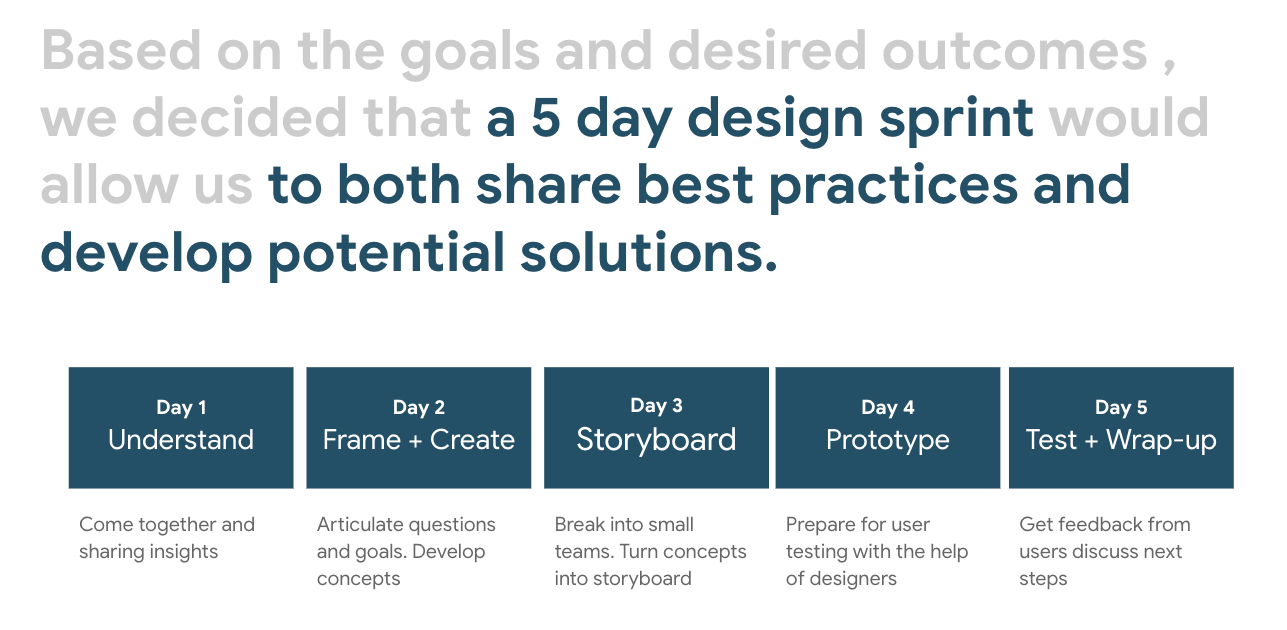
This document presents different approaches taken by the participating organizations so that nonprofits, governments, and policymakers can learn from existing cash assistance programs. This document isn't meant to capture all the possible solutions or to make recommendations as to a single preferred approach, but rather to capture the learnings of ten organizations that have developed expertise through experience with providing cash assistance programs.
Editorial disclosure: This report discusses the contributions by various organizations from a co-hosted sprint with Google, which are funders of work at New America but they did not contribute funds directly to the research or writing of this piece. View our full list of donors at www.newamerica.org/our-funding.