Stephen Burd
Senior Writer & Editor, Higher Education

Testifying yesterday at a House of Representatives hearing on alleged admissions abuses at several for-profit colleges, Harris Miller, the president of the Career College Association (CCA), said that his organization doesn’t have any tolerance for “schools that violate the rules and regulations” that govern the federal student aid programs.
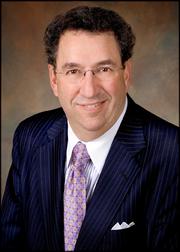 “Let me say up front: there is no room for cheating in the process of higher education, whether by students, teachers, administrators, other school personnel, or outside testers and evaluators,” Miller (pictured on the left) stated, adding “We share the government’s interest in eliminating any form of fraud and abuse associated with the Title IV [student aid] program.”
These are very good sentiments. But at Higher Ed Watch, we are unaware of any role CCA, the national lobbying group for proprietary colleges, has played in ferreting out fraud and abuse among its members.
Over the last decade, some of the largest publicly-traded for-profit higher education companies have come under scrutiny from federal and state regulators and have faced numerous lawsuits by former employees, shareholders, and students over allegations that they have engaged in misleading recruiting and admissions tactics to inflate their enrollment numbers.
But in the face of these accusations, CCA’s leaders have typically either remained silent or rushed to defend the institutions, warning that any increased government oversight into the for-profit higher education sector would force their schools to abandon their mission of educating students from low-income families or otherwise underserved communities. (Miller continued those scare tactics yesterday when he warned that increased regulatory pressure on his schools was causing many of them to “cut way back” on enrolling “ability to benefit” students — generally those without a high school diploma or GED. “Is that good from a societal point of view? I would argue as a citizen that it is not,” he stated.)
Don’t get us wrong. We would be the first to congratulate CCA if it truly changed its stripes. But it’s hard to take Miller at his word when he says that CCA “abhor[s] any practice that break [s] the rules or the law to admit unqualified students,” considering that several members of his association’s Board of Directors are leaders of large for-profit college chains that have been charged by federal or state authorities with carrying out these types of abuses and other deceptive practices.
For example, in April, the proprietary-school chain Alta Colleges agreed to pay the U.S. Department of Justice $7 million to settle allegations raised in a False Claims lawsuit that its Texas campuses had engaged in practices “designed to mislead prospective students and to misrepresent material facts to them.” Among other things, the government found that the school recruiters had lied to prospective students about their job placement rates (saying that they were more than 90 percent when they were actually just over 50 percent) and about their ability to transfer credits to other schools (even though no other accredited colleges in Texas would take them.) Yet, Jamie Turner, Alta Colleges’ vice chairman and co-founder, remains on the CCA board.
As they say, words are nice but actions are better.
Senior Writer & Editor, Higher Education